“Busy at Their Work:” Medical Treatment at the Battle of the Wilderness
By Tim Talbott · Originally published April 2024 · pp. 20–22
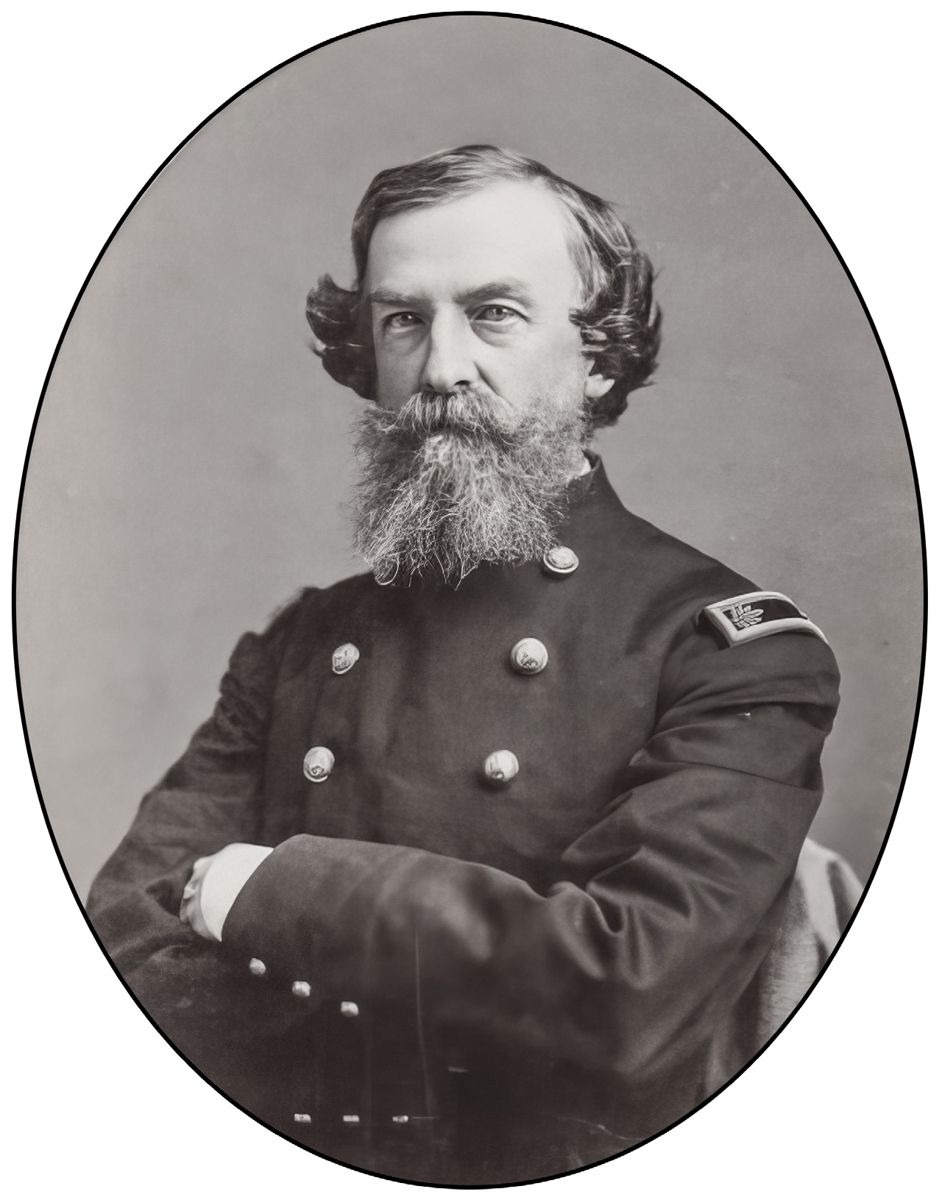
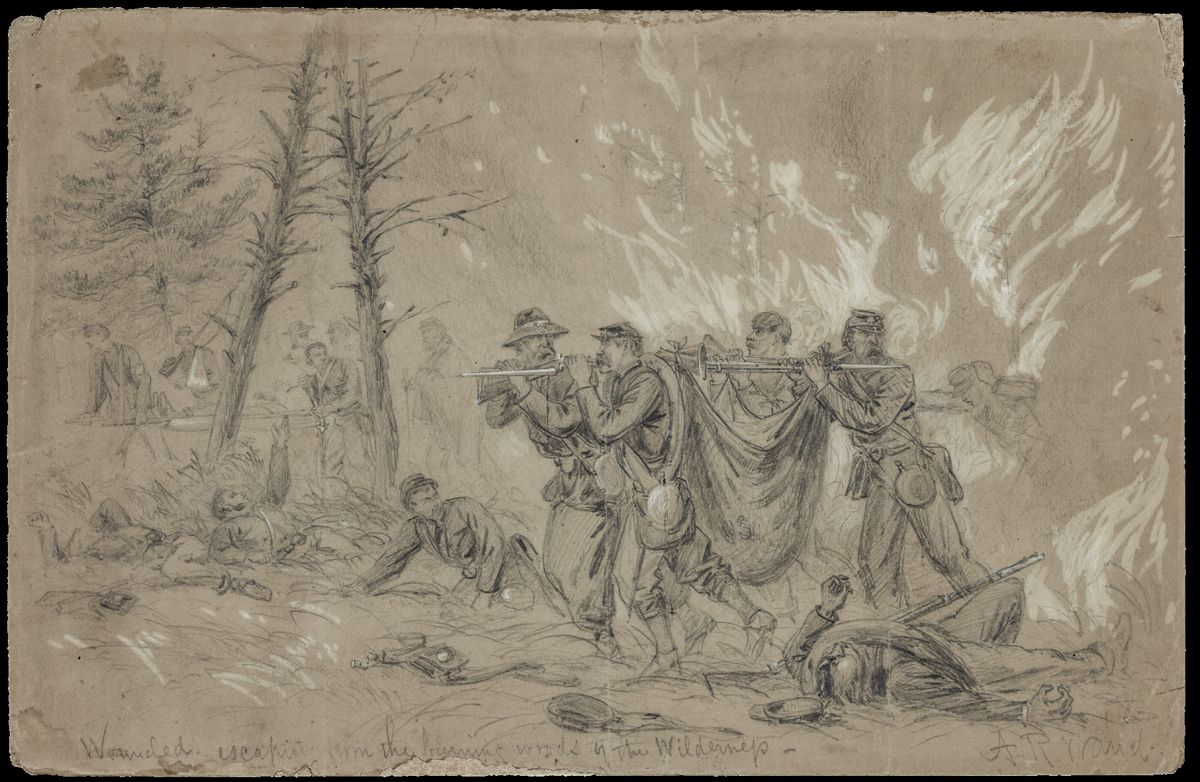
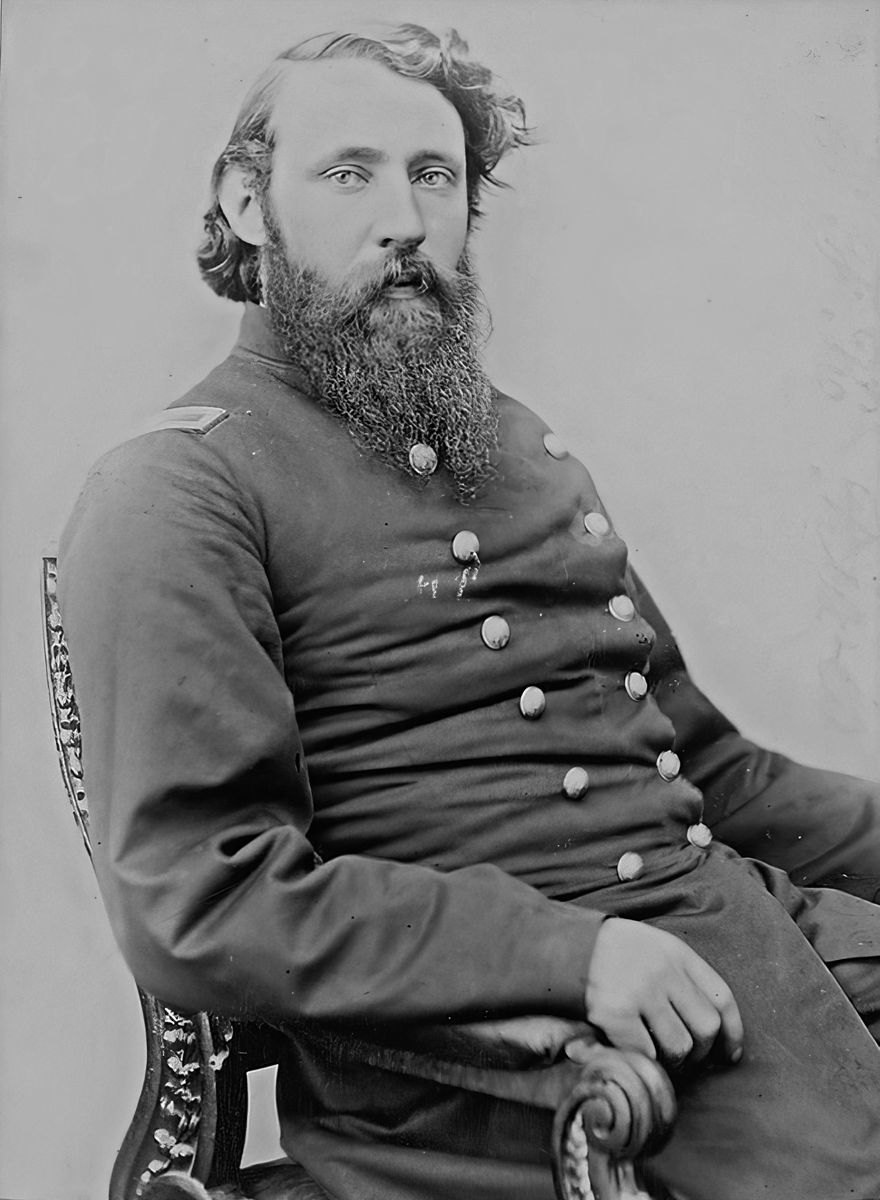
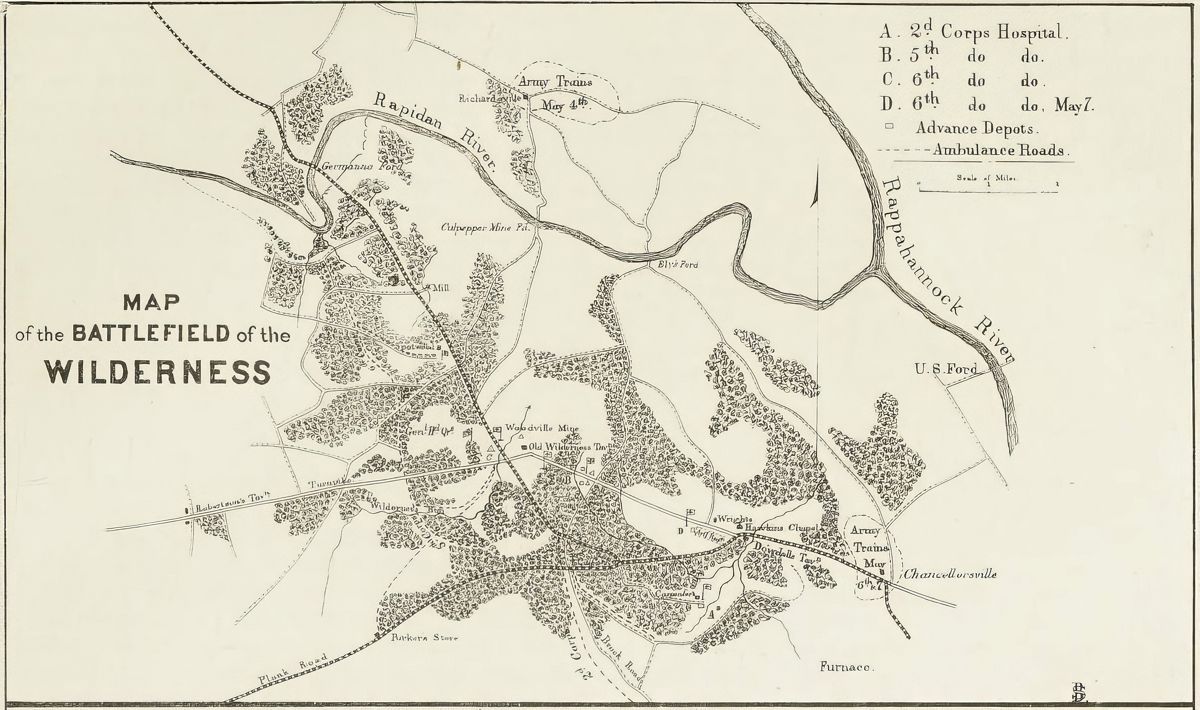
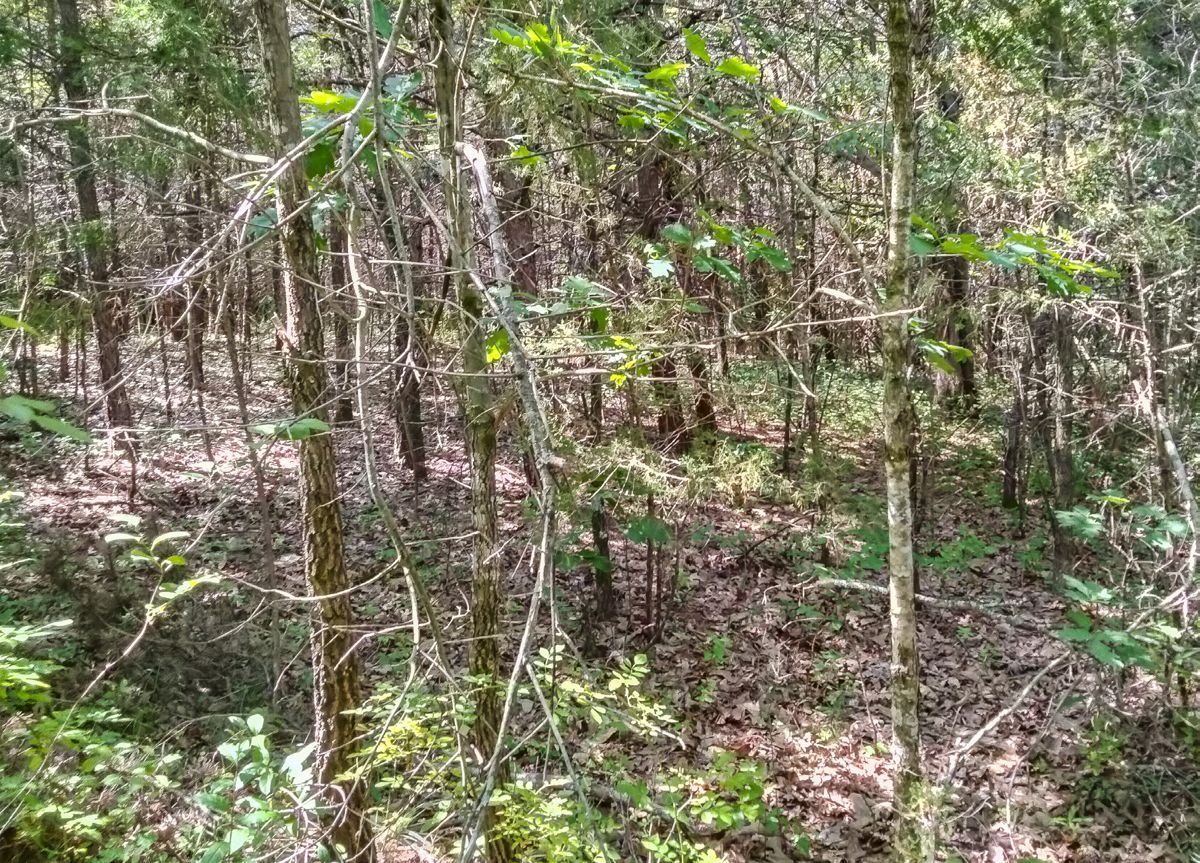
The Battle of the Wilderness, fought May 5-6, 1864, presented a whole host of issues for both the Army of the Potomac and the Army of Northern Virginia. Among others, a primary concern was that the dense second-growth timber of this seventy-square-mile forest created communication, command, and control problems. And although fought partly on ground adjacent to that battled over the year before during the Chancellorsville Campaign, the armies’ directions of approach had somewhat changed, thus neutralizing much of the area’s previous familiarity. This battle, the first clash between Civil War giants Grant and Lee, produced a tremendous number of casualties. By most estimates, the two days of fighting left almost 30,000 soldiers either killed, wounded, missing, or captured. As was the case on the vast majority of Civil War battlefields, the wounded greatly outnumbered the killed, missing, and captured. Although both armies attempted to be as medically prepared as possible for the upcoming campaign, the Wilderness again tested the medical departments in both armies, just as previous battles had before, and others would afterward. Dr. Thomas McParlin, who took over the role of Medical Director for the Army of the Potomac after the influential Dr. Jonathan Letterman left, later explained in his campaign report that their ambulance corps consisted of 60 officers and 2,300 enlisted men at the beginning of May 1864. Leading up to the clash, “All of the ambulances were thoroughly repaired, painted, and marked” with their corps and division designations. The ambulance corps drilled regularly, and medical supplies were stocked. Although a thorough Confederate medical report from the campaign apparently does not exist, comments made by some Confederate Army medical personnel expressed a shortage of staff and supplies. Commissary rations, especially for patients and attendants, had received cuts in the months leading up to the battle. The Army of the Potomac’s V Corps, which arrived in the area of the Old Wilderness Tavern the previous day, opened the fighting on May 5 in a clash just west of that location with the Army of Northern Virginia’s Second Corps, commanded by Gen. Richard Ewell. Fought partly in Saunder’s Field, one of the cleared areas in the Wilderness, casualties on both sides mounted rather rapidly. Dr. McParlin noted that V Corps division hospitals were set up “on a slope of open ground by a small creek which crossed the Fredericksburg pike 1 mile east of Old Wilderness Tavern.” The area had several springs for a water supply and soon “tents were pitched, operating tables and kitchens prepared, surgeons and attendants at their posts” were all ready to receive the wounded. An ambulance depot “was near the turnpike, about 400 yards behind the line of battle.” In addition, “A surgeon with attendants was stationed at Old Wilderness Tavern for the purpose of dressing the slightly wounded who might be straggling along the road and who passed by the advance hospitals without having been cared for.” The wounded began arriving at about noon and by nine that night “1,235 men had been received, fed, dressed, and sheltered.” Confederates set up field hospitals at Locust Grove on the Orange Turnpike and near Parker’s Store on the Orange Plank Road. Coming in on the right of the V Corps, the VI Corps, set up its hospitals at the Spotswood House (1st Division), the Woodville Mine complex (2nd Division), and near Old Wilderness Tavern (3rd Division), all relatively close to the Orange Turnpike and Germanna Plank Road intersection. During a futile attack by the VI Corps during the evening of May 5, Col. Joseph Warren Keifer received a wound to the left forearm. Making his way to the rear, he arrived at a hospital. Warren recalled that “I was carried through an entrance to a large tent, on each side of which lay human legs and arms, resembling piles of stove wood, the blood only excepted. All around were dead and wounded men, many of the latter dying. The surgeons with gleaming, sometimes bloody, knives and instruments, were busy at their work.” His broken arm bones resectioned, Keifer “was then born to a pallet on the ground to make room for – ‘Next.’” Fighting to the left of the V Corps, the II Corps battled with Gen. A.P. Hill’s Confederates along the Orange Plank Road. The II Corps established its hospitals near the Carpenter House, “1 mile southeast of the junction of the Germanna Ford and Chancellorsville plank roads.” A good water supply and ambulance routes to the front made the site ideal. McParlin noted that “About 600 wounded were received” there on May 5. The following day, McParlin reported, “The hospital of the Second Corps being but a short distance from the front, the influx of patients was so rapid and their numbers so great that it was not possible to record all of them.” However, included were “About 120 of the enemy’s wounded…” Dr. McParlin explained that “…this was a battle which no man saw or could see’ fought in the midst of dense thickets…and compelling the opposing lines to approach very near each other in order to see their opponents.” Also, the wood caught fire in many places and “some wounded, unable to escape, were thus either suffocated or burned to death.” McParlin estimated about 200 perished due to the flames. In addition, the dense woods created problems for stretcher bearers of
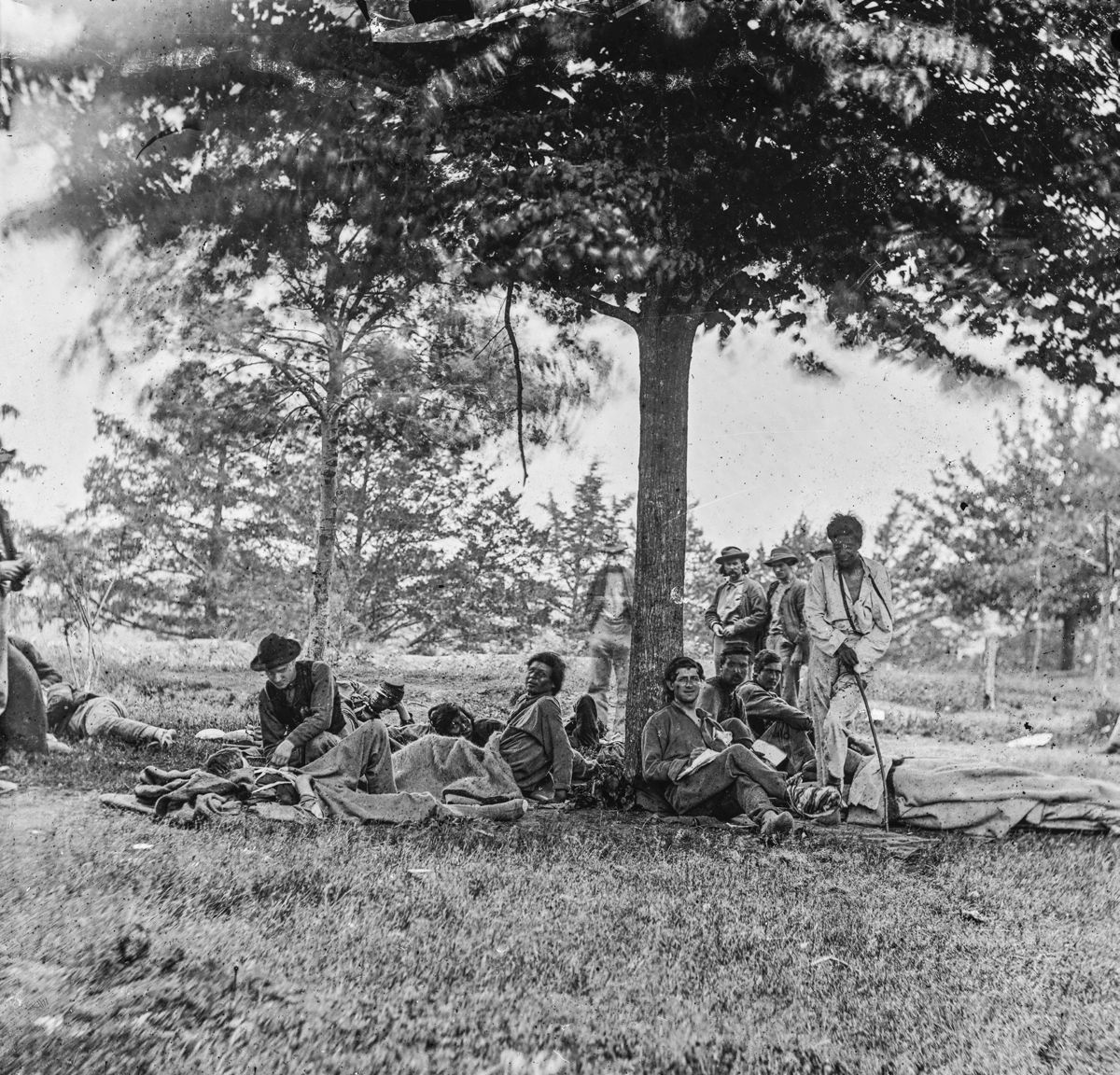
CivilWarNews.com the ambulance corps. “Repeated efforts were made, especially at night, to bring off the wounded lying between the lines, but with very small success, it being almost impossible to find wounded men lying scattered through the dense thickets, and the enemy firing at every moving light, or even at the slightest noise,” McParlin noted. Fighting resumed early on May 6, with the II Corps leading a massive assault along the Orange Plank Road front. Arriving to help stabilize the Confederates, Gen. James Longstreet’s First Corps smashed it with a counterattack. During the day’s fighting, Longstreet fell wounded, shot accidentally in the neck by his own men. A rider soon found Dr. J.S.D. Cullen, Longstreet’s medical director, who arrived and tried to stop the bleeding. Put on a stretcher, Longstreet went by ambulance to the hospital complex at Parker’s Store. Artillerist Robert Stiles, “rode up to ambulance and looked in. They had taken off Longstreet’s hat, coat and boots. The blood had paled out of his face and its somewhat gross aspect was gone.” After about a three mile ambulance ride, doctors examined Longstreet at the field hospital and found that his wound, though extremely painful, would probably not be fatal. Moved again by ambulance on May 7, Longstreet went to Orange Court House, staying the night at Meadow Farm, the home of Erasmus Taylor, who served as Longstreet’s quartermaster. Longstreet traveled from Orange to Lynchburg by train where he recovered for a time at Mrs. Caroline Garland’s home. Many Federal wounded at the Wilderness ended up in hospitals in Fredericksburg, where they received attention in homes, churches, and other buildings set up as makeshift hospitals. Attended to by army doctors and nurses, and civilian organizations like the U.S. Sanitary Commission and the U.S. Christian Commission, they were joined by more of their comrades wounded in the extended fighting that came next at Spotsylvania Court House. Evacuating the Federal wounded from Fredericksburg by May 27, the army transported most of them to hospitals in
Alexandria and Washington, D.C. The Confederates moved many of their wounded to Orange Court House, and from there by railroad to hospitals in Richmond, Gordonsville, Lynchburg, Farmville, Petersburg, and other locations.
CVBT has helped save over 220 acres of Wilderness battlefield land, including the sites of Fifth Corps field hospitals. The mission of CVBT is to preserve land associated with the four major campaigns of: Fredericksburg, Chancellorsville, Mine Run, and the Overland Campaign, including the Wilderness, and Spotsylvania
Court House. To learn more about this grassroots preservation nonprofit, which has saved over 1,700 acres of hallowed ground, please visit: www.cvbt.org.
Tim Talbott is the Chief Administrative Officer with the Central Virginia Battlefields Trust.