
Through The Lens
We Are As Good As Ten Thousand Battle of South Mountain – Part I
By Stephanie Hagiwara · Originally published September 2023 · pp. 20–21
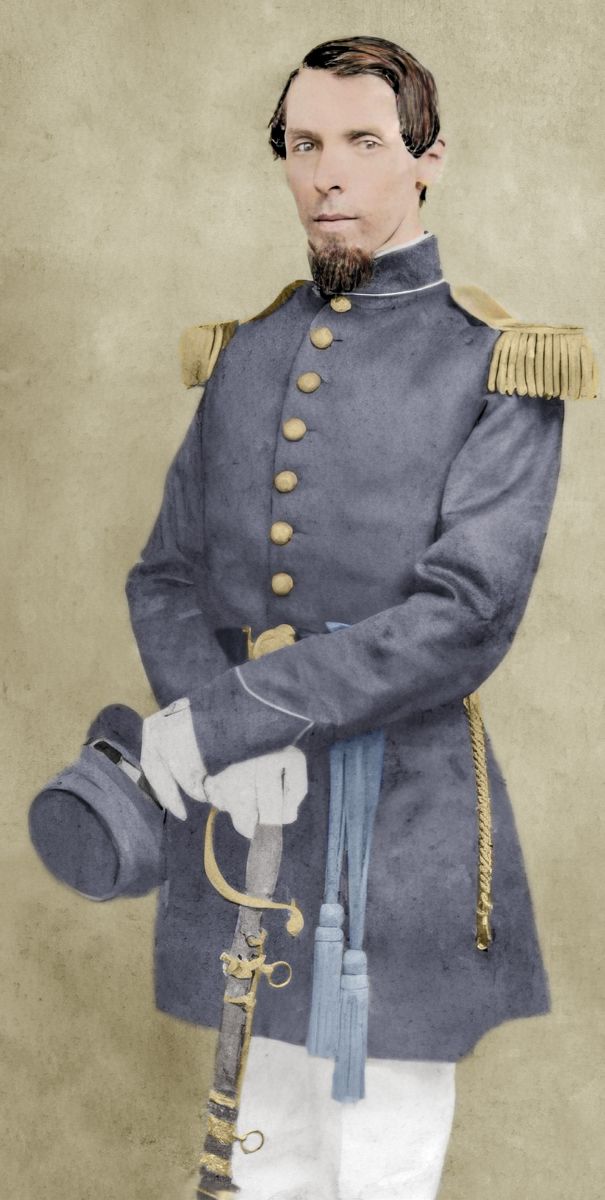
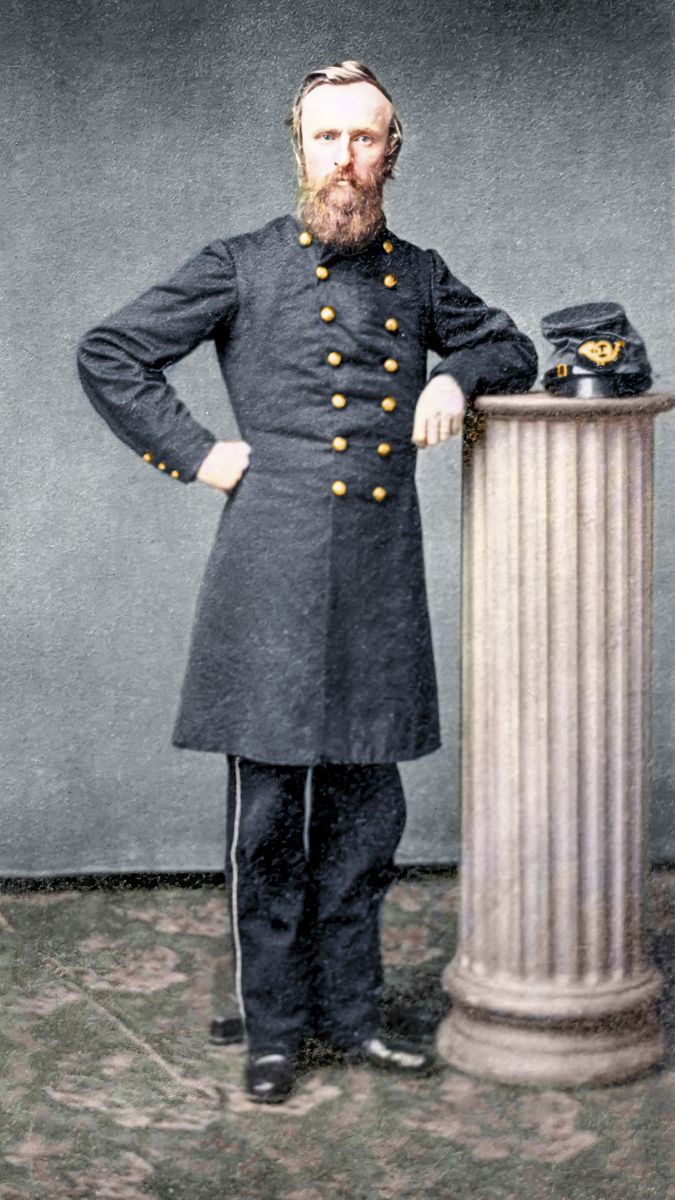
We Are As Good As Ten Thousand Battle of South Mountain – Part I “Here is a paper with which, if I cannot whip Bobby Lee, I will be willing to go home.” – U.S. Gen. George McClellan, Army of the Potomac On September 3, 1862, C.S. Gen. Robert E. Lee, Army of Northern Virginia, sent a message to Confederate President Jefferson Davis, that he intended “to enter Maryland.” Within ninety days of assuming the command on June 1, Lee had driven U.S. Gen. George McClellan’s Army of the Potomac away from the Capital of the Confederacy, Richmond, Va., to the outskirts of Washington D.C. Aware that his men did not have the strength to defeat Washington’s formidable fortifications, Lee looked North. Maryland’s crops would soon be ready to harvest. More to the point, Lee hoped for a victory on Union soil. By September 7, all of Lee’s men had crossed the Potomac. U.S. Col. Rutherford B. Hayes, 23rd Ohio, had spent September 7 marching from Washington to Maryland as part of Col. Eliakim Scammon’s brigade, Kanawha Division. The future U.S. President was beloved by his men due to his diligence in looking out for his soldiers. Into camp rode his IX Corps. Commander Gen. Jesse L. Reno. Reno was “in towering passion because some of the men were taking straw or wheat from a stack.” Reno objected to pilfering in a loyal state and asked for the men’s colonel. Hayes, a civilian lawyer, presented himself. During the conversation, Reno had placed his hand on his pistol. The Ohioans began to handle their arms. Hayes, who appreciated Reno’s “gallantry and skill,” had defused the situation until he remarked, “‘Well, I trust our generals will exhibit the same energy in dealing with our foes that they do in the treatment of their friends.’ He asked me, as if offended, what I meant by that. I replied. ‘Nothing—at least, I mean nothing disrespectful to you.’” The men cheered as Reno rode away. Reno was offended. “He spoke to Colonel [Hugh] Ewing of putting colonels in irons if their men pilfered!” On September 9, Lee met with his generals. Blocking Lee’s ability to establish supply lines through the Shenandoah Vallely, Va., were 3,000 Federal troops at Martinsburg and 10,000 men at Harpers Ferry. Lee divided his force into five parts to capture the Federal garrison at Martinsburg and “intercept such as may attempt to escape from Harpers Ferry.” Lee issued Special Order No. 191 detailing his operational plan, including the location of every command. On September 13, a signed copy of Lee’s orders was found by Federal soldiers in a meadow. The “Lost Dispatch” was wrapped around three cigars in an envelope addressed to C.S. Gen. Daniel Harvey Hill. The envelope was quickly delivered to U.S. Gen. George McClellan, Army of the Potomac. McClellan proclaimed, “Now I know what to do!” He told Gen. John Gibbon, “Tomorrow we will pitch into his centre, and if you people will only do two good, hard days’ marching, I will put Lee in a position he will find hard to get out of.” McClellan divided his army into three wings to march through the passes up to South Mountain, Md,. on September 14 for a big fight on the 15. On September 14, at 6 a.m., Gen. Jacob D. Cox accompanied Scammon’s 1,500 men with Capt. James McMullin’s, Ohio Light Artillery, 1st Battery, six 10-pdr. Parrotts leading the advance. They soon came across Col. Augustus Moor, Cox’s brigade commander, who had been captured two days earlier. Moor, learning of their destination, involuntarily exclaimed, “My God! Be Careful!” Honor-bound by the terms of his parole, Moor turned away, saying nothing more. Cox immediately returned for his Second Brigade and sent warnings to expect trouble on the mountain. On September 14, before the Battle of South Mountain,
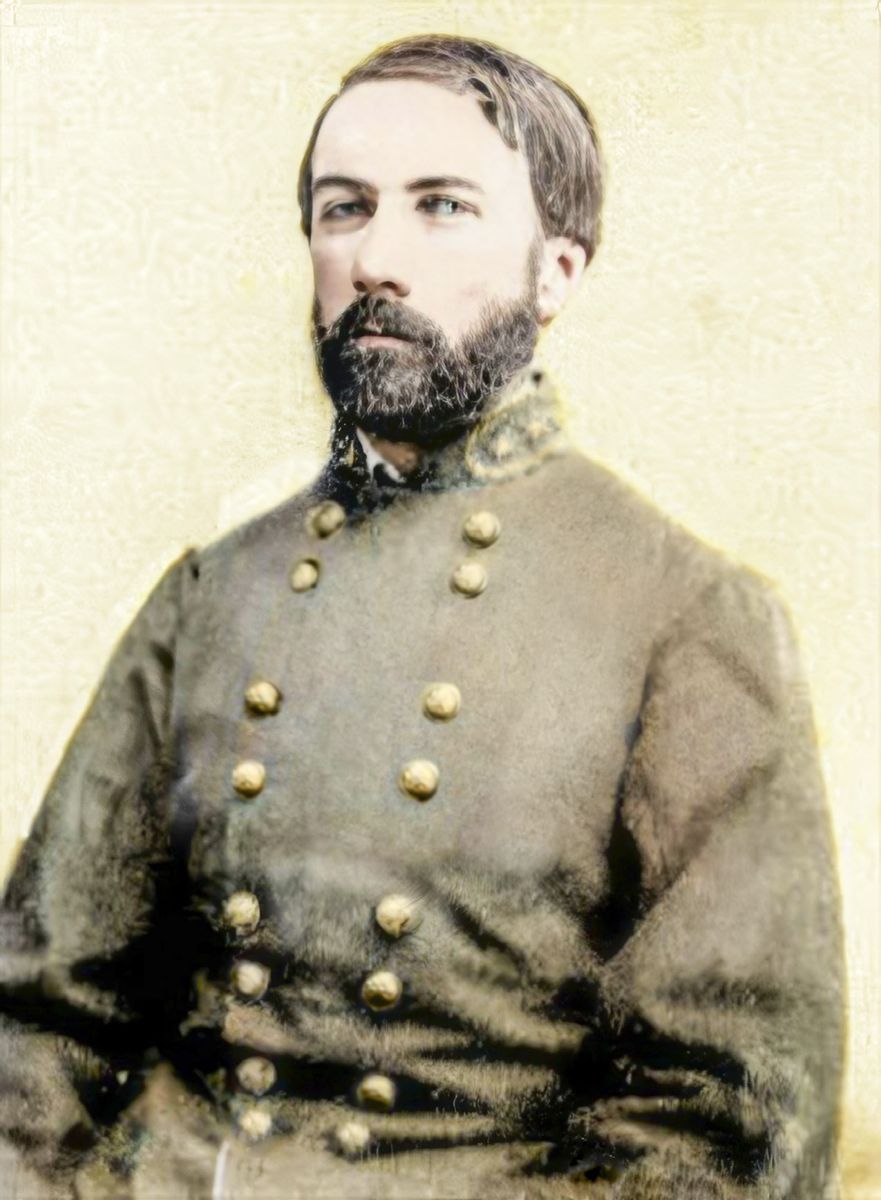
Md., began, Hill climbed the mountain’s summit and saw the Federal’s “marching columns extended back far as eye could see…many of the troops had already arrived and were in double lines of battle, and those advancing were taking up positions as fast as they arrived. It was a grand and glorious spectacle, and it was impossible to look at it without admiration.” Hill’s plan was to use his 2,300 men to delay McClellan until he could be reinforced. Hill sent “the most fearless man I ever knew,” 31-yearold Gen. Samuel Garland to hold Fox’s Gap. Garland had graduated from Virginia Military Institute in 1849, and pre-war, the successful lawyer had been active in the state militia. Garland deployed his 1,100 men off the Old Sharpsburg Road over 1,300 yards. Scattered through the line were Capt. John Pelham’s two guns from Col. Thomas Rosser’s, 5th Va. Cavalry, and Capt. James Bondurant’s, “Jeff Davis Artillery,” two 12-pdr. Napoleon’s and two 3-inch rifles. Bondurant’s gunners began lobbing shells at Scammon’s men marching up Old Sharpsburg Road’s steep ascent. Instead of continuing the two miles to the summit, Scammon turned off onto the loop road to sweep around the Confederate right and rear. At 9 a.m., Hayes’s 23rd
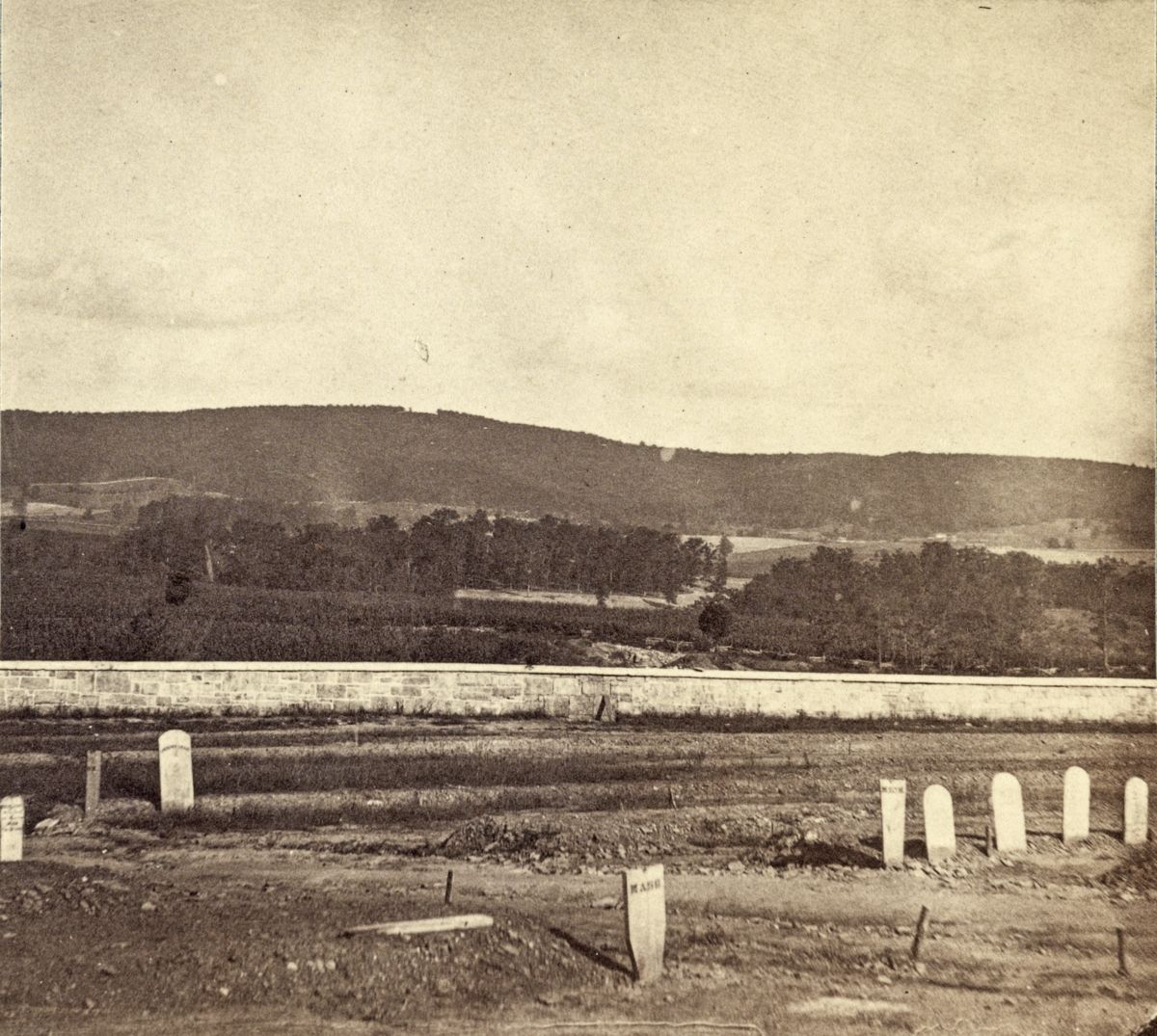
Ohio led the attack up the mountainside through the thick wooded terrain. Garland ordered an entire regiment to support his skirmishers. The Ohioans “pushed through bushes and rocks over broken ground towards the enemy; soon received a heavy volley, wounding and killing some.” Fearing his line may break, Hayes yelled, “Now boys, remember you are the TwentyThird and give them hell! In these woods, the Rebels don’t know, but we are ten thousand; and… we are as good as ten thousand, by God!” Hayes ordered a charge, pushing back the Confederates. The Confederates reformed and halted the Federal advance. The Ohioans fought their way to a stone wall. Rosser’s dismounted cavalry with Pelham’s two guns joined the attack on the Federals. Hayes believed their only chance was another charge. As he gave the command, Hayes felt a “stunning blow.” He had been shot in his left arm above the elbow. Fearing a cut artery, Hayes had a soldier tie his handkerchief above the wound. Weak and sick in the stomach, he sank to the ground. Hayes continued to direct the 23rd while in terrible pain and heavy fire hitting the ground around him. He ordered a company to wheel backward to face the threat, leaving Hayes between the two lines of battle, where he had a “jolly and friendly” talk with a wounded Confederate soldier lying nearby. An attempt to retrieve him renewed the heavy fire. Hayes ordered them back, “telling them they would get me shot and themselves too.” Eventually, Hayes was brought back through the lines and taken by ambulance to Middletown. Known for leading from the front, Garland rode over to where the firing was the heaviest to watch the battle near Ruffin.
CivilWarNews.com Ruffin asked, “General, why do you stay here? You are in great danger.” Garland responded, “I may as well be here as yourself.” Ruffin replied, “No, it is my duty to be here with my regiment, but you could better superintend your brigade from a safer position.” Before Garland could reply, Ruffin was shot in the hip. Garland turned in his saddle to give an order and was mortally shot in the chest. Col. Duncan McRae, 5th N.C., assumed brigade command. Garland would be the first general to die at Fox’s Gap that day. According to Hill, Garland was “pure, gallant and accomplished Christian soldier … who had no superiors and few equals in service.” Soon it would be the Federals’ turn to lose a highly regarded general. Sources:
Koptak, John David. The Battle of
South Mountain: The History Press, 2011. Sears, Stephen W. Landscape Turned Red: The Battle of Antietam: First Mariner Books, 2003 Williams, Charles Richard. (Ed.) The Diary and Letters of Rutherford B. Hayes, Vol. II: Ohio State Archaeological and Historical Society, 1922. Hill, Daniel H. “The Battle Of South Mountain, Or Boonsboro. Fighting For Time At Turner’s And Fox’s Gaps.” In Battles & Leaders of the Civil War. Vol. 2 New York: The Century Company, 1887–1888. Stephanie Hagiwara is the editor for Civil War in Color.com and Civil War in 3D.com. She also writes a column for History in Full Color.com that covers stories of photographs of historical interest from the 1850’s to the present. Her articles can be found on Facebook, Tumblr, and Pinterest.