
Vicksburg 160th Celebrations to Observe the Union Victory were Memorable
By Professor Earnest Veritas · Originally published September 2023 · pp. 1–5
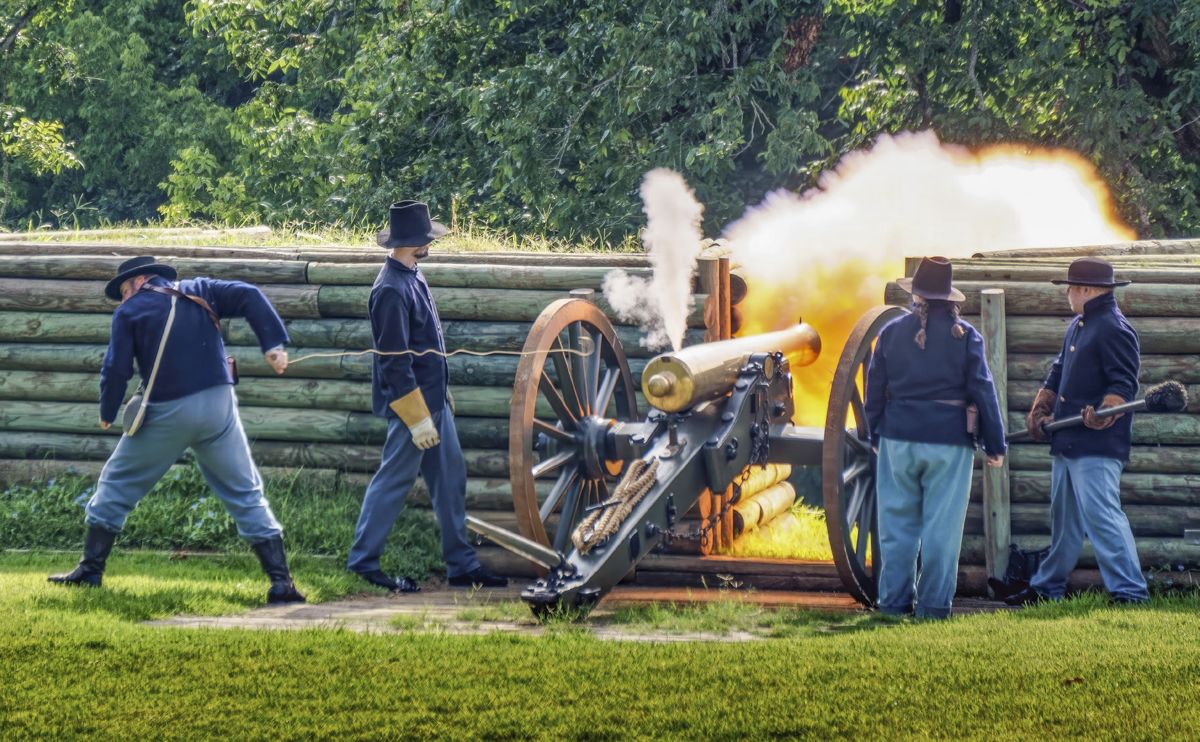
Vicksburg 160th Celebrations to Observe the Union Victory were Memorable By Professor Earnest Veritas Special Correspondent to – Western Theater – The 160th anniversary of the surrender of Vicksburg, Miss., by General John C. Pemberton to General Ulysses S. Grant was observed on July 1st and 2nd, last, at the National Military Park with the paradox of roaring cannon, contrasted with quiet talks from the soldiers camped on the battlefield around the Shirley house in the sweltering heat of a Mississippi July. Visitors to the park that weekend were also treated to the dynamic story of how the siege came to a quick and merciful end without a final assault on Confederate lines as was planned. That very brief sequence of events was told in the visitor center auditorium in presentations from the two opposing commanders, Gen. Ulysses S. Grant (Curt Fields) and John C. Pemberton (Morgan
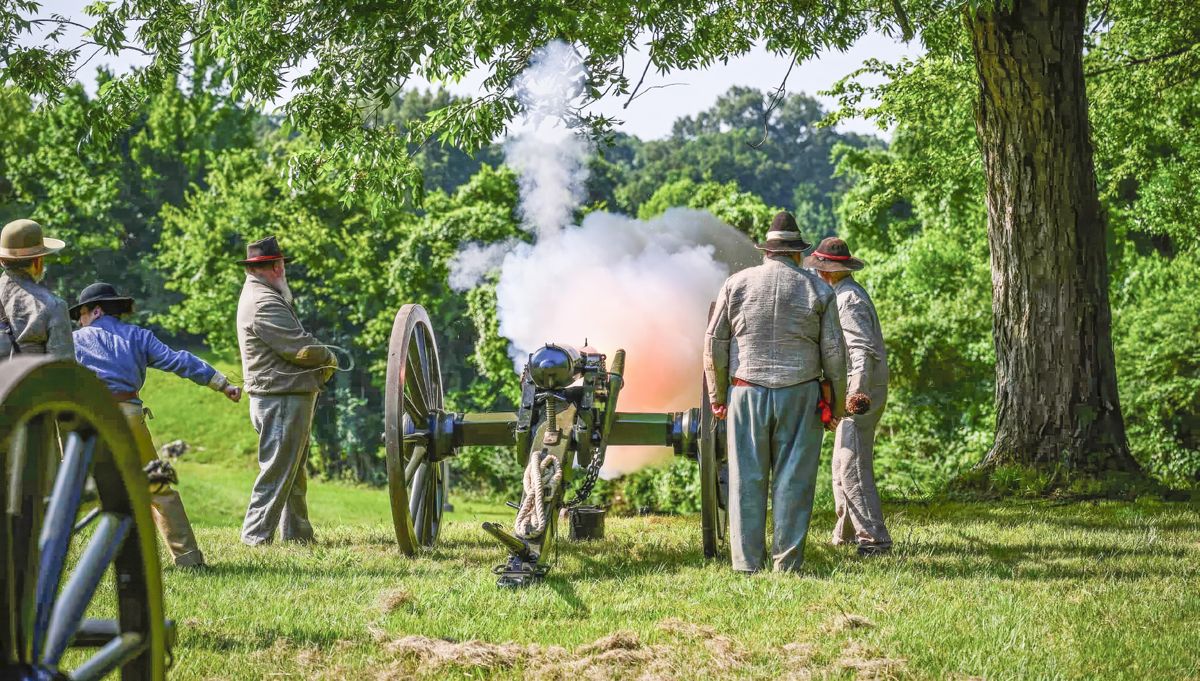
Gates). The generals came together and explained how the surrender was worked out in less than one day in their presentation “Vicksburg: Just 24 Hours,” which was given in the morning and afternoon of both days. Cannon firing demonstrations were given throughout both days by a Federal gun crew at the visitor center and a Confederate gun crew at the 2nd Texas Lunette (at tour stop 12). They had alternating schedules to accommodate the visitors to the park for the 160th observations. At the visitor center, the Federal gun crew fired at 9, 10, and 11 a.m. on Saturday and Sunday. The Confederate gun crew could be viewed firing their cannon at Tour Stop #12 (2nd Texas Lunette): 9:15, 10:15, and 11:15 a.m. on Saturday and Sunday. The Confederate crew was visiting from Kennesaw Mountain National Battlefield. The hardy troops of the 45th Illinois Infantry were encamped on the grounds around the Shirley House on the battlefield. Their encampment was authentic and most impressive. While they were involved in normal camp-life duties, they talked with various visitors to the park that weekend. In an overview of the Vicksburg
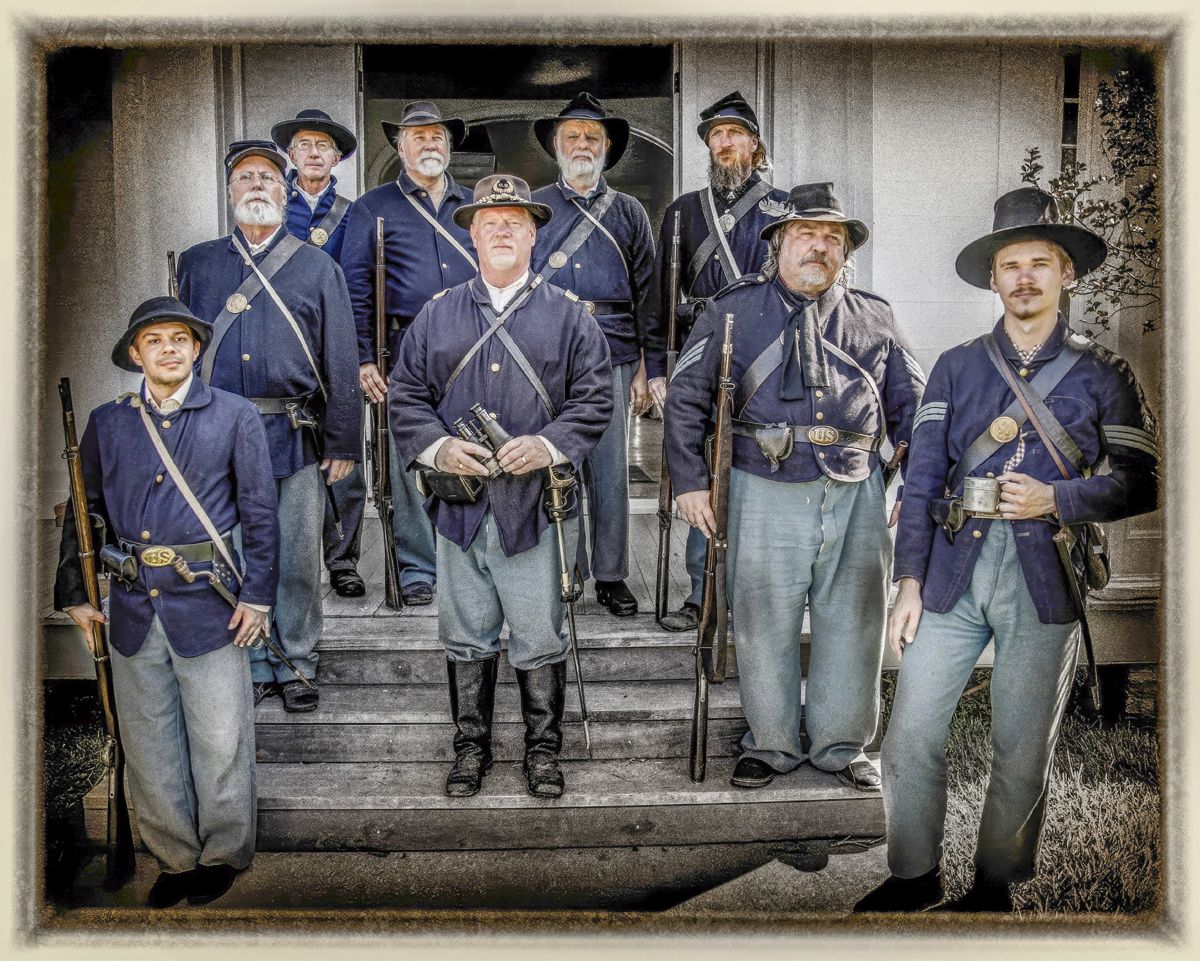
Campaign, a soldier of the 45th explained the importance of Vicksburg, the campaign from 1862–1863, emphasizing the role of the common soldier in camp and combat. They talked of the particular uses and importance of the equipment they carried as they showed their weapons, uniforms, backpacks, blanket rolls, and other equipment they used. A soldier spoke of the challenges and hardships faced by Union soldiers as they besieged Vicksburg. Several soldiers talked about the typical rations they were issued and demonstrated methods for cooking. Some of the 45th talked about the June 25th mine explosion at the 3rd Louisiana Redan and the desperate attempt to break through the Confederate lines, emphasizing the role of the 45th Illinois in that battle. Doug Baum brought his Texas Camel Corps to the park for both days of the anniversary observation to represent Old Douglas, the vaunted mascot of the 43rd Mississippi Infantry.
Doug had two camels available for the young (and not so young) visitors to admire, pet, and look at up close. Doug also talked about the story of Old Douglas, the Camel mascot of the 43rd Mississippi Infantry. Douglas was a hold-over from the 1850’s Texas Camel Experiment. During the War, he carried the regimental band instruments and other camp equipment for the 43rd Mississippi. Sadly, Douglas was killed by a sniper while at Vicksburg. He was buried in the old city cemetery. For an added treat for visitors to the park, Generals Grant and Pemberton spent time conversing on the famous ‘Surrender Knoll’ where they were on July 3rd, 1863. For more information about Vicksburg National Military Park, visit www.nps.gov/vick/ index.htm. Morgan Gates is a licensed Vicksburg battlefield guide and may be reached on his Facebook page: Morgan Gates. One may also contact him directly through the park. Also, visit Friends of Vicksburg National Military Park and Campaign. Professor Veritas would like to thank the Vicksburg National Military Park staff and the park website for the valuable assistance of both for information in the preparation of this report. “Simply put: tell the simple truth, simply.” – Professor E. Veritas
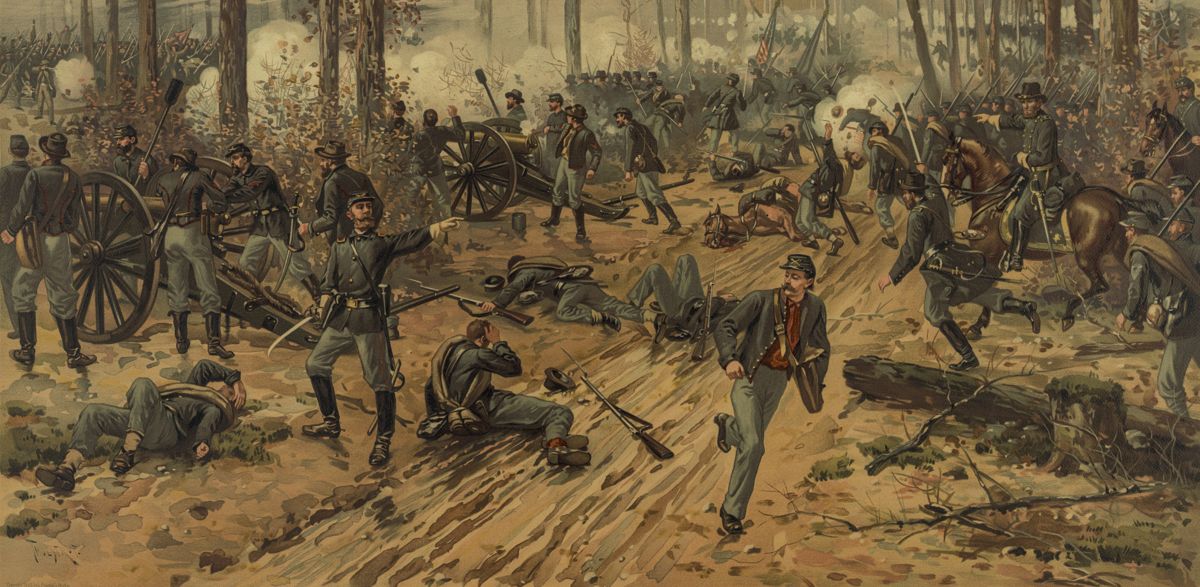
About the Surrender The Surrender at Vicksburg, which took place during the American Civil War, was a pivotal event that significantly impacted the outcome of the conflict. It marked a turning point in the war and had profound implications for the Union’s ultimate victory. Vicksburg is located on the bluffs overlooking the Mississippi River, was a strategic stronghold for the Confederacy. The city’s location made it a critical point of control over the river, and its capture became a top priority for the Union forces. General Ulysses S. Grant was determined to take Vicksburg as part of his broader plan to gain control of the Mississippi River and split the Confederacy in two. The siege of Vicksburg began in May 1863 and lasted for over six weeks. The Confederate forces, led by General John C. Pemberton, held out bravely, but they were ultimately overwhelmed and surrounded by the Union army. The relentless bombardment and lack of supplies took a toll on the Confederate defenders, leading to their eventual surrender on July 4, 1863. The fall of Vicksburg was a significant blow to the Confederacy. It effectively cut off their access to the Mississippi River, severing vital supply lines and dividing the Confederacy geographically. This victory also boosted Northern morale and solidified General Grant’s reputation as a skilled military leader, eventually leading to his promotion to Lieutenant General and command of all Union forces. The surrender at Vicksburg came one day after the Confederate defeat at Gettysburg, making the 4th of July a doubly joyous day for the Union. The combined victories at Vicksburg and Gettysburg bolstered Northern support for the war effort and further demoralized the Confederacy. In conclusion, the surrender at Vicksburg was a critical moment in the American Civil War. It significantly weakened the Confederacy and helped pave the way for the Union’s ultimate triumph. The capture of Vicksburg (Buddy Secor)
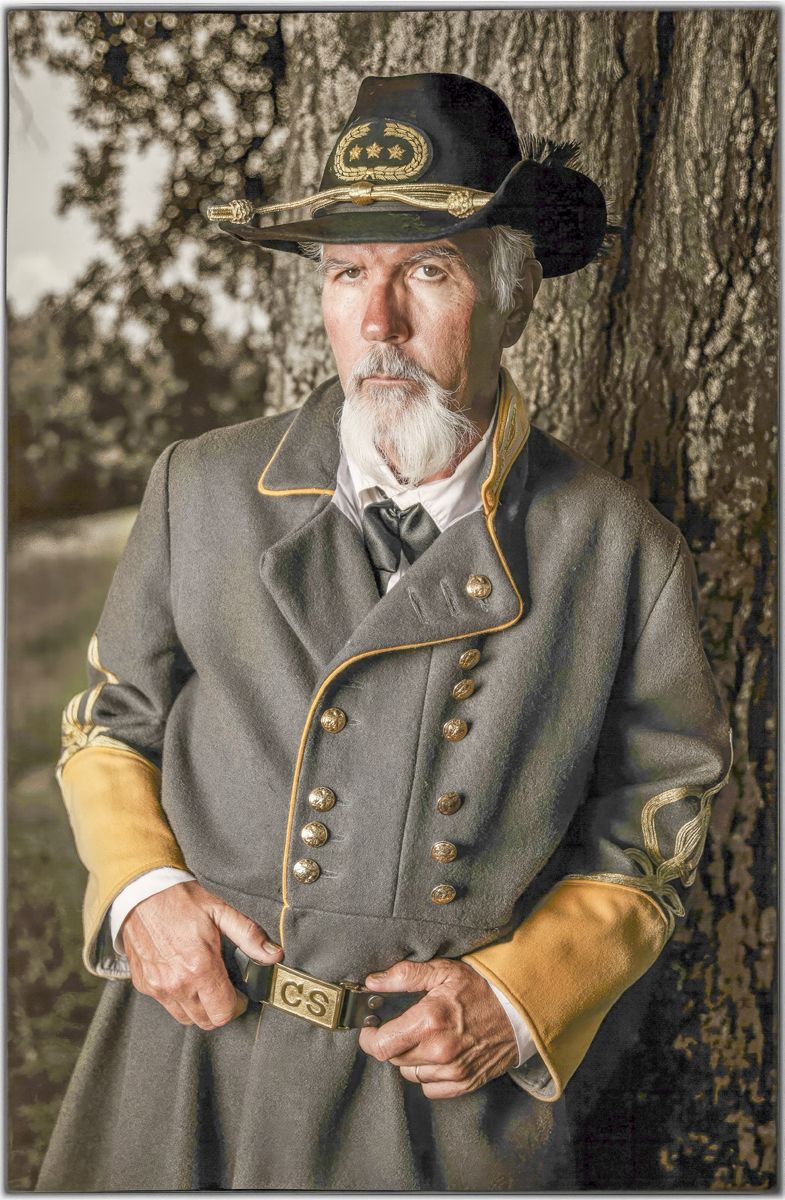
by General Grant’s forces was a strategic and symbolic victory that turned the tide of the war in favor of the Union.
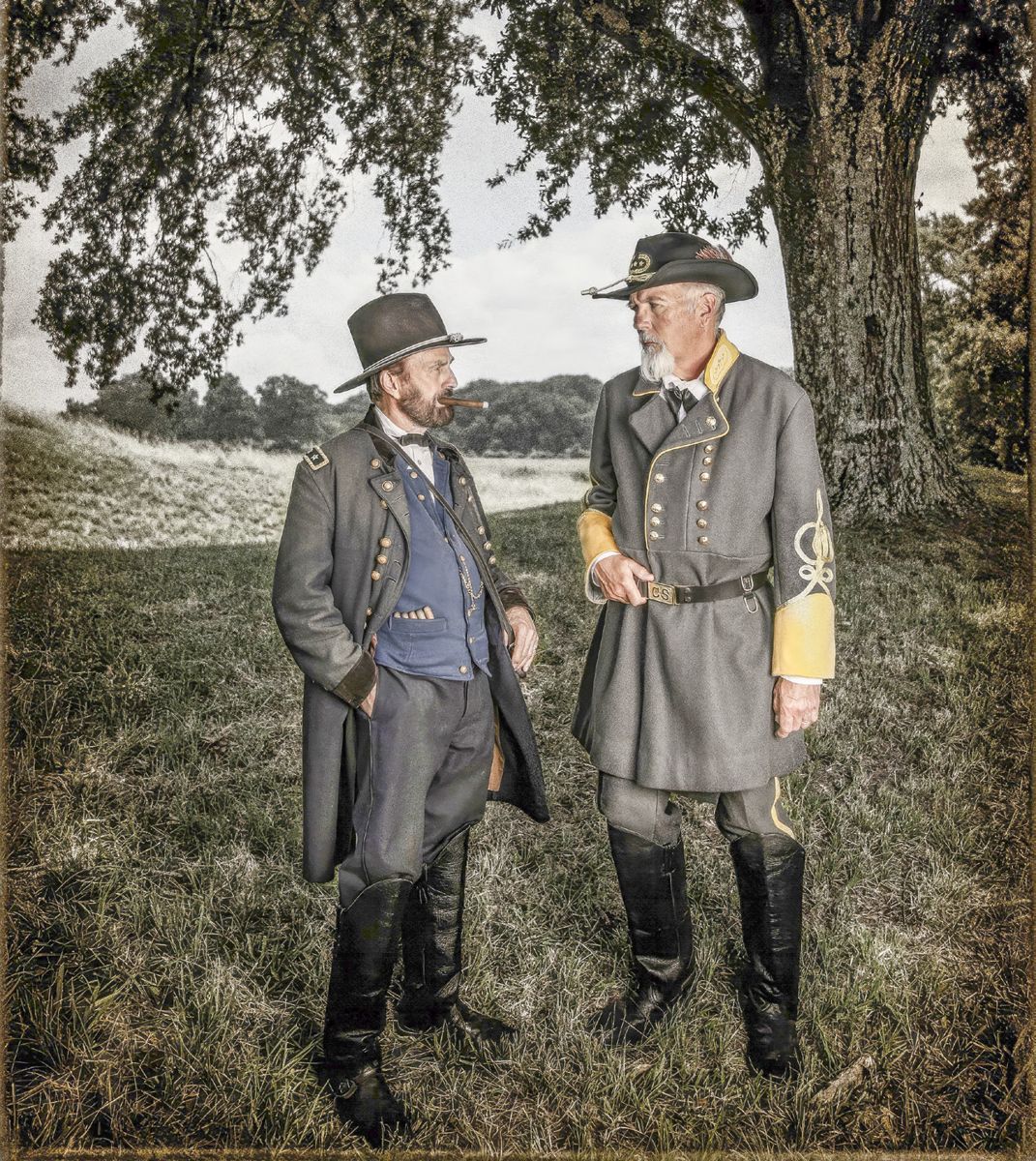
Grant at Vicksburg Union General Ulysses S. Grant led the assault on Vicksburg with the intention of gaining control of the Mississippi River and cutting off Confederate supply lines. The campaign was a challenging one, as the city was heavily fortified and protected by skilled Confederate forces under General John C. Pemberton. Grant’s troops initially attempted to take Vicksburg by direct assault, but they faced fierce resistance and suffered heavy casualties. Recognizing the difficulty of a direct approach, Grant shifted his strategy and decided to lay siege to the city. His forces encircled Vicksburg, cutting off its supply lines and subjecting its inhabitants to relentless bombardment. During the 47-day siege, both sides endured harsh conditions and constant danger. Civilians sought shelter in caves and endured food shortages, while soldiers on both sides faced the physical and psychological tolls of war. Despite the hardships, Grant’s determination and strategic acumen prevailed.
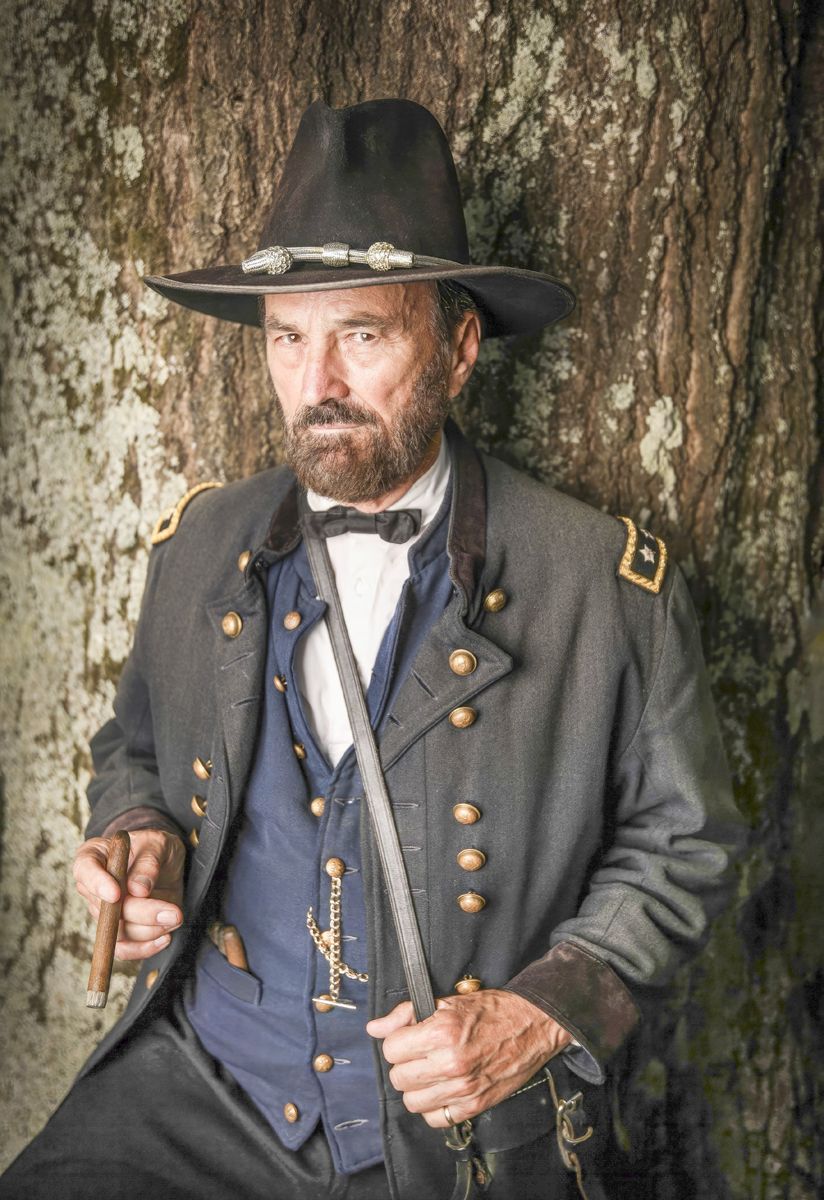
Pemberton at Vicksburg John C. Pemberton’s role at Vicksburg during the Civil War was significant, as he found himself in command of a crucial Confederate stronghold that held strategic importance in the Mississippi River region. Born in 1814, Pemberton was a West Point graduate and a veteran of the Mexican-American War, possessing military experience that would prove valuable during the impending conflict. In May 1863, Pemberton was appointed to command the Confederate forces at Vicksburg. He faced immense pressure from Union forces, led by General Ulysses S. Grant, who sought to gain control of the Mississippi River, cutting the Confederacy in two. The city’s high bluffs and formidable defenses made it a formidable obstacle for the Union army. Pemberton, however, faced numerous challenges during his tenure. He struggled to maintain morale among his troops, as they faced shortages of food, supplies, and ammunition. Additionally, his relationship with his subordinate officers was often strained, leading to communication issues and coordination problems within
CivilWarNews.com the Confederate ranks. During the 47-day Siege of Vicksburg, Pemberton’s men valiantly defended the city against relentless Union assaults. Despite their resilience, the Confederate forces were ultimately overwhelmed, and
Vicksburg fell to the Union on July 4, 1863. This pivotal loss was a severe blow to the Confederacy, as it not only granted the Union control of the Mississippi River but also boosted Northern morale and further weakened Southern resolve.
After the defeat at Vicksburg, Pemberton’s military career suffered a setback, and he was reassigned to less prominent roles for the remainder of the war. Following the Confederate surrender in 1865, he returned to civilian life and later moved to Virginia. John C. Pemberton’s legacy remains tied to his command at Vicksburg, where he faced enormous challenges and contributed to shaping the outcome of the Civil War.