
This And That
The War Before the War, Part 3: Captain Lee
By Gould Hagler · Originally published September 2023 · pp. 24–26
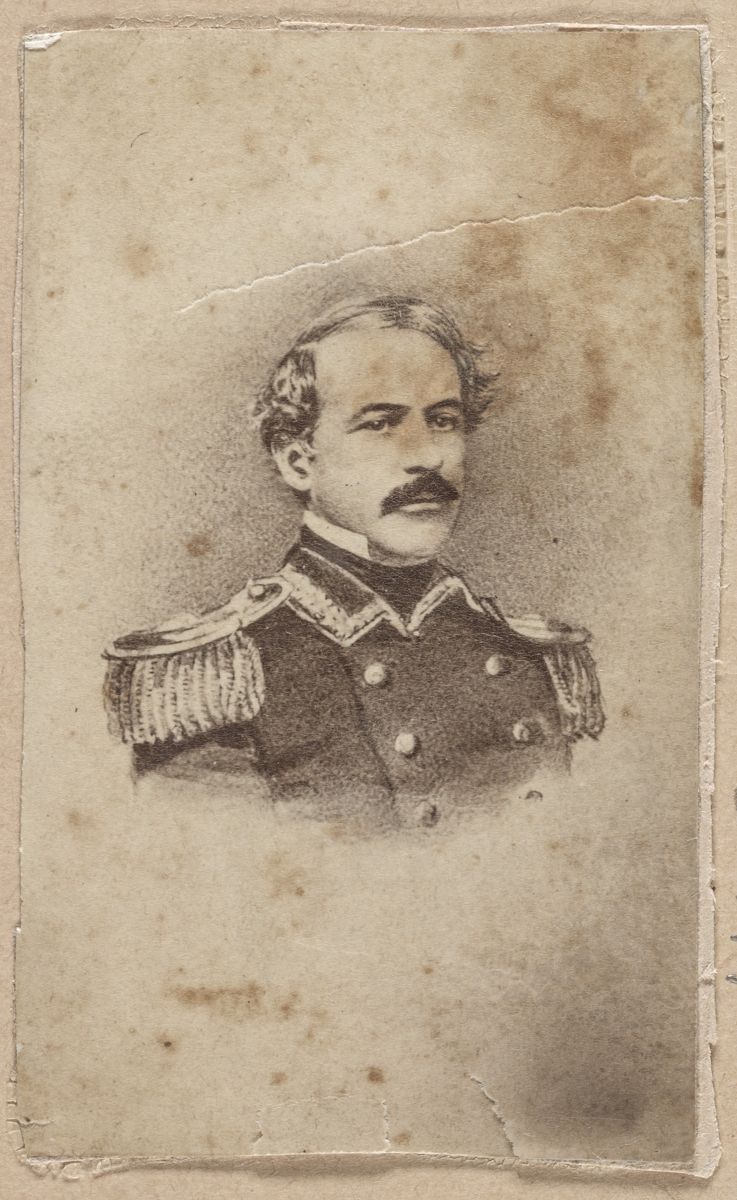
The War Before the War, Part 3: Captain Lee Robert E. Lee’s record in the Mexican War is probably better known than the records of other officers who were to win fame in the later internecine conflict. Douglas Southhall Freeman’s four-volume biography of Lee covers his subject’s experience in Mexico in detail, with five chapters and nearly 100 pages devoted to this phase of Lee’s career. Lee graduated from West Point in 1829, almost two decades before Thomas Jackson and
George McClellan, the subjects of the first two columns in this series. He held the rank of captain when the war began. Officers who were superior to Lee in Mexico were mostly out of the service by the time the next war commenced; those who were younger and lower in rank played a less prominent role in this war than did the future Confederate leader. Capt. Lee’s service in the Mexican War began in September 1846 when he arrived in San Antonio. Lee and the other engineers attached to the division commanded by Brig. Gen. John Wool made maps, improved roads and bridged streams used
by Wool’s men as they marched to the Rio Grande and beyond into northern Mexico. For the rest of the year and into the next these troops clocked several hundred miles marching to and fro over the engineers’ roads and bridges. However, they saw no combat. The theater had become quiet since Maj. Gen. Zachary Taylor’s victories at Palo Alto, Resaca, and Monterrey. However, rumors of trouble popped up from time to time. Once, acting upon intelligence of a nearby Mexican force with a threatening intent, Lee went off to reconnoiter. He found nothing more threatening than some shepherds and their flocks. Another major battle was to be fought in February 1847, at Buena Vista, but Lee and much of Taylor’s force would by then be transferred. They went south to join Maj. Gen. Winfield Scott’s attack aimed at the port of Veracruz and inland toward Mexico City. This move made military sense, and it also made political sense for Scott: the Veracruz route was a better way to Mexico City and possibly a better way to the White House as well. (Scott got Mexico City but Taylor got the White House.) The transfer presented a big opportunity for Lee. He was leaving a theater that would become a backwater for the center of the action under the Commanding General of the Army. He would become a (Library of Congress)
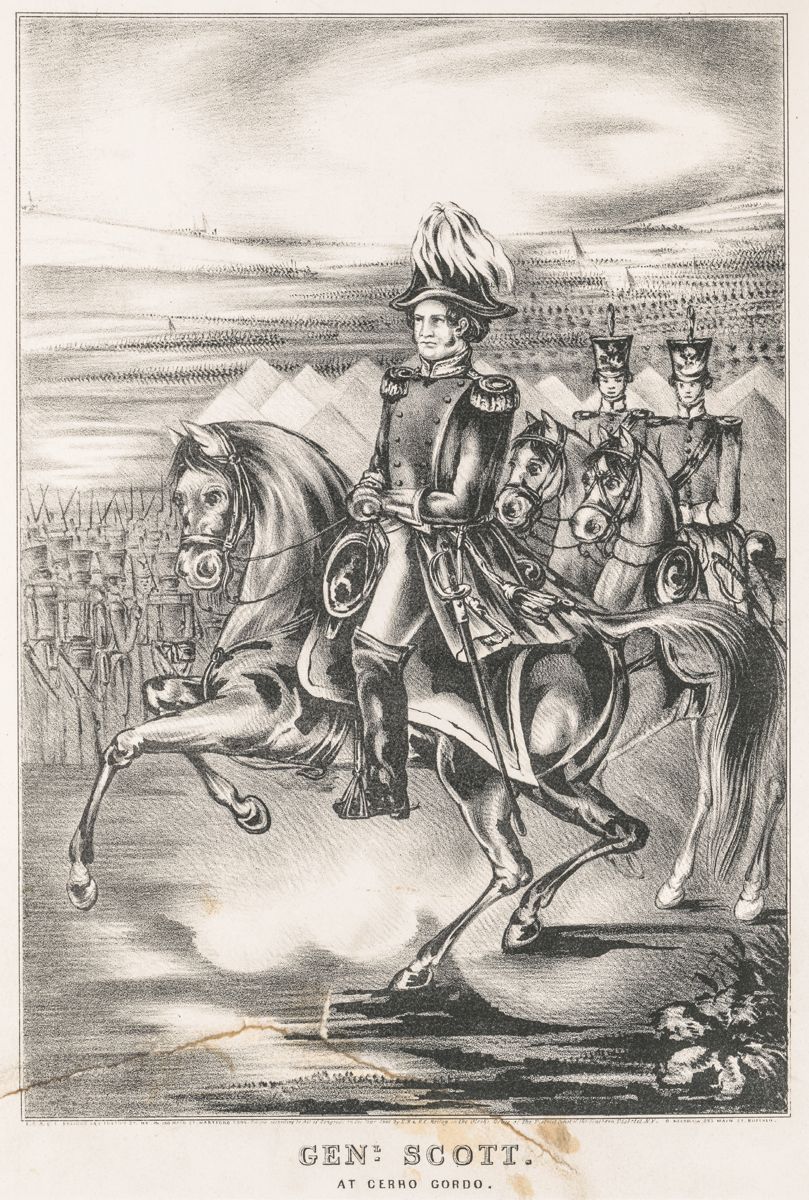
member of Scott’s inner circle and would play a significant part in the upcoming campaign. The landing at Veracruz was unopposed. Once ashore, Scott decided to take the fortified
CivilWarNews.com city by regular approaches. The work was therefore largely an engineering job. Freeman described the task and Lee’s role. Lee “had a hand in most of the work of the engineers, who laid off the lines, located the batteries, and directed the preparation of the platforms for the heavy ordnance.” Among his other duties Lee was assigned the work of siting the navy’s six large guns, each weighing in at more than three tons. On March 24, the defenders discovered the batteries just as they were ready to open. When the Mexicans began to shoot,
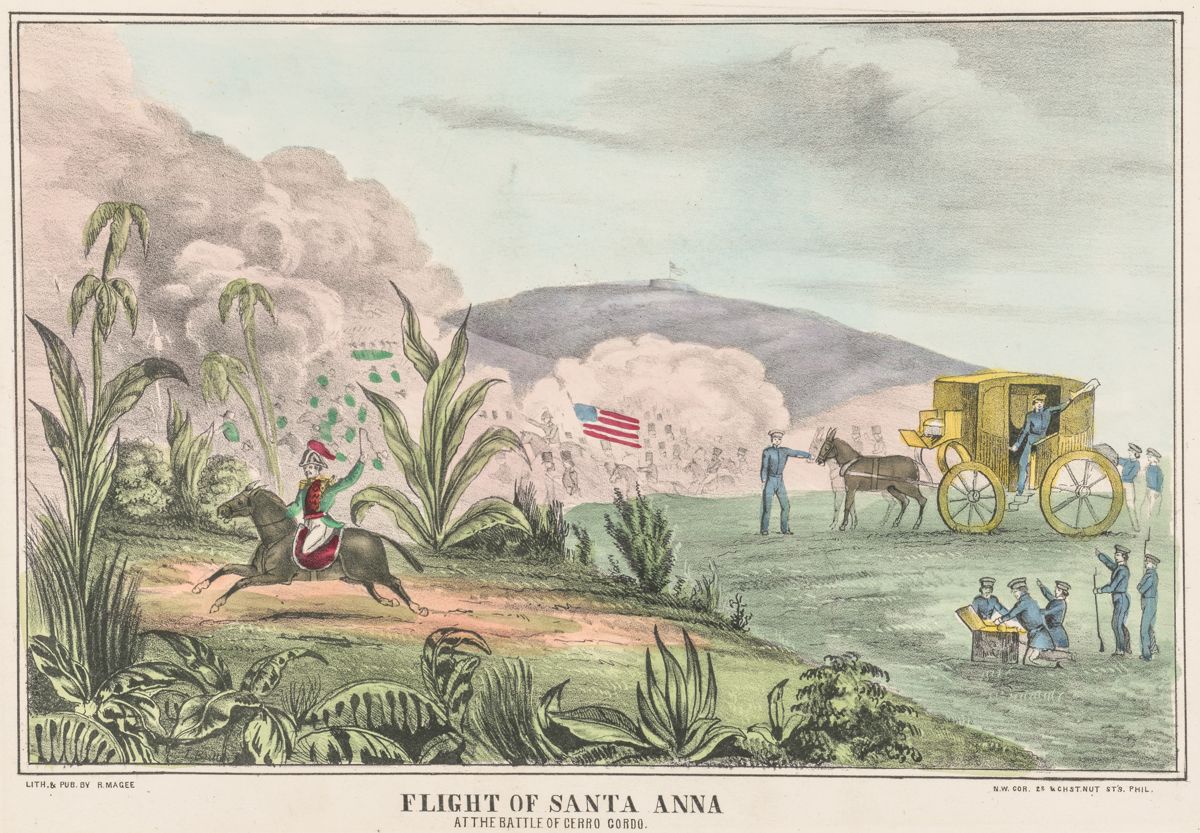
Robert E. Lee was in combat for the first time. The guns did the work in short order. The Mexican commander asked for a truce on the 26th and surrendered the following day. Moving west toward the capital, 250 miles distant, Scott’s army next encountered a Mexican force under caudillo Manuel López de Santa Anna. Santa Anna, with 8,000 men and 95 cannon, held a strong position blocking the National Road. A direct assault would be very costly, possibly disastrous. The Mexicans’ right flank, protected by steep bluffs and a river, was all but impregnable. Their left was also a strong position, but perhaps a way could be found to get at the enemy from this direction. Scott ordered a study of the terrain on this flank to find out. Lee would make a significant contribution to the major victory Scott’s forces won here, the Battle of Cerro Gordo. With other officers he scouted out the route around the enemy’s left on April 15. At one point Lee avoided capture by hiding under a log for several hours while Mexicans soldiers relaxed at a nearby spring. Then, groping his way through the dark, he returned to Scott’s headquarters with the necessary intelligence. The following day he led a work party to cut a trail suitable for infantry and artillery. On the 17th he led the attacking division to the jumping off point for the assault. That night he directed the placement of artillery on Atalaya Hill to support the infantry attacking Cerro Gordo on the 18th. While this attack was underway he guided a brigade which raced to block the Mexicans’ only escape route. Over 3,000 of the enemy were captured. Remnants escaped in disorder. “Santa Anna himself barely escaped on muleback,” wrote Freeman, “leaving his carriage, his headquarters equipment, his correspondence and money chest to fall in to the hands of the Americans.” Freeman wrote that Scott was much impressed by the 40-yearold captain and afterwards “leaned more and more on him.” After Cerro Gordo, the army paused in Puebla, waiting for supplies and reinforcements, before resuming the march to Mexico City. What lay ahead for the invaders as they marched toward the objective? The job to find out about the approaches to Mexico City was given to the chief topographical engineer, Maj. William Turnbull, and Capt. Lee. Gathering information from travelers and local residents, Turnbull and Lee produced a serviceable map for the commander’s use as he weighed his options. Scott, believing that a direct approach from the east would be extremely difficult, directed the two officers to make a careful investigation of the southern approaches to the city. This would be Scott’s choice, and this would be another opportunity for Lee to contribute substantially to the army’s success. The approach from the south, though preferable to the other option, nevertheless presented a challenge. The main road, protected by artillery, ran along a narrow passage between two lakes. Further to the enemy’s right the way was blocked by a vast lava field, the Pedregal. Could an army pass through the Pedregal and find a better route into the city? Scott sent Lee to find out.
A pick ax of the type used in the Mexican War for such tasks as cutting roads through lava fields. Originally in the Beverly DuBose Jr., Collection. Won as a door prize by Gould Hagler.
Lee played a key role in this important maneuver by which the U.S. force again flanked the enemy and avoided the bestdefended road. On August 18 Lee led a reconnaissance force into the Pedregal. He ascertained that the route, though difficult, was feasible. At dawn on the 19th Lee went in again, this time with a team of engineers and 500 workers drafted from the infantry. As the work party improved the narrow path, infantry and artillery followed. In the next 36 hours Lee would cross the lava field three times, twice in the dark and with virtually no rest, overseeing the road work, bearing messages to Scott and guiding troops to the far end of the unearthly landscape. While this route was better than the narrow passageway between the lakes, it was defended by infantry and artillery. The U.S.
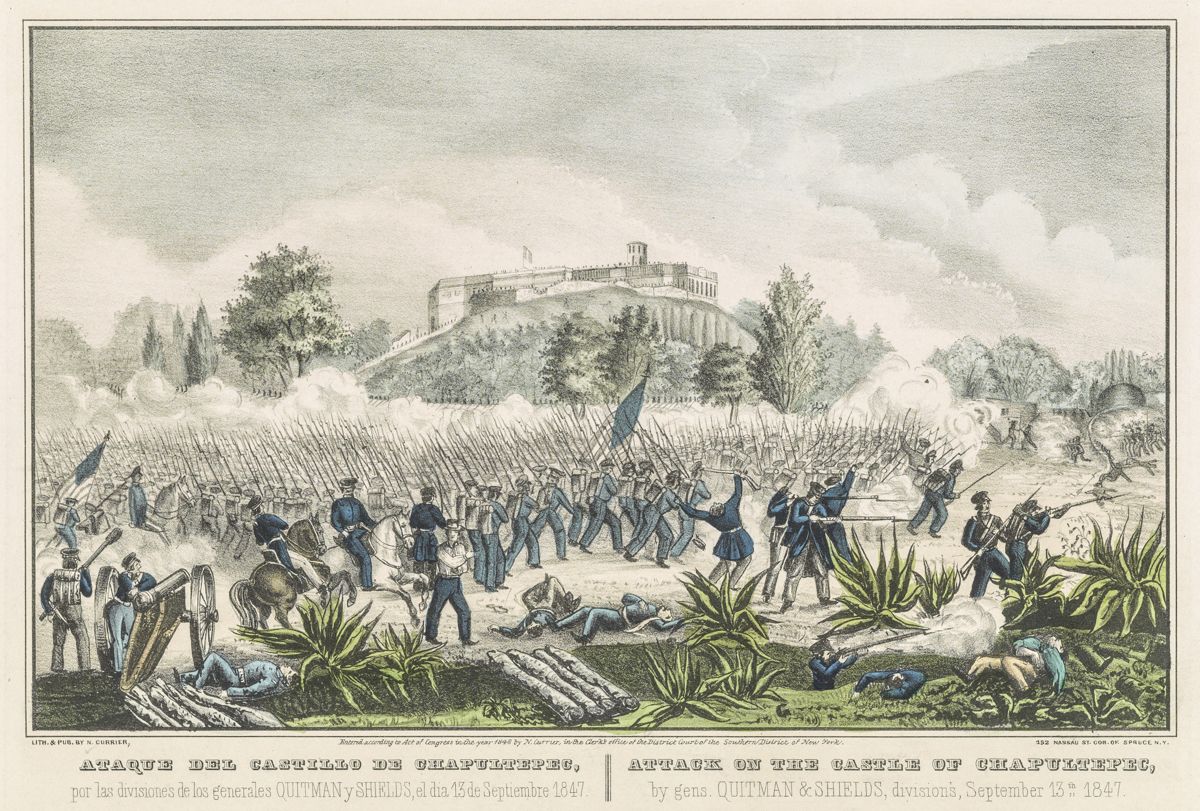
forces had to fight to get through. In addition to all else he had done, Lee was in the three engagements fought in the Pedregal and on the roads beyond. In Scott’s report, Lee was cited for his “exceedingly valuable services rendered throughout the whole of these operations.” Capt. Lee would soon be Col. Lee, as later he was breveted lieutenant colonel, as of August 20. The movement around the Mexican right had forced another retreat, but the fighting was not yet over. Between the Americans and the Mexican capital was Chapultepec Castle, a formidable position commanding two of the five causeways leading into the city from the south and west. After a council of war, Scott chose this line of attack. Lee and other engineers worked to bring up the heavy artillery, site the batteries and reconnoiter the approaches to the castle. Artillery bombarded the Mexican position on Sept. 12 and resumed on the morning of the 13th prior to the infantry assault. Chapultepec was the decisive battle of the campaign and the war. The castle quickly fell; its defenders retreated; American infantry and artillery pursued the enemy along the causeways up to the cities fortified gates. At 4 a.m. on the 14th a delegation from the city arrived at Scott’s headquarters to advise the commander that Santa Anna had evacuated the capital. There would be brief and sporadic fighting in the city after the surrender, but no organized or prolonged resistance. The battle, the campaign and the war were over. A truce was declared; treaty negotiations began; the American army occupied the now-peaceful city. Lee was not idle during this occupation. He busied himself with surveying, map making and related work, prudent activities considering that there was no certainty that the fighting would not resume. However, the treaty was signed in February and the war declared over in March 1848. Lee went home in the spring. After the Mexican War, Lee remained with the army, continuing duties as military engineer, serving as superintendent at West Point, and later moving to the cavalry. In 1859 he commanded the force that captured John Brown and put down the insurrection at Harpers Ferry, one of the sparks that ignited the conflagration that erupted in 1861. Gould Hagler is a retired lobbyist living in Dunwoody, Ga. He is a past president of the Atlanta Civil War Round Table and the author of Georgia’s Confederate Monuments: In Honor of a Fallen Nation, published by Mercer University Press in 2014. Hagler speaks frequently on this topic and others related to different aspects of the Civil War and has been a regular contributor to CWN since 2016. His email is [email protected].