
The Graphic War
The Graphic War — September 2023
By Salvatore Cilella · Originally published September 2023 · pp. 28–29
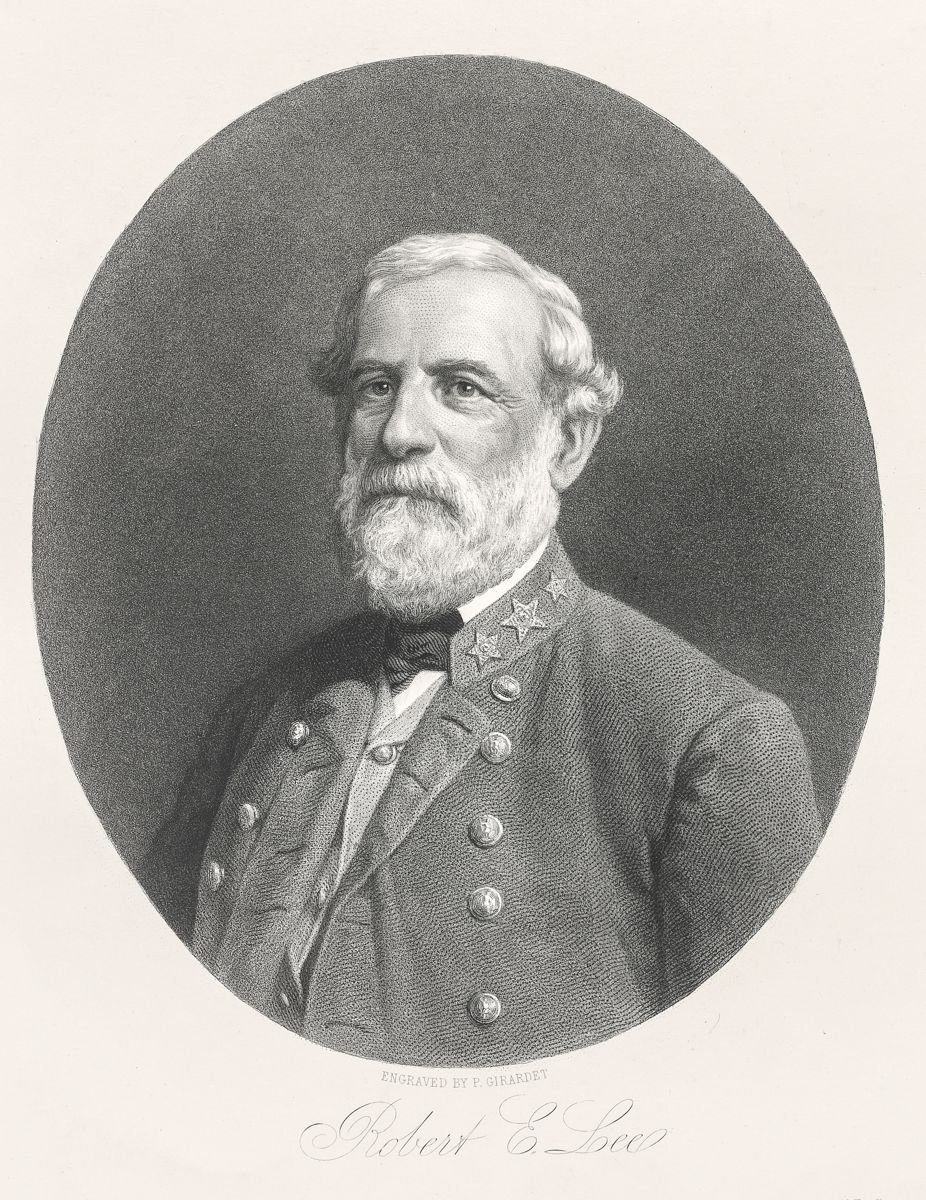
The Graphic War highlights prints and printmakers from the Civil War discussing their meaning and the printmaker or artist’s goals. Every century since the Middle Ages has seen human progress and technological advances. The 19th century was particularly both blessed and cursed with technical innovations. Warfare, probably more than any other phenomenon, produced changes that forever changed the way it was waged. Consider that the Federal government’s decision to replace the long-relied-upon flintlock musket with the Model 1841 Mississippi Rifle. In 1945, Just over 100 years later, the United States dropped the first atomic bombs. Advances in medical practice and procedures began to extend life spans. In the print world, the 1793 invention of the lithographic process competed with engraving and etching as a means of producing cheaper and cheaper images. Throughout the 1800s, it vied with a newfangled technology called the daguerreotype process. The two processes, print making and photography, on their two separate tracks, were accelerated by the time the American Civil War began. The American public hungered for news and graphic images of the war being waged by their sons, husbands, fathers and brothers. Photographers and print makers responded to the challenge. Major lithography firms, particularly in large, northern cities saw hundreds of images of war scenes, portraits of generals and political leaders, and sentimental images, roll off their presses. At the same time, small hamlets all over the country witnessed the proliferation of countless photography studios ready, willing, and able to capture your likeness for the enjoyment of family and future generations. Soldier boys and generals lined up at famous or now-forgotten photographic establishments to sit for their portraits for posterity. At first the south was no exception. Two Northernborn daguerreotypists in the new Confederacy were George W. Minnis (1819–1877) and Daniel Cowell (1831–1890). Pennsylvanian Minnis started out in Petersburg where he was active from 1847 to 1861 and Richmond from 1852 to 1861. Cowell was active from the 1850s through the 1880s. He began in Baltimore, resettled in Richmond in 1860, and ultimately settled in New Haven Connecticut in 1875. He was the former head operator at Whitehurst’s Daguerrean Gallery in Baltimore.1 Their two most famous sitters were none other than Jefferson Davis and Robert E. Lee. Davis had just turned 53 in June 1861 when he made his way to the new Confederate capital of Richmond. “Davis posed for two portraits during his visit to Minnis and Cowell. (Visit https://tinyurl.com/mtkxk4d7) One view pictures him in a rather somber posture, wearing a dark jacket, light vest, and white shirt with high collar. His loosely knotted dark tie rests slightly askew. The second image shows the tie tight and straight. This view became the engraving on the banknote.”2 It is unknown when, exactly, Lee sat for his photo. Civil War print experts Mark Neely, Harold Holzer, and Gabor Boritt estimate 1862 or ‘63. They call it “One of the most frequently engraved and lithographed Lee photographs” that was “routinely pirated by Southern photographers during the war and by Northern ones as well, notably Brady’s principal publishers, E. and H. T. Anthony, afterward.”3 The New York Public Library holds an original copy. The copy presented here is by engraver Paul Giradet (1821– 1893) after Minnis and Cowell (Figure 1); it is in the collections of the National Portrait Gallery, Smithsonian Institution. Others shamelessly copied it, including French engravers Alfred-Leon Lemercier and J. L. Giles (active 1861–1881). All were straight on copies.
Giles’ copy was probably the crudest. The most creative iteration of Minnis and Cowell’s work came after the war when artist John McRae and publisher John Kelly of New York issued a full-length portrait of Lee in 1867. (Figure 2). Typical of the fusion and confusion of photography and print making, the engraving credits the photographic studio of Mathew Brady for the original image with no mention of Minnis and Cowell. It portrays the heroic, “Marble Man” in high boots, immaculate uniform, sword to his left in a camp setting with the Confederate flag in the rear. Tents and mostly empty save one with soldiers seated at a planning table. Immediately behind Lee is a map prominently displaying the Potomac River. The gentle sweep of Lee’s tent is to his right. Artist McCrae flourished in New York City until his death in 1892 at age 77. His obituary credits the native of Edinburgh with learning the art of engraving before coming to America thirtyfive years earlier. “McCrae engraved portraits and subject plates, in both, line and stipple, for New York publishers of 1855. He executed several large and excellent subject plates for framing, and was working as late as 1880.”4 So what we have in McCrae’s engraving is a print taken from a photograph taken by Brady taken from a copy by Giradet or another engraver of Minnis and Cowell’s original photograph. Minnis faded from the historical scene. Cowell married a Southern woman but she died soon after they relocated to New Haven. Sadly, Cowell committed suicide at age 59. He left one adopted daughter along with five brothers and two sisters. He was buried in New Haven.5 Eventually photography crowded out lithography and engraving.
CivilWarNews.com Today, a comfortable hybrid or new synthesis called “photolithography” produces most of the material we use and see today in advertising, newspapers and special printing jobs. Endnotes: 1.
Directory of Baltimore Daguerreians, A-J compiled by Ross J. Kelbaugh, © Historic Graphics 1998, all rights reserved. Carte de visite by Minnis and Cowell of Richmond, Va. John O’Brien Collection. Copied in folder. September 2023. John O’Brien of Charles Town, W.Va., is a retired journalist and historian from the University of Connecticut, and a contributor to Military Images. The images reproduced here are from his collection. Mark Neely, Harold Holzer, & Gabor Boritt, The
Confederate Image: Prints of the Lost Cause, University of North Carolina Press, Chapel Hill, 1987. 64. David M Stauffer, American Engravers Upon Copper and Steel. Burt Franklin, New York, 1907. 167. h t t p s : / / w w w. f i n d a g r a v e . com/memorial/58001010/ daniel-t-cowell has edited Upton’s love letters 1868-70, Till Death Do Us Part: (Oklahoma University Press, 2020). He has edited the book From Antietam to Appomattox with Upton’s Regulars: A Civil War Memoir from the 121st New York Regiment (McFarland Press, 2023).
After 43 years in the museum field, Cilella devotes his time collecting American prints and maps and writing. His most recent books are Upton’s Regulars: A History of the 121st New York Volunteers in the Civil War (U. P. Kansas, 2009). His two-volume Correspondence of Major General Emory Upton, (U. of Tennessee Press, 2017), received the 2017–2018 American Civil War Museum’s Founders Award for outstanding editing of primary source materials. He
(Figure 2) Robert E. Lee. Portrait, John McRae, engraver; J. Kelly Pub., ca 1867. (Library of Congress)