
Col. Abraham Charles Myers, CSA and the Quartermaster Service of the Confederacy
By Lloyd W Klein · Originally published September 2023 · pp. 15–17
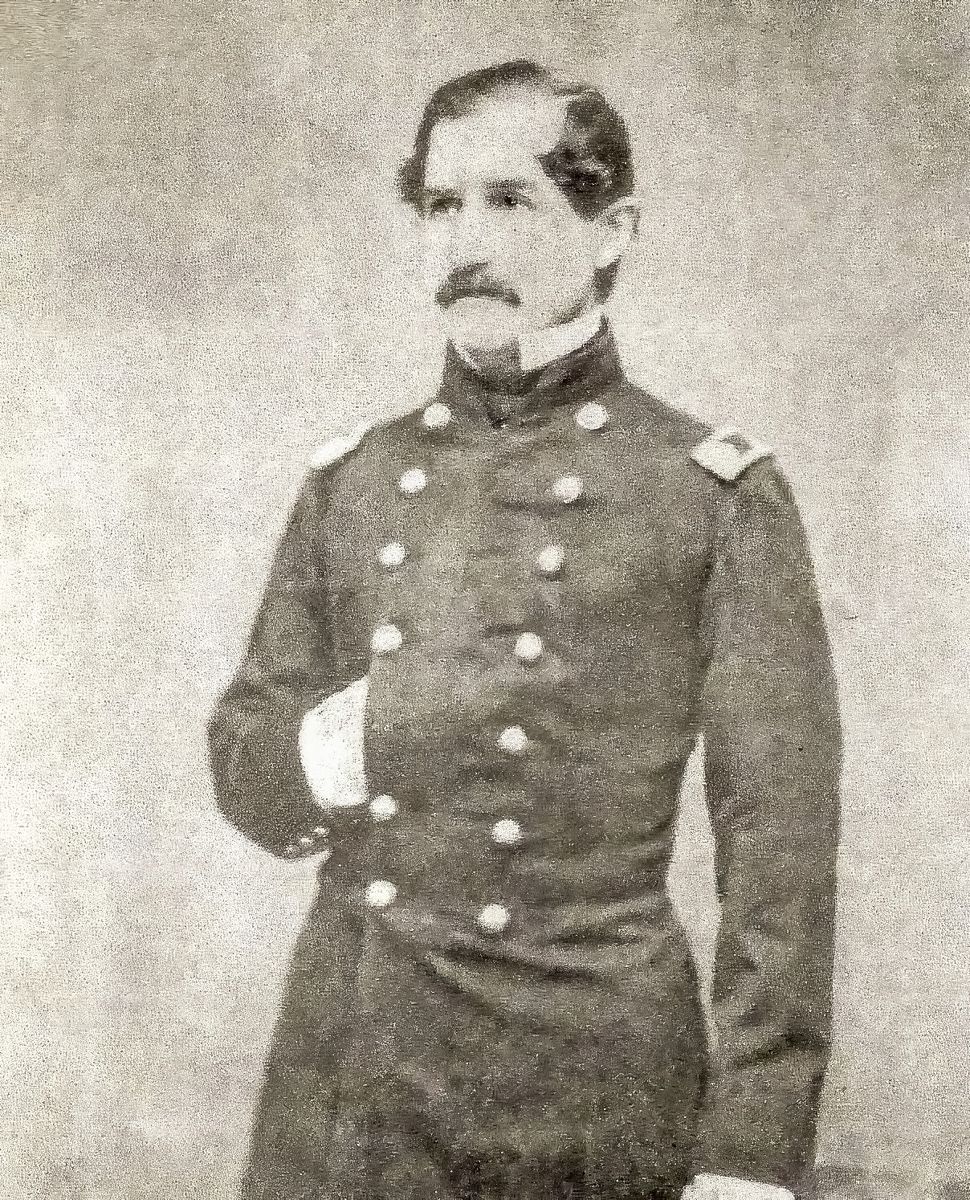
Col. Abraham Charles Myers, CSA and the Quartermaster Service of the Confederacy by Lloyd W Klein Abraham C Myers was the first quartermaster general of the Confederate States Army. He is not as well-known as Lee nor as illustrious as Stuart, but for the first three years of the War, no one had a more critical job, acquiring supplies necessary for the army and conveying them to the front. As the Quartermaster General, Myers was responsible for managing and supplying the Confederate Army with provisions, food, clothing, and equipment.
Background Myers was born in Georgetown, South Carolina on May 14, 1811. He was the son of Abraham Myers, a Charleston attorney who had fought in the South Carolina Militia during the Revolutionary War.1 Myers was accepted to the United States Military Academy and entered in 1828; after repeating his freshman year, he graduated in the 1833 class.2 During the Second Seminole War (1841–1842) he served as an assistant quartermaster in the United States Army, and was promoted to captain in 1839. He then was in service at Fort Moultrie. During the Mexican
War he was brevetted to lieutenant colonel for “gallant conduct,” which is highly remarkable for someone in the quartermaster service. General Taylor was so impressed that Myers rose to command all quartermaster operations in his army.3 From 1848 to 1861, he served in the Quartermaster Department under Quartermaster General Joseph E. Johnston. He held numerous important administrative posts in several forts throughout the Southern United States.4 Myers was the quartermaster for the Army’s Department of Florida5 in 1850; Fort Myers, Fla., was named after Abraham Myers.
The Confederate Quartermaster Department
The Onset of the Civil War In January 1861, Myers was stationed in New Orleans as chief quartermaster of the Southern Department.5,6 When Louisiana passed the Ordinance of Secession, several Federal officers immediately resigned. Maurice Grivot, Adjutant General of Louisiana, carrying out orders issued by Governor Moore, moved to sequester the remaining Federal property in the state.7 Myers, a secessionist and man of Southern heritage, promptly resigned his commission from the United States Army and personally turned the supplies over to Confederate authorities. He was immediately named Quartermaster General of Louisiana.8
Myers actively sought the position of Quartermaster General of the Confederate Army. After the Confederate Congress created the position of Quartermaster General, Myers made his official nomination February 15, 1862. It was passed February 17 (see figure 1).9 Myers served as the first Quartermaster General for the Confederate States of America. When the Confederate capital moved from Montgomery to Richmond, Myers’ bureau grew into an extensive administrative arrangement. The Quartermaster Bureau had its offices on the second floor at the southwest corner of 9th and Main Streets. The staff would eventually become the largest in the Confederacy’s supply administration, including 88 members. The role of the Quartermaster General was crucial in maintaining the logistics and efficiency of the Confederate military operations. Abraham Myers played a significant part in ensuring Confederate forces were adequately equipped and provisioned throughout the war. The CSA faced numerous challenges due to limited resources; blockades imposed by the Union impacted their ability to sustain their war effort. The Confederate government lacked nearly all manufactured production and had little capacity to generate them. Most industry and transportation facilities in the United States were in the North. Along with its lack of manufacturing, the South had to contend with a formidable blockade of its ports, which severely hampered the Southern economy. Myers, who like most Southerners thought the war would be a short one and that the South would prevail, did not initially believe these were insurmountable problems. His experience prewar southern postings and his prewar contacts were especially valuable. Myers sent agents into the domestic market, contracting with local manufacturers, and paying competitive rates. The department bought cotton, woolen cloth, and leather goods. He also established shops for making clothing, shoes, tents, wagons, and other equipment, and purchased livestock at market prices for as long as possible. During the first few months the South had sufficient supplies to cobble together a supply chain.10 A quartermaster department is responsible for creating a supply network for the army; in particular, the procurement, maintenance, and transportation of military materiel, facilities, and personnel. It is the functional bridge between economics and tactical operations. To operate optimally, the logistical network must connect the combat forces with the strength and capabilities of the society it defends. It is not merely an administrative task; it is an enterprise in itself that requires using technological and economic resources to overcome an enemy and sustains military forces by supporting its warfighting readiness.11 The South lacked the infrastructure required to produce and manufacture the required huge quantities of food, shoes, and clothing, and it further was incapable of transporting them long distances in a timely manner. The Confederacy also lacked the machinery and personnel to maintain its existing railroad network, or build new locomotives and railroad cars to replace equipment that wore out. Settling in for what would be a long war they had not planned for, the supply deficits developed into a crisis as the financial weakness of the country led to runaway inflation. Perhaps even more problematic than limited resources was the “pervasive ineffectiveness that characterized every aspect of Confederate administrative life, especially its logistical and supply arrangements.” Creating a new country with a new financial system, revamping its rail system, and developing an industrial capacity posed inconceivable and perhaps impossible problems for a state oriented government system. Trying to accomplish these tasks while being invaded by a much larger, resource rich country bordering its most critical strategic areas was likely beyond anyone’s capacity.
Myers immediately began advertising for tents and other camp equipment from Southern vendors.13 As president of the military board, Myers helped design the first Confederate Army uniform: “a blue flannel shirt, gray flannel pants, a red flannel undershirt, cotton drawers, wool socks, boots, and a cap.”14 Blankets, shoes and wool remained scarce. Quartermaster depots were created at Richmond and Staunton, Va.; Raleigh, N.C.; Atlanta and Columbus, Ga.; Huntsville and Montgomery, Ala.; Jackson, Miss.; Little Rock, Ark.; Alexandria, La.; and San Antonio, Texas.15 Supplying uniforms in bulk in 1861 was a huge problem.16 Myers estimated that he needed 1,600,000 pairs of shoes for the first year, but he could only locate 300,000.17 He also estimated that he would need hundreds of thousands of blankets, socks, and shirts, and almost no industry was present in the South to manufacture them. They would have to be purchased in Europe and brought through the blockade. It was not enough to purchase these items; they had to be transported to the armies. He devised a system of supply depots; Richmond and Nashville would be the main depots for the two theaters, with multiple satellite storage areas closer to the front.18 Railroads were the primary means of transport; overland wagon routes were slow, roads were bad, and draft animals were required by the military. River traffic provided some relief but the armies did not operate along navigable rivers very often. Despite a very large department, Myers was hampered by a lack of funds, inflation, and poor railroads, over which he had no control. His department was criticized by field commanders because the South could not obtain supplies to outfit the Army. His inability to provide shoes and uniforms was an especially serious problem. He set goals and controls for Southern manufacturing throughout the war. By commandeering more than half the South’s produced goods for the military, the quartermaster general, in a counterintuitive drift toward socialism, appropriated hundreds of mills and controlled the flow of Southern factory commodities, especially salt.19
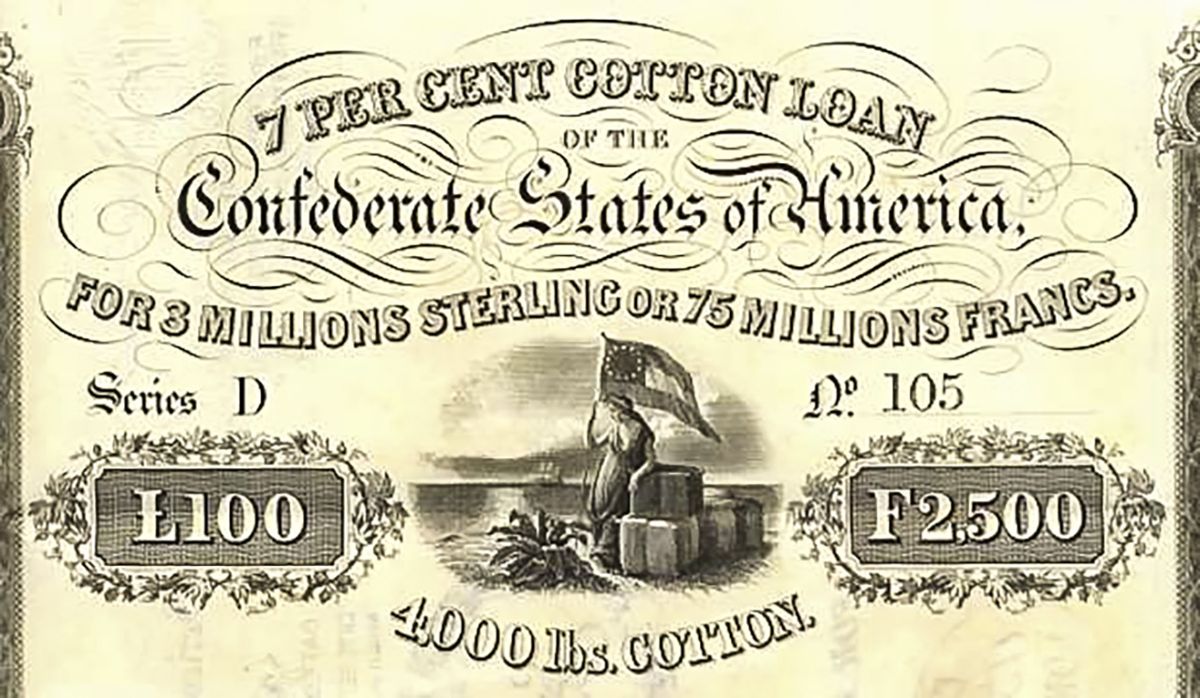
Cost of Supply Understanding the problems that confronted Myers requires a comprehension of the costs of Confederate supply and how the Confederate inflationary spiral altered the War. As a comparison, the U.S. dollar has experienced on average a 2.18% inflation rate per year since 1860. Hence, $1 in 1860 is roughly equivalent to $32.43 in 2023 dollars.20 The inflationary spiral of the Confederate dollar during the War increased costs exponentially: every six months, the value of the Confederate dollar decreased so much that costs were almost incomparable to the previous time frame. The total expenditures of the Confederate government, nearly all of which were for the War Department, increased from $70 million in November 1861 to $329 million in August 1862. That is a dizzying figure to contemplate in retrospect, and impossible to imagine what it was like for Myers, whose job was to administer and develop budgets for his department a year in advance. One example is that the $199 million allocated for the war budget for 1862 ran out by September.21 It’s impossible to operate a functional war machine with inflation at that unsustainable rate. How did this happen? On April 29, 1862, Commander David Farragut captured the South’s largest port city, New Orleans.22 The fall of New Orleans was a powerful financial disadvantage. For a nation composed of rebellious states to wage war, it must have capital with which to pay for war supplies; weapons, armaments, horses, food, clothing, soldiers’ salaries, etc. The way the Confederacy raised cash to finance the war was to sell bonds to its citizenry. The Confederates issued one round of bonds for $15 million and a second for $100 million. With only six million citizens, and even fewer with real wealth and flexible cash, public financing through bonds sales was a limited prospect. The Confederate government knew only foreign trading and investment could save it. Foreign investors thought conventional Confederate bonds were a poor investment and would not buy them. Moreover, the Confederacy itself was a poor credit risk. What products did they manufacture? What collateral did they own? To spark interest in their bonds, the Southern treasury came up with an innovative solution. It involved exploiting the South’s most abundant and important crop, cotton. They would issue 20-year bonds; should they fail to make payments on the 7% coupon, the bondholder could convert them into cotton at the pre-war price of 6 pence/pound (figure 2.) To try and run the price of their bonds up even more, as well as compel Great Britain to recognize the Confederacy, the South imposed an embargo on cotton shipments. British imports of Southern cotton fell from 2.6 million bales in 1860 to just 72,000 in 1862. By late 1862 what the British called “The Cotton Famine” was laying waste to its industry and causing so much unemployment in the textile regions in the north of England that civil unrest was bubbling to the surface. Meanwhile, as the Southerners hoped, the price of cotton soared, from 6.25 pence/ pound to 27 pence, making their cotton-backed bonds more valuable. This sequence of economic events succeeded in attracting investors in London and Amsterdam, which initially provided some cash to finance the war. The value of the bonds was underpinned by the holders being able to take delivery of physical cotton at the discounted price should the South fail to make interest payments. Collateral is only good if a creditor can take control of it. That’s why the Union Navy’s capture of New Orleans was so critical. It choked off a major Southern cotton export gateway. By 1863, after Britain had found new sources of cotton in India, Egypt, and China, investors lost faith in the Southern bonds. The effect on the Southern economy was catastrophic. With the domestic market exhausted, and no European buyers of their bonds, the Confederacy was forced to print unbacked paper money. Eventually the South printed at least $1.7 billion in paper money. The North did too, but at war’s end their “greenbacks” were still worth 50¢ in gold, whereas the “graybacks” were worth just 1¢. Making things worse, Southern states and municipalities printed paper money of their own adding to the supply of unbacked bills. The resulting budgetary pressure had consequences all along the administrative path. In 1862, Myers saw his estimated budget cut from roughly $27 million/month to $19 million. He informed the cabinet that the current actual expenditure was $24.5 million/month, and with rising inflation would clearly become much higher. Myers lobbied Congress for more appropriations to keep the war effort on track. The Congress then passed a supplementary expenditure of $127 million to pay for just the three months of December 1862 to February 1863.23
Increasing Problems as the War Continued By the spring of 1862, Myers was forced to resort to impressing necessary supplies. The scarcity of goods in the domestic market drove up prices, and combined with the insufficient funds provided him, made purchases to supply the war effort ineffectual. Added to this was the devaluation of currency and poor railway transportation of those supplies that were available. As the war progressed, Southern armies became short of all supplies. Many troops were barefoot or relied on boots taken from dead soldiers. Food, horses, and supplies of all types were woefully inadequate.24 The spring 1862 battlefield setbacks had a catastrophic effect on the Quartermaster Department. Loss of cities like New Orleans, Nashville, and Memphis, with their river access, warehouses, and manufacturing, was irreplaceable. Surplus stocks were lost in the storage. Even more deplorable were supplies wasted by soldiers who discarded them in critical amounts.25 The loss of the Virginia Peninsula resulted in losing several depots with supplies that could not be replaced easily. Although the Peninsula Campaign and the Seven Days battles are considered great strategic victories, implications of the supply system impacts are overlooked. By moving to meet McClellan’s threat in the east, Johnston had to abandon his position in northern Virginia, which opened territory east of the Shenandoah north of the Rappahannock to Union control. This was prime flour and beef farming land, all lost to Union operations.26 By mid 1862, Myers was unable to fulfill requisitions for 40,000 uniforms. Commanding generals of both major armies blamed Myers for the lack of supplies. Bragg dismissed the chief quartermaster assigned to his army and replaced him with someone untrained in the business; Myers protested to Secretary George W. Randolph.27 Although nothing was done then, later that fall orders from the Secretary of War ruled that transportation and distribution of supply was under the command only of the quartermaster service. The 1862 losses in the west were devastating to the Confederate cause, not just from a strategic perspective, but from the logistics viewpoint as well. While 1862 is generally thought of as being the peak of Rebel strength, the loss of the border states and the Mississippi Valley would have severe logistical repercussions for the next two years. The South lost many reserve supplies in retreats and a left behind large swath of food crops.28 This is a frequently overlooked feature of the war: as the Confederate army retreated, not only was it losing strategic ground but its supply resources as well, further impacting its strategic situation. In many retreats, supply depots and stores were often burned or abandoned, leaving unused, difficult to procure supplies. Two years into the war, the initial measures taken to allay stresses on the supply chain had long been utilized. Attendant economic and supply consequences had strained the South’s economy and become perceptible both to citizens and the army, with substantial political and military consequences. In 1863, the interconnected economic effects of scarce resources and lost food producing territory had become an irresolvable conundrum. The Union blockade decreased imports, reducing the amount of collectable customs duties. The blockade also limited Southern agricultural exports; thus, farmers and planters had less income to pay taxes. State’s rights made the central Confederate tax collections ineffective, even as the states were unable to contribute enough to support national war costs. The existence of slavery in the South and the diminishing likelihood of Confederate victory made foreign governments generally reluctant to loan money to the Confederacy. General Lee felt that his army was never adequately supplied and experienced numerous problems due to the lack of supplies.29 Resort to impressing shoes by Lee’s soldiers became necessary. The
Proposed February 15, 1862.
Passed Feb. 17, 1862.
inefficient redistribution system compounded the depletion of supply. The disparate groups granting contracts, submitting requisitions, and having a central authority, with no actual control or presence in the army units were conspicuous flaws in the process. Myers was given permission to send his own agent, Major J.B. Ferguson, overseas to purchase stores. He also assumed some control over domestic leather, wool, and textile industries. By mid-1863, Myers had established an extensive organization of purchasing agents, local quartermasters, shops, and supply depots. It was still insufficient, and the Confederacy soon resembled a rag-tag army, particularly in clothing and footwear. The quartermaster department soon became the target of much criticism, and in spite of his personal efficiency, he was unable to overcome the laxity and carelessness of remote subordinates. There was a considerable black-market operation, as well.30
Removal from Office Complaints about Myers, some of which were based on his religious background, led to him being replaced in the summer 1863. Inadequate supplies, especially clothing and shoes, had reached a crisis point. Tents, uniforms, blankets, shoes, horses, and wagons remained
CivilWarNews.com scarce, requiring scavenging and impressment throughout the war. Although manufacturing improved during this time, it remained woefully inadequate.31 Myers was an excellent administrator but he could not create supply lines without purchasing power. Despite these supply problems, he was well regarded among his colleagues and contemporaries, who understood that the supply deficits were not due to his malfeasance.
Conclusion Abraham Myers’ role as the Quartermaster General was important in supporting the Confederate war effort by overseeing army supply and logistics. His successor was even less successful than Myers in supplying the Confederate armies as the war went on, territory was lost, and the blockade took Endnotes: 1.
Burke, Walter E. Quartermaster: A Brief Account of the Life of Colonel Abraham Charles Myers, Quartermaster General C.S.A. W.E Burke Jr, 1976. Rosen, Robert N. (2000). Chapter 3: Hebrew Officers and Israelite Gentlemen. The Jewish Confederates. Columbia: University of South Carolina Press. https://muse.jhu.edu/book/85577. 2021, pp. 89–161. Kabakoff, Jacob. The Tombstone of the Reverend Moses Cohen. Accessed at https://kevarim.com/wp-content/uploads/2018/10/Rev-Moshe-HaCohen.pdf Burke op cit. Allardice, Bruce S. Confederate Colonels. A Biographical Register. Columbia: University of Missouri Press. 2008. Goff, Richard D. Confederate Supply. Durham: Duke University Press. page 8. Warner, E. J. Generals in Gray: Lives of the Confederate Commanders. Baton Rouge: Louisiana State University Press, 1959. increasing effect.
blood-military-power. 12. Hess, Earl J. Civil War Supply and Strategy. Baton Rouge: Louisiana State University Press, 2020. 13. Goff op cit pages 15-16. 14. Goff op cit page 16. 15. Goff op cit page 16. 16. Goff op cit page 33. 17. Goff op cit page 34. 18. Goff op cit page 35. 19. Lonn, Ella. Salt as a Factor in the Confederacy. New York: W. Neale, 1933 and Davis, William C. Look Away: A History of Confederate States of America. New York: The Free Press,, 2002. See especially Chapter 10. 20. Consumer Price Index Calculator. https://www.in2013dollars.com. 21. Goff op cit page 90. 22. Ferguson, Niall. The Ascent Of Money. A Financial History of the World. 10th Anniversary Edition. New York: Penguin, 2009. 23. Goff op cit pages 90-91 and 47-49. 24. Davis op cit Chapter 7. 25. Goff op cit page 66. 26. Goff op cit page 55. 27. Goff op cit page 66. 28. Goff op cit page 54. 29. OR, Series 1, Vol. 19, Part 2, p. 614. https://leefamilyarchive.org/9family-papers/741-robert-e-leeto-abraham-charles-myers-1862september-21. Keith S. Bohannon, Dirty, ragged, and ill-provided for: Confederate logistical problems
Elliot, Ellsworth Jr. West Point in the Confederacy. New York: G. A. Baker & Co., 1941. Page 401. 4. The Twiggs-Myers Family. Fix Bayonets Blog. (hereafter: Fix) https://fixbayonetsusmc.blog/2019/03/29/the-twiggs-myersfamily-part-iii. 5. Colonel Abraham Charles Myers. Jewish Military History Blog. https://jewishmilitary.org/f/colonel-abraham-charles-myers. 6. Goff op cit page 8. 7. Edwin C Bearrs. The Seizure of the Forts and Public Property in Louisiana. Louisiana History 2:401‑409, 1961). http://penelope.uchicago.edu/Thayer/E/Gazetteer/Places/America/United_States/Louisiana/_Texts/LH/2/4/Seizure_of_the_Forts*.html. The War of the Rebellion: A Compilation of the Official Records of the Union and Confederate Armies, Series I, Vol. I, 495. Washington: Government Printing Office (Hereafter: OR). https://ehistory.osu.edu/books/official-records/001/0495. 8. Rosen op cit. Chapter 1: The Free Air of Dixie. pp. 9–55. Bearrs op cit and OR pages 492-3. https://ehistory.osu.edu/books/official-records/001/0492. Journal of the Congress of the Confederate States of America, 1861–1865 [Volume I] THURSDAY, February 21, 1861] accessed https://www.loc.gov/item/05012700. Journal of the Congress of the Confederate States of America, 1861–1865 [Volume I] THURSDAY, February 21, 1861. https://www.loc.gov/item/05012700. Nomination in congress March 16, 1861, page 154. Hereafter: JCCSA. Wilson, Harold S. Confederate Industry Manufacturers and Quartermasters in the Civil War. Town: University Press of Mississippi. 2005. 9. Pages 841, 844 JCCSA; Wilson op cit. 10. Goff op cit pages 15-17 and Fix, op cit. 11. Wissler, John E. Logistics: The Lifeblood of Military Power. Heritage.org.
in the 1862 Maryland campaign and their solutions in Gary W. Gallagher (ed.) The Antietam Campaign, pp. 101–142, Chapel Hill: University of North Carolina Press, 2012. 30. Fix op cit; Goff op cit 68-70. 31. McPherson James M. To Conquer A Peace: Lee’s Goals In The Gettysburg Campaign. https://www.historynet.com/conquerpeace-lees-goals-gettysburg-campaign.
Dr. Lloyd W. Klein is Clinical Professor of Medicine in the Cardiology Division of the University of California, San Francisco. He is a nationally recognized cardiologist, clinical investigator and lecturer with forty years’ experience and expertise in managing myocardial infarction and individual tailoring of coronary revascularization strategies. He is also an amateur historian who has published extensively on the Civil War. His particular interests include political and military leadership and their economic ramifications. His book, Civil War Q&A, will be published by McFarland Publishers later this summer.