
The Unfinished Fight
Tin Cans
By Craig L. Barry · Originally published October 2023 · pp. 10–11
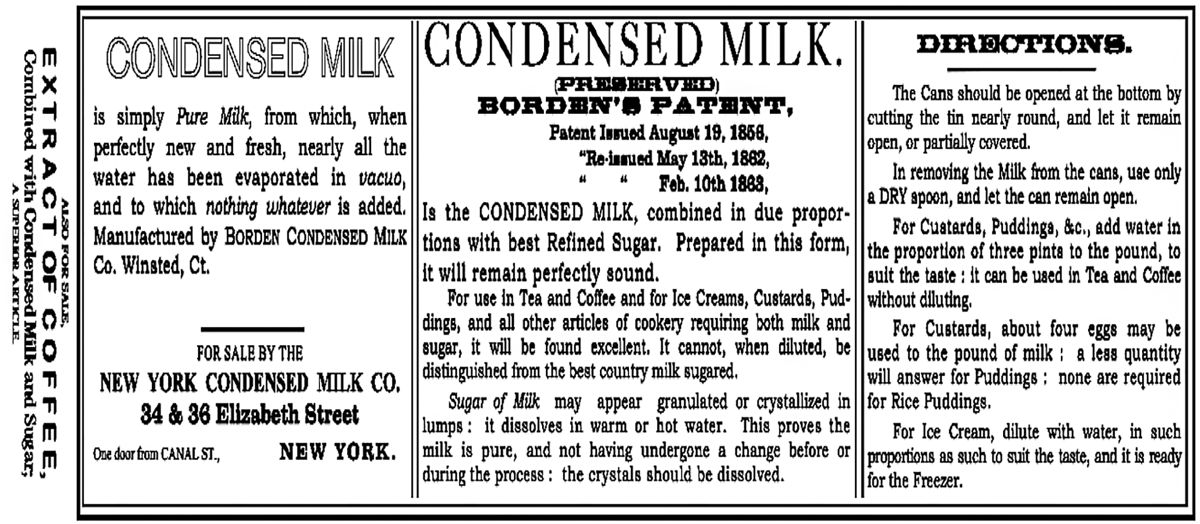
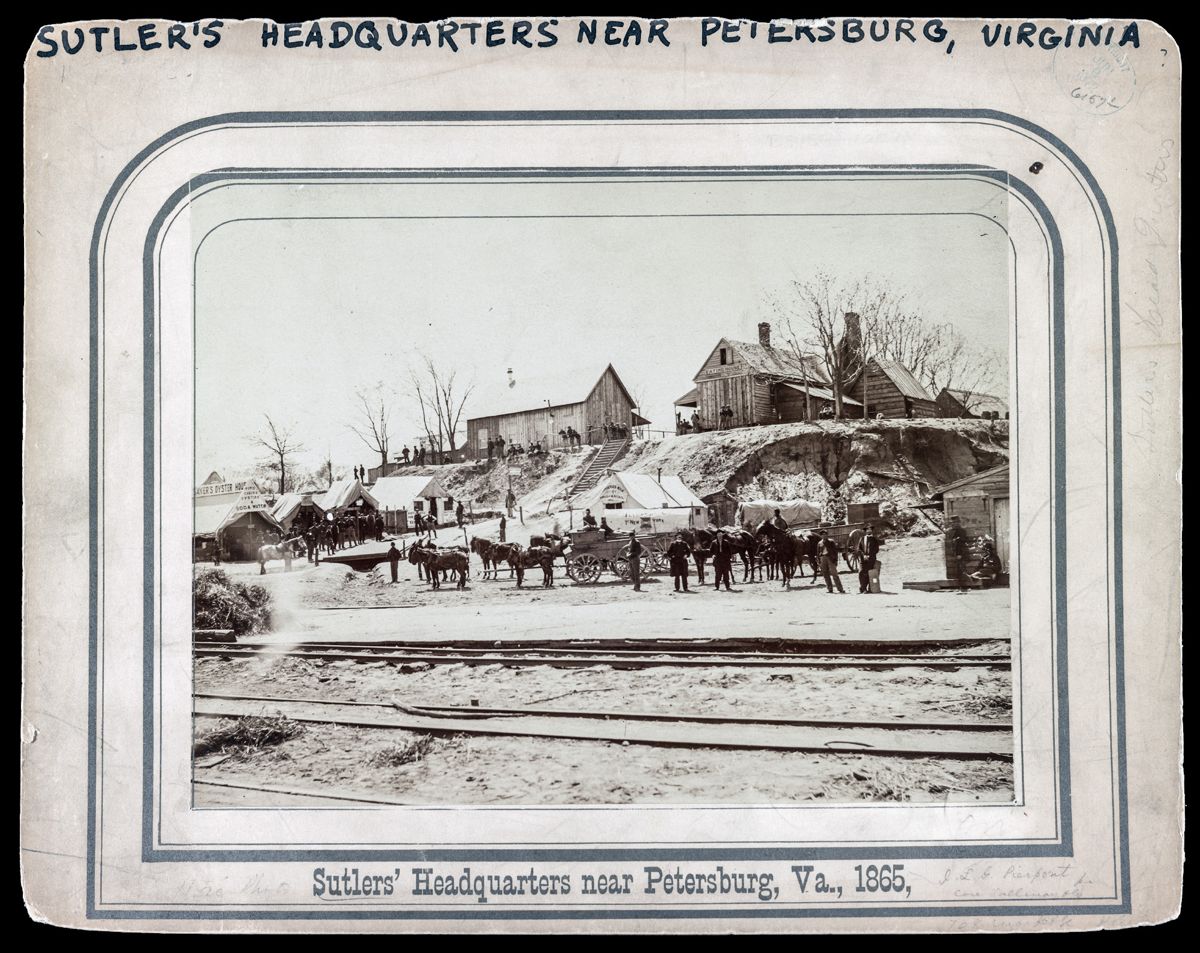
Tin Cans The canning of food to prevent spoilage was not a new technology during the Civil War, it dated back to the early days of the 19th century (at least in Europe). The first successful attempts were done with glass bottles somewhat like Mason jars by a pickle maker from Paris who supplied the French military during the Napoleonic Wars. Obviously, a shortcoming of glass jars is that they proved subject to breakage in transit. In New York as early as 1812 there was a factory that packed oysters, stewed meats, and vegetables in tin covered sheet iron cans. There was also a food canning operation in New Orleans about the same time. The iron cans were often heavier than the food they contained. The first use of a cylindrical “tin cannister” was patented by an English merchant named Peter Durand in 1811. He sold the patent rights to a grocer; eventually their largest customer became the British War Department. Durant later obtained an American patent for his ‘cannister’ in 1822. Some 19th century American canners are still in business today. William Underwood opened his canning factory in Boston in 1819 packing fruit in glass containers. He switched to tin plated cans because of the rising cost of glass. One early hazard associated with canned foods was poisoning from the lead solder used to seal the seams. The lead toxins seeped into the food. It took a while to figure out the seams should be soldered on the outside only. Underwood made a fortune supplying canned meat to the U.S. Government during the Civil War. The company later became known for Underwood’s deviled ham, a product still found on grocery store shelves today. Demand for canned goods accelerated with the outbreak of the Civil War; production went from about five million cans in 1861 to almost thirty million by 1865. Some canned goods were purchased as rations by the US Quartermaster or sold as treats by sutlers; others found their way into camps and battlefields by some other manner. For example, the U.S. Government purchased large quantities of Borden’s condensed milk, but it was not part of the regular rations. Rather, it was listed on the official list of medical supplies. Surgeon General William Hammond noted that the product was still commonly found in camps and “was in extensive use in our armies and hospitals.” Post-antebellum civilian acceptance of canned foods represented a paradigm shift from bulk selling of seasonal items to individualized product packaging that allowed goods to travel beyond traditional regional boundaries. The structure of modern food systems took shape during this time. Antebellum, a
Borden’s label. prudent civilian shopper would not trust milk that had traveled more than ten miles from the dairy farm, whether in a can or not and it is worth noting that Abraham Lincoln’s mother died from “milk poisoning.” One thing that seems odd in retrospect is that almost fifty years elapsed from the advent of the first canned food to the first mass produced device used to access the contents. The prevailing wisdom was to employ whatever tools were at hand. For example, instructions on one brand of canned food stated “to open cut around the top with a hammer and chisel.” It is possible that early tin cans were thinner and the metal softer than modern steel cans and hence easier to open with the “tools on hand.” There are many surviving tin cans from the Civil War-era that give the appearance of having been opened with a pocket knife or bayonet. Whatever the case, in 1858 Ezra Warner patented a lever type can opener in the United
States. It consisted of a sharp sickle which was pushed into the can and sawed around the edge. It was adopted by the Union army during the Civil War but the design was considered “too dangerous for home use.” In 1866 J. Osterhoudt patented a key type opener which was inserted into a tab on the side of the can to roll up a thin strip just below the lid. The key type can opener design lasted well over a hundred years. Pressurized cans of tennis balls used to be opened using a similar device as late as the mid-1970s. The mid-19th century tin can itself was made differently and used of different materials than modern cans. The tin can was cut from a sheet of tin-plated iron and then rolled into a cylindrical shape. It was then soldered down the outside seam to retain its shape. A period tin can has smooth sides and a smooth flat bottom with a lipped or overlapping portion soldered to the body. One did not employ craftsmen like tinsmiths for this kind of work. Nineteenth century tin cans do not feature the corrugated ridges found on modern canned goods. Strengthening cans by employing ridges was not unknown during the mid-19th century. For example, there is a court case known as Brown vs Hall (1859) which concerned a patent covering use of bead reinforcement on the sides of paint cans. Whatever the case, presumably as cost saving measure, beads or ridges were not features on canned food issued to soldiers. Can labels have a history of their own. During the 1860s most labels were printed, lithographed, or hand stenciled from woodcuts. They were largely monochromatic using a single ink color on a single color background; very few had more than two colors. The label making was outsourced to specialized printers. The elaborate artwork and multi-color lithography was not a feature of tin can labels until well after the Civil War. It became a standard practice for the can to feature the company name as proof of authenticity as with Borden’s condensed milk can, at least for fulfilling Government contracts. Labels from the Civil War-era would not be found with “Trade Mark” anywhere on them since the National Trademark legislation was not passed until 1874. Some well-known printed labels were produced by Prang & Meyer of Boston from 1856 to 1860 for the canner J.B. Hamblen & Company. Hamblen was famous for canned oysters, a popular item offered by sutlers in Civil War camps. Hamblen was a pioneer in the oyster canning business going back at least to 1851, according to the Boston City directory. After New Orleans fell to the Union, and the local canneries along with it, did Confederates have access to canned foods besides stoneware or glass jars from home? Certainly. A soldier in the 27th Arkansas Infantry died after eating improperly processed food from a tin can. A colonel in the Army of Northern Virginia recalled making gruel from cornmeal over a campfire in a tin can when rations got short, and further that the tin can as a cooking vessel had to be shared. There were also canned goods shipped to Confederate hospitals for the patients. A Confederate prisoner of war in Camp Douglas near Chicago mentioned receiving canned milk specifically. There were enough Southerners exposed to safe and edible food in tin cans that postbellum the sales of canned food in the South skyrocketed. Craig L. Barry was born in Charlottesville, Va. He holds his BA and Masters degrees from UNC (Charlotte). Craig served The Watchdog Civil War Quarterly as Associate Editor and Editor from 2003–2017. The Watchdog published books and columns on 19th-century material and donated all funds from publications to battlefield preservation. He is the author of several books including The Civil War Musket: A Handbook for Historical Accuracy (2006, 2011), The Unfinished Fight: Essays on Confederate Material Culture Vol. I and II (2012, 2013). He has also published four books in the Suppliers to the Confederacy series on English Arms & Accoutrements, Quartermaster stores and other European imports
E.J. Warner’s patent for the Can Opener, Jan. 5, 1858.