
This And That
The War Before the War, Part 4: The Reflections of Ulysses S. Grant
By Gould Hagler · Originally published October 2023 · pp. 24–25
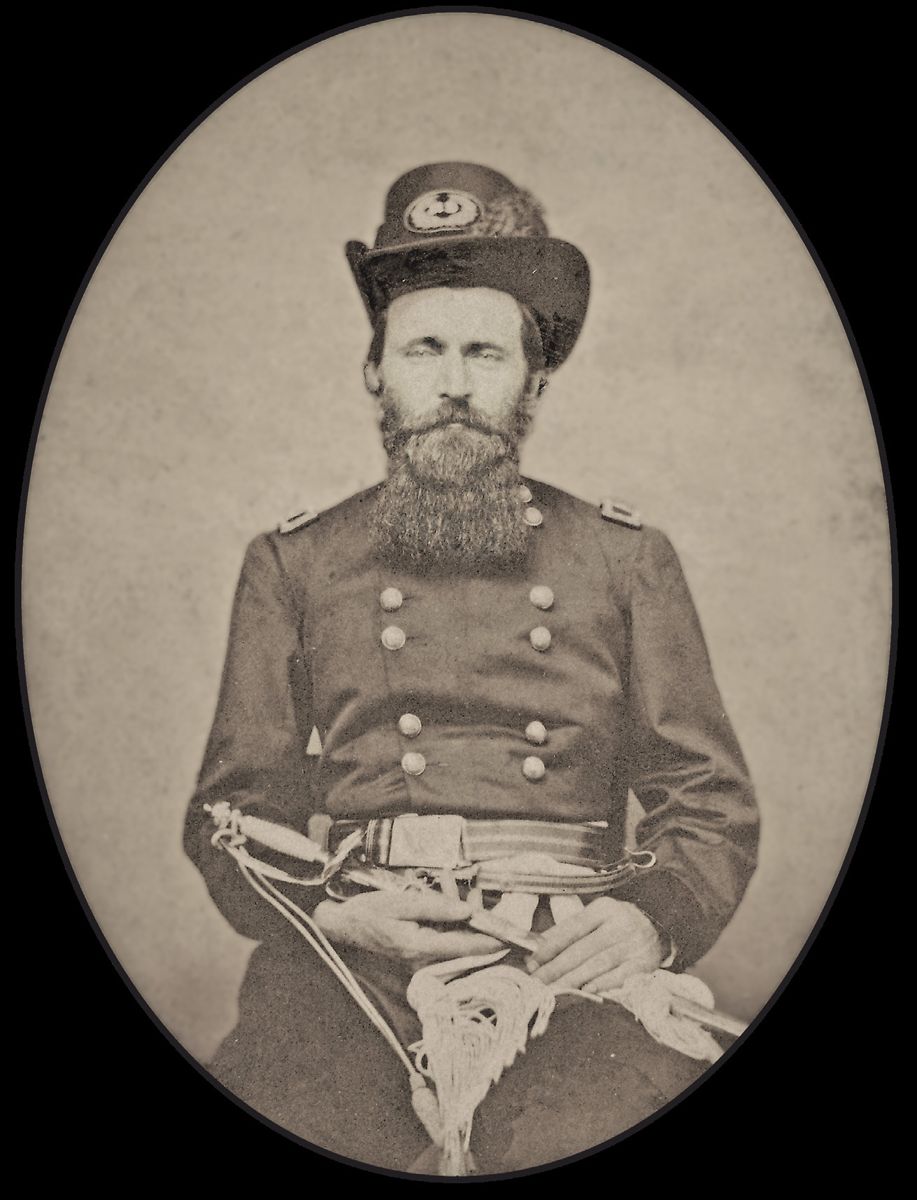
The War Before the War, Part 4: The Reflections of Ulysses S. Grant This column, the final of a four-part series, will look at the Mexican War from the perspective of Ulysses S. Grant. In his memoirs, written nearly four decades after the events, Grant narrated the military action and reflected on the causes and results of the war. Ron Chernow’s 2017 biography of Grant supplements the recollections of the 62-yearold general and president with letters from the time and other contemporary documents. In September 1843, newly commissioned with the rank of brevet second lieutenant, Grant was posted to Jefferson Barracks, (Library of Congress)
Missouri, where he served in the 4th Infantry Regiment. While there he met Julia Dent, to whom he became engaged. It was to be a long-distance romance, however, conducted via the post. Lieutenant Grant was going to war. The regiment was transferred to Louisiana, then Texas. Forces were being put in place, preparing for a war that loomed as the U.S. considered annexing Texas. Grant wrote: “I was bitterly opposed to the measure, and to this day regard the war, which resulted, as one of the most unjust ever waged by a stronger against a weaker nation.” This sentence was written by a mature man with much experience in war and politics. Chernow’s biography casts some doubt as to whether Grant had the same views in the
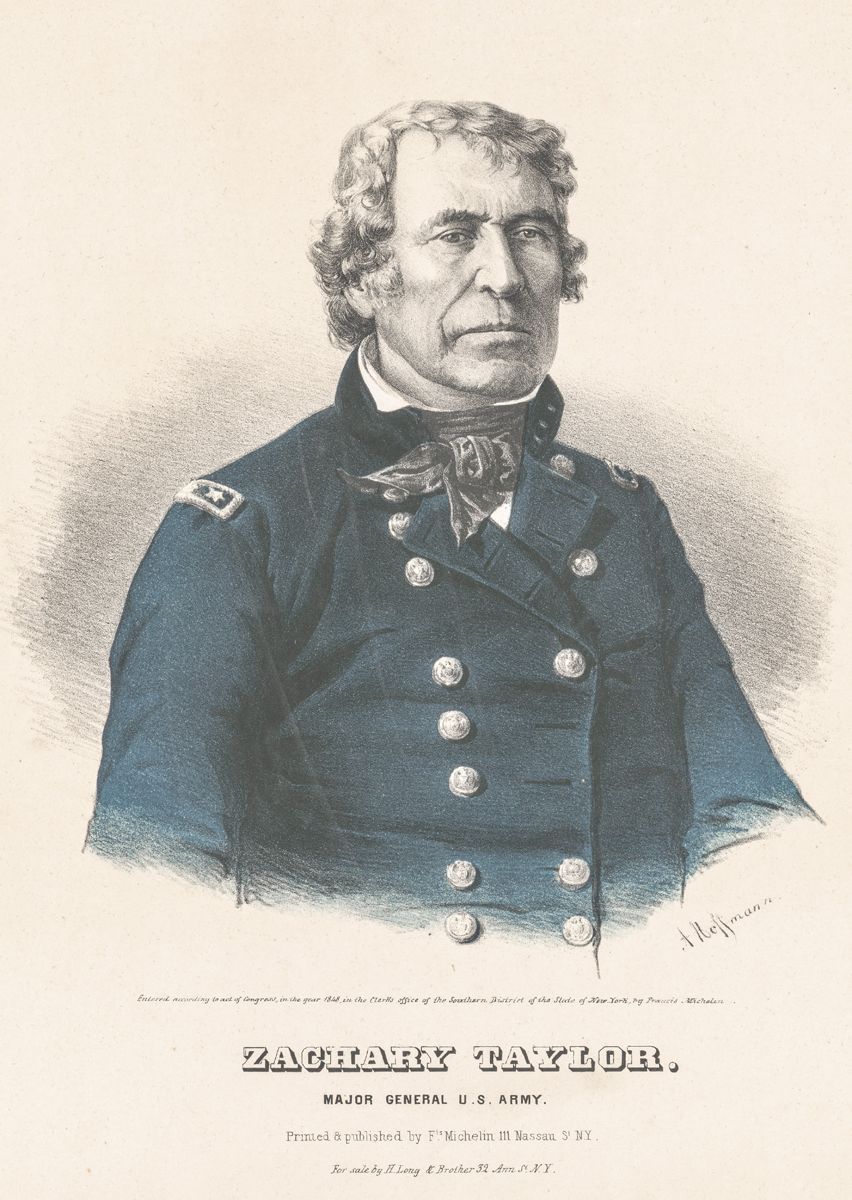
1840s. Chernow wrote: “If Grant thought this way at the time – and some contrary evidence exists – he certainly was not outspoken about it.” As expressed in the 1880s, Grant’s views were firm; Texas statehood meant an additional slave state; the vast expansion of the nation’s territory in the southwest could mean the further expansion of slavery. A tragic concatenation of events ensued. “The Southern rebellion was largely the outgrowth of the Mexican war,” Grant wrote. “Nations, like individuals, are punished for their transgressions. We got our punishment in the most sanguinary and expensive war in modern times.” Whatever his opinions, the lieutenant was an officer in the United States Army. The country was going to war and, consequently, so was he. In March 1846, the 4th Infantry was part of a force of 2,500 led by Maj. Gen. Zachary Taylor from Corpus Christi to the Rio Grande. “We were sent to provoke a fight,” Grant wrote,” but it was essential that Mexico should commence it.” Grant’s description of the 150mile march tells of a region with few people but large herds of wild horses and some buffalo. Water was sufficient for the army’s needs, but just barely, so “the marches had to be regulated by the distance between water supplies.” Mules needed to pull the army’s wagons were bought locally, from American traders and Mexican smugglers. His Whig commander, according to Grant, was not enthusiastic about the Democrats’ war. Grant speculated that Taylor “looked upon the enemy as the aggrieved party and was not willing to injure them further than his instructions from Washington demanded.” Strict orders against plundering were issued and, per Grant’s account, obeyed. The first action came at Palo Alto on May 8, 1846. Something over 2,000 Americans faced a larger Mexican force in a fight that lasted most of the afternoon. The infantrymen on both sides were armed with flintlock muskets. “At the distance of a few hundred yards,” Grant wrote,
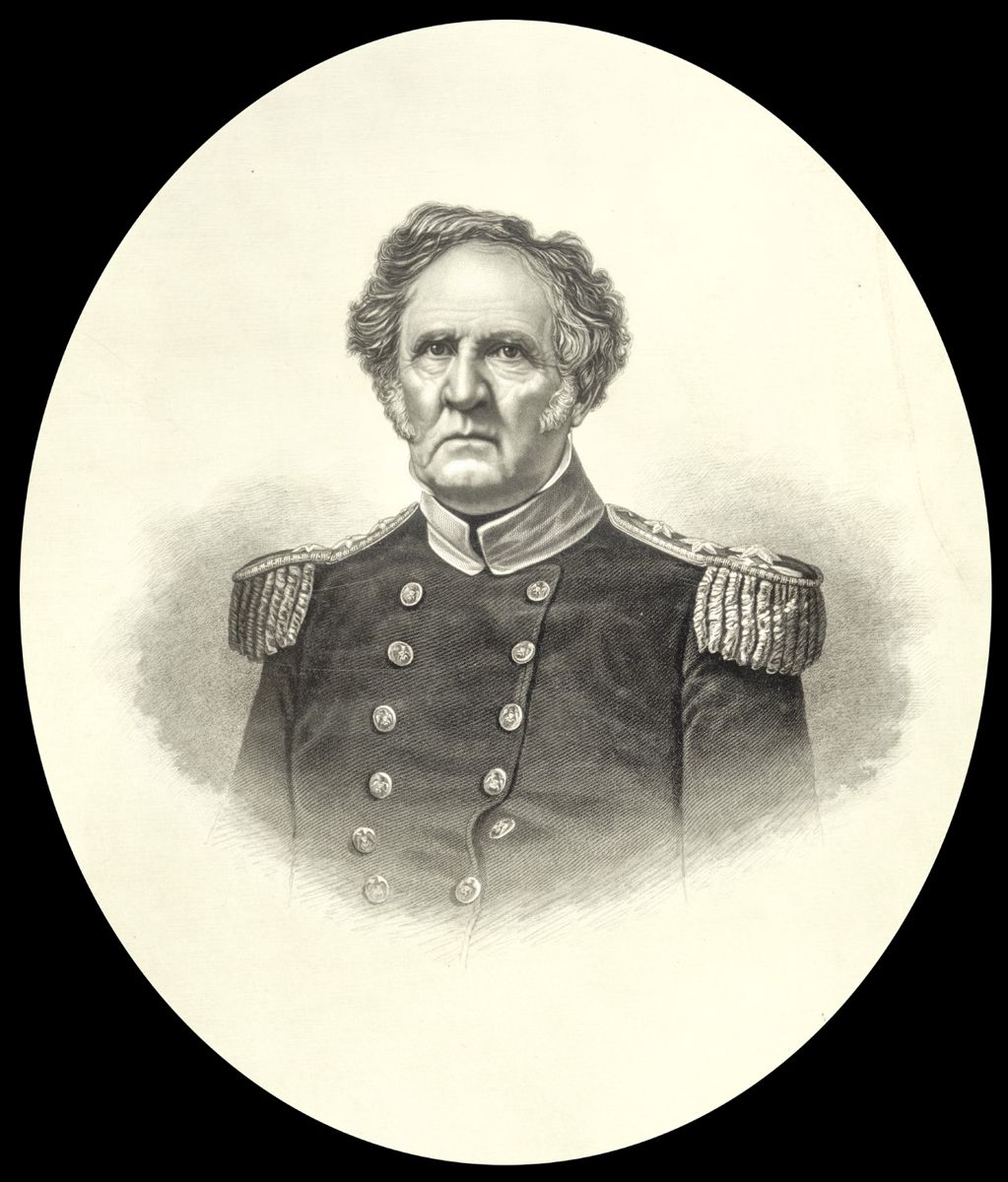
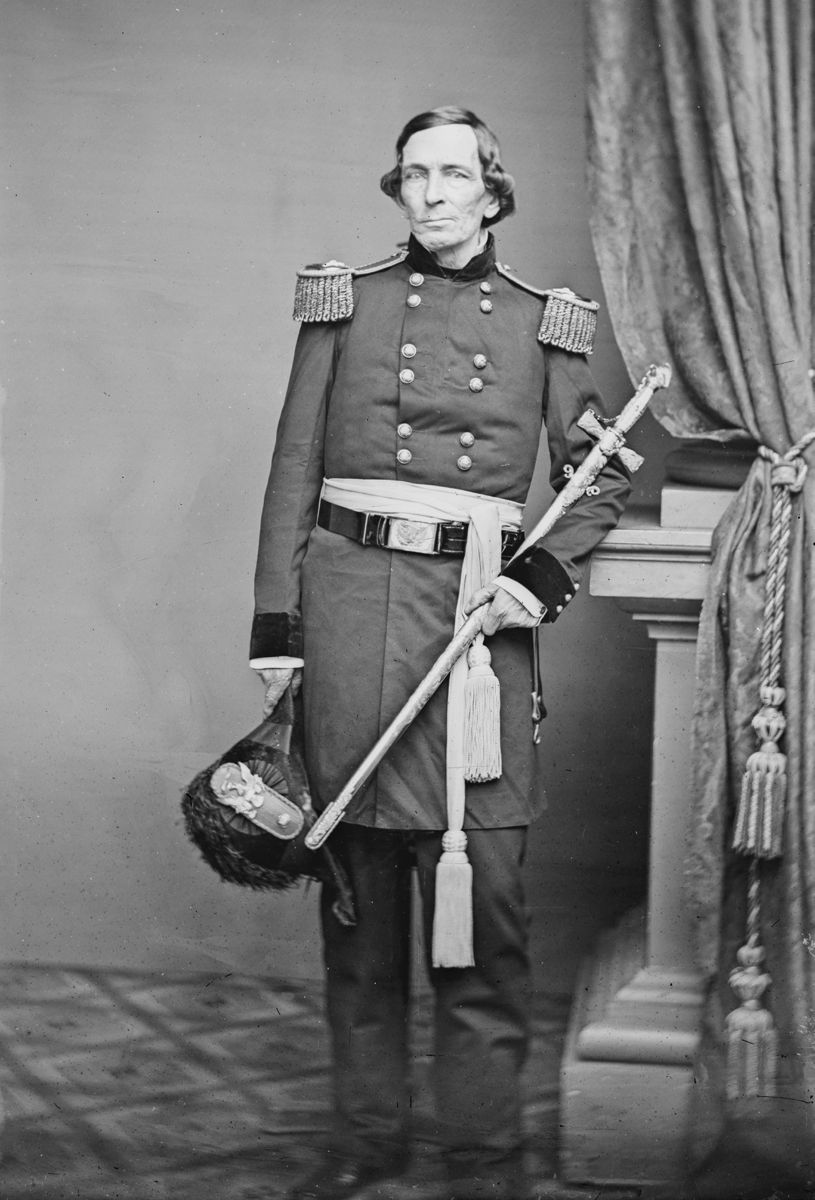
“a man might fire at you all day without your finding out.” The Americans’ superior artillery determined the battle’s outcome. The Mexicans retreated in the night. Even though the Mexican artillery was inferior, capable of throwing only solid shot, Taylor’s men knew they had been in a fight. Grant saw an enlisted man decapitated by an enemy round, which then struck an officer. Grant described the gruesome episode in a letter: “The underjaw is gone to the windpipe and the tongue hangs down upon the throat. He will never be able to speak or to eat.” The next day, with Grant in temporary command, his company fought at the Battle of Resaca. The unit’s role was a minor one. Grant joked that the battle “would have been won, just as it was, if I had not been there.” Taylor’s army then moved upstream on the Rio Grande, most troops going by steamer, some, including Grant’s regiment, marching overland. For the overland march, “pack mules were hired, with Mexicans to pack and drive them.” As there is nothing in Grant’s account that implies this service was compelled, one gets the impression that the Mexicans in the area lacked enthusiasm for their own government’s cause. Grant was serving as his regiment’s quartermaster the following September, when American and Mexican forces met in battle at Monterrey. The lieutenant was not content with his desk job, however, and he rode to the front and charged with his regiment. When the 3rd and 4th regiments were pinned down in the urban battle-scape and were running short of ammunition, Grant volunteered to ride for help. “My ride was an exposed one,” he wrote. The young horseman adjusted himself on the side of his mount and raced away. With the equine shield between him and the enemy he “got out safely without a scratch.” Taylor would win another battle at Buena Vista in February 1847, but much of his force, including Grant’s regiment, had by then been transferred to participate in Maj. Gen. Winfield Scott’s campaign. At this point in his memoirs, Grant focused his attention on politics. Scott, like Taylor, was a Whig. President Polk, a Democrat, wanted to annex Texas and win the war, but he feared one of his Whig generals would win the White House on the strength of his battle laurels. “The administration indeed had a most embarrassing problem to solve,” wrote Grant. An account of the political maneuvering is beyond the scope of this brief column, but it is an interesting story that readers may want to learn more about. We turn instead to Scott’s landing at Veracruz and to Grant’s activities there and on the march to Mexico City. Everyone knows the outcome of the Mexican War, and in retrospect it seems inevitable. Grant’s memoirs, however, remind us that the victory was far from certain. Landing at Veracruz with a force of 10,000 to 12,000 men, Scott undertook “to invade a country with a population of seven or eight millions, a mountainous country affording the greatest possible natural advantages for defence.” Scott was far from help if he got into trouble. The Duke of Wellington, when he heard of the landing and march inland, declared that “Scott is lost…. He cannot fall back upon his base.” The landing was unopposed; the fortified city was besieged; American artillery was put into place; Veracruz surrendered after a brief bombardment; and Scott headed west. The next obstacle was at Cerro Gordo, where the forces of Manuel López de Santa Anna held mountain passes with infantry and artillery. Grant wrote that a direct assault was “an impossibility.” Moreover, on the enemy’s flanks were “deep chasms or mountainous walls.” A route around the Mexican left was found, and a road cut, by Robert E. Lee and others in the corps of engineers. These engineers, Grant wrote, were “all officers who attained rank and fame, on one side or the other, in the great conflict for the preservation of the unity of the nation.” In his memoirs Grant was reticent about his own actions in Mexico, devoting space instead to the larger picture. He wrote nothing about what he did at Veracruz. Of his own actions at Cerro Gordo, he again was silent.
On a much higher level, he pointed out how Taylor, far to the north, contributed to Scott’s success in the south. Taylor’s advance on Buena Vista forced Santa Anna to personally lead troops to face the threat. After the battle he marched his defeated army back over the thousandmile route to face Scott in the mountains at Cerro Gordo. “Had the battle of Buena Vista not been fought Santa Anna would have had time to move leisurely to meet the invader further south and with an army not demoralized or depleted by defeat.” After Cerro Gordo, Scott’s army moved toward the capital and faced more obstacles created by nature and the Mexican forces. The only approaches to the city were causeways along narrow passages running between several lakes. The brigade of Col. John Garland, to which Grant was attached, moved along one of these causeways, “every inch of which was commanded by the enemy’s artillery and infantry.” The brigade held in place while the bulk of the army moved around the Mexican right flank. This movement followed a road cut through the Pedegral lava field, allowing the army to move closer to the city on roads less well defended. This flanking maneuver succeeded. In a series of three quick battles, the American attackers forced the Mexican defenders to retreat. Garland’s brigade moved forward as the Mexicans in their front pulled back. The opposing generals agreed to a truce following these engagements, during which time an American envoy discussed a treaty with Gen. Santa Anna, who, according to Grant, was “practically The Government.” Violations of the agreement led Scott to declare an end to the truce and commence the final advance to the Mexican capital. Scott’s Sept. 8 attack at Molina del Rey was a success, but a costly one that achieved little. Here Grant’s memoirs offer one of the rare accounts of his own involvement. He was with the troops which first entered the mill who led a small detachment up a makeshift ladder to a rooftop occupied by a few Mexican soldiers. Upon reaching the roof, Grant found a single private “guarding the prisoners he had surrounded, all by himself.” On Sept. 12, artillery opened on Chapultepec Castle, which fell to American infantry the next day. The fall of Chapultepec opened the way for the assault on the city’s fortified gates. Grant participated in this advance, leading the effort to flank a troublesome artillery piece blocking the way to the San Cosme gate. He then oversaw the dismantling of a howitzer so that it could be hauled into a church’s belfry. Grant knew enough Spanish to explain to the priest that he, the padre, had no say so in the matter. The piece was reassembled and placed into firing position. “The shots from our little gun dropped in upon the enemy,” Grant wrote, “and created great confusion.” That night, as the American forces prepared to renew the attack, Santa Anna evacuated the city. A delegation of citizens informed Scott of Santa Anna’s departure and told him there would be no further resistance. The capital of Mexico was Scott’s to possess and, indeed, to govern. The army occupied Mexico City and environs while the Treaty of Guadalupe Hidalgo was negotiated. As their duties were not onerous, Grant, by then a brevet captain, and other officers had time for various extra-curricular activities. Grant’s excursions took him to a bullfight, a gigantic volcano, and a vast cavern. When the treaty was ratified Grant returned home to his newly enlarged country and soon married Julia Dent. He stayed with the army for several years, attaining the rank of captain. He resigned from the army in 1854. His time in civilian life was marked with little success. His fortunes changed in 1861, when (in Chernow’s words) war rescued him “from a dismal record of antebellum business failures.” In June 1861, Grant, commissioned as a colonel, took command of the 21st Illinois Infantry. His subsequent career is well known. Gould Hagler is a retired lobbyist living in Dunwoody, Ga. He is a past president of the Atlanta Civil War Round Table and the author of Georgia’s Confederate Monuments: In Honor of a Fallen Nation, published by Mercer University Press in 2014. Hagler speaks frequently on this topic and others related to different aspects of the Civil War and has been a regular contributor to CWN since 2016. His email is [email protected].