
A Union General Turned Hangman
By Joseph F. Wilson · Originally published October 2023 · pp. 8–9
Despite the Civil War being over nearly ten years, the retired general rose early and put on his perfectly pressed dress uniform adorned with a flashy saber dangling by his side. Bedecked in his impressive military garb, the former soldier marched to meet the enemy at the courthouse in Mauch Chunk, Penn. General Albright enlisted in the 132nd Pennsylvania Volunteers as a major at the outset of the war. Being an aggressive leader, he rose through the ranks. At Antietam, he displayed enormous courage while charging the Bloody Lane after his colonel went down. When the 9 month regiment disbanded, he formed the 34th Emergency Regiment during the Gettysburg campaign. In September, the regiment dissolved leaving Albright a citizen once again. Now a practicing lawyer, the impeccably attired General Charles Albright wouldn’t be leading a charge on the battlefield but sought to reclaim lost glory when he vehemently implored a jury to hang four Irish Catholic miners accused of murder. The masquerading general effectively put the rope around their necks and had more to do with the hangings then anyone. In 1876, the general led the prosecution in the trial of miners who dared to challenge the low pay and horrific working conditions in the mines. The immigrants didn’t stand a chance in a skewed trial featuring more prejudice than justice. Tangible evidence proved to be scant in the trial according to modern day lawyers who have reviewed the sensational trial. In the same spirited way he once led troops in battle, the flamboyant general assumed control by parading around the courtroom in his flashy uniform assailing the jury members with fiery speeches that overshadowed the lack of evidence. Albright’s commanding voice boomed like a cannon demanding they find the defendants guilty as charged. General Albright left the army a hero after the war and returned to Mauch Chunk, later renamed Jim Thorpe, to resume his law practice. The record shows Albright was a good soldier when facing Robert E. Lee’s celebrated Army of Northern Virginia. In the Mauch Chunk trial, victory was a sure thing against the Irish miners who only wanted a fair shot in pursuing the American dream. Albright made sure that the so-called Molly Maguires went to the gallows. Whether the radical Ireland based Molly Maguires ever came to America and reorganized in the anthracite coal region in Pa. is debatable. The original Molly Maguires battled the English in Ireland in the 1800’s over land ownership. Miners in Pennsylvania only sought freedom from the appalling exploitation. Nearly all the jurors were Germans whose understanding of English was limited at best. Not a single Irish Catholic sat on the jury. Opponents of the hangings believe the Germans associated
General Charles Albright.
American Hotel, Mauch Chunk.
Albright’s splendid blue uniform with supreme authority and sided with the animated general whose intimidating antics dominated the courtroom. With a show trial that lasted over 4 months, the convictions were never in doubt in a court so lopsided that many today still deplore the lack of justice suffered by the Irish miners. Historians and law scholars agree such a biased trial could never happen today by pointing out that the miners were arrested by mine owner Franklin Gowen’s “private” Coal and Iron Police. All the supposed evidence was supplied by Allen Pinkerton’s “private” detective agency hired by Gowen to spy on the miners. The trial itself was deemed a “private” community matter. Even the State of Pennsylvania took a hands-off approach, allowing the one-sided trial to play out. Only the hangman came courtesy of the state. In an astonishing disregard for law and fairness, the court allowed mine owner Gowen to join the prosecution team. After returning to Mauch Chunk in the fall of 1863, Albright appealed to Penn. Governor Andrew Curtin and President Lincoln for troops to quell growing unrest in the coal region. Irish miners who felt abused began to fight back against the mine owners and railroad executives. Citizen Albright was also part owner of a mine and sole owner of a foundry making shells for the army in Mauch Chunk. Lincoln sent the 10th New
Jersey to the coal region to intimidate the miners. As a result, the miners faced both the federal troops and the Coal and Iron Police. All the wealthy executives in the coal industry welcomed the military serving alongside of Gowen’s private police in a show of force against the miners. All the coal fields in northeast Pennsylvania took on the appearance of a combat zone. Any complaints from miners over fair wages or conditions in the mines never gained any sympathy from Curtin or Lincoln. Coal mine owners such as Gowen raked in huge profits while the miners could barely feed their families. What little wages the miners earned went straight back to mine owners as all clothing, food, and supplies had to be purchased from the company store at inflated prices. Rent for company housing also exceeded market value. Many miners had little or nothing left after settling their accounts. While the Emancipation Proclamation played out in the Civil War, slavery was alive and well in the anthracite coal mines. The owners created a ticking time bomb that exploded into a violent labor dispute. The Civil War depended on coal from the region. Any disruption of the flow of coal had dire consequences for the war effort. The miners knew it and so did Lincoln. Coal fired the foundries that made weapons and fueled the steam engines of the trains that grew in importance as the war progressed. More importantly for wealthy mine owners and railroad tycoons, profits began dwindling. Sabotage of the mines and railroads played out in what might be the first major labor dispute in America. The miners certainly engaged in violence. Violence permeated northeast Pennsylvania through the 1860’s and the 1870’s. The chaos also came from mine owner Franklin Gowen, who hired Welsh and English thugs who hated the Irish to form his private Coal and Iron Police. The corrupt police force participated in violence of their own against the miners. Pinkerton’s planted spies also engaged and encouraged violence by miners just to snare their prey. Supporters of the miners believe the miners used the only means available against the mine owners for their mistreatment and atrocious working conditions. Detractors say the executed miners got what they deserved. Count General Albright among the latter. It’s believed that Albright’s hatred for the miner’s stemmed from their earlier opposition to the war. A rich man’s war and a poor man’s fight echoed in the mines. Being a staunch supporter of the war, Albright had little sympathy for miners opposing the war. Considered Mauch Chunk’s recruiting officer, he often gave fiery patriotic speeches from the balcony of the American Hotel, known today as The Inn at Jim Thorpe. Being a friend and associate of mine owner Franklin Gowen, the general conveniently overlooked Gowen quietly paying $300 for a substitute to take his place on the battlefield. During the fall of 1864, Albright reenlisted as Colonel of the 202nd Penn. Regiment. In March, Lincoln brevetted Albright as general for his fine leadership. When Robert E. Lee
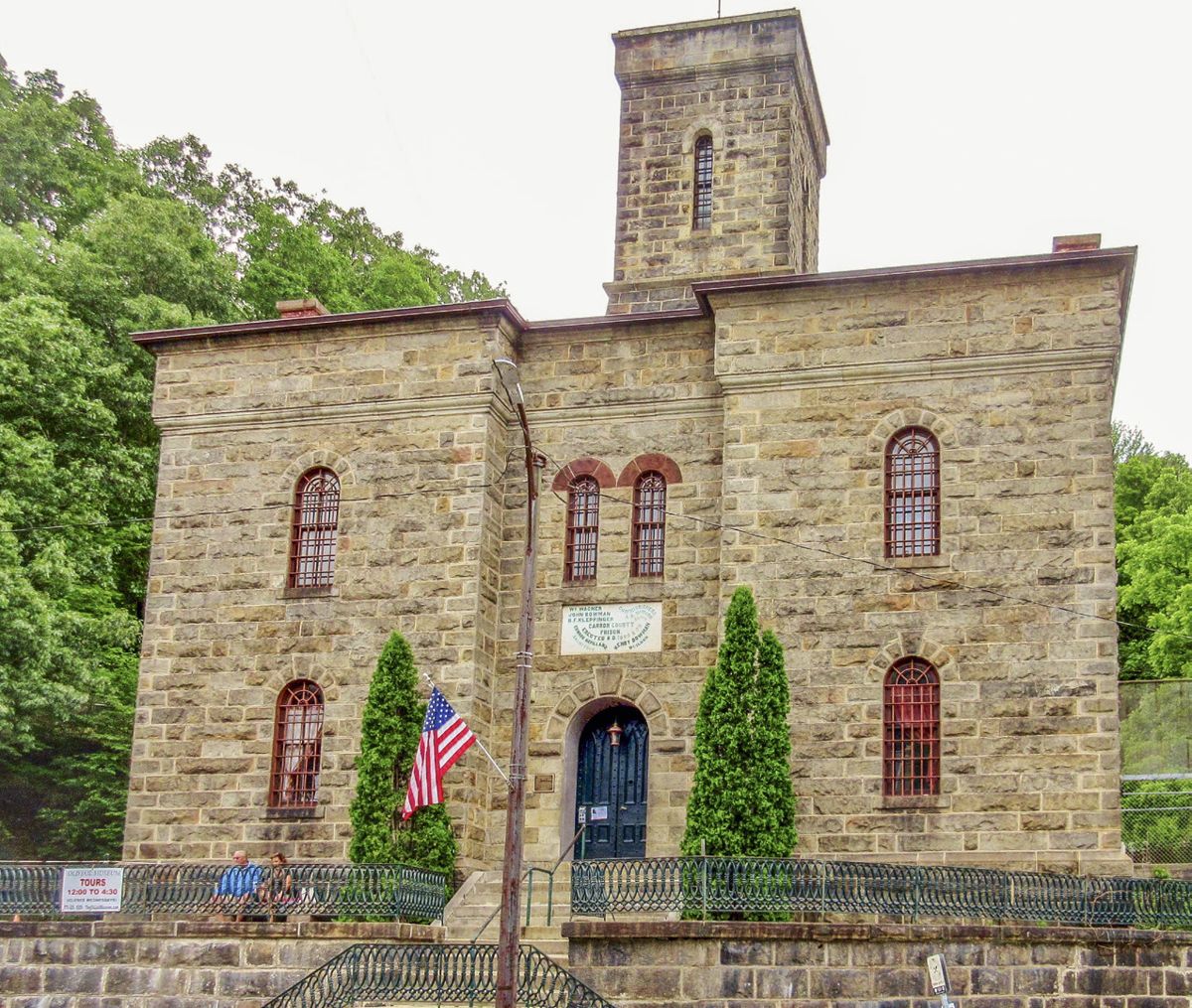
CivilWarNews.com surrendered on April 9, 1865, most of the boys in the 202nd regiment had time left to serve. Once again, Albright took his regiment to the coal regions to put the miners under the bayonets of the Federal Army. A total of 50 miners were arrested as a result of Allen Pinkerton’s spies infiltrating the miners. Many went to prison for supposed violence. Twenty coal miners went to the gallows. Albright had a hand in many trials in Carbon County, but his shining moment of reclaimed stardom came in Mauch Chunk when all four miners went to the gallows. Elated mine owners and railroad executives hailed the victorious general as a conquering hero. A decadent Albright basked in his celebrity not felt since the old war days. In a master stroke seeking maxim publicity, all four miners were hung at Mauch Chunk at the same time in a carnival atmosphere that had newspaper men and curiosity seekers packed into the old city jail. With one pull of the rope the platform holding the miners dropped, sending them into eternity. Immigrant coal miners across the country took notice. A shot across the bow gave warning. If you disrupt a wealthy tycoon’s operation, you may find a noose around your neck. The egotistical general besmirched his own good name by choosing his last battle to be against the poor Irish Catholic miners. It was an unfair battle that saw the interests of the powerful coal and railroad industries crush the rebellious workers. The Irish came to America seeking work and a better life for their families. For too many, all they found was a hangman! Joseph F. Wilson is a member of Old Baldy CWRT and The General Meade Society. The writer lectures on Civil War topics and is the writer and producer of the documentary “Civil War Prisons – An American Tragedy” available on Amazon. YouTube channel – “Joseph F. Wilson.” Email: [email protected].
Old City Jail, Jim Thorpe