
“Unsurpassed Courage and Determination”; Pender’s Brigade at Chancellorsville
By Tim Talbott · Originally published November 2023 · pp. 16–17
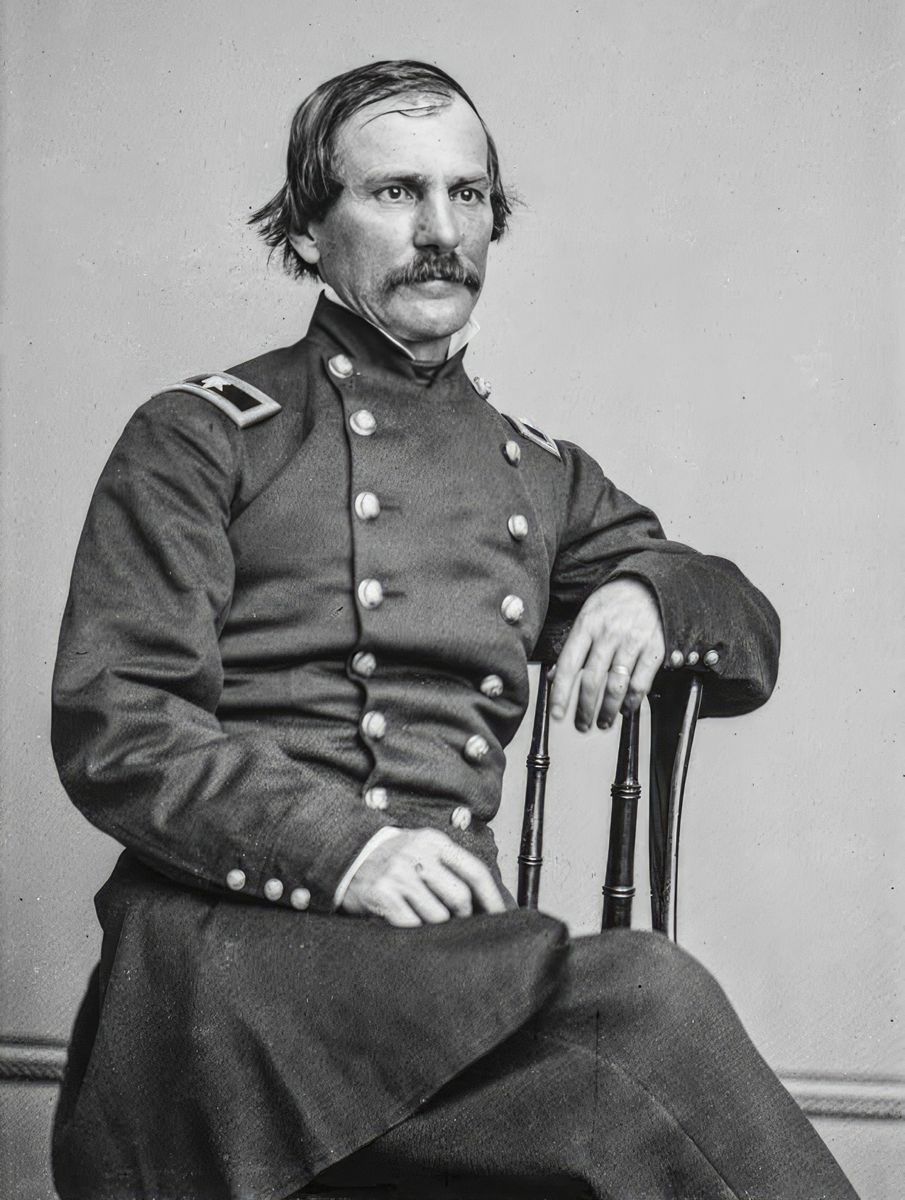
As part of Maj. Gen. A.P. Hill’s Division, Brig. Gen. William Dorsey Pender’s Brigade of five North Carolina regiments participated in Maj. Gen. Thomas
J. “Stonewall” Jackson’s famous May 2, 1863, flank march and attack. Positioned in the rear of the assault and supporting Brig. Gen. Raleigh Colston’s Division,
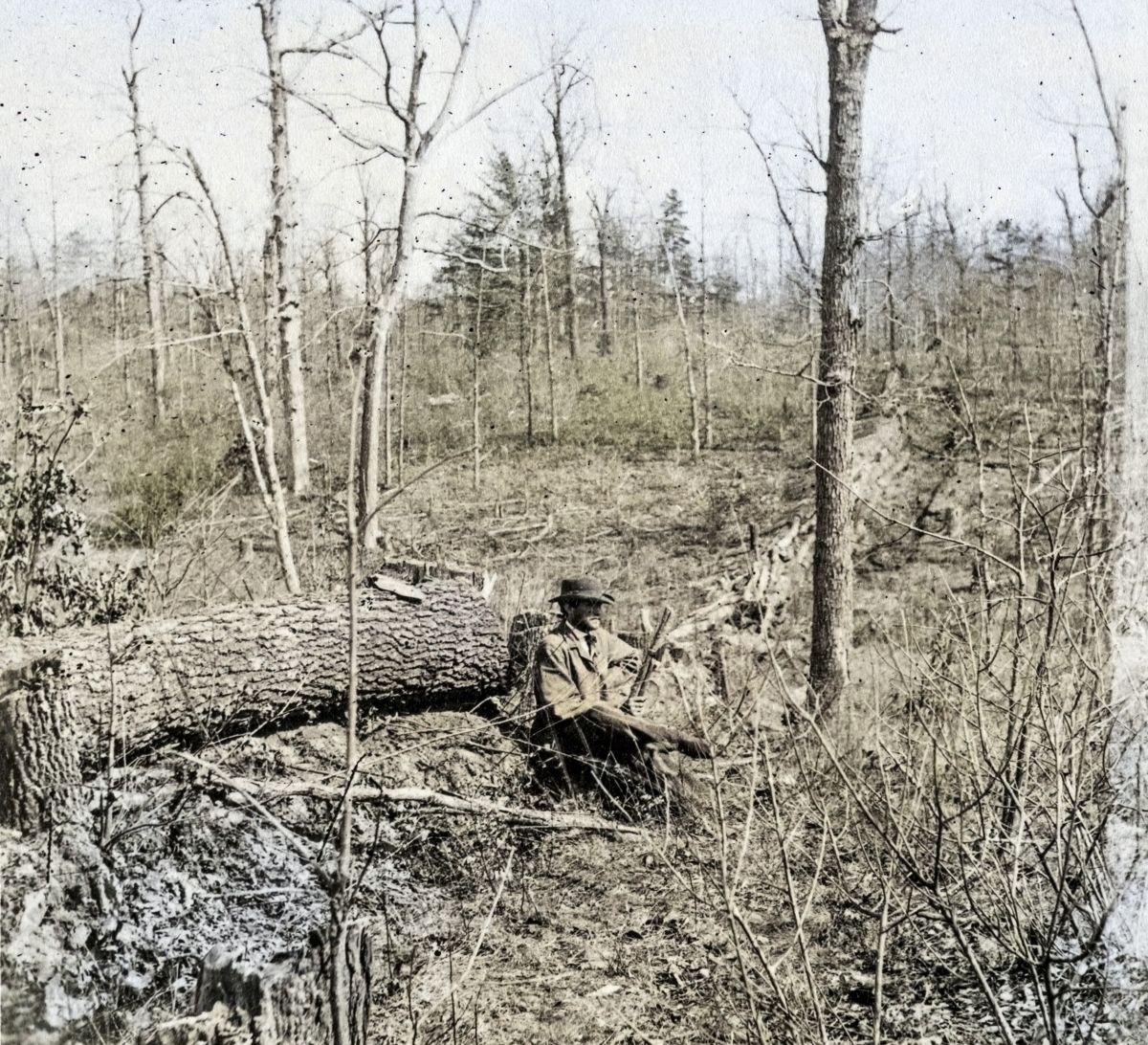
Pender’s Brigade did not engage Federal forces until late in the evening that day. Maneuvering with the Orange Turnpike on Pender’s right, his “men were subjected to a most galling and destructive shelling from the batteries near Chancellorsville.” Lt. Rowland S. Williams, 13th North Carolina, remembered that the enemy “turned loose a battery immediately up the road; grape and canister were scraping the ground, and at the same time musketry mixed in; bullets were coming up the road thick.” Pender, getting situated in the dark, “found that my troops occupied the most advanced position of our forces.” Once settled, the brigade sent out pickets and spent the night in this position. Being “the most advanced” virtually ensured Pender’s brigade would see difficult combat the following day. Hailing primarily from North Carolina piedmont and mountain counties, many soldiers in the brigade’s regiments (13th, 16th, 22nd, 34th, and 38th) were experienced troops by the spring of 1863. With their participation during the Seven Days’ Battles, Second Manassas, Sharpsburg, and Fredericksburg, most had witnessed much of the worst war had to offer. However, May 3, 1863, would test them as never before. During the night, the Federals, who expected Confederate attacks the following day, strengthened their position by felling trees and building breastworks. Lt. Williams recalled that, “We could hear them digging and chopping down the small undergrowth all night.” During the night “The moon shown beautifully … and the whip-poor-wills kept time to the Yankee axe and pick.” Just before daylight on May 3, Pender’s regiments formed to attack. One soldier in Company I, 38th North Carolina found “Stonewall” Jackson’s “buckskin gloves” resting in the road and marked “T. J. Jackson” inside the cuffs. Moving forward about 150 yards from their starting point, the brigade began receiving heavy fire, “but my men continued to advance,” Pender noted. The Tarheels soon found their dugin enemy. Carrying the first line of works, they ran into another line. The dense woods made it difficult to determine where the enemy was, and as Pender noted, “the resistance became so great from their infantry force, and the tremendous fire from artillery” that it forced the brigade to fall back but it rallied at the breastworks they captured earlier. Charging again, five color bearers for the 13th North Carolina went down. The regiment’s colonel, Alfred M. Scales, received a painful wound to the thigh. During the melee, Maj. Gen. Hiram Berry, who commanded a (Library of Congress)
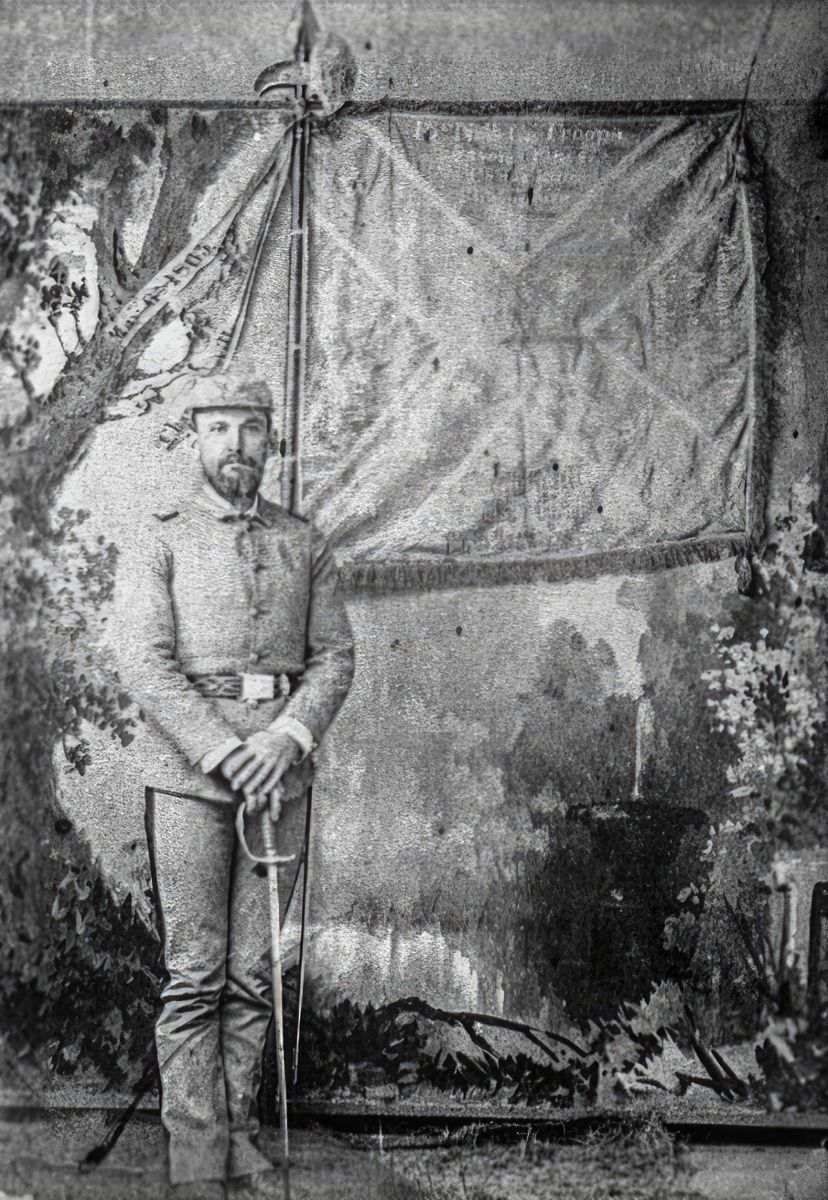
William Dorsey Pender graduated from West Point in 1854. He resigned from the U.S. Army in 1861 and eventually advanced as far as major general in the Army of Northern Virginia. Mortally wounded at Gettysburg on July 2, 1863, he died on July 18. (Library of Congress)
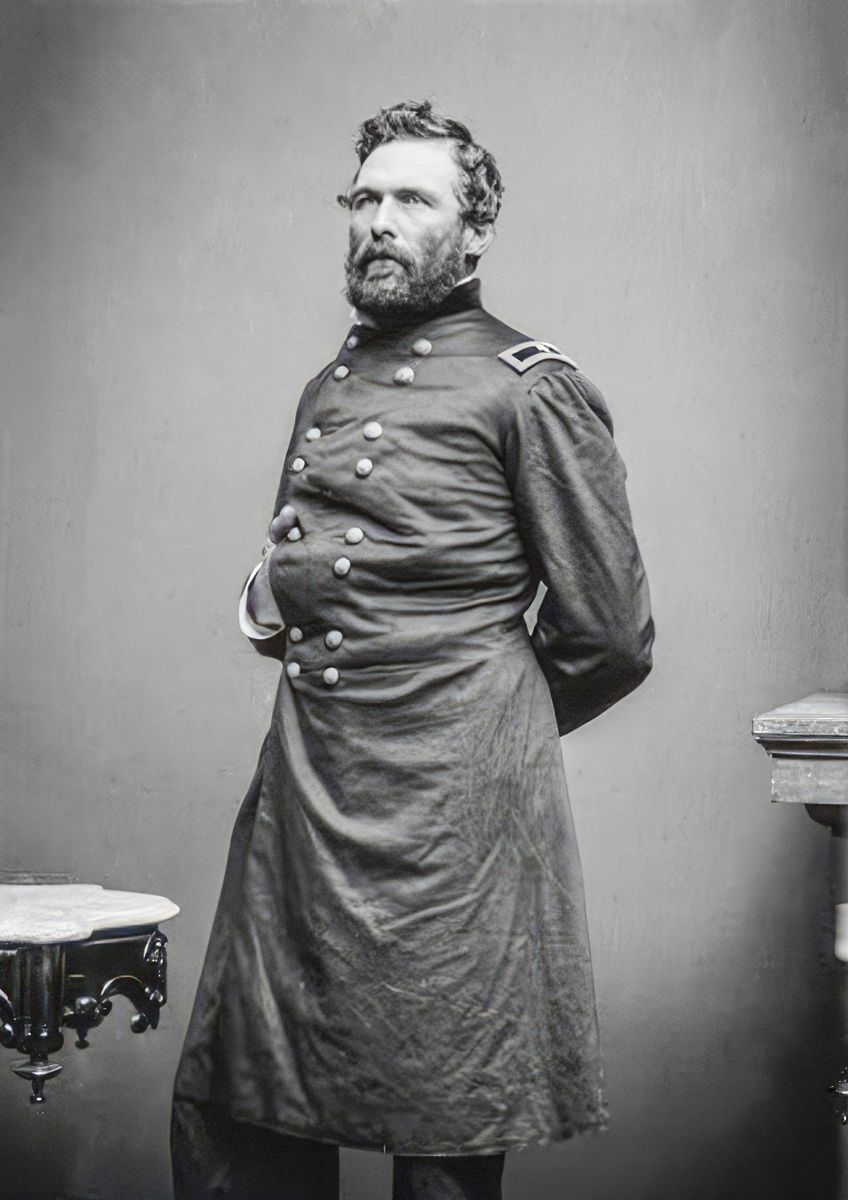
division in the III Corps, fell dead in the area over which Pender’s men attacked. Berry, who had risen in rank from colonel to major general without formal military training, was apparently shot by one of Pender’s sharpshooters while on horseback delivering orders, work normally reserved for staff officers. He died minutes after his removal to the Chancellor House. Berry’s men respected the tenacity of Pender’s men. Pvt. Daniel Macomber, 1st Massachusetts, wrote soon after the battle that the Confederates “come up in close column, close to our entrenchments … our whole line poured the shot into them. You could see them drop all around but as soon as one man fell another stepped into his place. They fight like the Devil there is no rubbing that out.” As they went forward, the 13th North Carolina, on the far left of the brigade did not receive the artillery fire that the rest of the brigade did and continued to advance with Edward Thomas’s Georgia brigade on Pender’s left. In doing so, they encountered Hays’ Brigade at close range. The 13th North Carolina’s Lt. Edward Smith was so near the Federals that “being fired upon by one of the enemy, [Smith] rushed forward, and killed him with his sword.” Pender credits Lt. John Ireland for capturing Brig. Hays and his staff, while Lt. Williams gives the honors to privates Alexander “Sandy” Andrews and Daniel Weeden. As Williams recalled it, the two Tarheels grabbed Hays’ horse by the bridle and told him to surrender. Hays replied that if they did not release his horse, he’d kill them. One Confederates then told Hays, “D—n you, dismount or I’ll kill you.” Hays complied. In another dramatic episode reported by Pender, Corp. Monroe Robinson, Company A, 13th North Carolina, “chased a color-bearer so closely that he tore off the colors, and threw down the staff, which was secured.” To make the scene even more hellish than it already was, Lt. T.D. Lattimore of the 34th North Carolina remembered that “During the fight the woods caught on fire from the explosion of hostile shells. The scene was sickening—the dead and wounded on both sides were burnt to a crisp. Numbers were so charred that their comrades could not recognize and identify them.” In his official report Pender claimed that “my brigade fought May 3 with unsurpassed courage and determination. I never knew them [to] act universally so well. I noticed no skulking, and they never showed any hesitation in following their colors.” The casualties suffered by the field officers in the brigade testify to Pender’s praise. As previously mentioned, Colonel Scales of the 13th North Carolina received a disabling thigh wound. Also wounded badly were Col. John S. McElroy and Lt. Col. William A. Stowe of the 16th North Carolina. Lt. Col. Christopher Cole and Maj. Laban Odell of the 22nd North Carolina were both killed. In addition, Maj. Murdock McRae McLauchlin, 38th North Carolina, was also severely wounded. Pender included a table breaking down his brigade’s losses by regiment in his report of the battle. He reported 45 officers and 706 men either killed, wounded, or missing. The emotionless numbers of course shadow the fact that of those 751 soldiers, 116 would not live to see the May 3 sunset; some of the 567 wounded would later die from effects of their wounds, others would never fight another battle and go home missing limbs; and probably at least some of 68 missing soldiers would forever go unidentified, thus not allowing their families to learn their fates and gain closure. CVBT has helped save over 320 acres at Chancellorsville. Tim Talbott is the Administrative Officer CVBT.
“Unsurpassed Courage and Determination”; Pender’s Brigade at Chancellorsville On May 9, 1863, a small article on the front page of the Richmond Daily Dispatch noted the capture of Gen. William Hays, who commanded a brigade in the Army of the Potomac’s II Corps at Chancellorsville. The story explained that up until Hays’s capture, “we never heard that there was any son of Richmond a traitor, fighting in the enemy’s ranks, certainly not in any prominent position.” Despite the newspaper hoping that the claim proved false, and the city’s Confederate-only reputation would remain sterling, Hays was indeed a Richmond native. Left out of the article is any mention or credit to the soldiers who captured him and what they endured to be in the position to do so.
The mission of CVBT is to preserve land associated with the four major campaigns of: Fredericksburg, Chancellorsville, Mine Run, and the Overland Campaign, including the Wilderness, and Spotsylvania Court House. To learn more about this grassroots preservation nonprofit, which has saved over 1,700 acres of hallowed ground, please visit: www.cvbt.org.