
This And That
The Last Surrender in the Cis-Mississippi
By Gould Hagler · Originally published November 2023 · pp. 24–25
The Last Surrender in the Cis-Mississippi “It ain’t over till it’s over”
– Yogi Berra The American Civil War did not end all at once. By the spring of 1865, it was clear the end was near, but how the end would come was far from certain. The story of Appomattox is well-known. What remained of Lee’s army, surrounded and hungry, yielded on April 9. The other main army in the east, Johnston’s cobbledtogether force in North Carolina, surrendered April 26. These were the two largest Southern armies, but thousands of Confederate soldiers were still under arms. Their stories are less well-known. In this column, we will look at the last days of the Confederate forces in the Department of
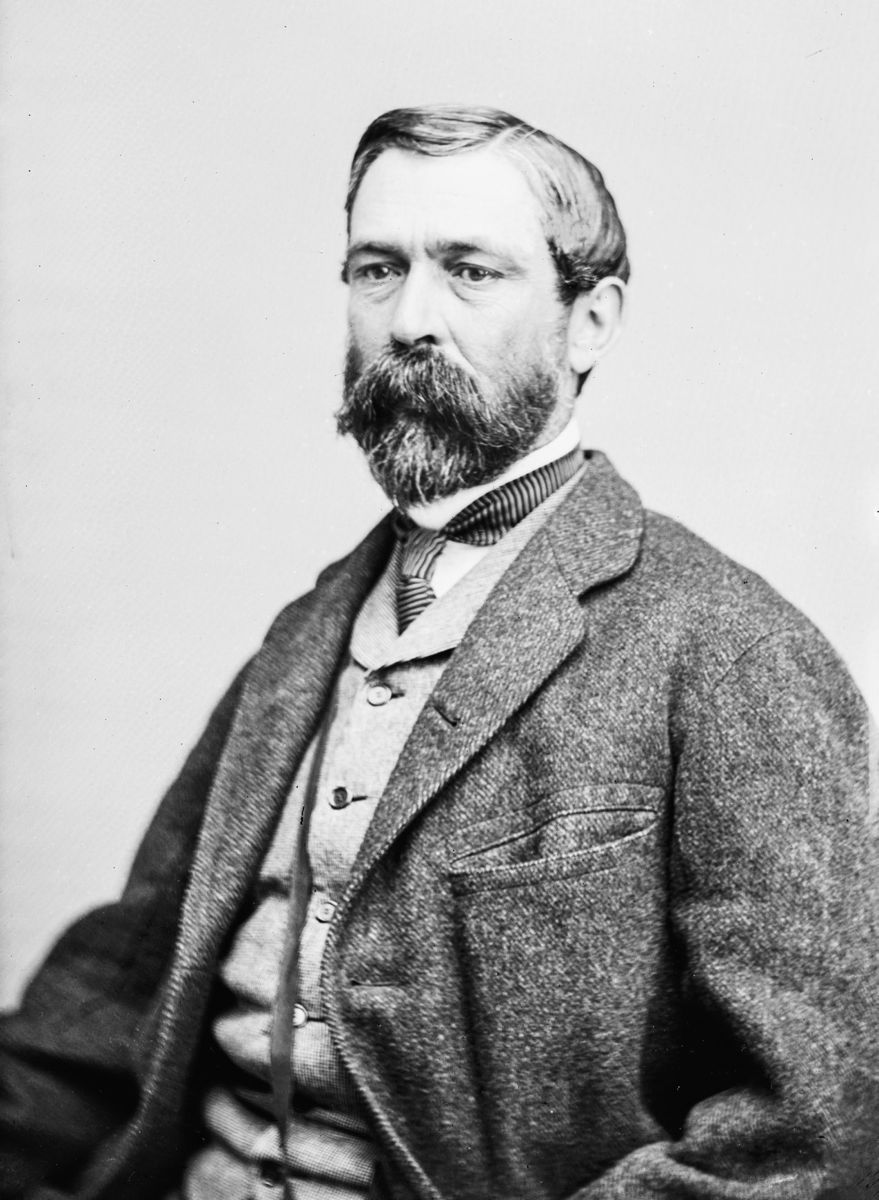
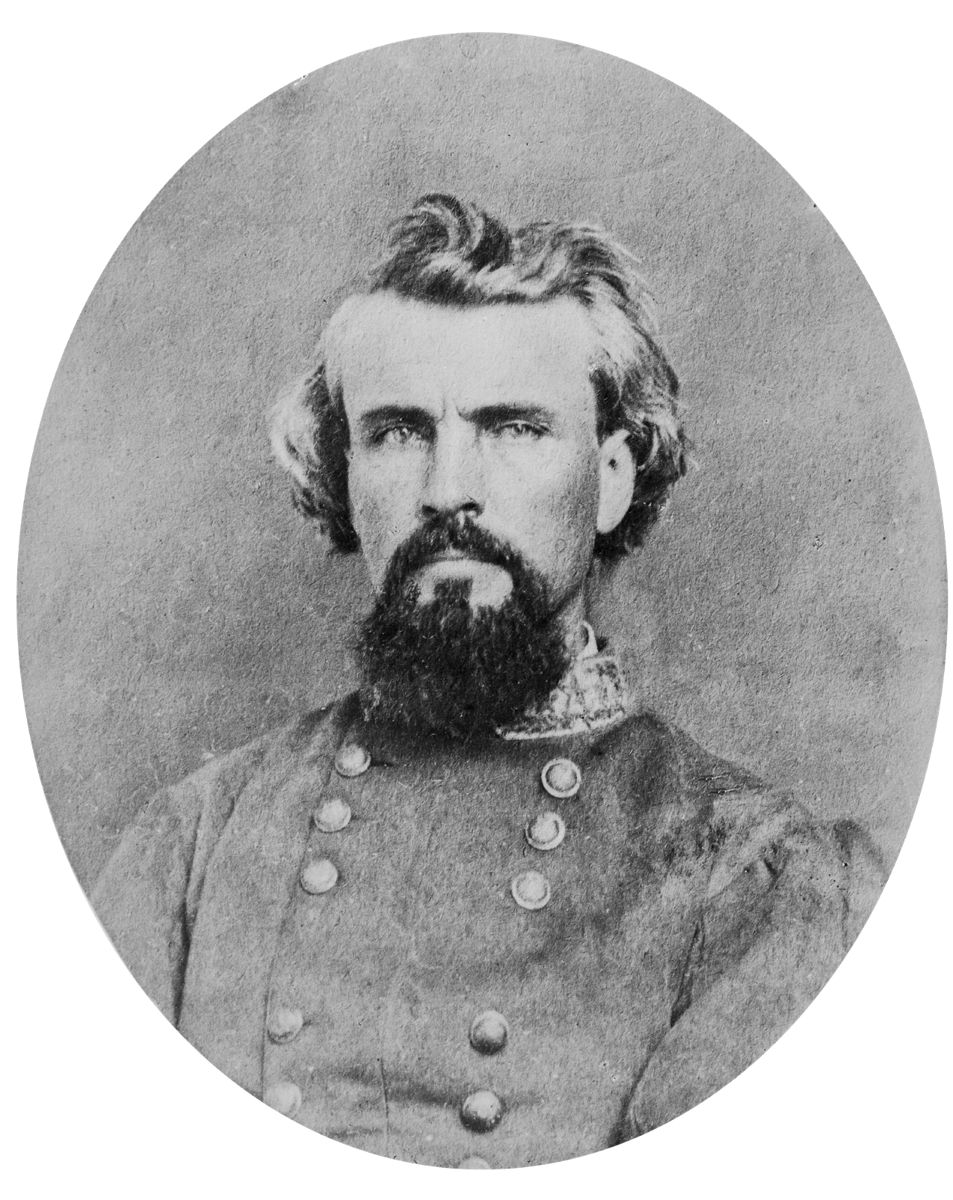
Alabama, Mississippi, and East Louisiana, commanded by Lt. Gen. Richard Taylor. Taylor, with his headquarters at Meridian, Miss., commanded about 12,000 men in this vast department. The most significant units were under Maj. Gen. Dabney Maury and Lt. Gen. Nathan Bedford Forrest. While Lee was retreating from Petersburg toward Appomattox, Maury’s forces were struggling to defend Mobile. The two forts protecting the city fell on April 8 and 9; Maury evacuated the city April 12, and marched north toward Meridian. Meanwhile, Forrest was withdrawing to Gainesville, Ala., after his defeat at the Battle of Selma on April 2. Maury and Forrest together commanded about 8,000 men. In his memoirs Taylor wrote that news of Lee’s surrender reached him before Maury left Mobile and that soon after came “the astounding news … of Lincoln’s assassination.” Taylor wrote Canby on the 14th proposing a prisoner exchange. Canby soon sent a written reply, a communication supplemented by a verbal message sent via a staff officer. In his response to the written and verbal messages, Taylor wrote: “Major Curell, the bearer of these communications, also gives to me the verbal message or suggestions entrusted to him by you for me. The tenor and tone of your communications and the sentiments of your message induce me to believe that a personal interview between us…may well be attended with results consonant with the views which, I think, we both entertain….” It is not difficult to read between the lines in this carefully written circumlocution or to guess the content of the verbal message conveyed by Major Curell. Taylor and Canby met on April 29 at a farm ten miles north of Mobile. The adversaries quickly agreed to a truce, which either party could terminate with 48 hours’ notice. On the very next day Canby wrote to Taylor giving the required notice: he had heard from Washington City. The explanation for this sudden termination of the truce lies with goings on in North Carolina involving Maj. Gen. William Sherman and Gen. Joseph Johnston. Many CWN readers are familiar with the agreement made by Sherman and Johnston. Signed on April 18, the pact proposed an armistice to apply in all theaters and outlined terms for the Confederate states to return to the Union. This Sherman was not authorized to do. Tempers exploded when news of the pact reached Washington. Sherman’s actions were immediately disapproved. Orders flew from the capital stating that “Sherman’s agreements could bind his command only, and no other.” All commanders east and west were to obey “no orders of Sherman” and were to continue to press the remaining Confederate forces. Taylor wrote in his memoirs that he and Canby had been advised of the Sherman-Johnston pact and had been “requested by the officers making it to conform to its terms until the civil authorities acted.” If they expected the agreement to be approved, and to be the basis of the surrender, they were wrong, as the emphatic orders from Washington made clear. However, the disapproval did not necessarily mean more fighting in Taylor’s department. In the same message notifying Taylor that the truce would end, Canby stated that he had been authorized to offer Taylor the same terms given to Lee at Appomattox. Taylor promptly agreed and suggested a meeting to execute the surrender. On May 8 the two generals met and signed a surrender agreement “consistent with the honor of our arms,” as Taylor wrote in his memoirs. We now turn to Forrest, whom we left in early April as he was moving to Gainesville after the Battle of Selma. What were his thoughts during the intervening time, and what was he likely to do? Both Taylor and the Federal authorities feared, with some cause, that the famous cavalry commander was not willing to surrender. David Silkenat in his Raising the White Flag wrote that “calls to prosecute [Forrest] for the Fort Pillow massacre might push him into waging a guerilla war long after other Confederate forces had raised the white flag.” Sherman, in a letter to his wife on April 22, before he got word that his agreement was disapproved, expressed fear of Confederate armies “breaking up into guerillas.” Of Forrest (and a few other generals he named) Sherman wrote that “nothing is left for them but death or highway robbery.” In a message to Lt. Gen. Ulysses Grant on April 25, after the government had disapproved the pact, Sherman wrote: “I now apprehend that the rebel armies will disperse, and instead of dealing with six or seven States we will have to deal with numberless bands of desperadoes, headed by such men as Mosby, Forrest, Red Jackson, and others who know not and care not for danger and its consequences.” During this time Forrest was weighing his options. He and his men certainly had reason to fear for their fate should they surrender. On April 25 Forrest made an announcement to his men concerning reports of Lee’s surrender and rumors of Taylor’s plans to surrender to Canby. He told his men that “no credence should be given to such reports.” The general’s announcement went even further, saying that reports from “Southern sources” denied that Lee had surrendered and asserted that “Grant had lost in battle and by desertion 100,000 men.” In this trying time it was “the duty of every man to stand firm at his post and true to his colors.” Soon after, in the first days of May, Forrest met with the governor of Mississippi, Charles Clark, and the former governor of Tennessee, Isham Harris. They urged him not to quit, but to take his command to the TransMississippi and join Gen. E. Kirby Smith’s force. By this time, however, Forrest had made up his
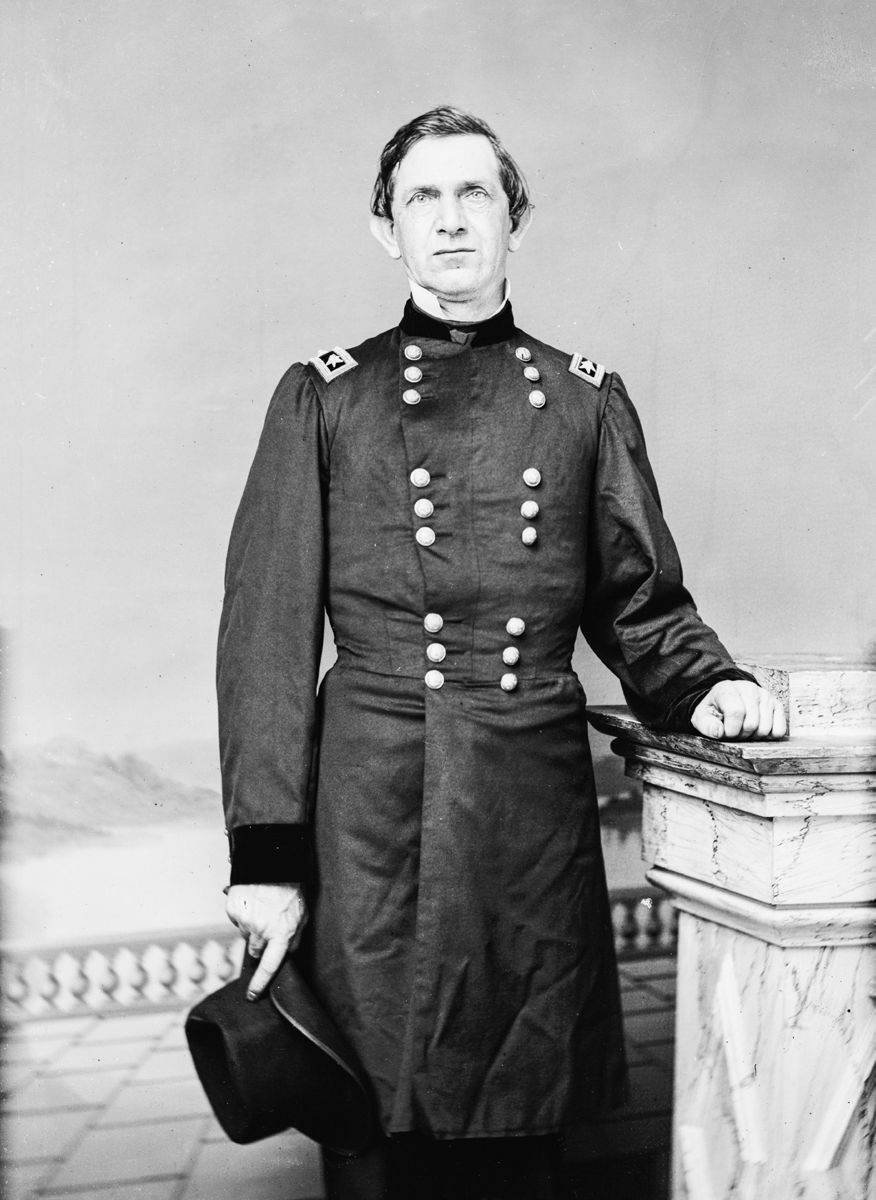
CivilWarNews.com mind: further resistance would be fruitless; surrender was the only reasonable course; he said “no” to Clark and Harris. What had determined Forrest’s decision? He certainly could see the futility of resistance and envision the further harm guerilla warfare would inflict on a region and a population already ruined by four years of war. If these facts were not already apparent, a message sent by Maj. Gen. George Thomas on May 2 made the situation even clearer. Thomas dispatched a subordinate with this order: “Send, under a flag of truce, a summons to Source: Scott, Robert Nicholson., Lazelle, Henry Martyn., Davis, George Breckenridge., Perry, Leslie J., Kirkley, Joseph William., Ainsworth, Fred Crayton., Moodey, John Sheldon. The War of the Rebellion: v. 1-53 [serial no. 1-111] United States: U.S. Government Printing Office, 1897, page 573.
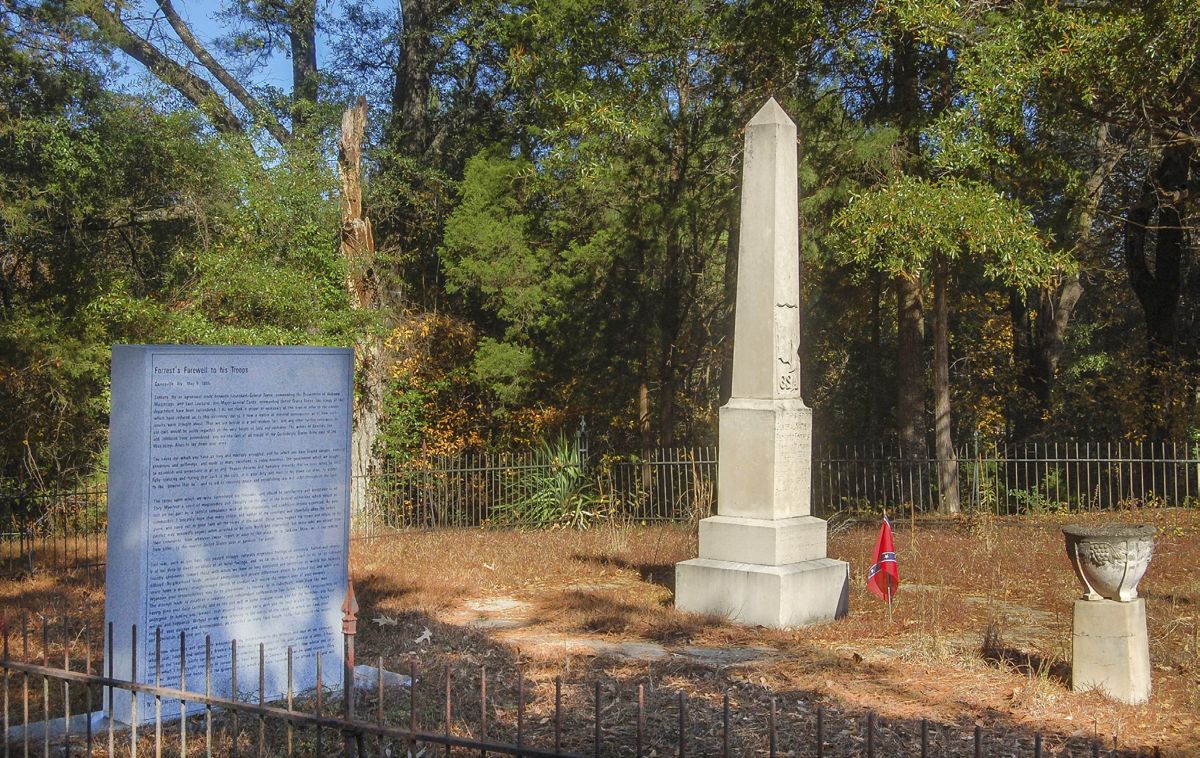
Forrest to surrender upon the terms given by General Grant to Generals Lee and Johnston. Inform him…of the rumors which have reached you, and that you are prepared for him, and if he attempts such a reckless and bloodthirsty adventure he will be treated thereafter as an outlaw, and the States of Mississippi and Alabama will be so destroyed that they will not recover for fifty years.” As for future prosecution, the prospect was uncertain. However, the terms of Taylor’s surrender provided for parole and stated that parolees would not be disturbed as long as they observed their parole and obeyed the law. These terms gave at least some assurance. Thomas’s warning, however, was probably not necessary. On April 30 Taylor had informed Forrest of the truce signed with Canby and ordered that “no movements or changes from dispositions of troops” be made. Forrest complied with this order, and on May 3 advised Thomas. On May 9 a Federal general journeyed to Forrest’s headquarters to issue paroles under the terms of the surrender signed by Taylor and Canby the day before. That same day Forrest issued his farewell message to his men. The message pointed to an undeniable reality. “That we are beaten is a self-evident fact,” the cavalry leader wrote, “and any other further resistance on our part would justly be regarded as the very height of folly and rashness.” Forrest characterized the surrender terms as “favorable,” and said they “should be satisfactory and acceptable to all.” He recognized the “spirit of magnanimity and liberality on the part of the Federal authorities,” which, he added “should be met on our part by a faithful compliance with all the stipulations and conditions therein expressed.” He also warned that any men failing to accept the parole offered “may assuredly expect when arrested to be sent North and imprisoned.” In April many had reasonable fears that the fighting would devolve into a brutal guerilla war. These fears were not realized. The events of early May ended the fighting east of the Mississippi. Next month’s column will examine events further west.
Sources: •
•
•
• •
David Silkenat, Raising the White Flag: How Surrender Defined the American Civil War, 2019 Richard Taylor, Destruction and Reconstruction: Personal Experiences in the Late War, 1879 Brian Steel Wills, The Confederacy’s Greatest Cavalryman: Nathan Bedford Forrest, 1992 M.A. DeWolfe Howe, Home Letters of General Sherman, 1909 Official Records, Ser. 1, Vols. 47 and 49.
Gould Hagler is a retired lobbyist living in Dunwoody, Ga. He is a past president of the Atlanta Civil War Round Table and the author of Georgia’s Confederate Monuments: In Honor of a Fallen Nation, published by Mercer University Press in 2014. Hagler speaks frequently on this topic and others related to different aspects of the Civil War and has been a regular contributor to CWN since 2016. His email is [email protected].