
Critic's Corner
How a British Newspaperman Got the Nickname of “Bull Run”
By Stephen Davis · Originally published November 2023 · pp. 30–31
How a British Newspaperman Got the Nickname of “Bull Run” A number of Englishmen came over to witness the Americans’ civil war, and their travels almost always took them through the Southern states. In their diaries and journals, the visitors recorded their observations, and later a number had their writings published. These foreigners’ anecdotes, when read today, offer close and fascinating glimpses of the Confederacy.1 Some of these travelogues are more famous than others. William C. Corsan was a Sheffield steel merchant who came here, October-November 1862, to
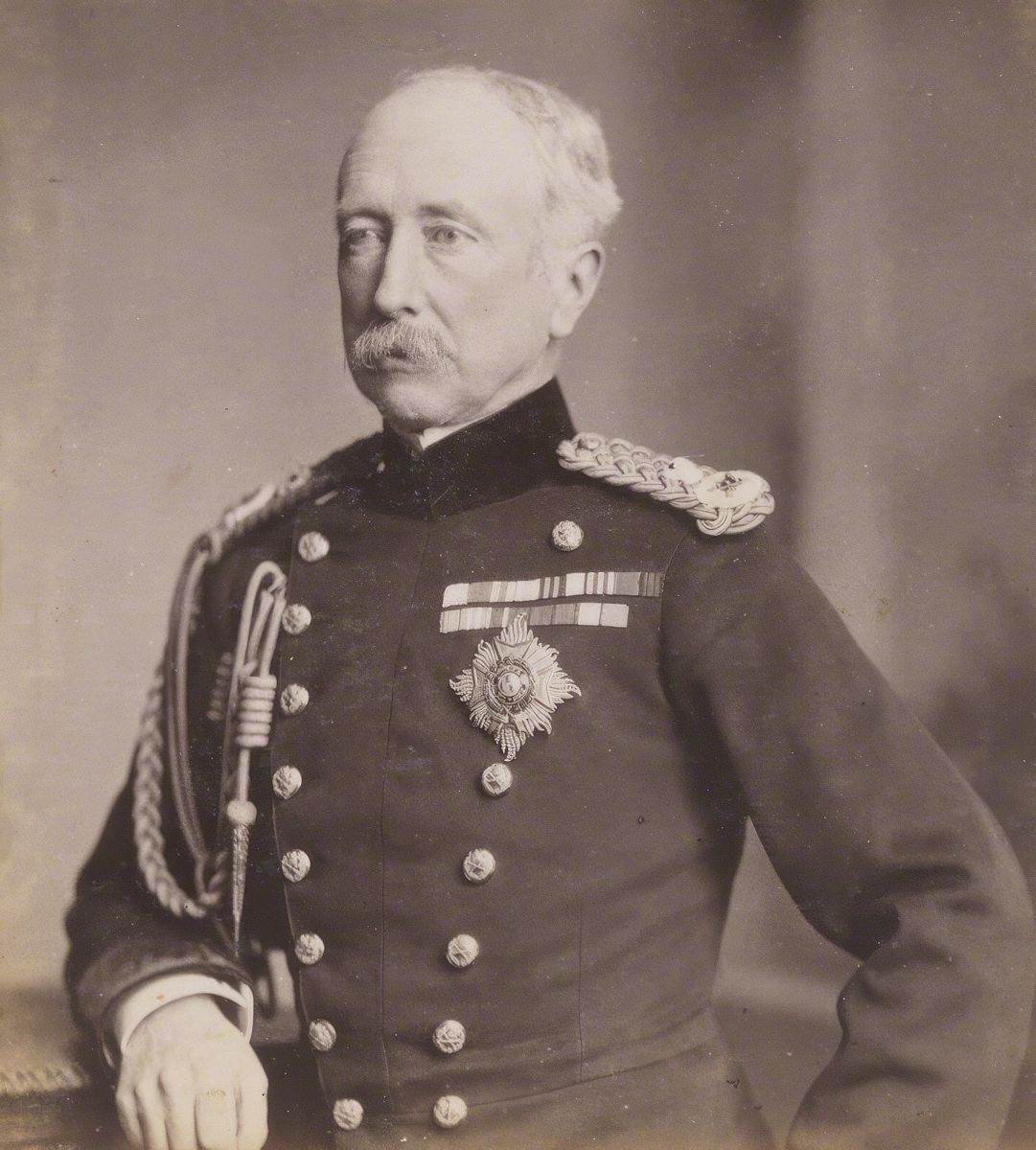
Garnet Joseph Wolseley.
examine how the blockade could affect his business. He left the States believing that the South would win. “It is no disgrace to the North that she cannot subdue the South,” he concluded, and suggested that the two sections agree to “live amicably and prosperously apart.”2 British army officers were keenly interested in the war. Col. Garnet J. Wolseley ran the blockade and spent five weeks touring the Confederacy, September-October 1862. During that time he was able to meet General Lee. “I have met many of the great men of my time,” he later wrote, “but Lee alone impressed me with the feeling that I was in the presence of a man who was cast in a grander mould, and made of different and finer metal than all other men.”3 Capt. Fitzgerald Ross traveled the South from May 1863 to April 1864, during which time he accompanied Lee’s army into Pennsylvania. Afterward he made his way through the Carolinas, Georgia and Alabama. In the spring of ’64 Ross ran the blockade to Nassau and eventually sailed back to England. His Visit to the Cities and Camps of the Confederate States was published there in 1865. “Without making any predictions,” writes one historian, Ross “evidently believed that the South could never be conquered.”4 More famous today than Wolseley and Ross is Lt. Col. Arthur Fremantle, whose diary, April-July 1863, includes his witnessing of Gettysburg.5 (Recall that scene in the Turner movie, with the red-capped Fremantle climbing up a tree during the battle to view the action.) The British press was enormously curious about the American conflict. Some newspapers even sent reporters over to cover events first-hand. Frank Lawley reported for the London Telegraph; after the war, Southerners remembered him as among “English newspaper correspondents in Richmond… who were our friends and wellwishers.”6 Frank Vizetelly wrote articles and drew pictures for the Illustrated London News. He was with Jefferson Davis’ entourage in Washington, Georgia, during its flight from Richmond. He was thus present on the town square on May 4, and witnessed the president’s sad farewell to his staff and escort as he prepared to ride off farther south. Vizetelly saw tears in Davis’ eyes, as he reported to the London News when he sent his drawings. The artist’s four pictures appeared in the ILN issue of July 22, 1865.7 Yet most famous of all was William Howard Russell of the London Times. Born in Ireland in 1820, Russell started out in 1841 reporting Irish politics for the Times. In 1853 he sailed to Crimea and covered the war. At Balaklava he watched the 93rd Argyles in combat, and in reporting their fight coined the phrase “the thin red line.” His description of the
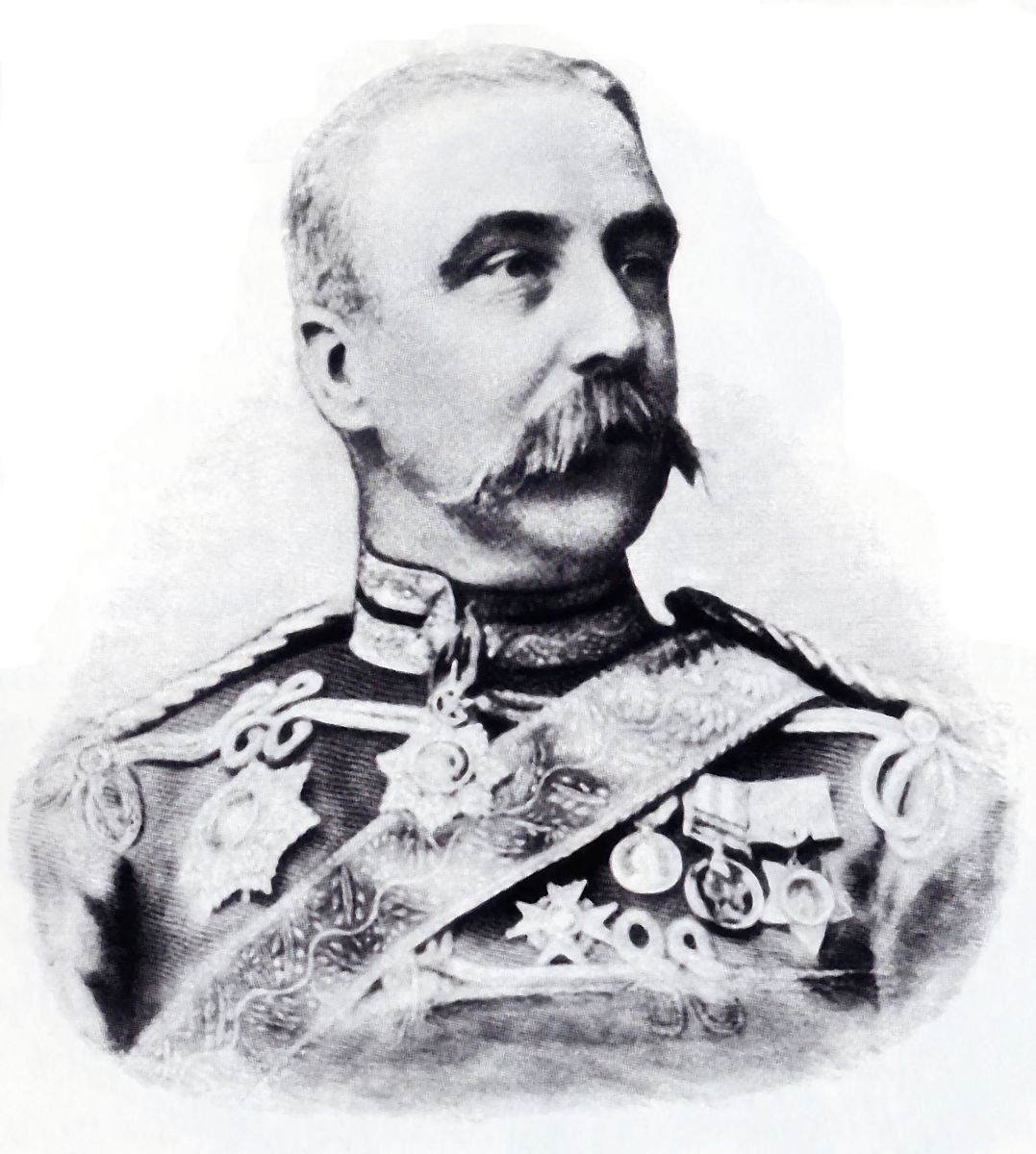
General Sir Arthur James Lyon Fremantle.
Light Brigade’s tragic charge moved Lord Tennyson to write his famous poem.8 The war in America would obviously attract a news-sleuth like William H. Russell. Actually he left the Isles even before it started, sailing on March 3, 1861. After landing in New York, Russell traveled on to Washington, then Charleston, Savannah, Montgomery, Mobile and New Orleans. He toured Mississippi River defenses with General Polk, then made his way to Chicago. There, on June 25, he penned his opinion that America’s civil war would end in a compromise: “The South is not as strong as the North, but its defensive power is enormous.” Russell was back in Washington by July 3 and deftly began to make his way into Washington’s high circle. He supped with Seward— “dinner bad, wine poisonous,” he recorded in his diary—and met Lincoln. To the president the secretary remarked of Russell’s Times, “If we only get them to do what we want all would go well.”9 On July 9 the correspondent dined with General Scott; on the 13th he rode through the camps of the large Federal army guarding Washington. He was not impressed. The Union troops numbered some 30,000, but “the officers are unsoldierly-looking men; the camps are dirty to excess; the men are dressed in all sorts of uniforms.”10 Nonetheless, it was this gaggle of greenery that McDowell proposed to lead out to meet the Rebels at Manassas. When they finally got started on July 16, the Federal forces’ advance was so slow that Confederate commander G. T. Beauregard had enough time to summon Joe Johnston’s forces from the Valley. When the Northerners attacked early on July 21, the Confederates were ready. The see-saw battle that followed ended with McDowell ordering retreat around 4 p.m. What began as an orderly withdrawal from the battlefield, however, soon turned into a panicky Federal rout.11 A shocked Russell was there to see it all. In the capital on July 20, he observed that “every carriage, gig, wagon, and hack has been engaged by people going out to see the fight.” Having failed to hire a horse, Russell engaged a two-horse gig and a Negro driver. The next morning he packed some sandwiches, water, tea, “a flask of light Bordeaux,” and set out to see the show. Riding through and beyond Alexandria, he could hear the sounds of battle. In a few hours he encountered excited crowds. “Bully for us!” cried a Congressman. “Bravo!” But then Russell started seeing a bunch of traffic heading his way. “My first impression was that the wagons were returning for fresh supplies of ammunition,” he recalled. “But every moment the crowd increased; drivers and men cried out with the most vehement gestures, ‘Turn back! Turn back! We are whipped!’ Civilians who had gone out to picnic and view the victory were now streaming back in flight, “the men shouting and the women shrieking.”12 Russell proved to be the first and probably most influential chronicler of McDowell’s rout when, on the day after the battle, and safely ensconced back in Washington, he composed a very long account of what he had seen. From it we draw this passage— colorful, to say the least, as only an eyewitness observer can record. “Turn back! Retreat!” shouted the men from the front. “We’re whipped! We’re whipped!” They cursed, and tugged at the horses’ heads, and struggled with frenzy to get past. Running by me on foot was a man with the shoulder-straps of an officer. “Pray, what is the matter, sir?” “It means we’re pretty badly whipped, and that’s a fact,” he blurted out in puffs, and continued his career. I observed that he carried no sword. The teamsters of the advancing wagons caught up the cry. “Turn back—turn your horses!” was the shout upon the whole line, and, backing, plunging, rearing, and kicking, the horses which had been proceeding down the road, reversed front and went off toward Centreville.
Those behind them went madly rushing on, the drivers being quite indifferent whether glory or disgrace led the way, provided they could find it. In the midst of this extraordinary spectacle, an officer, escorted by some dragoons, rode through the ruck with a light cart in charge. Another officer on foot, with his sword under his arm, ran up against me. “What is all this about?” “Why, we’re pretty badly whipped. We’re all in retreat. There’s General Tyler there, badly wounded.” And on he ran. There came yet another, who said, “We’re beaten on all points. The whole army is in retreat.”13
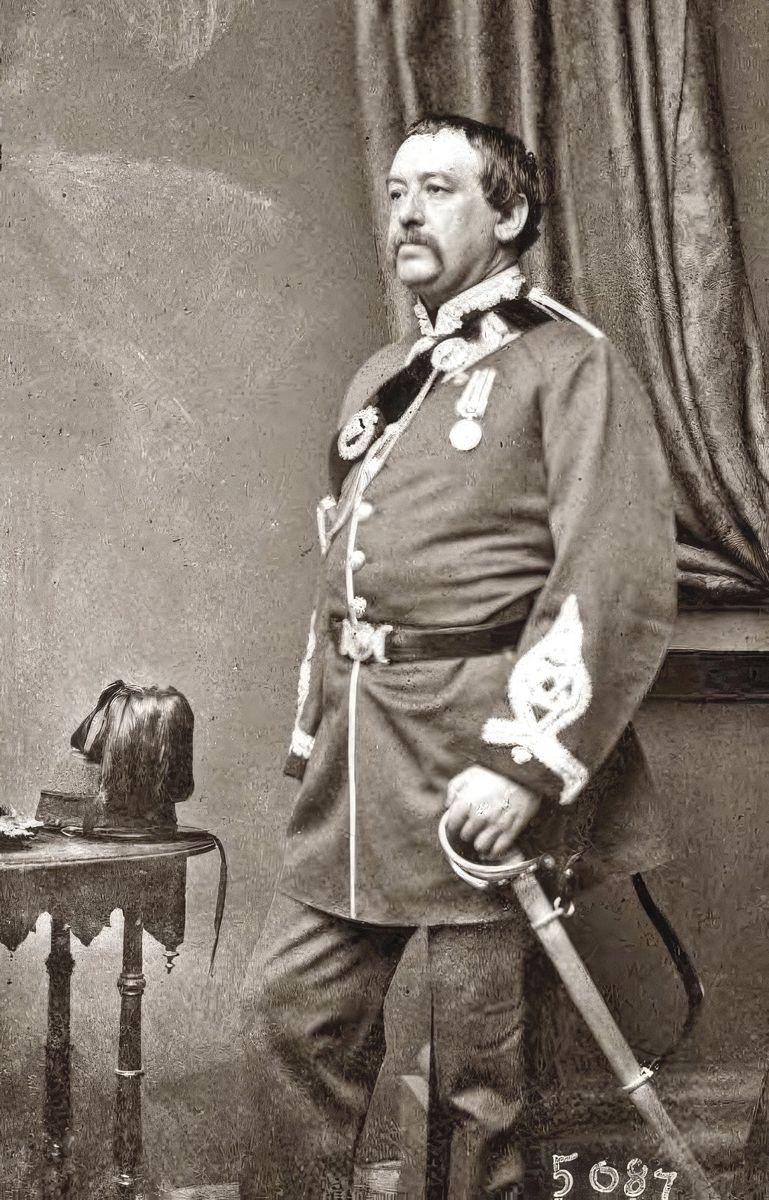
Russell put his dispatches onboard a steamer for London, and by the first week of August— pretty fast, when you think about it—they were appearing in the London Times. Three weeks later, they were being reprinted in the New York papers. “His description of the rout at Bull Run immediately set up a howl of outrage from Northern throats,” writes Allen Guelzo. Death threats came in the mail; sentries at the Potomac bridges took pot-shots at him. Journalistic colleagues distanced themselves. “We do not know and do not care what he saw,” growled the Chicago Tribune; “we should be justified in believing that he was not at the battle at all.” When Secretary of War Stanton prevented him from covering McClellan on the Peninsula, Russell boarded a steamer and on April 9, 1862 left America.14 Russell never ceased working. He covered the Franco-Prussian War, reported the Zulu conflict in South Africa, and was knighted in 1895. He was still traveling and corresponding when he died in London in 1907, aged 86.15
Sir William Howard Russell.
Ella Lonn, Foreigners in the Confederacy (Gloucester MA: Peter Smith, 1965 [1940]), 348-49. W. C. Corsan Two Months in the Confederate States: An Englishman’s Travels Through the South, ed. by Benjamin H. Trask (Baton Rouge: Louisiana State University Press, 1996), 140. Lonn, Foreigners, 350; Gary W. Gallagher, Lee: The Soldier (Lincoln: University of Nebraska Press, 1996), 184. E. Merton Coulter, Travels in the Confederate States: A Bibliography (Baton Rouge:
Louisiana State University Press, 1994 [1948]), 220. 5. Walter Lord, ed., The Fremantle Diary (Boston: Little, Brown, 1952 [1863]), 204-205. 6. Kate Mason Rowland, “English Friends of the Confederacy,” Confederate Veteran, vol. 25 (1917), 200. 7. Herman Hattaway and Richard E. Beringer, Jefferson Davis: Confederate President (Lawrence: University Press of Kansas, 2002), 425; William C. Davis, An Honorable Defeat: The Last Days of the Confederate Government (New York: Harcourt, 2001), 268. 8. Alfred Grant, The American Civil War and the British Press (Jefferson NC: McFarland, 2000), 122; Allen C. Guelzo, “The Gentleman from the Times,” Civil War Times Illustrated, vol. 18, no. 7 (November 1979), 4. 9. Martin Crawford, ed., William Howard Russell’s Civil War: Private Diary and Letters, 1861-1862 (Athens: University of Georgia Press, 1992), xxv, xxxi, xxxiv, xxxvii, 174; Louis M. Sears, ed., “The London Times’ American Correspondent in 1861: Unpublished letters of William H. Russell in the first year of the Civil War,” The Historical Outlook, vol. 16, no. 6 (October 1925), 253. 10. William Howard Russell, My Diary North & South, ed. by Fletcher Pratt (New York: Harper & Brothers, 1954 [1863]), 197, 199. 11. V.C. Jones, “First Manassas: The Story of the Bull Run Campaign,” Civil War Times Illustrated (Gettysburg, 1973), 7-12, 16-19; William C. Davis, Battle at Bull Run: A History of the First Major Campaign of the Civil War (New York: Doubleday, 1977), 234-36. 12. Russell, My Diary, 215, 217, 223; Richard Wheeler, A Rising Thunder: From Lincoln’s Election to the Battle of Bull Run—An Eyewitness History (New York: HarperCollins, 1994), 383-84. 13. Frank Moore, ed., The Rebellion Record: A Diary of American Events with Documents, Narratives, Illustrative Incidents, Poetry, etc., 11 vols. (New York: G. P. Putnam’s Sons, 1861-1863, and D. Van Nostrand Co., 1864–1868), vol. 2, Documents p. 57. 14. Guelzo, “Gentleman from the Times,” 44-45. 15. Ibid., 45.
Stephen Davis became a Civil Warrior around 1957, the year CBS aired “The Gray Ghost” on television. A lifelong Atlantan, he earned degrees at Emory and Chapel Hill. He served as Book Review Editor for Blue & Gray Magazine, 1985-2005, and has written widely for popular Civil War magazines and academic journals. Steve resides in northeast Georgia with his wife Billie and their cat Cha Cha, who navigate around his library of 3,000 Civil War books. He’s the author, with Atlanta journalist Bill Hendrick, of The Atlanta Daily Intelligencer
Covers the Civil War (Mercer University Press, 2022). His most recent work is I Thank the Lord I am Not a Yankee: Selections from Fanny Andrews’s Wartime and Postwar Journals (Mercer, 2023).