
Through The Lens
Hallo, Sam, I’m Dead! Battle of South Mountain – Part II
By Stephanie Hagiwara · Originally published November 2023 · pp. 6–8
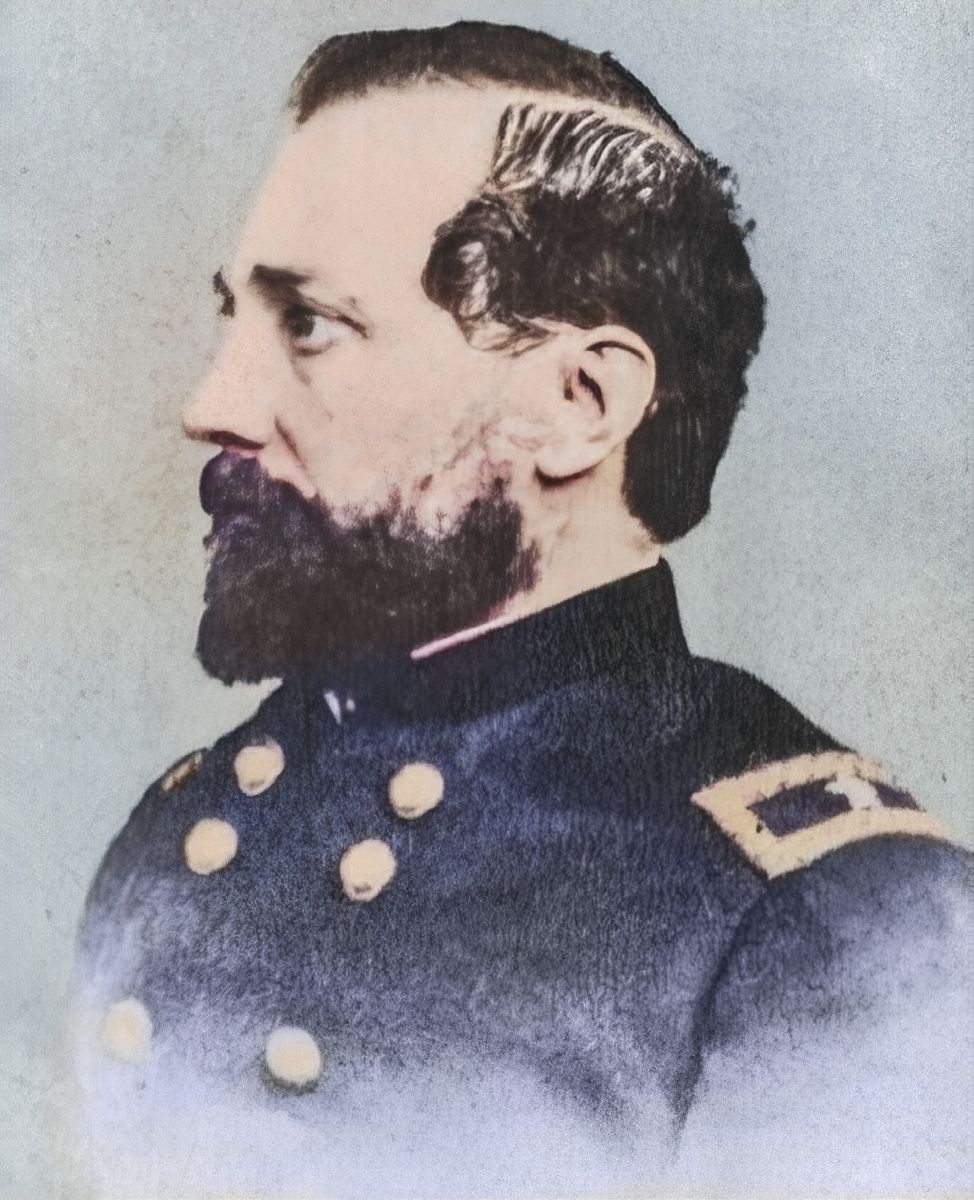
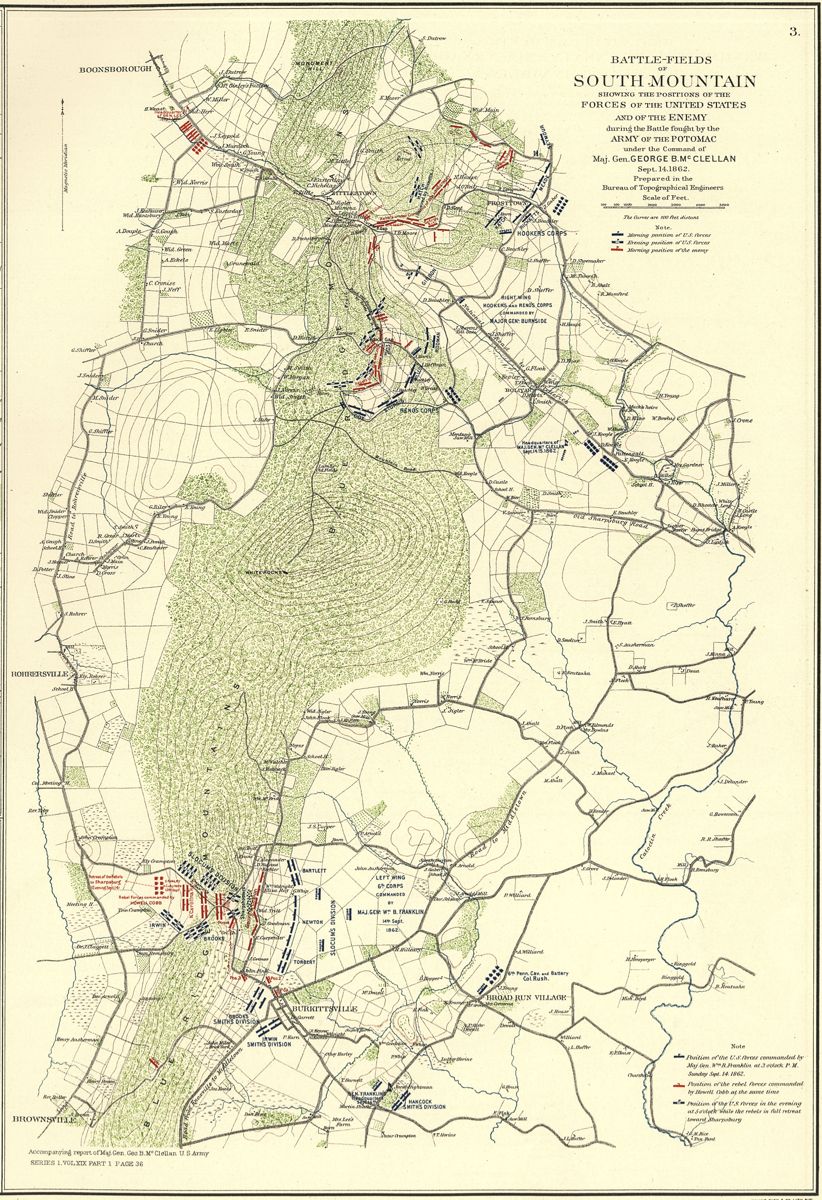
Hallo, Sam, I’m Dead! Battle of South Mountain – Part II “… motion was imperceptible, but could be inferred from the casual glint of sunlight on a musket barrel miles away. … each column a monstrous, crawling, blue-black snake, miles long, quilled with the silver slant of muskets at a “shoulder,” its sluggish tail writhing slowly up over the distant eastern ridge, its bruised head weltering in the roar and smoke upon the crest above, where was being fought the battle of South Mountain.” – U.S. Pvt. David L. Thompson, 9th N. Y. Volunteers About 9 a.m., September 14, 1862, during the Battle of South Mountain, Md., U.S. Gen. Jacob D. Cox, IX Corps , sent Kanawha Division men on a steep two-mile climb up Fox Gap to sweep around C.S. Gen. Samuel Garland’s forces at the ridgeline. During fierce fighting, Garland was killed about 10 a.m.
The Federals were ordered to fix bayonets and charge the stone wall. Under relentless Federal fire, without their commander, the green troops of the 12th N.C. panicked. The veterans tried to hold their ground but were being overrun. A cannon ball chopped the top of an oak tree trapping a 20th N.C. straggler. His cries for help were answered by a crazed pet dog. “I never saw a poor man’s pants torn so badly since. He suffered more than he would have had he gone into the fight,” wrote the 20th’s historian. C.S. Gen. Daniel Harvey Hill began the fight with two brigades and batteries. His intention was to hold on to Fox and Turner’s Gaps until he could be reinforced. Now Garland’s brigade “was too roughly handled to be of any further use that day.” Capt. James Bondurant’s, Jeff Davis Artillery two 12-pounder smoothbore Napoleons and two 3-inch rifled cannon, having lost their position, limbered up and galloped across the open fields. It was time to bluff. Hill ran two guns forward from Turner’s Gap forward and opened a brisk fire. His battery supporters were “a line of dismounted staff-officers, couriers, teamsters, and cooks. … I do not remember ever to have experienced a feeling of greater loneliness. It seemed as though we were deserted by “’all the world and the rest of mankind.’” By noon, the Kanawha Division had fought their way to the open fields of Daniel Wise’s at Fox Gap homestead. Cox’s goal, Turner’s Gap was a mile away. Cox’s men had endured three hours of a steep climb, “followed by as long a period of bloody battle.” The men were tired, and their ammunition was low. “It was time to rest,” decided Cox. His men had won a “glorious victory … it would have been folly to imperil it.” Cox’s men may have been resting on their arms, but Confederate artillery continued “a pretty steady fire.” Aiming at Wise’s fields “… their canister shot made long furrows in the sod with a noise like the cutting of a melon rind.” Both sides were waiting for reinforcements. Hill’s reinforcements arrived from Boonsboro, Md., first. Still, as he gazed upon the approaching blue columns, Hill knew that although “my little force could be brushed away as readily as the strong man can brush to one side the wasp or the hornet, I felt that General [George] McClellan had made a mistake.” Any resources diverted to fight Hill, were not reinforcing the fighting at Crampton’s Gap, the passage through South Mountain the Federals could use to ease the siege at Harper’s Ferry, Lee’s primary objective. On September 2, 1862, President Abraham Lincoln had restored McClellan’s command of the Army of the Potomac to the delight of his men. McClellan’s appearance “was the signal for the most spontaneous and enthusiastic cheering I ever listened to or participated in. Men threw their caps high into the air, and danced and frolicked like school-boys.” On the road to South Mountain near Middleton, Md., McClellan sat on his horse, Dan Webster, as the cheering troops passed. Hundreds of men
“hugged the horse’s legs and caressed his head and mane.” McClellan “continually pointed” towards the mountain where smoke billowed, and lines of men creeped upwards. “It was like a great scene in a play, with the roar of the guns for an accompaniment,” wrote Corp. George Kimball, 12th Mass. Volunteers.
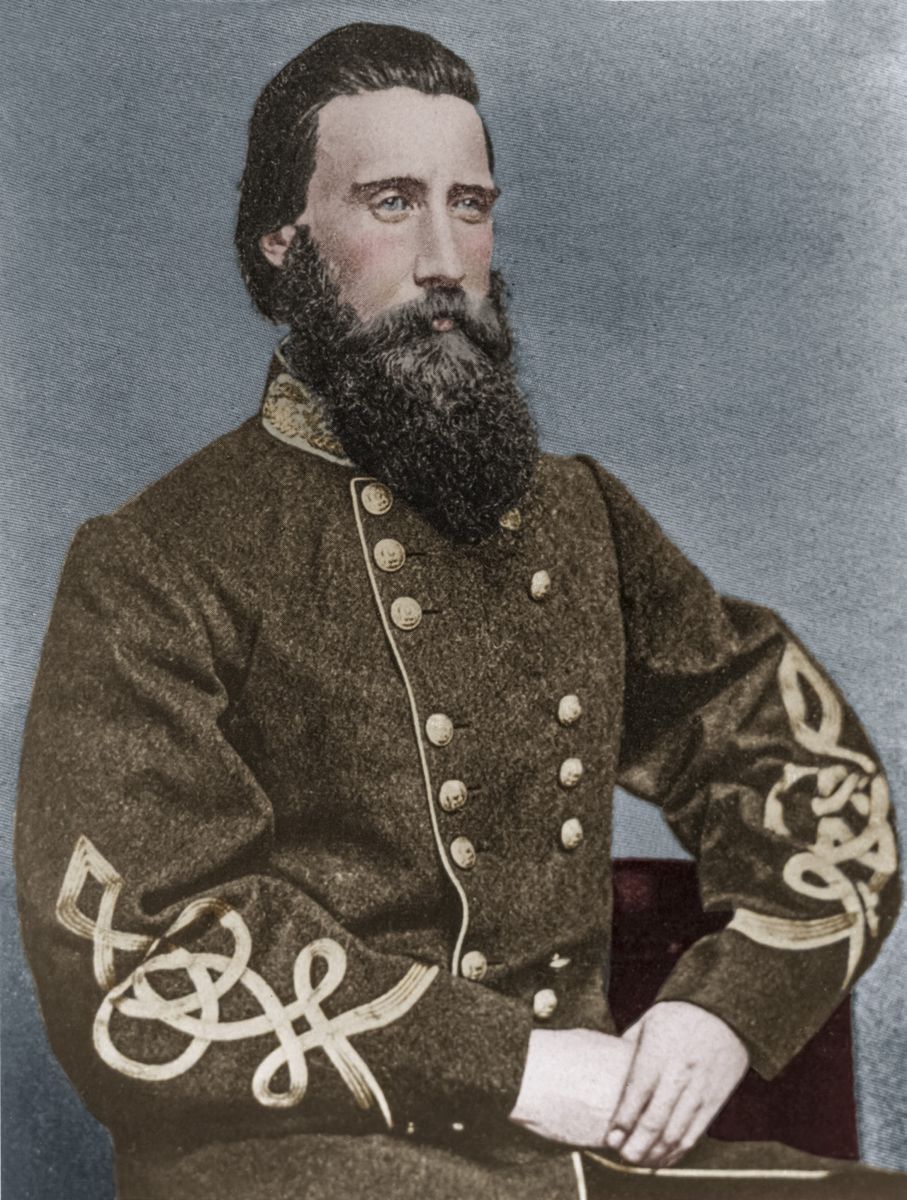
Near Boonsboro, about 3:30 p.m., Gen. John Hood’s Texas Brigade marched past Gen. Robert E. Lee astride his horse, Traveler. The battlefield was over two miles ahead, and uphill. Hood was under arrest for a conflict over captured Yankee ambulances. The men yelled, “Give us Hood!” Lee raised his hat saying, “You shall have him, gentlemen.” Lee called out Hood from the column, offering the return of his command in exchange for an apology. Hood declined. His soldier’s honor would not permit an apology. Lee responded, “Well, I will suspend your arrest till the impending battle is decided.” It was after 2 p.m. before IX
Corps leaders, Gen. Orlando B. Willcox, 1st Division, followed by generals Samuel Sturgis, 2nd Division, and Isaac Rodman, 3rd Division, joined Cox. The whole IX Corps was now united as Hill positioned four brigades to counterattack. The fierce fighting weaved through woodlots, pastures, and cornfields around Fox Gap. One North Carolinian remembered fighting “in so many directions that no one knew which was front.” In their baptism of fire, the 17th Mich. and 45th Penn. were ordered to charge Rebels behind a stone wall. In a few minutes both sides lost considerable dead and wounded before the Rebels retreated into the woods. The afternoon wore on. Smoke and the roar of the guns crowned the ridgeline of South Mountain. “Advance we could not. The enemy in numbers were like a solid wall… Retreat, we would not, and thus we fought, doggedly giving and taking the fearful blows of battle…,” wrote Felix de Fountaine, a Southern war correspondent. At sunset, Gen. Jesse L. Reno, IX Corps., arrived yards from where Garland had been mortally wounded. The highly regarded IX Corps commander was “a dauntless soldier”
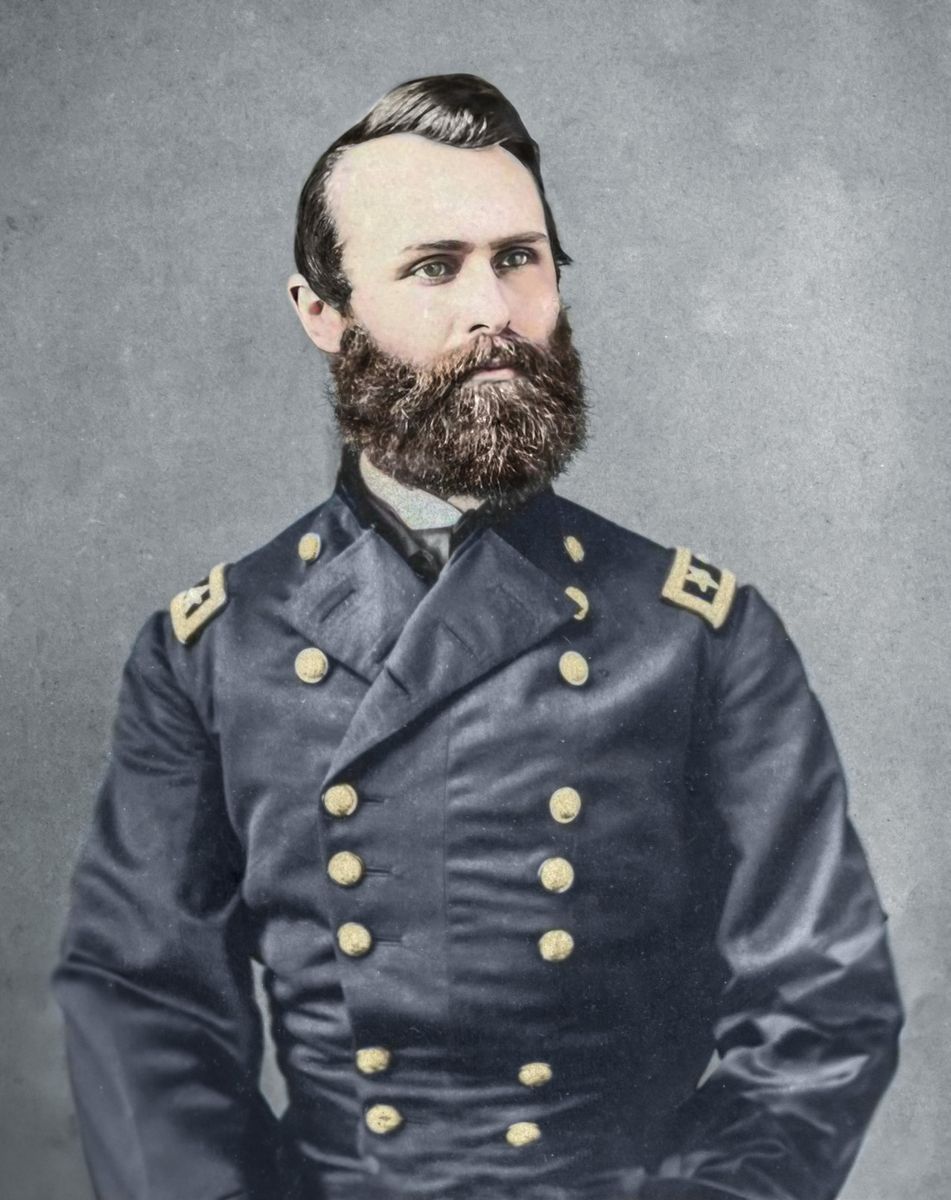
CivilWarNews.com whose “enthusiasm inspired his followers.” Reno peered through his field glass to determine what was holding up his men. From the tree line Hood’s men fired, “the flashing of the rifles illuminating the woods and revealing the Confederate position.” Reno was been shot just beneath the heart and carried off the field to Sturgis’s command post. Spotting his West Point classmate, Reno said, “Hallo, Sam, I’m dead!” Sturgis protested, “No, no. Not as bad as that.” Reno replied, “Yes, yes, I’m dead— good-by!” Minutes later Reno had died. Cox took command. The Rebel artillery continued to rake the fields and launch counterattacks. At dusk two North Carolina regiments charged a Federal battery. The 89th N.Y. lying in a nearby cornfield had set a trap. “The Confederates stood before us not twenty feet away, the full intention of destruction on their faces—but helpless, with empty muskets. The 89th simply rose up and shot them down,” wrote Pvt. David Thompson. The fighting stopped only after it became too dark to see. Cox pushed the Federal advance about a half mile from Turner’s Gap. Lee ordered a withdrawal from South Mountain with the intention of returning to Virginia.
On September 15, about noon, Lee received word that Harpers Ferry had surrendered. His supply line through the Shenandoah Valley, Va. had been secured. The Battle of South Mountain gave C.S. Gen. Thomas “Stonewall” Jackson the opportunity to deploy a trap without Federal interference. Lee ordered his army to reunite near Sharpsburg, Md. the site of the bloodiest single day of the War, the Battle of Antietam. Sources:
Koptak, John David. The Battle of South Mountain: The History Press, 2011 Sears, Stephen W. Landscape Turned Red: The Battle of Antietam: First Mariner Books, 2003 Hill, Daniel H. “The Battle Of South Mountain, Or Boonsboro. Fighting For Time At Turner’s And Fox’s Gaps.” In Battles & Leaders of the Civil War. Vol. 2 New York: The Century Company, 1887–1888 Stephanie Hagiwara is the editor for Civil War in Color.com and Civil War in 3D.com. She also writes a column for History in Full Color.com that covers stories of photographs of historical interest from the 1850’s to the present. Her articles can be found on Facebook, Tumblr, and Pinterest.