
Emerging Civil War
Emerging Civil War — November 2023
Originally published November 2023 · pp. 32–33
Chris Mackowski
From the Editor When Oklahoma State Police picked up Timothy McVeigh, he was wearing a t-shirt with an image of Abraham Lincoln on the front. Captioning the image were the words of John Wilkes Booth, Sic semper tyrannis: “Thus ever to tyrants.” McVeigh had been pulled over for having no license plate on his mustard-yellow 1977 Mercury Grand Marquis. No one knew at that point that McVeigh had, ninety minutes earlier, blown up the Federal building in downtown Oklahoma City. The back of McVeigh’s shirt included a comment cherrypicked from the vast canon of Thomas Jefferson: “The Tree of Liberty must be refreshed from time to time with the blood of Patriots and Tyrants.” Jefferson made his comment in private correspondence with John Adams’s son-in-law, exchanged in the wake of Shay’s Rebellion and the early, heady days of the French Revolution. Jefferson saw the French Revolution as a natural extension of the independence movement he’d help start in America and romanticized it as such. Extremists like McVeigh continue to quote Jefferson’s words as justification for their own violence. It doesn’t matter that Jefferson never publicly advocated that viewpoint nor that it was not shared by the rest of the Founders nor that he moderated his view over time after seeing the excessive violence of the French Revolution, the resultant rise of Napoleon, and the constant European wars that followed. Jefferson may have had revolutionary credentials, but that didn’t give his opinion any special weight compared to his contemporaries, no matter how tightly extremists want to cling to him. I was reminded of all this lately while working on a textbook chapter about the history of terrorism in America. McVeigh’s bombing sits on a thread of American history that includes the political movements that inspired the Virginia and Kentucky Resolutions, the 1814 Hartford Convention, the Nullification Crisis, and the Secession Crisis. Those movements had darker twins in Shay’s Rebellion, the Whisky Rebellion, John Brown’s Raid, armed opposition to Reconstruction, and the bombing in Oklahoma City. We could think of other examples, as well, no doubt. The Civil War was, of course, the greatest national calamity related to this tradition. The war inflicted 1.5 million casualties, including as many as 750,000 deaths. That doesn’t even factor in the heartbroken widows and orphans, bereaved parents and friends, and entire communities gutted of their young men. Devastation touched everyone. When I hear politicians today casually calling for, or even just predicting, another Civil War, I consider how tone-deaf they are to history as if those millions and millions of ruined lives from the 1860s were just some far-off abstraction that didn’t happen, not really, not to us. They don’t have a clue. We do. Let us remember our duty, as students of the Civil War, to remember those lost voices and hear what they have to say. — Chris Mackowski, Ph.D. Editor in Chief, Emerging Civil War ECW Welcomes Tonya McQuade Meet our newest member! Tonya McQuade is an English Teacher and Department Chair at Los Gatos High School in Los Gatos, Calif., and a member of South Bay Writers, Poetry Center San Jose, and the National League of American Pen Women.
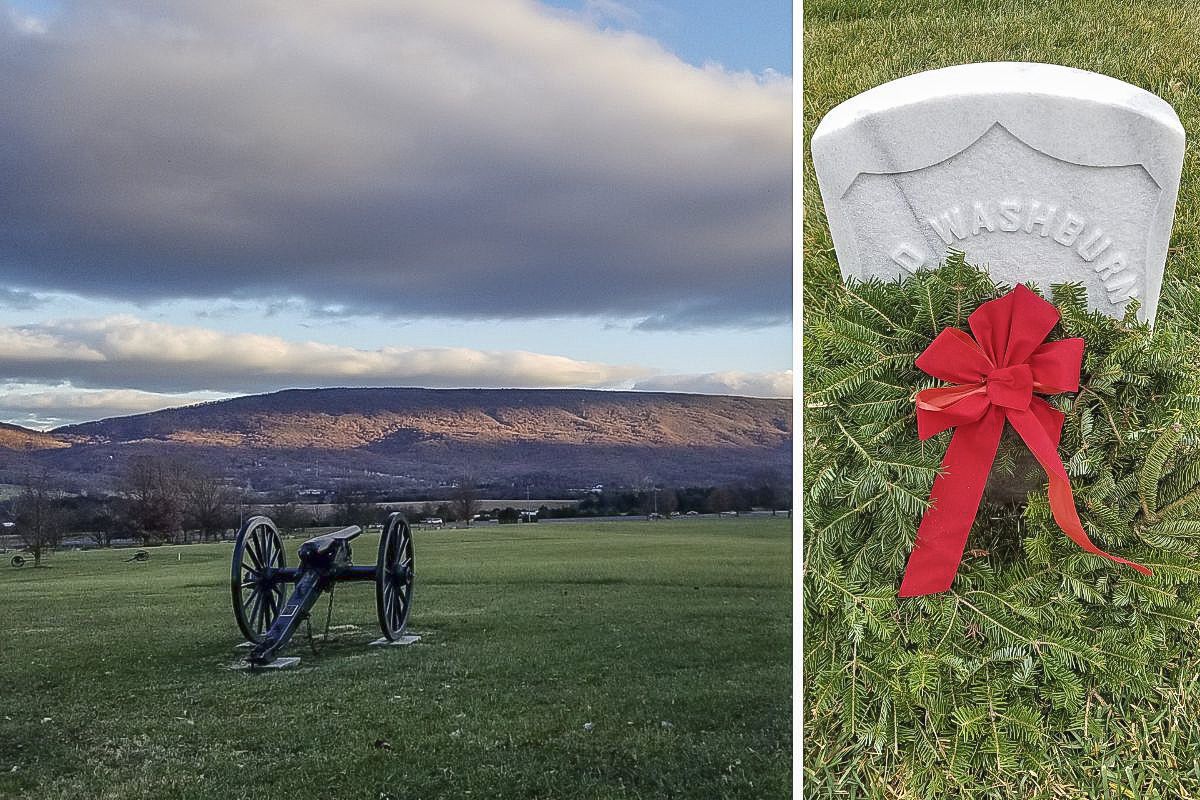
Tonya McQuade. She is a great lover of both history and nature, frequently visiting museums, state and national parks, and historical sites with her husband and children, as well as reading and teaching historical texts, literature, and primary source documents. In many cases, her reading of historical fiction has driven her to dig more deeply into the historical figures and events being portrayed, leading her to new discoveries and areas of interest. After acquiring 50 family Civil War letters in 2022, Tonya began researching the American Civil War in Missouri and began posting about her writing journey on a personal blog, Chasing History: Exploring My Ancestral Roots, as well as writing articles for the Emerging Civil War website. She is currently working on a book that incorporates the letters with historical commentary, titled A State Divided: The Civil War Letters of James Calaway Hale and Benjamin Petree of Andrew County, Missouri. She is also especially interested in the role women played in the Civil War, the history of slavery and abolition, and the ways the Civil War has been depicted in literature, film, poetry, and song. Tonya earned B.A. degrees in English and Communication Studies from the University of California, Santa Barbara, and served there as a writer and editor for the student newspaper, the Daily Nexus, for four years. She also earned her Single Subject Teaching Credential in English at UCSB and later her M.A. in Educational Leadership from San Jose State University. ECW Hosted Fundraiser to Support Wreaths Across America Wreaths Across America is the prominent non-profit coordinating these memorial efforts during the holiday. In the northern part of the Shenandoah Valley, Winchester National Cemetery takes part in this ceremony. At this location, more than 5,500 service members are buried, many United States volunteers from the American Civil War. This year Emerging Civil War historians hosted a battlefield tour fundraiser to help purchase and place more wreaths in Winchester National Cemetery, and proceeds will be used for that purpose. The Battle of New Market was fought May 15, 1864, and the Virginia Military Institute’s Corps of Cadets took a pivotal role in the fight as they joined the Confederate battle line and clashed with Union soldiers from Massachusetts, Pennsylvania, West Virginia, and Ohio. Learn More and Register https://emergingcivilwar.com/ecw_event/2023-wreaths/.
Notes & News Tim Talbott will be sharing about the Battle of New Market Heights to the First Defenders Civil War Roundtable of Berks County, Pennsylvania. Brian Swartz will be in Connecticut on October 5 and Maine on October 10, speaking about Joshua Lawrence Chamberlain and signing his book, Passing Through The Fire. Derek Maxfield has been busy with the beginning of a new semester and his continuing book tour for his new book Man of Fire: William Tecumseh Sherman in the Civil War. He and his students are preparing for a special exhibit on Spiritualism in Victorian America at the MorganManning House in Brockport, NY, Oct. 23-25. On October 4th, Maxfield welcomed author Harold Knudsen to Genesee Community College who talked about his book James Longstreet and the American Civil War: The Confederate General Who Fought the Next War. “Grant at 200,” co-edited by Chris Mackowski and Frank Scaturra, received a great review from Jonathan Noyalas in the September issue of Civil
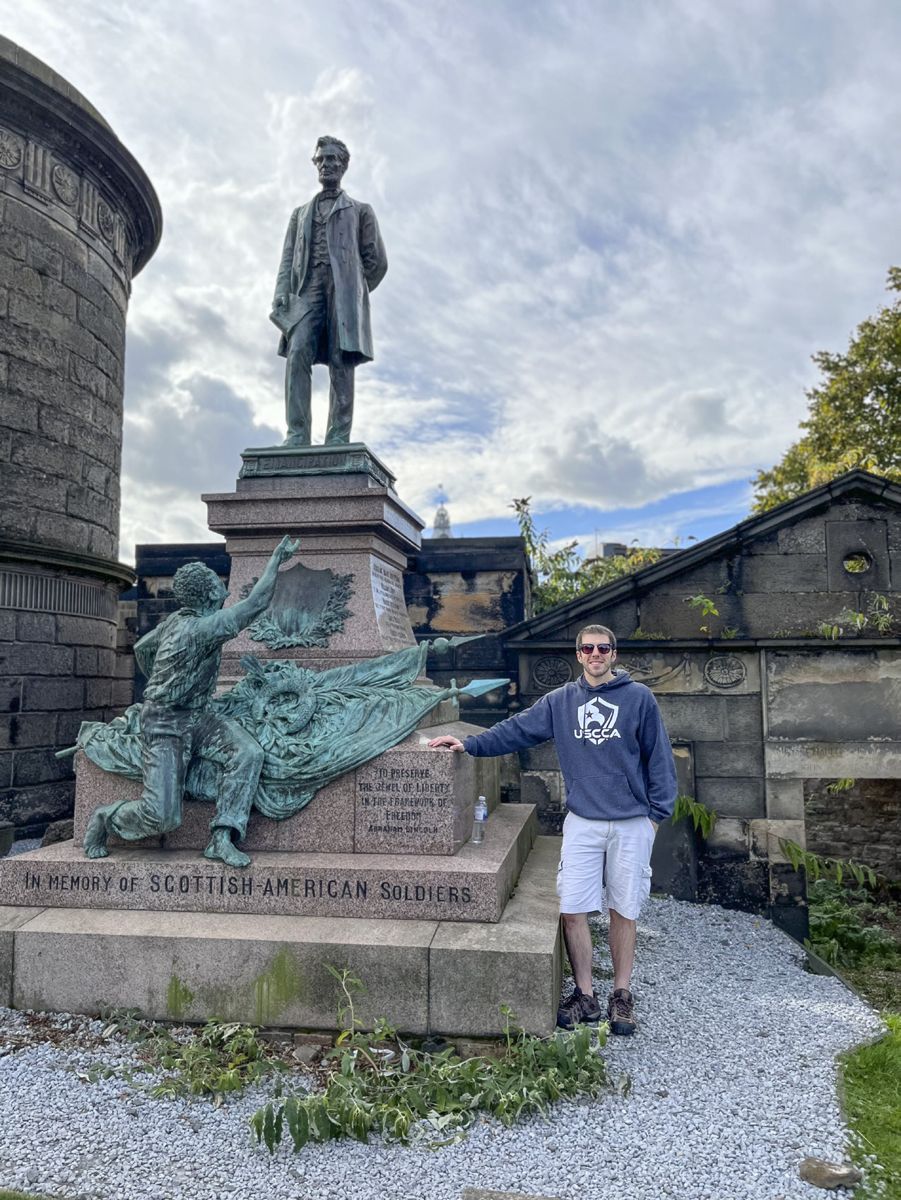
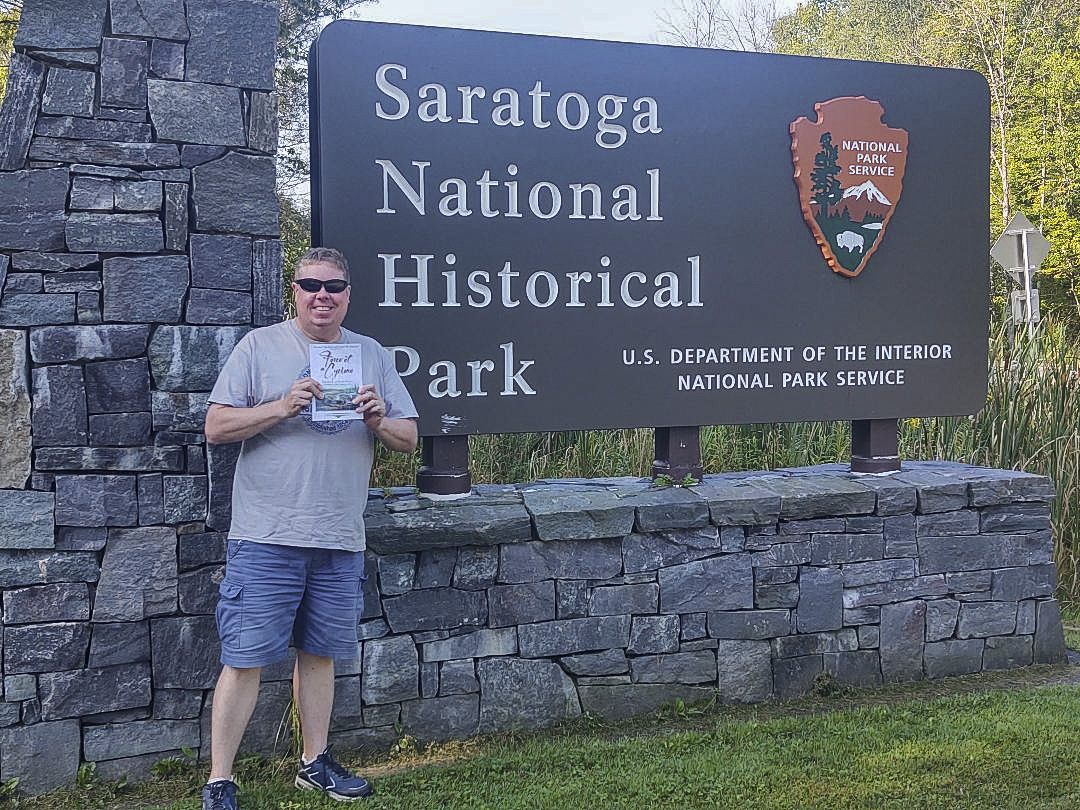
War News. “This thoughtfully conceived collection of fifteen essays is outstanding,” Noyalas wrote. “While this exceptional volume will appeal to those interested in Grant and offer a nice complement to the burgeoning literature that is redeeming Grant’s reputation, this splendid collection possesses much value for those interested in the power and necessity of revising history.” Brian Matthew Jordan appeared on C-SPAN2 on September 9, as part of the network’s coverage of the Shenandoah University Civil War Institute. He spoke to the Scottsdale Civil War Round Table on September 19. The University of Georgia Press published his most recent book, co-edited with Jonathan W. White, on September 1. He looks forward to next month, when he will host a national Civil War symposium on the campus of Sam Houston State University. Frank Jastrzembski has returned from a trip to Scotland, and he shares a photo of the bronze statue of President Abraham Lincoln, erected in 1893 at the Old Calton Cemetery in Edinburgh, Scotland, which honors six Scots who fought for the U.S. during the American Civil War. He also recently placed a veteran headstone at Colonel Henry Moore’s unmarked grave. Read more here: https://emergingcivilwar.com/2023/09/18/shroudedveterans-colonel-henry-moore/. Dwight Hughes gave a zoom talk for the Naval Order of the United States Monthly History Presentation on “The Naval Civil War in Theaters Near and Far” based on an essay in the new book The Civil War on the Water: Favorite Stories and Fresh Perspectives from the Historians at Emerging Civil War. Bert Dunkerly, ERW author Mark Wilcox, did a whirlwind tour of Rev War and French & Indian War sites in upstate New York. They signed copies of their books at the Fort Plain Museum, and Bert took his new book Force of a Cyclone. On September 9, Neil Chatelain spoke about his book Defending the Arteries of Rebellion with the Civil War Roundtable of Central Louisiana as part of their second Saturdays with Savas Beatie program. Besides that, he is 180 graded essays into the semester so far. Only another 700 or so to go. Sarah Kay Bierle took a whirlwind road trip with her dad over Labor Day Weekend, visiting a lot of historic sites that he wanted to see and explore: National Museum of Civil War Medicine, Fort McHenry, Gettysburg, National Fallen Firefighters Memorial, Harpers
Ferry, and Cedar Creek. Final Resting Places – Brian Matthew Jordan chats about his newest book Brian Matthew Jordan has co-edited a new book with Jonathan W. White, and it was released earlier in September 2023! We wish them and all the essay authors congratulations on the new volume. Final Resting Places brings together some of the most important and innovative scholars of the Civil War era to reflect on what death and memorialization meant to the Civil War generation and how those meanings still influence Americans today. In each essay, a noted historian explores a different type of gravesite, including large marble temples, unmarked graves beneath the waves, makeshift markers on battlefields, mass graves on hillsides, neat rows of military headstones, university graveyards, tombs without bodies, and small family plots. Each burial place tells a unique story of how someone lived and died; how they were mourned and remembered. Together, they help us reckon with the most tragic period of American history. Brian kindly answered some interview questions about his latest project. 1. What inspired you to explore the topic of Civil War Cemeteries? The Civil War did few things more efficiently than create graves. Growing up in northeastern Ohio, I was surrounded by tiny town cemeteries teeming with Union veterans. Tiny GAR flag-holders planted at a particular grave indicated that the headstone, no matter how worn or lichened, marked the final resting place of a Civil War soldier. Nearly every one of these cemeteries included a Grand Army of the Republic plot. Often, these GAR plots were the only sections in a nineteenth century cemetery where one could find a white man and black man resting next to one another. My earliest encounters with the war, then, were supplied by tiptoeing through the tombstones it created in my hometown. Many years later, at a SCWH meeting, my friend, Lincoln Prize winning historian Jon White, shared a bagel breakfast. We mused over the power of Civil War graves and determined that an edited collection was waiting to be written on the subject. We sketched out a rough outline on a napkin (Jon still has it!), and the book project was launched. 2. What’s the most impactful cemetery you’ve visited? Why? As a young boy, perhaps, six or seven, I visited the Old Hudson Township Burying Ground in Hudson, Ohio, on Sunday evening walks with my grandfather. The tiny cemetery is the burial site of abolitionist John Brown’s parents. It was the first of the countless cemeteries I have visited in my career and the first place where I really thought about the power of headstones and the politics of graves. In terms of pondering the enormous human cost of the war, though, the rows of mute white stones at Andersonville are, in mind, unrivaled in emotive power. 3. Was there some research during the project that took you by surprise? We owe our national cemetery system to the desecration of Union graves in the South immediately after the war. I didn’t appreciate the extent of the depredations until working on this project, thumbing through the Quartermaster General’s records at the National Archives. 4. Do you have a favorite part of working on essay collection books? The opportunity to work with talented colleagues. This project brought together so many historians whose work I admire, and getting the chance to edit their work was an honor. My coeditor and I gave our contributors wide latitude in preparing their essays. We invited contributors to be deeply reflective, even semi-autobiographical, if they cared to. We wanted essays that would reveal as much about the process of writing history as they would about the war. How, in other words, do sites of memory shape the histories we write and the historians we become? Some of the essayists embraced this license to great effect. Glenn LaFantasie’s essay on William Oates, for instance, is just an incredibly moving piece of writing. 5. How do you anticipate this book adding to the understanding of Civil War memorializing? I hope it isolates the grave as a site of memory: a place of private mourning and collective meaning making. We have an extensive literature on battlefields and monuments as sites of memory, but very few historians have considered graves as contested ground in the struggle to define the war’s meaning. Cemeteries were not apolitical spaces in the Civil War or beyond; rather, they became literal platforms for debating the cost of the war and its charge. Whether those graves deliberately planted in Mrs. Lee’s rose garden at Arlington or the Gettysburg dead so carefully arranged by the landscape architect William Saunders, Civil War cemeteries were always powerful vessels for engaging in politics and communicating meaning.
ECW Bookshelf There’s a new book available in the Emerging Revolutionary War Series. Congratulations to Rob Orrison and Mark Wilcox! “They have done all that can be expected of them; we are outnumbered and outflanked,” so described Lt. Col. Benjamin Ford of the desperate situation for his Marylanders at Camden on August 16, 1780. The battle of Camden is considered by many historians as the high tide of Great Britain’s prospects for victory in the American south. Beginning in the spring of 1780, British leadership focused their attention on conquering the southern colonies. In May 1780, Charleston, South Carolina, capitulated and the British captured the bulk of the American Southern Army. After the fall of Charleston, the British set up outposts through the South Carolina backcountry hoping to secure the colony before moving into North Carolina. In response, the Continental Congress sent the “hero of Saratoga,” Gen. Horatio Gates, to establish a new American Southern Army. Gates named this new force as his “Grand Army;” at its core was a small contingent of experienced Continentals from Maryland and Delaware. The majority of Gates’ army were untested, newly recruited militia from Virginia and North Carolina. Soon after arriving in North Carolina, Gates impetuously led his forces south to confront the British near Camden, South Carolina. The mostly-inexperienced army lined up against some of the best units of the British army in America and commanded by one of their best generals, Gen. Lord Charles Cornwallis. In a series of misfortunes, what happened on August 16, 1780, was an unmitigated disaster for the Americans. In All That Can Be Expected: The Battle of Camden and the British High Tide in the South, August 16, 1780, historians Rob Orrison and Mark Wilcox describe the events that led to one of the worst American military defeats in United States history. The authors lead you in the footsteps of American and British soldiers throughout the South Carolina backcountry. They interweave a clear historic narrative while guiding the reader to historic locations, creating a precise understanding of the events of August 1780. Order today at https://www.savasbeatie.com/all-that-can-beexpected-the-battle-of-camdenand-the-british-high-tide-in-thesouth-august-16-1780/.
ECW Multimedia Features On the Emerging Civil War Podcast… Gettysburg’s Southern Front with Chris Mackowski and Hampton Newsome h t t p s : / / e m e r g i n g c i v i l w a r. com/2023/08/23/ecw-podcastgettysburgs-southern-front/ Such a Clash of Arms with Sarah Kay Bierle and Kevin Pawlak https://emergingcivilwar.com/2023/09/12/ecw-podcastsuch-a-clash-of-arms.