
Through The Lens
Military Plans vs. Civilian Elections
By Stephanie Hagiwara · Originally published May 2023 · pp. 16–17
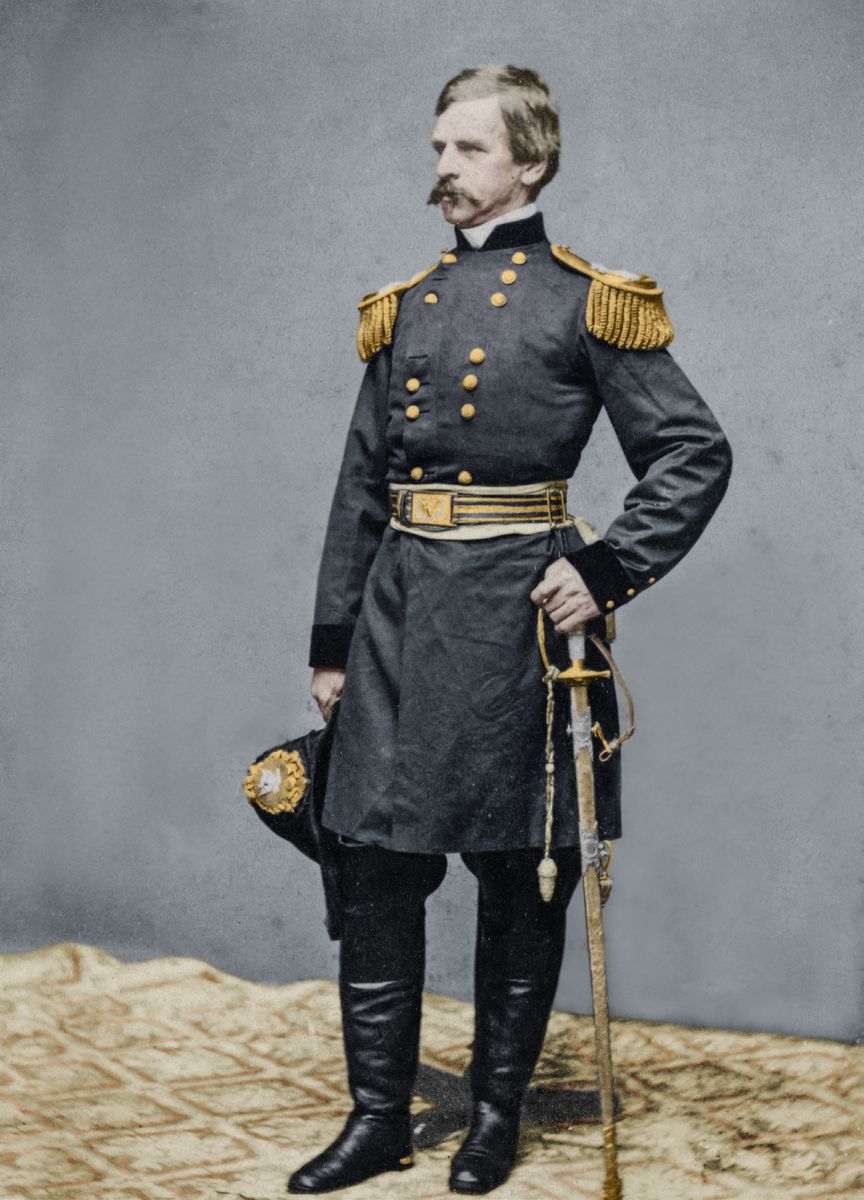
Banks suggested that “the only speedy and certain method” to implement the Ten Percent Plan would be to hold a special election for state officials under the current Louisiana constitution while declaring the slavery provisions “inoperative and void.” Subsequently, a convention to revise the constitution would be ordered, thereby avoiding “the
Military Plans vs. Civilian Elections “The eggs of crocodiles can produce only crocodiles; and it is not easy to see how eggs laid by military power can be hatched into an American state.” – U.S. Senator Charles Sumner On December 8, 1863, President Abraham Lincoln sent his annual message to Congress which included his Ten Percent Plan on how to restore loyal, civil rule in the seceded states, aka “Reconstruction.” State governments could be formed after 10 percent of its voters swore an oath of allegiance to the Constitution and to accept the emancipation of slaves. Confederate officials would not be able to participate in the new governments. He offered full pardons for former Confederate soldiers and sympathizers as a further enticement to end the War.
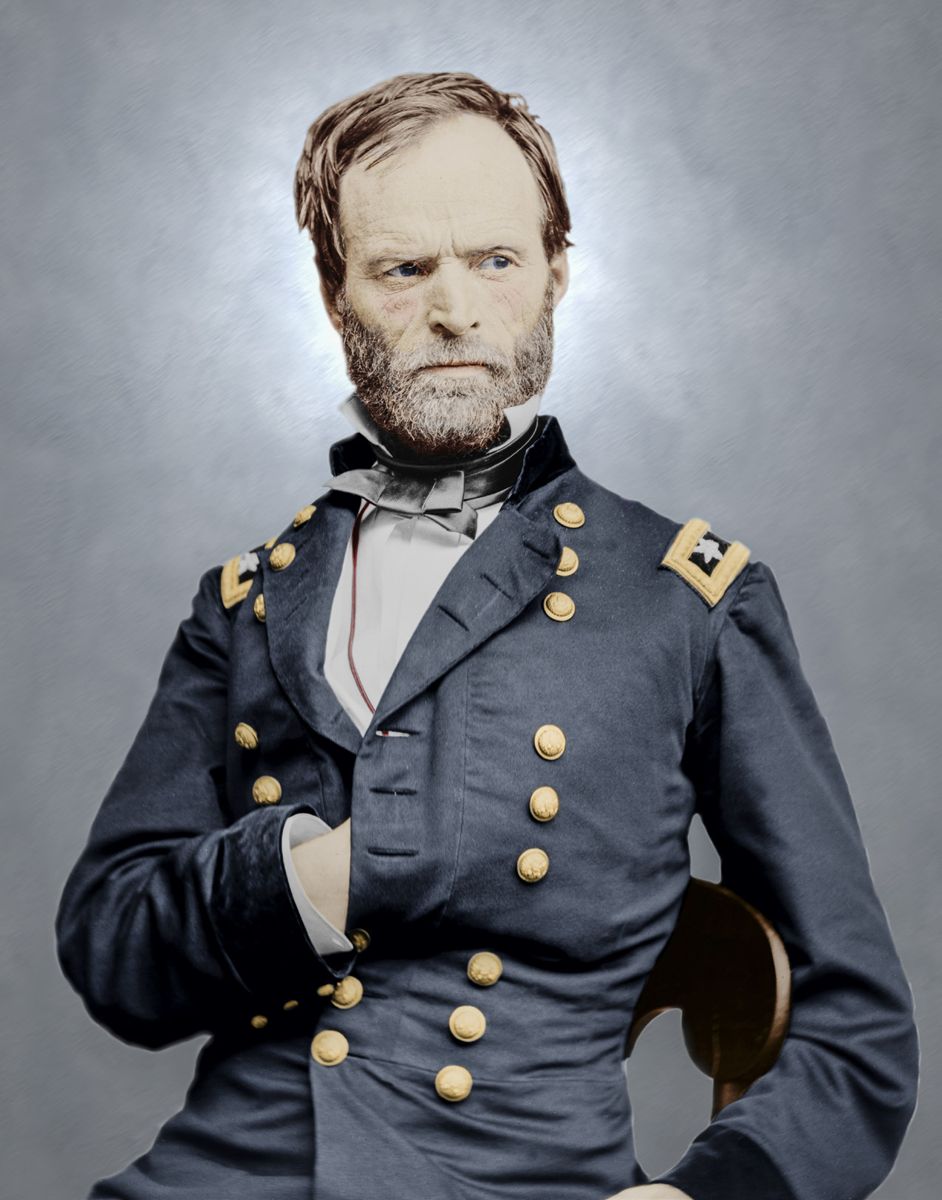
Lincoln proposed the Ten Percent Plan from a base of forgiveness and to enable the reunification process to begin quickly. Congress too wanted jurisdiction over Reconstruction. Congress objected to the Ten Percent Plan’s leniency towards the South and the absence of providing black citizens the right to vote. Lincoln acted while Congress debated and came up with its own plan. Louisiana, the sixth state to secede, was chosen as the Plan’s first test case. Maj. Gen. Nathaniel Banks, commander of the Department of the Gulf, was based in New Orleans, La. Banks had been struggling with the feuding factions of Union loyalists and hostile Confederate sympathizers to restore the state into the Union. Banks, who lacked military experience, became one of the first major generals in the War due to his political aptitude as Speaker of the U.S. House of Representatives. Gen. William “Old Tecumseh” Sherman. Colorization © 2012, civilwarincolor.com courtesy civilwarincolor.com/cwn. (Library of Congress)
question of slavery to the chances of election.” Lincoln responded that one advantage of focusing on the state level would be an “… exhibition to the World of moral, as well as military power, in the suppression of Rebellion and the reconstruction of government by consent and participation of the different classes of People.” At the same time, Gen. Henry Halleck devised the Red River Campaign. Federal forces would move up the Red River to Shreveport, La., before moving on to Texas. Adm. David Porter’s fleet of gunboats would supply the firepower. Banks would provide 20,000 men along with an additional 15,000 soldiers from Gen. William Sherman to combat land forces. Gen. Frederick Steele’s troops would swoop down from Arkansas to join the attack on Shreveport, La. On March 2, 1864, Sherman went to meet Banks in New Orleans. The preparations for the campaign were completed. Sherman was invited to the March 4, swearing in ceremony for Governor Michael Hahn. It featured army bands playing, church bells ringing, and “cannons would be fired by electricity.” Sherman, “regarded all such ceremonies as out of place at a time when it seemed to me every hour and minute were due to the war.” Sherman had wanted to go up the Red River. He was familiar with the area due to his service as the superintendent of a local military academy. Gen. Ulysses S. Grant wanted Sherman to lead the campaign. However, Banks decided to serve as the overall commander and out ranked both men. Sherman, “thought it best not to go.” The March 14, election of state officers delayed the start date of the campaign. According to Steele, “the President is very anxious it should be a success. Without the assistance of the troops to distribute the poll-books, with the oath of allegiance, and to protect the voters at the polls, it cannot succeed.” Sherman commented, “If we have to modify military plans for civil elections, we had better go home.” On March 26, Banks reached Alexandria, La., to rendezvous with Porter and Sherman’s men. Banks was astonished to find Sherman’s men were looting stores and private homes. Porter’s sailors were busy seizing cotton from the surrounding countryside as a prize of war. Cotton was being burned to prevent it from falling into Federal hands. Banks received a message from Grant, newly appointed as
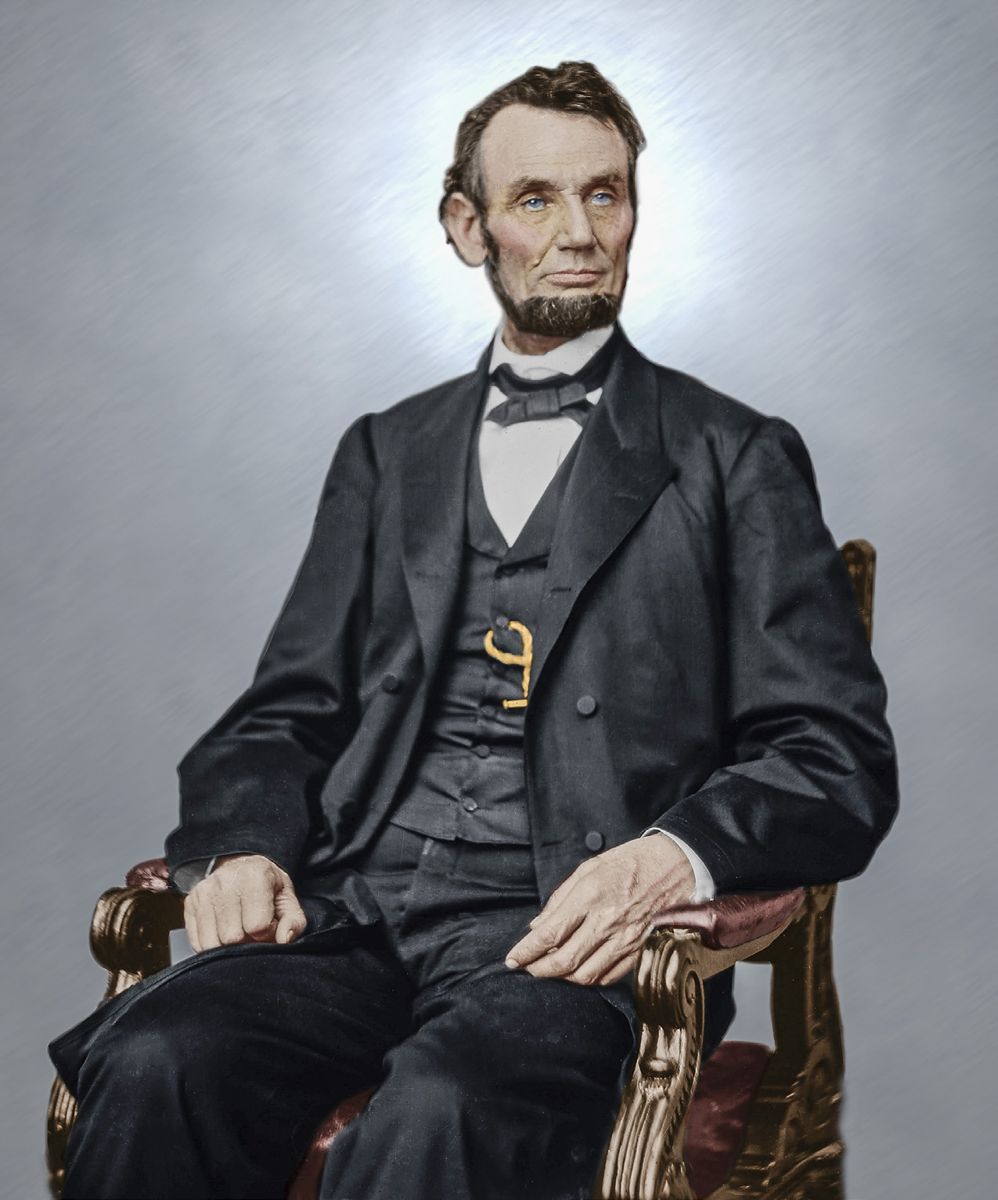
General-in-Chief of the Armies of the United States, that he had to return Sherman’s men to him by mid-April, “even if it leads to the abandonment of the main object of your expedition.” Furthermore, the level of the Red River was lower than normal. Porter would have difficulty moving his heaviest vessel, the USS Eastport, through shallow water. Banks could abandon the entire campaign, wait for the navy to navigate shoals, or proceed without it. He determined to take advantage of the navy’s water depth delay to hold an election for convention delegates. It would give the impression of wider support for the new government. The area’s 1,500 potential voters, “… were very much frightened at taking the oath of allegiance and then being left to the rebels. But it was represented to them that we had come to remain and take possession of the country.” Furthermore, it was seen as an opportunity to be able to use their cotton as they saw fit. On April 1, Alexandria held the election. “Flags fluttered and guns boomed as the Unionist citizens of the parish trooped to the polls to exercise their right of franchise, and when the ballots were tabulated it was found that a grand total of 300 votes had been cast.” On April 3, Banks decided he couldn’t spare the time to reconnoiter the road alongside the river. Instead, he sent the army on the inland route, separating it from the navy’s guns. Away from the river, the muddy road narrowed through the woods. The distance between the head and tail of Gen. William Franklin’s, XIX Corps., stretched 20 miles. On April 8, at the Battle of Mansfield, La., C.S. Gen. Richard Taylor was able to turn his intention to slow the Federal advance into a rout. Factoring in Grant’s timeline, Banks knew he had to turn back, acknowledging the military failure of the Red River Campaign. On April 9, Louisiana held a constitutional convention. Delegates were sent from 19 of Louisiana’s 48 parishes. Conventioneers enjoyed free liquor, free cigars, and other extravagances at the cost of over $250,000; still, the Constitution of 1864 was passed. It abolished slavery, granted the vote to all white males, gave tax money to educate both black and white children, and opened the possibility for the state legislature to grant voting and civil rights to blacks. Lincoln considered the new Constitution imperfect but gave “a foundation to build on for the future.”
CivilWarNews.com As Banks predicted, “Offer them a Government without slavery, and they will gladly accept it as a necessity resulting from the war. … If this plan be accepted in Louisiana, … it will be adopted by general concurrence … in every other southern state, as rapidly as you choose to accord to them the privilege of self-government.” Sources: •
•
• •
Johnson, Ludwell H. Red River Campaign: Politics and Cotton in the Civil War: The Kent State University Press, 1993. ed. Roy R Basler. The Collected Works of Abraham Lincoln: Rutgers University Press, 1953-55, vol 7, 124 -125. Oates, Stephen B.. With Malice Toward None: HarperCollins, 1977. The Law Library of Louisiana. (2023, March 15). Louisiana’s Constitutions:1864. lasc.org. https://lasc.libguides.com
Stephanie Hagiwara is the editor for Civil War in Color.com and Civil War in 3D.com. She also writes a column for History in Full Color.com that covers stories of photographs of historical interest from the 1850’s to the present. Her articles can be found on Facebook, Tumblr and Pinterest.