
Through The Lens
A Mortifying Affair
By Stephanie Hagiwara · Originally published March 2023 · pp. 18–19
A Mortifying Affair
“The time is at hand when, if an attempt can be made to capture the enemy’s forces at New Berne, it should be done. I can, now spare troops for the purpose, which will not be the case as spring approaches.” Gen. Robert E. Lee
On January 2, 1864, Gen. Robert E. Lee wrote President Jefferson Davis suggesting an attack to recapture the second largest town in North Carolina, New Bern. Gen. Ambrose Burnside had captured the railroad and river trade center on March 14, 1862. Lee sought a “large amount of provisions and other supplies … said to be at New Berne, which are much wanted for this army.”
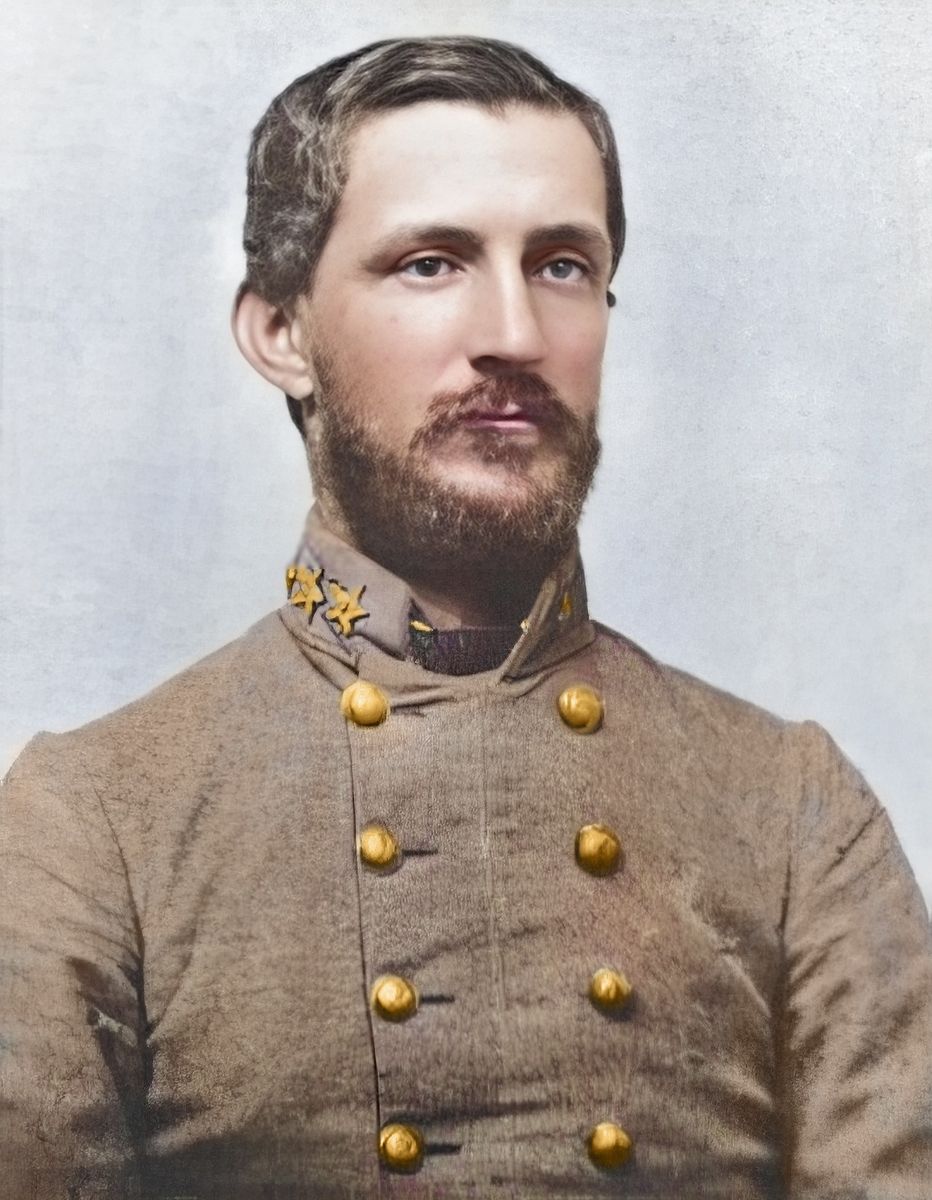
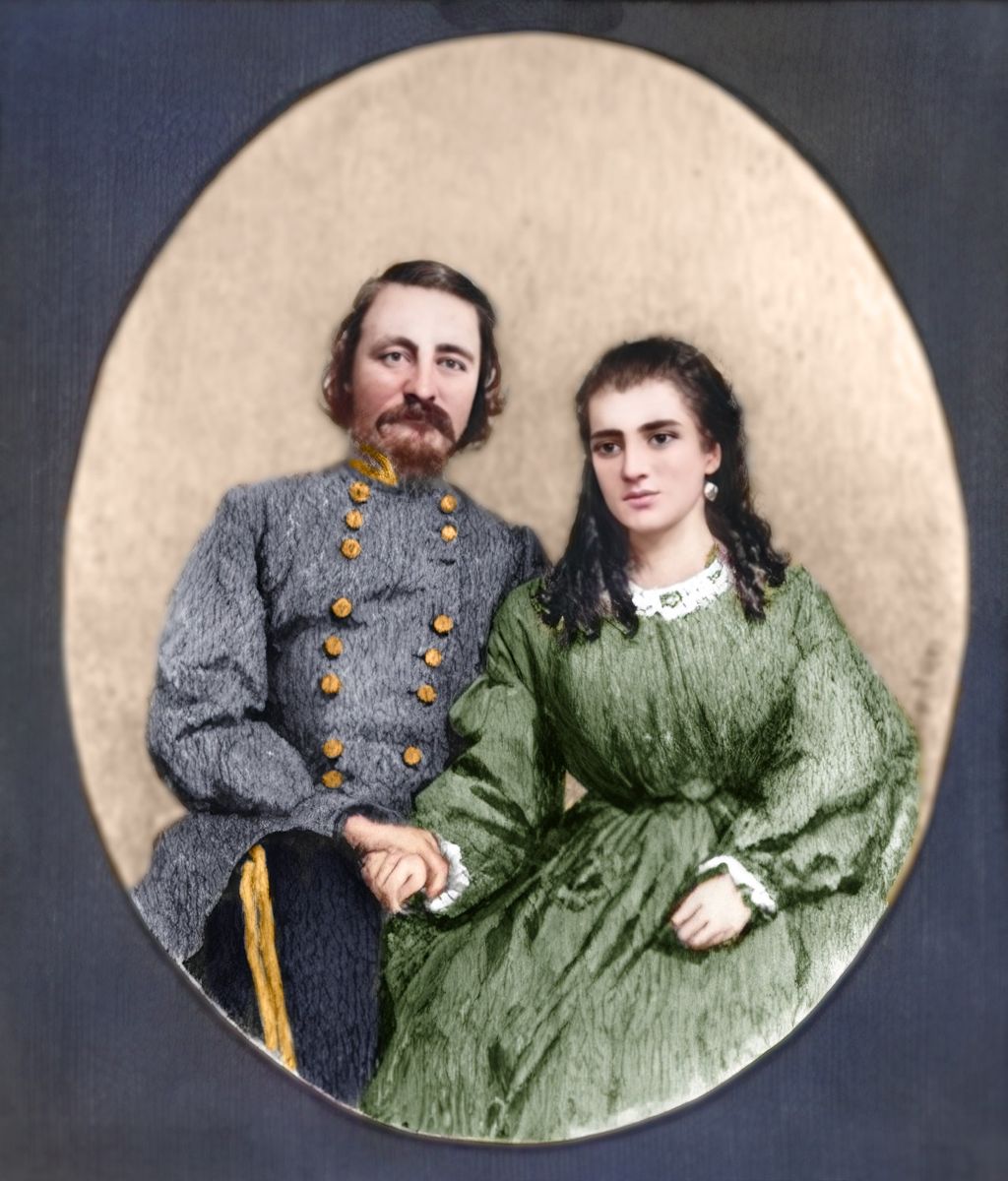
Gen. George Pickett was selected to coordinate the infantry, artillery, and naval attack on New Bern. Pickett, best known for his namesake charge at Gettysburg, Penn., on July 3, 1863, graduated from West Point, fought in the Mexican-American War, and served on the frontier. Twice widowed, he married “smuggled” bride, LaSalle “Sallie” Corbell, on September 15, 1863. Corbell was “smuggled” into Petersburg, Va. to avoid the wedding being used to capture Pickett.
In fall 1863, Pickett’s Dept. Of Virginia and North Carolina was at subpar strength due to the Confederate strategy of sending troops where needed. In October 1863, New Bern became a Federal base to conduct raids focused on burning, pillaging, offering freedom to all slaves, and “insulting our ladies.” Morale plummeted; North Carolina suffered the highest desertion rate in the Confederacy. Pickett deemed that the Federals, “like the Indians, only war on the defenseless,” and considered the raids a violation of the “rules of war.” Pickett’s response was to order, “any one caught in the act (negroes or white men) of burning houses or maltreating women must be hung on the spot.”
The plan for what became the February 1-3, 1864, Battle of New Bern was for all Southern forces to converge on the town for a simultaneous attack. On January 30, 1864, Pickett set out from Kinston, N.C., with a force of 13,000 men. Pickett split his force into three columns. Gen. Seth M. Barton’s 4,500 men, eight rifled pieces, six Napoleon guns, and 600 cavalrymen were to approach New Bern from the south and enter the town via the railroad bridge. Col. James Dearing, with the 15th and 17th Va. Cavalry, was assigned to attack Fort Anderson across the Neuse with three piece of artillery and 300 troopers. From the northwest, Pickett and 26-year-old, North Carolinian Gen. Robert F. Hoke were to surprise the troops at Batchelder’s Creek and silence the guns in the star fort and batteries near the Neuse River. Commander John Taylor Wood, with 14 boats, was tasked with attacking gunboats in the Neuse during the night and in the morning join the land forces attacking New Bern.
A prewar instructor at the U.S. Naval Academy, Wood was the grandson of former President Zachery Taylor. Realizing his plan to remain neutral wasn’t feasible, on October 3, 1861, Wood accepted a commission in the Confederate Navy, joining his uncle, President Jefferson Davis, his cousin, Gen. Richard Taylor, and his brother, Col. Robert C. Wood Jr., in aligning with the Confederacy. Wood’s first responsibility was to recruit and train men to crew the ironclad USS Virginia. Serving as an aide-de-camp (ADC) to Davis, the “Horse Marine” held both the rank of captain in the CSA Navy and as a colonel of cavalry, one of the few to hold dual rank.
For the attack, Wood assembled 33 officers and 220 enlisted men, including 25 marines. The men with 12 cutters and two large launches armed with 12-pdr. howitzers arrived in Kingston by rail on January 31. Using muffled oars, the men rowed down the Neuse River through the night. The men wore a white badge on their left arm and used the password “Sumter” to differentiate themselves from their foe. Unable to find any Federal gunboats at New Bern before dawn, they rowed back upriver to await nightfall.
The next night the Confederates spotted their prey, the 186 feet long USS Underwriter, anchored between two forts off New Bern. The 341-ton sidewheel steamer was powered by two 800 horsepower engines, crewed by 12 officers and 72 men, and carried a 20-pdr. Parrott rifle and four 32-pdr. Dahlgrens. Wood called the men together to pray before attacking the formidable opponent. It was “a strange and ghostly sight, the men resting on their oars with heads uncovered, the commander also bareheaded, standing erect in the stern of his boat; the black waters rippling beneath,” wrote Midshipman Thomas Scharf.
The Underwriter’s bells struck at 2:30 a.m., revealing her location. “As I stood up and watched the line,” Lt. George W. Gift wrote, “it looked like a naval funeral procession.” Spotting the boats, the Underwriter “slipped her cable and made efforts to get up sufficient steam from her banked fires, to move off, or run the Confederates down.” The Rebels opened fire with the howitzer, hitting the pilot house. The Federals returned fire, “grapnels were thrown on board, and the Confederates were soon scrambling, with cutlass and pistol in hand, to the deck with a rush and a wild cheer, that rung across the waters, the firing from the enemy never ceasing for one moment.”
The “life-and-death struggle” lasted ten minutes before the Underwriter was captured. The Federal shore batteries then targeted the ship. Unable to generate enough steam to carry off their prize, all wounded were removed, and the ship set ablaze. The retreating Confederates “could see by sudden flashes in the sky, and by the dull, heavy booming sound which came to them upon the night air, that the shell-room was reached and that the explosion had begun.”
On January 31, Hoke camped without fires at Steven’s Fork, two miles from a Federal outpost. On the morning of February 1, he “threw some trees across the creek and crossed two regiments over.” to keep the Federals occupied while the bridge was repaired. Hoke marched his men over the creek, “routed them,” marched the nine miles to reach a spot within a mile of New Bern and waited for the other two columns to get into position. According to his wife, “Through a whole day of torture Pickett waited in deathlike suspense with the prize of Newbern almost within his grasp.”
Barton in the meantime easily captured a Federal “blockhouse.” After sending scouts ahead, Barton concluded that he was “unprepared to encounter obstacles so serious.” A lively artillery duel ensued lasting until the following day. Barton sent word that, “he had been entirely misinformed as to the strength of the place, and that he pronounced the works as too strong to attack and that he had made no advance and did not intend to, and that he had sent out twice his cavalry to cut the railroad and they returned without accomplishing it.” Dearing too reported that the fortifications were too formidable and decided against the assault. With the failure of two of his columns Pickett retreated on February 3.
Both Davis and Lee were disappointed the expedition didn’t achieve its primary objective. “It is difficult in a combined attack to regulate and harmonize on an extreme field all the operations,” acknowledged Lee. Lee did congratulate Hoke, “You and your gallant brigade accomplished your part of the work.”
Both sides commended Wood. The Confederate Congress formally thanked the “Horse Marine” for all his “daring and executed plans.” After the War, U.S. Adm. David Porter wrote, “This was a rather mortifying affair for the navy … [but] it was to be expected that with so many clever officers, … such gallant action would often be attempted.”
Sources:
• Barrett, John G., The Civil War in North Carolina: The University of North Carolina Press, 1995
• Gordon, Lesley J., General George E. Pickett in Life and Legend: The University of North Carolina Press, 1998
• Bell, John, Confederate Seadog: John Taylor Wood in War and Exile: McFarland & Company, 2002
• Scharf, John, Tomas, History of the Confederate States Navy from Its Organization to the Surrender of its Last Vessel: Joseph McDonough, 1894
Stephanie Hagiwara is the editor for Civil War in Color.com and Civil War in 3D.com. She also writes a column for History in Full Color.com that covers stories of photographs of historical interest from the 1850’s to the present. Her articles can be found on Facebook, Tumblr and Pinterest. (Public Domain)