
Critic's Corner
A Feisty Red-head Has Her Say
By Stephen Davis · Originally published March 2023 · pp. 28–29
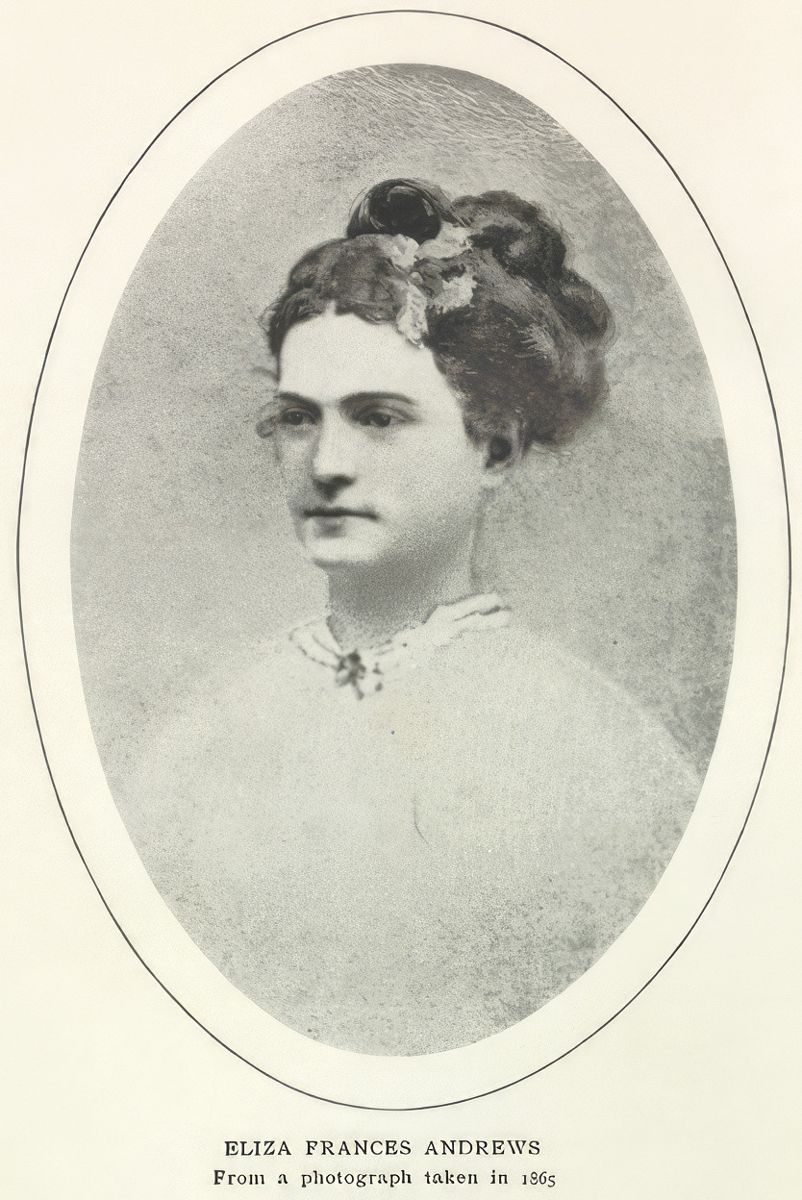
A Feisty Red-head Has Her Say Biographers say that writing about individuals, telling the story of their lives, brings them so close to their subjects that the writers feel as if they are in their company. (It is said that Dr. Freeman, while writing his biography of Lee in the 30’s, walked past the General’s famed statue on Monument Avenue, addressing it as “Good morning, General Lee” and “Good evening, General Lee.”) By this view, the writer not only follows the subject’s life, but almost shares it, absorbing its experiences, even making them his. That’s not quite what happened between me and Frances Andrews, but it’s close. I’ve had an edition of Eliza Frances Andrews’ The War-Time Journal of a Georgia Girl for years. I bought it, charming dust jacket and all, for $5.75 a long while ago. Like many of you, I found the recent pandemic quarantine a fine time—‘cause we had so much of it—to peruse my bookshelves for an old classic that I’d never made the opportunity to read. In so doing I entered the realm of a young Southern woman—an intelligent, lively conversationist with a sparkling wit and straightforward manner. In appearance she was of middling height, slender, and graceful in her movements. She was also a striking redhead, with a face full of freckles. In short, I’ve spent a couple of years with Fanny Andrews. Born on a middle Georgia plantation in 1840, Frances— everyone called her “Fanny”— received a good education at the local girls’ school, then went on to graduate from a “female college” in 1857. Fanny was twenty-four, living at home in Washington, Georgia (“Little Washington,” as they call it), when Sherman’s Yankee hordes swept across Georgia in their march to the sea. Judge Garnett Andrews’ estate, “Haywood,” escaped the enemy’s path, but the invasion of her state, and the stories she heard about it, led Fanny to start writing a journal just before Christmas 1864.1 She kept at it, with daily entries running into August 1865. She didn’t intend it for print, but late in life she dusted off her pages, spiffed up the prose, and found a New York publisher. The War-Time Journal of a Georgia Girl was first published in 1908. It was reprinted by Macon’s Ardivan Press in 1960, which is the edition I have; Mercer history professor Spencer Bidwell King, Jr., wrote a fine introduction.2 Since then it’s seen several paperback reprints, including one in 1997 from the University of Nebraska Press, with a foreword by Jean V. Berlin. As she prepared her diary for print, Fanny made a point of not softening her expressions of wartime passion, including hateful words directed at Yankees. She unapologetically intended her journal to be “expressive of the animosities of the time,” which is one of the main reasons historians and scholars of Southern literature have so often been drawn to its colorful and often entertaining text. “I thank the Lord I am not a Yankee,” Fanny confided in another, shorter journal which she kept during 1870-72. Dr. Kitt Rushing, of the University of Tennessee, found this postbellum diary in her brother’s papers in Chattanooga as recently as 1998. He edited it and saw to its publication by the University of Tennessee Press in 2002.3 When I proposed a new edition of Andrews’ The War-Time Journal of a Georgia Girl, this time with a foreword and commentary by myself, Dr. Marc Jolley, Director of Mercer University Press, happily agreed. Our new volume (320 pages, hardcover) is just out. Among other pluses (as we see them), ours is the first work to combine portions of both Andrews’ wartime and postwar journals. Note portions: I chose those passages most expressive of Fanny’s Southern patriotism, wartime emotions, and dismay (often disgust) at Yankee ways, which animated the feisty redhead into her last days. She was a Rebel to the end, and seemed not to care if she offended postwar readers with her commentary. This included her remarks on black folk, both the family servants and later as freed people. These have led to recent scholars, even Dr. Rushing, to term Andrews’ writing “racist.” I do not make this aspersion, and note in our book that the r-word was not even coined until 1928, finding common use in the mid1930s, just in time for Hitler’s Germany.4 Fanny Andrews seems never to have tired of writing about Yankees. Yankee, of course, dates from a much earlier time, when Dutchmen in New York disparagingly referred to Jankees. As Mencken points out, the word has since then been “a term of derision.” Yet Yankees eventually turned it into something they were proud of, such as “Yankee ingenuity.” But as Mencken further notes, “during the Civil War, as everyone knows, Yankee became a term of disparagement again, applied by the people of the South to all Northerners.” A case in point is the tale from Father Abram Ryan, the Catholic priest-turned poet of the Lost Cause. One day he saw his young niece gazing upon a painting of Jesus’ crucifixion. He asked her if she knew of the infidels who had crucified her savior. “O yes I know,” she said, “the Yankees.”5 It was in this very vein that
Fanny Andrews wrote about them in her private diary. (My Northern friends will wince, but they will join me in remembering Donald Davidson’s reminder that we are “still Rebels, still Yankees.”6) In January 1865, for example, she wrote, “I used to feel very brave about Yankees, but since I have passed over Sherman’s track and seen what devastation they make, I am so afraid of them that I believe I should drop down dead if one of the wretches should come into my presence.” Indeed, it was the Yankees’ depredations against helpless Southern civilians that so enraged Miss Andrews. “Those dreadful Yankees” had left a poor woman without provisions; they had burned a village and left it “charred and black as Yankee hearts.”7 It was even worse when, after Appomattox, Yankee conquerors came to stay in Washington. They strode the streets as if owning them, showing discourtesy to every citizen. One, Fanny noted, walked by “without even touching his hat, as the most ignorant Confederate would have done.” She was not alone; friends avoided church “while such bitter hatred as they feel towards the Yankees have a place in their hearts.” When the Federal garrison in town came to include Black soldiers, Fanny thought that a race war loomed, “and we shall have only the Yankees to thank for it.” Her father, Garnett, had been a Unionist just before the war who had opposed secession. In talking with him Fanny worked at being considerate. Once, after such a conversation, she confided privately, I would have done justice to Yankee virtues, if they had had any, but since that infamous march of Sherman’s and their insolence in bringing negro soldiers among us, my feelings are so changed that the most rabid secession talkers, who used to disgust me, are the only ones that satisfy me now.8 Today’s idiom is “C’mon, Fanny, and tell us what you really think,” but we don’t have to coax her.
Yankee, Yankee, is the most detestable word always ringing in Southern ears. If all the words of hatred in every language under heaven were lumped together into one huge epithet of detestation, they could not tell how I hate Yankees….I used to have some Christian feelings towards Yankees, but now that they have invaded our country and killed so many of our men and desecrated so many homes, I can’t believe that when Christ said “Love your enemies,” he meant Yankees.9
One afternoon Fanny and a friend were taking a walk downtown when “two drunken Yankees ran across the street at Mary and me and almost knocked us down, whooping and yelling with all their might.” “And the Yankees pretend to be a civilized people!” she exclaimed. “It is sad to think how things are changing. In another generation or two, this beautiful country of ours will have lost its distinctive civilization and become no better than a nation of Yankee shopkeepers.”10 Alas, it was into the den of these very Yankee shopkeepers that Fanny ventured in the summer of 1865 after a Northern relative had invited her up for a visit. It didn’t take long at Cousin Lilla’s house for her to notice that “Yankee ideas of hospitality are very different,” she observed. “There is a primness about a Yankee house, that keeps me in constant terror lest I should put something out of order….The Yankee way is much more economical and orderly than ours—but I can’t help liking ours best.” Even the way they talked caused cringes: “I cannot get over my horror of that abominable lingo
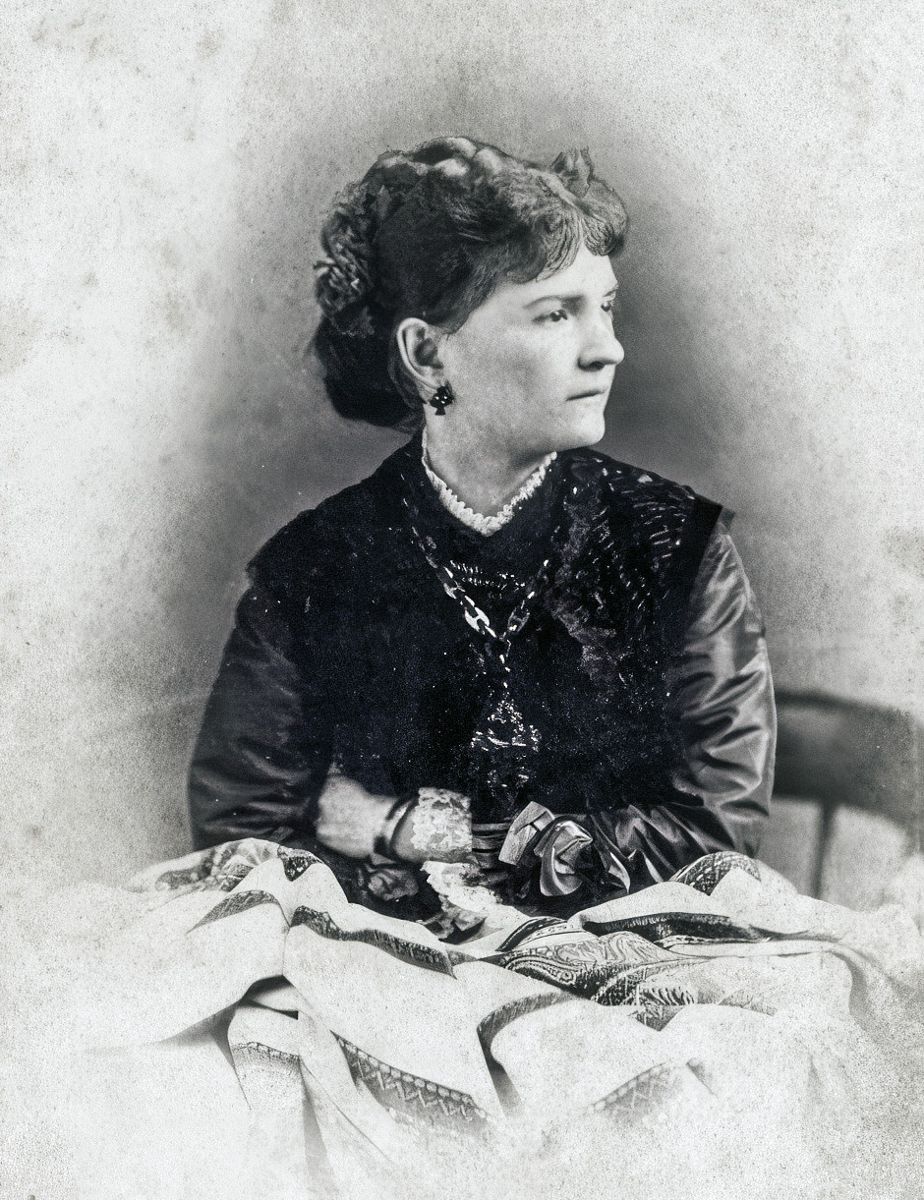
CivilWarNews.com that all these Yankees have—it sounds so coarse, so unrefined.” “The more we see of Yankee society, the less we like it,” our diarist confessed. One afternoon Lilla led a carriage ride through Newark, and all she could talk about in pointing out the big mansions was how their owners had made their money. “They all belong to merchants or manufacturers,” sniffed our diarist, who commented that in the South men distinguished themselves as planters or soldiers. “Almost everyone of the elegant residences that have been pointed out to me,” she sniffed, “are owned by people who have grown suddenly rich by the manufacture of shoe pegs, trunk straps, or some contemptible little thing of that sort.”
A Yankee manufacturing town like Newark is certainly not the place that one would choose for its society. Give me a thousand times over, our elegant Southerners, with their poor old dilapidated homes. I would rather today, marry a poverty stricken Southerner without a home, than be mistress of one of these splendid establishments with a miserable plebeian who knows nothing beyond the shoe peg and tape business, for its master. It is people, and not their surroundings, that make society.
“I thank the Lord I am not a Yankee,” she entered in her journal that September, after having gotten more than a taste of her cousin’s lifestyle.11 When Fanny returned to Washington, she turned to occasional writing. Perhaps it was the disciplined composition of her journal that led Frances to reckon that she had a knack for it— cacoethes scribendi, as they used to call it, the knack for writing, or maybe the urge to. Either way, in as early as February ’65 she wrote about “the career I have marked out for myself,” meaning that of writing, and affirmed that her pursuit of it would leave no time for marriage. She was so determined to succeed that in June 1865 she declined to sign a friend’s photograph book until she had become a “celebrated female.”12 Back then, there weren’t many vocational paths open to women, teaching being among the most common. Andrews, though, didn’t like the idea of being stuck with “a black-board and twenty stupid children.” But women novelists could write and sell their writing, even if it were under a pseudonym.
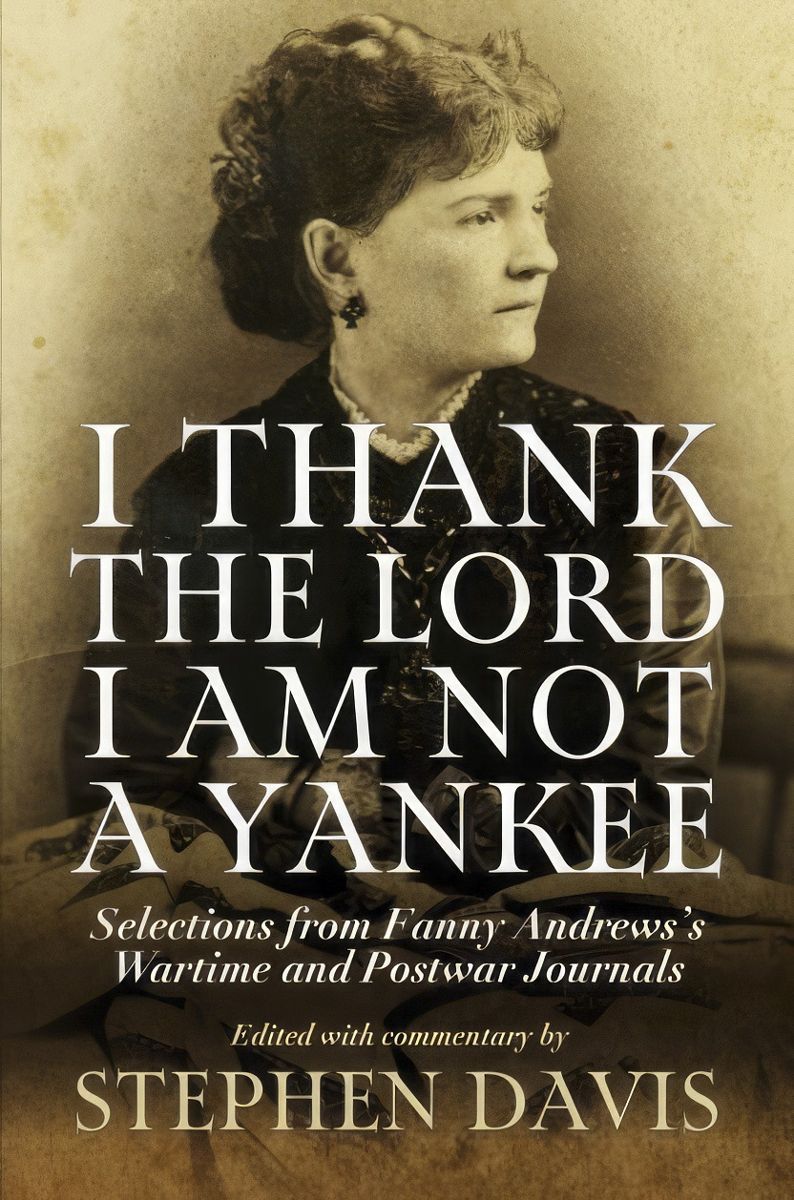
Fanny’s was “Elzey Hay”: Elzey came from the name of a family friend, Confederate general Arnold Elzey, and Hay, probably taken from the name of the family home. She scored her first hit with an article for the New York World that appeared on August 21, 1865. Others followed, including one titled “Dress Under Difficulties,” about Southern women’s efforts to look fashionable even amidst wartime shortages of sartorial finery. The essay appeared in Godey’s Lady’s Book, the popular women’s magazine published in Philadelphia. There were outlets closer to home, though, and one was Scott’s Monthly Magazine. Founded in Atlanta shortly after the end of the war, the monthly featured pieces on war history, short fiction and items of general interest. Between spring 1866 and fall of ’69, Scott’s carried eight articles by Elzey Hay. It was Scott’s that first let the cat out of the bag as to its contributor’s identity, when one volume’s index listed a piece, “In Fashion and Out of Fashion,” by “Miss Fannie Andrews.” By 1872, it was pretty well known in the American literary world that “Elzey Hay” was Frances Andrews. She explained the reasons for her several years of anonymity in an article at the time. “The great beauty of anonymous writing is to protect one against the bores and the other annoyances of a small reputation, till one can claim the advantages of a great one,” she declared. In truth, Frances Andrews probably did not possess a “great” reputation; but as a young single woman of thirtysomething years, she had reason to be pleased with what she had accomplished so far.13 One of the features of our I Thank the Lord I am Not a Yankee is that we have collected all eight of Miss Andrews’ pieces appearing in Scott’s (from extant issues at the Atlanta History Center), and reprinted them. So far as we know, this is the first time they have been published together. At work on novels during this time, Frances had her first, A Family Secret, published in 1876. Several more followed, during which years she nurtured a keen interest in botany. She wrote several texts on the subject, as well as articles for scientific journals. As another bonus in our book we reprint “Botany as a Recreation for Invalids,” in which she relates how, after ill health sent her for a long sojourn in Florida, she hunted and collected lots of local flora, all the while cuing readers how easy it would be for them, too.14 For years Miss Andrews taught French and literature at Wesleyan
Female College in Macon, Georgia, and lived out her days, purposefully having never married, in Rome, Georgia. She departed this life in December 1931, and is buried in Washington’s Resthaven Cemetery.15 I recently gave a presentation to the Washington Civil War Round Table, and thought of getting into town a little early to pay a visit to Resthaven. But I didn’t, as I wondered what I would say to her at her gravesite that I had not already said to her during the time we’ve been together. I’m an old Rock ‘n’ Roller, so I’ll close with lyrics from The Band’s song, “The Weight,” Robbie Robertson’s hit on Music from Big Pink (1968): Catch a cannon ball now to take me down the line My bag is sinkin’ low and I do believe it’s time To get back to Miss Fanny, you know she’s the only one Who sent me here with her regards for everyone Yep, it’s time to get back to Miss Fanny. For those seeking to join me, I heartily recommend The War-Time Journal of a Georgia Girl.
Notes
- Barbara B. Reitt, “Eliza Frances Andrews” in Kenneth Coleman and Stephen Charles Gurr, eds., Dictionary of Georgia Biography, 2 vols. (Athens: University of Georgia Press, 1983), vol. 1, 29-31. 2. Eliza Frances Andrews, The War-Time Journal of a Georgia Girl 1864–1865, ed. by Spencer Bidwell King, Jr. (Macon: Ardivan Press, 1960). 3. Eliza Frances Andrews, Journal of a Georgia Woman 1870–1872, ed. by S. Kittrell Rushing (Knoxville:
University of Tennessee Press, 2002). 4. Stephen Davis, ed., I Thank the Lord I Am Not a Yankee: Selections from Fanny Andrews’s Wartime and Postwar Journals (Macon: Mercer University Press, 2023), 283 n. 5. Stephen Davis, What the Yankees Did to Us: Sherman’s Bombardment and Wrecking of Atlanta (Macon: Mercer University Press, 2012), xvii. 6. Donald Davidson, Still Rebels Still Yankees and Other Essays (Baton Rouge: Louisiana State University Press, 1972 [1957]). 7. I Thank the Lord I Am Not a Yankee, 12, 14, 29. 8. Ibid., 123, 147, 159-60. 9. Ibid., 31-32, 59. 10. Ibid., 173, 175. 11. Ibid., 284, 288-90, 292-93, 295, 304. 12. Ibid., viii-ix. 13. Ibid., 184-85, 187, 305; [Mary T. Tardy], The Living Female Writers of the South (Philadelphia: Claxton, Remsen & Haffelfinger, 1872), 216. 14. Ibid., 305-309; Charlotte A. Ford, “Eliza Frances Andrews, Practical Botanist, 1840-–931,” Georgia Historical Quarterly, vol. 70, no. 1 (Spring 1986), 63-80; Miss E. F. Andrews, “Botany as a Recreation for Invalids,” Popular Science Monthly, vol. 28 (April 1886), 779-81. 15. Charlotte A. Ford, “Eliza Frances Andrews: A Fruitful Life of Toil,” Georgia Historical Quarterly, vol. 89, no. 1 (Spring 2005), 25-56. Steve Davis’ ruminations on General Lee, “Why Robert E. Lee Still Matters,” which appeared in our January issue, are now posted on the website of the Abbeville Institute.