
Private Benjamin Franklin Rogers Is Remembered
By Charles H. Bogart · Originally published June 2023 · p. 19
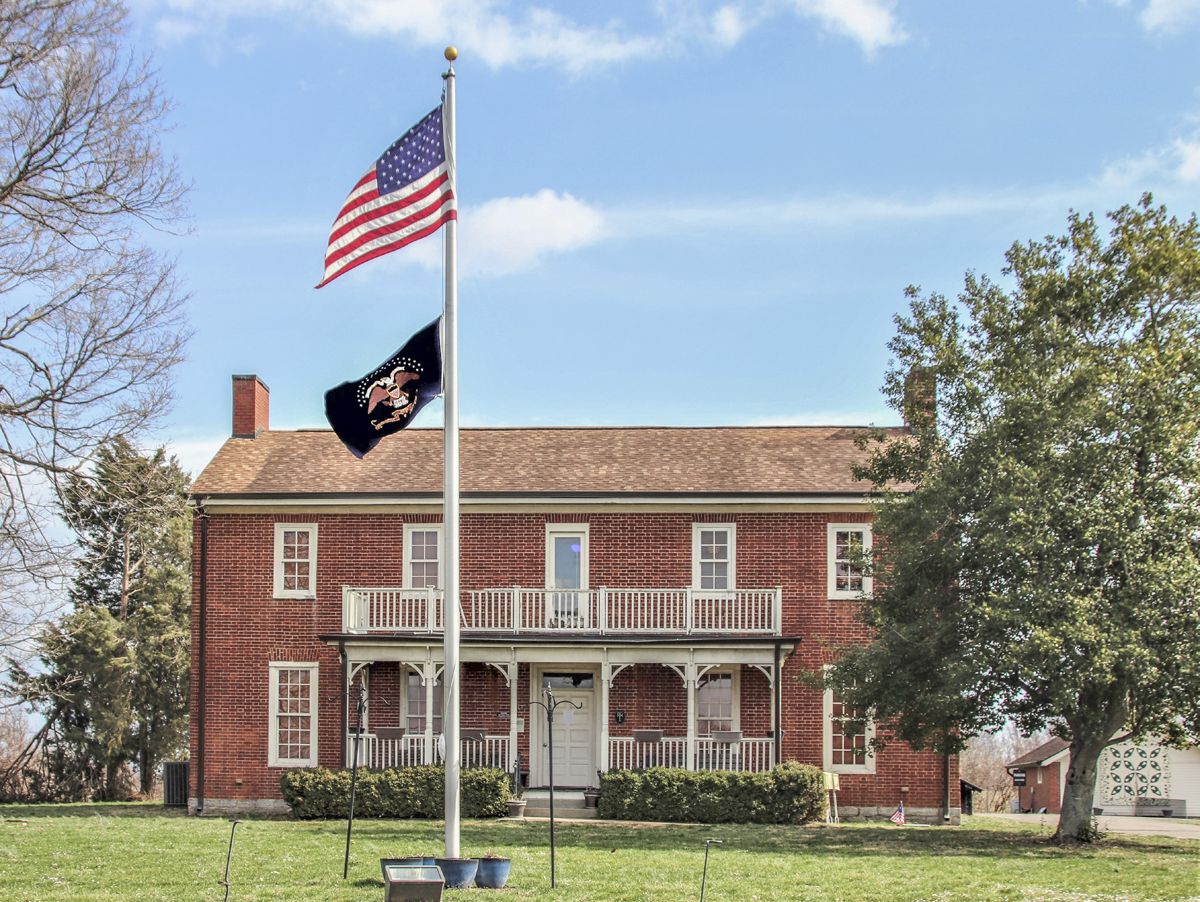
At the beginning of the 19th century, Adam Rogers settled in the southern end of Madison County, Ky. Here he established a farm of over 500 acres. In 1811, he built a two-story brick house on his farm at the junction of Big Hill Road and Lexington Road. In 1847, Adam’s son, Adam C. Rogers and his wife Martha, were blessed with a son, who they named Benjamin Franklin Rogers. The Rogers’ farm, worked with slave labor, was a prosperous endeavor, but this all changed in August 1862. On August 29 and 30, 1862, a Confederate Army under Generals Edmund Kirby Smith and Patrick Cleburne was invading Kentucky. The Confederate force collided with a Federal Army under General William Nelson at the Rogers’ family farm. At this time, Benjamin Franklin Rogers was 15 years old. During the battle, the Rogers’ family took shelter in the farmhouse basement. When the Battle of Richmond, Ky., was over, the farm grounds were covered with bodies of dead and wounded Confederate and Federal soldiers, along with the remains of numerous horses and mules. This battle was an overwhelming victory for the Confederates. The majority of the Federal troops of General Nelson’s command were either dead, wounded, or captured. Those who were not casualties were fleeing for Louisville, Kentucky, or Cincinnati, Ohio. Without additional Federal opposition, Confederate troops went on to occupy Lexington and Frankfort, Ky. At Frankfort, they inaugurated Richard Hawes as the Confederate Governor of Kentucky. However, the Battle of Perryville, fought Oct. 8, 1862, so weakened the Confederate Army that they pulled out of the Commonwealth shortly thereafter and never again returned in strength. The Rogers’ farm had been destroyed by the fighting that turned it its land into the Richmond Battlefield. The farm’s outbuildings were either destroyed or heavily damaged, while the farm’s livestock and crops was confiscated by the Confederate Army. The farm’s slaves dispersed. The Rogers’ family went overnight from being one of the rich elite families of central Kentucky to being impoverished gentry. The Rogers’ family would, within a few years, lose their farm, as they were unable to pay its debts. In 1872, at the age of 25, Benjamin Franklin Rogers joined the U.S. Army at Louisville, Ky. On his enlistment papers, he listed his occupation as farmer. At the time of his enlistment, the 7th Cavalry Regiment, under the field command of Lt. Col. George Custer, was conducting peacekeeping operations in Kentucky and South Carolina. Benjamin Franklin Rogers was assigned on Feb. 5, 1872, to Co. G, 7th Cavalry at Spartanburg, S.C. Custer’s military rank in 1872 was that of lieutenant colonel, but he had been a brevet general of volunteers during the Civil War and was normally referred to as General Custer by the press. It would appear from Private Benjamin Franklin Rogers’ army records that he had a drinking problem, although no cause for the following events has been found. On November 29, 1872, Rogers was sentenced by general court martial to four months confinement and four months of forfeiture of pay; then on Feb. 26, 1876, he was again sentenced by general court martial to four months confinement and four months of forfeiture of pay. In June 1876, Co. G of the 7th Cavalry was part of Major Marcus A. Reno’s battalion during the Little Big Horn Campaign. Major Reno’s assignment on June 25 was to attack the lower half of an Indian camp discovered on the Little Big Horn River, while Custer attacked the camp’s upper portion. To reach the village, Major Reno’s command had to ford the Little Big Horn River. Once across the river, the battalion then had to maneuver, forming on line to charge into the Indian camp. Before Major Reno and his men reached the Indian camp, they came under attack, were forced to retreat, and then driven across the Little Big Horn to higher ground where the men took up a defensive position. During the fighting on the far side of the river, Private Benjamin Franklin Rogers was killed. His body was recovered some months after the battle and is buried as an “Unknown” in the Little Big Horn Military Cemetery. On February 7, 2023, to commemorate the life of Private Benjamin Franklin Rogers, the Battle of Richmond Association, Sgt. Elijah P. Marrs Camp No. 5,
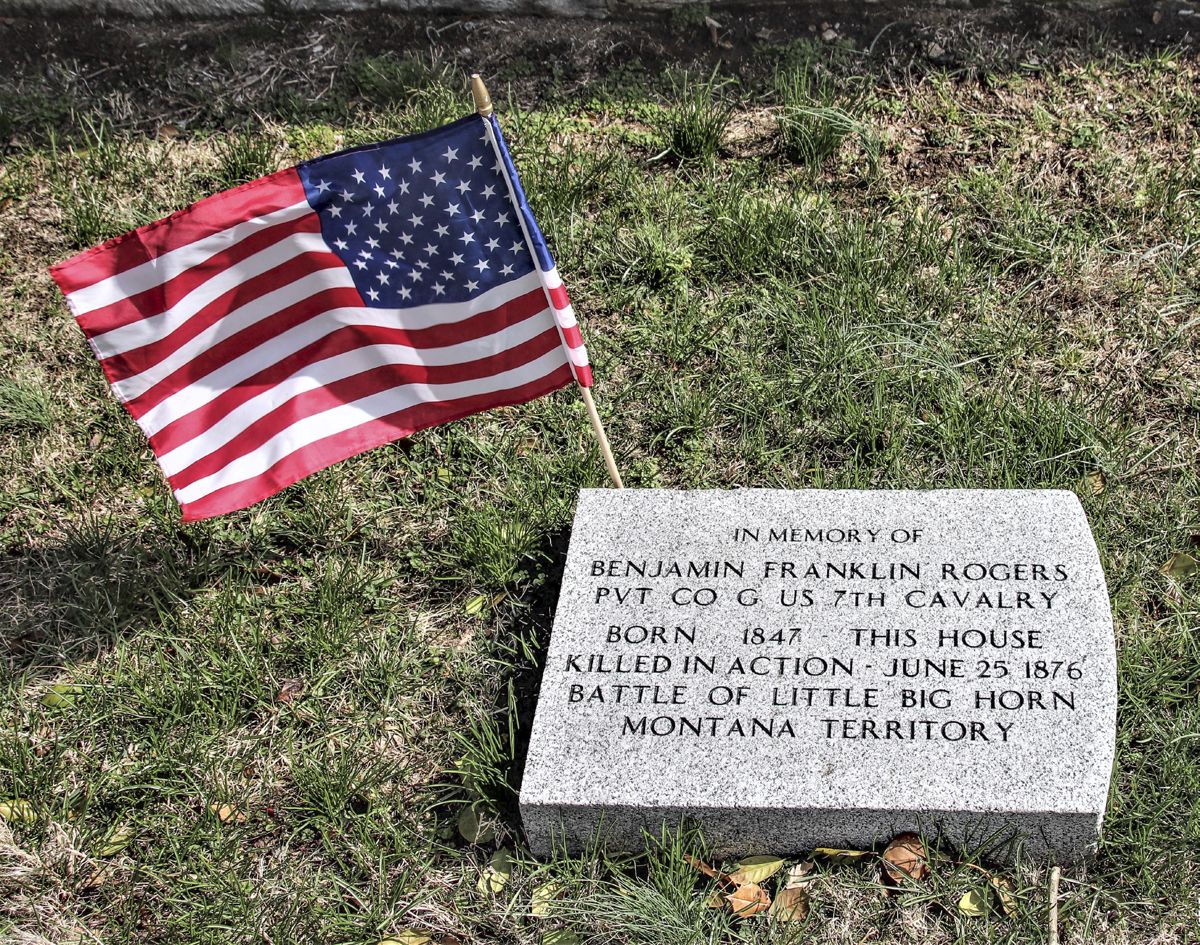
Kentucky Department of the Sons of Union Veterans of the Civil War, and the Madison County Civil War Roundtable placed an historical marker for Private Rogers next to his childhood home. The historical marker reads: “In memory of Benjamin Franklin Rogers Pvt Co G US 7th Cavalry – Born 1847 this house – Killed in action June 25, 1876 Battle of Little Big Horn Montana Territory”
Charles H. Bogart has a BA from Thomas More University and an MCP from Ohio State University. He is employed as a tour guide at the Fort Boone Civil War Battle Site in Frankfort, Ky., serves as President of the Frankfort Civil War Roundtable, and is a board member of the Kentucky Civil War Roundtable. He has written several books and articles on military and naval history.