
The Unfinished Fight
Taking the Oath: Alcohol Use in the Civil War
By Craig L. Barry · Originally published July 2023 · pp. 10–11
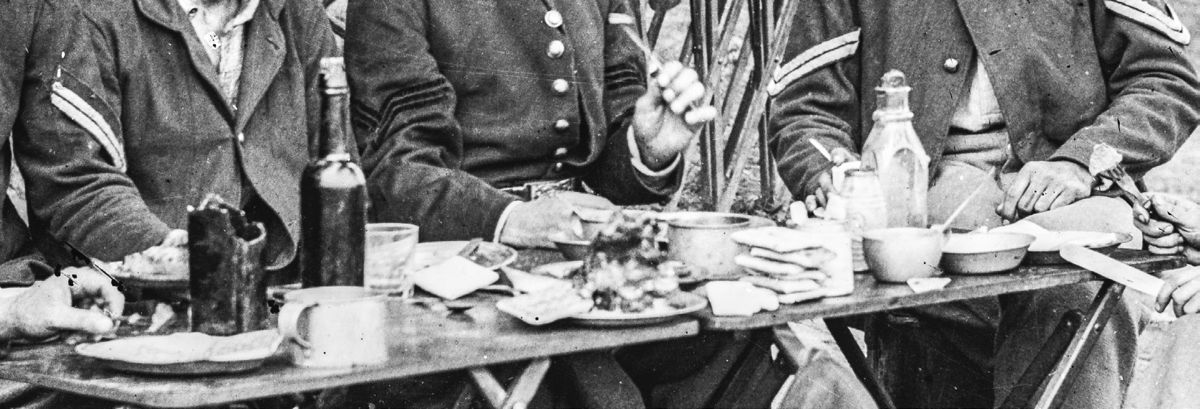
Taking the Oath: Alcohol Use in the Civil War The subject of whiskey consumption in America during the Civil War-era is as well documented as any activity of the 1860s. In American society during the 1860s, the drinking of alcoholic beverages was seen in some quarters as a shameful but common habit, particularly in larger American cities. Perhaps the influx of Irish and German immigrants and their drinking customs contributed to that view. The Temperance movement oversimplified the matter of alcohol to the point where a person spoken of as “having no vices” might refer to as little in his character as “not drinking (alcohol), smoking nor chewing tobacco.” Temperance was not, as is sometimes thought, the campaign of rural backwaters; rather, it was on the cutting edge of social reform and was closely allied with the anti-slavery and women’s rights movements in the North. 1860s women as a group were less likely to partake than men, at least in public. This was due to the attitudes of the time, Temperance, and related societal mores. However, there were fewer settings where decorum permitted a lady to partake of this form of refreshment. Partaking of spirits was well documented among the American population. Some civilians were gulping hot grog in the winter, sipping mint juleps in the summer or downing smashes, Windsorcoolers, cobblers, skins, morning glory, Tom and Jerry, private smiles, corpse revivers, fiscal agents, four-forty-fours, Jersey lightning (applejack), monitor, swamp-angel, eye-opener, moustache-twister, egg noggs, gin-sling, timble doodle, stone fence, and other “saloon drinks.” Americans in the 1860s made a grand ceremony of “taking the oath” a period term for liquoring up.
The vices of 1860s men were not limited to tobacco and gambling, and many enjoyed whatever whiskey or other alcoholic beverages they could obtain. One of the many period terms for the common grain-based beverages, was “John Barleycorn.” It comes from an English ballad of the same name; Barleycorn being the personification of the principal ingredients in whiskey. As with any traditional folksong or ballad, there are a variety of versions with different interpretations. Robert Burns wrote a version in 1782 that is certainly not a condemnation of whiskey: John Barleycorn was a hero bold, Of noble enterprise; For if you do but taste his blood, ‘Twill make your courage rise…
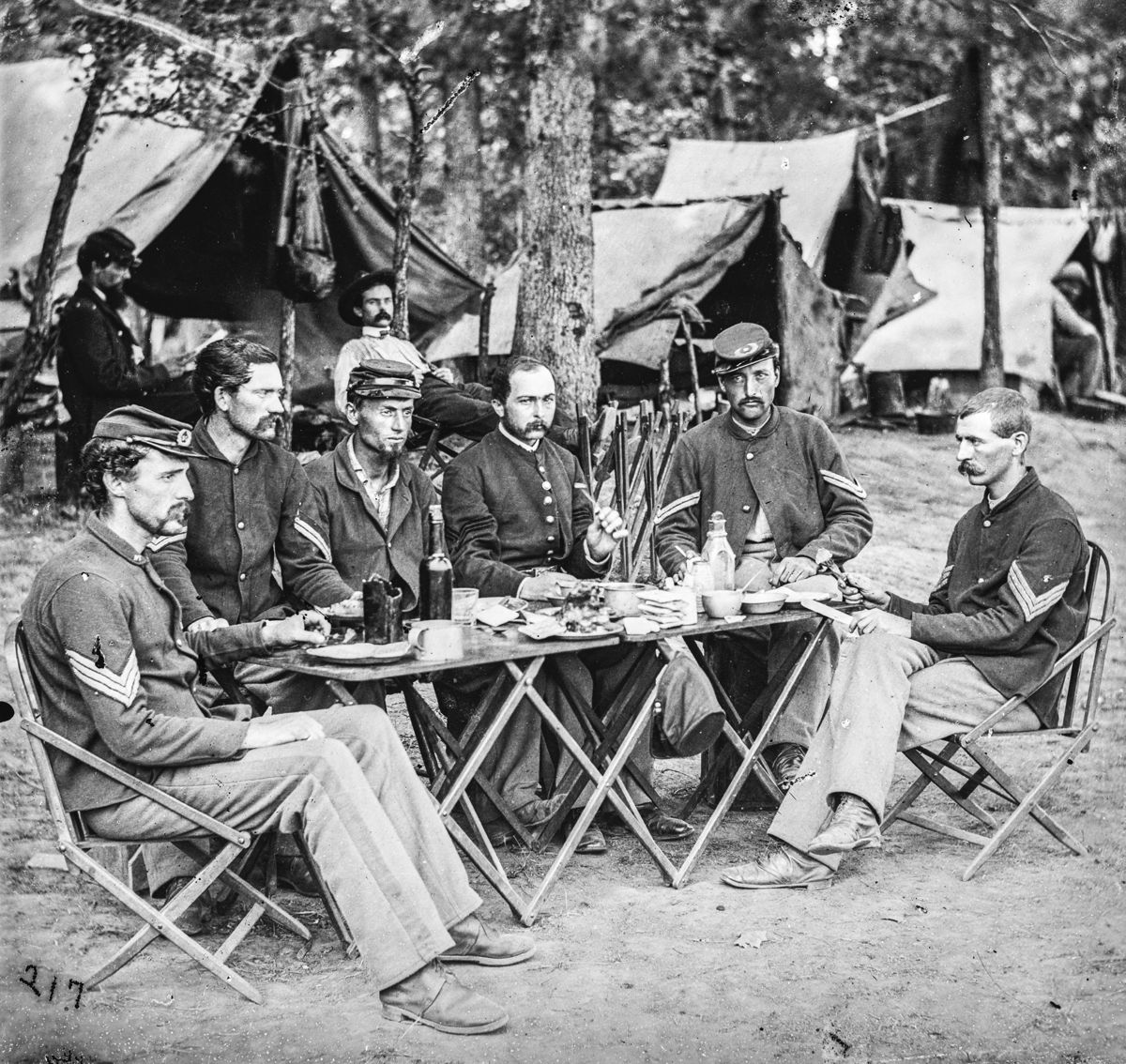
In most versions of the traditional ballad, regardless of previous vice, the last stanza usually concludes with a final nod to the necessity of “old demon” alcohol: Now the Huntsmen he can’t hunt the fox Nor so loudly blow his horn And the Tinker he can’t mend his kettles or pots, Without a little John Barleycorn. Beer was not as uncommon as the lack of period references would suggest and it was certainly well-known to soldiers of the era. “Ale” was an item of issue approved by the Continental Congress during the American Revolution period and continued to be issued as rations until the middle of the 19th century when it was replaced by coffee. In contrast with distilled spirits in the 1860s, beer was considered in a different category. It was an item of sustenance and in some cases nutrition. The stronger distilled spirits were enjoyed more for their inebriating qualities after the workday was done while beer drinking began early and went on throughout the day primarily to add calories and quench thirst. The first hop flavored beers were brewed one thousand years ago in Europe and were often made in monasteries. The ration for the Benedictine monks was five quarts of beer per day. Ronald Sarasin noted in his article, Celebrate America’s History with Beer, that the beer ration on the Mayflower was a gallon per day for every man, woman, and child. This was not considered unusual because drinking water was not always potable. As a result, “They (Pilgrims) had hoped to sail further south, but due to a shortage of beer decided to land and settle in Massachusetts.” While often called a “lager,” the most common beer may have been a stouter dark brew known as “porter,” as it kept from spoiling without refrigeration longer than lagers or pilsners. The term “lager” refers to the less common, low hop beer that was fermented naturally (45 days or longer) and requires colder temperatures. The term “pilsner” refers to the 1840s German pale gold lager beer. Lagers and pilsners reached their greatest popularity after the Civil War-era. Ales were also popular during the time period. Most references to beer drinking come from Northern men though not necessarily because Southern temperance, chivalry, or religiosity eliminated a Confederate’s partaking. The main factors were the North’s greater access to raw materials, transportation, and the number of brewers who naturally settled in the cooler regions of what was then termed the “Northwest,” but what we now call the “upperMidwest.” The Confederacy did have some breweries. One of the best known was at Chimborazo Hospital, located in Richmond. It not only boasted a large bakery, but it also helped recuperation of the wounded by means of its 400 keg capacity brewery. In one period account, a soldier on leave in New York City noted that: “I am afraid to say how much Bavarian beer was disposed of… the more we drank the thirstier we seemed to get: In fact, no one who has not seen Germans drink beer can form any adequate idea of the quantity they consume. Bavarian beer is, of course, not nearly so strong as the English beer; but is still a very agreeable drink, and tastes much like pale ale.” Why was lager beer less common in the 1860s? Lager beer requires consistently cold temperatures for brewing.
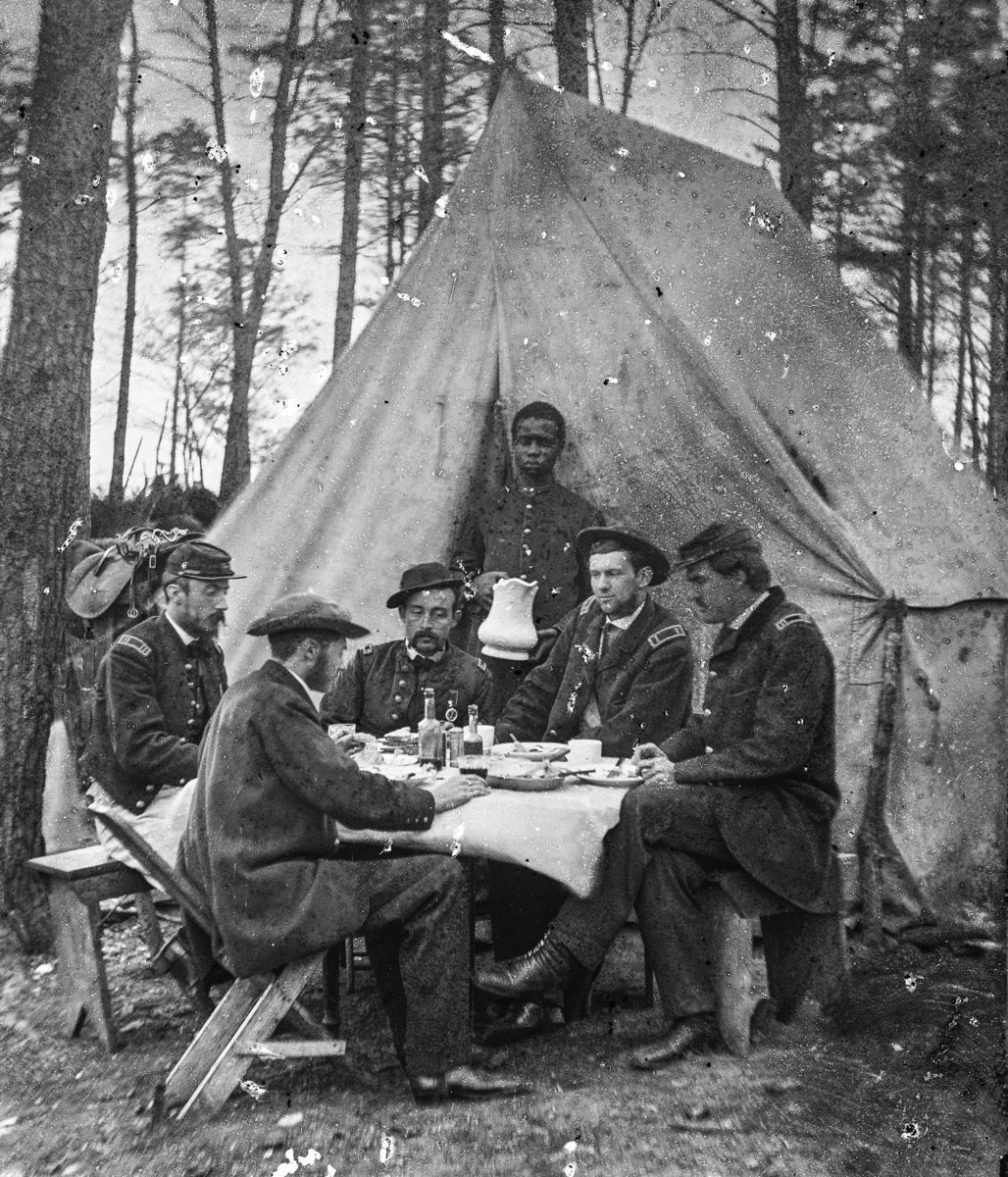
Refrigeration was a post-Civil War technology and the temperatures only got cold enough for brewing lager beer a few months out of the year. Ice harvesting and deep cellars were used to extend the necessary conditions for brewing production. In contrast, German style lager was common in the larger cities such as St Louis with substantial German immigrant populations. The following account dates from The Illustrated London News dated December 3, 1864, and suggests lager beer was quite popular there among German civilians, just as it was in America. “To appreciate the great German element in the social and political life of America requires,” says our New York correspondent, “a treatise on lager beer.” Lager beer proper is composed of malt, hops, and water, and its excellence is said to depend much upon the quality of the spring from which the water is obtained. It is lighter than the beer of England, and has a bitteraromatic flavour, very grateful to the palate… One of the meanings of the German word ‘lager’
is storehouse. Hence this kind of malt beverage derives its name, the variety of it brewed for summer drinking, especially, being stored away for some months before it is considered fit for use… As in Bavaria, so it is here and there is hardly a street, lane, or alley in the city in which the lager beer saloon, in some of its various forms, is not to be found.” Of course, that Southern center of debauchery known as New Orleans, was also famous for absinthe, had several breweries but fell into Union hands early in the Civil War. Ginger beer was also popular in the South. The principal predecessors of ginger beer were mead and a spiced version called Metheglin, which date back to the early 1600’s in colonial America, and a thousand years in Europe and Scandinavia. Metheglin was a naturally carbonated, yeastfermented honey beverage, that often included spices, such as ginger, cloves, and mace. It was one of the most popular and longest surviving beverages from the earliest colonial days in America. Brandy is usually a distilled form of wine, or at least produced from grapes, but the term was also known to include “applejack,” a freeze distilled hard cider. Applejack was popular during the Civil War-era. It was also called “Jersey lightning” dating from the colonial period. George Washington was said to have asked for the recipe in 1760 and introduced it to the Virginia colony soon thereafter. Brandy was substituted in period saloon “receipts” when whiskey was in short supply. Craig L. Barry was born in Charlottesville, Va. He holds his BA and Masters degrees from UNC (Charlotte). Craig served The Watchdog Civil War Quarterly as Associate Editor and Editor from 2003–2017. The Watchdog published books and columns on 19th-century material and donated all funds from publications to battlefield preservation. He is the author of several books including The Civil War Musket: A Handbook for Historical Accuracy (2006, 2011), The Unfinished Fight: Essays on Confederate Material Culture Vol. I and II (2012, 2013). He has also published four books in the Suppliers to the Confederacy series on English Arms & Accoutrements, Quartermaster stores and other European imports.