
Critic's Corner
Henry Kyd Douglas, I Rode with Stonewall (1940)
By Stephen Davis · Originally published July 2023 · pp. 26–27
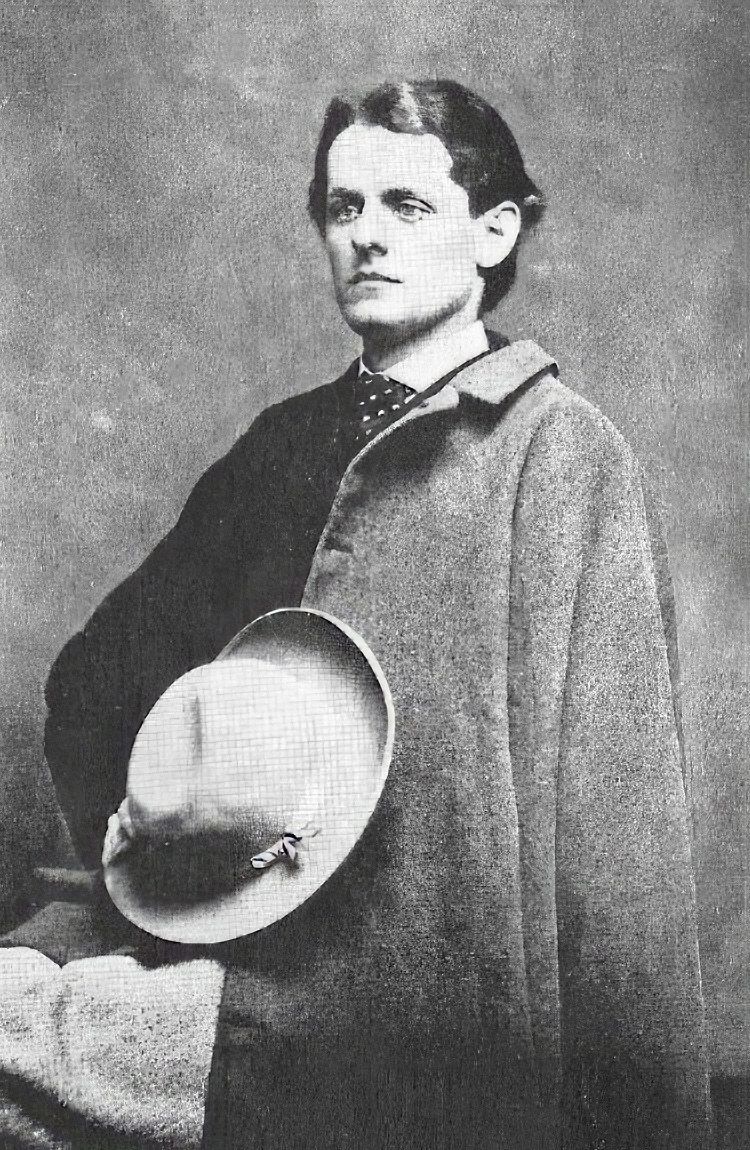
Henry Kyd Douglas, I Rode with Stonewall (1940) Among the most notable memoirs written by officers of the Army of Northern Virginia stands that written by one of General Jackson’s staff officers, Henry Kyd Douglas. Born in September 1838 near Shepherdstown in what is now West Virginia, Douglas went to college, studied law, and practiced in Charleston. At the start of the war he enlisted as a private in Company B, 2nd Virginia, which became part of the Stonewall Brigade. First Sergeant at Manassas, he was later assigned to General Jackson’s headquarters staff and became Assistant Inspector General, even
I Rode with Stonewall: Being chiefly the war experiences of the youngest member of Jackson’s staff from the John Brown raid to the hanging of Mrs. Surratt .1961 edition.
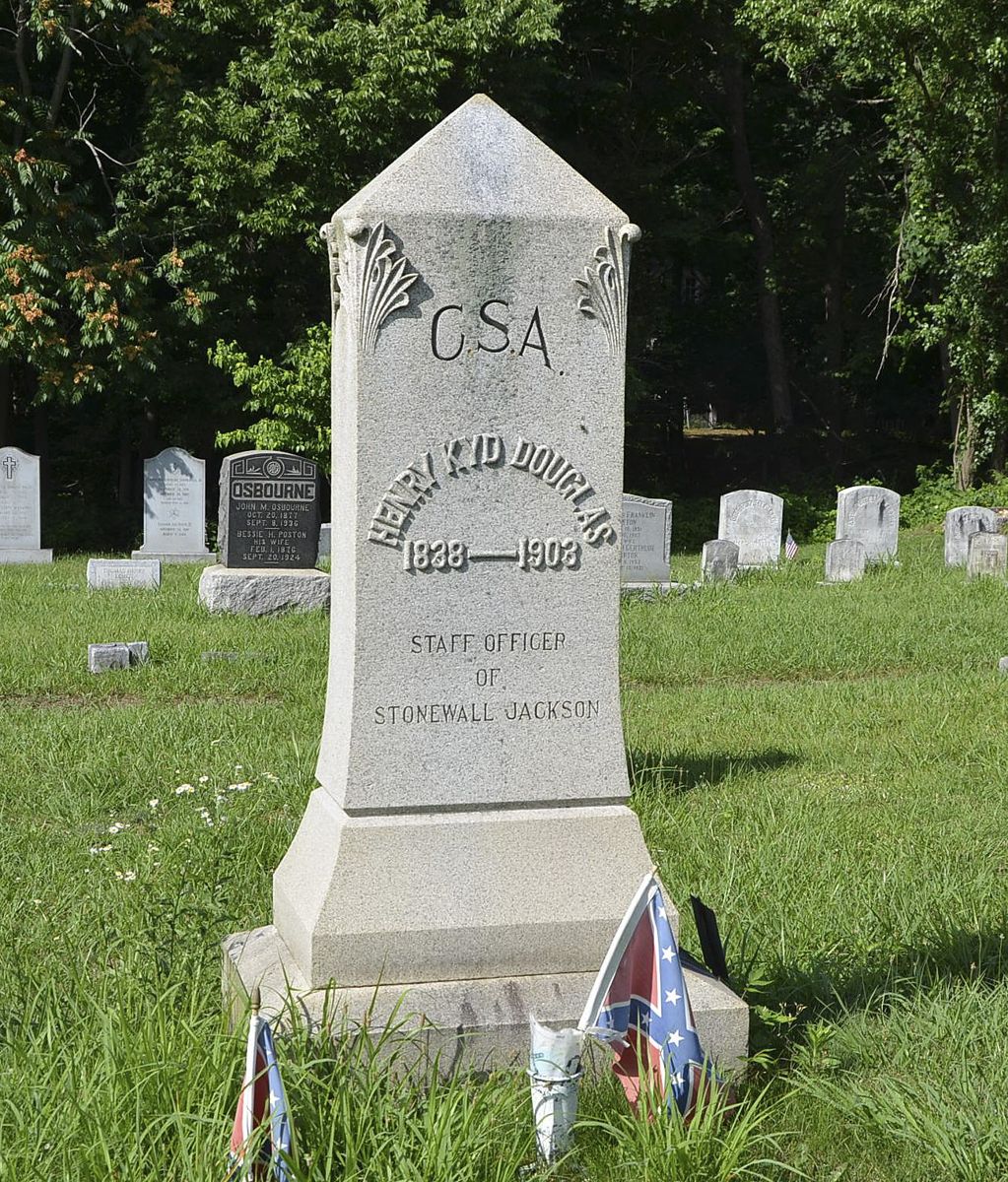
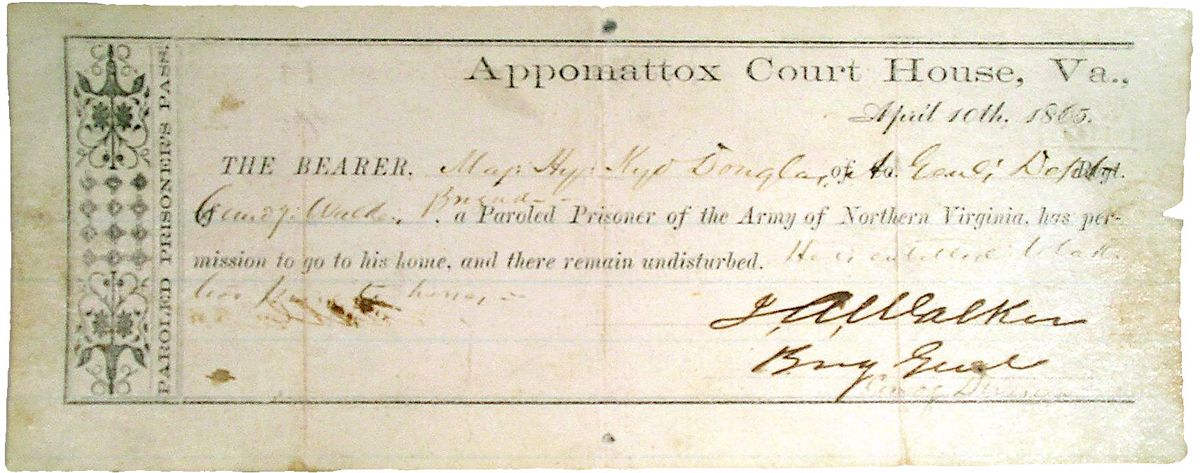
as he remained with his company (captain, fall ’62). After Jackson’s death he became Assistant Adjutant General in Edward Johnson’s division, with rank of major. He was wounded at Culp’s Hill, captured and imprisoned until March 1864. He returned to service as Johnson’s AAG, then Jubal Early’s, then John Gordon’s. He surrendered at Appomattox with the rank of colonel, commanding an infantry brigade. Douglas was a well-educated and literate man; he wrote two articles on Stonewall for Battles and Leaders in the 1880s. But his memoir was a long time coming. He used a wartime diary to write his reminiscences in 1867, but waited thirty years to rework it. At the time of Douglas’ death in 1903 it remained unpublished. It was not till 1940 that a nephew consented to its publication by the University of North Carolina Press. Today I Rode with Stonewall offers some of the freshest firsthand observations on Jackson to be seen in the literature. Douglas was with Stonewall in November 1861 when Jackson had to relinquish command of his First Brigade for transfer to the Valley. He heard the General’s farewell to the men, and within fifteen minutes he and another witness “wrote it out from memory, comparing our recollection of every word until we thought it accurate.” Thus when Douglas notes Jackson at least twice referring to “our second War of Independence,” he defines Stonewall’s stature as an adamant Confederate warrior. And yet, when a young hostess entertained the General and officers in her parlor by playing “Dixie,” Jackson professed a liking for the tune—but didn’t recognize it when it was played. Douglas had plenty of time to observe his commander. In face and figure Jackson was not striking. Above the average height, with a frame angular, muscular, and fleshless, he was, in all his movements from riding a horse to handling a pen, the most awkward man in the army. With high, broad forehead, small sharp nose, thin, pallid lips generally tightly shut, deep-set eyes, dark, rusty beard, he was certainly not a handsome man. “Walking or riding the General was ungainly,” Douglas adds; “his main object was to get over the ground.” So extremely self-disciplined was he that our memoirist at one point terms him “hard as nails.” Focused on his sense of duty and his determination upon its performance, in Jackson “there was no place for sentiment or pity.” Once, on the march in a driving rain, Jackson dismounted to help his men rebuild a damaged bridge. “He’s as systematic as a multiplication table and as full of military as an arsenal,” someone once said. Yet Jack had a light vein. When Douglas told his commander a light story, Jackson broke forth “a very hearty laugh, something he seldom indulged in.” And he always had a soft spot in his heart for Lee’s cavalry chief. “He was very fond of Stuart,” he writes, “and Stuart could always amuse him.” Only once during the war did our memoirist see the General read a novel. But Douglas was close enough to observe breaks in Stonewall’s façade. At Fredericksburg Jackson took a shine to little Janie Corbin, who visited him daily. After the lass lost her comb, the General fixed up her hair. Later, hearing of Janie’s death from scarlet fever, Jackson “was much moved and wept freely.” This same Jackson was fearless under fire. At Malvern Hill a shell exploded nearby, killing several men and throwing dirt upon the General as he was writing a note. He simply shook off the dust and resumed writing. At Winchester, seeing his lines surge forward, he exclaimed, “Very good! Now let’s holler!” Jackson then led his staff in “a deafening roar.” The men revered their leader. The story goes that when cheers erupted in their camps, they
Soon “he grew more than usually loquacious. The truth is,” Douglas noticed, “the General was incipiently tight.” How Jackson got his nickname is a familiar story, but there are slight differences in the various accounts by “eyewitnesses.” Here’s Douglas’ take on General Barnard Bee’s famous words: “Look! There is Jackson’s brigade standing behind you like a stone wall!” (emphasis added). That same rock-solid style was evident
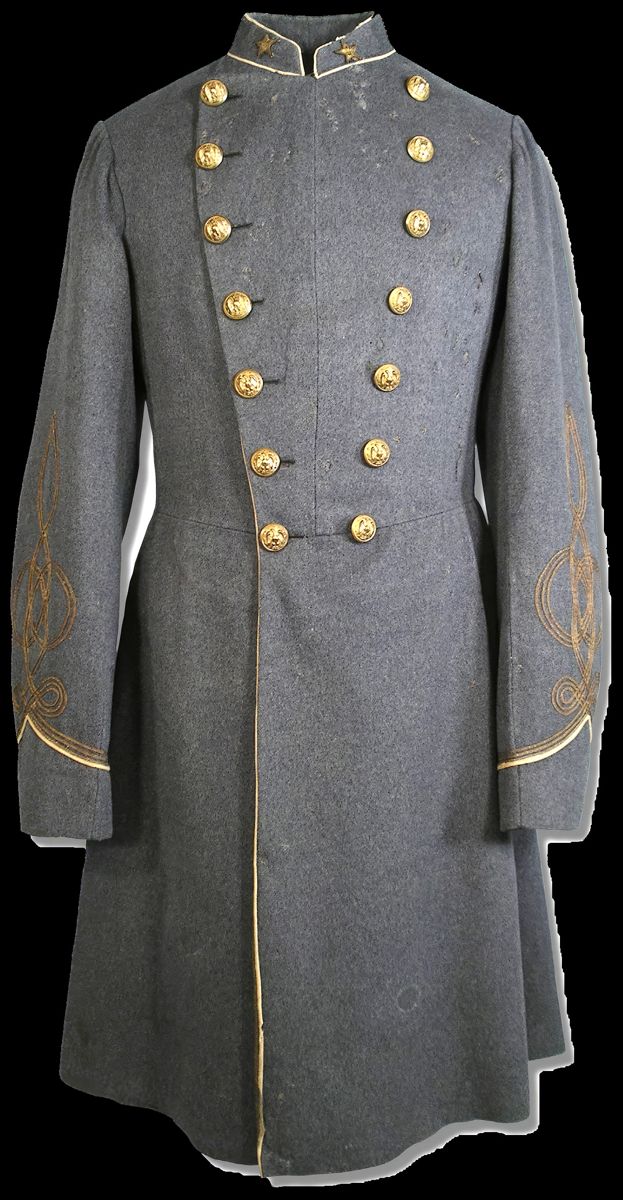
Henry Douglas’ uniform coat. (Antietam National Battlefield)
CivilWarNews.com a year later on the same battlefield of Manassas. Under heavy attack by Pope, Jackson received a courier from Longstreet, whose divisions were marching to his aid and who asked if he needed reinforcements. “Tell General Longstreet,” Jack replied, “that I am obliged to him but I don’t need them now; if he gets hard pressed I’ll send him reinforcements.” What makes I Rode with Stonewall so valuable is that Douglas based it closely on a wartime diary he kept. Shortly after Jackson’s death Captain Douglas visited General Lee and heard him explain why he could not visit Stonewall as he lay ill at Guinea Station or later in state at the Capitol. “Those people over the river are again showing signs of movement and I cannot leave my Headquarters,” the general declared. Douglas was precise. “I have given these remarks of General Lee as spoken,” he writes, “for I wrote them out in my diary and they are verbatim according to my fresh recollection.” Douglas also refers to the wartime letters he sent his parents at their home near the Potomac. He quotes from a card he wrote to his father: “Sept. 15. ’62—Dear Father: Harper’s Ferry has surrendered. Nobody hurt on our side. H. K. D.” Then he wryly adds, “To be with Jackson was to take lessons in brevity.” “Old Jack” stories are here in abundance, including old chestnuts about raising his right hand while riding and about sucking that lemon. There’s the one about Jim, Jackson’s servant, who often observed him in prayer. But when Jim saw him kneeling at night, “then I begin to cook rations and pack up for there will be hell to pay in the morning.” There are new ones, too, as when a kind Virginia lady stitched a straw hat and sent it to the General. Its effect was like malicious magic, and under its transformation our General, never an Apollo, became a caricature. He looked into a mirror to see himself; one glance was enough and he did not “stand and gaze.” He handed it to Jim to put away carefully, and Jim took it with mock gravity and carried it off daintily. The General never asked for it again and it disappeared. Despite his keen eye for detail, Douglas refrains from explaining Stonewall’s battles. Regarding Groveton, for instance, he shrugs, “this work is not serious for that.” (The memoirist learned modesty very well from his mentor.) Douglas’ keen eye took in others as well. After he lost his leg, Dick Ewell “was never the same old ironsides again.” As a division commander, Powell Hill earned a reputation as “quick, bold, skillful and tenacious.” But “it cannot be said he added to it when he commanded a corps,” as our memoirist gently puts it. Douglas was more effusive when writing about Jeb Stuart. “America never produced Stuart’s equal as a cavalry commander,” he trills. “I am not forgetful of Nathan Bedford Forrest, and Philip Sheridan, and Wade Hampton, and others, but there was but one Jeb Stuart.” I often say that having a lifelong Civil War passion keeps us enthusiasts young. Reading
Henry Kyd Douglas’ recollections of Stonewall Jackson rendered me absolutely juvenescent. Stephen Davis of Cumming, GA, as been contributing his monthly “Critic’s Corner” column to Civil War News for several years. He is the author of George N. Barnard: Photographer of the Atlanta Campaign (Historical Publications). His two-volume study of General John B. Hood has recently been published by Mercer University Press. Ted Savas has termed Steve’s What the Yankees Did to Us: Sherman’s Bombardment and Wrecking of Atlanta (2012) as “by far the most well-researched, thorough, and detailed account ever written about the ‘wrecking’ of Atlanta.”