An Historical Snapshot 20th Massachusetts Volunteers: Henry Tremlett and Paul Revere
By Joan Wenner, J.D. · Originally published July 2023 · pp. 8–9
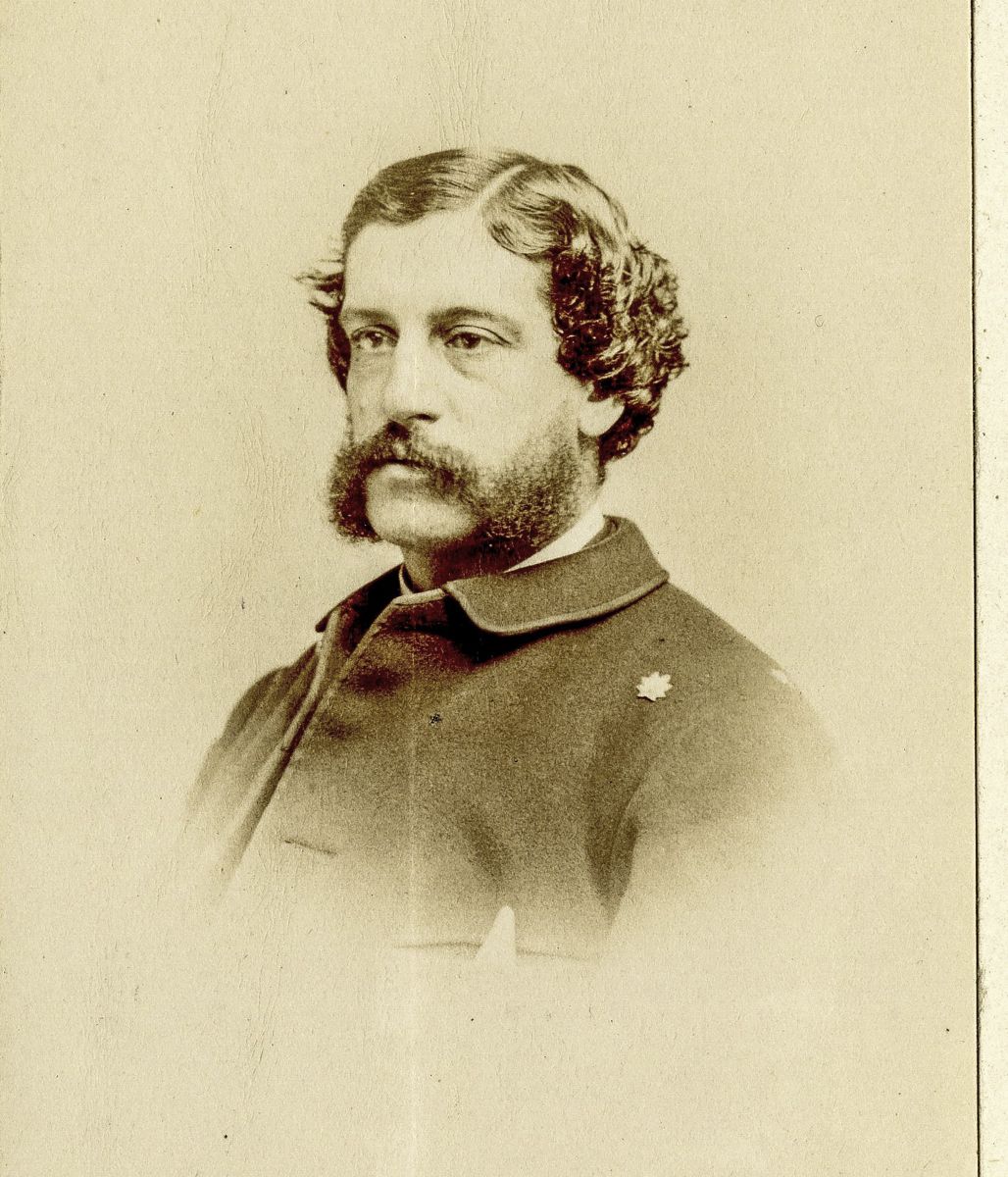
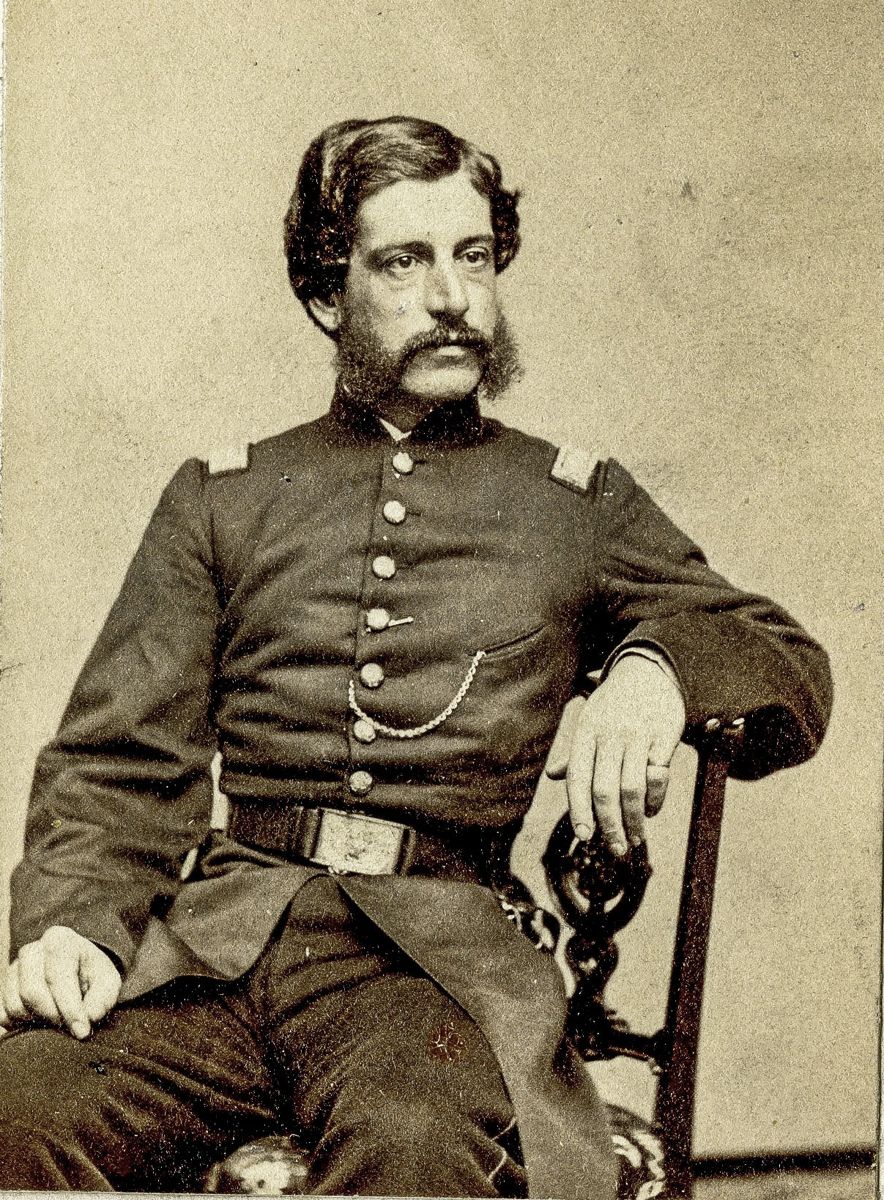
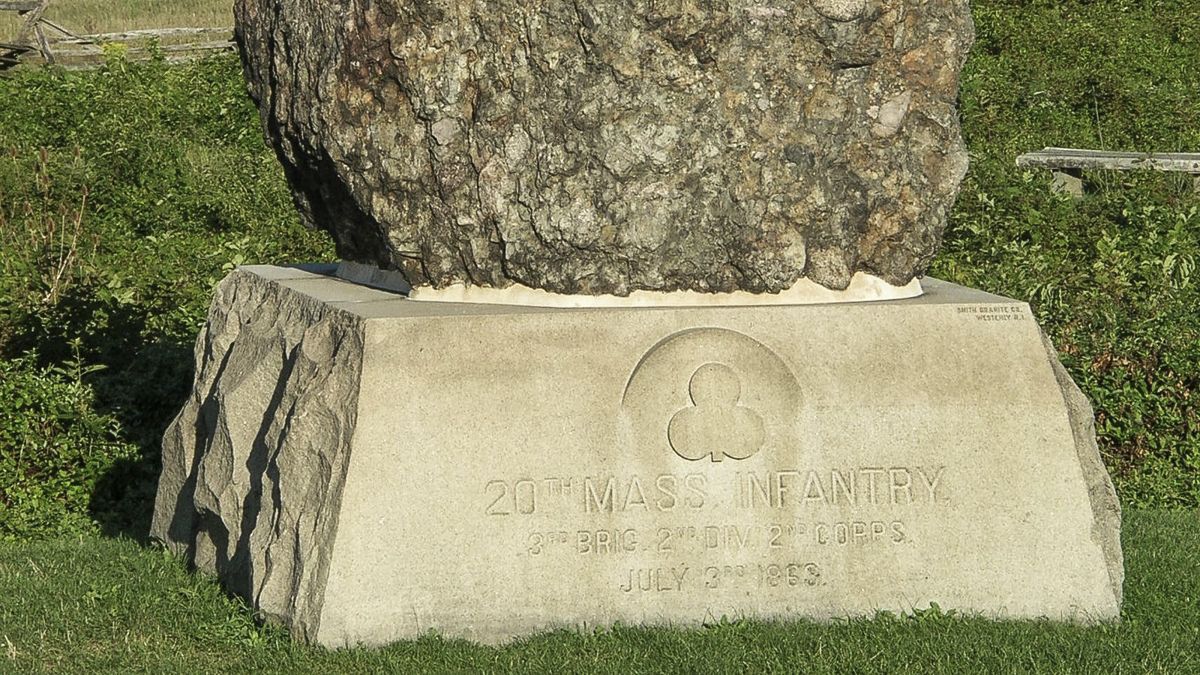
There were about a dozen men of the 20th Massachusetts Volunteers, the Harvard Regiment, who might be labeled as ”notable.” One is well known; one is far lesser known. Paul J. Revere fought at Gettysburg, and Henry Tremlett who did not, but was engaged in most large eastern battles. The battle of Gettysburg raged over three pivotal days in high summer 1863 is arguably the key battle of the entire Civil War according to Iain MacGregor in his recent U.S. Civil War Battle by Battle, and numerous other authors and historians. Lee’s invading Army of Northern Virginia, fresh from a dramatic victory at Chancellorsville, attempted to finally break the Union Army of the Potomac, now commanded by Meade, on its own territory to hopefully force a diplomatic solution. By the beginning of the second day, the Union line resembled a fishhook east and south of the town. Lee determined to drive them from their positions on Culps Hill, Cemetery Hill, and its southern ridge, with all-out assaults on both flanks; locations whose names were made famous by resolute assault and defense on July 2, 1863. “It ended in complete disaster with over half his command killed, wounded or captured—and with it the cause of the Confederacy fatally wounded.” After Gettysburg, even the staunch North Carolinians for example, a growing majority had enough of war. Much has been written about Paul J. Revere, the grandson of famed Revolutionary War dispatch rider Paul Revere. Colonel Revere, 20th Massachusetts, was part of Lander’s Brigade, II Corps, Army of the Potomac. Lander’s Brigade was composed of the 19th and 20th Massachusetts, 7th Michigan, 42nd and 59th New York. At Gettysburg, the
Paul Joseph Revere, grandson and namesake of Revolutionary War patriot Paul Revere.
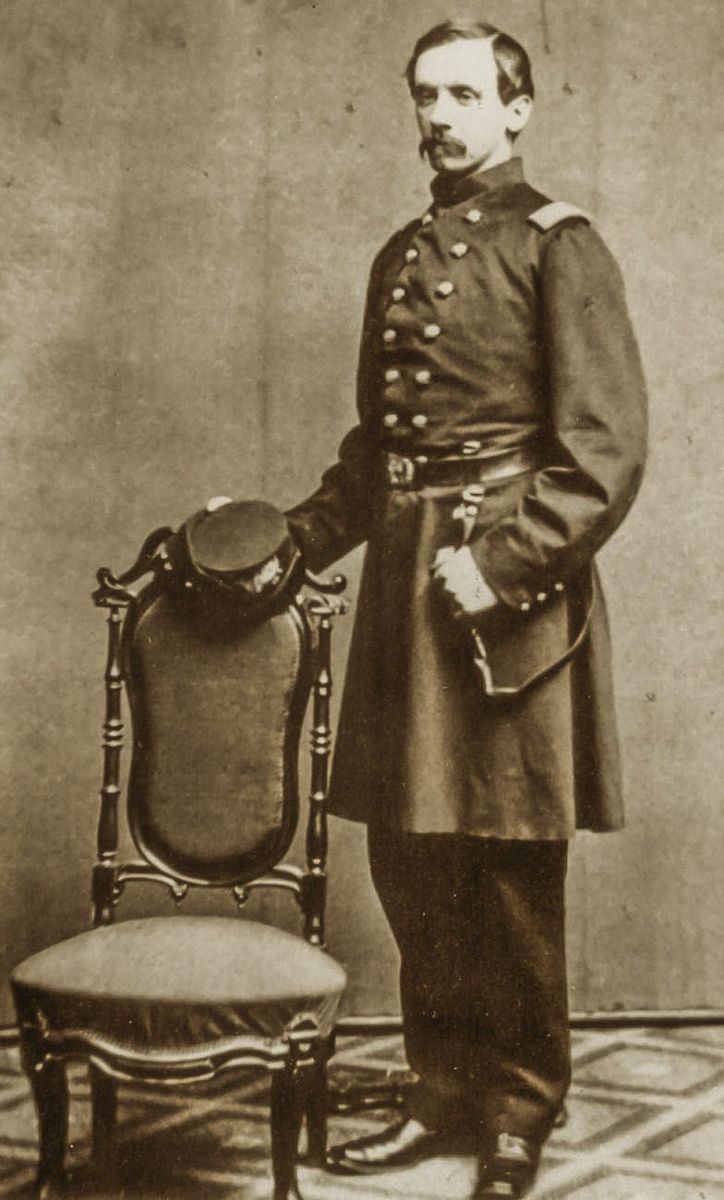
Lt. Col. Henry M Tremlett, 20th Mass Volunteers Infantry. (MOLLUS_ Mass_V93_4795.)
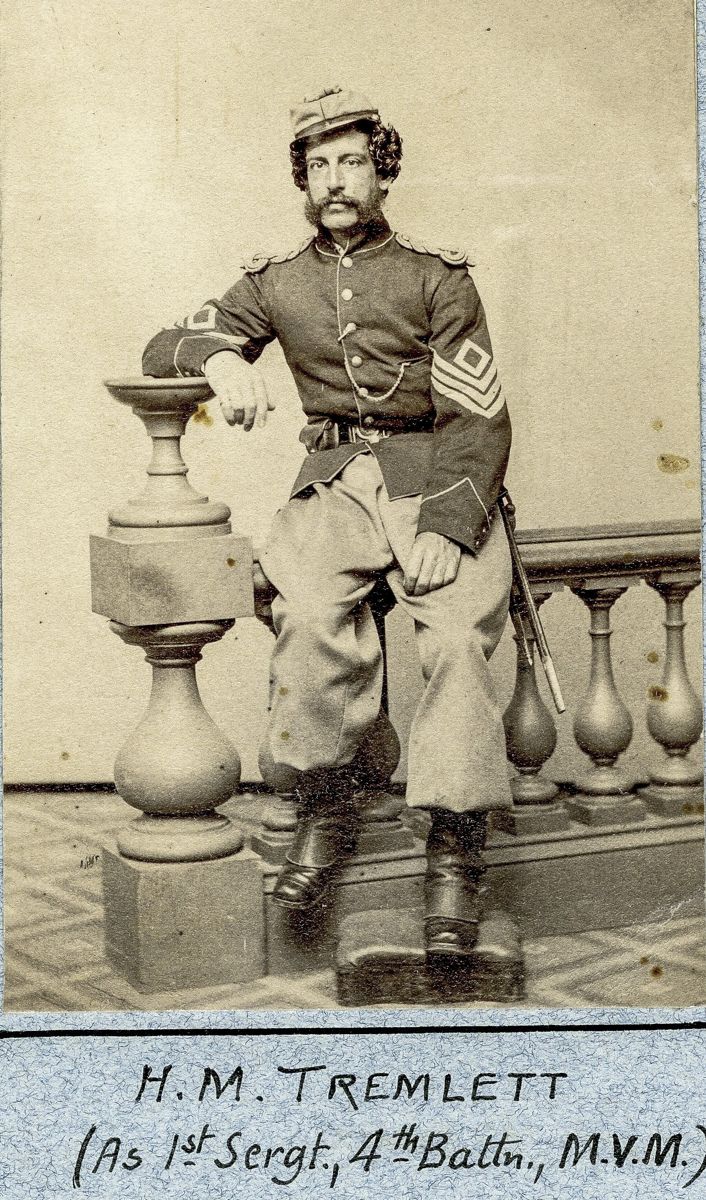
brigade was part of General John Gibbon’s 2nd Division in Winfield Scott Hancock’s II Corps. The brigade was led by Colonel Norman Hall who had risen to brigade command by his service in the 7th Michigan. Revere, who was wounded and captured at Ball’s Bluff the fall of 1861, was mortally wounded on July 2, 1863, by artillery canister shot as the 20th helped stop the Confederate attack; he died two days later on July 4, 1863. Here we shine a spotlight on another member of the ‘Harvard Regiment’ as the enlistees were referred to on occasion. In addition to the Harvard-educated Revere and others from the college, the Twentieth included Henry Tremlett. Born January 1, 1833, Henry grew up in a mercantile family. Henry doesn’t seem to have attended Harvard but he did graduate from the prestigious college-preparatory Chauncey Hall School. Henry is said to have loved traveling and went on exotic foreign trips customary for affluent graduates to augment their experience and education. Henry noted he preferred that to university. The son of a prominent Boston shipping merchant, he gravitated toward a mercantile life. In 1855, age 22, he settled down long enough to enter the family business along with his older brother, doing business as Tremlett Bros., a company separate from their father’s firm. Since their father was in poor health, a merger was orchestrated, making firm Deblois & Tremlett. The firm enjoyed much success but there was a storm brewing on the horizon, a war between the states. Henry M. Tremlett enlisted July 10, 1861 for three years, or the way. As a captain, he was assigned to lead a company in the “Harvard Regiment” as it was called. Company command was awarded him because he had been an NCO in the Massachusetts Volunteer Militia before the war. Henry and his company fought at Ball’s Bluff, then regiment served through the Peninsula Campaign before he went home recruiting during the summer of 1862. During his recruiting efforts, he was reassigned to the 39th Massachusetts Regiment as its second in command. Most of his service over the next three years was in the 39th Massachusetts. Serving first as the regiment’s second in command, he reenlisted July 10, 1864, and was soon promoted to lieutenant-colonel. Along with his regiment, he spent the winter of 1862-63 in Poolesville, Maryland, guarding the Potomac River’s northern shore. During the Spring 1863, the regiment was assigned to the Washington, D.C., defenses until the Overland Campaign was underway. Leaving the capital, the regiment was assigned to Robinson’s Brigade, the Second Brigade, Second Division, V Corps, and participated in the battles around Richmond, before moving to the siege operations against Petersburg, Va. While leading the regiment during the siege of Petersburg, he was wounded January 5, 1865. Praised as “courageous,” he died of the wound later during June 1865. For a references to the 20th Massachusetts at Gettysburg, go to ArmyHeritage.org and see: “Isn’t this Glorious! 20th Massachusetts Volunteer Regiment at Gettysburg’s Copse of Trees” by Edwin Root and Jeffrey Stocker, 2006. “Harvard’s Civil War: a History of the Twentieth Massachusetts Volunteer Infantry,” a text on the Twentieth, was published by University Press of New England, Hanover, NH, 2005. Another informative website is:walkbostonhistory. com + :nps.gov/places/20thmassachusetts-monument.htm. Joan Wenner, J.D. is a longtime contributor, with a law degree, to Civil War News and other history publications. Comments are welcomed at [email protected]