
Through The Lens
A Grand Sight to Witness
By Stephanie Hagiwara · Originally published July 2023 · pp. 16–17
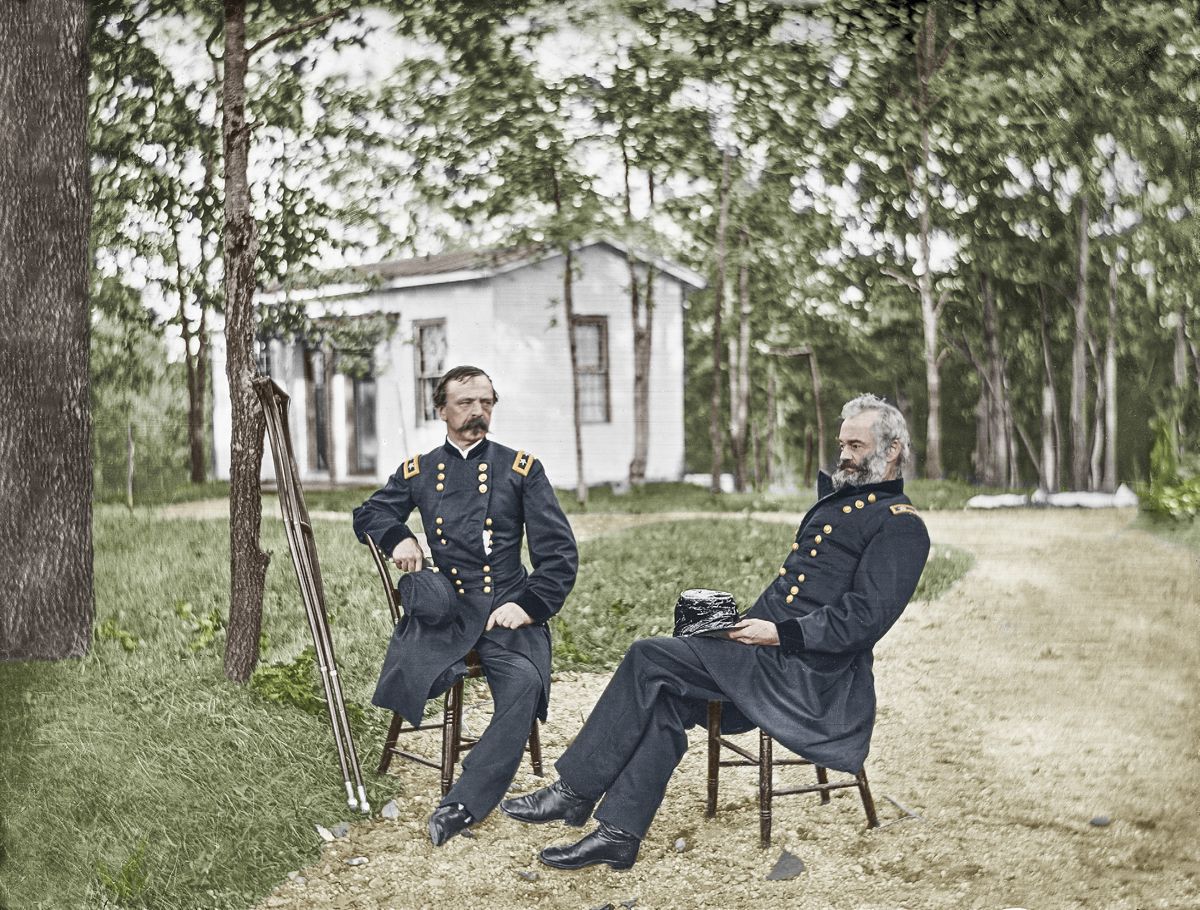
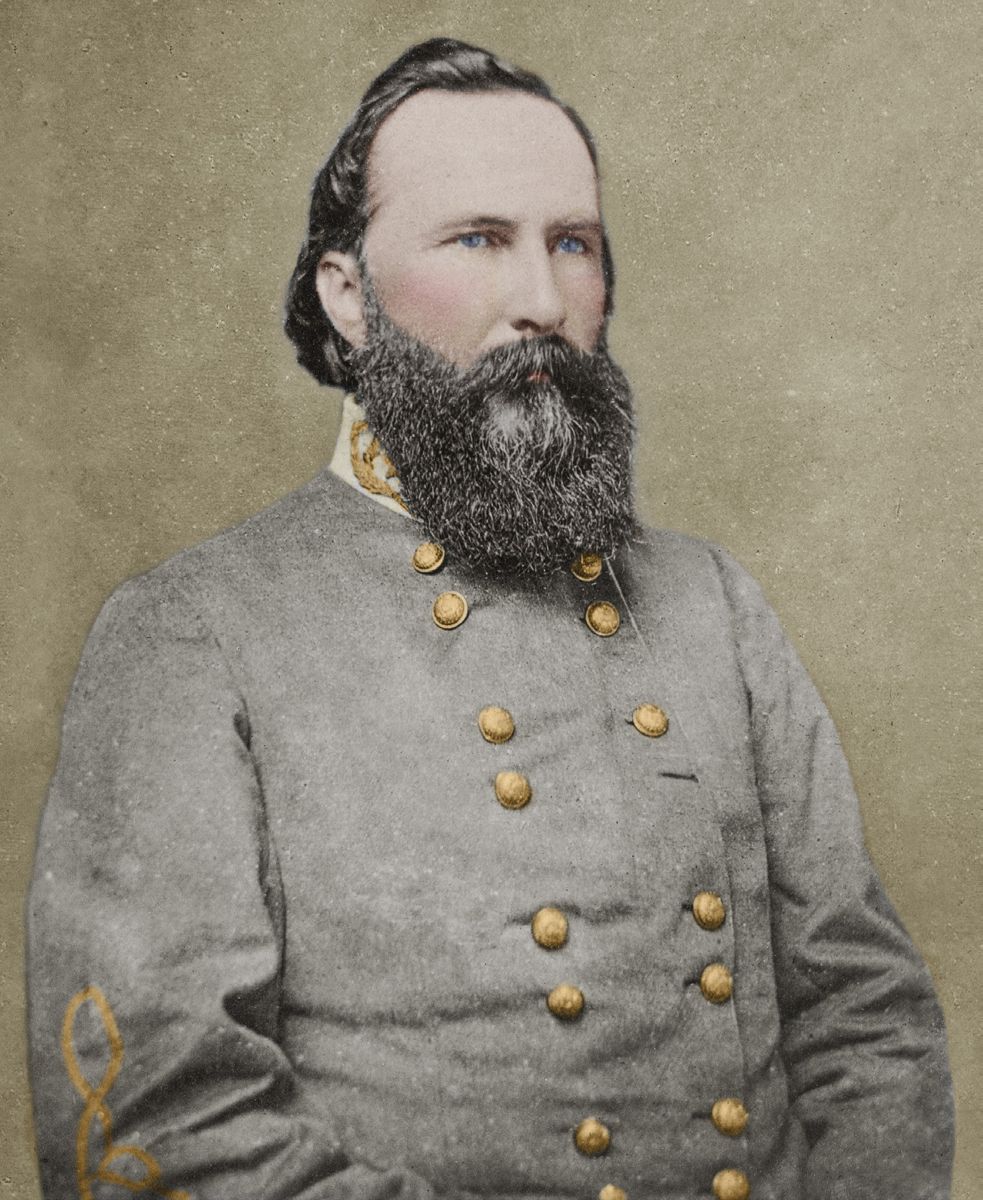
A Grand Sight to Witness Longstreet was “sitting on his horse like an iron man with his spyglass to his eye, coolly watching the effect of our shots. Limbs of trees fell and crashed around him, yet he sat as unmoved as a statue.” – C.S. Capt. Decimus et Ultimus Barziza, 4th Texas Infantry On July 2, 1863, the second day of the Battle of Gettysburg, Penn., Gen. Robert E. Lee was sitting under a tree discussing the tactical situation with his generals before dawn. Gen. James Longstreet opposed a tactical offensive due to the Confederates’ finite number of men; he wanted to wait for Gen. George Pickett’s Division to arrive before launching any major attack. “I never like to go into battle with one boot off,” Longstreet remarked. The Army of Northern Virginia had a successful first day and wanted to continue the momentum. Lee ordered an assault on the Federal left with divisions from generals James Longstreet’s 1st Corps and Ambrose Powell Hill’s, 3rd Corps. Longstreet would borrow Gen. Richard Heron Anderson’s Division to replace Pickett’s. Lee stated, “The enemy is here, and if we do not whip him, he will whip us.” Lee tasked Capt. Samuel Johnson, “to reconnoiter along the enemy’s left and return as soon as possible.” Johnson reported that the roads to Cemetery Hill and Little and Big Round Tops were clear of Federal troops. Gen. Lafayette McLaws’ Division would lead the attacking force, which moved under orders “not to display the colors as we were supposed to be in ambush.” At Herr Ridge, Gen. Joseph Kershaw spotted Federal signal flags on Little Round Top. Moving forward would reveal the huge Southern column to the Federal lookouts. Longstreet ordered a countermarch, a complicated maneuver. To maintain the order in which they had marched that day, the men at the head of the column would have to peel off along the right and left, face to the rear, and resume leading the march. About 3:30 p.m. the Confederates cleared the woods on the edge of Seminary Ridge and were greeted by Federal fire. “The view astonished me,” wrote McLaws, “as the enemy was massed in my front, and extended to my right and left as far as I could see.” Kershaw’s Brigade immediately positioned themselves behind a stone wall paralleling the Emmitsburg Road. On their left was Gen. William Barksdale’s Mississippi Brigade; Col. H.G. Cabell’s eighteen cannon rumbled in and soon began firing. Gen. John Bell Hood’s Division were behind them on their right rear. The fire came from U.S. Gen. Daniel Sickles’ III Corps positioned on farmer Sherfy’s peach orchard 600 yards away, occupying a key location in Lee’s attack plan. Nationally known, Sickles was “loved more sincerely, and hated more heartily, than any man of his day.” The former New York lawyer, diplomat, U.S. Congressman, and philanderer came from a wealthy family, had the character of “one of the bigger bubbles of scum,” and the people skills of a confidence man. In 1859, Sickles shot and killed his wife’s lover, Philip Barton Key II, the son of Francis Scott Key, author of “The StarSpangled Banner.” In the first use of the temporary insanity defense, future Secretary of War Edwin Stanton argued that Sickles was driven temporarily insane by his wife’s infidelity. He was acquitted. The public was more outraged that Sickles forgave and reconciled with his wife. Sickles, a Democrat, had not voted for Lincoln but supported the Union cause by recruiting the five regiment “Excelsior Brigade.” Needing bi-partisan support, Lincoln promoted Sickles to brigadier general. At Gettysburg, Sickles was the only non-West Point corps commander in either army. Sickles considered his assigned position in the Federal “fishhook” line “a low marshy swale.” Sickles repeatedly appealed to Gen. George Meade, commanding the Army of the Potomac, to move his divisions three-quarters of mile west as far as the Emmitsburg Road and Sherfy’s peach orchard to gain the advantage of “commanding ground.” Having received what he considered tacit approval, Sickles marched 10,000 men to the peach orchard with flags flying and drums beating. It was “a grand sight to witness this little corps of two divisions gallantly move on the advance,” wrote an officer. Under heavy fire Meade rode out to Sickles’ position, a half a mile in front of the army, and vulnerable to fire from two sides and well “beyond supporting distance.” Gen. Andrew Humphreys’ Division on the right flank was completely exposed. On his left, and also exposed, Gen. David Birney’s Division occupied the Peach Orchard, stretching past a wheat field to Devil’s Den and the Plum Run Valley beyond. Without realizing it, Sickles had imperiled the entire Federal Army. In the ensuing discussion Meade pointed out, “this is in some respects higher ground than that to the rear; but there is still higher ground in front of you, and if you keep on advancing you will find constantly higher ground all the way to the mountains.” Sickles offered to return to his original position. “I wish to God you could, Meade shouted over the cannon fire, “but those people will not permit it.” At which point Meade’s borrowed horse, in an “uncontrollable frenzy” dashed off with Meade in “a heavy shower of shells.” About 3:45 p.m. C.S. Col. Edward Porter Alexander open fire with an estimated 54 cannon. Federal batteries roared back. “I could hear bones crash like glass in a hail storm,” wrote a Confederate. Within 20 minutes a shell seriously wounded Hood’s left arm. Gen. Evander Law assumed divisional command. “I don’t think there was ever cigar to reassure his men. He was soon chloroformed, and the leg was amputated in a house on Baltimore Pike. Sickles survived the operation to conduct a lifelong feud with Meade and regularly visited his amputated leg that he had donated to the National Museum of Health and Medicine where it can still be seen today. Sources •
•
•
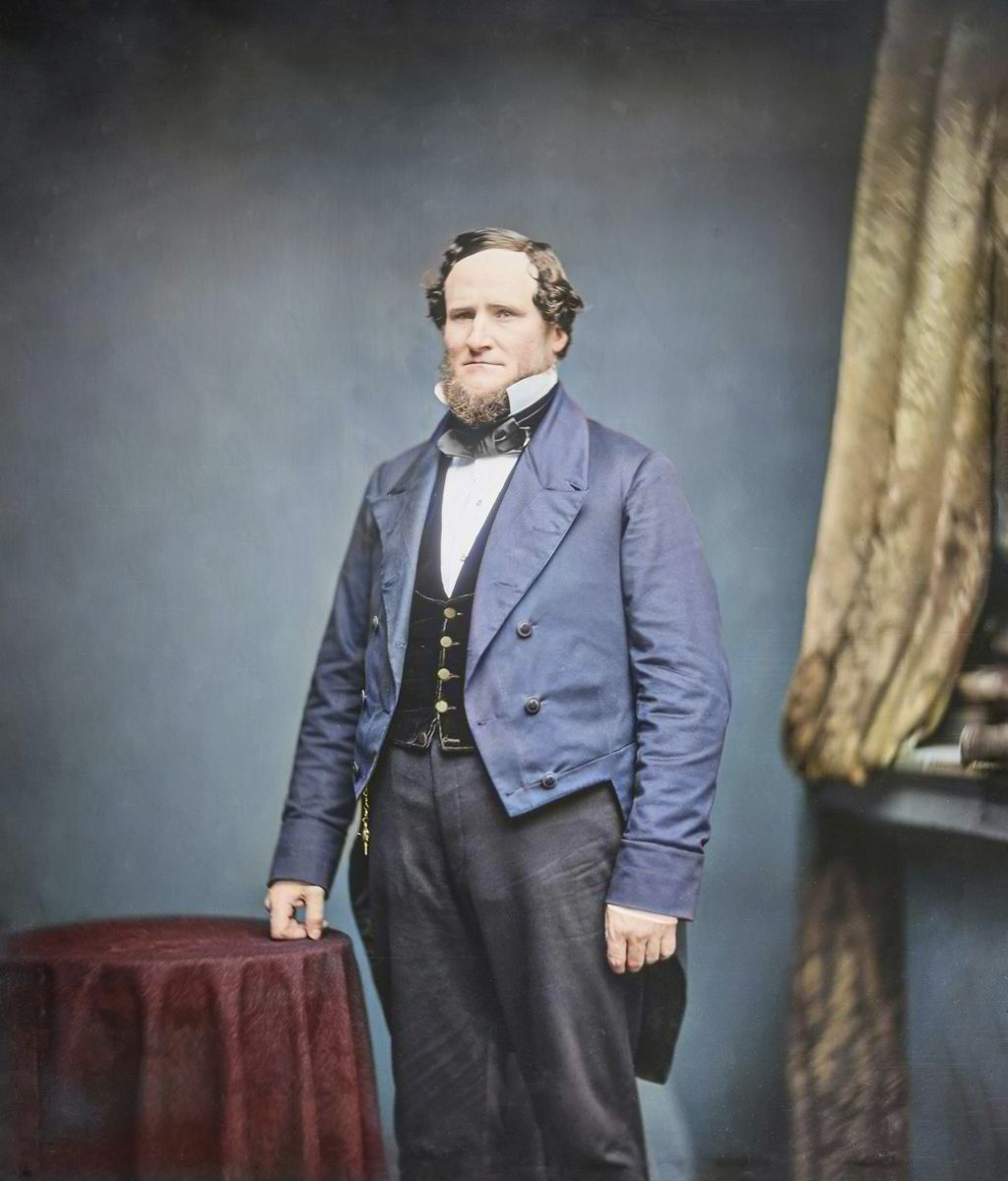
• in our war a hotter, harder, sharper artillery afternoon than the second day at Gettysburg,” wrote Alexander. Longstreet had promised Lee that he would take personal responsibility in the fighting much to McLaws’ annoyance. Barksdale began appealing to both Longstreet and McLaws to send his brigade to attack. Barksdale was a former fireeater secessionist senator. He was known for stopping a fullscale brawl on the congressional floor with laughter by putting his knocked off wig on his head backwards. “I wish you would let me go in, General … I would take that battery in five minutes.” Longstreet kept refusing, “we are all going in presently.” Finally, at the signal to go into battle, his face “radiant with joy,” Barksdale led the charge yelling, “Forward, men, forward!” Barksdale’s 1,600 Mississippians responded with the Rebel yell, charging “with the savage courage of baited bulls.” The Federal line collapsed before them. Longstreet ordered Alexander to deploy his batteries at the peach orchard. The “pieces and caissons went at a gallop, some cannoneers mounted, and some running by the sides—not in regular line, but a general race and scramble to get there first.” Barksdale, waving his sword at the head of his troops, urging his men forward beyond the Trostle Farm, dropped from his saddle, mortally wounded. Humphreys’ Division retired in good order while under attack.
His horse was wounded six times and threw Humphreys off after the seventh. “Twenty times did I bring my men to a halt and face about.” He managed to reach Cemetery Ridge with less than 3,000 of his 5,000 men. At his Trostle Farm headquarters, Sickles was struck in the right leg while mounted on his horse He shouted for a tourniquet. As he was carried off on a stretcher, Sickles was puffing away on a big Havana
Guelzo, Allen C. Gettysburg: The Last Invasion. Knopf Doubleday Publishing Group, 2013 Wert, Jeffry D. Longstreet: The Confederacy’s Most Controversial Soldier. Simon & Schuster, 1993 Clark, Champ, and the Editors of Time-Life Books. Gettysburg. The Confederate High: Time-Life Books, 1985 Hessler, James A.. Sickles at Gettysburg: The Controversial Civil War General Who Committed Murder, Abandoned Little Round Top, and Declared Himself the Hero of Gettysburg. Savas Beatie, 2013
Stephanie Hagiwara is the editor for Civil War in Color.com and Civil War in 3D.com. She also writes a column for History in Full Color.com that covers stories of photographs of historical interest from the 1850’s to the present. Her articles can be found on Facebook, Tumblr, and Pinterest.