
Lincoln Forum’s 27th Gathering
By Leon Reed · Originally published January 2023 · pp. 8–10
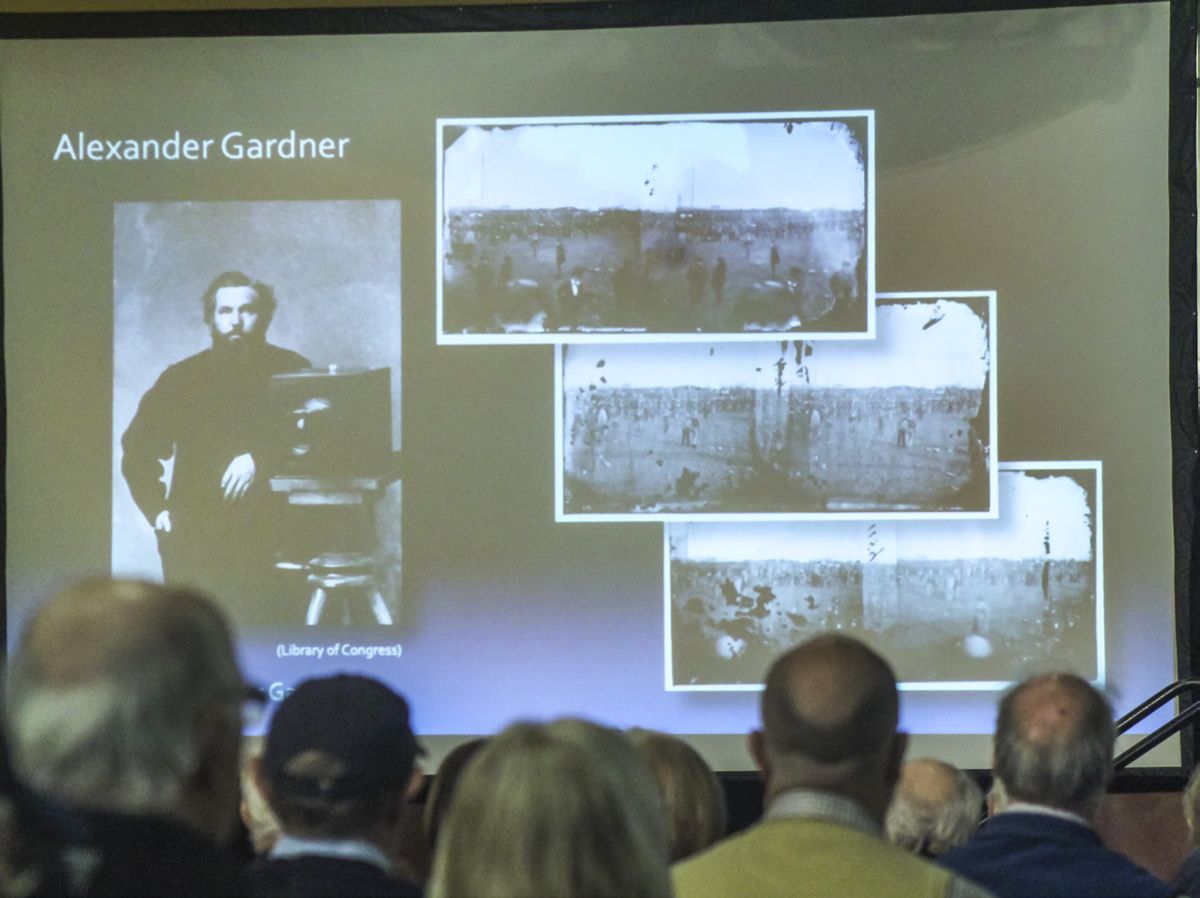
More than 350 Abraham Lincoln scholars and aficionados gathered at Gettysburg’s Wyndham Hotel on November 16-18 for the Lincoln Forum’s 27th annual symposium. While the conference was, as always, jam-packed with informative and engaging lectures and panel discussions by some of the country’s top historians, it also had a bit of an air of a family reunion. Conference chair Harold Holzer commented, “What I think the Lincoln Forum offers that no other meeting or conference can match is camaraderie and friendliness: the event is a grand reunion for our multi-year
Lincoln and Democracy Harold Holzer addressing the forum. attendees, who in turn go out of their way to welcome first-timers. Our speakers, whether they come from academia or network news or both, love to engage our crowd. We don’t call it the Forum ‘family’ for nothing.” For all the impassioned discussions, academic conferences don’t often create front page news. But this conference was an exception. On Saturday, November 19, the New York Times ran a front page story on Christopher Oakley’s announcement that he had settled one of Gettysburg’s enduring mysteries: the specific location of the platform that Edward Everett, President Abraham Lincoln, and other dignitaries stood on during the cemetery dedication ceremonies.
Headline speakers:
Those who came to the dinners enjoyed three special
John Avlon.
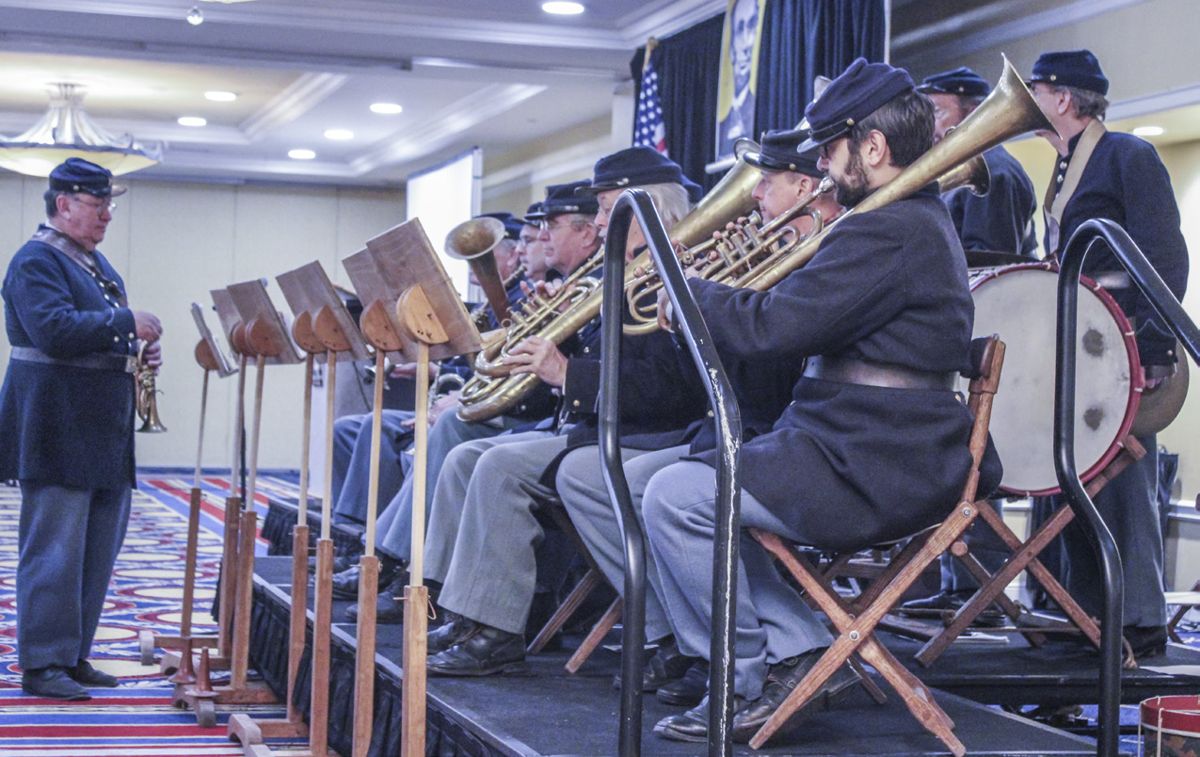
performances. The second night of the conference, the Federal City Brass Band presented a concert of Civil War era music, played on period instruments. A special treat was to hear the quite different version of the “Star Spangled Banner,” one Lincoln and his contemporaries heard. The other two nights, guests heard from a TV news commentator who is also a serious historian, John Avlon, author of Lincoln and the Fight for Peace, and another TV news commentator, John Meacham, author of Abraham Lincoln and the American Struggle. Avlon spoke on the continuing influence of Lincoln on world leaders down the years, particularly focusing on how Lincoln influenced the peace at the end of World War II. He pointed to the end of World War I, which involved a ceasefire with no real surrender followed by a punitive peace. By the time of World War II, it was recognized that this approach created the conditions for the rise of totalitarian government and, eventually, World War II. FDR, like Lincoln 80 years earlier, demanded unconditional surrender but then advocated a soft peace, including, most notably, the Marshall Plan. Avlon noted that Lincoln’s influence was widespread around the world. For example, General Lucius Clay, commander of the occupation effort in Europe, stated that his guiding philosophy was to consider what Lincoln would do. West Berlin’s mayor Willy Brandt idolized Lincoln; the King of England made reference to him in his speeches, and even Emperor Hirohito of Japan kept a bust of Lincoln. Harry Truman, a native of Missouri, remembered stories of Yankee vindictiveness and, like Lincoln, concluded that “I can’t be vindictive.” On the conference’s last night, John Meacham was awarded the Richard Nelson Current Award of Achievement. In giving him the award, Holzer quipped “We were ready to give you this award years ago, but we had to wait for you to write a Lincoln book.” Meacham spoke on “Lincoln and the Arc of a Moral Universe: The Conscience of a President.” He noted the importance of Lincoln’s selection of 1776 as the date of the nation’s founding rather than 1787. “He asserted the premise that the Declaration matters and called attention to the most important sentence ever rendered in English: all Men are created equal.” Meacham asserted that historians frequently ignore the role of Lincoln’s parents in forming the young Lincoln’s views. “He believed in a transcendent moral order, and in the words of Micah, to act justly, to love mercy, and to walk humbly. He demanded that the country follow a moral path through a brutal war.” Both authors sat patiently for more than an hour after their talks, bantering with the guests and signing a massive number of books.
Lincoln the politician and statesman Several speakers and panelists addressed aspects of Lincoln’s work as a politician and/or statesman. Michael Green, professor of history at the University of Nevada-Las Vegas, and Andrew J. Lang, associate professor of history at Mississippi State, addressed “Lincoln and the Union” in a breakout session. Jonathan W. White moderated a panel consisting of Reg Ankram, J. Matthew Gallman, Harold Holzer, and Elizabeth Leonard on “Lincoln and the Democrats.”
Jonathan W. White.
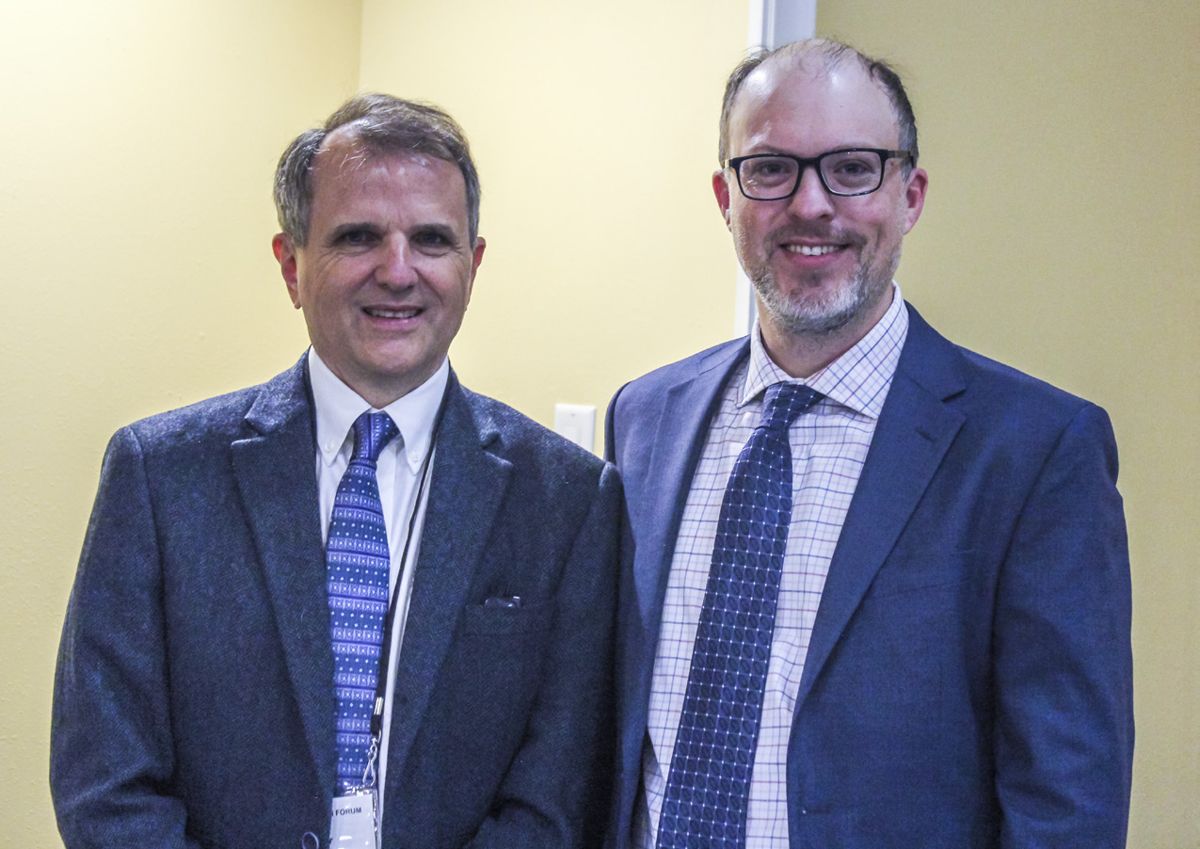
Finally, David J. Kent, president of the Lincoln Group of the District of Columbia and author of Lincoln: The Fire of Genius: How Abraham Lincoln’s Commitment to Science and Technology Helped Modernize America, and Edward Steers Jr., author of Getting Right with Lincoln: Correcting Misimpressions About our Greatest President, led a breakout session on Lincoln and science and technology. Green and Lang pointed out that the idea of “Union” is often under-estimated as a cause to fight for. Far from being a somewhat creation of the Department of Agriculture to promote research and diffusion of new techniques.
Race Relations
Elizabeth Leonard. abstract idea, “Union” was a powerful emotional concept and secession was a threat to our way of life. The attitude of many was “We made a deal, we kept our end of the deal, why not you?” Secession wasn’t just the action of a few states to depart; it threatened the entire construct of the United States. The panel discussion on Lincoln and the Democrats showed that Lincoln’s relations with Democrats were very complex, ranging from giving them important positions in the government and the military to suppressing newspapers and arresting state legislators whose loyalty was questioned. Newspapers of the time were highly partisan, with editors and publishers sometimes also functioning in party leadership. Harold Holzer pointed out that there were waves of suppression, some of which “lasted an astonishingly long time.” The original actions were taken to prevent border states, Kentucky, Missouri, Maryland, from seceding but later arrests happened after editors urged soldiers not to re-enlist. Kent observed that the Civil War era was a time of important scientific advances, the mechanical reaper replacing manual labor, railroads replacing animal power, and that Lincoln saw and understood the implications of these changes. Lincoln, of course, came from the Whig tradition, which called for government aid to such initiatives. Steers mentioned the Homestead Act and Pacific Railroad Act, both were approved during the Lincoln presidency’s first Congress, as especially important spurs to technology. The important work done by Lincoln, according to Kent, was in setting up the framework for promotion and control of science: the National Academy of Sciences, the emergence of the Smithsonian as an important research organization, and the
Three presentations addressed race relations. John Rhodenhamel, former archivist at Mount Vernon and document curator at the Huntington Library, and author of America’s Original Sin: White Supremacy, John Wilkes Booth, and the Lincoln Assassination, and conference vice chair Jonathan W. White, professor of American Studies at Christopher Newport University and author of A House Built by Slaves: African American Visitors to the Lincoln White House, spoke about their recent books. A panel moderated by Edna Greene Medford, professor emerita at Howard University, consisting of Christy Coleman, executive director of the Jamestown-Yorktown Foundation; Michael Green; and James Oakes, Distinguished Professor of History at the CUNY Graduate Center, and author of The Crooked Path to Abolition: Abraham Lincoln and the Antislavery Convention, addressed “Lincoln, Race, and Citizenship.”
John Rhodenhamel. Rhodenhamel noted that the traditional view of Lincoln’s assassination was that “John Wilkes Booth was a crazy, drunken actor, and the assassination was an isolated event that had no real meaning.” He said, “Booth was a crazy, drunken actor, but that’s not why he shot Lincoln.” Instead, he argued, the assassination grew out of the atmosphere at the end of the war. He summarized the feeling of exhilaration in the North and despair in the South as the end approached. Lincoln’s visit to Richmond was especially important. “Richmond’s racial divide had never been more starkly evident than the day of Lincoln’s visit.” Southerners did not see the saintly figure of the Lincoln Memorial when they looked at
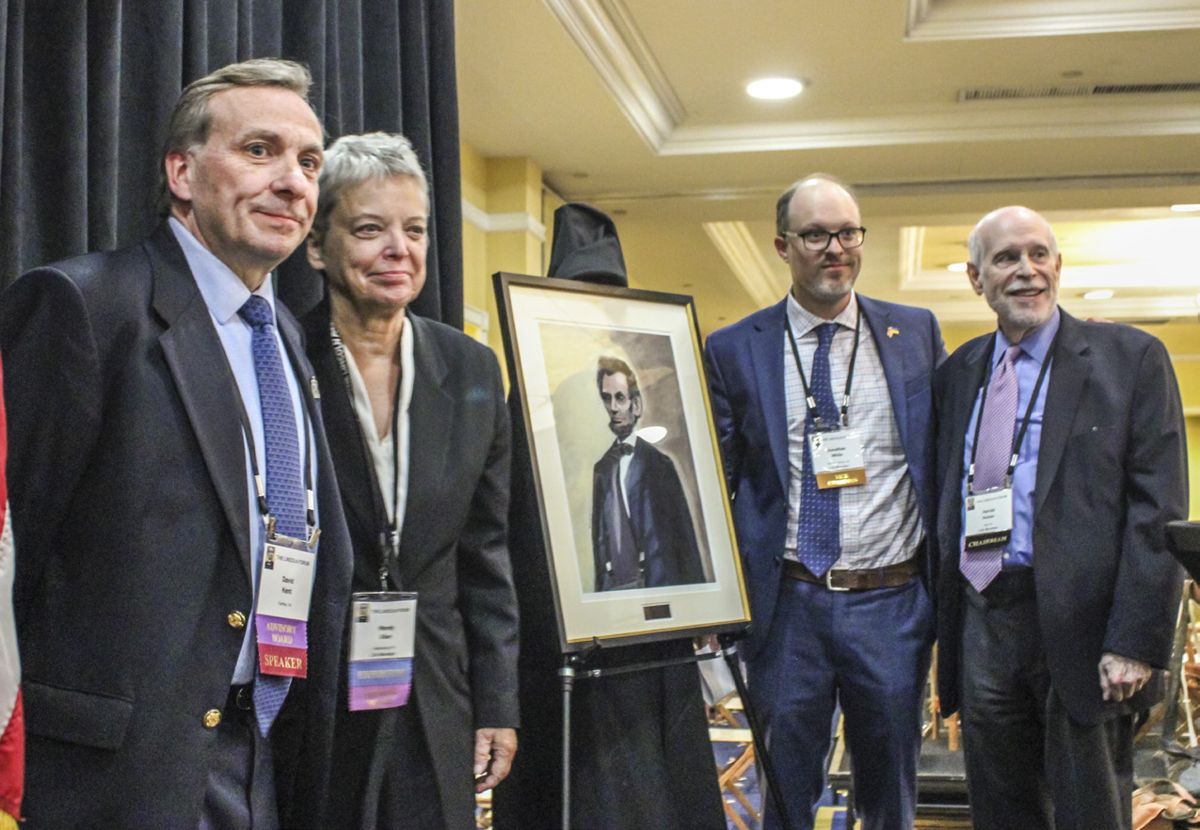
Walter Stahr and Jonathan W. White. Lincoln. White discussed Lincoln’s encounters with African Americans during his years in the White House. For the first time, African Americans felt there was an occupant of the White House who would listen to them; they felt comfortable writing the president to ask his personal support. The decision to arm African American soldiers was one of the weightiest decisions Lincoln wrestled with. One of his first African American visitors to the White House was Robert Smalls, an enslaved harbor pilot who planned and executed a daring escape right under the noses of Confederate harbor traffic. Lincoln was initially reluctant to arm African Americans because he feared they would be cowardly, but Smalls’s example played no small part in changing Lincoln’s mind. Frederick Douglass was an especially frequent visitor and Lincoln came to rely on him for counsel. At one particularly dark moment for the Union cause, in August 1864, when Lincoln’s re-election campaign looked hopeless, Lincoln expressed his frustration that enslaved people weren’t running away in sufficient numbers. The two collaborated on the spot to develop an effective message. Douglass said later that encounter showed Lincoln’s true ani-slavery views, which were often hidden. White concluded that Lincoln’s interactions “show a relationship of listening and communication. He listened to them, and they listened to him.” Medford-Greene’s panel discussed the concept of citizenship, which was considerably more complex than it is today. The concept of birthright citizenship wasn’t made specific until the passage of the 14th amendment. At first, under the 1790 Naturalization Act, only “whites” could be citizens, though even the concept of “white” was fluid. As the definition expanded, Indians, considered residents of domestic dependent nations, were still excluded from citizenship. Another present-day concept, voting as a citizenship right, also remained years in the future. Lincoln’s views on citizenship were somewhat opaque. He strongly protested the Dred Scott decision’s denial of citizenship to all African Americans but did not consider Indians to be citizens and did not take strong positions about suffrage.
Political figures Two speakers addressed Treasury Secretary Salmon P. Chase and the methods he used to finance the war. Walter Stahr, a writer who followed up his biographies of Secretary of State William Seward and Secretary of War Edwin Stanton with the recent Salmon P. Chase: Lincoln’s Vital Rival, and Roger Lowenstein, author of Ways and Means: How Lincoln Financed the Civil War. In addition, Elizabeth Leonard, John J. and Cornelia V. Gibson Professor at Colby College and author of Benjamin Franklin Butler: A Noisy, Fearless Life, discussed her book about a leading political general. Stahr spoke of the political backgrounds of the two rivals. He pointed out that Chase made several aggressive statements about slavery, including a denunciation of the state law prohibiting blacks from attending school. Stahr noted that statements like these by Chase and Seward ultimately explain Lincoln’s nomination; needing to carry moderate northern states, the Republicans knew they couldn’t nominate someone with a long record of real, or perceived, militant statements. Despite his disappointment, Chase campaigned hard for Lincoln. “Lincoln could not have been elected without Chase’s effort in New York,” said Stahr.
Chase continued to play an important part in national politics. He provided the best accounts of the two cabinet meetings where the Emancipation Proclamation was discussed and was among the voices counseling Lincoln to include language about arming black troops to later drafts. Forum founder Frank Williams interviewed Lowenstein. Before the presentation, Lowenstein was presented with the Harold Holzer Lincoln forum Book Award. Lowenstein stated that finance was one area where the Union had a pronounced advantage, in no small part due to the energy and creativity of Treasury Secretary Salmon P. Chase. Other advantages included the banking system, the Homestead Act, and the Morrill Land Grant Act. But the scale of financial needs surprised everyone. In December 1860, the Bank of Commerce came up with $50 million and informed Washington, this should be enough, don’t come back for more. Ultimately, Lowenstein pointed out, that sum was matched 60 more times. Other financial innovations introduced in the North included the Legal Tender Act and the national Bank Act.
Roger Lowenstein. In contrast, the South made mistake after mistake, including its near total reliance on loans. The South believed that cotton would be their effective leverage (“no one dares make war on cotton, because cotton is king”), but they over-estimated the power of cotton and under-estimated its effectiveness.” Leonard re-appraised the life and reputation of one of the period’s most prominent political generals. She acknowledged that, to the extent most people think of Butler at all, they tend to focus on his lack of success as a field commander in several campaigns and two unflattering nicknames, “Beast” and “Spoons,” he acquired during his tenure as military governor in New Orleans. Leonard commented that she had at times said “I’m sick and tired of Joshua Chamberlain and Bowdoin College; all we [at Colby] have is Ben Butler.” She said Gary Gallagher suggested she should re-examine Butler. “I think you’ll find there’s a lot to be proud of.” Leonard joked that she sometimes wants to call him “’Butler Gump,’ because he turns up everywhere.” Based on her follow up study, she decided his reputation is due for a reappraisal, based on his many contributions before, during, and after the war. “He played an instrumental role in keeping Maryland in the Union and later, at Fort Monroe, he went on to establish the contraband policy, a major, unauthorized step toward emancipation.” She also pointed out that as the war ground on, “he became devoted to his black soldiers and they to him.” In the years after the war,
Butler served in Congress, where he led the opposition to President Johnson’s lenient Reconstruction policies, helped organize the Andrew Johnson impeachment, and helped organize support for the 14th and 15th amendments. “He supported women’s suffrage and, to level the playing field, urged West Point to admit black students.” She observed that “the massive attendance at his funeral tells us far more about his importance and what he contributed to the country.”
Awards Along with the awards to eminent authors, the conference also grants scholarships that allow high school students, college students, and teachers to attend the conference. Forum Vice chair Dr. Jonathan White remarked, “I love meeting these ‘first-timers,’ especially the student and teacher scholarship winners, because they have such enthusiasm and eagerness to learn about Lincoln. Many of them told me about how much they enjoyed the Forum and look forward to attending again next year.” On the last morning of the conference, Don McCue announced winners of the Platt Family Lincoln Forum scholarship essay contest. This year’s theme, given the 100th anniversary of the Lincoln Memorial, was “How has the whole question of memorializing leading figures of the Civil War, including Lincoln, changed in the 100 years since then?” The 3rd prize winner ($500 award) was Ranen Miao of Washington University. Abigail Morehouse, University of the Arts, earned the second prize ($750 award). Writing the champion essay ($1,500 award) was Vivian Turnbull, Hillsdale College. The conference is a labor of love for its organizers. Vice chair White observed, “One of the highlights of my year is traveling to Gettysburg in November for the Forum. It is wonderful to see so many friends, and to hear from such incredible speakers.” Conference chair Harold Holzer added, “As we depart each year, Thanksgiving season; Lincoln made it a national holiday, after all, always makes me especially thankful for our attendees, guests, participants, fellow Forum officers and administrators, and hotel staff, all of whom are already thinking about 2023, Forum XXVIII, and making good on the promise, ‘wait till next year.’” “I know I say this every year, but this was an extraordinary Forum. We were blessed with uniformly compelling and entertaining lectures, vigorous panel discussions, and great entertainment from the Federal City Brass Band. The real music to my ears comes when members of our Forum ‘family’ come forward to tell me, ‘This is the best symposium ever.’ That sort of reaction means much because it comes from such an educated and engaged audience.” Leon Reed is a retired Senate aide and U.S. history teacher. He lives in Gettysburg and is the author of History in Granite and Bronze: The Civil War Artwork of Gettysburg, Antietam, and Washington, D.C. Scholarship Winners Through generous contributions as well as the proceeds of a used book sale and a sale of Lincoln Forum logo gear, the Forum is able to offer a variety of annual scholarships that bring people to the conference who wouldn’t normally be able to attend. Thomas Horrocks, who chairs the Scholarship committee, commented, “The Lincoln Forum’s Frank J. Williams Student Scholarship program began ten years ago. This year’s student scholars, Samuel Pierce, a home-schooled senior from Fort Washington, Maryland; and Lennox Cross, a senior at Robert F. Munroe Day School in Quincy, Florida, continue the tradition of impressive young scholars who study Abraham Lincoln and the Civil War.” Pierce attended with his mother, Jozina, and Cross was accompanied by his father, Mark). Cross hopes to attend Florida State while Pierce has his eyes on Patrick Henry College. Two years ago, the Lincoln Forum established the FranklinMedford Student Scholarship program, named in honor of the esteemed historians John Hope Franklin and Edna Greene Medford, to provide support for an undergraduate or graduate student of color to attend the Lincoln Forum. Horrocks said, “This year’s Franklin-Medford scholar, Hugh Allen Goffinet, is a third year student at Howard University and is an up-andcoming star in the history field.” Goffinet has been working on the experiences of US Colored troops during the war and during Reconstruction. He recently published “The assault on Private Berry Brown; Civilian Violence against the USCT” in the Emerging Civil War blog. In addition, scholarships are provided to history teachers. This year’s teacher-scholars were Kenton Horsley, Wintland (KY) Middle School, Larry Dorenkamp, North Hills (Pittsburgh) Middle School; and Monica Henry, Trinity Christian Academy.