Fort Branch, North Carolina, Reenactment Survived Covid
Originally published January 2023 · pp. 12–13
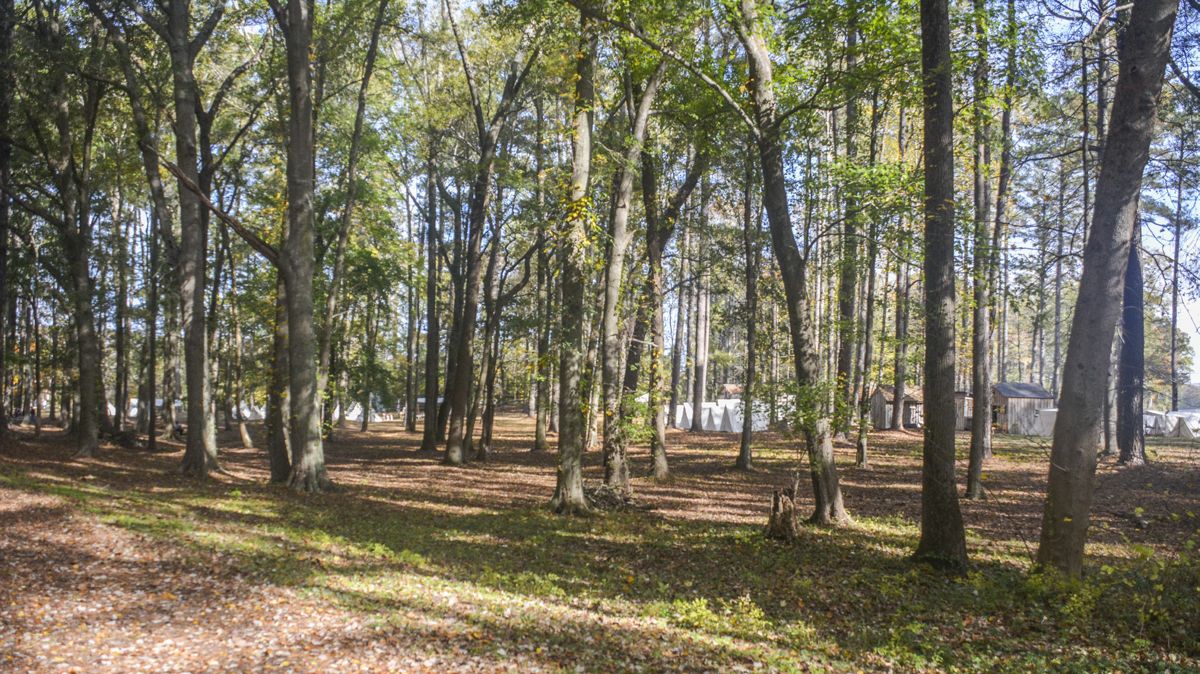
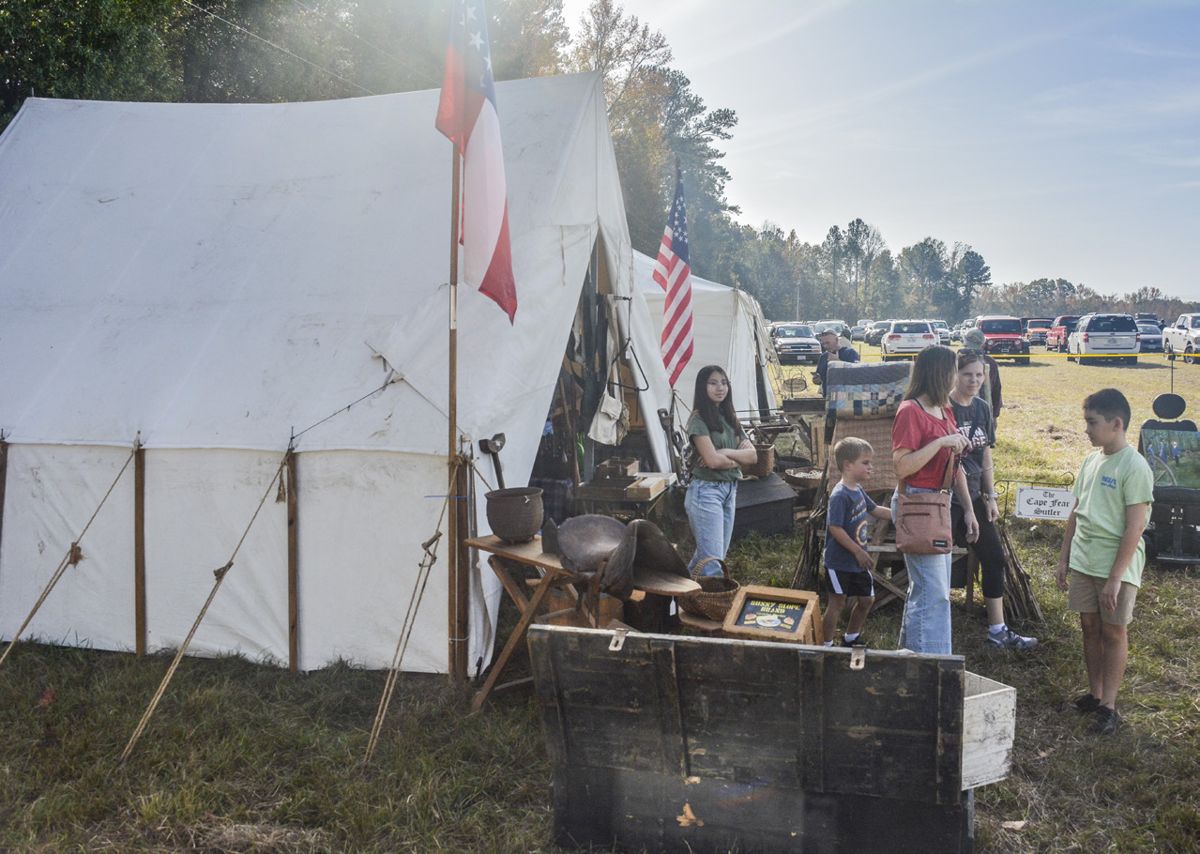
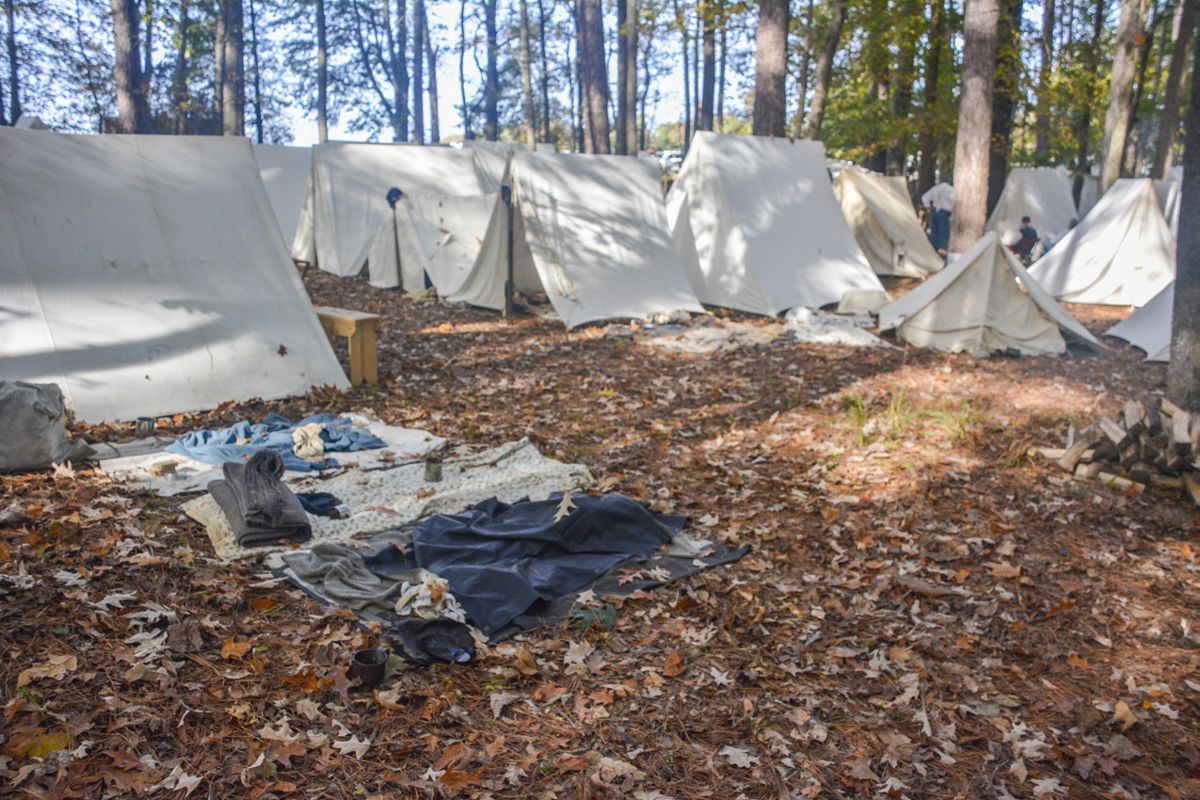
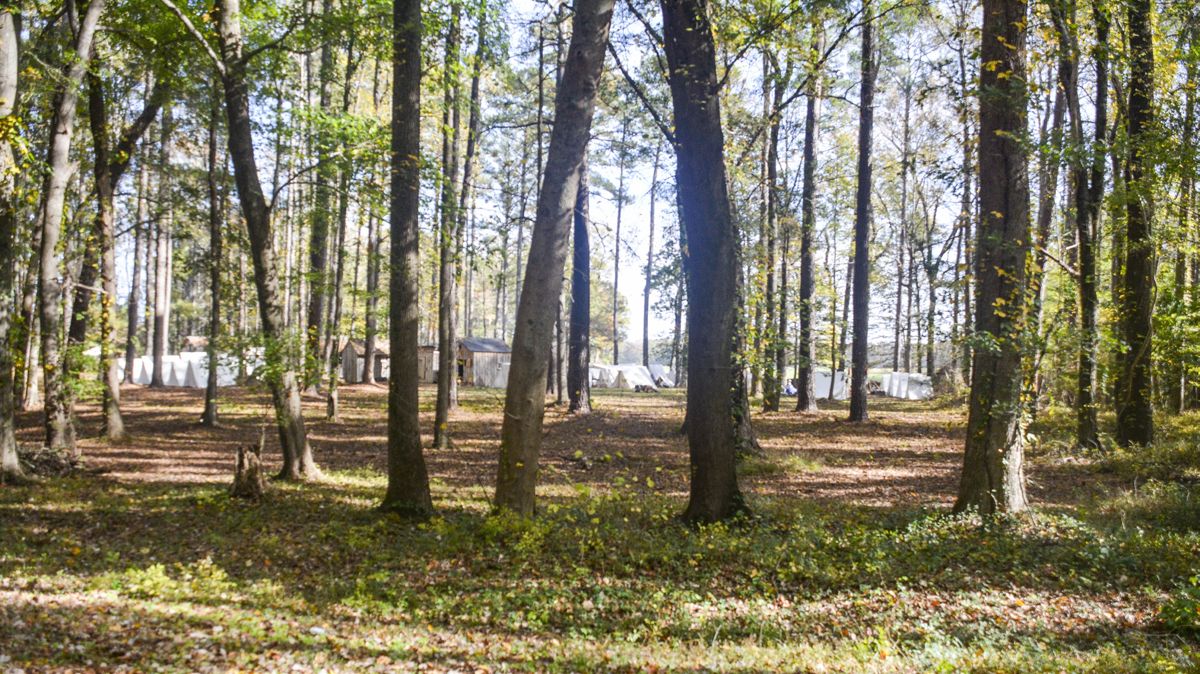
HAMILTON, N.C.—Over the November 5 and 6 weekend, the Fort Branch reenactment made its annual appearance. This year’s event was leaner with only some 200-250 participants representing both sides and all three branches. The public still turns out despite the political climate and the momentum lost to covid. This year was perhaps less well attended but several hundred visitors came to see the living history, buy from sutlers, learn about medicine, life on the home front, and tour the museum and fort itself. Fort Branch, one of the best preserved Civil War earthworks, with most of its original complement of artillery still on site, has conducted reenactments for years but has gradually broadened its approach to go beyond the entertainment focus. This report basically ignores the two public battles and the Sunday morning tactical to show something of the site and what goes on in parallel with the battle reenactment. Going from the parking area involved a walk through the sutlers; there were only a half dozen this year, down from many more prior to covid. Reenactors took advantage of end of campaign season pricing to replace worn shoes, clothing, and other gear, plus acquire literature and equipment to improve their impressions. The general public took in the sales area, taking the opportunity to learn about blacksmithing or buy historical items that struck their fancy. The trail wound down through a wood line and into one camp area portraying a field impression. Not every soldier slept in tents and there was a wide scatter of wool and gum blankets through most camp grounds. Moving toward the museum, the lower ground closer to the fort, where earth for the fort’s glacis and parapets was obtained during three major construction phases, was left open because it is very often flooded by seasonal rains. This year proved an exception as the temperature on this bright and sunny weekend hovered in the low 80’s. The North Carolina home front situation was well portrayed by civilian living historians who opened the Bunting House
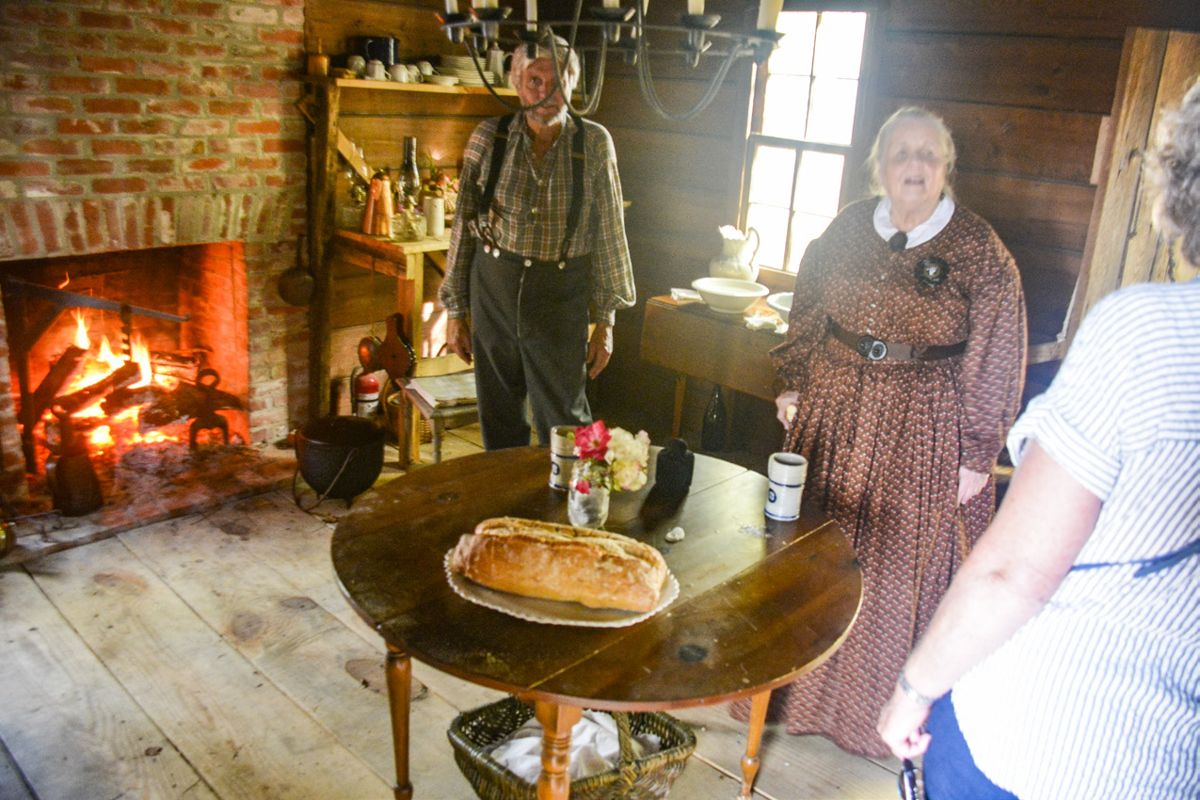
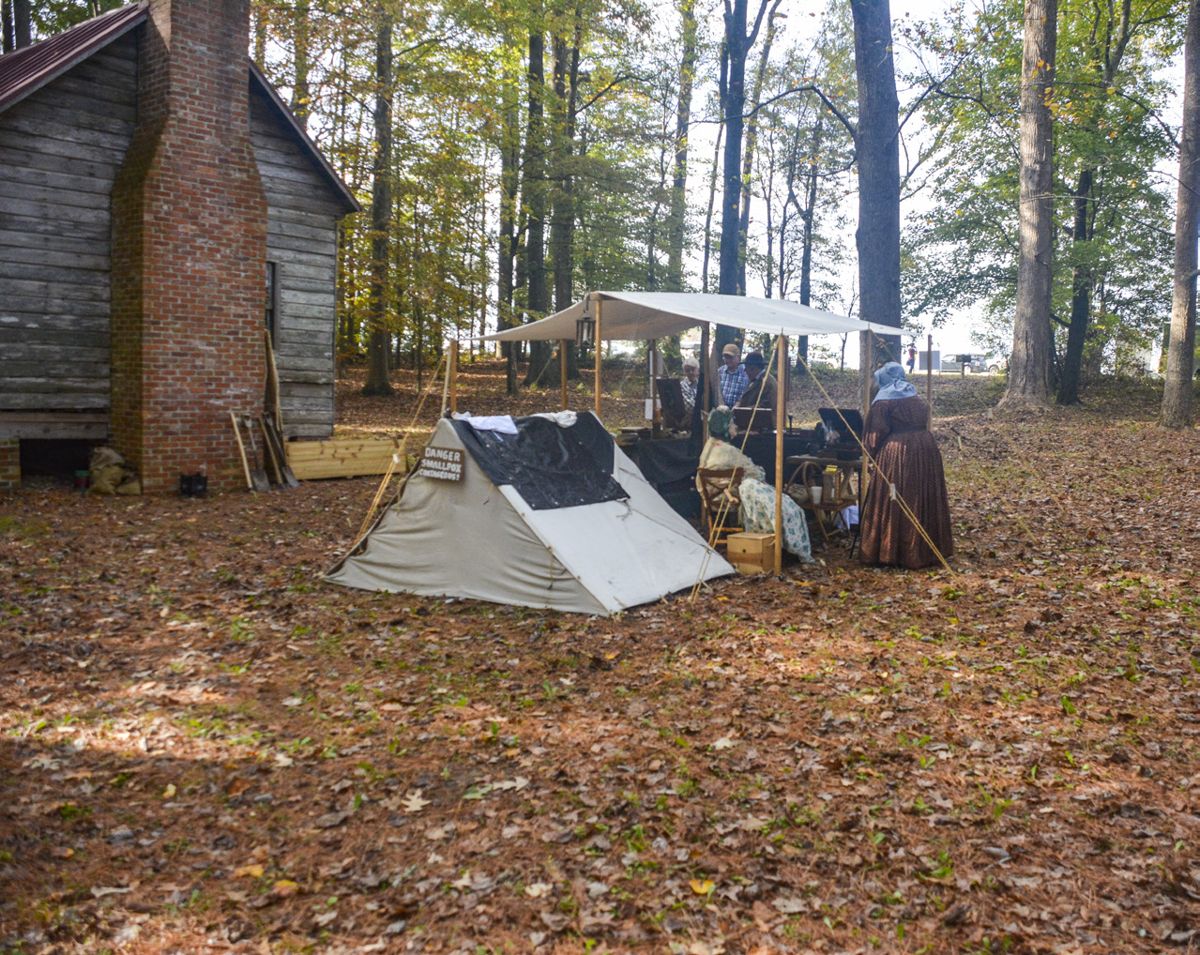
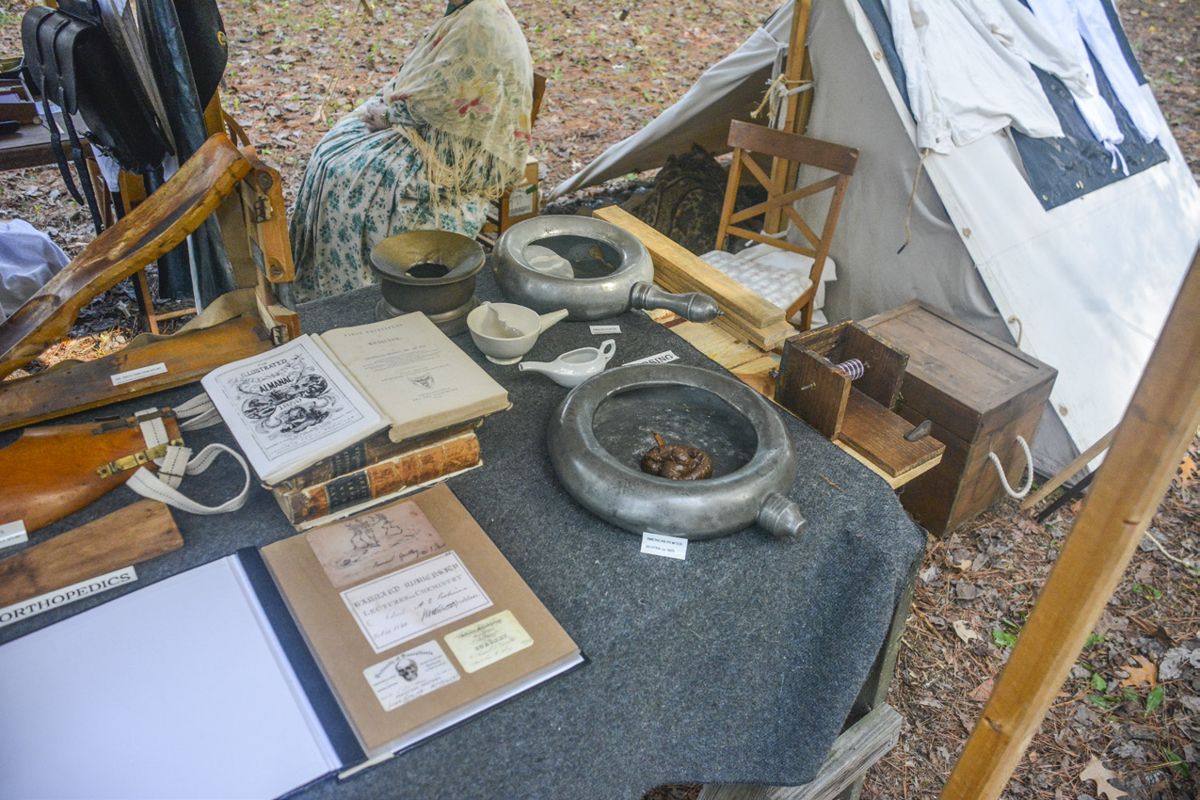
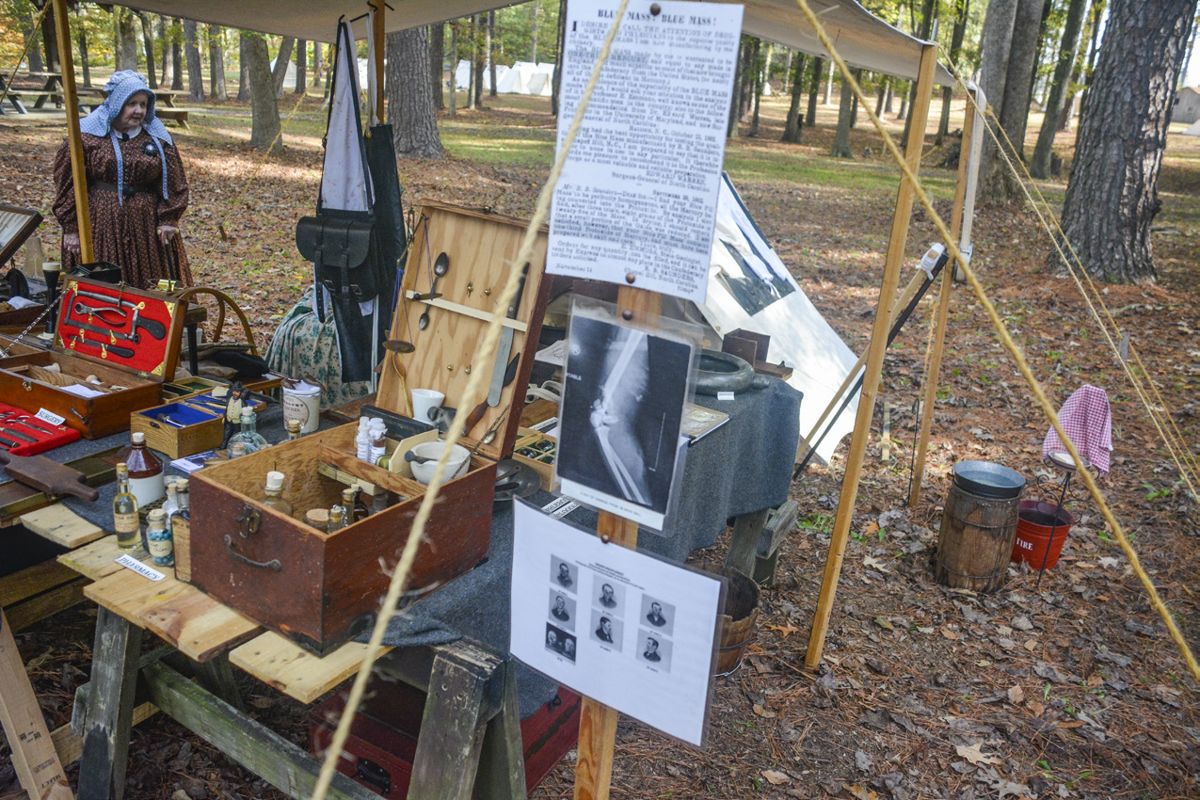
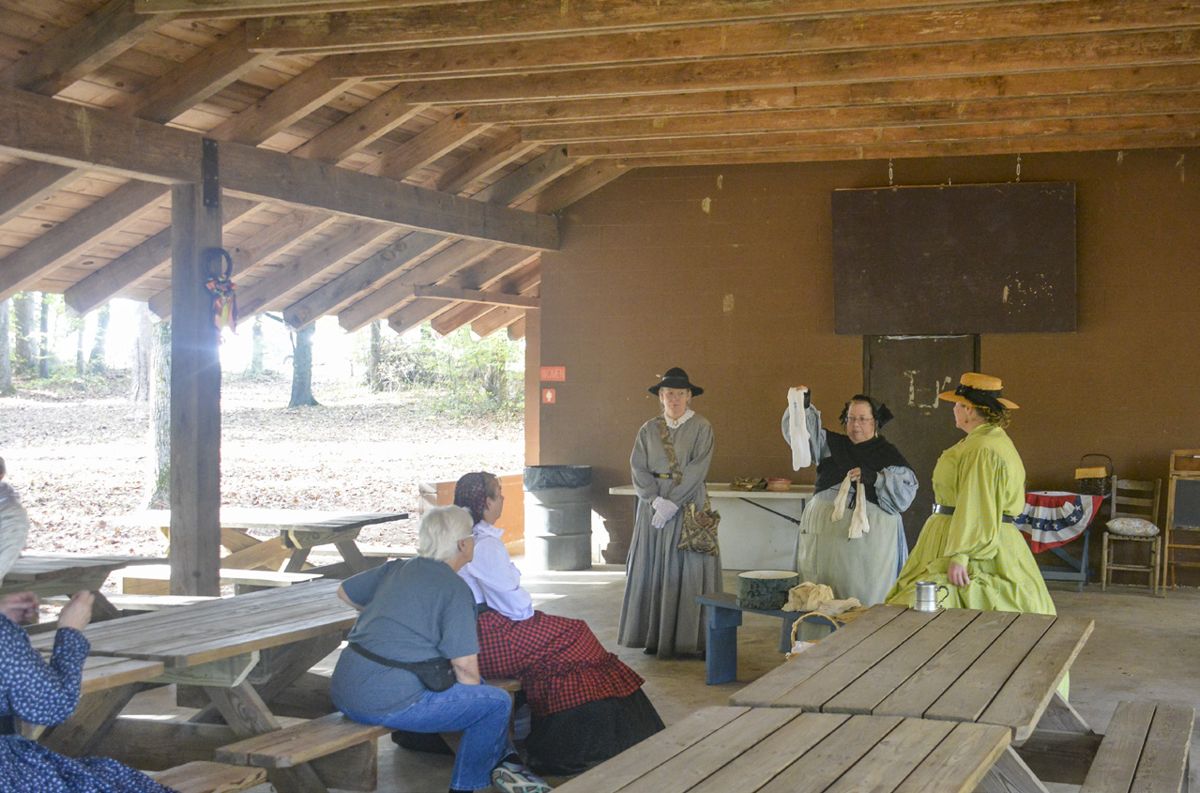
(circa 1830’s) but exhibiting a hall and parlor floor plan found from late medieval times to the post-Civil War era. There was no formal program; the occupants were as well versed in initiating conversation as answering questions while they prepared food and, just outside the door, washed an interesting collection of mid-nineteenth century undergarments, or “unmentionables,” as one farm woman described them. Next to the house was a quarantine tent for smallpox patients. This led to much discussion with the local doctor who explained that inoculation against the pox was more common than most think when the War broke out. It was pointed out that when the state’s Continental soldiers went north to join Washington’s army in 1777, they were all inoculated in Alexandria, Virginia, or Georgetown, Maryland. The medical display included prosthetic devices including a wooden leg and splinting, as well as a question raising display of medical instruments, a used bedpan, and medications. Only a short distance away a fairly large group of womenfolk ranging from camp followers to town ladies enjoyed tea and coffee while officially discussing clothing styles and their manufacture, and admittedly conducted a great deal of catching up on the various units and their gossip. After the refreshments were over, teams of women gave presentations to their cohort and a growing group of spectators; one interesting presentation was on stockings and socks, including a give and take on why something that would not be seen in polite
Medical display.
Hospital equipment.
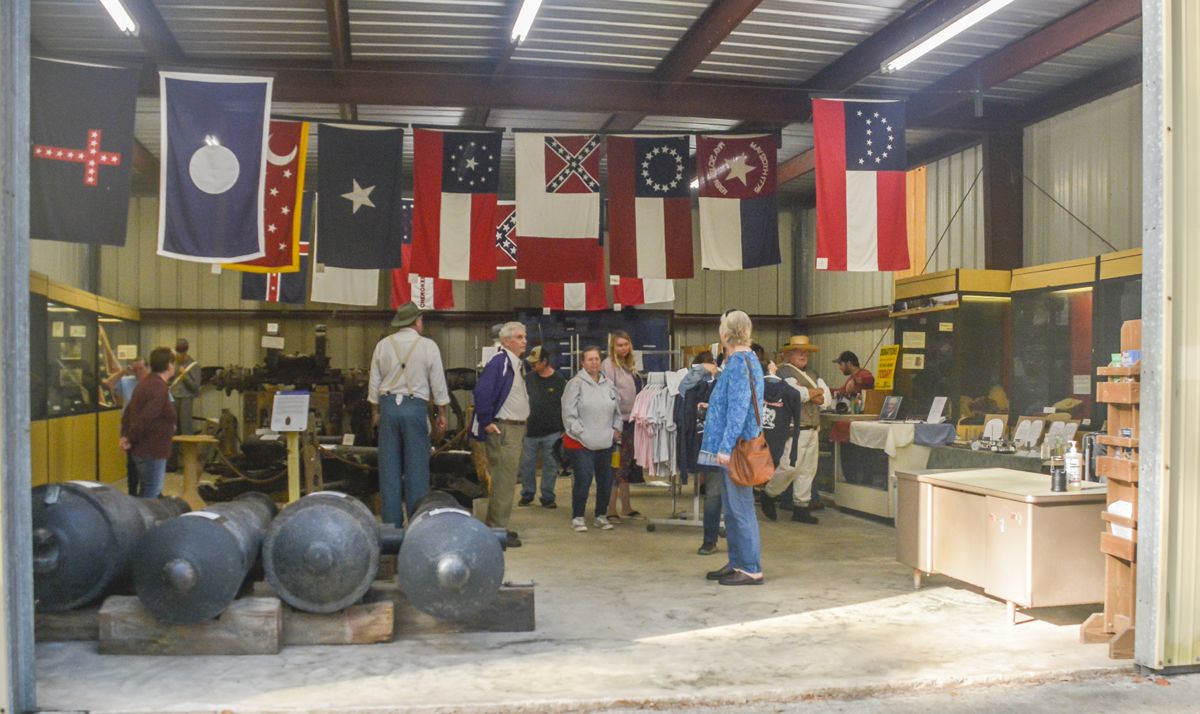
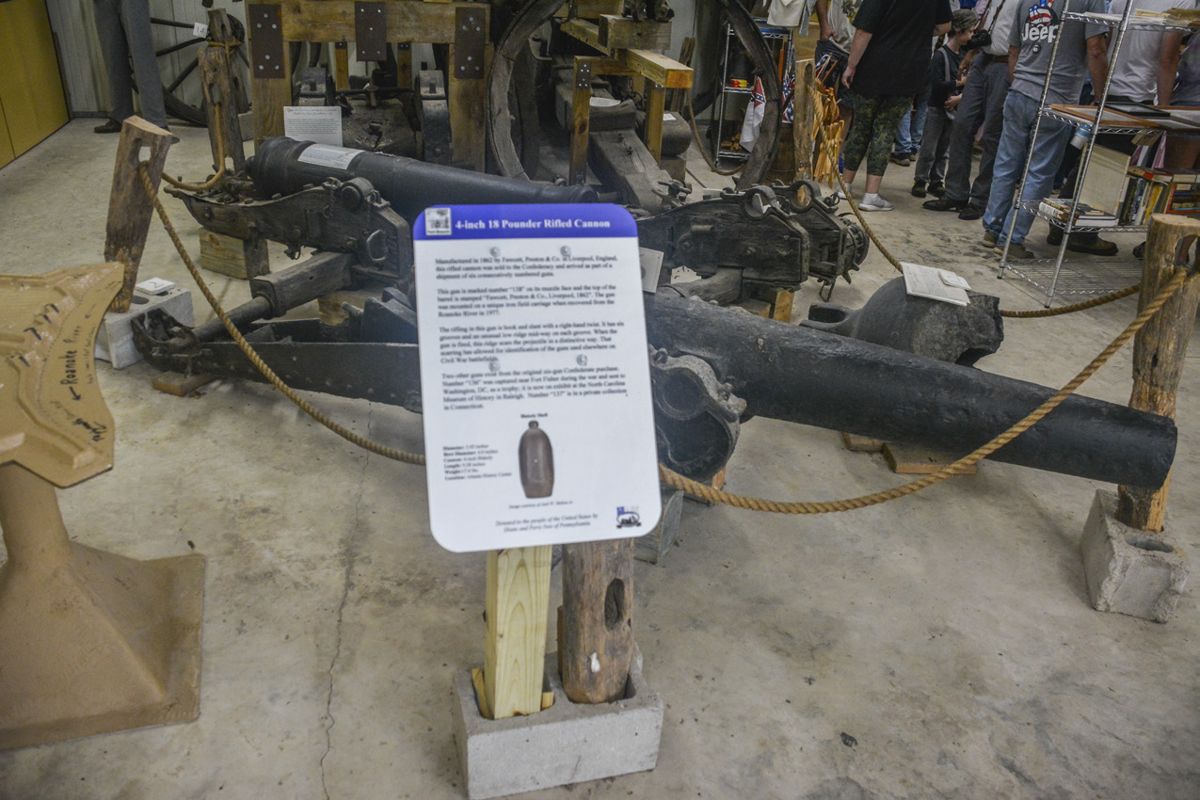
Stocking lecture. social circles was often well decorated. Just beyond was the museum. Over the years, it has expanded to be more than just a shelter for protecting the cannon thrown into the river during the fort’s evacuation in March 1865. This year, there was a two for one sale on shirts, books, and children’s toys. The museum was fully staffed with volunteers from the Fort Branch Historical Society, many of whom are clearly very knowledgeable about the fort, its history, and a variety of Civil War topics. The museum area also saw
CivilWarNews.com a public unveiling of signage donated by the Blue and Gray Education Society. The well designed signs are found throughout the fort and three are present in the museum area; two deal with the cannon, a much larger one deals with the defense of the Roanoke River valley. Others are placed at key points around the fort interior where gun emplacements, the magazine, commissary, a pre-war civilian grave yard, and other internal fort elements are located. Moving toward the fort, a public outreach effort to preserve the endangered Wyse Fork
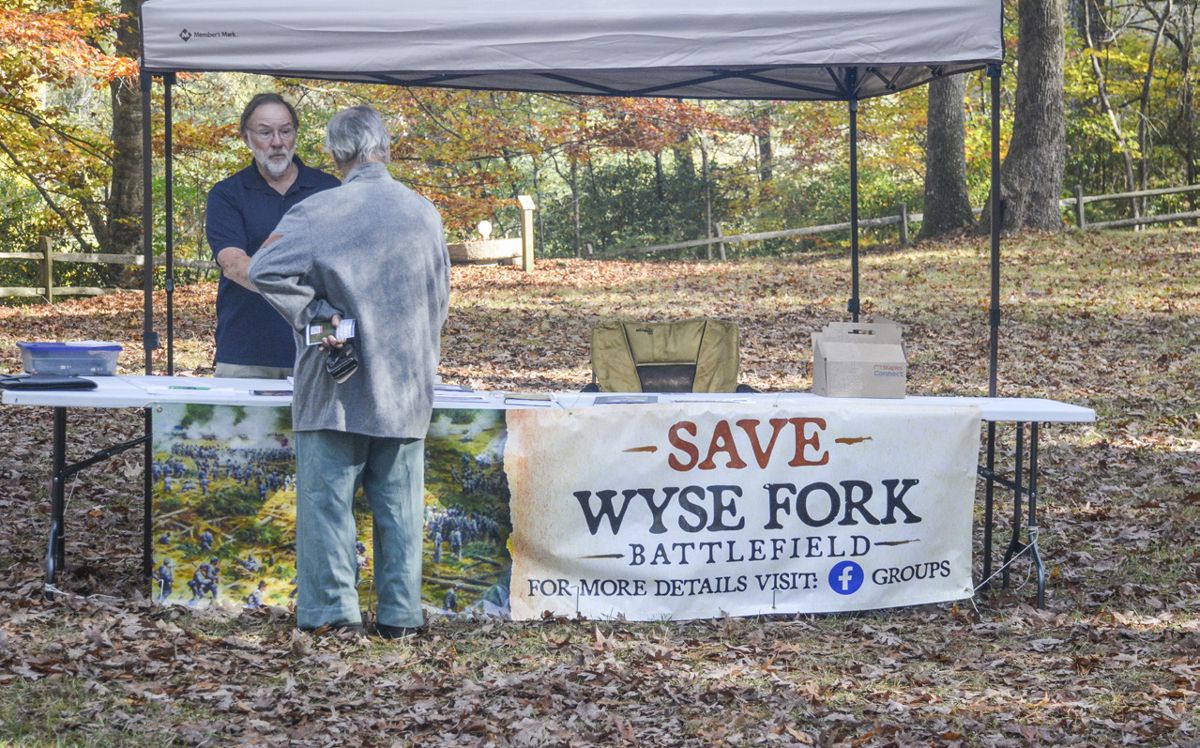
Battlefield was stationed. The table was manned by amateur historians who have rallied to oppose the North Carolina Department of Transportation’s plan to put an interchange into the center of the state’s second largest Civil War battlefield. They are not opposed to the highway, just that portion that would destroy where soldiers from all over the North, from Massachusetts and New York to Ohio and Minnesota, and the South, both Carolinas, and across all the states to Louisiana, Arkansas, and Mississippi, fought and died in March 1865. They were quick to point out that North Carolinians fought on both sides as infantry, artillery, and cavalry during the engagement. One Confederate private, Thomas Dula, Company K, 42nd North Carolina Infantry, is fairly well known because he is the “Tom Dooley,” of a famous ballad; history is where you come across it. Small guided tours went through the fort itself, looking at gun emplacements and how they controlled the river and covered the surrounding landscape. This latter aspect, the outlying defensive works, is something the Society is still learning about but there is clear evidence that there were trenches and gun emplacements associated with the fort that are still visible up to two miles from the main fort. Once these were identified, new searches through documents about the fort were reread and questions about what the documents actually meant were raised. They are still being answered. The fort continues to interest and intrigue people, many of whom come to be entertained but leave with new information about their own past history. This is why the Fort Branch Historical Society continues to stay the course and provide the venue for a trip into Martin County and eastern North Carolina’s long history. For more information visit www.fortbranchcivilwarsite.com.