
The Unfinished Fight
Fanny Crosby
By Craig L. Barry · Originally published February 2023 · pp. 12–13
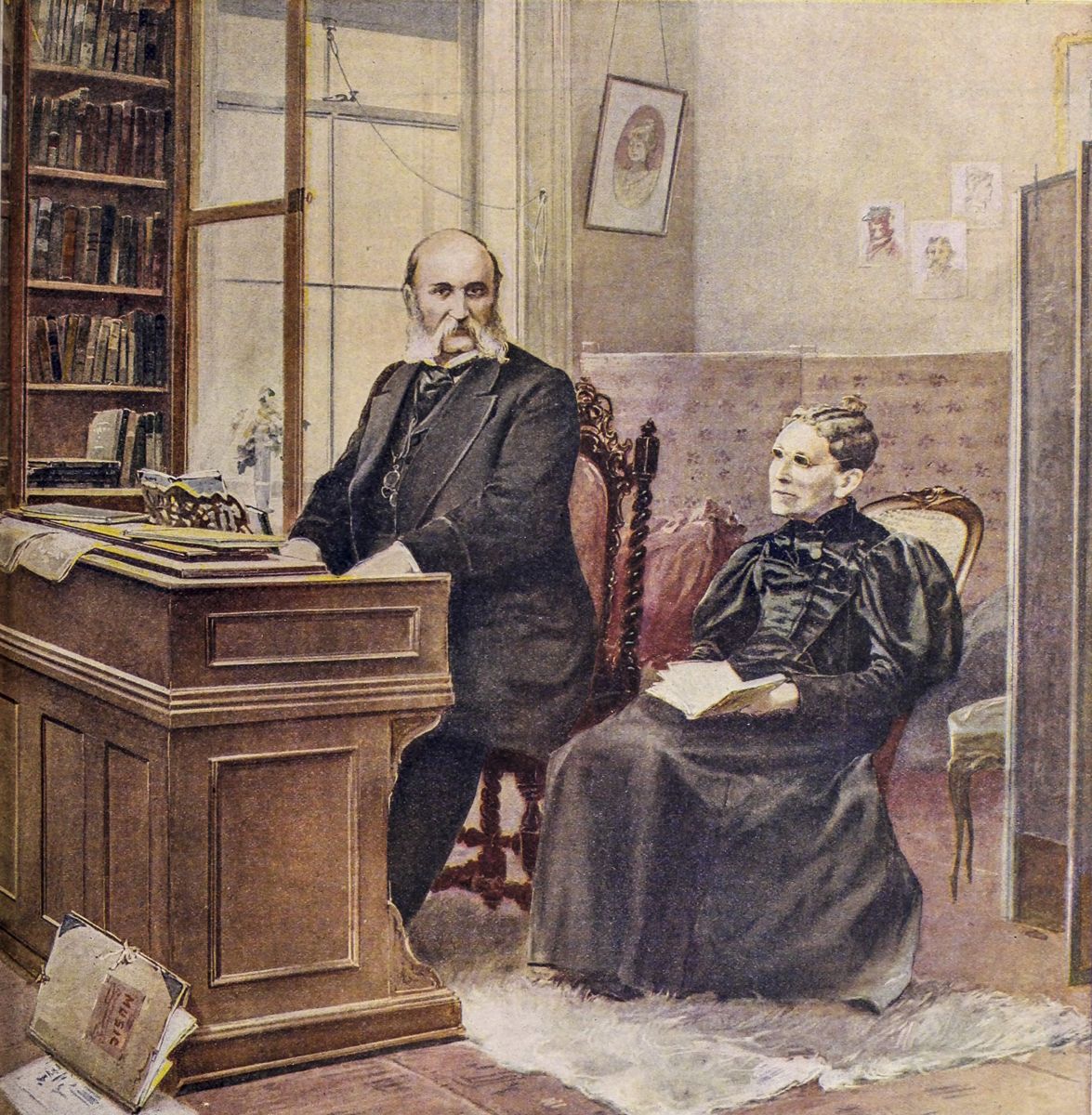
Fanny Crosby “You can’t save a man by telling him of his sins. He knows them already. Tell him there is pardon and love waiting for him. Win his confidence and make him understand that you believe in him, and never give him up!” – Fanny Crosby One of the most fascinating characters of the 19th century was the blind hymnist, Fanny Crosby (1820–1915). Imagine if you will a stack of 18 goodsized church hymnals—that’s what the 9,000 hymns Crosby composed, in whole or in part, during a 50-year period would fill. You would be hard-pressed to find a postbellum hymnal without several of her compositions included. In fact, a few of her better-known hymns are still gospel standards. Crosby’s hymns have been criticized as “gushy and mawkishly sentimental” by modern standards and critics
Fanny Crosby. have sometimes attacked both her writing and her theology. The fact remains that she exerted an enormous influence on a considerable body of American hymnody, and some of her hymns are still being recorded today. Her “Blessed Assurance” was on a record called “Amazing Grace: A Country Salute to Gospel”
that won a Grammy Award in the Country/Southern Gospel category in 1996. Crosby was born with vision on a farm in Putnam, N.Y. She was blinded when a traveling doctor treated her eye infection at six weeks old with hot mustard poultices, a treatment that burned her corneas. Shortly thereafter the family suffered another tragedy when her father passed away, forcing her mother to take work as a maid to provide for them. For her part, Crosby never indulged in self-pity despite her difficult circumstances. She was fortunate to have had an extended family to provide care while her mother worked. She wrote later, “It seemed intended by the blessed providence of God that I should be blind all my life, and I thank him for the dispensation. If perfect earthly sight were offered me tomorrow I would not accept it. I might not have sung hymns to the praise of God if I had been distracted by the beautiful and interesting things about me.” The Crosby family had strong roots in New England. Fanny’s great-grandfather Charles fought at Bunker Hill against the British in 1776 and she grew up hearing stories of his exploits. In her own words, “When General Warren was killed at Bunker Hill it was a Crosby who caught up the American flag as it fell from his hands.” Another relative, Enoch
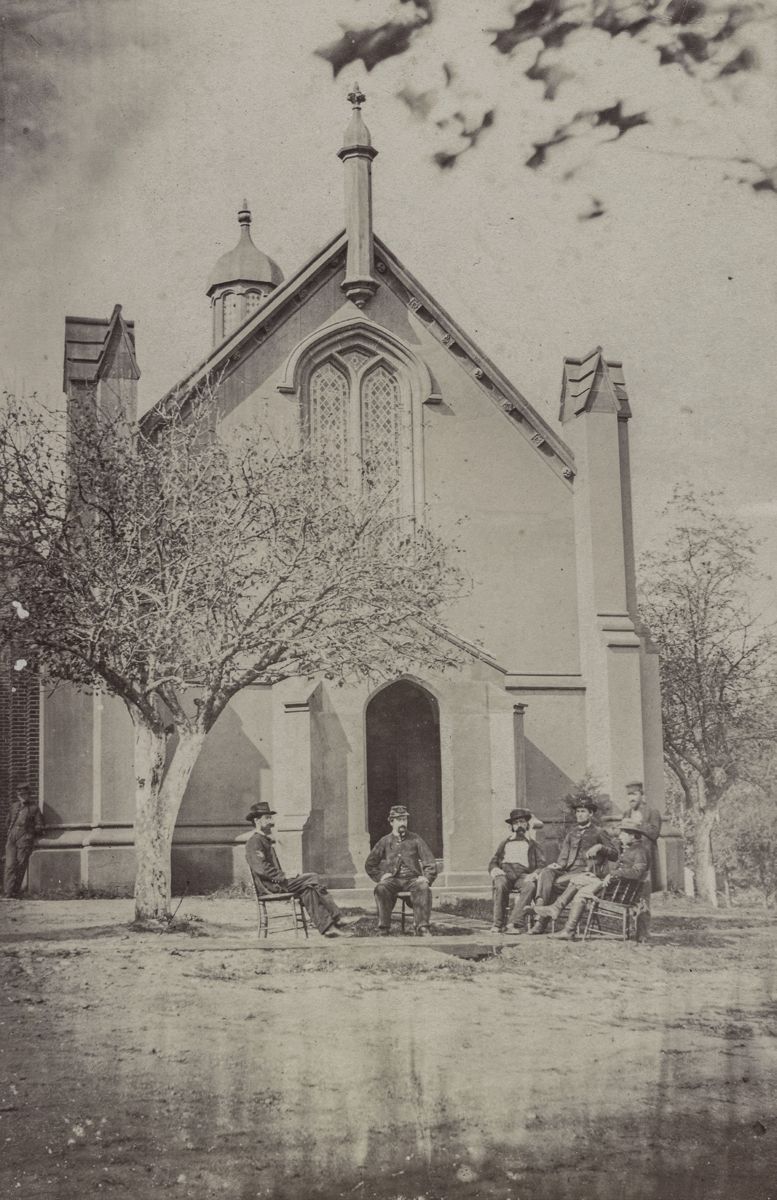
Practice Chapel Virginia Theological Alexandria, Va. (Library of Congress)
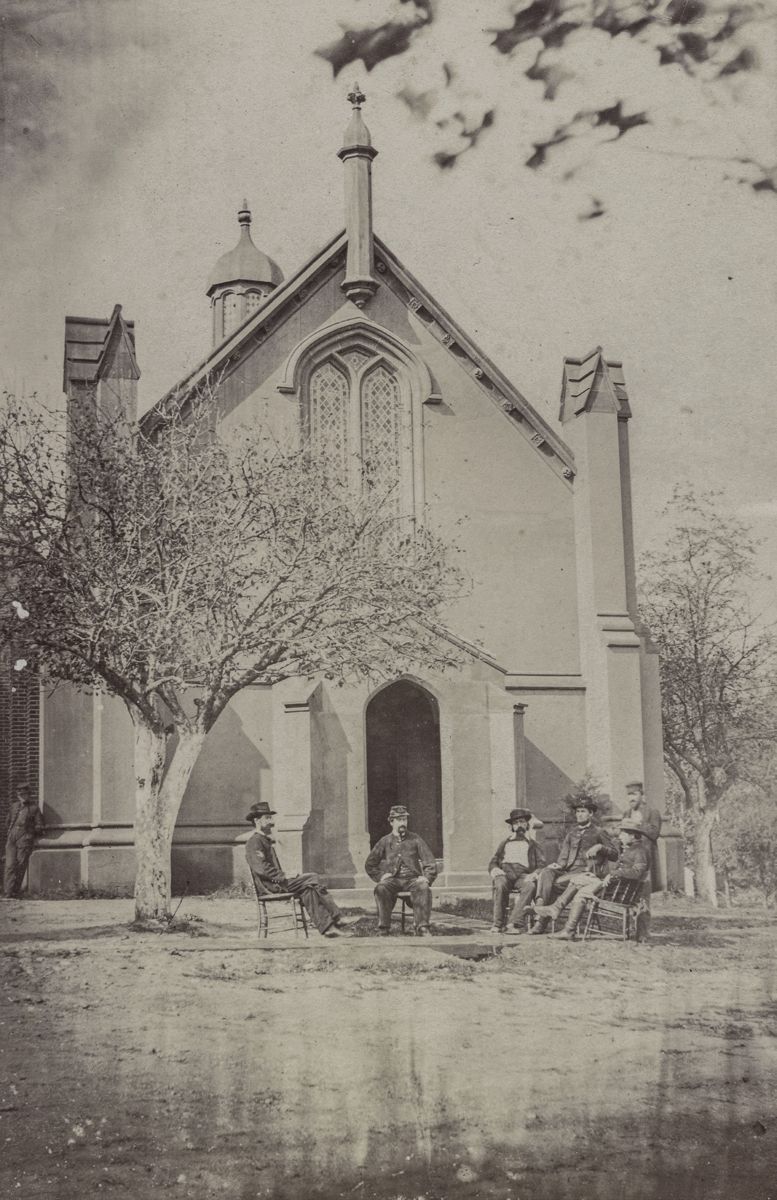
Seminary,
Crosby, was once captured and imprisoned by the British soldiers he was spying upon. He is considered in some literary circles as the inspiration for James Fennimore Cooper’s second novel, The Spy: A Tale of the Neutral Ground (1831).
At age 15 Crosby left for New York City, which at that time meant Manhattan, to attend the New York Institute for the Blind. She used her gift of memory to absorb the lectures she attended. She joined the faculty there at age 23 and taught history and rhetoric classes. Crosby devoted many of her Civil Warera poems and songs to the abolition of slavery. Her satirical “Song to Jeff Davis” deemed the Confederate president worthy of death by decapitation. She was so staunchly pro-Union that after the Civil War began, she often wore a small U.S. flag pinned to her bodice. Once a Southern lady visiting a restaurant in New York found this display offensive and snapped, “Take that dirty rag away from here.” Crosby, blind and middle-aged though she was, challenged the woman to “… repeat that remark at your own risk!” During the Civil War years in New York, Crosby’s already remarkable life took a sudden turn after composer William Bradbury gave her a hymn-writing test. He asked her to put her Christianthemed poetry to some of his melodies. She came up with lyrics that Bradbury considered much better than work of his other collaborators. Her first
CivilWarNews.com effort, “We Are Going,” (1863) was published in his next hymnal. She later worked with Howard Doane, Ira Sankey, Robert Lowry, and other prominent hymn composers. Fanny Crosby was in great demand as a lecturer and preacher. Although completely blind, wherever she traveled and performed, she insisted on going alone. While she received a stipend of a few dollars for each hymn published, she and her husband, a former student, lived in simple circumstances near the Bowery district. The Bowery, originally a respectable entertainment center in Manhattan’s southern tip, had degenerated by the time of the Civil War into an area of lowbrow concert venues, gambling halls, beer gardens, and flophouses. It was also home to the infamous Nativist gang “the Bowery Boys,” who took an active part in the mayhem during the New York Draft Riots of mid-1863. Rather than improve her standard of living even for safety’s sake, Crosby opted to donate any funds in excess of her modest living expenses to local rescue missions. On the evening of Feb. 11, 1915, when she was almost 95, Crosby dictated a letter to cheer a bereaved friend, including a poem which she recalled perfectly. She died later that night. Hymnist Elisa Edmunds Hewitt, who wrote “Will There Be Any Stars in My Crown,” provided the memorial poem:
Away to the country of sunshine and song Our songbird has taken her flight And she who has sung in the darkness so long Now sings in the beautiful light.
Craig L. Barry was born in Charlottesville, Va. He holds his BA and Masters degrees from UNC (Charlotte). Craig served The Watchdog Civil War Quarterly as Associate Editor and Editor from 2003–2017. The Watchdog published books and columns on 19th-century material and donated all funds from publications to battlefield preservation. He is the author of several books including The Civil War Musket: A Handbook for Historical Accuracy (2006, 2011), The Unfinished Fight: Essays on Confederate Material Culture Vol. I and II (2012, 2013). He has also published four books in the Suppliers to the Confederacy series on English Arms & Accoutrements, Quartermaster stores and other European imports.