
This And That
A Natural Battleground
By Gould Hagler · Originally published February 2023 · pp. 22–25
A Natural Battleground Mountain passes, rivers, fords, roads and (in modern times) railroads often determine how armies move and consequently influence where armies collide. Many places have witnessed more than one battle. Thermopylae is the site of eight battles (per Wikipedia’s count), the first in 480 B.C. and the most recent in 1941. Three famous battles between the English and the Scots—Stirling Bridge (1297), Falkirk (1298) and Bannockburn (1314)—were all fought along a short, 12-mile corridor in southern Scotland. In World War I we had two Battles of the Marne, one in 1914 and a repeat in 1918. The French and the Germans fought in the Ardennes in 1914; in the next war the Germans attacked there in 1940, and yet again, against U.S. forces, in what is best known as the Battle of the Bulge. The Civil War has its own share of multiple battles fought in the same vicinity. The best known are the pair of battles fought in Northern Virginia. The First Battle of Manassas (or Bull Run) on April 21, 1861, was the first major battle of the war. Sixteen months later Federals and
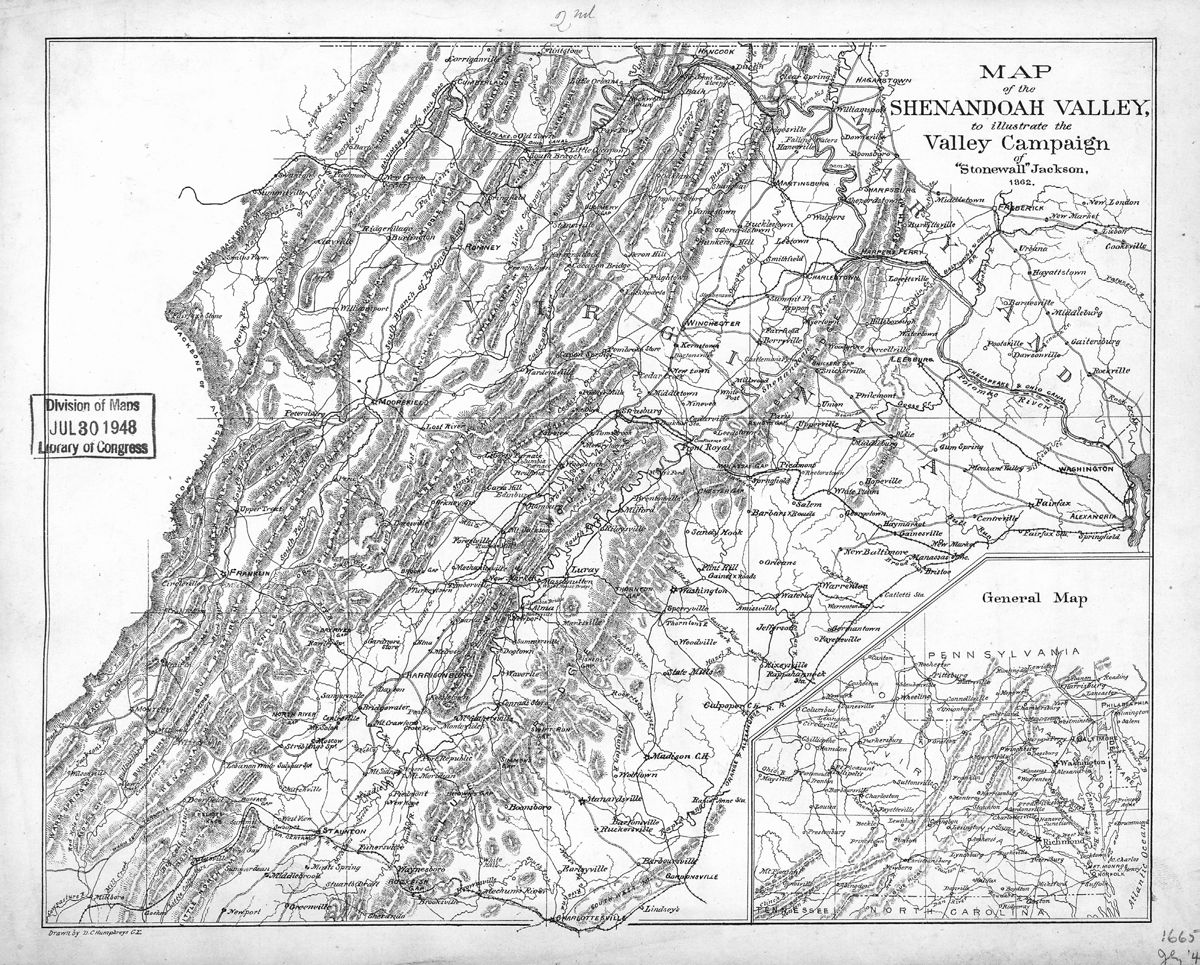
Confederates met here again in the Second Battle of Bull Run (or Manassas). We also have Corinth. The First Battle of Corinth (May 1862) was not much of a battle and is sometimes called the Siege of Corinth, but it was not really a siege. The Second Battle of Corinth, or just the Battle of Corinth, was the real thing, fought in October 1862. Both events point to the importance of the railroad. Fredericksburg (numbers one and two), Chancellorsville, Spotsylvania, and the Wilderness were so close that a single National Military Park serves to teach visitors about all five battles, where a total of over 100,000 American men were killed, wounded, or captured. To the west, we have the Shenandoah Valley. Shelby Foote called the Valley “a corridor [that] pointed shotgun-like at the Union’s solar plexus.” The Confederates took advantage of this weapon and used the corridor several times to launch invasions and minor raids into the North. Throughout the war, armies marched up, down and across* the Valley. The whole place was a battlefield. The National Park Service states that the area “witnessed hundreds of skirmishes and engagements, including twenty battles.” In the Valley there were two battles named for Kernstown and three for nearby Winchester. Let’s look at each of these five, in chronological order, and consider how each battle fits into the overall course of the war. The First Battle of Kernstown, fought on March 23, 1862, was the initial engagement in Stonewall Jackson’s famous Shenandoah Valley Campaign. Jackson marched his men 40 miles in a day and a half from Mount Jackson to Kernstown. There he came upon what he thought was a small rear guard. He attacked. His intelligence was faulty, however, and he unexpectedly met a force of 8,500. With only 3,000 men in the ranks (about 1,500 others fell out during the rapid march), the Confederates were repulsed, suffering over 700 total casualties, including 80 dead. This was an inauspicious start for the Valley Campaign. However, in the next two months Jackson took his force up the Valley, crossed and recrossed the Blue Ridge, fought battles at
Maj. Gen. Nathaniel Banks. (Library of Congress)
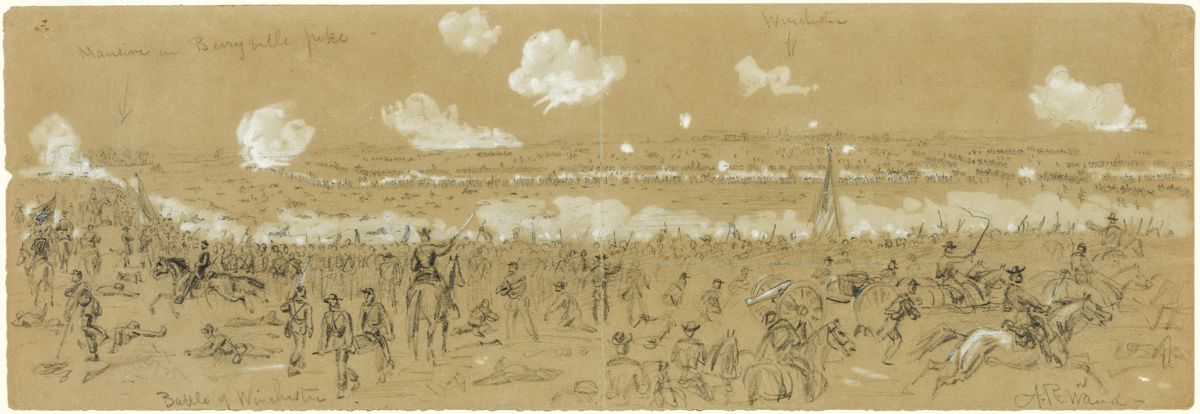
McDowell and Front Royal, then hastened back down the Valley in pursuit of the retreating Federals. Not far from the Kernstown battlefield, on May 25, the Federals attempted to make a stand at the First Battle of Winchester, just south of the town. Federal Maj. Gen. Nathaniel Banks commanded a force of 6,500; Jackson led 16,000 men. The Federals offered stiff resistance at first but ultimately broke and fled north, through Winchester and beyond. After losing over 2,000 casualties (including 1,714 captured), Banks’s army crossed the Potomac at Williamsport. The Confederates lost fewer than 400. First Winchester was a major tactical victory with major strategic consequences. Lincoln ordered more troops to the Valley, hoping to snag Jackson in a trap formed by three separate Federal forces. The plan failed. Banks, disregarding Lincoln’s orders, did not pursue when Jackson went up the Valley. Then, by rapid marching, Jackson was able to defeat the other two Federal armies in detail. In addition, the diversion of forces to the Valley relieved pressure on the Confederates defending Richmond. Jackson, having cleared the Valley of enemy forces, took his army to join Gen. Lee to help drive Gen. George McClellan’s threatening army from the Confederate capital. The Second Battle of Winchester was fought during the 1863 Gettysburg Campaign. Lee invaded the North for the second time, using the Blue Ridge to cloak his movements and aiming Foote’s shotgun at Maryland and beyond. The Army of Northern Virginia’s Second
Corps, commanded by Lt. Gen. Richard Ewell, led the way. Ewell crossed the Blue Ridge on June 12 via Chester’s Gap, placing the corps near Front Royal.
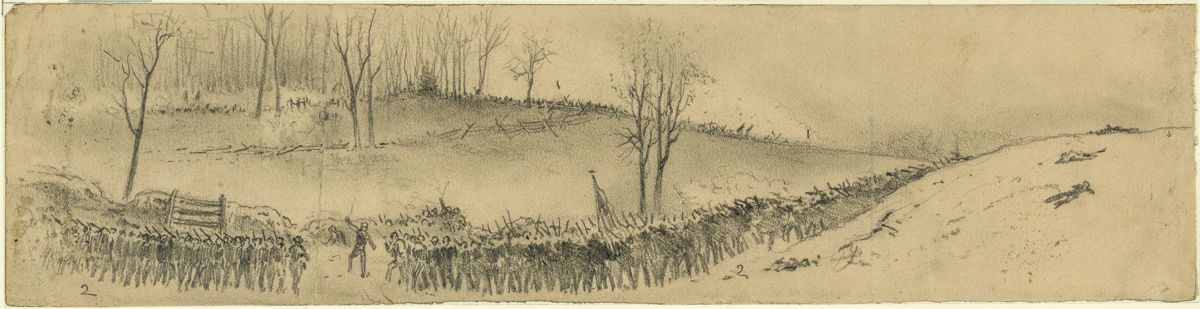
Lt. Gen. Richard S. Ewell, Confederate commander at Second Winchester. (Library of Congress) The bulk of the Federal forces in the vicinity, about 7,000 under Maj. Gen. Robert Milroy, were holding fortified positions at Winchester, 25 miles to the north. Ewell marched toward Winchester with some 12,500 men, while sending one division to bypass the town and block the road north of Milroy’s position. Not realizing he was facing so large a force, Milroy disregarded orders from Washington to withdraw to Harpers Ferry. On June 14 and 15 his force was battered by Confederate artillery, flanked on both sides, and ultimately surrounded. The Federals’ attempt to fight their way out failed. In the chaos the Union lost 4,000 captured and missing (including 700 sick who were not in the fight and were left behind in the town). Only 95 were killed and 348 wounded. Confederate losses were minimal. Several hundred men, Union and Confederate, were hospitalized in Winchester while their comrades battled in Pennsylvania. As Lee retreated after the Battle of Gettysburg, thousands followed the route through Winchester. The town was overwhelmed with 8,500 sick and wounded Confederates, who were followed by many hundreds of tired and hungry Union prisoners. The Second Battle of Kernstown occurred a year later, after the Overland Campaign ended and after the investment of Petersburg started. In July 1864 the Second Corps, now under Lt. Gen. Jubal Early and designated as the Army of the Valley, marched down the Valley and embarked upon a large-scale raid that reached the outskirts of Washington. With only 14,000 men, however, Early could do little more than raise a scare. On July 14 he crossed back into Virginia. Ten days later Early attacked the Federals at Kernstown.
First Battle of Winchester, May 25, 1862. (Waud, Alfred R. (Alfred Rudolph), 1828–1891, artist. Library of Congress)
CivilWarNews.com The Federals had reduced their strength in the area. Learning this, Early, with his entire army, attacked Brig. Gen. George Crook’s somewhat smaller force in Kernstown. The Federals lost about 1,200 men, half of whom were captured. The
Confederates lost half that number. Crook’s routed force retreated precipitously across the Potomac. Taking advantage of the opportunity, Early wrecked the railroad between Martinsburg and Harpers Ferry. He
History has recorded three Battles of Winchester and two Battles of Kernstown. The imagination of historian Richard McMurry has given us a fourth Winchester and a third Kernstown. As a bonus McMurry throws in a Second Seven Days. In his 2002 work The Fourth Battle of Winchester: Toward a New Civil War Paradigm McMurry presents a whimsical counterfactual as a springboard to his serious analysis of the war and 150 years of historiography. The counterfactual chapters of McMurry’s book posit a Confederate victory at Cedar Creek on October 19, 1864. In the imagined battle the Federals do not recover from the Confederates’ initial success, as they did in reality, and are routed. Confederate Lt. Gen. Jubal Early is killed in action (a stroke of good fortune, as McMurry imagines it) and is replaced by Maj. Gen. Joseph Kershaw. The new commander capitalizes on the victory and chases the foe northward. In the Third Battle of Kernstown the Confederates destroy the Federal rear guard and continue the pursuit. The Union force attempts a stand a few miles to the north, but are defeated in the Fourth Battle of Winchester. In a few fun-packed pages McMurry leads the Confederates from victory to victory. Lee triumphs in Virginia. General Grant and other incompetent Eastern commanders are transferred to Minnesota to fight the Sioux. Abraham Lincoln loses the election to McClellan. All is lost. Or is it? Across the Appalachians the imaginary Confederates have no more success than they had in real history. Major General George Thomas wins a smashing victory at Nashville. Major General William Sherman continues his winning ways through Georgia and the Carolinas, and faces no real opposition as he heads toward Virginia. General Joseph Johnston visits Lee. They and other generals see the hopelessness of their situation. With difficulty they convince President Davis that defeat is inevitable and that further resistance will result only in more death and more misery. News of the Confederate surrender is delivered to President Lincoln as he sits on the stage at his successor’s inauguration, moments before McClellan is sworn in. The second half of McMurry’s book drops the fantasy and analyzes actual events. He argues that action in the West determined the outcome of the Civil War. In the Trans-Appalachian Theater Federal forces won an almost uninterrupted string of victories from early 1862 onward. Whatever happened in the East, or whatever one imagines could have happened, the South was doomed to lose the war for the simple reason that its armies lost the battles in the Confederate heartland. Confederate wins at Third Kernstown, Fourth Winchester and even Second Seven Days wouldn’t matter.
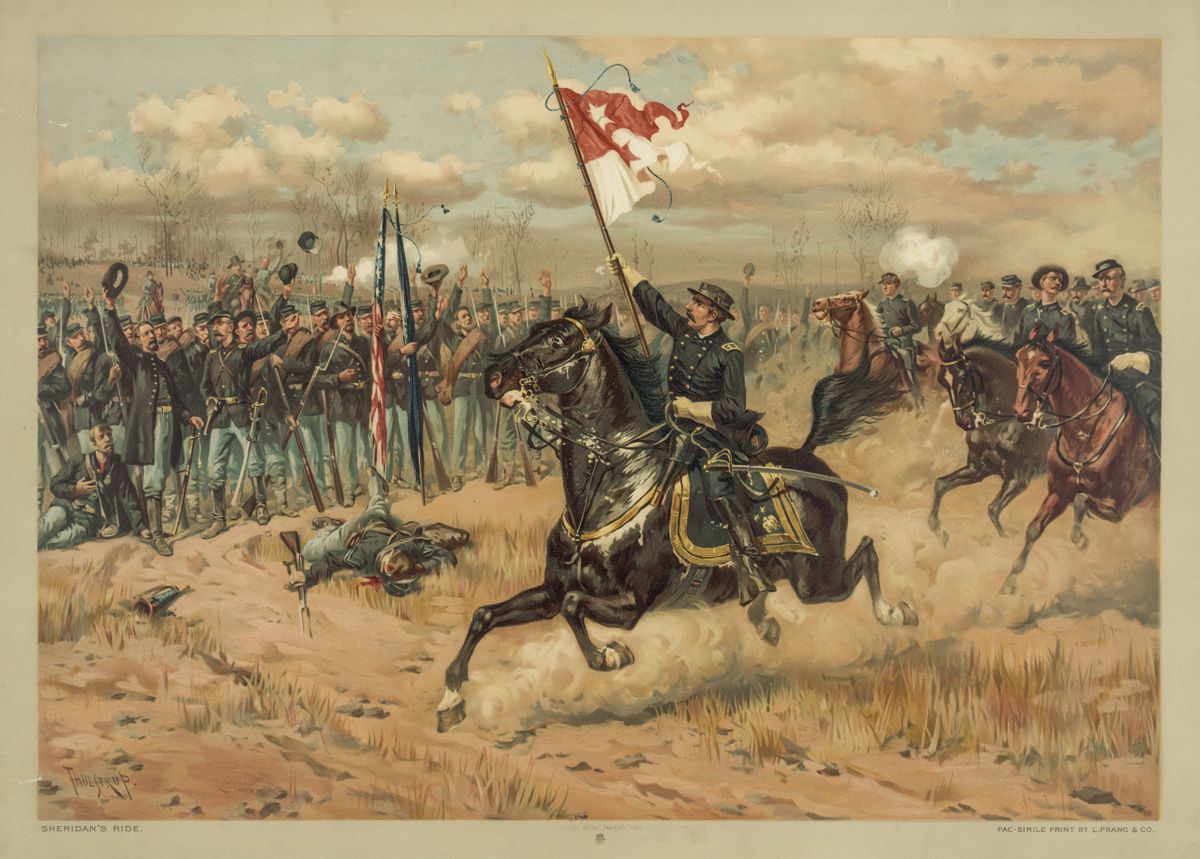
Gen. Philip Sheridan. (Library of Congress)
then crossed into Maryland and engaged in some payback for earlier Federal depredations in the Valley. Brigadier General John McCausland was dispatched with his 3,000 cavalrymen to the prosperous town of Chambersburg, Pa. McCausland demanded a ransom ($500,000 in greenbacks or $100,000 in gold) or he would burn the town. He got neither the greenbacks nor the gold. Chambersburg went up in flames. A hard war was turning harder. At the Third Battle of Winchester, fought two months later, Early’s 15,500 men faced a Federal force of 35,000 in the largest of all the battles fought in the Valley. On September 19, the new Federal commander in the area, Maj. Gen. Philip Sheridan, attacked Early’s army north of Winchester near Opequon Creek. The outnumbered Confederates fought effectively most of the day, but finally had to retreat in the face of overwhelming numbers. Losses were very heavy on both sides. The Federals lost a total of 5,000; the Confederates 4,000. Sheridan’s assignment was to drive Early’s army out of the Valley and to destroy the region’s ability to feed Lee’s beleaguered army. The Third Battle of Winchester was the beginning of that effort. After Winchester, Early resisted for a month and even took the offensive at Cedar Creek on October 19. Here the Army of the Valley achieved initial success, but was routed by a Federal counterattack late in the day. Cedar Creek ended effective Confederate resistance in the Valley. In Volume One of Lee’s Lieutenants, Douglas Southhall Freeman included an appendix on the military geography of
CivilWarNews.com Virginia. The pages on the Shenandoah Valley cogently analyze the strategic significance of the Valley’s agricultural resources and its geographic features, natural and man-made. “If a Southern army could hold the passes of the Blue Ridge,” Freeman wrote, “[the Valley] could be a vast covered way.” He explained that if Union troops moved along the Orange and Alexandria Railroad, “Southern soldiers in the Lower Valley would be on their flank.” The “covered way” was, of course, a two-way street. Freeman wrote that “to an enemy who seized and held the gaps, the Valley offered an easy route to the geographical center of Virginia.” In addition, Freeman wrote that the region “was the most productive area of Virginia for both cattle and for grain.” Armies must eat. The Shenandoah Valley was a natural battleground. It was inevitable that it would be bitterly contested from the war’s beginning to its end. *As most readers know about the Valley, “up” means south and “down” means north, as the river flows. “Across” means across. Gould Hagler is a retired lobbyist living in Dunwoody, Ga. He is a past president of the Atlanta Civil War Round Table and the author of Georgia’s Confederate Monuments: In Honor of a Fallen Nation, published by Mercer University Press in 2014. Hagler speaks frequently on this topic and others related to different aspects of the Civil War and has been a regular contributor to CWN since 2016. His email is: [email protected].