
Through The Lens
The Battle of the Bands / The Battle of Stones River: Part I
By Stephanie Hagiwara · Originally published December 2023 · pp. 6–7
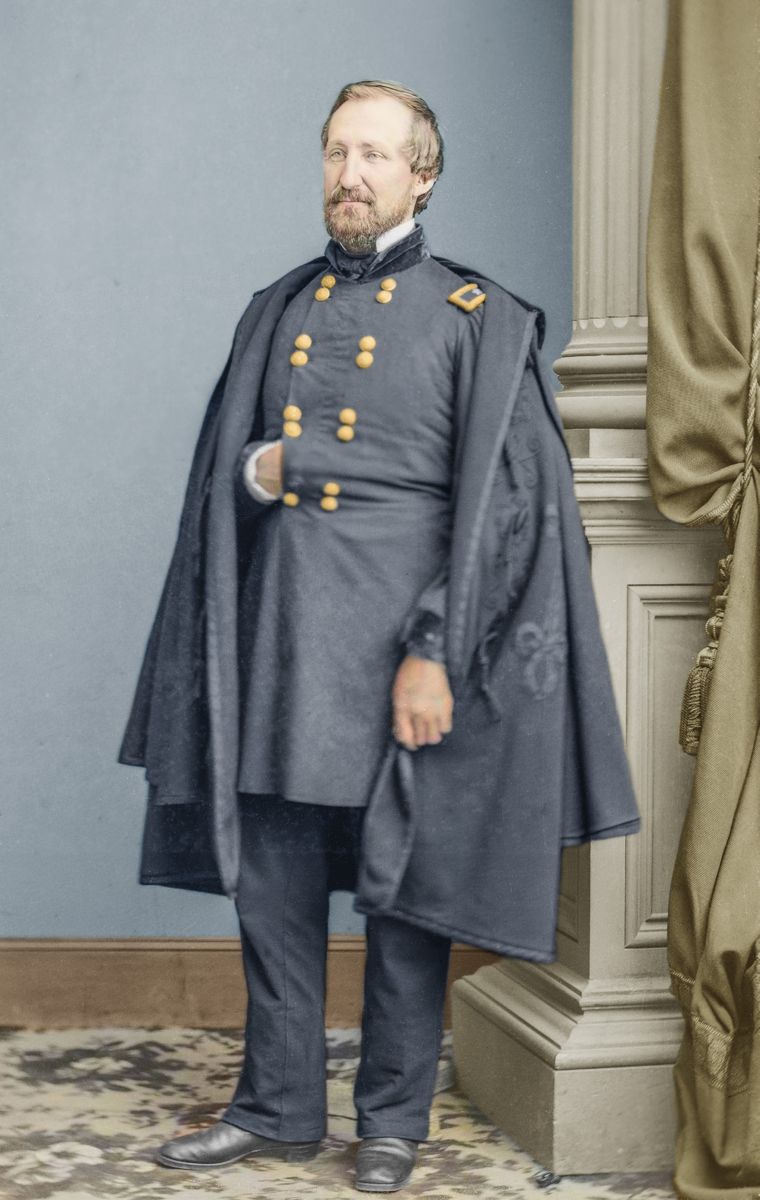
The Battle of the Bands The Battle of Stones River: Part I “Every soldier on that field knew when the sun went down on the 30th that on the following day he would be engaged in a struggle unto death, and the air was full of tokens that one of the most desperate of battles was to be fought.” – U.S. Gen. Henry M. Cist, Army of the Cumberland On December 25, 1862, U.S. Gen. William Rosecrans, Army of the Cumberland, deemed the time was ripe to fight the enemy. He had learned Confederate President Jefferson Davis had ordered one of C.S. Gen. Braxton Bragg’s Army of Tennessee’s six divisions to Vicksburg, Miss. He also knew half of Bragg’s cavalry were busy elsewhere. Rosecrans issued orders to depart the next morning to attack Bragg at Murfreesboro, Tenn., 35 miles from his headquarters in Nashville. Rosecrans ended the evening’s War Council banging a mug of toddy proclaiming, “…We shall begin to skirmish, probably as soon as we pass the outposts. Press them hard! Drive them out of their nests! Make them fight or run!” Rosecrans had been appointed army commander with the expectation he would rapidly proceed to fight the Confederates and win. President Abraham Lincoln sought a victory to give teeth to the Emancipation Proclamation. Not wanting to “stop and tinker,” Rosecrans spent two months stockpiling “the essentials of ammunition and twenty days’ rations,” while resisting Gen. Henry Halleck’s escalating warnings that if he “… remain[ed] one more week in Nashville, I cannot prevent your removal.” After an evening of heavy rain, it was a cold gray dawn as generals Thomas Crittenden’s three divisions moved down the Nashville Pike on the Federal left, Alexander McCook’s three infantry divisions and David Stanley’s cavalry brigade took the Nolensville Pike in the center, and George Thomas’s Division and three brigades marched down the Franklin Turnpike, on the Federal right. Out of Rosecrans’s 82,000 men, only 42,000 were taking part in the advance. The remainder stayed behind to protect Nashville and the railroad. The Federals marched through heavy rain and mud for four days. Bragg ordered his cavalry “not to fight them too much, but to let them come on.” Bragg’s 37,713 men were spread over thirty miles around his supply base at Murfreesboro. He selected the ground for the upcoming battle because it was large enough to concentrate his army and cover the roads to Nashville. It was not well suited for defense. It had clumps of dense cedar trees, limestone outcrops, open fields, and a river known to flood after heavy rain. Bragg didn’t prepare the ground for defense as he believed “heavy intrenchments demoralize our troops.” On December 29th, about 4 p.m., Federal skirmishers emerged from a four-acre clump of trees later known as the “Round Forrest,” about two miles from Murfreesboro. They could see Bragg’s battle line along the ridge about a half mile to their immediate front. It was acknowledged that they were no longer opposing the cavalry. In the fading light, it was agreed to hold the troops in place. Meanwhile, Gen. Joseph Wheeler’s 2,000 cavalrymen were ordered to harass the Federal flank and rear to wreak havoc with Rosecrans’s supply lines. “Wheeler’s 1862 Raid Around Rosecrans” began around 9 a.m. the morning of December 30 at Jefferson, Tenn. Wheeler attacked 64 supply wagons of U.S. Col. John C. Starkweather, 1st Division, 3rd Brigade, destroying 20 wagons and taking 50 prisoners. After two hours of fighting, Wheeler suspended the attack to continue his mission. Around 1 p.m., Wheeler attacked McCook’s reserve wagon train near Lavergne, Tenn. The prisoners were paroled “while the men burned the wagons. It was a sight to make all rebeldom glad. Mules, stampeding with burning wagons hung to their traces, Yankees running, all appliances for our subjugation,” reported C.S. Capt. George K. Miller, 8th Cavalry. Wheeler paroled about 500 prisoners, captured 200 stands of arms, and destroyed nearly a million dollars of public property. Wheeler continued his work snatching and torching Federal wagon trains while distracting Federal fighting units. He “dropped like a tornado upon quiet Nolensville,” seizing wagons loaded with ammunition and medicine. In his wake, “… streets were covered with empty valises and trunks, knapsacks, broken guns, and all the indescribable debris of a captured and rifled army train.” Wheeler caught Federal forging parties, relieving them of their plunder. By daybreak on December 31, Wheeler had circuited around Rosecrans’s army, destroying four wagon trains, capturing over 1,000 prisoners, acquiring enough weapons to equip a brigade, and remounted his men with fresh horses. Both sides were adjusting their men on December 30. Rosecrans positioned generals Crittenden on the Federal left, Thomas in the center, and McCook on the right. He planned a morning assault on Bragg’s right flank by executing a right wheel with McCook as the anchor. He ordered McCook to build a line of fires on his right about 6 p.m. to simulate an extension of his line to deceive Bragg into thinking the action would come from his left. Bragg, noticing the fires, changed his plans and ordered a morning assault on Rosecrans’s
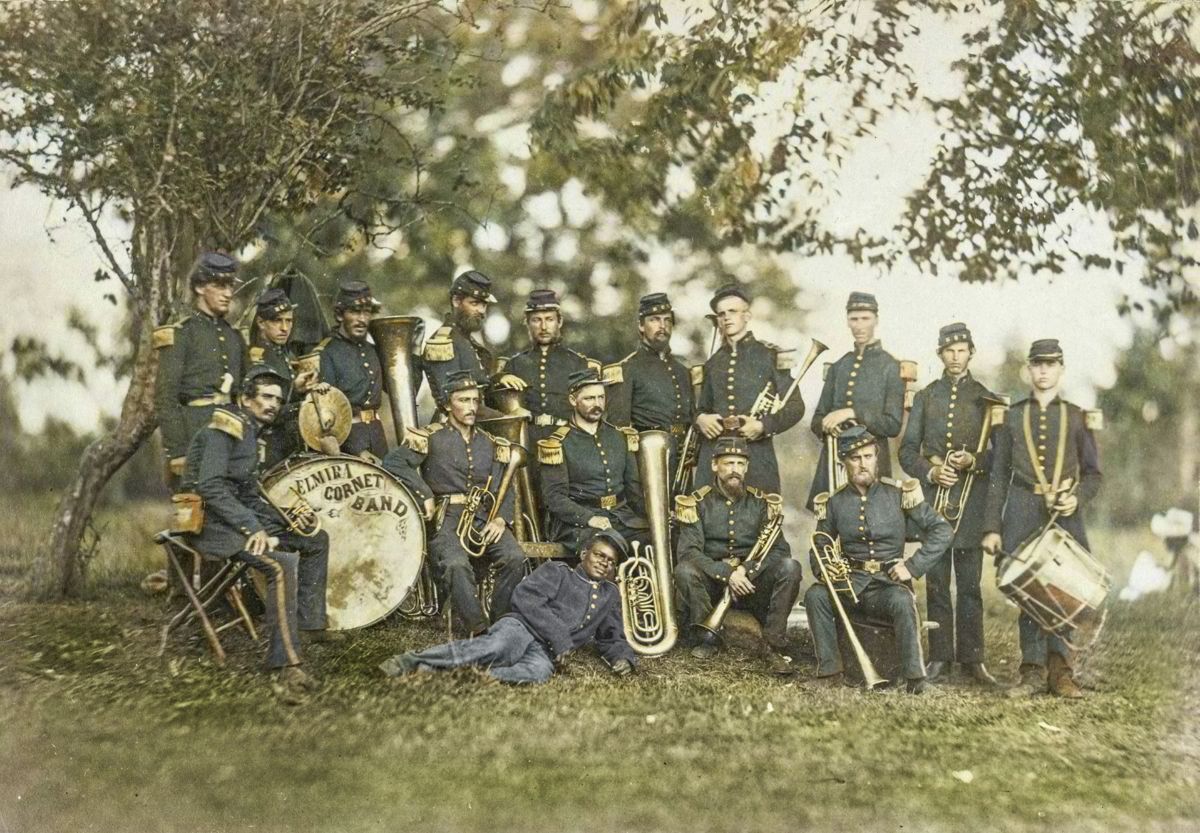
CivilWarNews.com right flank, McCook’s position, using two corps as a right wheel to push the Federals up against the Stones River and under the guns and infantry of former U.S. VicePresident Gen. John Breckridge. Both sides were now planning on attacking the other’s right flank. Settling down in the cold winter evening, the military bands took on their customary role of lifting morale with popular songs. In the windless night, the music drifted over the approximately 700 yards separating the two armies. The Northern bands could be clearly heard by the Confederates, who called out requests for Southern songs. The Federal bands yield to the Confederates. The impromptu concert was turning into a lively exchange with “Yankee Doodle,” “Dixie,” “Hail, Columbia,” and “Bonny Blue Flag” ringing out over the lines. The “battle” turned as a Federal band struck up “Home Sweet Home.” According to C.S. Pvt. W.J. Whorsham, 19th Tenn. Infantry, “Immediately a Confederate band caught up the song, then one after another until all the bands of both armies were playing the strain. … each soldier of both armies thought of what tomorrow would bring, whether wounds or death, and would he ever see his home again.” The Battle of Stones River, Tenn., would be launched before daybreak on the last day of 1862. Rosecrans had ordered his attack for after breakfast; Bragg had ordered a dawn assault. Both generals deemed the success of their plan would depend on the element of surprise.
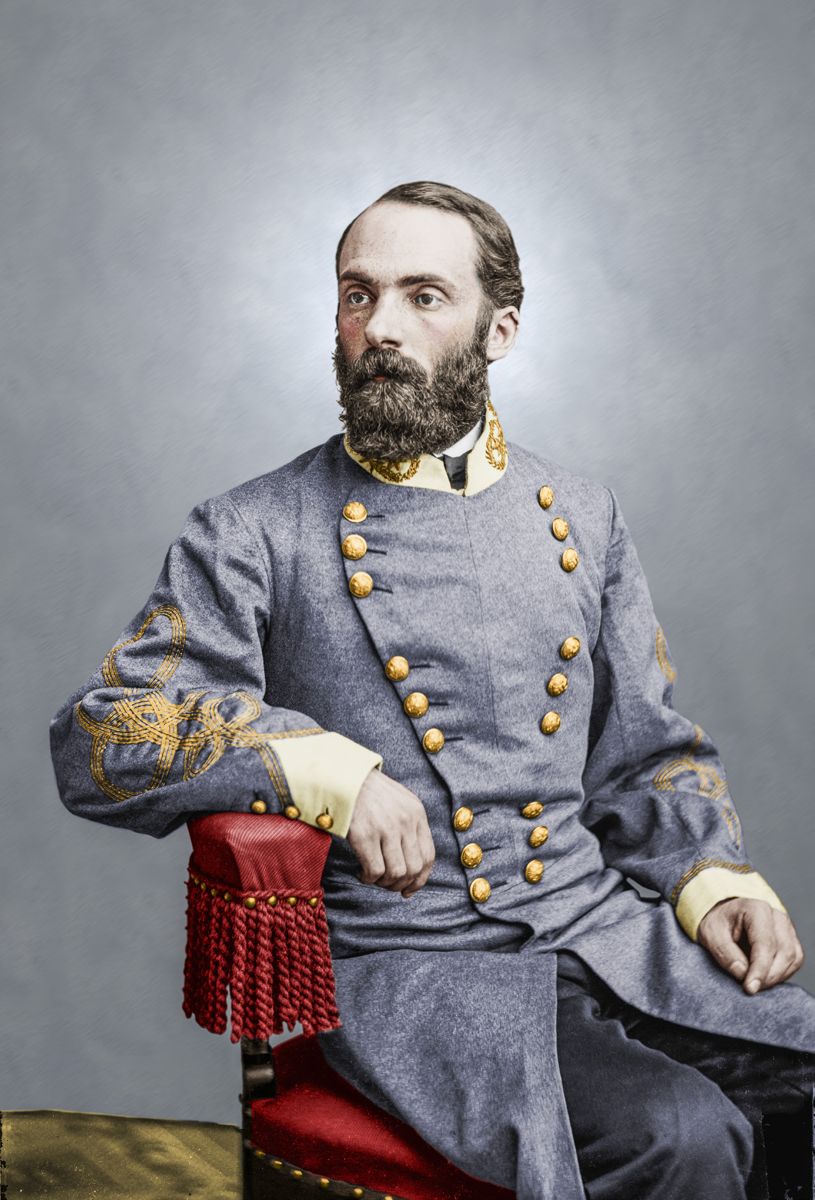
Sources: Foote, Shelby. The Civil War: A Narrative: Volume 2: Fredericksburg to Meridian: Random House, 1963 • Robert Underwood Johnson, Clarence Clough Buell, Battles and Leaders of the Civil War. Vol. 3: Century, 1887 pg. 614 • Korn, Jerry, and the Editors of Time-Life Books. The Struggle for Tennessee: Tupelo to Stones River: Time-Life Books, Alexandria: VA, 1987 • Cist, Henry M.. The Army of the Cumberland: Charles Scribner’s Sons, 1882 •
Stephanie Hagiwara is the editor for Civil War in Color.com and Civil War in 3D.com. She also writes a column for History in Full Color.com that covers stories of photographs of historical interest from the 1850’s to the present. Her articles can be found on Facebook, Tumblr and Pinterest.