N-SSA Fires off its 148th National Skirmish
By Bruce Miller · Originally published December 2023 · pp. 1–11
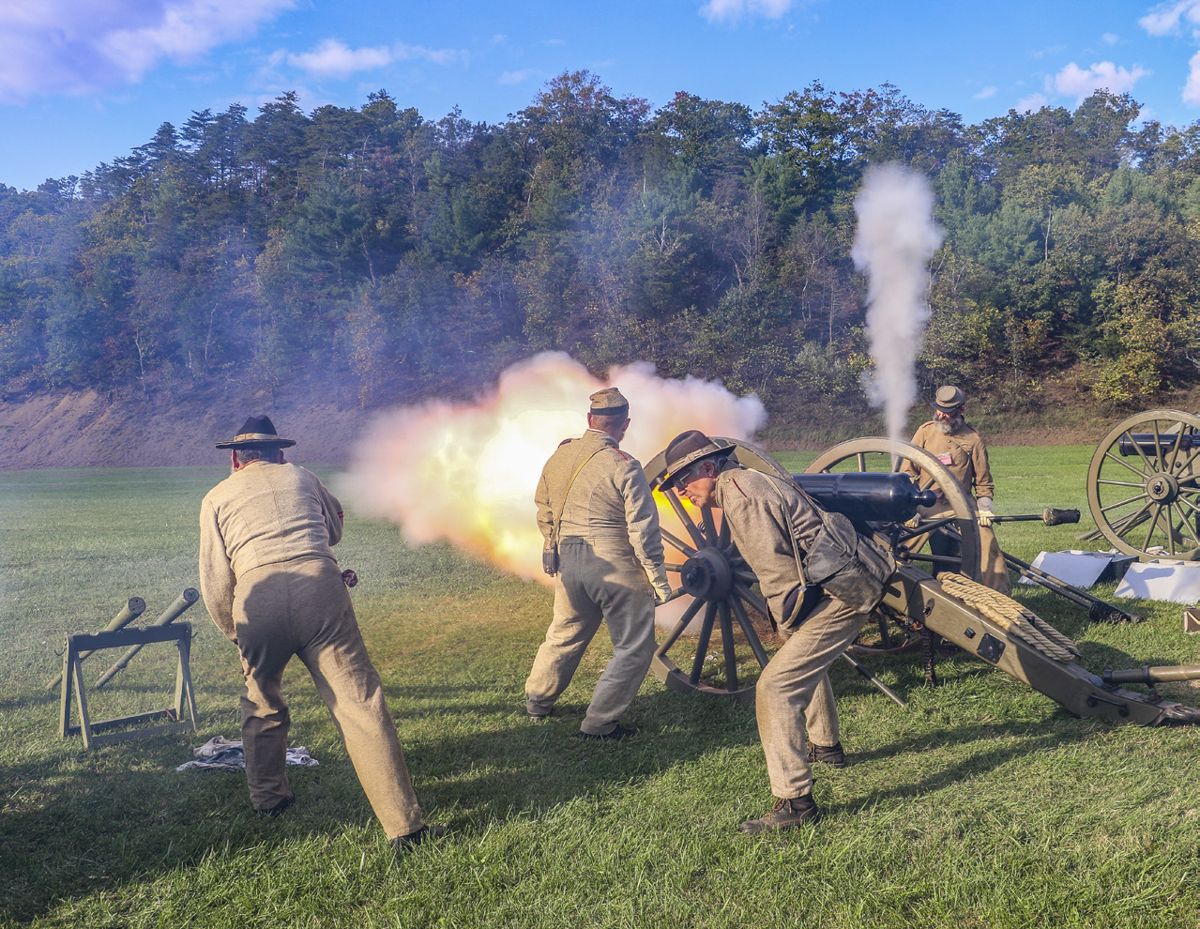
Cannon Roar West of Winchester
N-SSA Fires off its 148th National Skirmish By Bruce Miller The North-South Skirmish Association (N-SSA) held its 148th National Competition October 6 through 8, 2023. Member units competed in livefire matches with original or authentic reproduction Civil War period arms including cannon, mortars, muskets, carbines, breech-loading rifles, and revolvers. It is the largest Civil War event of its kind in the country and attracts spectators, Civil War enthusiasts, and shooting sports media coverage. Forty-five cannon participated in the artillery team matches, a crowd favorite. One historical gun was Ken Kurdt’s original State of New York 6-pounder. It was manufactured in 1834 by Bellona Foundry, along the James River above Richmond. The markings near the vent say “I.C. & Co. B.F.” indicating this gun was manufactured when Major John Clark owned Bellona, before it was purchased by Dr. Junius L. Archer in the 1840s. Another big favorite was the
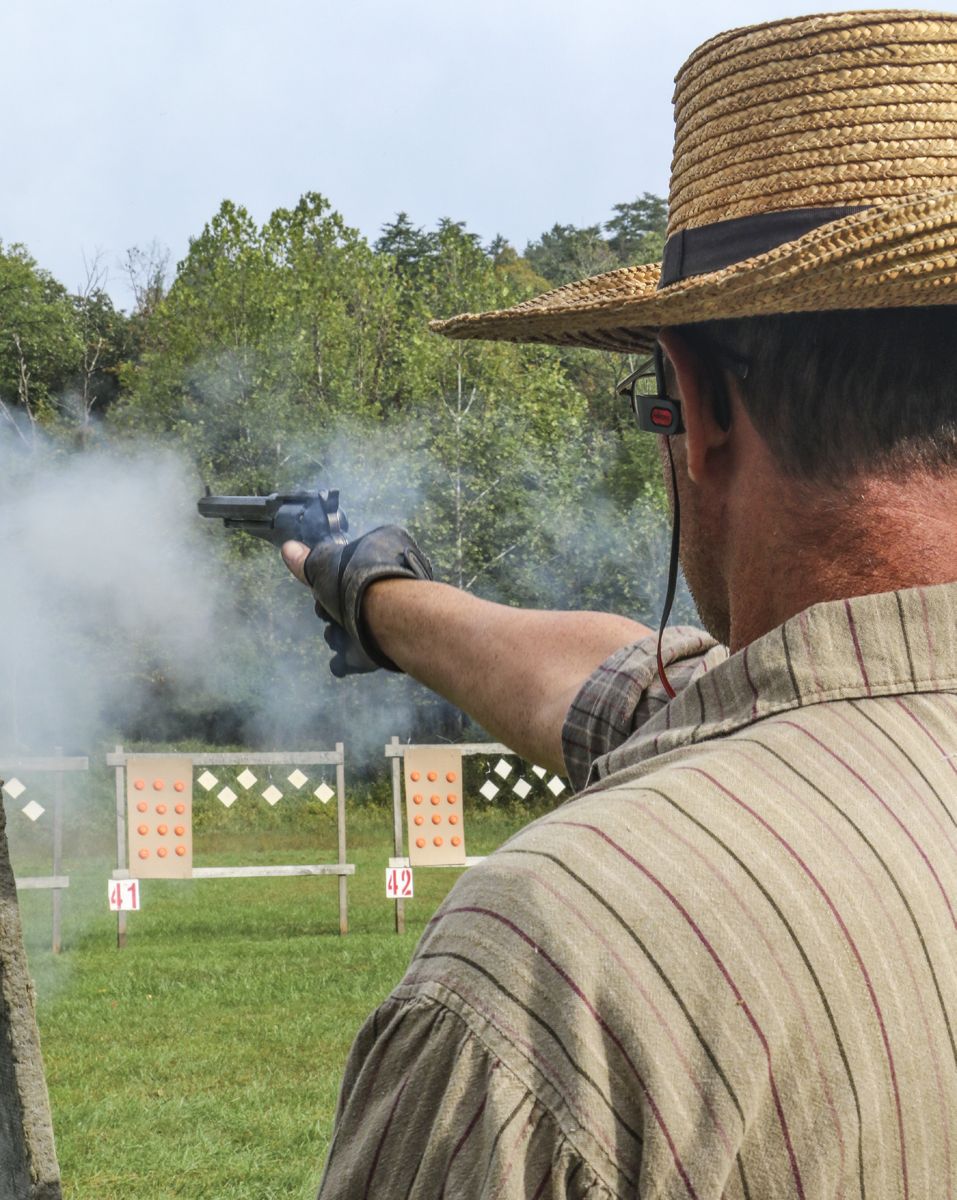
Smithgall Foundation’s massive Army 20-pounder Parrott rifle. It was manufactured at West Point Foundry in 1861 for the Commonwealth of Pennsylvania and was used by the 1st Pennsylvania Light Artillery during the War. In the N-SSA, the 3rd U.S. Infantry competes with both small arms and the impressive artillery pieces. The range is reconfigured so cannon fire perpendicular to the small arms firing line and the guns are classified by type: smoothbore, rifled, howitzer, and rifled howitzer. Target frames with paper targets mounted on drywall backers are set at ranges of 200 yards for rifled and smoothbore guns and 100 yards for howitzers. All cannon fire 12 solid projectiles, with a maximum of seven shots, at either of two targets: a bull’s eye and a cannon silhouette that represents counter battery fire. The best five shots on each target count for a maximum of 25 points per target, with a perfect score being 50-5V. Howitzers fire a maximum of 12 projectiles at a single bullseye target, with the 10 best shots counted and a perfect score being 50-10V. In the Smoothbore Class, the Dixie Artillery won with their 6-pounder gun and a score of 473V. In the Rifled Class, McNeill’s Rangers and their 2.25-inch Confederate mountain rifle won with a near perfect score of 50-4V. All six rifled guns that medaled scored 48-3V or better. In the Howitzer Class, Hardaway’s Alabama Battery won, shooting an impressive 504V with their 12-pounder Tredegar field howitzer. The 1st Maryland Cavalry took the Rifled Howitzer Class with their pack Parrott, scoring a nice 49-1V. The accuracy of Civil War period cannon is utterly amazing and shows that Civil War gun crews knew how to get the most out of them.
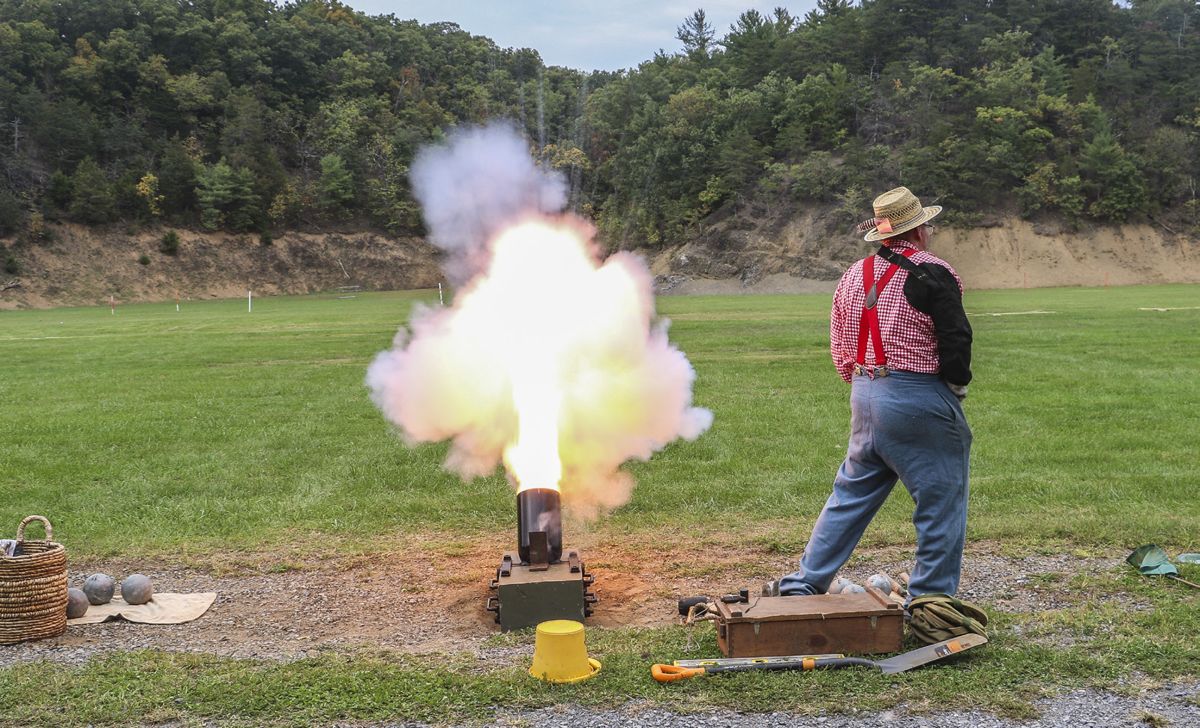
Forty-three units participated in the mortar team match. The mortar teams fire seven shots at a stake 100 yards down range. Officials then carefully measure the distance between stake and mortar balls, then tally the best five shots for score. The overall winner was the 11th New Jersey Infantry with a terrific five-shot aggregate score of 25 feet, 8 inches. This is a particularly fun match to watch because with the mortars’ low muzzle velocity, you can actually see the flight of the projectile. One of the most impressive events at the North-South Skirmish Association nationals are the opening ceremonies held on the morning of the final day of competition. On Sunday morning as the sun rises in the eastern sky, over 2,500 skirmishers form up by unit with their flags flying. For as long as anyone can remember, the N-SSA band has led off the ceremonies with the playing of period arrangements of the “Star-Spangled Banner,” “Dixie,” and “The Battle Cry of Freedom.” Bruce Rohrbach of the 149th Pennsylvania is the latest in a long line of band leaders. He has been in the band for over 40 years and plays a Helicon; a preSousa tuba. Rohrbach also plays professionally, as do most of the other dozen band members. While they play a range of instruments from flute to bass drum, all are also shooters. Their performance adds a great deal to the heritage and pageantry of the final day of all N-SSA Nationals. As for the small arms matches, this National was once again dominated by the 110th Ohio Volunteer Infantry (OVI), who would win two small arms matches and finish second in three others. It seems the near invincible 110th OVI refuses to lose as they won their 29th musket team match since 2000 on this weekend. They won the musket team match with a time of 519.5 seconds for the five-event program, almost a minute and a half ahead of the second-place team. One hundred fifty-two teams participated in this N-SSA signature competition. The 110th also triumphed over 103 rain-soaked teams in winning the carbine team match. Harlan’s Light Cavalry won the smoothbore musket match, defeating 130 other four-member teams. One of the N-SSA’s founding units, the Washington Blue Rifles, bested 64 other teams to win the four-event revolver team match by a solid 26.7 seconds. The 149th Pennsylvania Infantry scored the gold medal in the single shot rifle match; the 8th Virginia Infantry won the breechloading rifle match, and the 1st Maryland Cavalry won the Spencer team match. The most recent addition to the N-SSA small arms competitions is the smoothbore pistol match, which was won by the 1st Maryland Cavalry. The N-SSA is the country’s oldest and largest Civil War shooting sports organization with almost 3,000 individuals that make up its 200 member units. Each portrays a particular unit or regiment and proudly wears a uniform representing the one the original soldiers wore over 160 years ago. At the 148th National, nine members were recognized for 50 years and five for 60 years of membership, quite an accomplishment. The National Rifle Association award for the top Young Skirmisher (under 19 years of age) went to Spencer Ostner, 9th Virginia Cavalry, with an aggregate musket and carbine score of 160-0X and the Senior Skirmisher (over 65) award went to Mark Hughes, also 9th Virginia Cavalry, with a 184-1X. The 149th National Competition is scheduled for May 17-19, 2024, at Fort Shenandoah, just north of Winchester, Virginia. For more information about the N-SSA, visit our website www.n-ssa.org. (Ericka Curley) The 110th Ohio Volunteer Infantry (OVI) competes in the smoothbore musket match. Smoothbore musket shooting is a great test of skill, as marksmanship with these firearms is more challenging to master than with rifled muskets. (Ericka Curley)
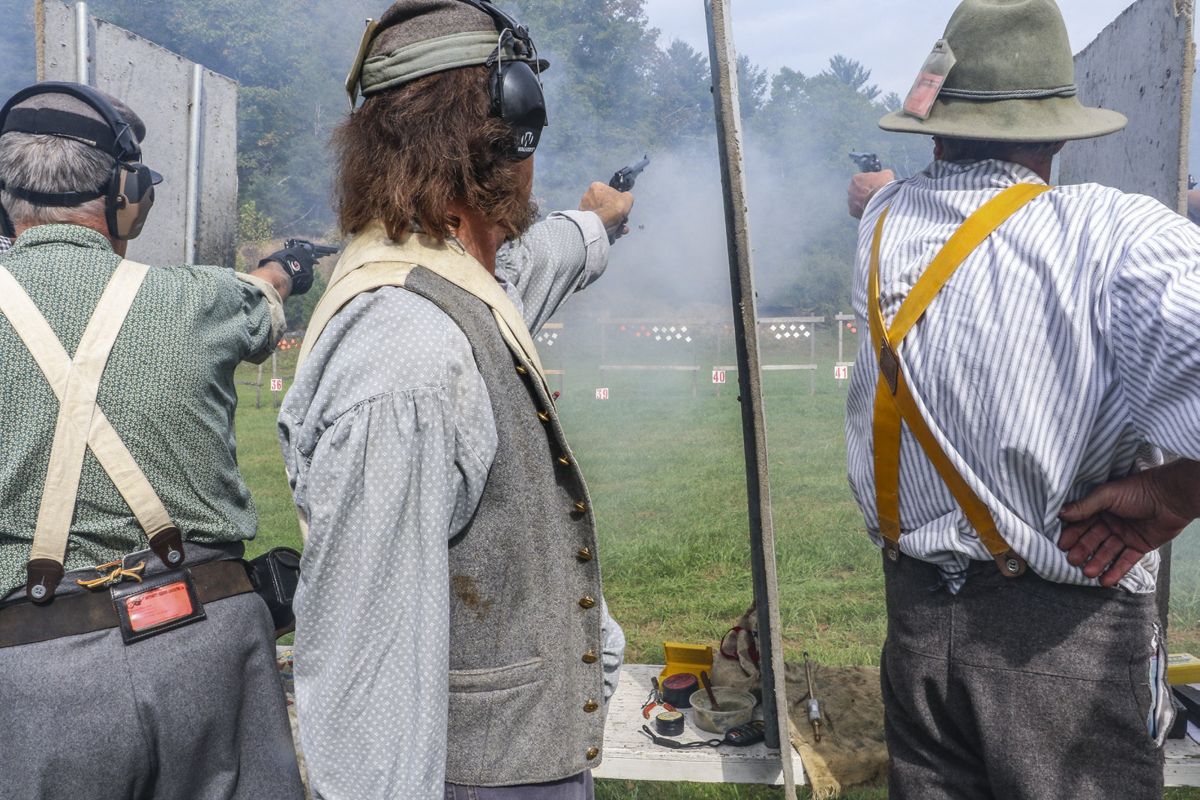
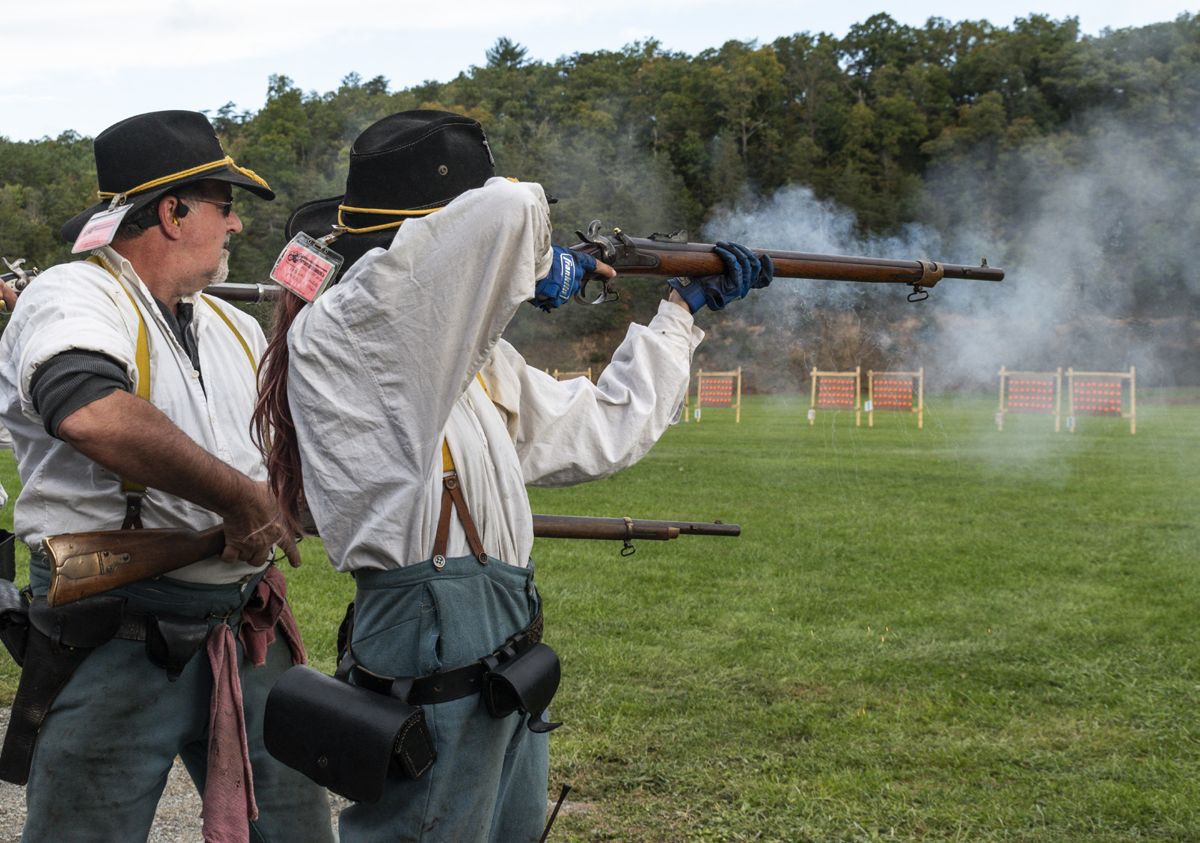
Jack Boyenton and Jessica Kwon fire their smoothbore muskets at 3.5-inch square wooden blocks. The 148th National was Jessica’s first skirmish since joining the 1st Regiment Virginia Volunteers. (Lars Curley) Duncan Bartley and Tony Shiflett of the 1st Regiment Virginia Volunteers compete in the smoothbore musket match along with 130 other four-member teams, shooting targets placed at 25 and 50 yards. (Ericka Curley)
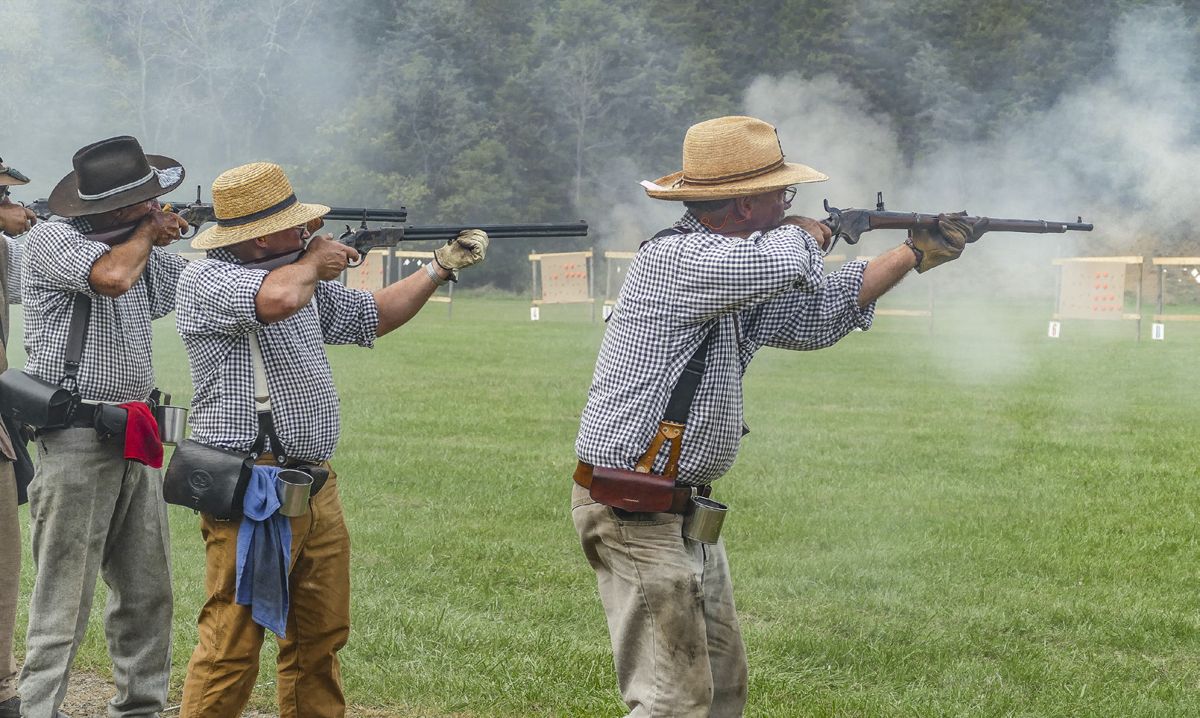
A competitor takes aim with his Ballard rifle during the single-shot breechloader rifle competition. Teams in this match usually consist of shooters using Ballard and Sharps rifles, along with other Civil War era single-shot breechloaders. (Niki Bethke)
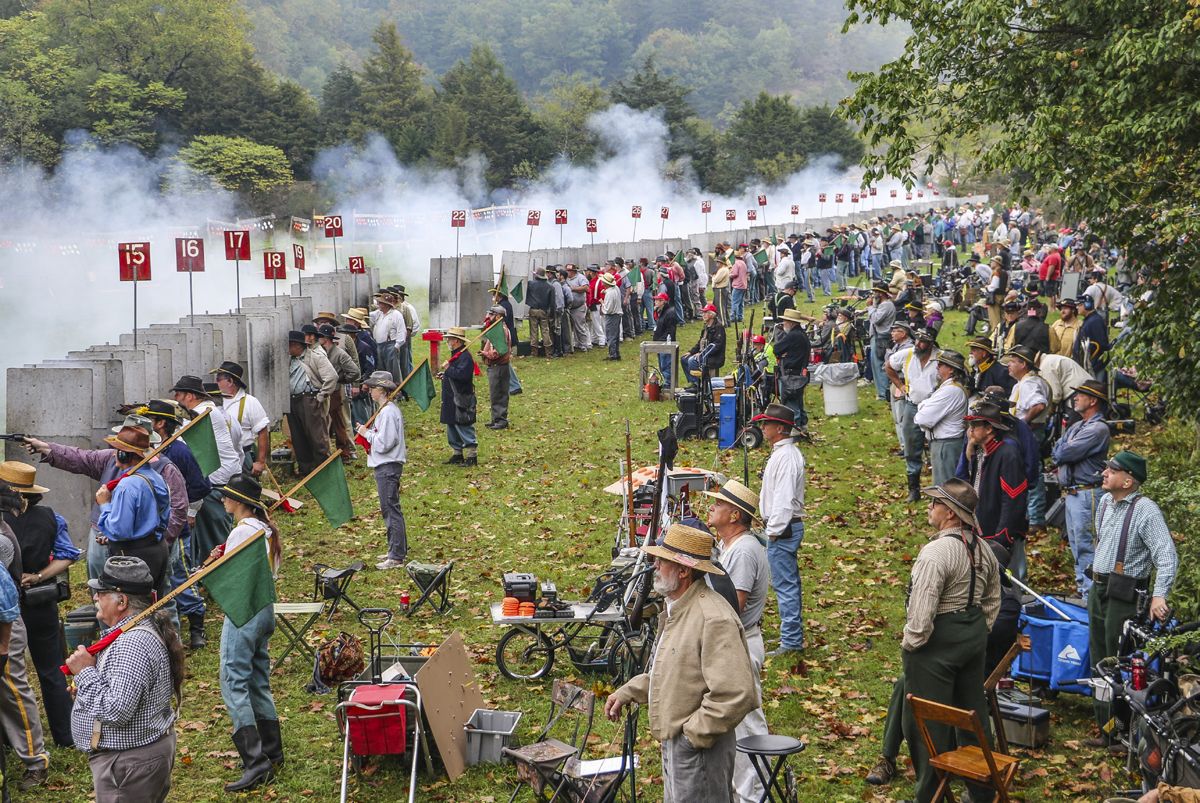
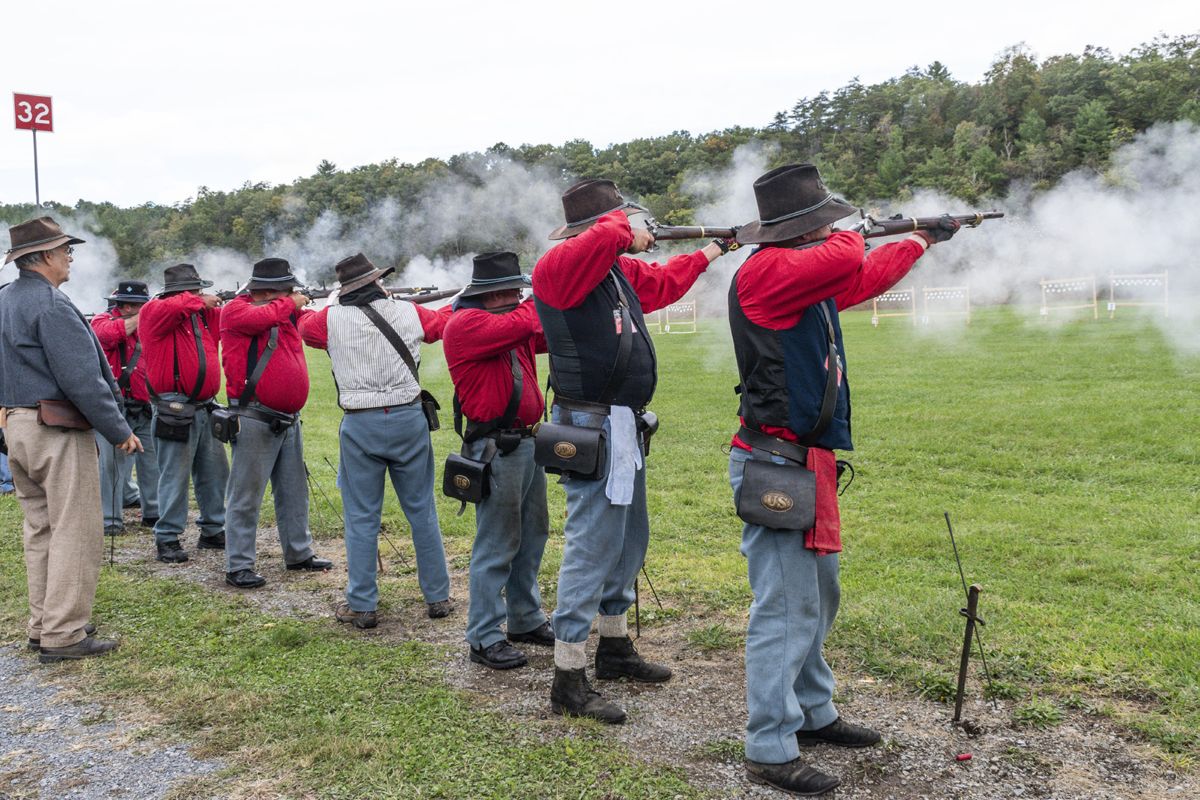
This uniformly-garbed Union team fires at 16, four-inch hanging targets. At a National Skirmish, eight-person musket teams fill 65 line positions; the largest continuous firing line in the country, controlled by a single main tower. (Ericka Curley)
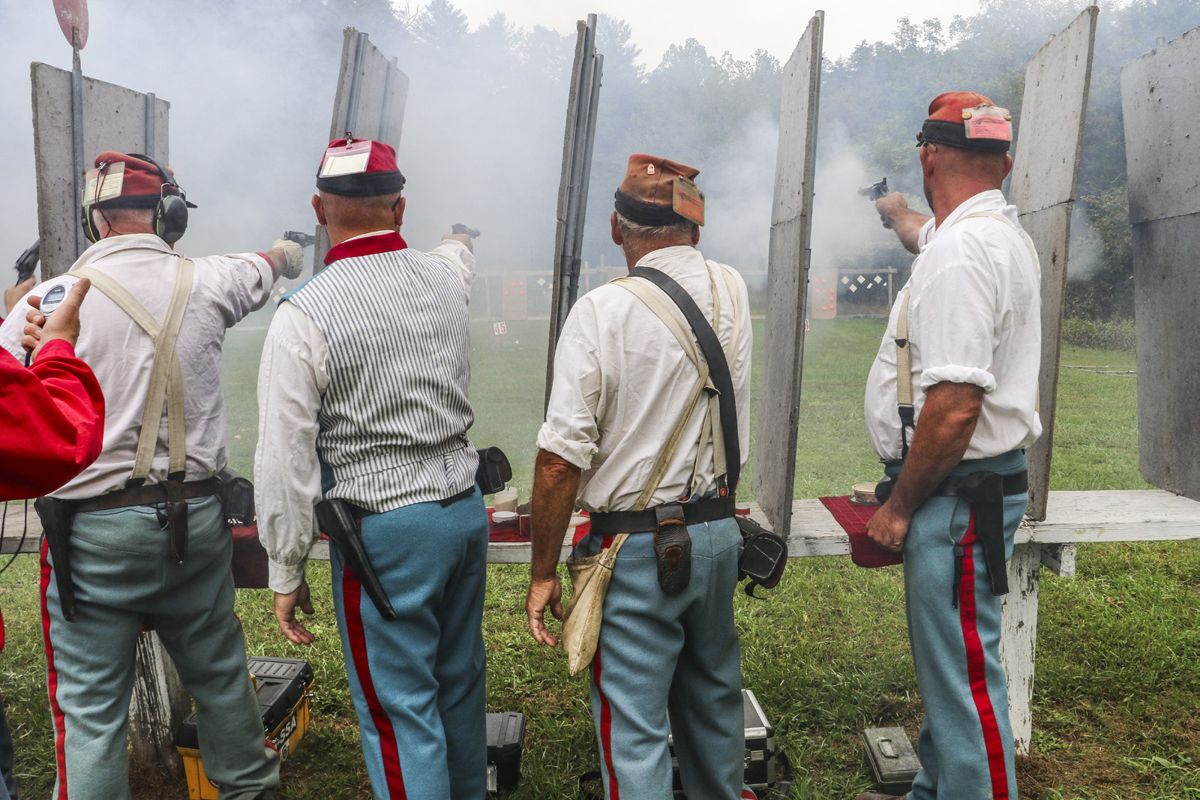
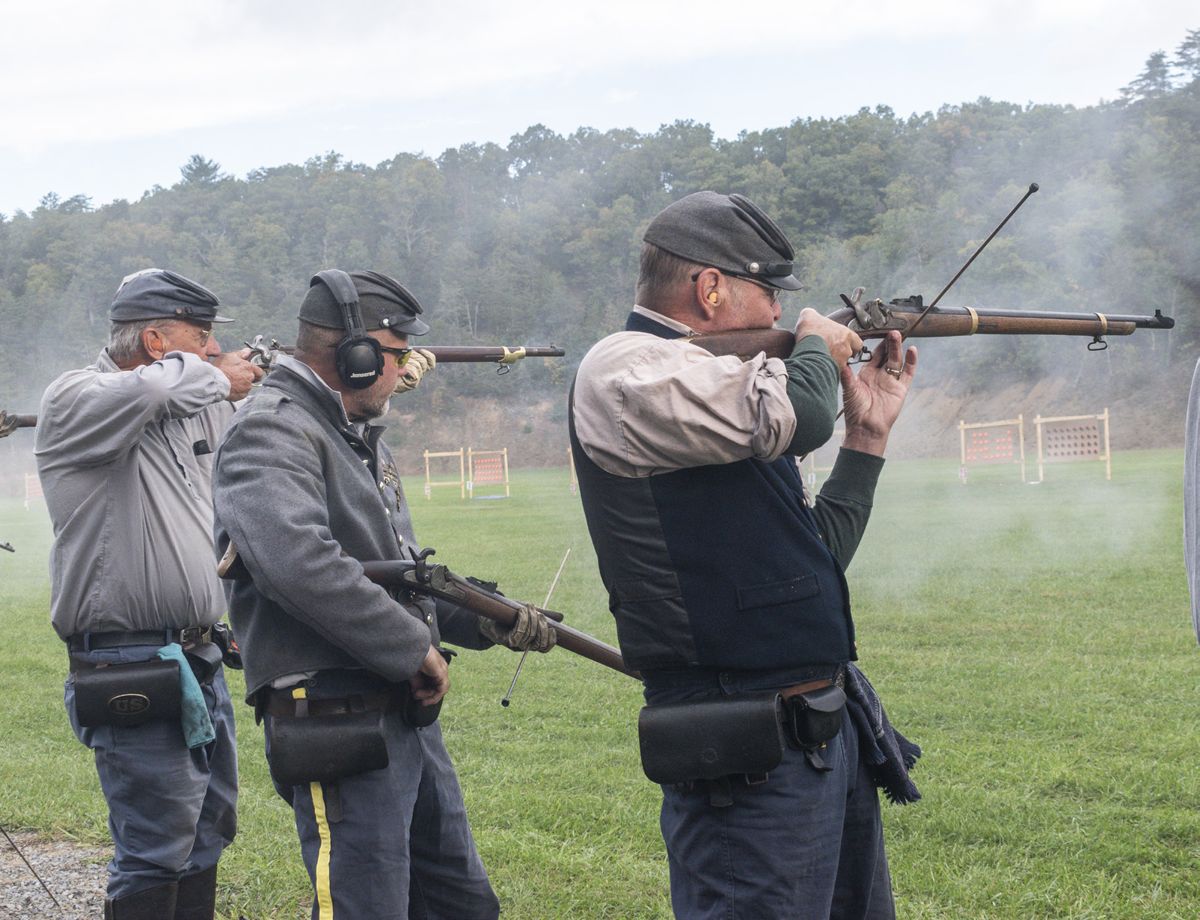
Skirmishers with the 1st Maryland Infantry load and aim during the smoothbore musket match. As a non-profit organization dedicated to preserving the history of the American Civil War, N-SSA teams are named for actual Civil War units and adopt uniforms representative of the ones worn over 160 years ago. (Niki Bethke)
Sadie Walsh competes in her first National Skirmish shooting black powder. She and her older sister Emily grew up shooting in the BB gun matches and have come of age to officially join their team, the 2nd Maryland, Baltimore Light Artillery, CSA. (Ericka Curley)
Safe gun handling is a priority in the N-SSA. Each line position is required to have a safety officer (with a signal flag) to monitor the safety of the team’s loading and firing. A line judge for each team uses a stopwatch to record the length of time it takes for the team to break all of their targets, and ensures that the correct number of hit targets is counted. (Ericka Curley)