
Tributes and Targets at N-SSA 147th Nationals
By Bruce W. Miller · Originally published August 2023 · pp. 1–7
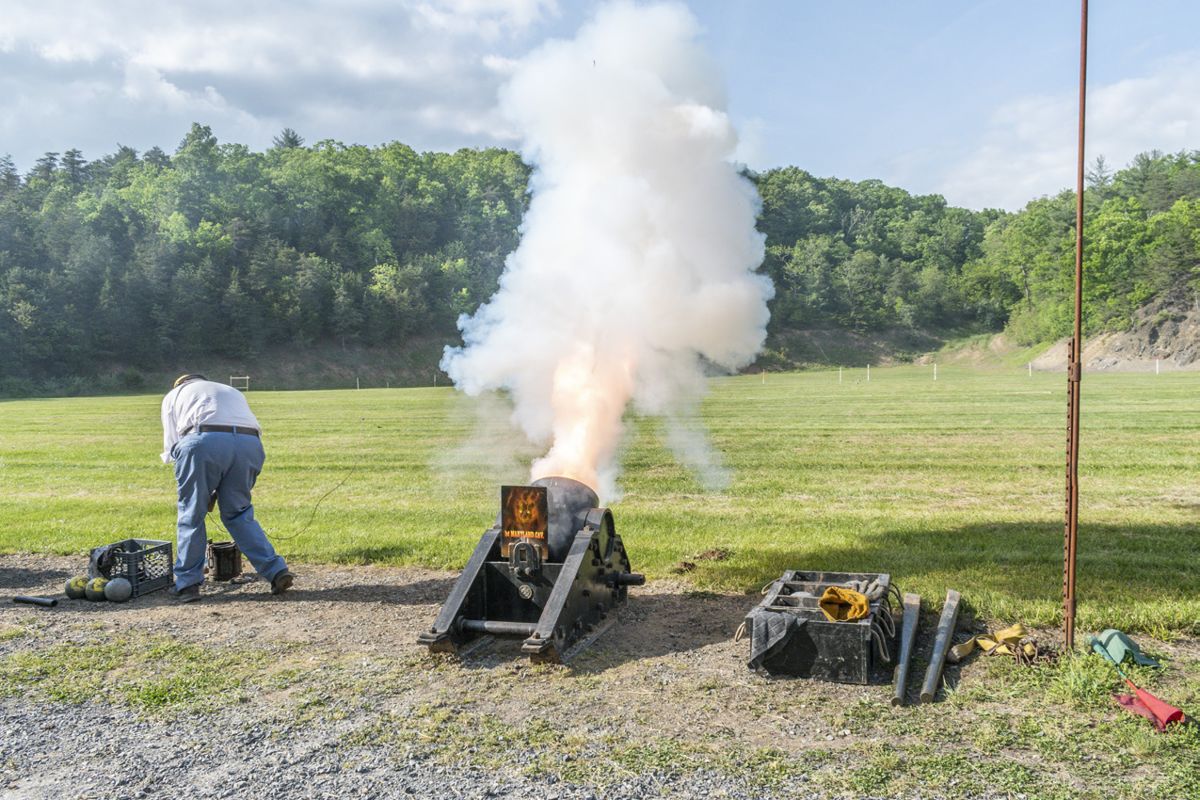
Rob Bethke pulls the lanyard to fire the 3rd Maryland Artillery’s 24-pounder mortar. Crews fire seven mortar balls at target stakes placed 100 yards from the firing line. The distances of the five closest shots are then tallied to determine a team’s score. (Ericka Curley)
The only bittersweet occurrence at this sun-drenched national was the retirement of longtime executive secretary, Judy Stoneburner. This past winter, health issues plagued Judy who has served the association in this key role for 13 years. A native Virginian, she joined the N-SSA in 1994 and continues to be a member of Mosby’s Rangers. Judy was also the first woman to be the director of a national skirmish. In her own words, she lists her top three duties as “always take care of the members’ needs,
Tributes and Targets at N-SSA 147th Nationals By Bruce W. Miller The North-South Skirmish Association (N-SSA) held its 147th National Competition May 17 through 21, 2023. Member units competed in livefire matches with original or authentic reproduction Civil War period muskets, carbines, breech-loading rifles, revolvers, mortars, and cannon. It is the largest Civil War event of its kind in the country and attracts not only spectators but Civil War enthusiasts and shooting sports media coverage.
This is the range officer’s view from the main tower during the musket match of a National Skirmish. Eightperson musket teams fill 65 line positions controlled by one main tower and three sub-towers, which communicate via the range’s PA system, short wave radios, and signal flags. (Ericka Curley)
represent the association in a positive and professional manner, and strive for excellence in all of her assigned duties.” Judy was the hub of the organization and will be greatly missed. It was a big weekend for one of the N-SSA’s founding units, the Washington Blue Rifles. They won medals in five of the seven small arms team matches. They won the musket team match with a time of 514.9 seconds for the five-event program finishing 48.5 seconds ahead of the second place team. One hundred fiftyfive teams participated in this N-SSA signature competition. The 2nd Maryland Artillery (CSA) triumphed in the carbine team match over 121 other sundrenched teams. The Nansemond Guards won the smoothbore musket match, defeating 123 other four-member teams. The Iredell Blues bested 63 other teams to win the fourevent revolver team match by a whopping 77.6 seconds. The
Charlie Smithgall smiles as he stands with his 1848 dated Ames 12-pounder field howitzer. His crew had just won the howitzer match at the 138th N-SSA National Skirmish, October 2018. (Ericka Curley) Washington Blue Rifles scored another gold medal in the single shot rifle match, the 1st Maryland Cavalry (CSA) won the Spencer class match and the 2nd Maryland Artillery (CSA) won the breechloading rifle match. The cannon matches on Saturday afternoon opened with a special tribute to Charles W.
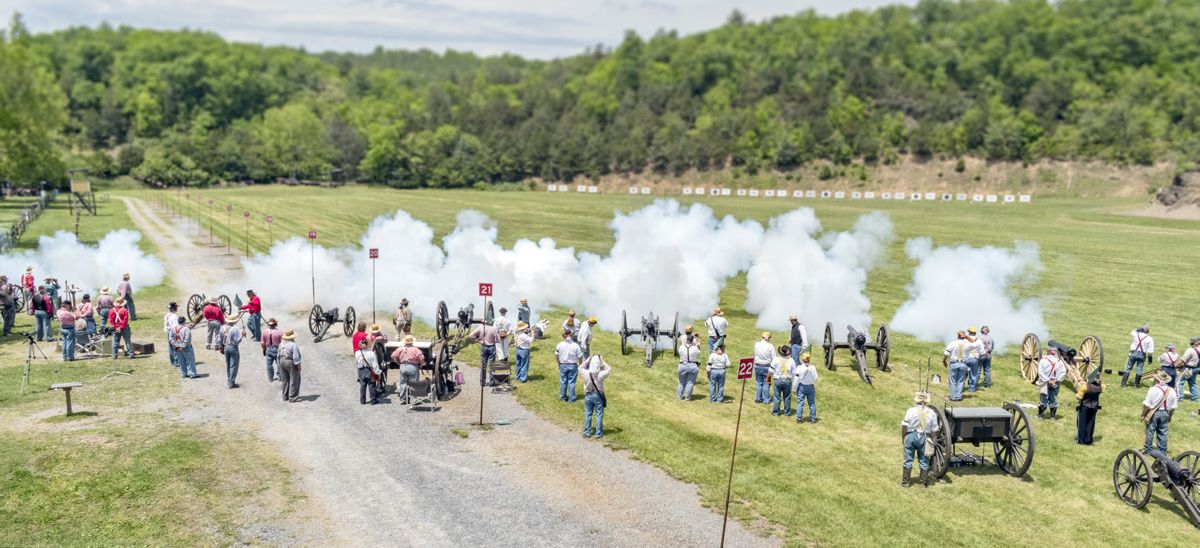
“Charlie” Smithgall. Charlie was one of America’s most renowned collectors of artillery pieces and equipage from the 18th century to modern times. He established The Smithgall Foundation, a 501c3 dedicated to the preservation of artillery and military antiques. Charlie was a past commander of the N-SSA and frequently wowed members and spectators with the amazing range of guns that he brought to the nationals, including a 30-pounder Parrott rifle that shook the ground when fired. Artillerist Tim Scanlan delivered a stirring eulogy, after which a massive 21-gun salute was fired, followed by a duo of buglers playing “Taps” before the matches began. Charlie leaves behind a great legacy. Forty-four guns participated in the artillery team matches. The range is reconfigured so that the cannon fire perpendicular to the small arms firing line, and the guns are classified by type: smoothbore, rifled, howitzer, and rifled howitzer. Target frames with paper targets mounted on drywall backers are set at a range of 200 yards for rifled and smoothbore guns and 100 yards for howitzers. Rifled cannon and smoothbore guns fire 12 solid projectiles, with a maximum of seven shots at either of two targets: a bull’s eye and a silhouette of a cannon facing them that represents counter battery fire. The best five shots on each target count for a maximum of 25 points per target, with a perfect score being 50-5V. Howitzers each fire a maximum of 12 projectiles at their single bullseye target, with the 10 best shots counted and a perfect score being 50-10V. In the Smoothbore class, the 1st Virginia Cavalry (gun #1) was the winner with 47-3V. In the Rifled class, the 1st Valley Rangers won with a perfect score of 50-5V. This highly competitive group of 27 had five guns score 50 or better. In the Howitzer class, Hardaway’s Alabama Battery (Baldwin gun) won, shooting an impressive 504V. The 1st Maryland Cavalry took the Rifled Howitzer class, scoring a terrific 49-5V. Civil War cannon accuracy is truly amazing and N-SSA artillerists know how to get the most out of them. Forty-nine units participated in the Mortar Team match. The mortar teams fire seven shots at a stake 100 yards down range. Officials then carefully measure the distance from the stake and tally the best five shots for score. The overall winner was the Cockade Rifles with a terrific five shot aggregate score of 25 feet-6 inches. This is a particularly fun match to watch because with the mortars’ low muzzle velocity, you can actually see the flight of the projectile. The N-SSA is the country’s oldest and largest Civil War shooting sports organization with 3,000 individuals that make up its 200 member units. Each portrays a particular unit or regiment and proudly wears a uniform representative of the one they wore over 160 years ago. At the 147th National, 16 members were recognized for 50 years and six for 60 years of membership in the Association: quite an accomplishment. The National Rifle Association award for the top Young Skirmisher (under 19 years of age) went to Emilee Walsh, 2nd Maryland Artillery (CSA), with an aggregate musket and carbine score of 148-0X and the Senior Skirmisher (over 65) award went to Gary Bowling, Nansemond Guards, with a 177-3X. The 148th National Competition is scheduled for Oct. 6-8, 2023 at Fort Shenandoah, just north of Winchester, Va. For more information about the N-SSA, visit the web site at www.n-ssa.org.
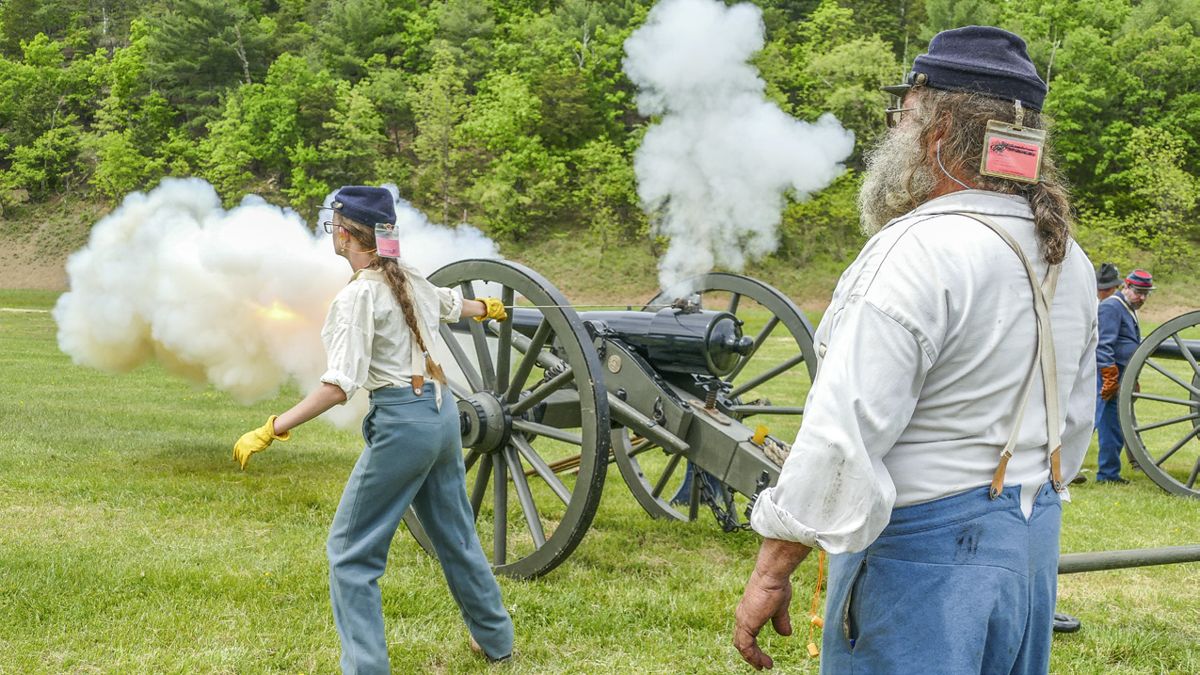
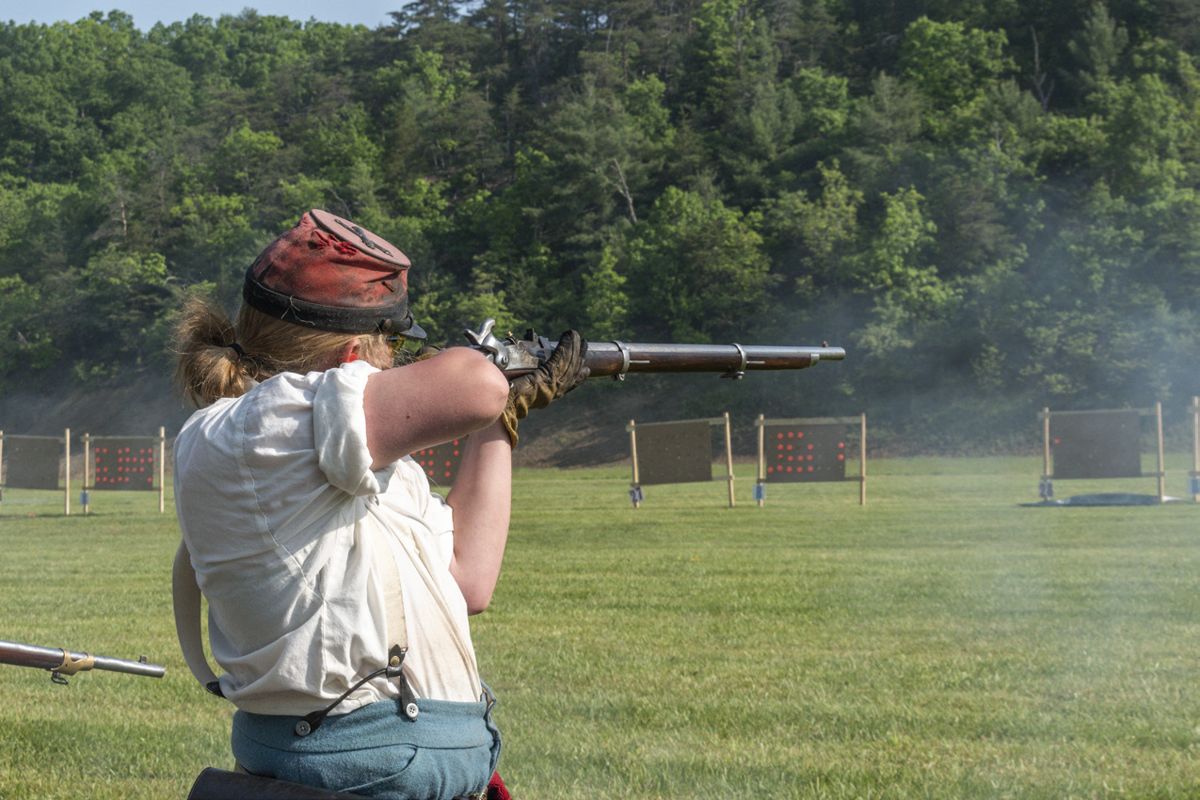
Emilee Walsh of the 2nd Maryland, Baltimore Light Artillery (CSA) grew up shooting in the “Tenderfoot” BB and pellet gun matches. When she reached 14, the minimum age required to become a full N-SSA member, she joined the team and began to compete in the black powder matches. This National, she won the first place National Rifle Association Young Skirmisher award for the top shooter under 19 years of age. (Ericka Curley) (Lis Cole) (Niki Bethke)
The Union Guards deftly load and aim their smoothbore muskets and fire at the four-inch hanging tiles at 25 yards down range. National Skirmish targets consist of all breakable targets, hanging or mounted on a cardboard backer. (Ericka Curley)
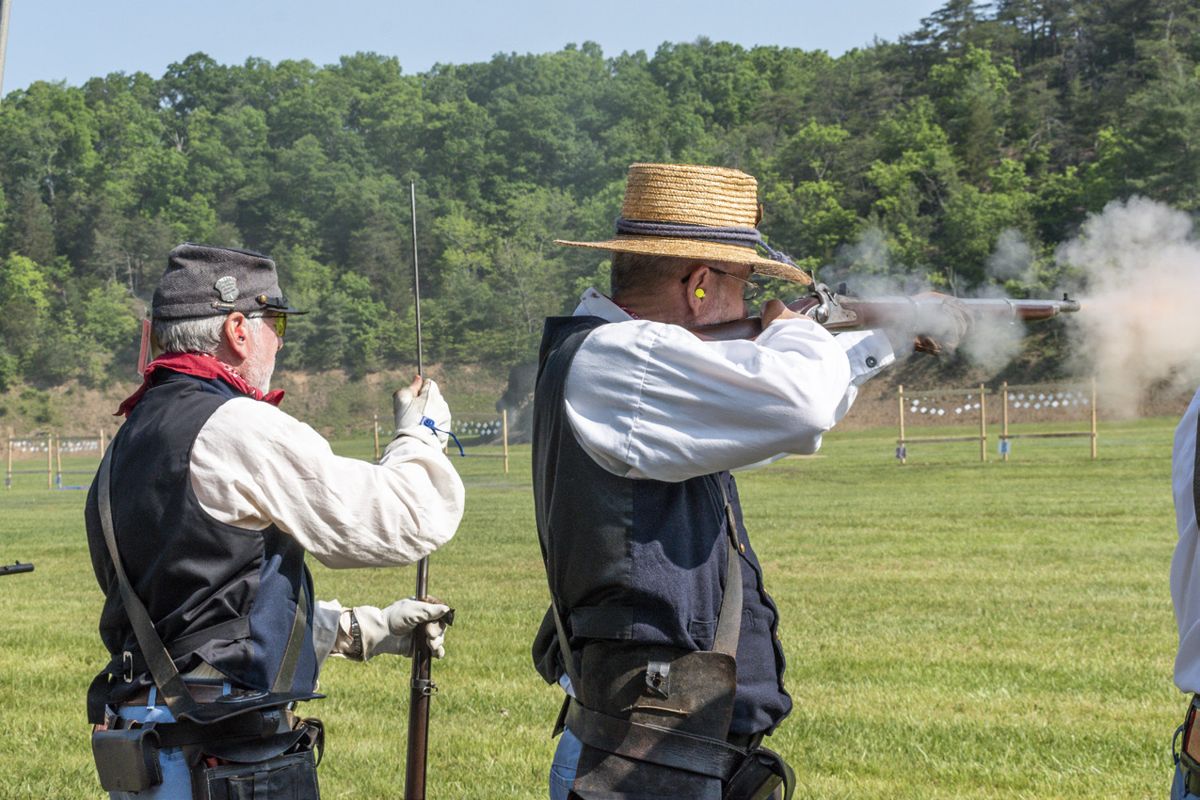
The percussion cap is about to ignite the main charge as Duncan Bartley, 1st Regiment Virginia Volunteers, fires his original Nathan Starr smoothbore contract musket, made in 1831, a percussion gun converted from a flintlock. (Ericka Curley)
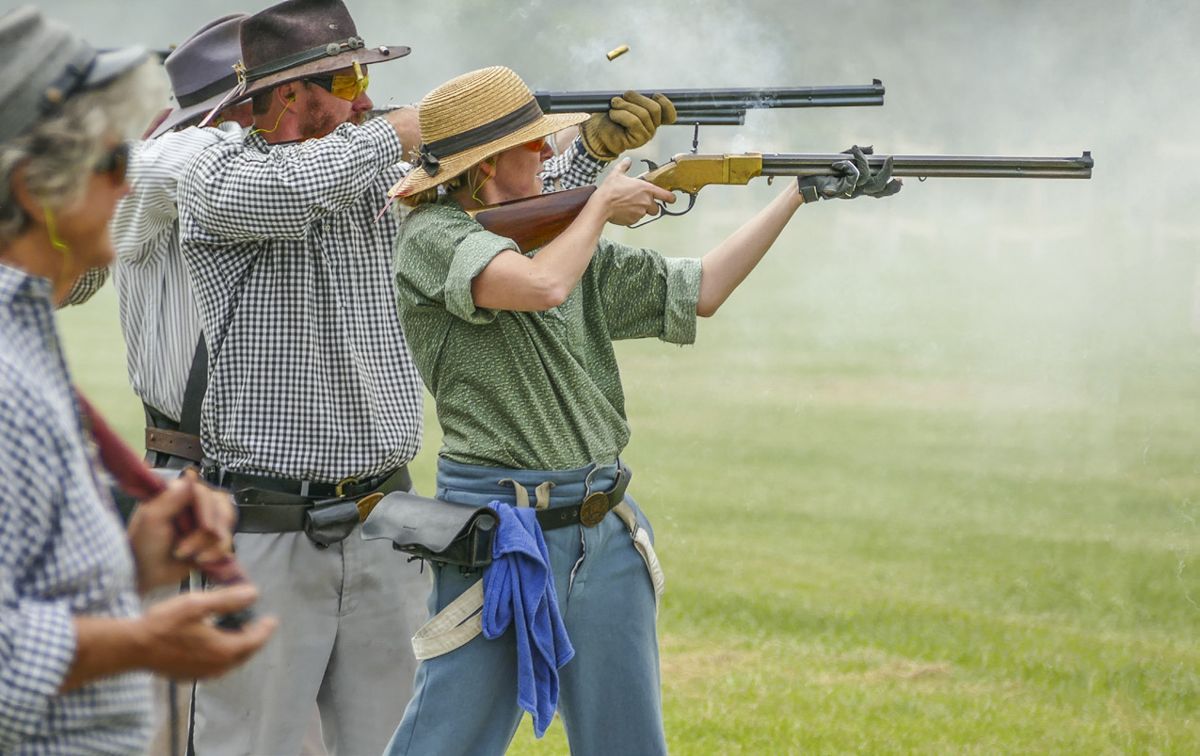
Left: Two mortar crews with Hardaway’s Alabama Battery fire simultaneously. Mortar matches are spectator favorites, because you can follow the ballistic path of the projectiles as they arc through the air toward the stake down range. (Ericka Curley) Top right: Duncan Bartley, Jack Boyenton, and Rob West of the 1st Regiment Virginia Volunteers load their smoothbore muskets and fire at clay pigeons on a cardboard backer at a distance of 25 yards. One hundred twenty-three fourperson teams participated in the popular smoothbore musket competition, clearing targets at 25 and 50 yards. (Ericka Curley)
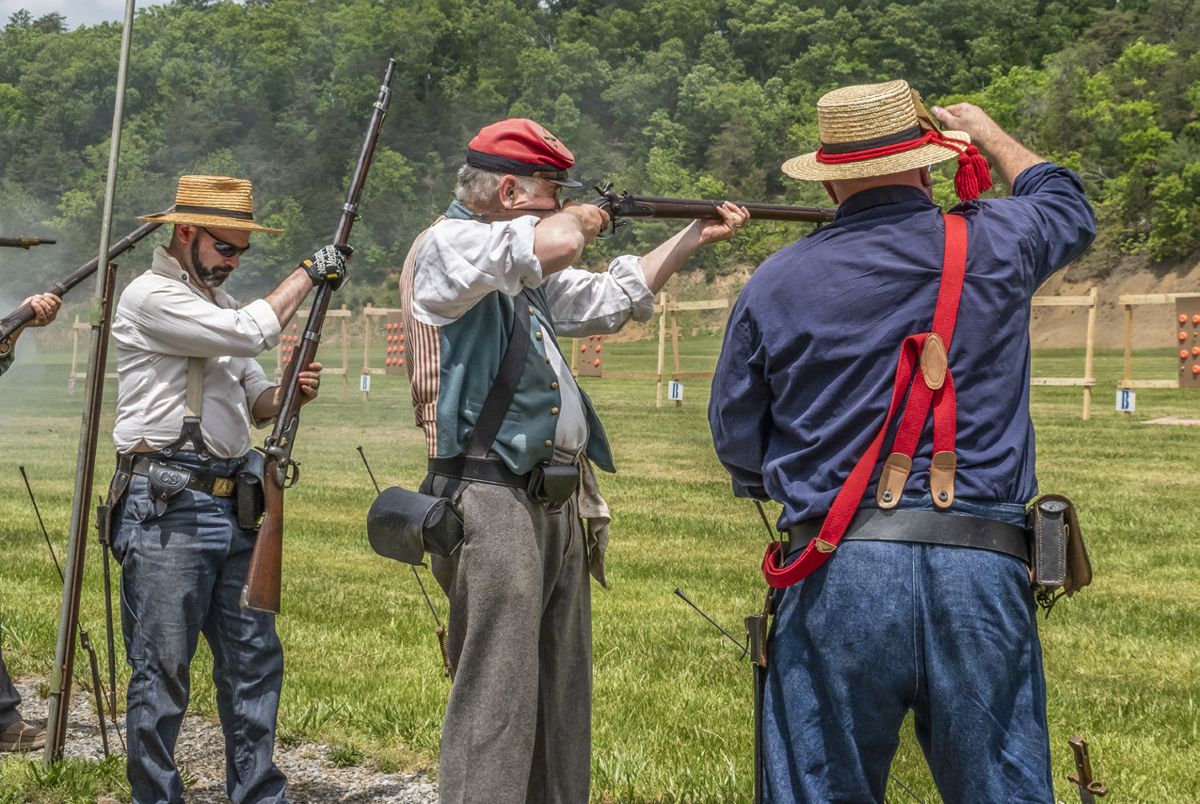
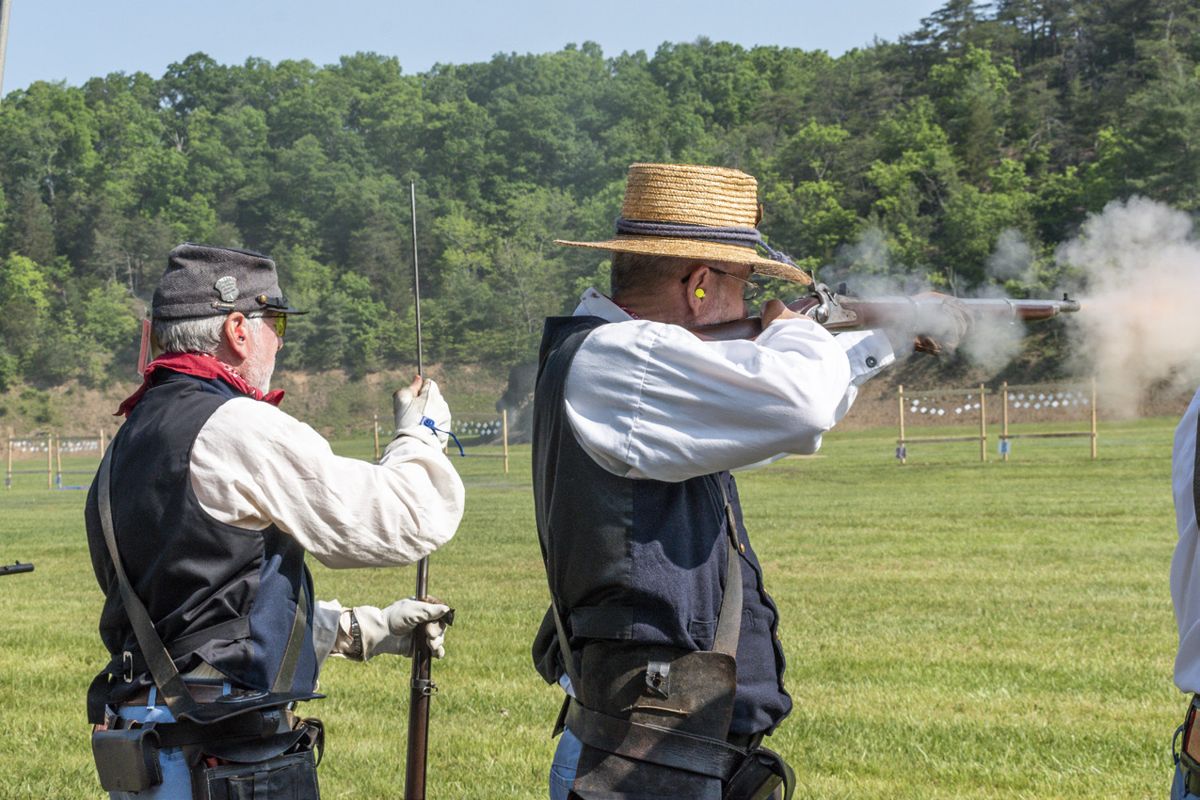
Left: Two members of the 9th Virginia Cavalry load and aim their rifle muskets at 32 clay pigeons on a cardboard backer, the first event of the musket match. The eightperson musket teams compete to break all of the clay pigeons in the least amount of time. (Ericka Curley) Above: The 2nd Maryland, Baltimore Light Artillery (CSA) smoothbore team skillfully displays the variety of steps it takes to fire a muzzleloading musket: retrieving a round from the cartridge box, ramming the projectile into the barrel, placing a percussion cap onto the gun’s nipple, and aiming at the target. (Ericka Curley)
Right: Retiring N-SSA Executive Secretary Judy Stoneburner handled any assignment that came her way. Here, she instructs a reporter at a recent media event on the firing of a Smith carbine. (Bruce W. Miller)
Adding to the period atmosphere of N-SSA Nationals is the authentically uniformed 1st Maryland Infantry fifers and drummers. The unit is composed of skilled musicians and is a crowd-pleaser as they march to the range before commencement of the Sunday morning opening ceremonies. (Lis Cole)
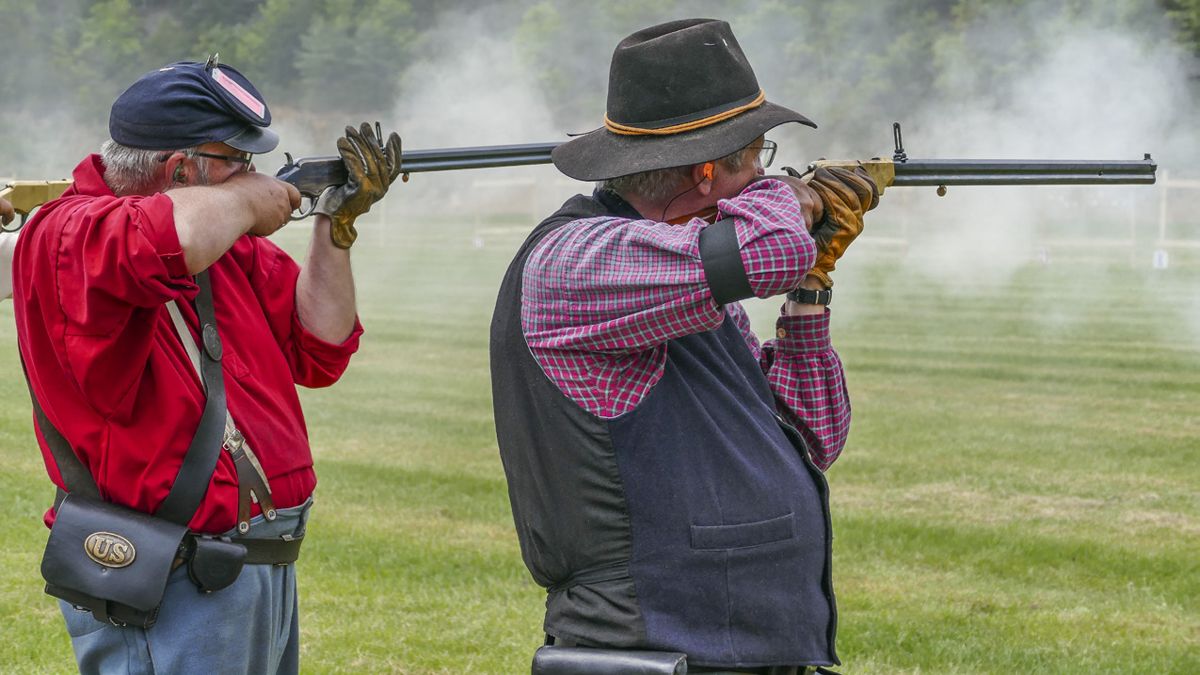
Skirmishers of all ages enjoy shooting in the N-SSA competitions. These two are competing in the rifle musket match along with 155 other eightperson teams. (Ericka Curley)
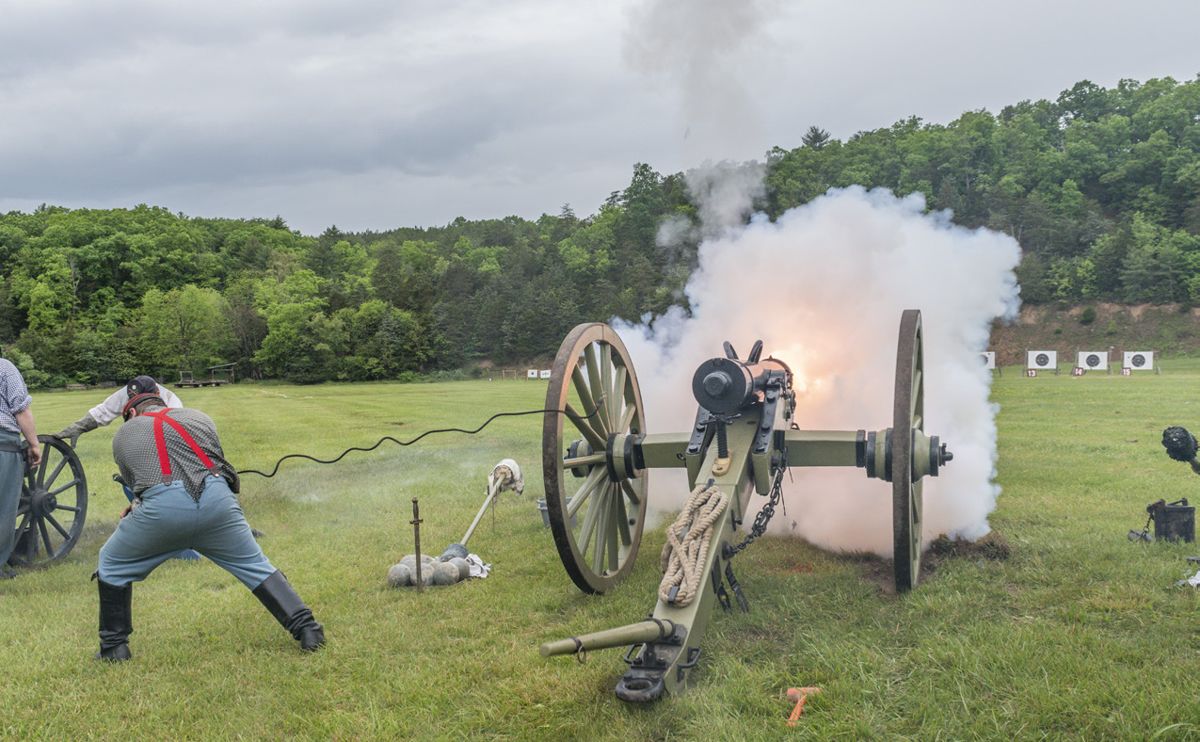
It takes only a fraction of a second for an artillery piece to fully fire once the friction primer is pulled, demonstrated by the position of the lanyard as Hardaway’s Alabama Battery fires Jeffery Baldwin’s Tredegar 12-pounder field howitzer. Hardaway’s won first place in the howitzer class with this gun. (Niki Bethke)