
This And That
The War Before the War, Part 2: George B. McClellan
By Gould Hagler · Originally published August 2023 · pp. 20–22
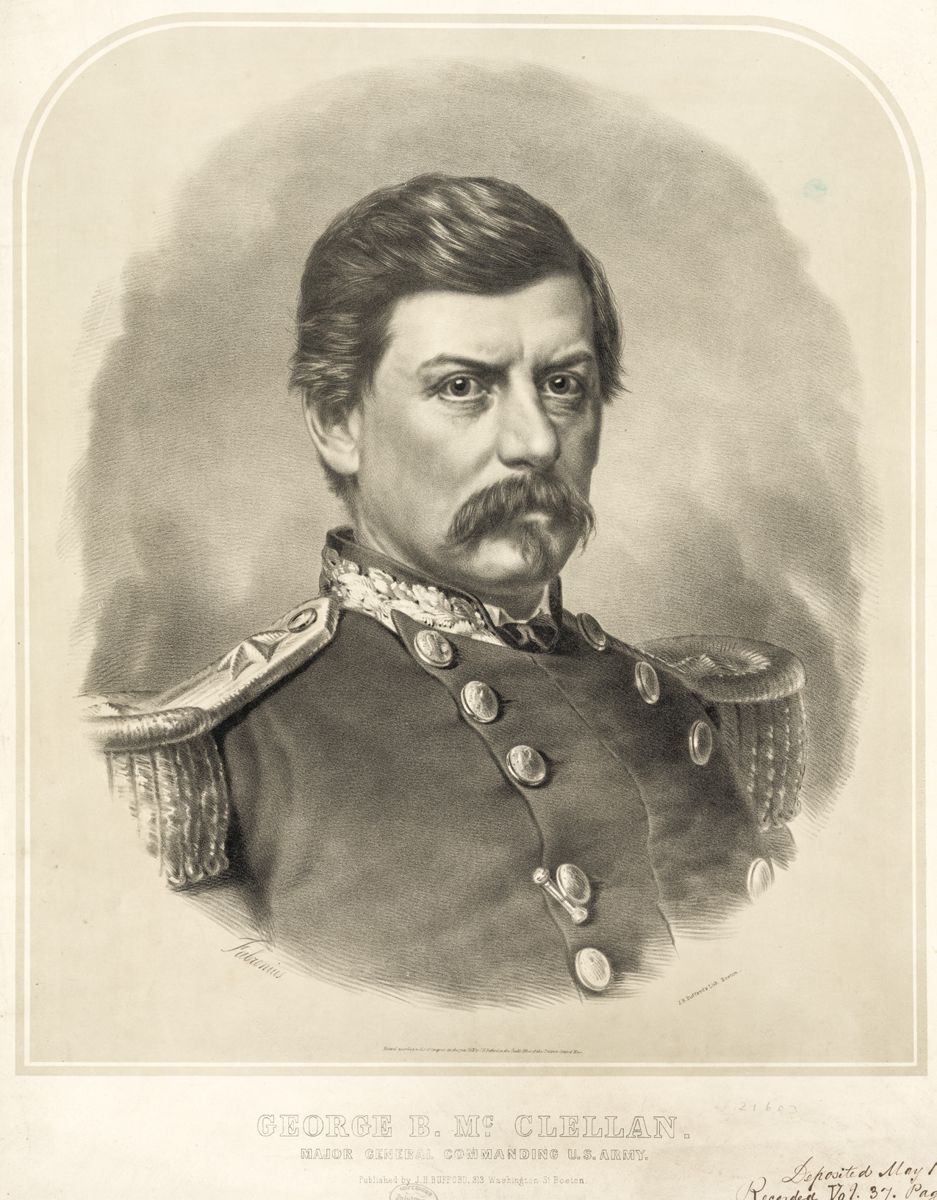
The War Before the War, Part 2: George B. McClellan Last month’s “This and That” reviewed the Mexican War experience of an artilleryman, Thomas Jackson. This time we will have a look at the record of an officer who, like Jackson, graduated from West Point in 1846 and almost immediately went into action. Ranking second in his class, George McClellan had his pick of assignments. He chose the Corps of Engineers. Stephen Sears’s 1988 biography of McClellan devotes the better part of a chapter to his subject’s service in the war with Mexico. Most of the following is based on Sears’s work. I also consulted the 1941 biography by H.J. Eckenrode and Bryan Conrad, which offers a more cursory look at McClellan’s role in the war.
When war erupted McClellan described his excitement in a letter to his sister. “Hip! Hip! Hurrah!” he wrote, delighted at the prospect of entering the fray and battling “musquitoes and Mexicans.” Commissioned on June 1, 1846, the brevet second lieutenant would soon face both enemies. Lt. McClellan was one of three officers in the elite Company of Engineer Soldiers. He spent two months training recruits in the general duties of a soldier and in the ways and means of building military roads, bridges, fortifications, and other necessary edifices. The company sailed from New York in September and arrived in Texas in October 1846. The warring parties had signed a truce after Maj. Gen. Zachary Taylor’s victories in Texas and northern Mexico. McClellan’s first battles, therefore, would be fought not against Mexicans but against disease, dysentery and malaria.* McClellan was laid up for a month, after which time the engineers worked their way south
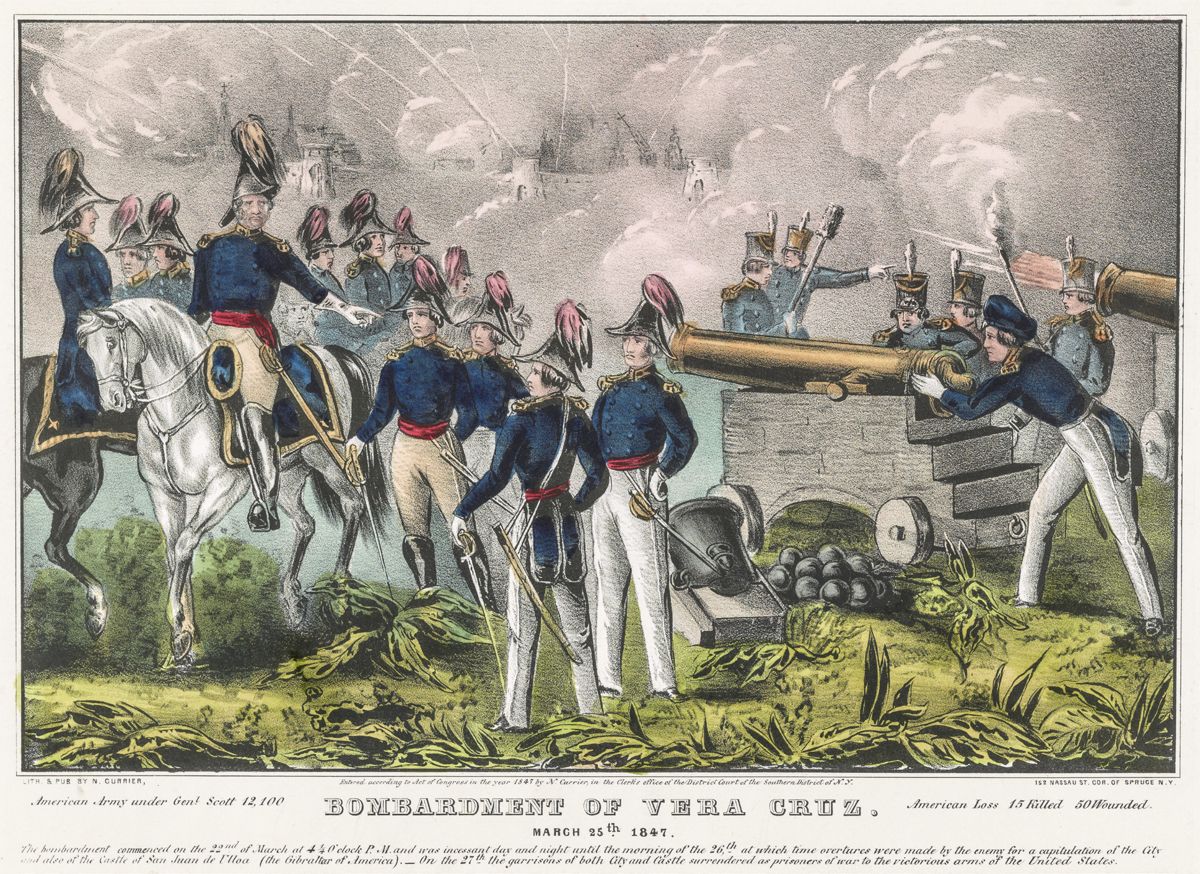
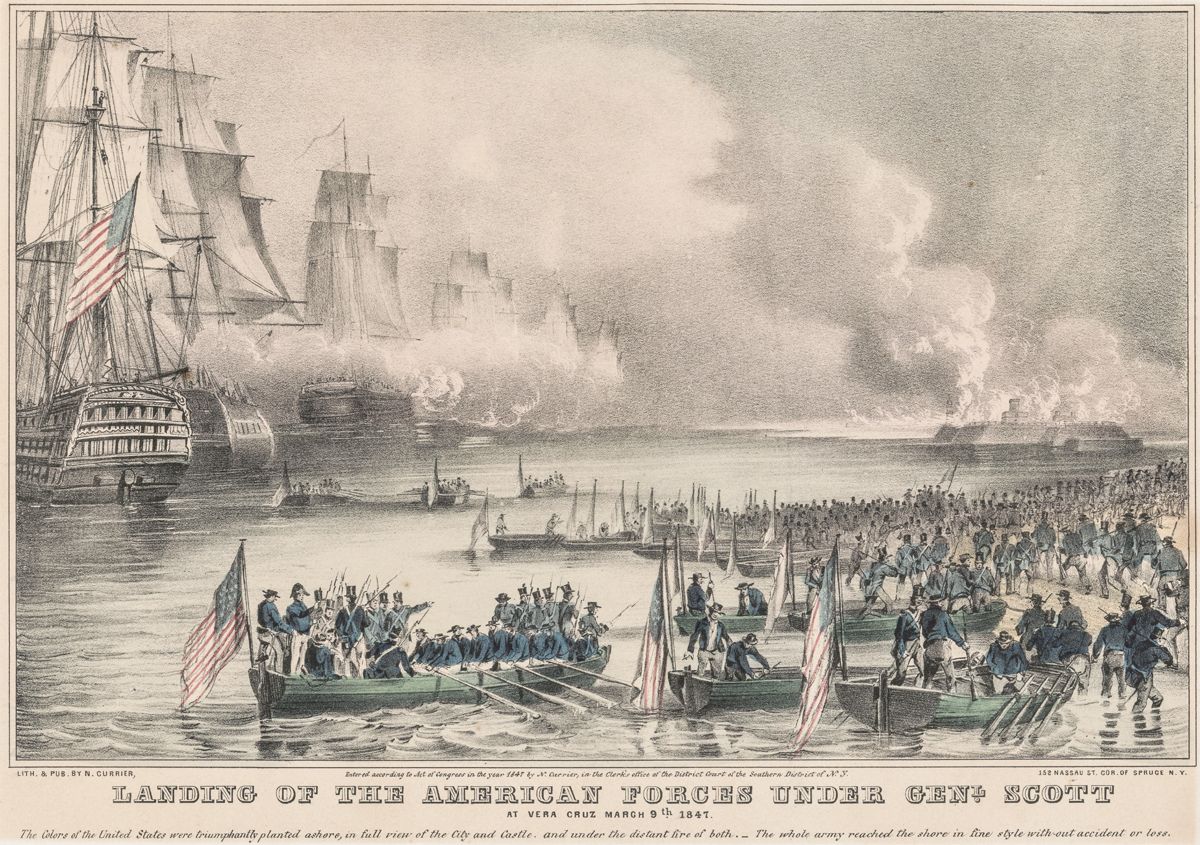
400 miles along the coast to Tampico, preparing the road for a division of volunteers that was to take part in Maj. Gen. Winfield Scott’s amphibious landing at Veracruz. McClellan and his company rode the waves ashore on March 9, 1847, along with the rest of Scott’s army. McClellan wrote of a shot whizzing overhead just before his landing craft was cast off. He expected to be under heavy fire as they were rowed ashore, but to his surprise that single whistle was the only one he heard: the landing was unopposed. Once on land, the engineers, commanded by Col. Joseph Totten, got to work. McClellan and other officers oversaw the construction of siege works used to force the surrender of Veracruz. Once, while reconnoitering beyond the lines, McClellan discovered the city’s main aqueduct, which the Americans soon cut. The daytime work was dangerous, as the enemy constantly fired at the workers and their overseers. At night the sand fleas tortured their victims as they tried to sleep. Starting on March 24, the army’s guns and heavy ordnance borrowed from the navy bombarded the city’s defenses. The Mexicans asked for a truce the morning of the 26th and surrendered on the 27th. Soon Scott’s force moved west on the National Road, toward the capital, 250 miles inland. Fifty miles from the coast the U.S. forces came to Cerro Gordo, where the Mexicans, fortified in a narrow pass, blocked the highway. In his memoirs Ulysses Grant described the difficulty of attacking this position. “The road…zigzags around the mountain-side and was defended at every turn by artillery. On each side were deep chasms or mountain walls. A direct attack along the road was an impossibility. A flank movement seemed equally impossible.” A way around had to be found. McClellan was on a detail, under Capt. Robert E. Lee, charged
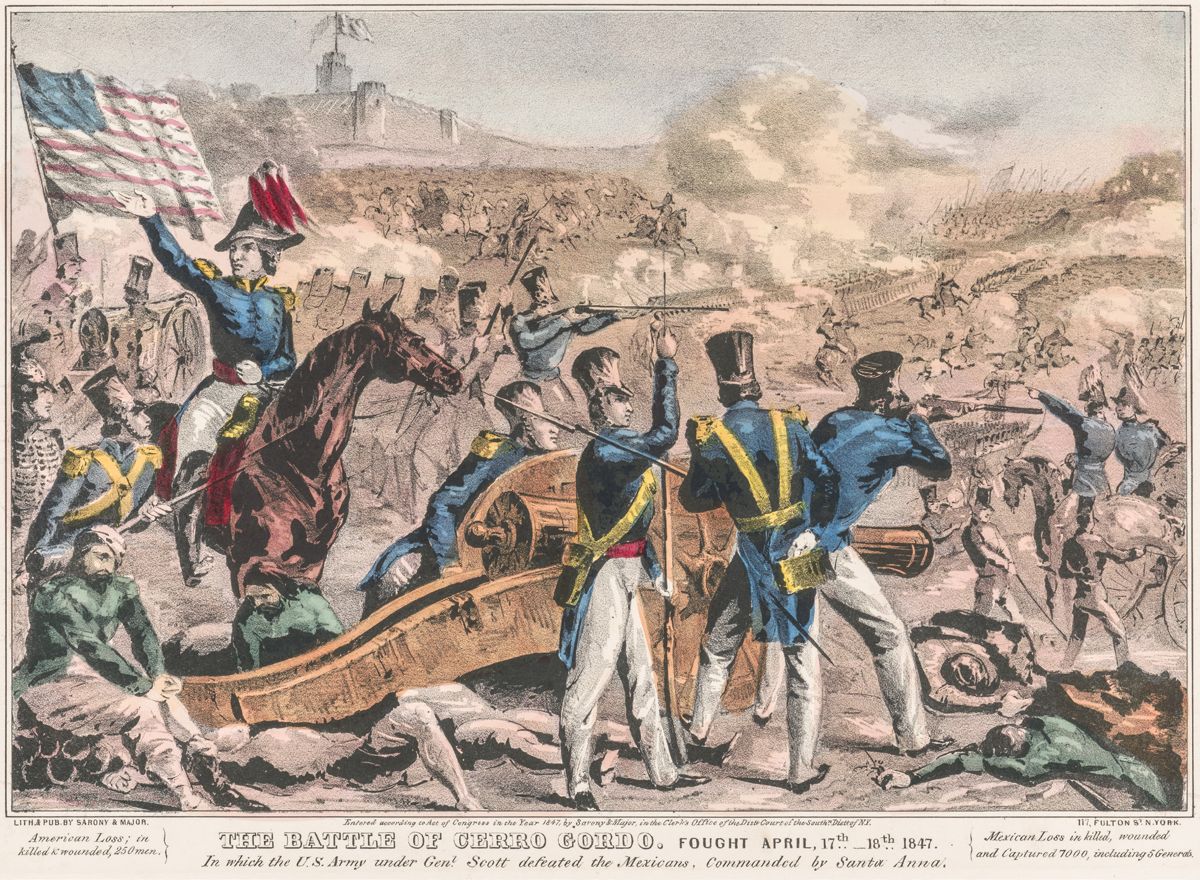
CivilWarNews.com with the task of blazing a trail through the rough terrain. The route was difficult, but a path was made. A force of infantry and artillery reached a position for assaulting the Mexican left. However, when this flank attack was made, McClellan was at the other end of the line, with four regiments of volunteers under Maj. Gen. Gideon Pillow, who had been ordered to make a diversionary attack on the Mexican right. Pillow’s attack was botched, but the main attack by two divisions forced a hasty and disorganized retreat. In his diary McClellan lambasted the inept “parcel of volunteers” and their commander, who displayed
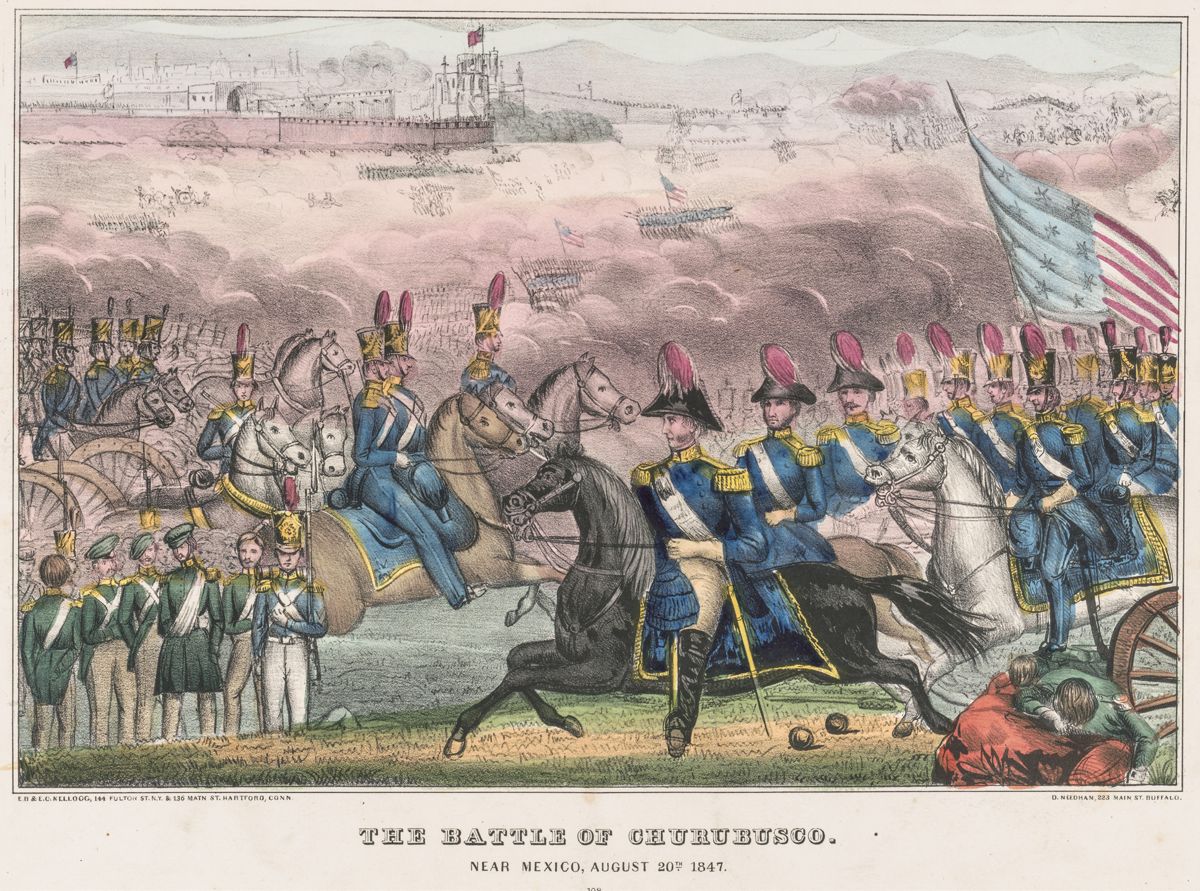
“worse than puerile imbecility.” After Cerro Gordo the army paused at Puebla. Many volunteers went home when their enlistments expired, so Scott had to wait for fresh troops. McClellan used the down time to study the earlier invasion of Mexico by Cortés. Soon he would continue along the route trod by the conquistadors. Starting in early August, the army headed west, severing communications with Veracruz and living off the land. Engineer McClellan became an artilleryman pro tem during the Battle of Contreras on August 19. The American troops trudged through the Pedregal lava field, following a rough path hastily made by the engineers and hundreds of laboring soldiers. As they approached the western end of this horrid landscape (described by Eckenrode and Conrad as “a plain of fire frozen into rock”), the troops were met by artillery fire from a fortified position. Pillow ordered two batteries moved into position to return fire. This order was conveyed by McClellan, who soon found himself in the midst of a lopsided artillery duel. As the Mexican guns took a terrible toll on the outgunned American batteries, Lt. McClellan assumed command of some guns when their officers were seriously wounded. He lost two mounts to enemy fire and was himself hit, but he suffered no serious injury and remained in action. The following morning American infantry flanked the Mexicans again, forcing another withdrawal. Here, at Churubusco, McClellan was again in action, taking part in an assault which drove the Mexican forces back. For his bravery and leadership, McClellan earned words of praise in the official report and a promotion. Next came the climactic attack on Chapultepec, the lofty fort protecting two causeways into Mexico City. At Chapultepec the temporary artillery commander went back to engineering, a job not necessarily less dangerous than artillery. On the night of Sept. 11 McClellan and the men he trained, under the direction of Capt. Robert E. Lee, laid out two batteries of siege guns. The following day, while under enemy fire, the engineers placed two more heavy batteries. After a 14-hour bombardment the infantry assaulted and captured the castle. The American troops pursued the retreating Mexicans toward the city. According to Sears, “McClellan and the engineer troops took the lead in the house-to-house fighting, breaking through the common walls with pickaxes” as they fought their way along the causeway. American forces took the city gates. The defenders evacuated the city on Sept. 14. After the American victory at Mexico City the fighting ended under the terms of a truce, which lasted until the Treaty of Guadalupe Hidalgo was signed. During the eightmonth occupation of the capital McClellan served as his company’s quartermaster. He enjoyed very comfortable quarters in a fine home owned by a highranking Mexican officer. During his off-duty hours he attended the opera, went sightseeing and
In addition to McClellan’s actions in the preparation for and during the fighting, some details not directly related to the battles may be of interest to the reader. One episode discussed by Sears is McClellan’s disappointment in not being ranked first in his class. To most people, I think, being number two at the United States Military Academy would be a source of great satisfaction. One would expect the secondplace man to offer the top man a sincere and comradely congratulations and keep any disappointment to himself. McClellan, however, thought he was the best and wrote to his family that he had “malice enough to want to show them that if I did not graduate at the head of my class, I can nevertheless do something.” McClellan showed no more aplomb when he was not promoted early in the war. He had asked his influential father to help him get a captaincy in one of the newly-authorized regiments of regulars. He lost out, and in a letter to his father displayed a fierce resentment, blasting a government so foolish as to be blind to his merit. He started at the top with Pres. Polk and then attacked the new regimental commanders, “deficients of the Mil. Academy, friends of politicians, & bar room blaguards.” Like most regular officers, McClellan had little regard for volunteer troops, political generals and the politicians back home who managed (or mismanaged) the war. Unlike most others, however, Bvt. Capt. McClellan, a month short of his 21st birthday, gave his U.S. senator the benefit of his views. In an intemperate letter, he expressed disgust at a government that passed over professionally trained officers in favor of men taken from “county courthouses, & low village bar rooms.” One episode in Sears’s biography especially caught my attention. In his final year at the Military Academy the cadet happened to encounter an acquaintance of his father’s. The man called the 19-year-old cadet by his first name, causing great offense. In a letter home, the indignant son informed his mother that he had made it very clear to the man that, to him, he was not “George,” but “Mr. McClellan.”
had a romance with a señorita. He also visited the Aztec Club, a place where he would “meet none but gentlemen,” he assured his mother in a letter. Like most of the young American officers in the Mexican War, McClellan performed well. In Sears’s assessment McClellan’s “personal courage had been amply demonstrated. In the Vera Cruz siege and at Cerrro Gordo and the battles for Mexico City he had done his duty and more, often under severe enemy fire; Chapultepec, in fact, would earn him a second brevet promotion, to captain.” However, McClellan was aware that his role as a junior officer in this affair was a minor one. He was somewhat embarrassed by the attention he received upon his return to Philadelphia, where prominent citizens made a fuss and presented him with a ceremonial sword. McClellan wrote that “it actually causes a kind of feeling of shame to rise in me this being rewarded for doing a subaltern’s duty in such a small business.” In June 1848 Capt. McClellan left the señorita, the Aztec
Club and Mexico, and with the Company of Engineer Soldiers headed for West Point. He remained in the army for nearly a decade. He resigned in 1857 to go into the railroad business. In this field McClellan proved to be a highly capable executive. He missed the army however, and longed for a more exciting career. He would have his chance beginning in April 1861. * The malaria parasite was transmitted by the “musquitoes” that McClellan had mentioned in the letter to his sister, but this fact was not known at the time. Gould Hagler is a retired lobbyist living in Dunwoody, Ga. He is a past president of the Atlanta Civil War Round Table and the author of Georgia’s Confederate Monuments: In Honor of a Fallen Nation, published by Mercer University Press in 2014. Hagler speaks frequently on this topic and others related to different aspects of the Civil War and has been a regular contributor to CWN since 2016. His email is [email protected].