
The Vermont Brigade at the Wilderness
Originally published April 2023 · pp. 14–15
The Vermont Brigade at the Wilderness Few brigades, Union or Confederate, sustained the numbers of casualties and encountered the trying situations that the Vermont Brigade suffered while fighting on the battlefields that the Central Virginia Battlefields Trust works to preserve. Green Mountain State men fought at Fredericksburg in December 1862, and at Second Fredericksburg during the Chancellorsville Campaign. In the late fall of 1863, they participated in the Mine Run Campaign. At Spotsylvania Court House, the First Vermont Brigade, as they were sometimes known, had three regiments that participated in Col. Emory Upton’s May 10, 1864, attack on the Mule Shoe, and then battled again on May 12 and 18. Above all those engagements, it was the Vermont Brigade’s participation in the Battle of the Wilderness that stands out as probably their most difficult test. The Vermont Brigade formed in fall of 1861, under the charge of native son, William F. “Baldy” Smith. For the majority of the war the respected unit consisted of the 2nd, 3rd, 4th, 5th, and 6th Vermont Infantry regiments. For a time in 1862 and 1863, the orphaned 26th New Jersey fought with the Vermonters, but by the summer of 1863, it was back to an all Vermont brigade. The 1st Vermont Heavy Artillery joined the unit as infantrymen during the fighting at Spotsylvania Court House and stayed with it through the end of the war. By the time of the Battle of the Wilderness, the Vermont Brigade had already earned a reputation for combat prowess and toughness on the march. Their grit came partly through solid leadership and desperate trials by fire at Williamsburg, and then during the Peninsula Campaign, especially at Savage’s Station in the Seven Days’ Battles. Largely unengaged at Antietam and held in reserve at Gettysburg, they fortunately missed the worse of those two monumental clashes. In August 1863, they were among the troops ordered to New York City to guard against, and suppress, the draft riots. After several months spent in their Culpeper County winter quarters, all was hustle and bustle on May 4, 1864, as the Vermont Brigade broke camp and headed off on another campaign, this time under a new overall commander, Lt. General Ulysses S. Grant. Detached from the Sixth Corps, the Vermont Brigade and the other two brigades from Maj. Gen. George Washington Getty’s Division, stopped briefly at Wilderness Tavern, but received orders to quickly move forward to the intersection of Orange Plank Road and Brock Road. There the Vermonters saw Confederate infantry brigades moving in their direction and pushing the Federal cavalry. Fighting in the
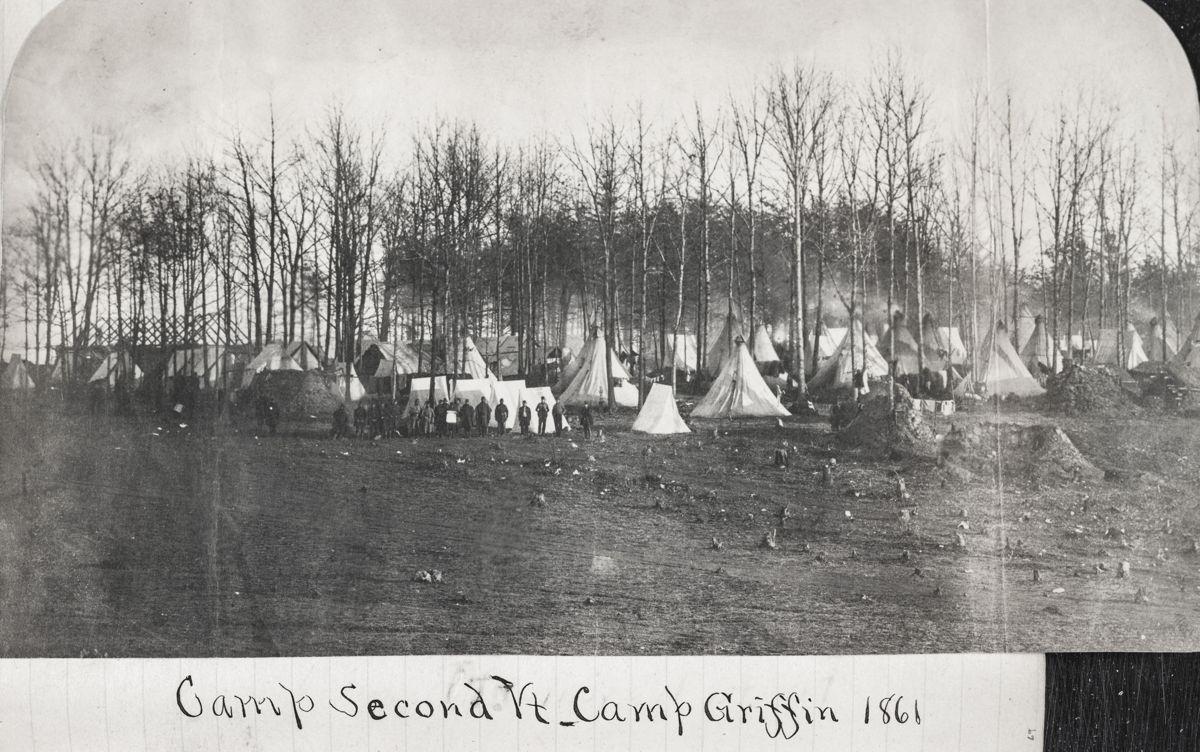
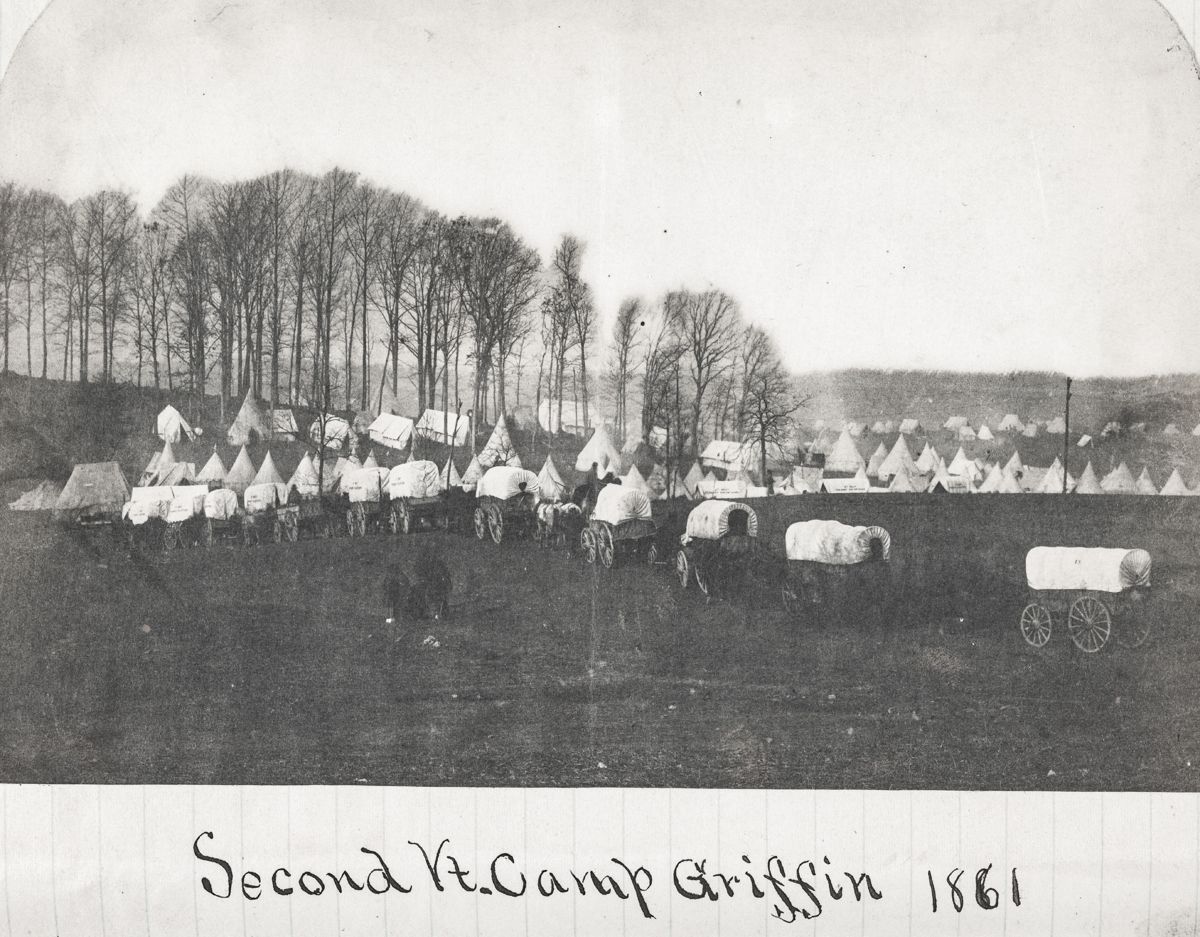
The original regiments of the Vermont Brigade were organized in 1861. Shown here are two camp views of the 2nd Vermont early in the war. (Library of Congress)
dense woods limited artillery to the roadway. Some Federal infantrymen started building improvised breastworks, but the Vermonters soon received an order to attack. Moving forward in battleline, the landscape made communication difficult. Col. Lewis Grant, commanding the brigade, noted in his official report that, “The ground was covered with brush and small timber so dense that it was impossible for an officer at any point of the line to see any other point several yards distant.” The Vermonters fired a volley and then “hugged the ground as closely as possible, and kept up a rapid fire; the enemy did the same,” Grant reported. It was as if lead was flying from smoke shrouded trees fired by ghosts
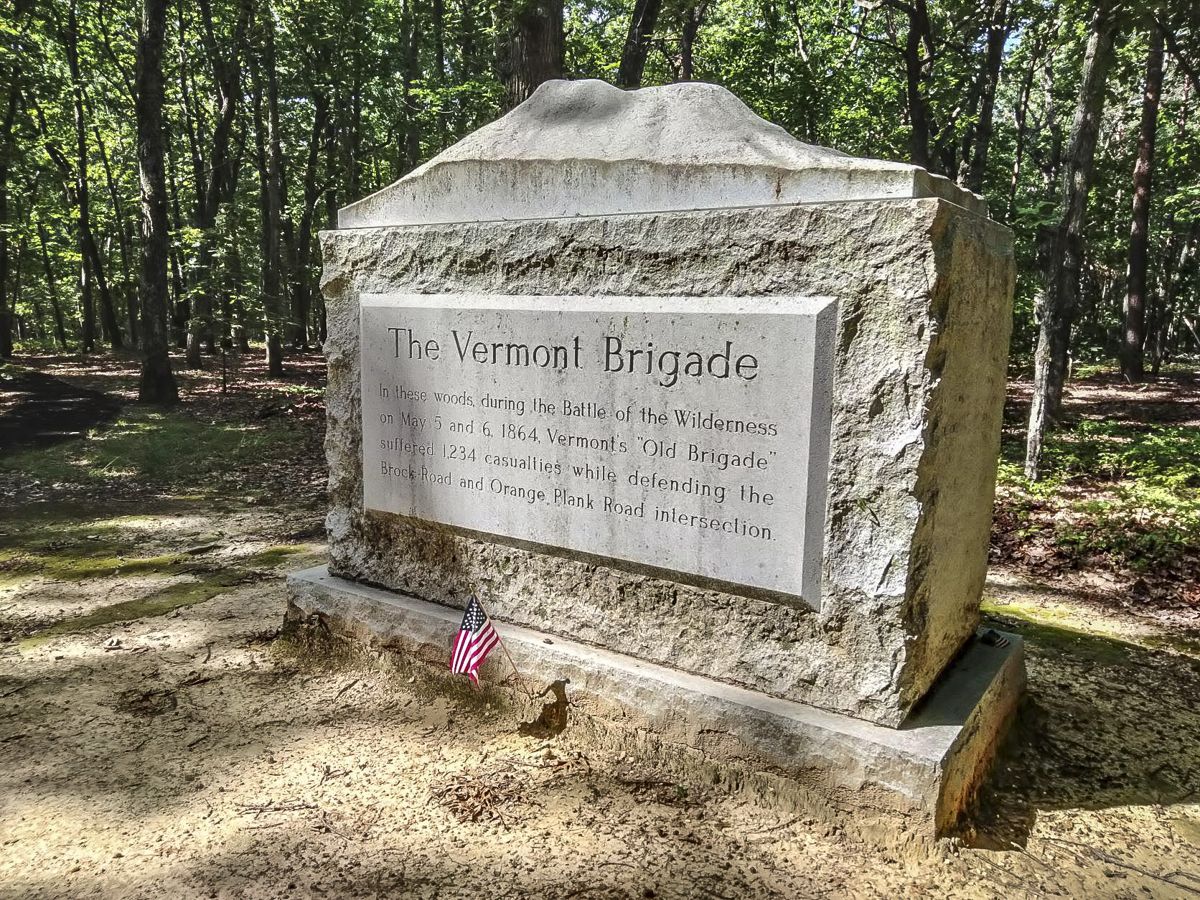
The Vermont Brigade’s heroism at the Battle of the Wilderness is honored by a monument where they encountered some of their hardest fighting. (Tim Talbott)
Lewis Addison Grant served as the major, lieutenant colonel, and colonel of the 5th Vermont before becoming the commander of the First Vermont Brigade. (National Archives and Records Administration)
CivilWarNews.com instead of from Confederate rifles. The Vermonters started falling by scores. Col. Grant tried to dislodge the Confederates, “but the moment our men rose to advance the rapid and constant fire of musketry cut them down with such slaughter that it was found impracticable to do more than maintain our then present position,” he explained. They held firm. After receiving support from three II Corps regiments, Col. Grant, noting a potential weakness in the Confederate line, asked the 5th Vermont to try to break it. Their major responded, “I think we can.” The line went forward and was partly successful, but support troops “were thrown into some confusion” and went to the ground. The 5th Vermont outpaced its help and soon had to hit the dirt, too. With their ammunition nearly exhausted, II Corps units relived the Vermonters, who retired to their previous Brock Road position when darkness mercifully halted the fighting. The Vermonters had fought for about five hours. Getty’s brigades, and particularly the Vermont men, had helped plug the gap A. P. Hill’s Confederates were making, and then held it until the II Corps was able to get into position. Their effort was at a fearful cost. Col. Grant explained that, “One thousand brave officers and men of the Vermont Brigade fell on that bloody field. Was the result commensurate to the sacrifice? Whether it was or not the battle once commenced had to be fought.” Regardless of whether the II Corps had been able to hold its own, “the enemy would have secured the important position and completely cut off that corps from the rest of the army,” if the Vermonters had not acted Grant noted. May 6 brought additional combat for the Vermont Brigade as it attacked along with the II Corps and successfully pushed A.
P. Hill’s Confederates out of their improvised earthworks. However, James Longstreet’s Corps arrived on scene in the nick of time and counterattacked, forcing the Federals back toward Hill’s old position now occupied by Grant’s Vermont men. The brigade commander noted, “Perhaps the valor of Vermont troops and the steadiness and unbroken front of those noble regiments were never more signally displayed.” Taking tremendous casualties again, the Vermont men were fortunately relived by II Corps reinforcements that arrived to relieve the pressure. According to one historian’s count, the Wilderness cost the Vermont Brigade 1,234 casualties, almost half of its men. The Vermont Brigade went on to earn more laurels at Cold Harbor, Petersburg, and the Shenandoah Valley. The Vermonters returned to Petersburg, where on April 2, 1865, they led the assault that broke the Confederate defensive line, and precipitated the surrender at Appomattox a week later. CVBT has helped save over 220 acres of Wilderness battlefield land.
The mission of CVBT is to preserve land associated with the four major campaigns of: Fredericksburg, Chancellorsville, Mine Run, and the Overland Campaign, including the Wilderness, and Spotsylvania Court House. To learn more about this grassroots preservation non-profit, which has saved over 1,700 acres of hallowed ground, please visit: www.cvbt.org. Tim Talbott is the Chief Administrative Officer with the Central Virginia Battlefields Trust.