
Confederate Uprising on the SS Maple Leaf
By Joe Wilson · Originally published September 2022 · pp. 32–33
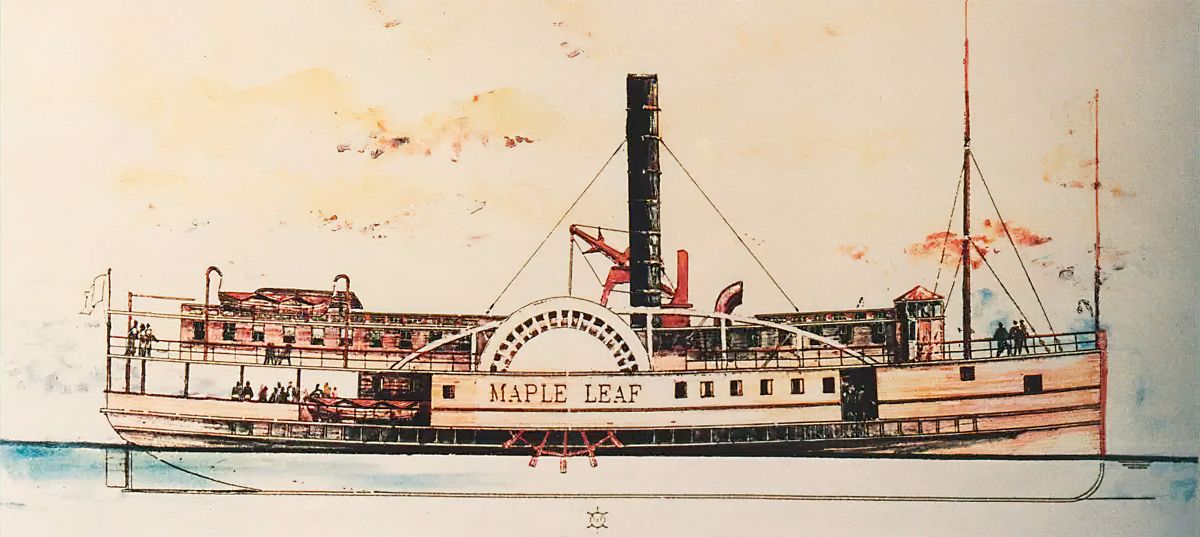
Fifty Confederate officers marched out of a Union prison in New Orleans on June 2, 1863, and boarded the SS Cahawba waiting in the harbor. A jovial mood permeated the deck of the steamer as the prisoners knew freedom waited at the end of the voyage. At City Point, in Hopewell, Va., the Southern captives would be exchanged and free to rejoin their units and get back in the fight. At least that was the expectation. A 200 man detail from the 6th New York Infantry under Colonel William Wilson guarded the prisoners. Known as Wilson’s Zouaves, the Yanks were just as eager to set sail as the prisoners. The Sixth had served their time and were headed for New York to muster out of service. After weighing anchor, the Cahawba glided out of the harbor with a festive atmosphere on board not typical of the usual prisoner transport. Any prospect of trouble wasn’t expected from captives about to be set free. Guards and prisoners on the steamer mingled and talked freely. Both groups enjoyed the six-day voyage to Fort Monroe, Virginia. From Fort Monroe they were to proceed up the James River for exchange at City Point. Gouverneur Morris of the 6th NY later wrote, “These gentlemen the sixth found a very pleasant lot of fellows, and as it is much pleasanter to drink and exchange yarns with a man than to shoot at him, the officers and men got on the best of terms with their friends the enemy.” In a few days the pleasantries would quickly sour for one group. Fortress Monroe in Virginia came into view on June 8 as the Cahawba steamed into the harbor. The prisoners left the Cahawba and spent the night on an old troop ship. Still basking in the prospect of their coming freedom, the thankful Confederate officers presented a rather unusual resolution to Colonel Wilson that read: “Resolved, that we tender our gratitude and thanks to Colonel William Wilson, his officers, and his men of the 6th NY Volunteers, for their kind and courteous treatment received at their hands during our passage from New Orleans to Fort Monroe.” Next morning, June 9, the Confederates boarded the SS Maple Leaf for the last leg of the trip to freedom. Captain Henry W. Dale skippered the ship along with three mates and a crew of 30 men. First, the steamer stopped at nearby Fort Norfolk just below Fort Monroe to pick up more prisoners. She dropped anchor for the night still holding a cheerful bunch of officers. In the morning, 47 more officers boarded the Maple Leaf and joined the prisoners from New Orleans. The 47 officers brought the total of Confederate prisoners to 97. Shocking news came aboard with the Norfolk officers that the men from New Orleans had not yet learned. At first, cordial pleasantries took place between the Confederate officers. The casual banter soon turned to anger among the prisoners from New Orleans when the Norfolk men revealed that prisoner exchanges had been halted. Thoughts of freedom vanished with all prisoner swaps being terminated. The new destination was the Union prison at Fort Delaware. Hostility among those held at Fort Norfolk had been festering for days since hearing the bad news. Now, the resentment took hold in the New Orleans group who felt betrayed by the Federals. Tempers flared among prisoners eagerly looking forward to gaining their liberty. Prisoner
Captain John U. Green wrote of his disappointment, “It would be difficult to describe our feeling.” The journey up the James River fell by the wayside. Instead of exchange at City Point, the Maple Leaf charted a new course for Fort Delaware. A future clouded with uncertainty hung over the entire group. Long term confinement at Fort Delaware till the war ended now seemed a distinct possibility. Trading one prison for another wasn’t acceptable to the disgruntled officers. After being so close to freedom, the officers believed the arrangement so abruptly put in place by the lying Yankees was a deception. Many prisoners from Fort Norfolk had been recently transferred from Fort Delaware to Fort Norfolk for exchange. Now, they were going back. A return to Fort Delaware brought even more disappointment for men who thought they saw the last of the filthy island prison. The afternoon of June 10, 1863, the Maple Leaf steamed for Fort Delaware with the 97 officers on a trip where the mood on board stood in stark contrast to the gaiety experienced on the voyage from New Orleans. Men on board the Maple Leaf once again saw the Yankees as their enemy. Any friendly conversation enjoyed previously with their captors vanished. Unlike the trip from New Orleans, when 200 men guarded the prisoners, only a 12-man guard detail commanded by Lt. William Dorsey from the 3rd Penn. Heavy Artillery guarded the prisoners bound for Fort Delaware. It was thought that miles of surrounding ocean offered a natural barrier to thwart any escape. A smaller detail of guards seemed to be sufficient for guarding prisoners on the open sea. That miscalculation didn’t take into account the rage
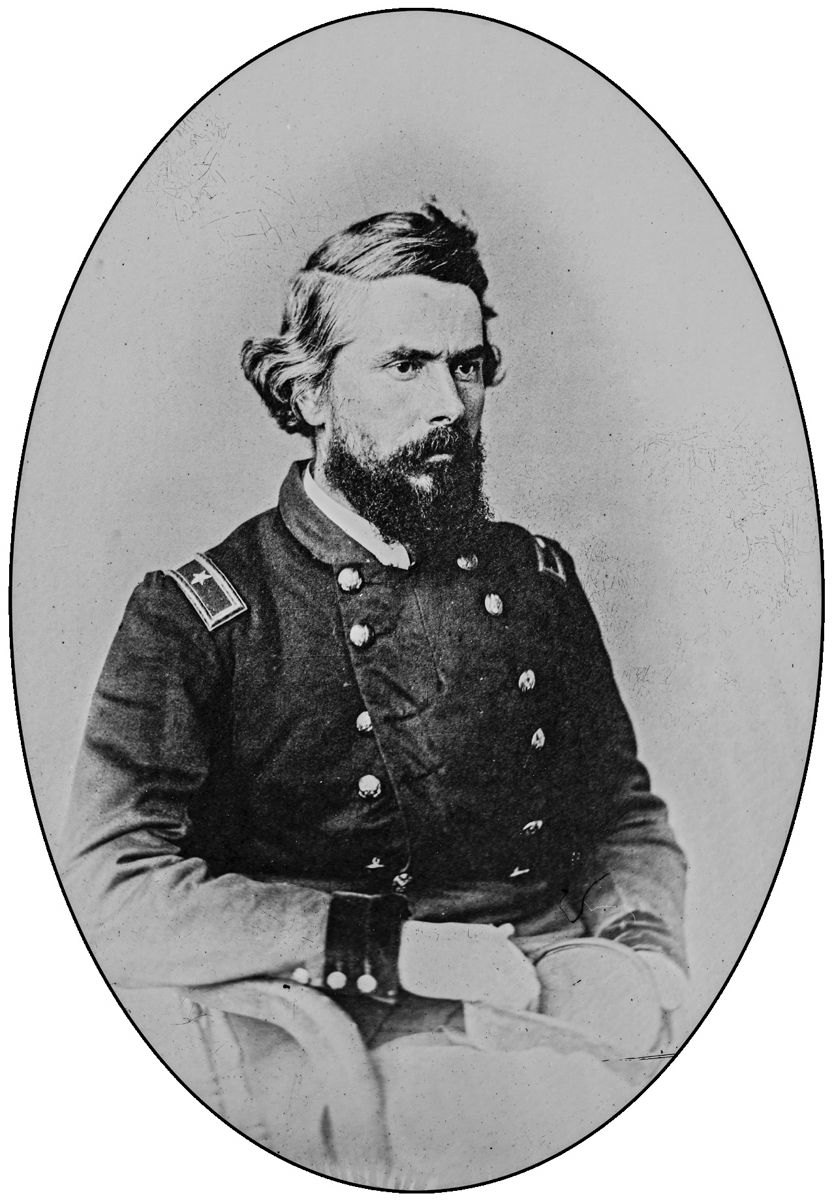
Captain Emelius W. Fuller. (WikiCommons) festering in the officers who by nature of their rank naturally had a disposition for planning. Preparation for hatching a plan soon emerged among the officers. Leading the group, Captain Emelius W. Fuller surveyed the situation. Fuller immediately called for a council to lay out a plan. With Fort Delaware so near, Fuller needed to devise a plan quickly. A scenario for returning to “Dixie Land” took precedent. It was clear that Fort Delaware wasn’t going to be a part of their future. Captain Fuller had commanded Confederate gunboats and gained much respect from Admiral David Farragut in their confrontations. Another leader of the plot was Captain Oliver Semmes, son of Admiral Raphael Semmes. Oliver’s famous father commanded the CSS Alabama. Newspapers in the north often referred to Oliver Semmes as “the son of the rebel pirate.” The Maple Leaf steamed off the Virginia coast with the Federals never suspecting that 97 irate officers of the Confederacy had other plans for their journey. The southern officers had free range on board the ship. One affable officer, Captain Eugene Holmes, made quick friends with the ship’s captain and his officers. Captain Dale and his mates allowed Holmes easy access to the pilot house for casual and mundane conversation. Holmes had another motive. Captain Holmes engaged the unsuspecting crewmen in mindless talk while he focused entirely on the ship’s bell. It was decided that the bell offered the best opportunity for a signal that could be heard all over the ship. After three taps of the ship’s bell, the free roaming Confederates would overpower the guards. Holmes had his assignment. The other scheming Confederates took their places around the guards they were assigned to subdue when the bell rang. Men assigned to each guard waited for the bell. Once the bell rang out, the officers would spring into action. Two hours out of port, the ship passed the Cape Henry Lighthouse. Captain Holmes made his way to the pilot house to engage Captain Dale. Around 5:30 p.m. the ship’s bell rang out three times over the sound of the ship’s churning engine. After the bell rang, the rousing rebel yell punctuated the air. All hell broke out on board the Maple Leaf. Butternut clad men wrestled with the boys in blue for control of their muskets and the ship. The fight didn’t last long. Confederate Captain Richard Seckel remarked, “I had my man subdued after the first ring of the bell.” The surprised guard detail, along with their Yankee officer, went from captors to captives in an instant. Armed Confederates introduced Captain Emelius Fuller to Captain Dale as the new
Captain of the Maple Leaf. Being a navy man, Fuller had no trouble operating the ship. Captain Fuller turned the ship around and headed south past the Cape Henry Lighthouse once again. Now firmly in control of the ship, men celebrated by raiding the pantry and stores of liquor on board. Lt. Dorsey, commander of the disgraced guard, knew his career just ended. With the Confederates in command of the Maple Leaf, Captain Fuller summoned Captain Semmes and a few senior officers to a meeting to decide what came next. Some on board wanted to sail to the friendly confines of Nassau. A shortage of coal and the threat of blockading Union ships ended that conversation. It was decided to flee on foot. Not all the prisoners wanted to leave the Maple Leaf. A total of 27 of the 97 on board decided to stay with the ship. Many still carried wounds that prevented an arduous journey on foot. Included among the wounded was Captain Fuller who remained with the ship. A few others wanted to honor an oath they had taken earlier not to escape. Fuller conned the ship to a point a half mile off the Outer Banks close to the North Carolina border. As the sun faded on June 10, the 70 officers went ashore in the Maple Leaf’s lifeboats leaving the ship back in Yankee hands. Out of respect for 27 officers remaining on board, the escapees didn’t scuttle the Maple Leaf. Setting the ship on fire would’ve surely offered better odds of success for the fleeing former prisoners. With the mutineers gone, Captain Dale took back command of the ship and had Fuller locked up. Despite a promise to go directly to Fort Delaware, Dale promptly returned to Fort Monroe that night. For reasons known only to Lt. Dorsey, the humiliated commander of the guard waited till next morning to notify his superiors. Colonel William Ludlow, acting commander at Fort Monroe, promptly directed officials in Suffolk and Norfolk to send out search parties to track down the southerners. Union cavalry from the 7th NY set out immediately to recapture the rebels. Landing on the Outer Banks portion the North Carolina coast left the escapees with a formidable challenge. Once on shore, the men elected Captain Semmes their leader. Far from being in the clear, the Confederates stood on the shores of the Outer Banks with Currituck Sound separating them from the mainland. Semmes led the group south along beach of the Outer Banks into North Carolina. Luckily, they ran into Southern men boiling down sea water for salt, who agreed to ferry them across Currituck Sound. On the mainland the Rebel fugitives remained in Yankee held territory with the Confederate lines still 60 miles away. Semmes and his band of escapees wisely moved by night to evade the hundreds of cavalrymen scouring the area. The Union search parties had the advantage of being on horseback, while the southerners travelled on foot. Still 200 miles from Richmond, they had to traverse the Dismal Swamp, cross numerous rivers, and many miles of woodlands. To reach Richmond, the group would need plenty of help. The good women of the south came to the fore. Many local women had men fighting for the Confederacy. Aiding the escaped prisoners offered the ladies an opportunity to do their part. Food and drink came by the cartful. One loyal southern woman whose husband was away fighting for the Confederacy introduced Semmes to Captain Willis Sanderlin, a local Confederate partisan. Sanderlin knew the area well and steered the group away from the roving bands of Yankee cavalry. Captain Sanderlin made it his mission to guide the men all the way to Richmond.
Spending time in the Dismal Swamp wasn’t comfortable, but the wetland offered a bit of protection only a swamp could provide. Moving out of the swamp brought the first obstacle. The Pasquotank River proved much too deep for fording. Fortunately, Lt. Sanderlin had boats hidden away for maneuvering in Yankee territory. His Home Guard safely brought the men across the river. Every halt along the route seemed to bring out a welcoming committee. Locals all along the way furnished the wayward rebels with food, drink, and any needed medical supplies. At some point, Semmes decided to break the seventy men into three groups. All headed for the Seaboard and Roanoke Railroad. Once beyond Yankee lines, some men came upon Confederate cavalry who escorted them to the rail junction. All three groups reached the rail line at different times the same day. Once on board the train, spirits soared as the train carried the victorious men to freedom. For over a week they had foiled the Union cavalry. At Weldon, the newly free Confederates transferred onto the Petersburg & Weldon Railroad that carried them to Petersburg. On June 22, the last leg was on Richmond & Petersburg line that carried them to Richmond. When the train pulled into the station, many turned out to welcome the adventurers who bested the Yanks on the sea and land. Back pay lined the pockets of the men enabling them to stay at the luxurious Spotswood Hotel for drink and a welcome bath. Accompanying the group all the way to Richmond was the celebrated Partisan Ranger, Captain Willis Sanderlin. For his role, the officers presented Sanderlin with a fine new Colt revolver. The Confederates spared the Maple Leaf from destruction on June 10. She continued sailing eight more months until the ship’s career abruptly ended when she struck a mine on the St. Johns River, 12 miles above Jacksonville, Fla. In the early morning of April 1, 1864, the flagship of General Truman Seymour struck a Confederate mine and sank into the river. Over fifty souls escaped the steamer but four men died when the mine exploded. Because of the thick mud in the river, a plethora of preserved artifacts were preserved; some have been salvaged with the support of the State of Florida. The Jacksonville Museum of Science and History now exhibits an impressive array of the Maple Leaf’s artifacts. The epic adventure garnered little attention in history books as the escape took place among some of the more famous chapters of the Civil War. On the same day the rebel officers boarded the Maple Leaf, the largest cavalry battle of the war took place on June 9 at Brandy Station. Not long after the cavalry clash, General Robert E. Lee invaded Pennsylvania in the epic Gettysburg Campaign. Almost a month after the escaping officers left the Maple Leaf, Vicksburg finally fell to General Grant. Newspapers had many other stories to fill their pages. The officers who seized the Maple Leaf and outwitted the Yankee cavalry had a fantastic yarn to spin for many years at reunions long after the war. The little-known story is one of the most extraordinary tales of the Civil War. Joseph F. Wilson lectures on Andersonville Prison and Walt Whitman in the Civil War. The author also produced the documentary film “Civil War Prisons – An American Tragedy” now available on Amazon. Contact – [email protected].