
“We Can Defeat Them at Any Point”
By Bruce Allardice and Wayne Wolf · Originally published October 2022 · pp. 32–33
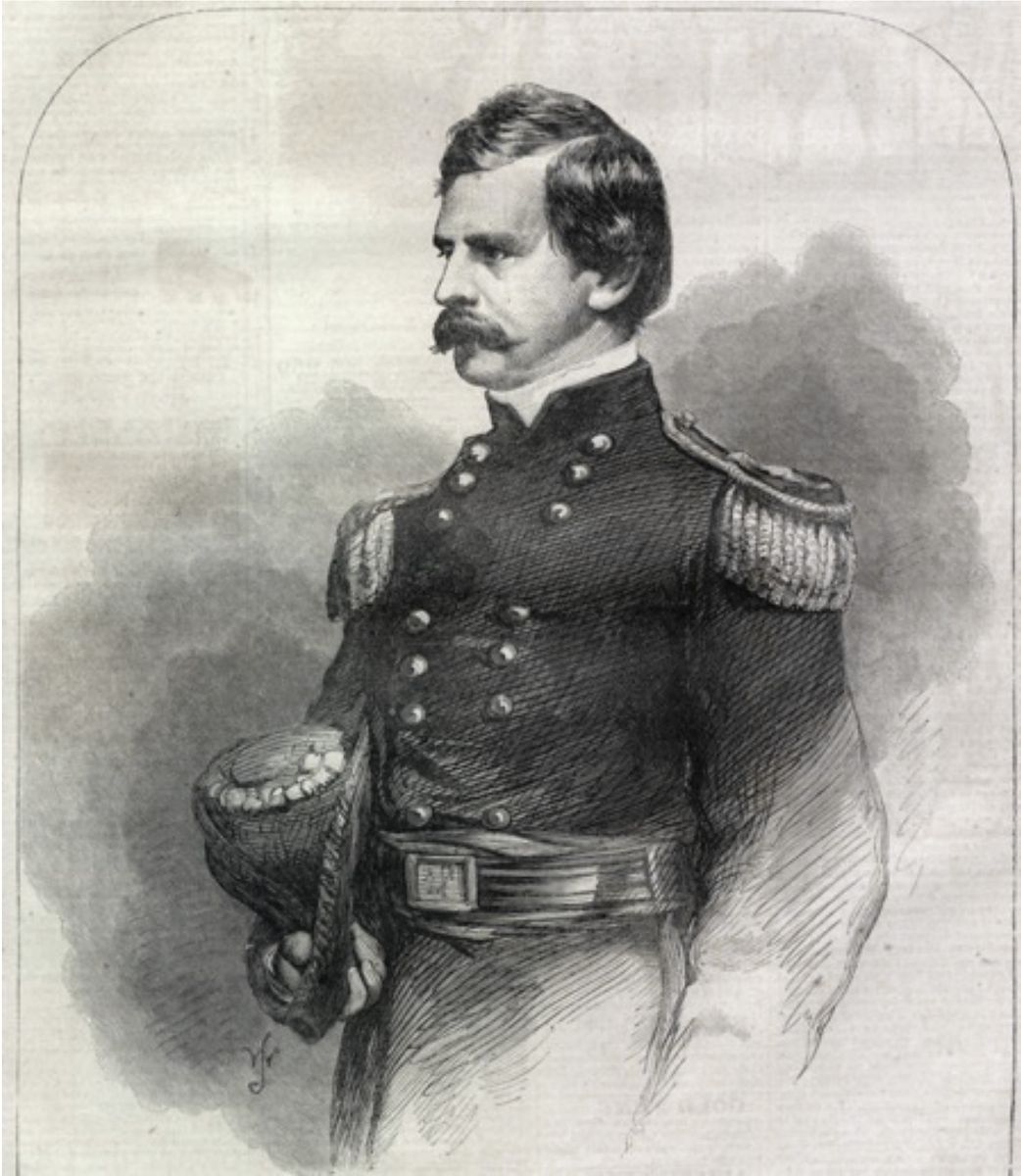
“Headquarters, Department of the Shenandoah New Market, VA May 2, 1862 By Bruce Allardice and Wayne Wolf In early May 1862, General Nathaniel P. Banks exuded optimism about an early end to the Rebellion. What follows is an important letter from Gen. Banks to Sec. of War Edwin Stanton outlining his strategy for maneuvering his troops in the coming campaign. Banks was dissatisfied with having to remain in the Shenandoah Valley because, in his estimation, it was a backwater, while others were sharing the glory of capturing Richmond and ending the Rebellion. In flowery language, in keeping with his political background, Banks offered some sound analysis of what the Union armies should do, but showed complete ignorance of the intentions of Stonewall Jackson and the Confederate Army. In this letter Banks estimated the Confederate available force in the area as 20-21,000, which was not far off. This contrasts with McClellan’s panicky overestimates of the forces opposing him near Richmond. Banks’ guesses about enemy intentions was wildly off. In his letter Banks believed that Confederate intentions were strictly defensive; in fact Jackson, far from retreating, was then making his famous moves to attack both Fremont and Banks.
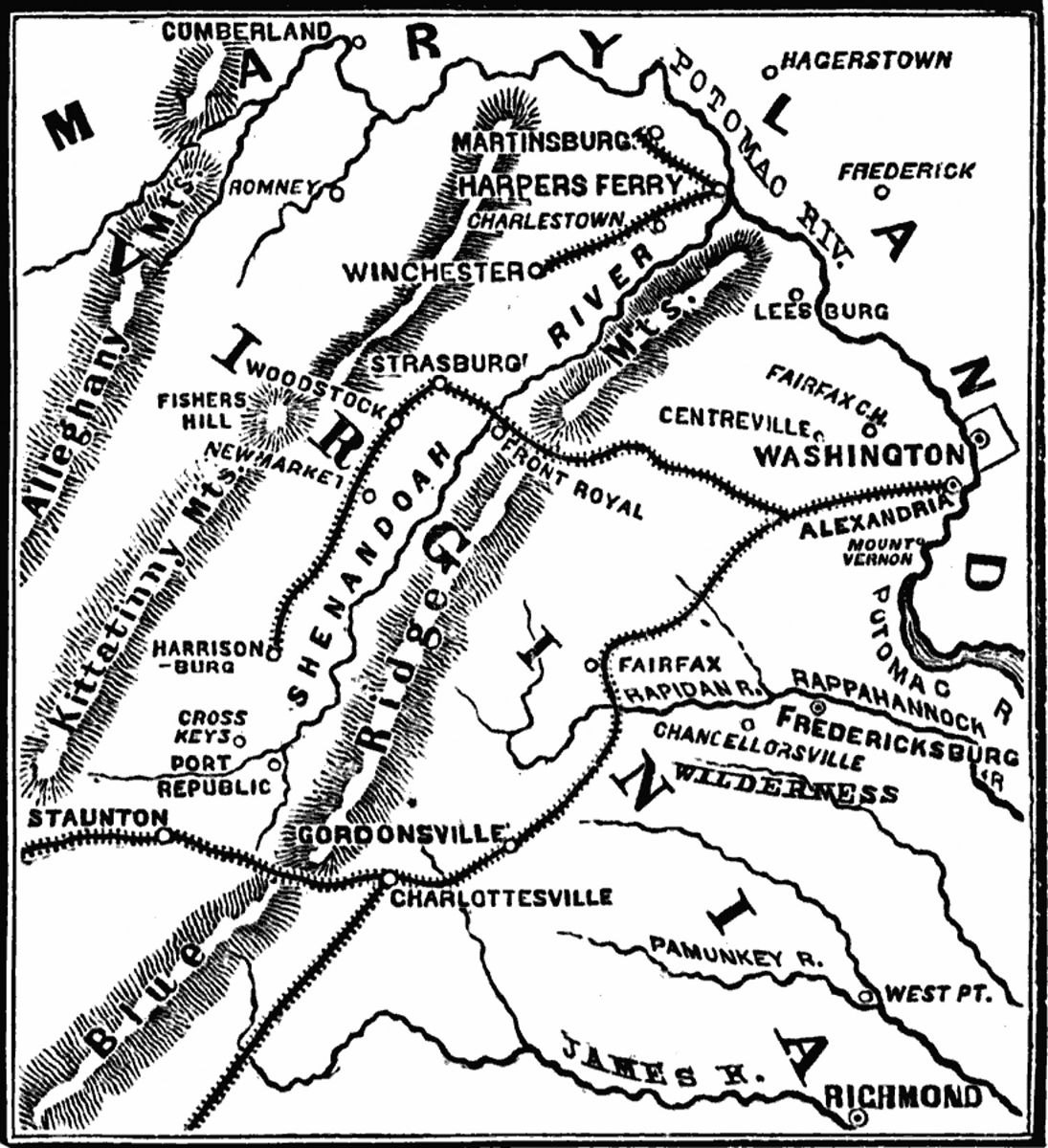
To the Honorable E. M. Stanton, Secretary of War The Dispatch of the Honorable Secretary of War, dated—, in which he suggests that inquiry whether my command may not separate itself by too great distance from our supplies, and adds that the President does not desire that a further advance be made at present, has led me to believe that I might, without impropriety, make a more full statement of our situation, than my daily telegraphic reports admit. I do this with some hesitation, lest the conclusions I present might seem to be based upon more limited and partial views, than those obtained by the Department, or the President, in their daily survey of the whole field of action. The only change that has occurred in the position of affairs since the date of the dispatch referred to, is the feeble attempt of the enemy to concentrate his forces at some practicable point. These forces, so far as can be ascertained, consist of Jackson’s army about 8,000, Ewell’s division, 8,000 now near the Shenandoah, and Johnson’s force, 4 to 5,000 near Staunton. If concentrated, their forces may reach 20 to 21,000 men, much demoralized and weakened by daily desertions; their purpose will be doubtless to oppose our advance, either by way of
Staunton or Gordonsville. But our force is more than equal to theirs, and we can compel them to retreat or defeat them at any point they may select for battle. This force disposed of, which is a condition precedent to any future movements, I believe may be justly assured as substantial matter of fact; 1st the duty assigned to the Fifth Corps D’Armie in the Valley of Virginia is completed;
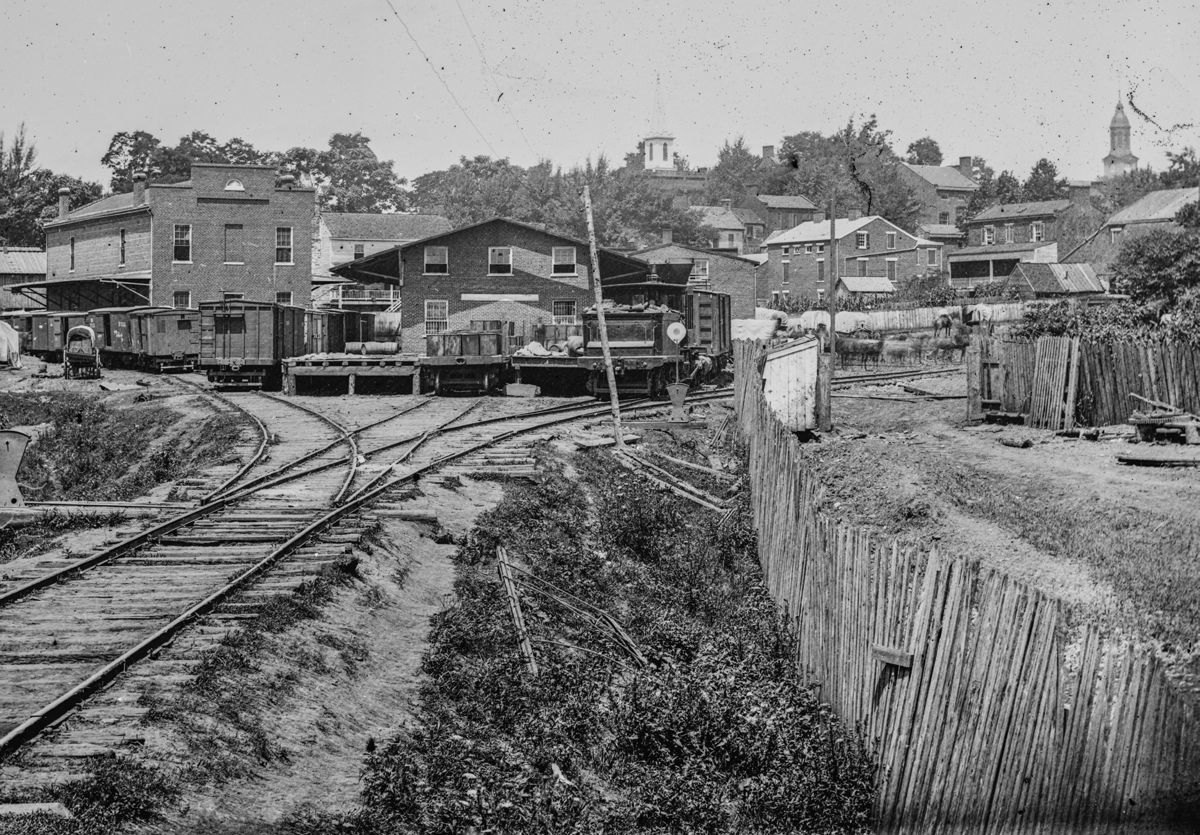
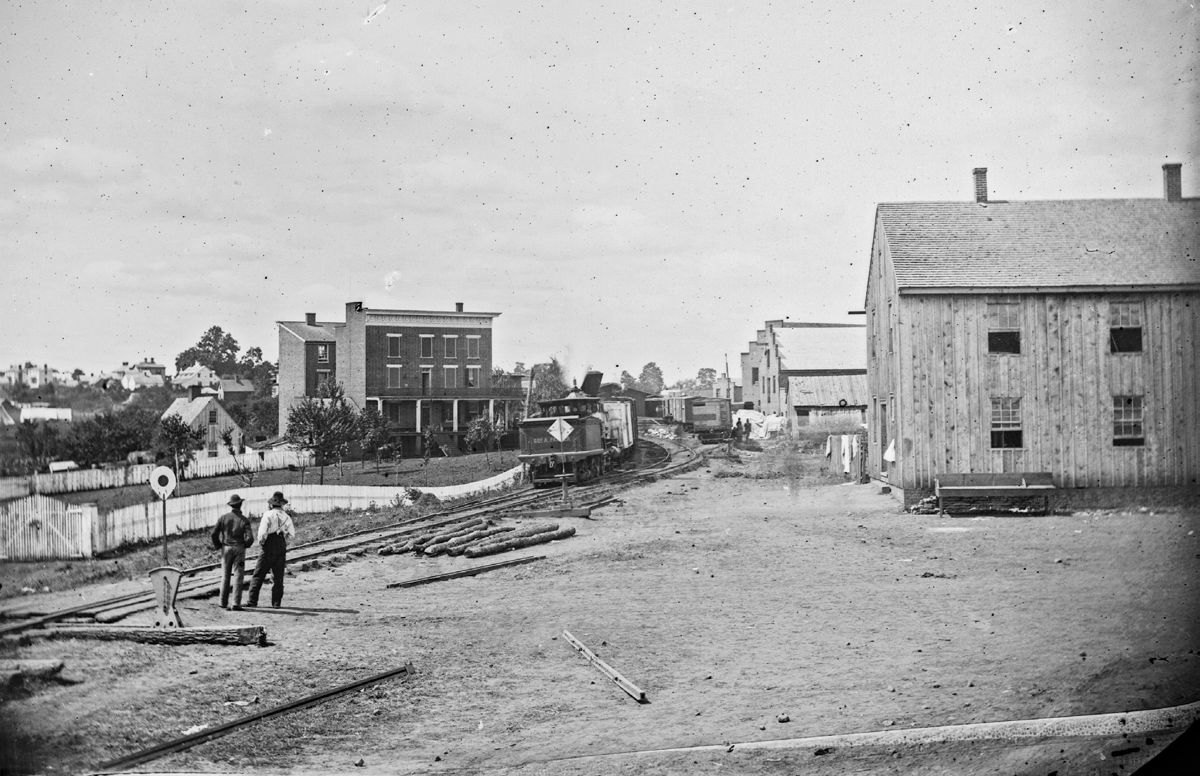
2nd that no permanent force is further required south of Strasburg, which communicates with Alexandria and other lines by the Manassas Gap Railroad, and when fortifications have been One week after this report, President Lincoln ordered Banks to withdraw to Strasburg and to send part of his force east to McDowell. Two weeks after that, Stonewall Jackson attacked and routed Banks’ weakened army at the first Battle of Winchester. Endnotes: 1. Original at John L. Nau III Civil War History collection, Albert and Shirley Small Special Collections Library, University of Virginia. 2. Robertson’s Stonewall Jackson estimates the combined force at 17,000 men. 3. Cf. The Official Records, vol. 12 part 3, pages 111, 112, 118.
On April 30 Banks reported to Washington that “Jackson is bound for Richmond. This is the fact. I have no doubt.” 4. The Stanton dispatch Banks responded to, dated April 26, 1862, is in OR 12:3, pp. 106-107. 5. Edward Bissell Hunt (1823-63). Bruce S. Allardice is Professor of History at South Suburban College in Illinois. He is a past president of the Civil War Round Table of Chicago. Wayne L. Wolf is past president of the Lincoln-Davis Civil War Roundtable. constructed under the direction of Capt. Hunt of the engineer corps, so that a comparatively small force will be able to protect all north of that line. Once expelled from the Valley there is nothing to induce the return of the Rebels, unless it might be the presence of an inferior force in the Upper or Southern part of the Valley, which they might be able to overthrow. And thus hope to strengthen their sinking cause, by an otherwise barren victory. With Fremont’s force on the right and my own on their left they could not advance as far north as Strasburg without certain destruction. The people of the Valley south of Strasburg though not altogether loyal, are not hostile. They are uncertain and confused as to the future and doubtful yet as to the success of the government over them that they have accustomed to consider invincible. But they are not hostile. This is best shown by the fact that not a single instance of individual violence against us [i.e, guerilla warfare] has occurred on the part of any person not of the Rebel army. The telegraph has not been disturbed nor a bridge burned— not an article of property stolen or destroyed, not a horse maimed and no unreasonable complaints of the inevitable exaction of the army, nor even of the cruel depredations by the marauding thieves that follow its march. In addition to this, I add that their young men desert the enemy in hundreds, accept the oath of allegiance without scruple, and they the people, render every service required of them readily, and most earnestly desire peace. I see plainly the ultimate solution of our difficulties so far as the people of this part of Virginia are concerned. They are deluded people, incredulous of the overthrow of those who have ruled them so long, but not in themselves hostile to the government of the United States. This, of course, refers to those remaining at home and a large class who have been impressed into the service. Upon these grounds I assume that no considerable force is require south of Strasburg—and if any remain in the southern part of the Valley it should be so strong as to afford [sic avoid] attack by the enemy. These views are submitted with deference but with a conviction they will be found correct. In regards to future movements, after the expulsion of Jackson, I would beg leave to suggest that General Fremont’s force moving in the line of his Department from Moorfield [west of the Shenandoah, on a line with Strasburg], will cover Staunton in his march, so as to secure the entrance to the Valley against the enemy. General Milroy with three or four thousand men is already near that point. The movement of my command over the mountains from New Market by Luray to Culpeper Court House, or by Madison to Orange Court House, or on both lines if deemed expedient, will enable us to occupy Gordonsville or any intermediated point with 15 thousand fighting men. A corresponding advance on the part of the troops at Warrenton Junction [McDowell’s corps, east of the Blue Ridge Mountains] will ensure safety to both forces. This movement presents to my mind the following advantages: First, it protects the Shenandoah Valley from any invasion by Staunton or by the mountains; Second, it relieves, for active service elsewhere, all the troops now in the Valley; Third, it is the most convenient line from which our supply can be drawn. They can be received from Strasburg, as now from Front Royal by the Manassas Gap Railroad, already in operation, and from the Orange and Alexandria R. R. It also opens to us a new and fertile tract of country, not yet foraged by the enemy; Fourth, it offers the best turnpikes in Virginia for our marches; Fifth, it expels the enemy without probable contest, from the whole country north of the line of the Virginia Central Railway between Staunton and Gordonsville; Sixth, it will enable us to hold Gordonsville or any intermediate point until all communications, bridges etc. can be reconstructed in the rear; Seventh, it will enable the Department to place within striking distance of Richmond without merging commands, to which I have no objections, if necessary seventy-five thousand men, if my computation of forces is correct, so that they can be moved at any moment in any direction that the exigencies of the public service may require. The inconvenience occasioned by the existence of separate commands can readily be removed—our troops only ask that they may share in the reestablishing the government where the blows fall thickest and heaviest. The accompanying map [not found] shows well our situation. I have the honor to be with greatest respect, Your obedient servant, N. P. Banks Major Gen. Comdg”