
The Sad Fate of Captured Union Sailors
By Joseph Wilson · Originally published October 2022 · pp. 16–17
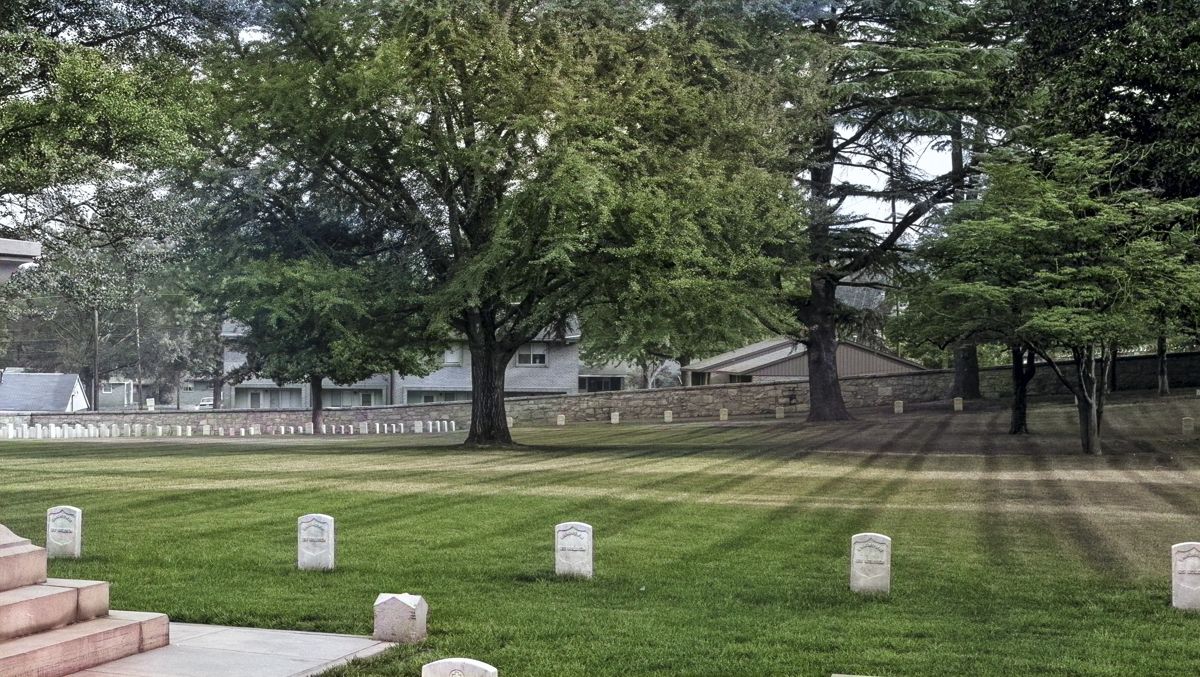
The Sad Fate of Captured Union Sailors by Joseph Wilson Few Union sailors serving aboard ship gave much thought to being captured. Boys enlisted in the U.S. Navy boarded ships confident that the superior Union Navy would keep them far from any southern prison. Unlike their comrades serving on land, seamen may have felt a false sense of security on a ship surrounded on all sides by water. Many sailors fell into the hands of the enemy after leaving their ship as part of a landing party in a joint operation between the Army and the Navy. If an unfortunate sailor did land in prison, available data shows that they went to the burial pits at a more alarming rate than soldiers in the Army. While Civil War prisons are probably the least covered and most neglected aspects of the war; navy prisoners can best be described as a sub-chapter of the war’s prison history that gets even less attention. Most writers choose to focus on the grandeur of battle, after all, dying in prison doesn’t stir emotions like a glorious death on the battlefield. Perhaps shining a light on the enormous prison fatalities may even be an embarrassment for a civilized nation. Approximately 420,000 soldiers on both sides spent time in prison. Records show that 30,000 Federals died in confinement for a death rate of 15%. Up north, 26,000 Confederates died in prison for a 13% fatality rate. Those figures are the dead prisoner totals settled on by the government. Modern day researchers think it’s much higher. A trip to a Civil War era prisoner of war facility often brought a death sentence for men after the exchange agreement broke down in 1863. A closer look reveals a more ominous story for the sailors. The number of navy men captured is small when compared to soldiers taken while serving in the Army. A total of 132,554 men served in the U.S. Navy during the war. While historians offer an unofficial number of between 1,200 and 1,500 captured sailors, that figure may only represent white sailors. Complicating the issue is the many captains who didn’t bother to name individual black seamen in reports, but only reported a total number of colored crewmen, or contrabands. To undertake a detailed look at all the Union sailors who died in captivity would require an extensive research project that might prove impossible. The effort would be even more difficult when trying to account for captured black seamen who were killed before ever seeing a prison. The issue of accounting for captured sailors is further clouded as ships often carried army personnel and civilian watermen, i.e., pilots, who may all have been listed as navy crewmen by their captors. Andersonville National Historic Site in Georgia has the most complete records of any Southern prison. Andersonville’s NPS database offers a fairly clear picture of the misfortunes that ensued for navy captives in the stockade. The data reveal that captured sailors who entered the Andersonville stockade perished at a significantly higher rate than their army counterparts. While the Andersonville records list an overall 29% casualty rate for all prisoners, the captured sailors far surpassed that number with a staggering 51% death rate. Andersonville National Park data list a total of 201 navy personnel in the stockade. Of that number, 103 sailors never went home. They went to the burial pits and left their bones in Andersonville National Cemetery’s red clay soil. Why the sailors perished at such a higher rate is a matter for debate. A distinction has always been made between army enlistees from the city and those recruits from the farm who lived in a somewhat less contaminated environment. Country boys leaving the bucolic setting on the farm seem to have attracted more disease than city dwellers once they were in an overcrowded dirty army camp. It’s thought that boys who existed among the germs and bacteria so prevalent in cities had some sort of immunity that may have been an advantage in camp; they had already survived diseases less common in rural areas. Captured sailors went from one extreme to another. One reason for their demise may be that salt spray and life aboard ship with cleaner air may have offered a cleaner environment than a prison. When they left their lives aboard a somewhat less tainted ship sailors suffered in a prison camp that was even worse than an army camp. A 51% death rate is hard to imagine even at Andersonville. But it could have been much worse. Sailors at Andersonville enjoyed one perk that saved many more of them from the burial pits. More sailors surely would have died had there not been a separate exchange agreement in September 1864, between Union Secretary of the Navy Gideon Welles and Confederate Secretory of the Navy James
Mallory. That deal freed the naval men from captivity at the height of the dying. Gideon Welles pressed Lincoln for an exchange of his boys since many smaller exchanges in the army were taking place despite the Dix-Hill pact being dead. General Sherman made private exchanges with General Hood in Georgia. The same kind of swap happened with other generals in the field. Lincoln agreed with Welles that it was only fair to spring the sailors from captivity; Mallory promptly accepted. A deal was struck between the two navy secretaries to swap navy sailors. Captain Henry Wirz, commandant at Andersonville Prison, received orders to round up the seamen and set them free. Navy boys from the North and South boarded trains for home as the dying continued in prisons. There is no doubt that Andersonville’s excessive rate of 51% sailor death rate would have soared even higher had Welles not intervened. All the surviving sailors left Andersonville for exchange in September 1864; the remaining Union prisoners, all soldiers, were shuffled around Georgia trying to evade Sherman’s army. Many died at other prisons or along the route. Thousands made a return trip to Andersonville on Christmas for a second stay. Two sailors among the dead who never made it home met their demise in July 1864 at the end of a rope after being identified as raiders. The raiders had pillaged and murdered their fellow prisoners until the POWs set up a police force to end the violence. A trial conducted by the prisoners inside the stockade found the sailors guilty, along with numerous soldiers, and the death sentence was imposed. The Andersonville data list 20 sailors from the USS Southfield. On April 19, 1864, the ironclad CSS Albemarle came down the Roanoke River and sunk the Southfield during the Battle of Plymouth. As was the case with regiments in prison, the crew likely stuck together in the stockade. The Southfield prisoners watched as their comrades perished one by one until only one crewman was left among the living. Only a single sailor from the Southfield made it out of prison alive. Another incident suggests that some of the 43 Navy men who died in the prison hospital may not have been counted among the navy casualties. In September
1864, when the Welles/Mallory exchange became known, a Union navy nurse working in the prison hospital seized on an opportunity to free some prisoners. The nurse, who had served aboard the USS Housatonic, Richard Tinker, switched the names of 43 dead sailors who had died to soldiers in the hospital. Since the naval prisoners were being sent for exchange, the ruse allowed army boys, each now bearing a dead sailor’s name to be exchanged. Wilbur Hale of the 120th New York Infantry exited through the gates as U.S. Navy Landsman Frederic Augustus James. Frederic was captured in the failed September 8, 1863, attempt to capture Fort Sumter when a flotilla of 20 small boats carrying 400 combatants entered Charleston Harbor to storm the fort. When Frederic landed at Fort Sumter armed with a pistol and cutlass the plan went awry from the start. After taking heavy fire, the boats retreated, leaving 104 men on the island who had no choice but to surrender, including James. James spent time in several prisons before Andersonville. Less than three months after entering the stockade in Georgia, the lifeless body of Frederic James went to the trenches on September 12, 1864. Less than three months after entering Andersonville, the lifeless body of Frederic James went into the grave. A very much alive Private Wilbur Hale walked free under the assumed identity of Landsman Frederic James. It can be assumed that Wilbur Hale will hold a special place in his heart for Frederic James, the sailor who likely saved his life. Hale went on to live a long life finally passing away in 1920 at the age of 80.
Frederic Augustus James headstone. (Joe Wilson) The death of Frederic James must have been figured out after the war since he is resting under grave stone #8858 in the cemetery. Remarkably, only 450 prisoners rest under stones prisoners were stacked one on top of another without coffins. To this day, the U.S. government has no idea how many dead prisoners fill the holes. Nor can it be said how many sailors rest in the pits. Only a headstone on one end of the trench and a foot stone 240 feet away mark the lengthy graves holding Union dead. The same can be said for other national cemeteries at the old POW camps At Florence Stockade in South Carolina, close to 3,000 Union men died. Most prisoners buried in the Florence National Cemetery are unknown. Burial details at Camp Lawton Prison in Georgia put 748 dead prisoners in the ground. All have since been relocated to a National Cemetery. Nearly 360 of Lawton’s dead are unidentified. There’s little doubt that sailors are in to both cemeteries. Of all the sailors who died after capture, the most elusive
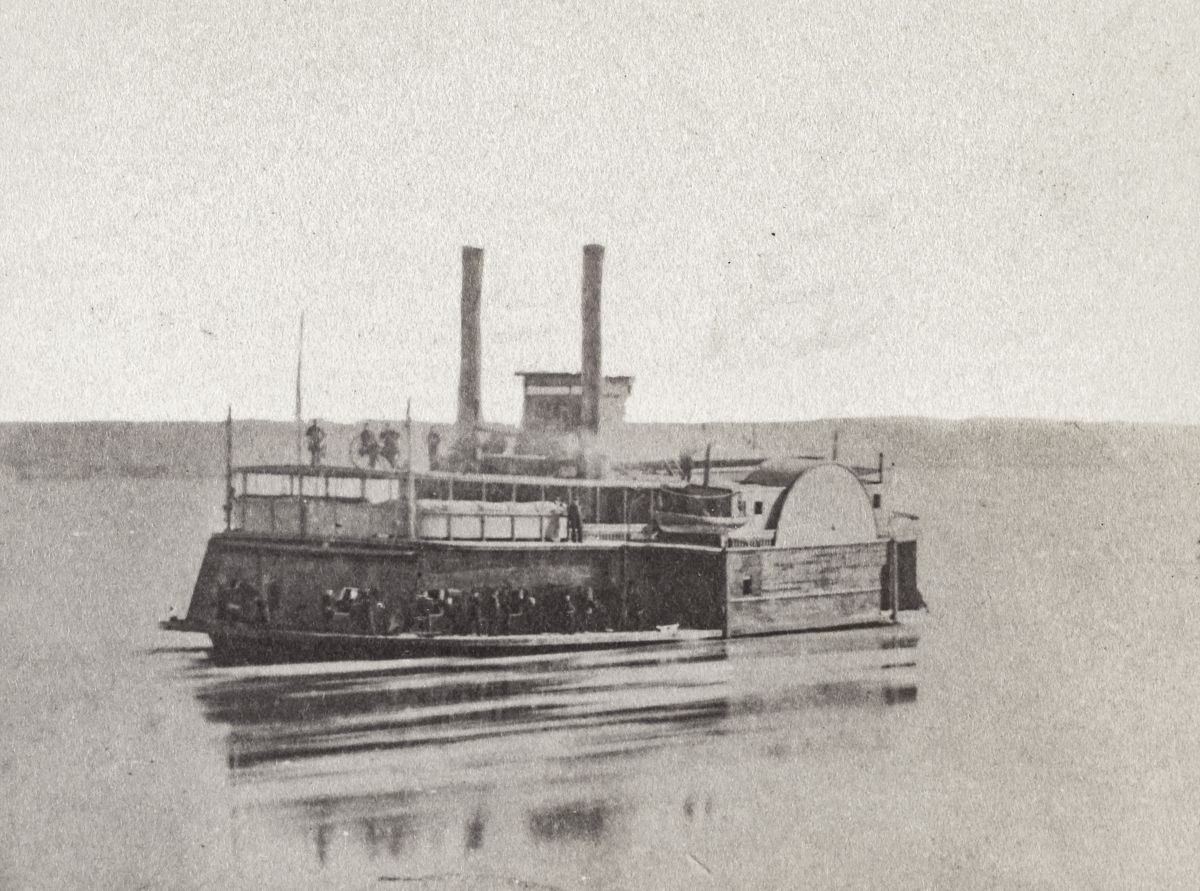
June 24, 1864. The Queen City was captured along with many prisoners, including Surgeon Westfall. After release from prison, the surgeon filed a report that included a chilling admission by a Confederate officer on Shelby’s staff. Westfall posed the question to the officer as to what they do with captured black men. The southerner answered with stunning honesty that “they would be treated as are the rest we had captured, kill them.” Lucky black sailors and soldiers had their lives spared if forced to work in the official sounding “Confederate Negro Labor Bureau.” Numbers relating to the Civil War are not absolute. Every year that passes brings new totals in every category. Historians combing through the records come up with an even a more horrible picture of our American Civil War. The appalling group for compiling true figures is the black sailors who fell into Confederate hands. The commander of the captured USS Clifton, Lt. Frederick Crocker, reported all the names of his white seamen, but then added “and 21 mostly colored.” Since captains failed to list their names among their crews, those black Federal sailors who served their country are lost in history’s dustbin. Nearly 10,000 black sailors served aboard Union ships during the war. If not killed in battle, black sailors faced “Murder in the First” when captured. Navy Surgeon Lewis Westfall served aboard the USS Queen City when she was operating near Clarendon, Ark. The gunboat came under attack by Confederate forces led by General Joseph Shelby on statistics of the navy prisoners at Andersonville Prison and the sailors sent to Camp Groce are a strong indication of the possible fate of more imprisoned sailors. What is already known of the unfortunate ending of some sailors in captivity may only be the tip of the iceberg. An in-depth study might reveal that the outcome of captured Navy boys may be much worse than we think. marked “Unknown Soldier” from gates of the prison in good health; a total of 12,919 prisoners who most were carried out feet first. An estimated 3,800 prisoners are buried in the Andersonville A casualty rate that is shocking who died in the Salisbury prison National Cemetery. How many when compared to any group. stockade are buried in 18 trenches unknowns may be sailors is All the dead prisoners from in what was a cornfield. Dead anybody’s guess. Camp Groce and Camp Ford A partial record at another rest in the isolated Union POW prison holding navy men shows Cemetery in Hempstead, Texas. a horrific number of dead sailors All were buried in pits with USS Queen City. (Library of Congress) so disproportionate to the soldier only cedar crosses marking total. The Confederate Prison their graves. Any indication of a Camp Groce in Texas kept fairly cemetery had vanished by the turn reliable data on a large group of the century. A stone monument of Union naval prisoners. From installed by Texas in 1987 in front a single lopsided battle on the of the secluded field to honor the Calcasieu River on May 6, 1864, dead is the only evidence of the a total of 111 sailors entered the hundreds of forgotten prisoners Texas prison camp and suffered resting beneath the surface. a devastating loss. The Union Any suggestion of how many seamen who surrendered came prisoners rest in that cemetery is from the USS Granite City and simply a guess, but somewhere in the USS Wave. that field it is known that 79 dead Of the 111 sailors, only 32 sailors are resting below. And ever saw their families again. maybe more. The 79 dead sailors represent an In North Carolina, It will never astonishing 70% casualty rate for be known how many dead sailors the men from those two ships. populate the 18 burial pits in the The sailors marched through the Salisbury National Cemetery. Joseph F. Wilson lectures on Andersonville Prison and is the writer and producer of the Civil War documentary film “Civil War Prisons – An American Tragedy.” The film is available on Amazon. Thanks to “Sailor” Dan Cashin for contributing to this article. Contact [email protected].