
McCormick CWI Offers New Interpretive Program & Shares Findings
By Jonathan A. Noyalas · Originally published October 2022 · pp. 8–9
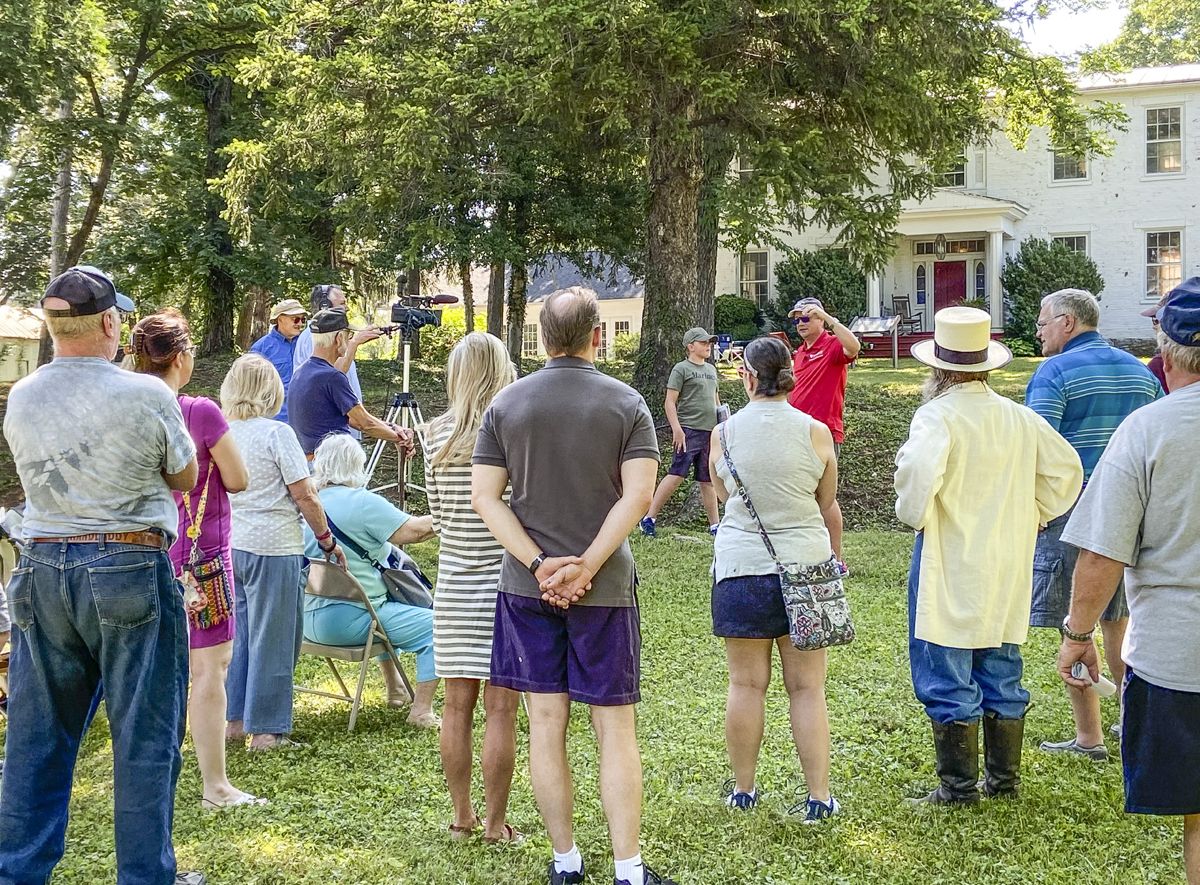
New Interpretive Program Debuts at Fort Collier Earlier this year Shenandoah University’s McCormick Civil War Institute (MCWI) forged a partnership with the Fort Collier Civil War Center in Winchester, Va., to enhance interpretive efforts at the ten-acre site that figured prominently in the Third Battle of Winchester and to offer public programs throughout the year. On Saturday, June 25, MCWI’s director, Prof. Jonathan A. Noyalas, conducted an interpretive program, “They Have Completely Surrounded Stine’s House:” The Construction and Early Use of Fort Collier. The program, which guided visitors around the property focused on the fort’s construction, initially supervised by Lieutenant Cowles Myles Collier, and the war’s impact on Isaac Stine and his family. Five descendants of the Stine family attended the program. Additionally, MCWI published a new handout available on Fort Collier. The handout offers information about the Stine family, Lieutenant Collier, and the Union cavalry charge that sealed Confederate general Jubal Early’s defeat at the Third Battle of Winchester. Fort Collier is located at 922 Martinsburg Pike in Winchester.
Civil War era in the Shenandoah Valley. Previous summer fellows have conducted research related to the Battle of Cool Spring, Judge Richard Parker, and Union veterans residing in the Shenandoah Valley in the decades after the conflict. This summer three history majors, Caitlyn Graulau, Brennan Komelasky, and Steven Stabler, worked as summer fellows researching places and individuals mentioned in primary sources related to celebrations of the Emancipation Proclamation in the Shenandoah
Valley after the Civil War’s end. This summer’s fellowships also supported a much larger digital history project MCWI is engaged in as an affiliate member of the Council for Independent College’s Legacies of Slavery Project. This project is being
MCWI Summer Fellows Share Findings
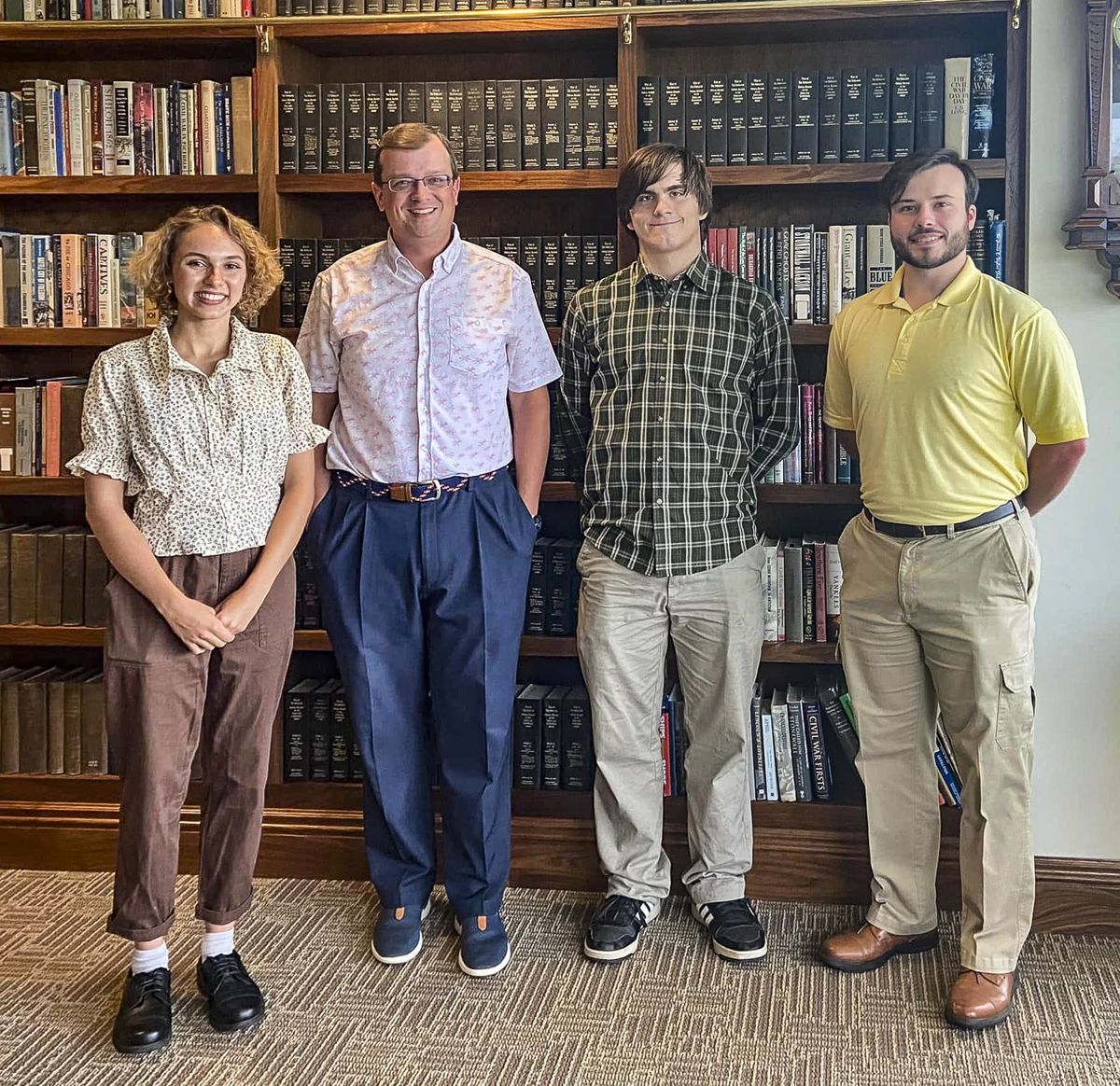
Since the summer of 2017 MCWI has offered summer fellowship opportunities as the result of the generosity of our donors for students to work closely with Prof. Noyalas on various topics related to the done in collaboration with the Gilder-Lehrman Center for the Study of Slavery, Resistance, and Abolition at Yale University with financial support from the Andrew Mellon Foundation. Over the past sixteen months a team of researchers, many of whom are students, have identified various relevant documents, largely newspaper accounts. With those sources collected, the moment arrived to bring context to them and resurrect the stories of numerous people, groups, and places mentioned in the articles. Among the stories resurrected by summer fellow Caitlyn Graulau, and shared as part of Shenandoah University’s College of Arts and Sciences Summer Scholar’s Program, was the story of Jasper Thompson. A figure mentioned frequently in newspaper articles in the late 1860s and early 1870s as fulfilling various leadership roles at Emancipation celebrations in the northern Shenandoah Valley, Thompson was born in Harpers Ferry in January 1844. On March 29, 1864, Thompson enlisted in the 23rd USCT and by war’s end rose to the rank of first sergeant.
First Sergeant Jasper Thompson’s tombstone in Fairview Cemetery. (Photo courtesy Caitlyn Graulau) Thompson married Dolly Ann Irwin in 1869. The couple had twelve children. Thompson met a tragic end to his life when he was murdered by his neighbor on September 6, 1906. Thompson is buried in Fairview Cemetery in Charles Town, W.V. MCWI summer fellows Brennan Komelasky and Steven Stabler shared findings about a variety of topics including area African American bands that played at Emancipation celebrations and the ways in which Emancipation’s legacy lived at Storer College in Harpers Ferry. The digital history project, tentatively titled “The Spirit of Freedom,” is slated for release in the latter-half of 2023. Noyalas)