
“The Delay in Operations Has Been Unavoidable”
By Bruce Allardice and Wayne Wolf · Originally published November 2022 · p. 29
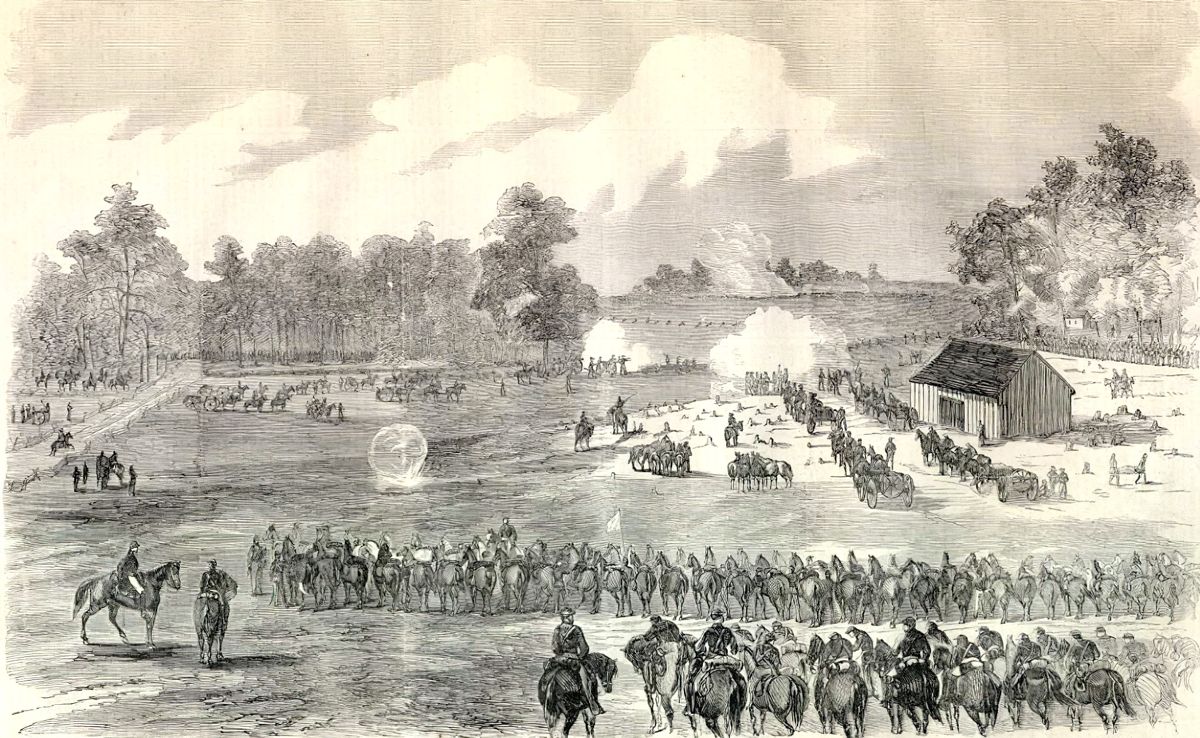
Letters of Civil War soldiers frequently speculate on how the war is going. They are most valuable in that they give the viewpoint of the common soldier, rather than the general, and their viewpoint at the time, rather than a month or a decade later, as in the case of reports and memoirs. Jerome Bonaparte Satterlee was born in Salisbury, N.Y., in 1838, the son of farmers. Schooled at Fairfield Seminary, during 1861 he enlisted in Company B, 44th New York Infantry (“Ellsworth’s Avengers’). The regiment, a zouave outfit, was planned as a memorial to Elmer Ellsworth, and was to have men who were “unmarried, under 30, with some military experience, and taller than 5’ 8”.”1 The 44th saw its first action at the May 27, 1862, Battle of Hanover Court House, Va. The 44th, on the Union left, helped repulse an attack by the 18th North Carolina, but the fighting was intense. The regiment “lost a quarter of its men and later would count forty-four holes in its battle flag.”2 A month later Satterlee was captured by the Confederates at the Battle of Gaines Mill. Sent to Libby Prison, he was exchanged three months later, but due to a great loss of weight while imprisoned, he didn’t return to duty until 1863. Promoted to corporal, he was further injured and eventually honorably discharged. In 1866 he moved to Delaware County, Iowa, where he became a lawyer, prominent public official, and GAR officer. He died at his daughter’s home in Washington, D.C., in 1925, and is buried in Arlington National Cemetery. During the war Satterlee frequently wrote home to his parents Beriah and Elizabeth Jennings Satterlee, and siblings Martha and Amos. His letters evince a strong belief in God and a similarly strong belief in the Union cause. The letter below was written between the Battles of Hanover Court House and Gaines Mill, when the 44th, Martindale’s Brigade, Porter’s V Corps, was camped on what became the Gaines Mill battlefield. “Camp No. 17 (near Cold Harbor, Virginia) June 13th, 1862 Dear Parents, Brother and Sister: I have just received and read your letter. It found me in good health and enjoying myself as well as could be expected. There is but little stirring now here and consequently I have very little news to write. Our regt. was called out today on an alarm but it was false and they soon came back. I was on guard and did not go with them. All is now quiet but how long will it remain so I cannot of course tell. We are camped but a short distance from the house where the Rebel Gen. Pettigrew was wounded and taken prisoner at the Battle of Fair Oaks, is lying. Dr. Gaines the owner of the house3 and of the land we are encamped on is a notorious secesh and is in Fort Monroe for his evil behavior, he having made many threats of what he was going to do &c. I wrote a letter home so lately that I have but little to write. You wanted me to write the particulars of the Battle of Hanover—I have already done so and if you don’t get the letter I will write again. Eleazar Stoddard4 was not near me when he was shot. He being so much shorter was at the lower end of the company. He was instantly killed the ball striking him under the eye and going through his head. I don’t think he suffered any pain or was conscious of what hit him. I have written a letter to his folks giving them the particulars of his death, burial, etc. I am sorry to hear that you are not enjoying any better health. But I hope that the time of Spring’s work is past you will recruit up some. I hope you will not worry about me any more than you can help. I am well am tough and I would not have any of you concern yourselves any more than you can help. Remember that God Ruleth and that He is His infinite mercy ever doeth all things well. If it is His will I hope to come home safe soon but otherwise I want to be resigned to His will and I hope you will be also. Our Regt. may never be in another engagement—not half the Regt. that went with us to Hanover got near enough to be in the least danger and in any event you would I am sure wish me to be at my post in the hour of battle as at other times.5 I have no disposition to shirk and I know you would despise me if I should fail to do my duty so then cheer up and be hopeful. Now is no time for despair by the time for cheerful effort backed by love of country and a perfect trust in God and victory is certain (I believe). The delay in the operations of our army before Richmond has been unavoidable on account of high water. The Chickahominy flats have been flowed water more or less for some time but they are clearing up some now and if we have no more rain soon I think there will be a chance to do something. Many of the troops are across the river [i.e., on the south side] but the heavy guns are not yet over. We are on the reserve and are yet on the north bank. I have not seen Edgar6 nor heard from him since we left Yorktown. I expect he is acting as orderly to some of the generals. He was at McClellan’s headquarters the last I knew of him. But it is getting dark and I must close for this time. Write soon and as often as you can spare time. Your son Jerome B. Satterlee 44th N.Y. Vol. Infantry” 1.
Endnotes:
https://civilwarintheeast.com/us-regiments-batteries/newyork-infantry/44th-new-york/ Sears, To the Gates of Richmond, p. 116. See also Nash, A History of the Forty-Fourth Regiment, pp. 73-77. The regiment suffered 84 casualties. Rumor had it that the regiment’s colonel hid behind a tree the entire fight. Dr. William F. Gaines (1804-74), owner of the land on which the Battle of Gaines Mill was fought. An ardent secessionist.
Eleazar H. Stoddard (1838-62) of Company B, son of Allen Stoddard of Salisbury, N.Y. This sentence seems to hint that many soldiers shirked when the firing started. Probably Edgar H. Spencer (1840-74) of the Oneida Cavalry, a Salisbury neighbor.
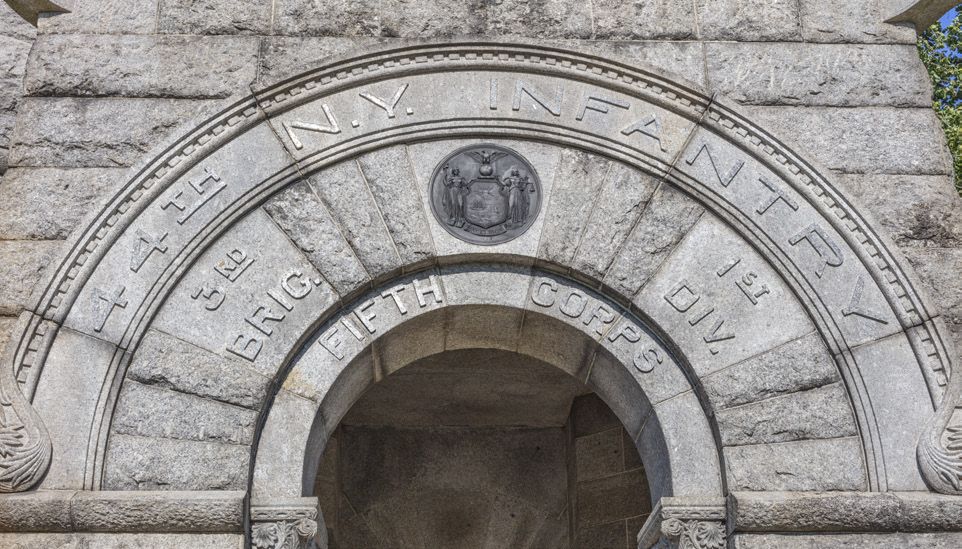
Bruce S. Allardice is Professor of History at South Suburban College in Illinois. He is a past president of the Civil War Round Table of Chicago. Wayne L. Wolf is past president of the Lincoln-Davis Civil War Roundtable. Entrance to monument.
the
44th
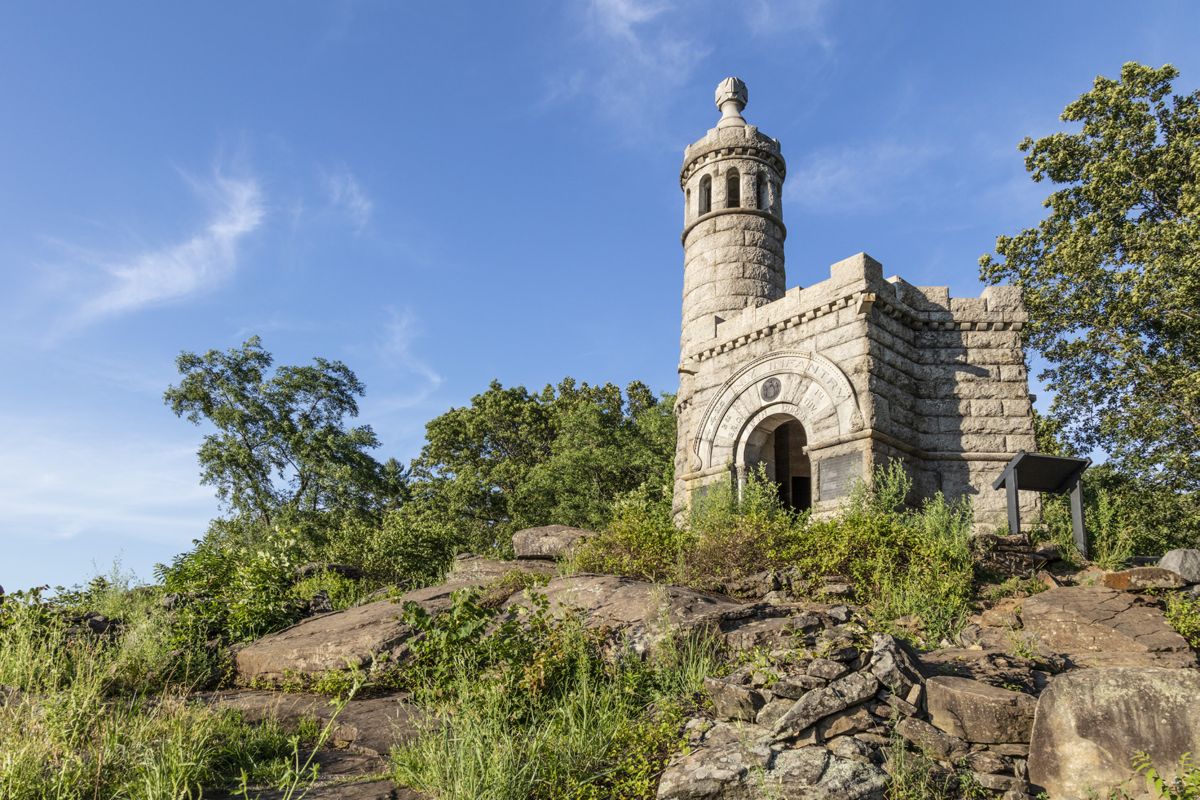
New
York
Monument to the 44th New York at Gettysburg, on Little Round Top. (Photo by Jack W. Melton Jr.)