
Orlando Poe: Civil War engineer, Generals' aide, to Lighthouse builder
By Joan Wenner, J.D. · Originally published November 2022 · p. 37
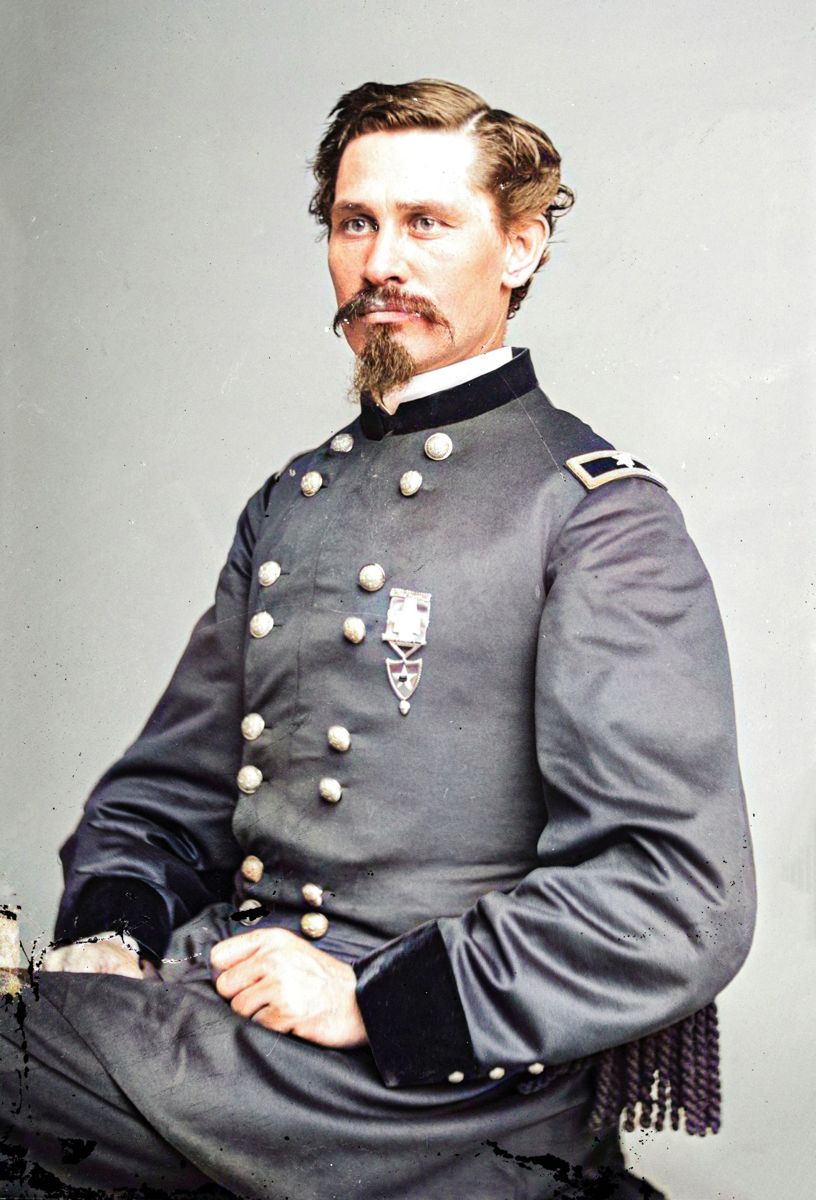
As was said by a gunboat captain to Union Secretary of the Navy Gideon Welles, “Battles are won by two qualities, the ability to endure and ability to injure.” Special skills could also be factored into this equation. Orlando Metcalfe Poe graduated from West Point in 1856; sixth in his class. He had special skills particularly in engineering. Born in 1832 on an Ohio farm, the ‘lighthouse man’ as one author would call him gained recognition that continues to this day according to the National Park Service.
McClellan’s staff Having excelled in math he was first appointed to the Corps of Topographical Engineers and stationed in Detroit where his extensive survey work of the Great Lakes ended when the Civil War began. The so-called ‘visionary engineer’ became a trusted member of McClellan’s staff; with principal duties that included surveying positions, sketching routes, and preparing battlefield maps. He was credited with significant contributions to various Union successes in Ohio, West Virginia, and Washington, D.C.
Visit our new website at: HistoricalPublicationsLLC.com
As one example, in the Western Virginia Campaign’s 1861 Battle of Rich Mountain, Poe was in the advance and observed the Rebel front covered by entanglements created from underbrush, a defensive addition called abatis or slashing. The Official Records contain a report to Colonel H. Bache, Commanding, Topographical Engineers from First Lieutenant Poe that explained a sketch map; “The drawing of the main work was reduced from one made by the enemy and captured by us, [it] was verified upon the ground by myself. Otherwise, we would have been without any sketch claiming to be accurate, for there was no time in which to make a survey.” His career suffered however when McClellan fell out of favor. Historian Bruce Catton wrote of the general’s political and military difficulties that Lincoln reportedly said, while likely making McClellan wince, “As we say out West, if a man can’t skin, he must hold a leg while somebody else does.” Poe did not receive the brigadier general’s rank he expected and was also transferred to the Western Theater.
Sherman’s aide
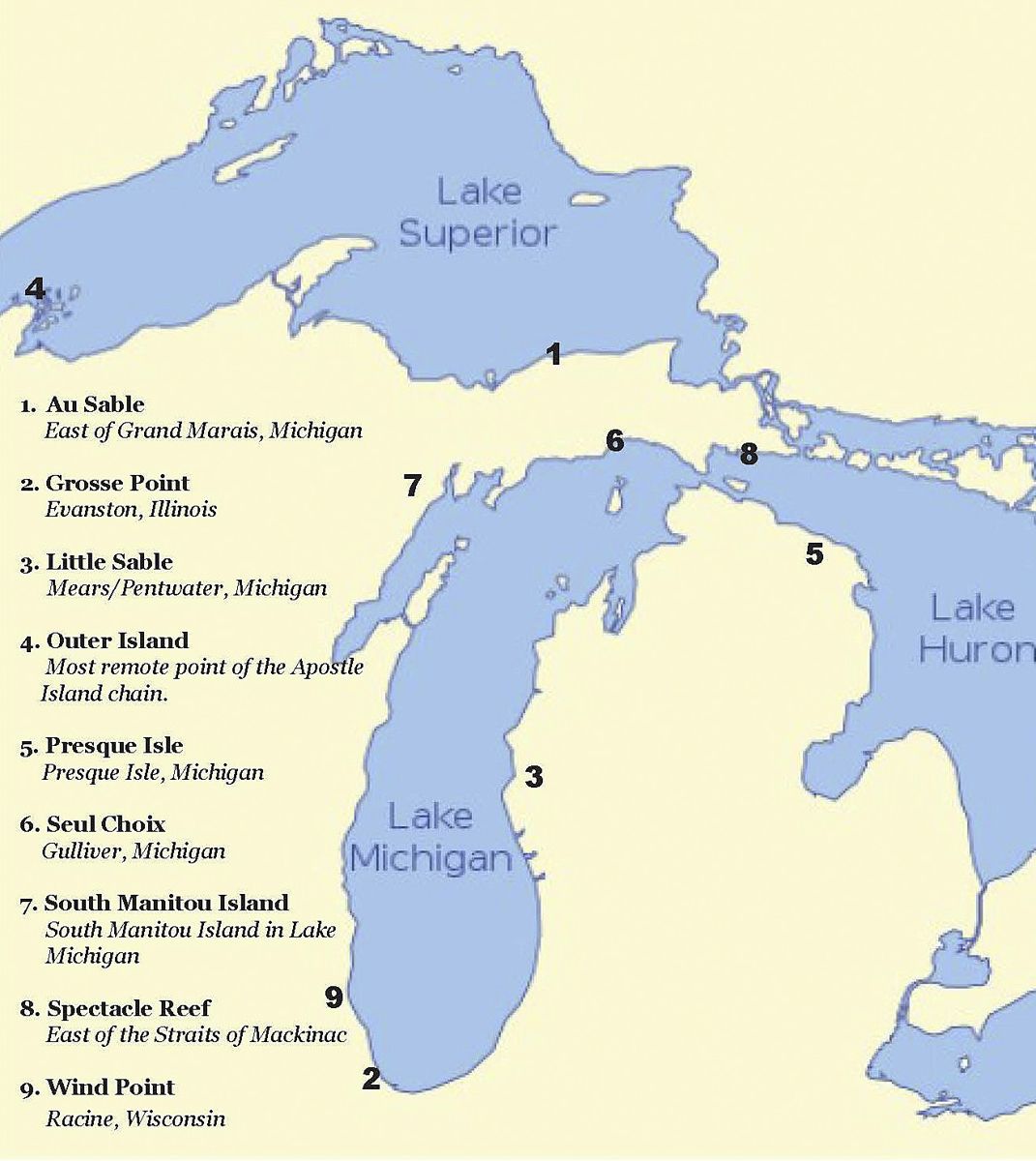
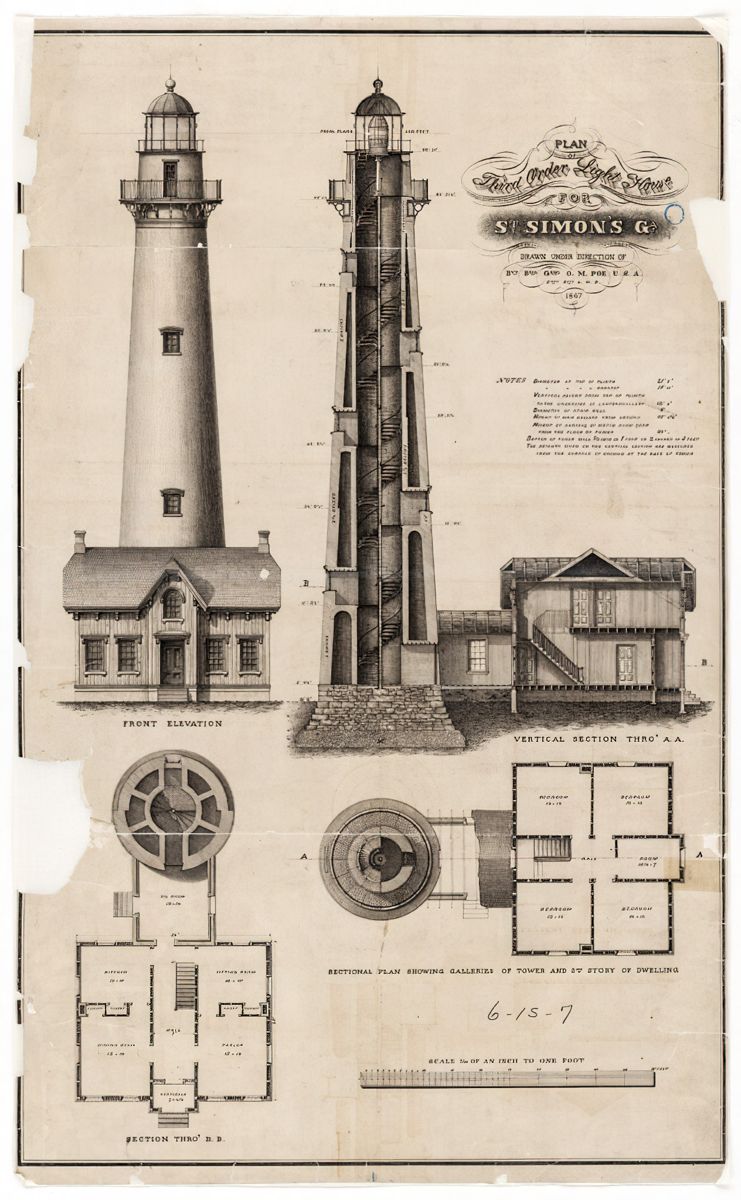
As his exceptional skills became more recognized Poe rose to be Sherman’s Chief Engineer. In this position, and following orders for operations in the South, he built the roads and bridges that made the March to the Sea possible. Eventually Poe was named brevet brigadier general. In 1865, with the war over, he became Engineer Secretary of the Lighthouse Board which included responsibility for all lighthouse construction. Poe designed what became known as the “Poe style” tower with a gentle taper from bottom to top, “featuring graceful embellishments such as masonry gallery support corbels and arch topped windows” rarely found on lighthouses. Not said to be one who skimped on costs, his Spectacle Reef Lighthouse at the treacherous waters of Lake Huron on the eastern end of the Straits of Mackinac, was the most expensive construction project of its day. The well-known Au Sable Light Station, a site preserved by the Park Service, contains one of his remarkable ‘towers’ that continue to guide mariners along the shores of Lakes Superior, Michigan, and Huron. Four years and eight lighthouses later, he returned to Sherman’s staff as an aide advising on the engineering and security for four transcontinental railroad lines. In 1884, upon Sherman’s retirement, Poe returned to the Great Lakes where he designed massive locks for shipping. Poe died in October 1895, apparently due to injuries suffered during his lock-building efforts and is buried in Arlington Cemetery.
Author’s Note: Paul Taylor, in addition to editing selected Poe letters to his beloved wife Eleanor published as “My Dear Nelly” by Kent State University Press, also wrote about Orlando Poe for the Michigan Historical Review in 2010 and the Michigan History Magazine in 2014.
Joan Wenner, J.D. is a native New Yorker with a law degree, longtime contributor to Civil War News and published in numerous history publications with a special interest in naval operations and military courts of inquiry. She presently resides in coastal North Carolina. Comments are welcomed at [email protected].