
This And That
Bureaucratic Infighting
By Gould Hagler · Originally published November 2022 · pp. 24–25
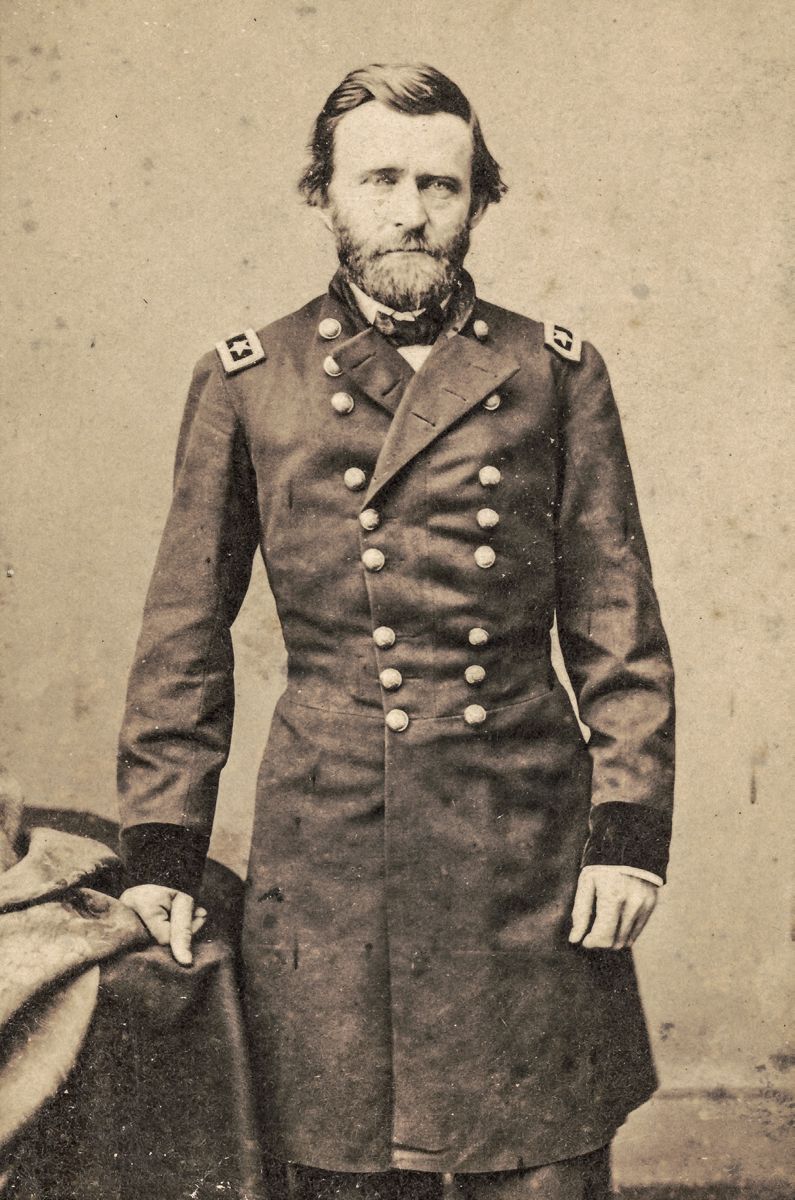
“I must have a safe conduct from the War Department or Grant will shoot me.” – J.C. Van Duzer In late fall 1862, in the first of several efforts to take Vicksburg, Federal forces under Ulysses Grant began to move south along the Mississippi Central Railroad. Grant, new in his job as commander of the Department of the Tennessee, had a great deal to worry about as he led this campaign. On top of all his other headaches, Grant had trouble with John C. Van Duzer, the local superintendent of the U.S. Military Telegraph. I first ran across the superintendent’s name when I was preparing a column on the Battle of Iuka, fought in September 1862. As Grant and his subordinates, Generals Ord and Rosecrans, were planning a pincer movement against the Confederate force in Iuka, Van Duzer telegraphed Grant with a report from Maryland. The superintendent relayed an erroneous dispatch telling of an overwhelming Federal victory at Antietam Creek. Lee’s army was said to be destroyed in a calamity that would end the war. Grant sent a message to Confederate Gen. Sterling Price, telling his adversary that his cause was lost and suggesting that he surrender to avoid unnecessary loss of life. Of course, this report grossly exaggerated Lee’s setback in Maryland; the war was far from over; Price did not surrender; the delay ruined the pincer movement; and Price’s army escaped. I did some checking on this telegrapher, just out of curiosity, and discovered that Grant had him arrested, but not in September, and not for any reason connected to Antietam or Iuka. The story begins with a November 14 telegram to Grant from Assistant Secretary of War P.H. Watson, saying that a person named Riggin was “interfering with the management of telegraphs” in Grant’s department. Riggin was an imposter, read the message. Grant was told to arrest him. Grant replied immediately, informing Washington that Col. John Riggin was his aide and was acting on Grant’s specific order prohibiting use of the wire for private dispatches after 10 a.m. Riggin, Grant said, had been “assigned the duty of military superintendent of telegraphs within the department.” A fast and loud, “NO!” came from Assistant Secretary Watson.
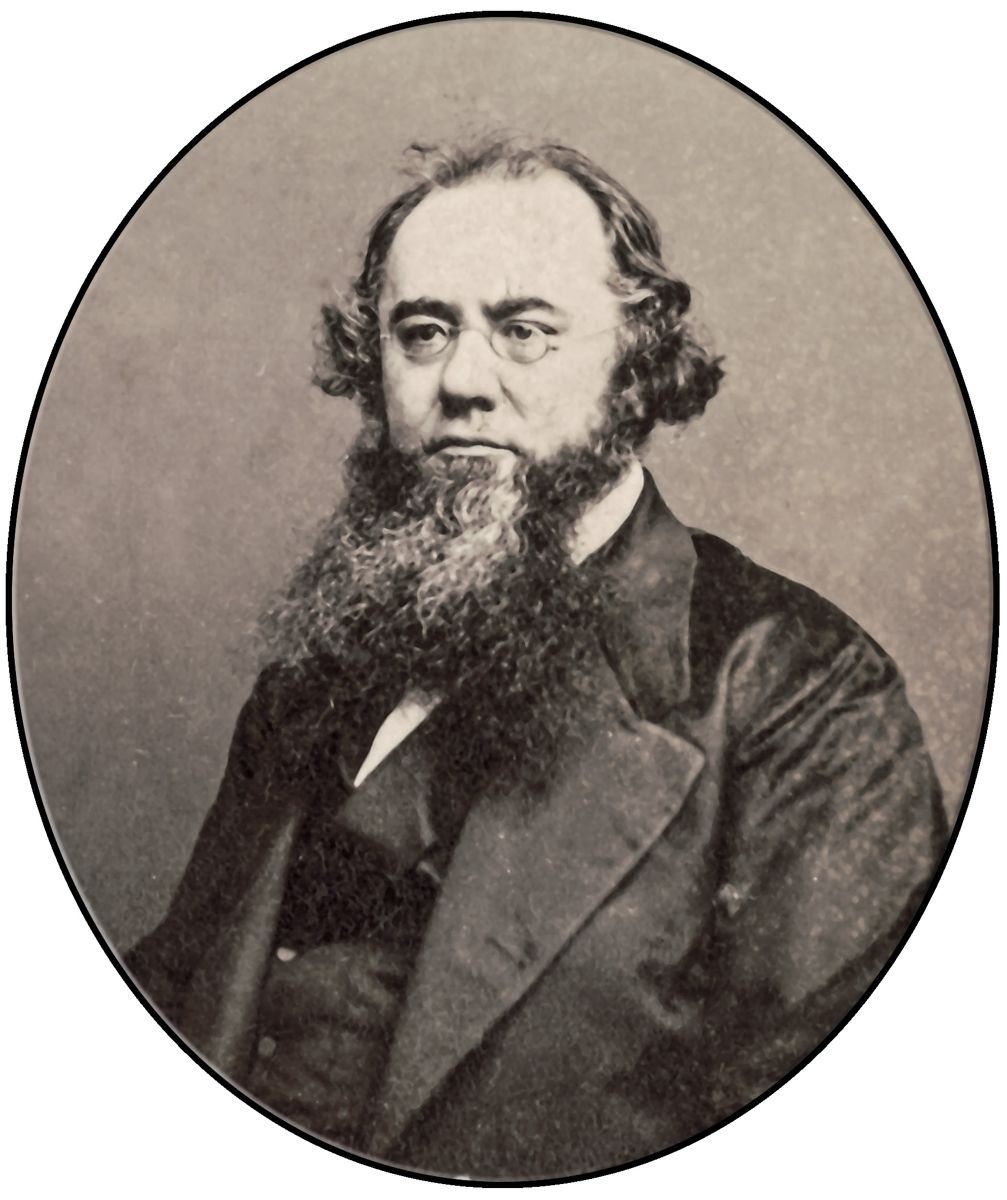
Grant was not a link in the chain of command reaching from the Secretary of War down to the telegraph superintendents and their operators, constructors, and repairers. Watson informed the general that Secretary Stanton had appointed Col. Anson Stager as superintendent of military telegraphs. Stager was in charge and Riggin must not interfere. If Stager’s deputies “fail in their duties,” said Watson, “a report of the fact to Colonel Stager will bring a prompt remedy.” Van Duzer appears in the record two weeks later, on November 26, when Grant reminded him that the earlier order restricting the use of the lines was still in force. On the 28th Col. Stager sent a circular to all telegraph operators, telling them that they were to obey Van Duzer. “Orders from any other source will not be obeyed.” The next day Grant telegraphed an angry response to what he termed the “insolent dispatch” from Stager: “My orders must be obeyed and Van Duzer removed.” On the 30th Van Duzer was arrested and kept in close confinement. The same day Grant sent a curt email to Stager.
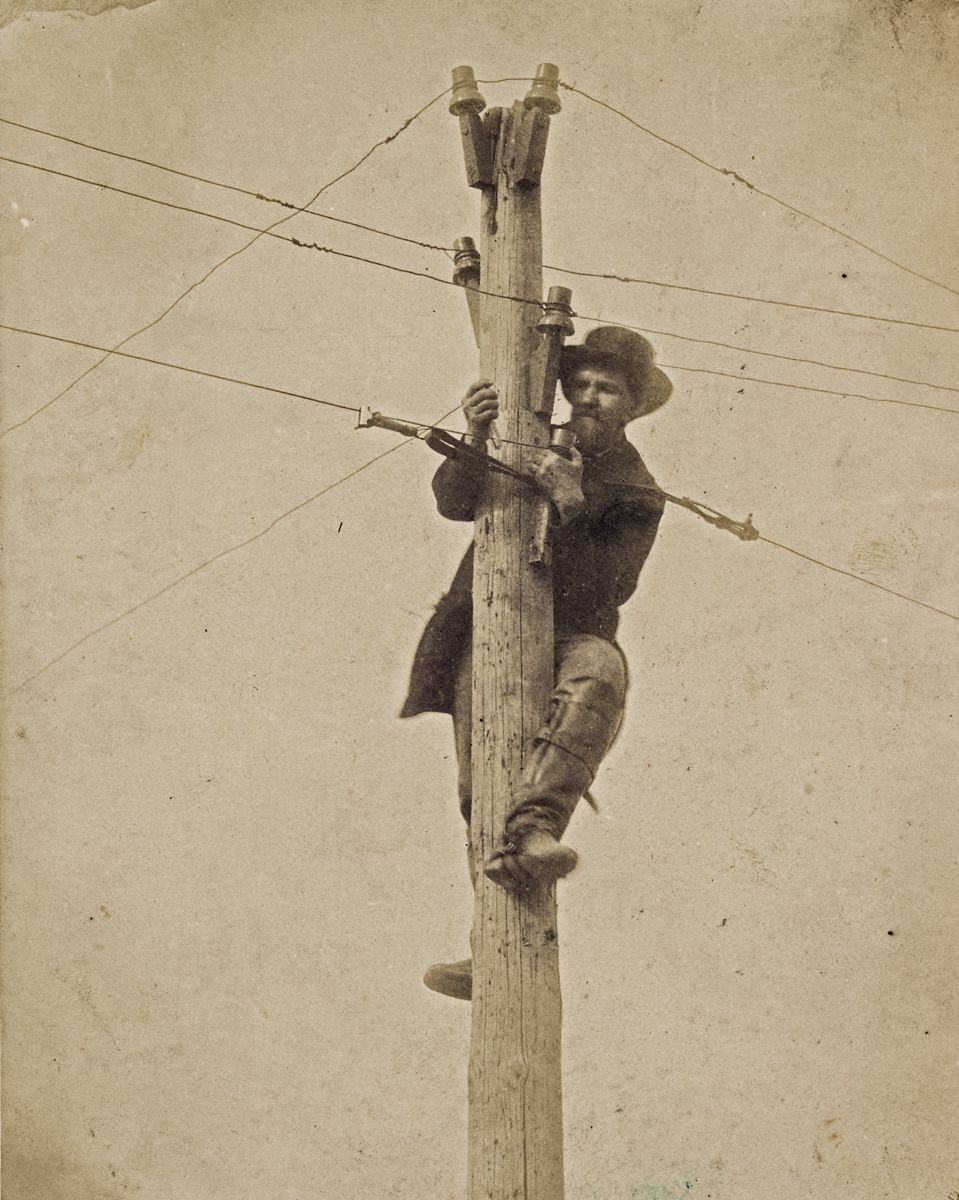
“I have arrested Van Duzer. Will send charges by mail.” The officials in Washington did not want to wait for the mail. On December 1 the War Department telegraphed Grant: “Report to this Department by telegraph the charges upon which Van Duzer is arrested. By order of the Secretary of War.” The OR contains Grant’s detailed reply to a Col. Kelton in the War Department. Grant charged that the superintendent had been slow to run lines to where Grant needed them, putting the burden on Grant to direct the work. Furthermore, Van Duzer was “inclined to the belief that he could only receive directions from Colonel Stager. Any directions I would give were immediately dispatched to Washington, and a wrong impression of the nature of the directions was evidently conveyed.” In today’s lingo I think we would use the term “passiveaggressive” to describe Van Duzer’s behavior, or alleged behavior, as we have only Grant’s side. Van Duzer’s attitude irritated Grant, and worse would soon come. Grant stated the he was “for a whole day prevented from sending a dispatch because the lines were being used by offices along the line sending paying dispatches.” It was at this point, on November 14, that the “imposter” intervened and Grant was ordered to arrest his own aide. Grant’s dispatch to the War Department states that there was no more trouble until November 26, when Grant’s dispatches were again delayed. The operator in Grant’s headquarters, when asked about the delay, told the general that “the wires were being used from other offices sending cotton-dispatches.” Here Grant fired off the message to Van Duzer, reminding him that the order concerning private dispatches was still in force. Van Duzer complied, but
CivilWarNews.com immediately re-assigned the operator in Grant’s HQ, which Grant saw as retaliation against the operator for telling Grant the truth. This called for a tete-a-tete, at which Grant read the riot act to the superintendent. He told Van Duzer that he was to make no such personnel changes without consulting the general. Grant would keep the new operator, but he told Van Duzer that he would have no one in his headquarters “who would not let me know when dispatches could not be sent and the reason why.” Grant thought this settled matters, but two days later he was “astonished” to learn of Stager’s “insolent” circular to all the operators. Grant blamed Van
Duzer for the entire mess. It was at this point that he telegraphed a piece of his mind to Stager and told him that Van Duzer was arrested. Grant ended his long dispatch by asking Col. Kelton to “lay this matter before the Secretary of War.” Kelton did so and the reply was swift and brief: “Turn Van Duzer loose.” On December 3 Grant sent a message to the commander of the post at Grand Junction: “Release Mr. Van Duzer on parole. By order of the Secretary of War.” The following day Secretary Stanton himself issued the same order directly to the same officer. However, Grant did not interpret “release” to mean “reinstate.” On
December 5 Grant clarified his order: “The release of Van Duzer does not entitle him to interfere with telegraph matters – or to remain in this department. He must leave by the first train.” Van Duzer was released, per the War Department’s order, and exiled from the Department of the Tennessee, per Grant’s. December 7 found the telegraph superintendent in St. Louis. From there he telegraphed a superior in Cairo. “I was sent out of department under guard and General Tuttle informed me that he is ordered to arrest and confine me if I return. I do not understand that General Grant intends to give me any chance to show by investigation that I am right. I desire to return to the department in preference to any other position in the service, but to do it must have safe-conduct of War Department or General Grant will shoot me.” As the earlier dispatch to Grant from the War Department stated, Van Duzer worked for Stager, who was appointed by the Secretary of War. Van Duzer was outside Grant’s chain of command. If Van Duzer had been answerable directly to Grant, the general would have gotten the telegrapher’s attention on November 13 or 14, and that probably would have been that. If not, Grant would have fired Van Duzer, without having to explain his action to anyone, and nothing whatsoever would appear in the OR about the matter. From the records we have of this episode, most would form a negative view of Van Duzer.
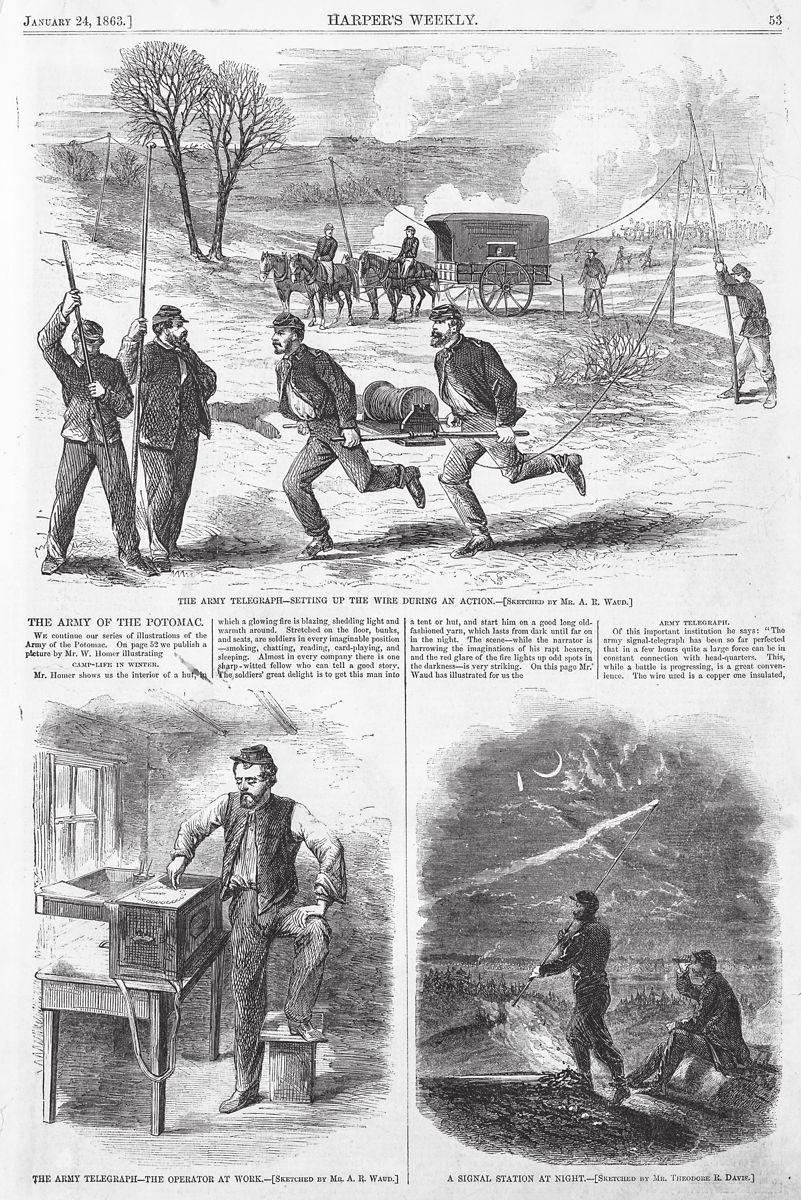
However, most of what we read was penned by Grant, so we must keep that in mind. Somewhat to my surprise, Van Duzer did not disappear from the record after his set-to with Grant. There is more to his story. Van Duzer didn’t return to Grant’s department and he wasn’t shot. Instead, he joined up with another man who fell into disfavor with Grant, Gen. Rosecrans. When Rosecrans took command of the Army of the Cumberland, Van Duzer went with him. He stayed there after Rosecrans was replaced by Gen. George Thomas and served throughout the war. The records of Van Duzer’s service with Rosecrans and Thomas paint a more positive image of the man. The various dispatches he sent in 1863 and 1864 also tell a story about the United States Military Telegraph, the men who ran it, the operators at the telegraph keys, and the construction men and repairers in the field. A future column will let Van Duzer tell that story. Gould Hagler is a retired lobbyist living in Dunwoody, Ga. He is a past president of the Atlanta Civil War Round Table and the author of Georgia’s Confederate Monuments: In Honor of a Fallen Nation, published by Mercer University Press in 2014. Hagler speaks frequently on this topic and others related to different aspects of the Civil War and has been a regular contributor to CWN since 2016. His email is [email protected].