A Remarkable Tale: The U.S. Sanitary Commission
By Joseph F. Wilson · Originally published May 2022 · pp. 36–39
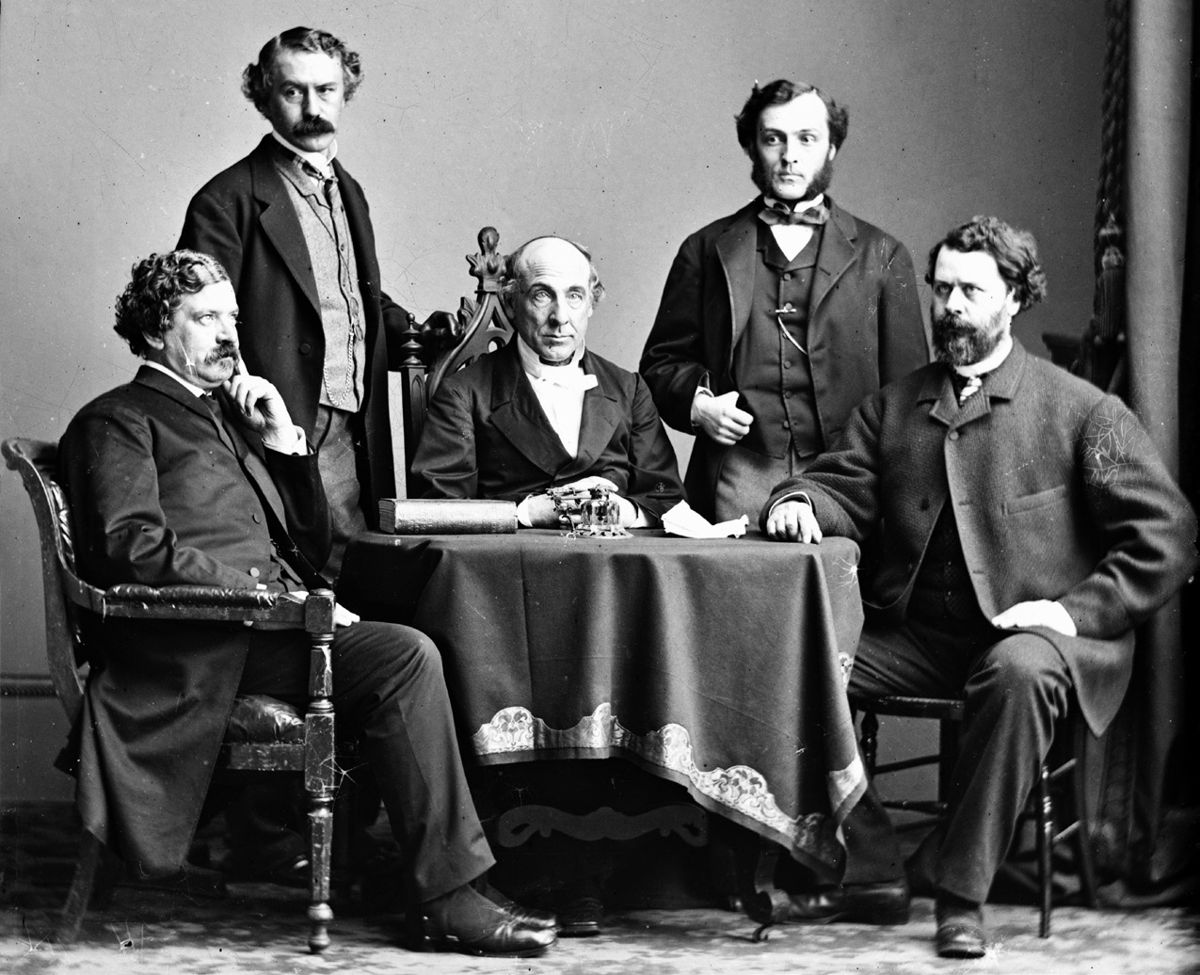
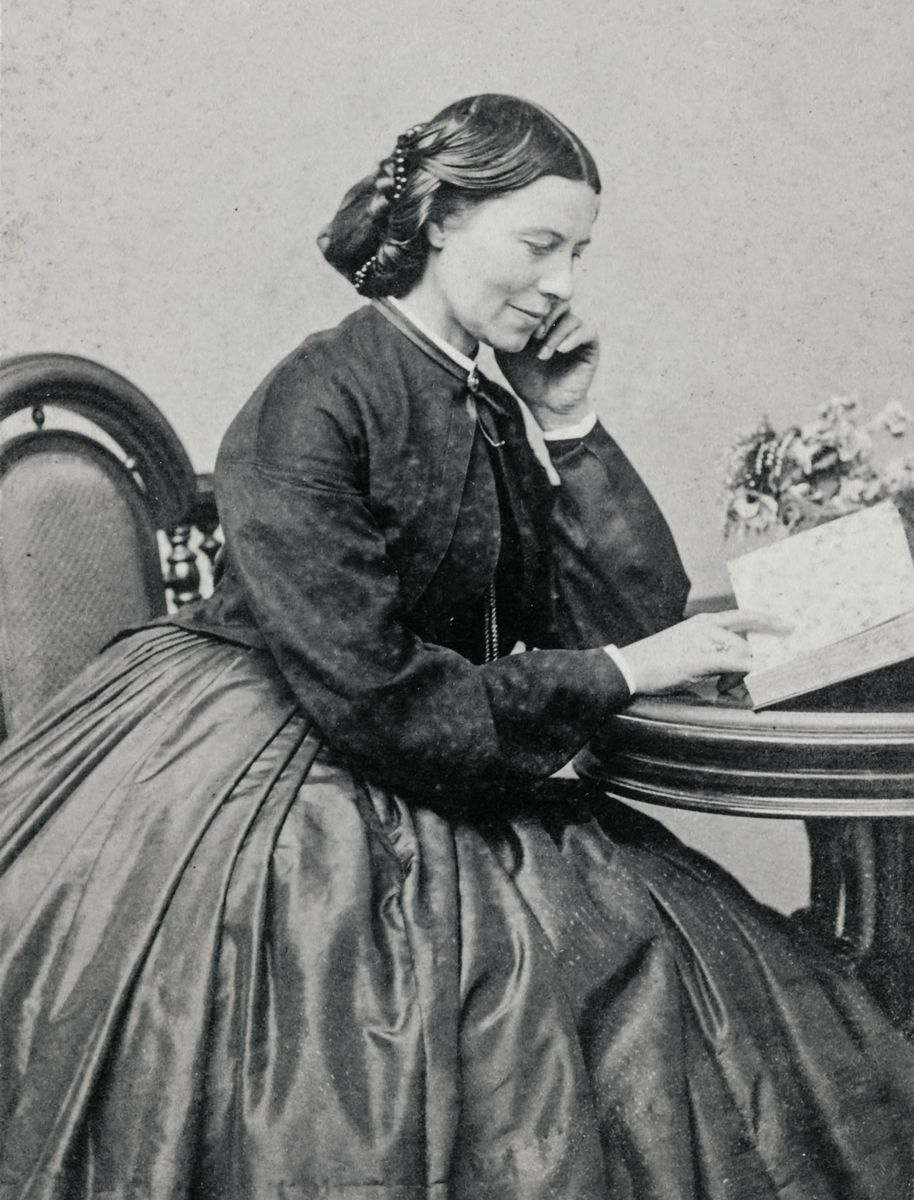
The echo of musket fire and shrieking artillery shells ceased. All was quiet on the battlefield except for the groans and cries of the wounded soldiers scattered about the fields and ravines. Both armies moved on leaving behind too few doctors burdened with the bloody aftermath. Thankfully, a new army reached the town, and guided their many wagons over the dusty roads toward the carnage. Their arsenal lacked weapons, but the wagons were overflowing with copious amounts of mercy, compassion, and much needed supplies rolled forward to offer relief. The United States Sanitary Commission had at last arrived. The renowned charitable organization arose from the loving hearts of thousands of northern citizens shortly after the scourge of a Civil War fell upon the nation. A seed had taken root before the dust settled over Fort Sumter and created one of the greatest benevolent foundations in American history. Any recounting of the Civil War not including a chapter on the United States Sanitary Commission unfairly leaves out the major contribution of a key component during the war. The origins and the evolution of the Sanitary Commission started with dedicated women in New York City and across the country who rapidly formed aid societies to help with the war effort. At the center of the woman’s movement in New York City, Dr. Elizabeth Blackwell wasted no time in organizing women shortly after the war broke out. A headstrong woman who knew no boundaries, she summoned all New York’s prominent woman to come together and support the volunteers marching off to war. Elizabeth sought to duplicate the efforts of Florence Nightingale in the Crimean War. Dr. Blackwell’s organizational skills and determination gave rise to the “Women’s Central Association of Relief.” In 1849, British born Blackwell
Dr. Elizabeth Blackwell (wiki, public domain)
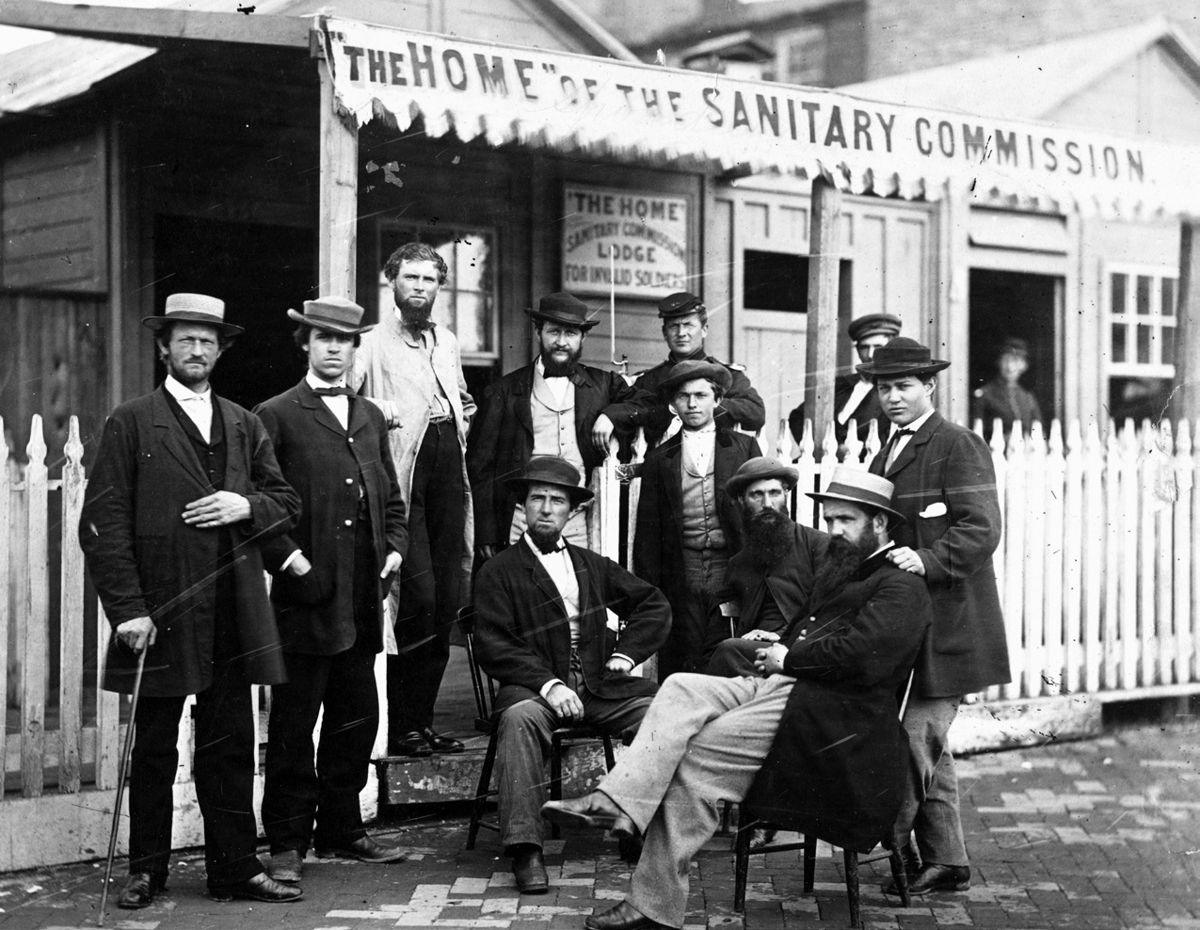
earned the distinction of being the first female in the United States to receive a medical degree. Only a freak accident that left her blind in one eye denied Blackwell the coveted title of surgeon. Her training of women in nursing care established a pipeline that sent a steady stream of volunteers from New York to Washington. In Washington, an overworked Dorothea Dix welcomed the help as she labored trying to supply newly created hospitals with volunteers to care for the mounting numbers of sick soldiers. Soon, the hospitals overflowed with mangled soldiers suffering from the war’s ghastly wounds. Dr. Henry Bellows of New York took notice of the developing aid societies. Bellows, a pastor at All Souls Unitarian Church, believed that if the loosely organized groups joined forces, a powerful entity could emerge. On April 29, 1861, Bellows called together the influential women of New York for a meeting at the Cooper Institute. All in attendance agreed with the doctor’s intentions without reservation. A potent movement had begun; at the center of it all stood Henry Bellows. Excitement escalated to a fever pitch after meeting with the ladies. But the elation didn’t last. A conference with Dr. Richard A. Satterlee, an army purveyor in New York, took an unexpected turn. After pitching the idea of a united citizens support group, Doctor Satterlee did all he could to dampen the group’s enthusiasm. Satterlee thought the efforts of sentimental citizens a waste of time. He reasoned it best to let the War Department take care of the soldiers. The indifferent doctor thought the excitement of war fueled the endeavor and in time the movement would evaporate. Satterlee severely underestimated Bellows and his legions of committed women. Not dismayed by Satterlee’s rejection, Dr. Bellows and three other doctors boarded a train bound for Washington on May 15. Determined to carry their intentions on behalf of the Women’s Central Association to anyone who would listen, Bellows planned to present his idea for citizen involvement. On the 13-hour journey to the capitol, the conversation turned to the successful British efforts to establish a commission to care for its soldiers during the Crimean War. The British Sanitary Commission succeeded in significantly reducing casualty deaths in the British Army by instituting practical rules of sanitation. A new direction suddenly took hold. All four doctors seized on the idea. Once in Washington they vigorously pursued a new agenda. On a moving train headed for the Capitol City, the “Women’s Central Association of Relief” gave birth to the “United States Sanitary Commission.” Their mission was sure to rankle feathers in bureaucratic Washington. Convincing Washington they needed help from lay folks was another matter. Nothing came easy in Washington. A meeting with General Winfield Scott proved fruitless; Scott wielded little influence at the War Department. Acting Surgeon General, Dr. Robert Wood, showed little interest. Bellows continued pressing politicians, generals, and the Surgeon General for support in creating an arm of the government to supplement the Medical Bureau in providing all things necessary to protect the health of the soldiers. Perhaps to rid himself of Bellows, Wood sent a letter of support to Secretary of War, Simon Cameron, calling for a “Commission of Inquiry and Advice in Respect of the Sanitary Interest of the United States Forces.” The issue now rested with Cameron. Over two weeks later he finally wrote out what he called “a Patriotic Proposal” and sent it to President Lincoln for consideration. Lincoln thought the group could do no harm. He likened them to a “Fifth Wheel” on a coach. The other four wheels were the Quartermaster, Commissary, Transportation, and the Medical Bureau. Lincoln signed the bill six days later on June 13, 1861. Four simple words scribbled on the bottom simply stated, “I approve the above.” At the time Lincoln could not have fully understood the magnitude of what he had just done. His signature galvanized a national army of non-combatants whose numbers eclipsed by far any army in the field. This dedicated army’s enormous contributions helped keep the war machine greased and fine-tuned. In time, Lincoln’s so called “fifth wheel” rightfully took its proper place supporting all four wheels of his symbolic wagon. A simple swipe of Lincoln’s pen changed history. Bellows and the aid societies across the country celebrated. On the first meeting of the Sanitary Commission, it came as no surprise that the energetic Dr. Henry Bellows was elected its President. Serving as Executive Secretary, Frederick Law Olmsted, infused the organization with such energy that Bellows himself later credited Olmsted for the commission’s tremendous success. Olmsted’s organizational skills and tireless work ethic seemed almost superhuman. Known as the Father of Architectural Landscape, his designs permeate the entire country, including Central Park in New York. Frederick Law Olmsted’s contribution to the Northern war effort proved invaluable to eventual victory, yet today, few know his name. A wave of patriotism washed over the North as the nation went to war. Volunteers of all ages and backgrounds came forward to support the effort. Never before had such an army convened so quickly. Fearful of misuse and waste, the Commission wisely directed aid societies to stop sending material directly to camps and instead to forward their donations to Sanitary Commission warehouses. When sent directly to soldiers in camp, extra pants or shirts often went to a sutler in exchange for liquor. Local chapters in major cities overflowed with gauze, blankets, food, books, and untold supplies of every variety. They were sent on; farmers donated thousands of bushels of vegetables, anything to bolster morale or mend
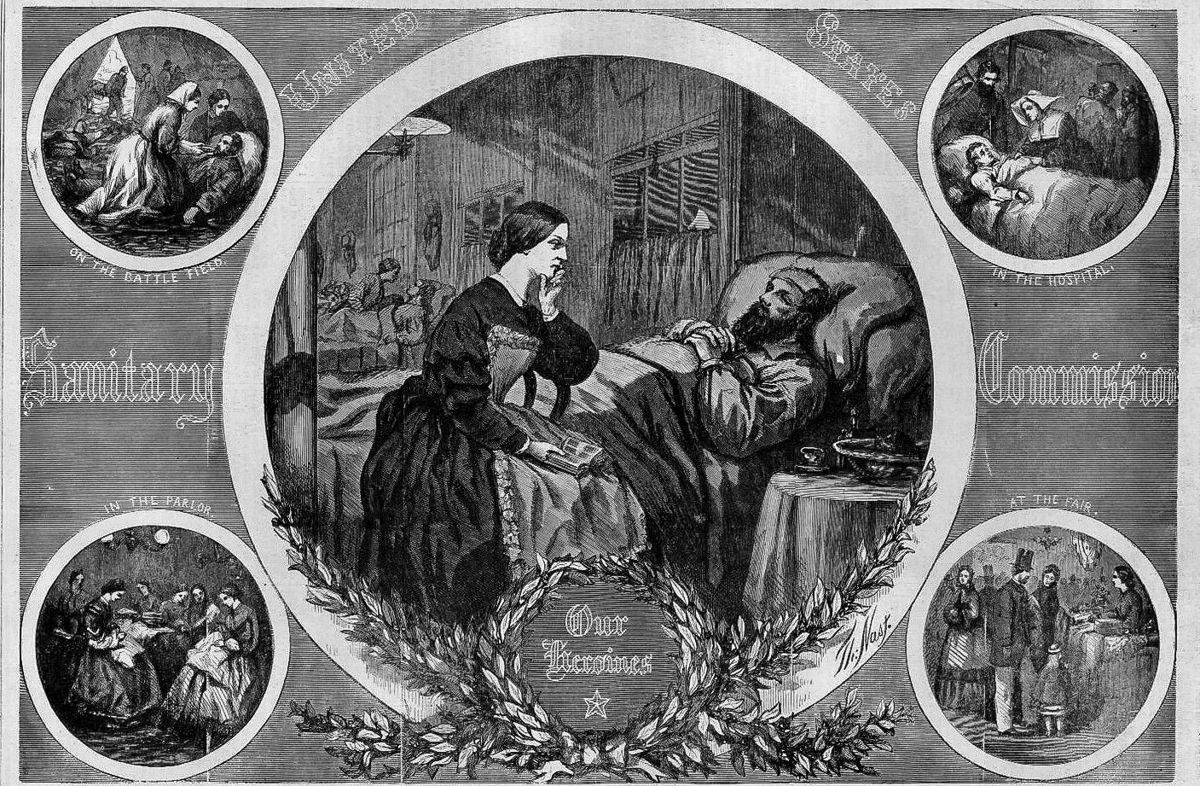
Frederick Law Olmstead (Wiki public domain) a sick soldier. The sole purpose of the Sanitary Commission focused on safe guarding the well-being and health of the volunteer soldier. The Commission carried the people’s love to every mother’s son in the newly formed army of citizen soldiers. An admirable goal in time of war; few could argue such nobility. Young enlistees needed proper nutrition, wellmade clothing, and compassionate medical care after battle. All badly needed staples that went lacking as the bloody war expanded. Faced with a long war, the War Department struggled mightily to meet the crisis; a concerned nation mobilized to confront the shortage. The Sanitary Commission admirably filled the huge void as the shortage in provisions threatened soldier welfare. Huge monetary donations poured in to the Commission for procuring the necessary goods. Those not financially able sent food and clothing. Many women knitted socks for their boys in blue. Though desperately needing funds to further their work, the Sanitary Commission’s board surprisingly refused money from the same government that permitted the organization to help. They did accept wagons and horses provided from the War Department, buildings for stores and offices but the lifeblood coursing through the veins of the commission came solely from charitable donations provided by loving folks in the North. Tens of thousands of patriots volunteered to join the war effort back home. A home front army of loyal citizens far surpassed in numbers any army in the field. Just as regiments assembled in Washington, hundreds of Ladies Aid Societies formed in every major city and small town across the north. The glowing embers of patriotism burned just as bright among the women’s groups as it did in their male counterparts shouldering a musket.
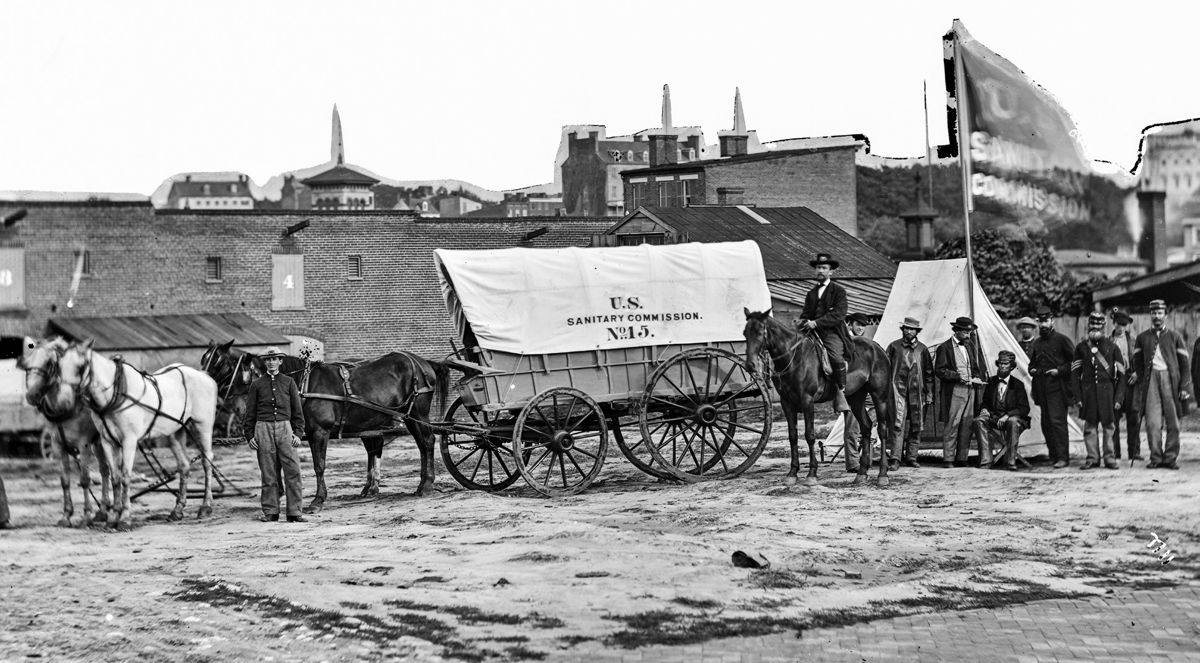
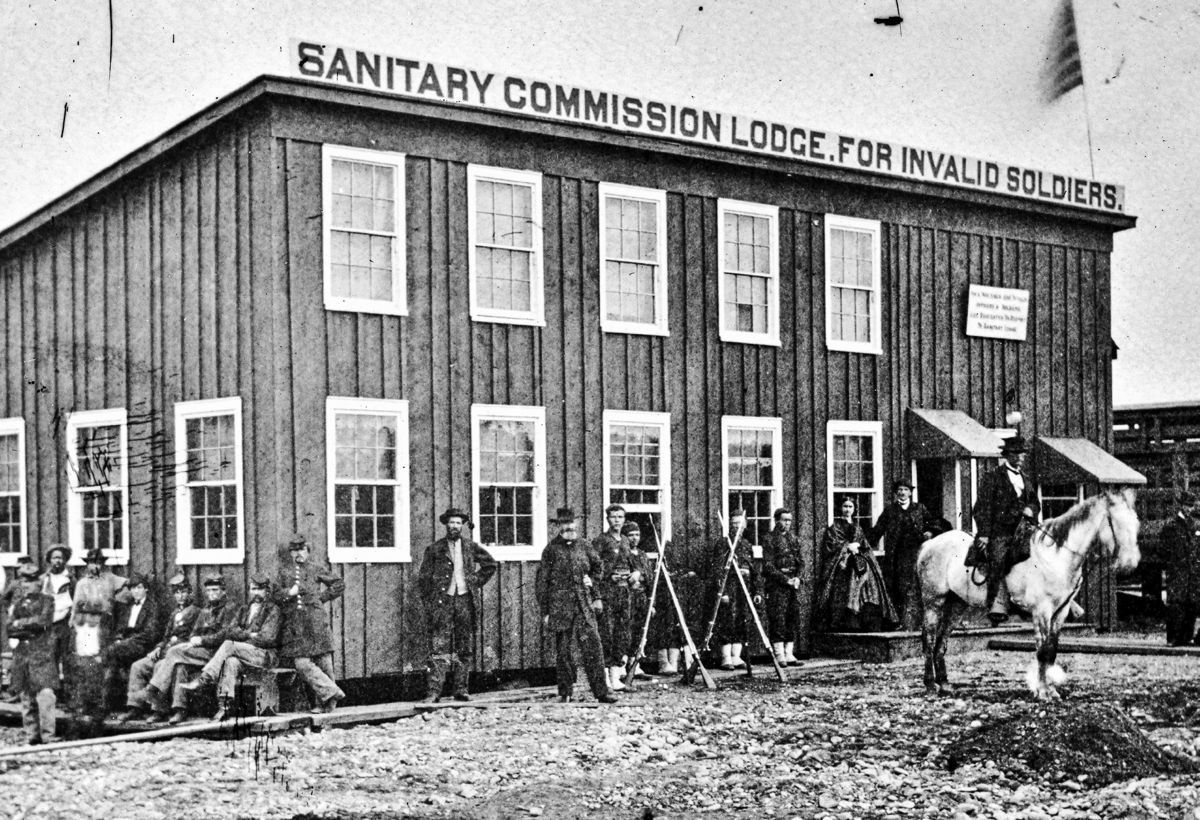
Hospitals staffed by Sanitary volunteers to care for the sick and wounded increased dramatically soon after the start of hostilities. An idea proposed by the Commission resulted in hospital ships plying the waterways to receive the ill and injured soldiers wounded in battle. Battlefields swarmed with Sanitary members aiding fallen soldiers soon after the devastation wrought by shot and shell. Homes for invalid soldiers appeared in numerous cities. Even in quiet parlors back home, the labors of impassioned volunteers impacted every aspect of the war. Wherever the cold hand of war struck the soldier, the warm touch of the Sanitary Commission lessened the suffering. Despite their northern affiliation, the volunteers paid no regard to the color of the uniform. All wounded soldiers in need of care felt the genuine love offered by fellow Americans. The new army soon met an unexpected foe. Feelings of resentment formed rapidly in the Medical Bureau as petty jealousies in bureaucratic Washington came to the fore. Despite the Commission and the Medical Bureau sharing the same objective, the Bureau cast a wary eye toward the upstart organization. How could a bunch of meddling New Yorkers know how to safeguard the welfare of an entire army? The loathing exhibited toward the Commission by many doctors and officers in the rigid Bureau never softened even when the surging casualties and influx of widespread disease assailed the army. In the grimy streets of Washington politics, the Sanitary Commission dug in their heels. Henry Bellows thought the Bureau small minded. The mission of the army’s Medical Department had been looking after a small 18,000-man army in peacetime. The army now stood at 75,000. In a matter of months, it would top 200,000, and later crest well over 600,000. Never had such demanding circumstances challenged the Medical Bureau. Bellows thought the Bureau incapable of carrying out the task. Work commenced in earnest in the weeks after Lincoln’s official approval. Sanitary inspectors fanned out to inspect the evergrowing number of army camps dotting the outskirts of the Capitol. What they found was monumental. Army regulations allowed too many soldiers to crowd into a camp of only a single square mile. Soldiers slept on bare ground lacking any straw bedding. Offal and sewage disposal had little uniformity in the camps. Poorly made army blankets from crooked suppliers fell apart in even moderate conditions. Meals lacked vegetables. Latrines went ignored. Liquor flowed freely. Discipline was practically nonexistent. The permissive habits in camp guaranteed a visit to the already overcrowded hospital for the citizen soldiers new to camp life. Too few hospitals left many sick soldiers in camps to infect others. Reports from Sanitary inspectors often went ignored. A new Surgeon General, Dr. Clement
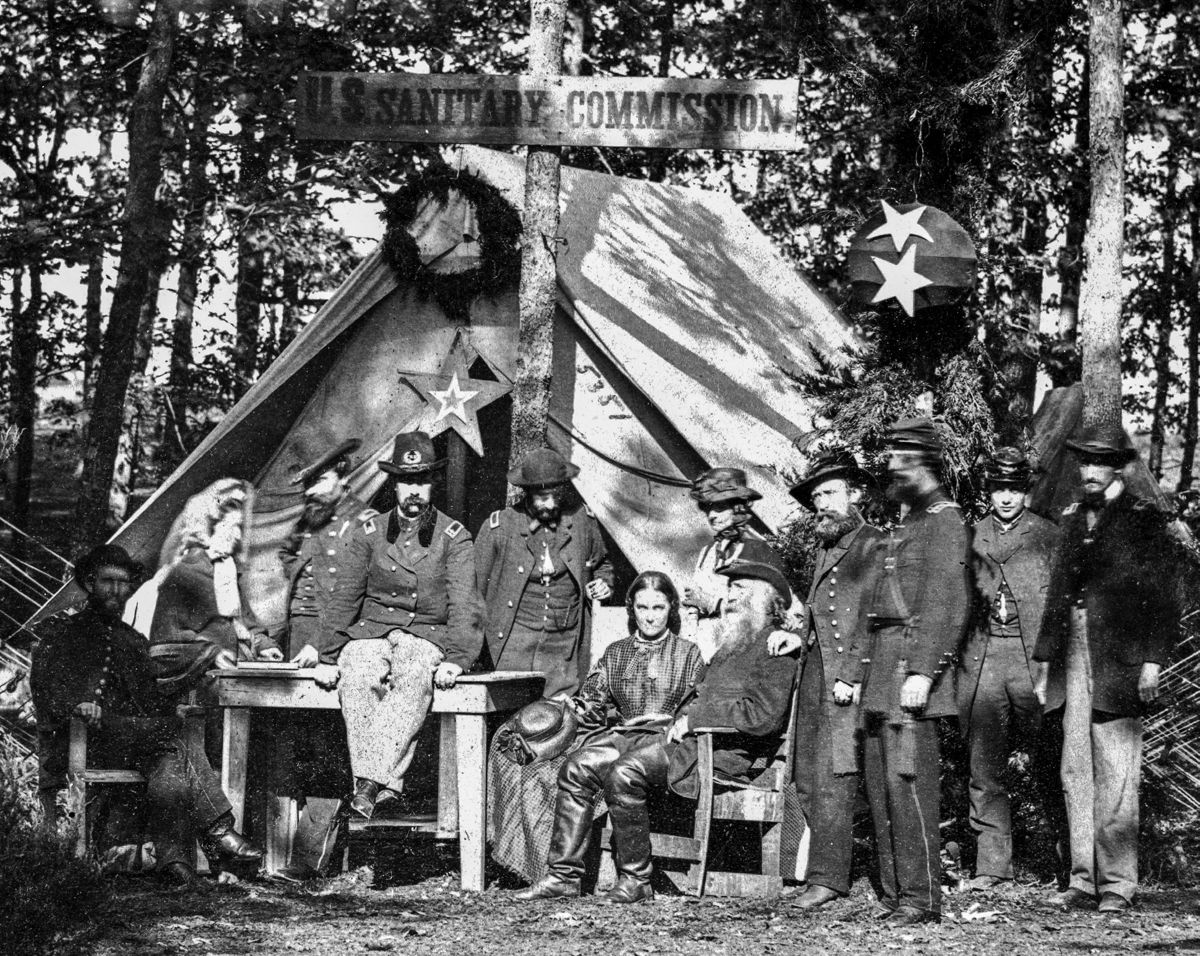
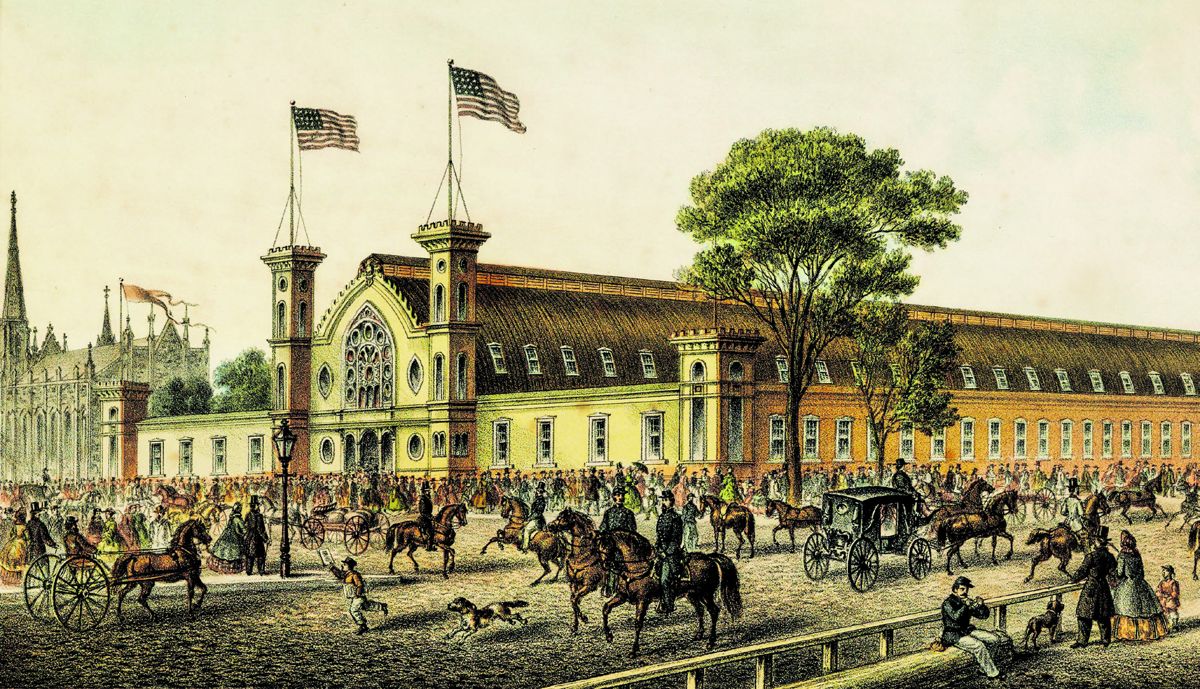
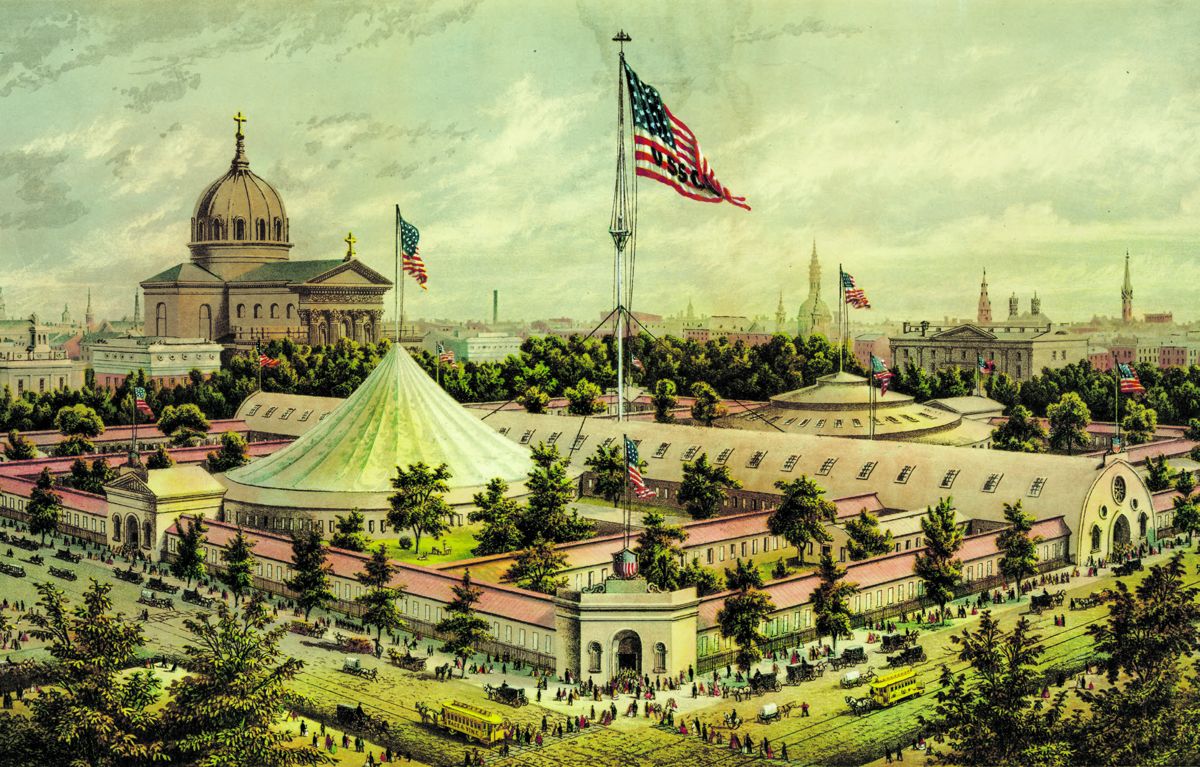
Alexander Finley, did little to sun suddenly broke through in change procedures. Stuck in a Washington. Lincoln appointed rigid military tradition, Finley General George B. McClellan stayed the course and frowned on July 24, 1861, as the new on any innovative suggestions commander of the Federal forces. from outsiders. Finley relegated Desperation melted away and the Commission to overseeing confidence soared. McClellan’s the volunteers, while he and the exemplary organizational skills Medical Bureau administered to restored respectability to an army the regular army. and city in shambles. The hardliner Finley never hid his Most important for the disdain for the do-gooders. On one commission, McClellan lacked the occasion, Finley delayed a request jealous streak infecting the Medical for medicine from McClellan’s Bureau. All parties interested in medical director, Surgeon Charles supporting “Little Mac’s” new S. Tripler. That prompted the army had a friend in McClellan. Commission to spend $500 of The Sanitary Commission gained a their own reserves to purchase 220 staunch supporter. McClellan went gallons of quinine to treat malaria. to work dismissing incompetent Tired of the incessant delays from officers, sharpening discipline, and the Medical Bureau, many doctors closing down saloons. in needy hospitals simply went The new commander called straight to the Commission for a meeting in September to supplies. discuss the role of the Sanitary The Commission thought the Commission with Secretary glaring need for more hospitals of War Simon Cameron and had to be addressed quickly. Henry Bellows. Both General The winds of war blowing thru McClellan and the Secretary the Quartermaster’s Department of War reached a satisfactory had General Montgomery Meigs conclusion. They declared support focusing solely on guns, not and openly sought the advice of hospitals. Things looked bleak in the Commission but implementing the opening days of the war. The any suggestions proved difficult. calamity at First Bull Run on July An October meeting with an 21, 1861, did little to change that impressed Lincoln further elevated perception. the status and far-reaching effect of Just as ominous clouds began the group. No longer thought of as gathering over the capitol, a radiant an encumbering fifth wheel to the wagon, the volunteer organization took its place as one of the most significant forces in the Northern war effort. Commissioners firmly believed that health and hygiene, if practiced religiously, resulted in an effective war machine, as well as content soldiers. Most important to a soldier’s health was a proper diet. Coffee and hardtack offered little nutrition to an army on the march. Wholesale changes had to be implemented to avert troubles. A reactionary Medical Bureau treated maladies, while a visionary Sanitary Commission sought to prevent them. Nothing separated an ill soldier from a wounded soldier in the thinking of the Commission. Father Abraham’s army lost a fighting man either way. One of the first matters pressed by the Sanitary Commission involved Kalorama Hospital. Much to the surprise of Commission inspectors, doctors didn’t separate smallpox patients from other patients. Commissioners immediately protested to McClellan that smallpox-infected soldiers must be quarantined. They insisted that contaminated clothes be put in ovens, and guards placed at entrances to deny entry to anyone not necessary. To further isolate the infected, they advised that no camp be established within a quarter mile of any smallpox facility. One of the first tests came after the debacle at Ball’s Bluff on October 19, 1861. A prompt response from the Commission in delivering hospital supplies and clothing won the group high praise from individual officers and doctors. Such proven efficiency yielded a growing and stronger political influence for the new advisory arm of the government. Qualified Commission agents of impeccable character were soon attached to field armies. With the dawn of 1862, the Commission gained an unlikely friend. Cameron was out and Edwin Stanton took the reins as the new Secretary of War for the War. Stanton didn’t love the Sanitary Commission, but he despised Surgeon General Finley. Finley drew the ire of Stanton from the start of a war the Surgeon General had no chance of winning. Of all the politicians populating Washington, Finley picked a fight with a master manipulator. The Commission gleefully watched Finley fashion his own demise. The new Secretary of War thought the Medical Bureau inefficient under Finley’s direction; the Battle of Shiloh cemented that view. All knew a large battle was brewing; a plan should have been in place. Sharp criticism erupted from Stanton after the poor performance by the Bureau at Shiloh when much needed supplies forwarded by the Medical Bureau arrived days after the fighting, a delay by the Medical Bureau that caused much unnecessary suffering.; The Sanitary Commission went to work before the battle ended. Finley was out; General William Hammond, a man who wholeheartedly supported the Commission, was appointed the new Surgeon General. When the war went on, attention later turned to prison camps. Captured soldiers languishing in inadequate and filthy prisons especially drew the sympathy of the Commission. Sending food and clothing to the prison camps took top priority as soldiers perished in alarming numbers due to inaction on the part of bickering government officials on both sides. Inspectors visiting prisons in the North and South found conditions at most camps appalling. After inspecting a Northern prison in Chicago, Henry Bellows adamantly demanded the closing Camp Douglas. Instead, the Commissary General of Prisons, Union General William Hoffman, refused inspectors further access to any prison. On many occasions, goods meant for suffering prisoners never reached them. Food and clothing sent South earmarked for northern prisoners often fed and clothed the Confederate Army. Although many prisoners in the North and South received material goods from the Commission at some point, efforts to supply the prisoner of war camps fell far short. As the war dragged on, more funds were needed. Major cities started holding Sanitary Fairs to raise money for the cause where admission ranged from 25 to 75¢. Every imaginable item went to the auction block. Items of every variety went on sale in booths stacked with furniture, toys, art works, clothes, war relics, and much more. Concerts, exhibits, lectures, and even theatrical productions entertained thousands of patrons. Food donated by women filled appetites at rail stations staffed by local women. Women even dogged generals for their autographs to sell at the fairs. The first notable and large Sanitary Fair was organized in 1863 by Mary Livermore in Chicago. Mary skillfully represented the Sanitary Commission across seven Northwestern states, while demonstrating the same zeal as Henry Bellows. She organized hundreds of Ladies Aid Societies and instructed them in the fine art of soliciting donations. Although men dominated the Commission’s hierarchy, it was the dedicated women on the home front who formed the nuts and bolts of every Sanitary operation. Men acted the part of the Generals and Colonels in the Sanitary Commission, but it was mostly women who fought in the trenches. In October 1863, Mary organized the Northwestern Soldier’s Fair despite the many critics who thought the gesture honorable enough but didn’t believe a significant amount of money could be raised. Mary’s aim for a lofty goal of $25 thousand dollars seemed far too optimistic. Much to the surprise of her detractors, the fair brought in $86,000. Supporters flocked to the fair at the rate of 5,000 daily and gladly paid the 75¢ admission. Topping the list of sale items was Lincoln’s personal copy of the final draft of the Emancipation Proclamation which brought $3,000 dollars at auction. Lincoln reluctantly parted with the document but stated, “I had some desire to retain the paper, but if it shall contribute to the relief or comfort of the soldiers, that will be better.” The prized document eventually found a home at the Chicago Historical Society, but was lost forever in the great Chicago fire of 1871. New York, Philadelphia, and other cities across the North soon began organizing their own fairs after the success in Chicago. The City of New York hosted their patriotic extravaganza in April 1864, as the “Metropolitan Sanitary Fair.” New Yorkers rightly boasted later how their fair netted more money than any other. The Big Apple’s festival turned a profit of $1.2 million dollars. Lincoln again did his part by handwriting several copies of the Gettysburg Address to be auctioned off just as he did for many others. Lincoln’s repeated writing of the address later confused historians as to which might be the original. In Philadelphia, the grandeur and pageantry nearly matched New York’s effort. The Commission’s June 1864 Great Central Fair held, added another $1 million dollars to the coffers of the Sanitary Commission. On one particular day, organizers doubled the price of admission as folks wanted to get a glimpse of special visitors. The move hardly fazed crowds that jam packed the venue. President Abraham Lincoln attended that day, along with wife Mary and his young son Todd. Lincoln even contributed to the event by bringing 48 signed copies of the Emancipation Proclamation that fetched $10 apiece. The Great Sanitary Fair in Philadelphia infused the war effort mightily with some much-needed funds. Until the end of hostilities, Northern people held steadfast in their support of the Union Army’s soldiers. Over the course of the war, the Sanitary Commission raised an astonishing $25 million dollars in goods and cash for the war effort. That translates to approximately $422 million dollars in today’s money. Lincoln could never have imagined that signing the “Patriotic Proposal” would have amassed the support that it did. One of the least known executive orders issued during the Civil War produced one of the most effective arms of the U.S. government in wartime. Without firing a shot, Doctor Henry Bellows and company helped tilt the fortunes of war in favor of the Union. The patriotic people in the North accomplished what few thought possible in 1861. The United States Sanitary Commission emerged from the smallest hamlets in the nation to fill an enormous void in the war machine. In the decades after the war, another charitable organization came to the fore that closely resembled the Sanitary Commission. The “Angel of the Battlefield,” Clara Barton, worked alongside the Commission during the war. One can rightfully argue that the Sanitary Commission was the precursor to the American Red Cross. Inspired by the Commission, Miss Barton founded the Red Cross in 1881. A remarkable organization sprouted from the seeds planted in 1861 by kindhearted American men and women, the United States Sanitary Commission left an indelible mark on the Civil War before fading into history in 1866. Joseph F. Wilson lectures on Andersonville Prison and Walt Whitman in the Civil War. He also produced “Civil War Prisons – An American Tragedy,” a documentary film now available on Amazon. Contact – joef21@ aol.com.