
This And That
“A Moving Mass of Blue Coats” Tracing Sherman’s March to the Sea: Part Three of a Four-Part Series
By Gould Hagler · Originally published May 2022 · pp. 18–19
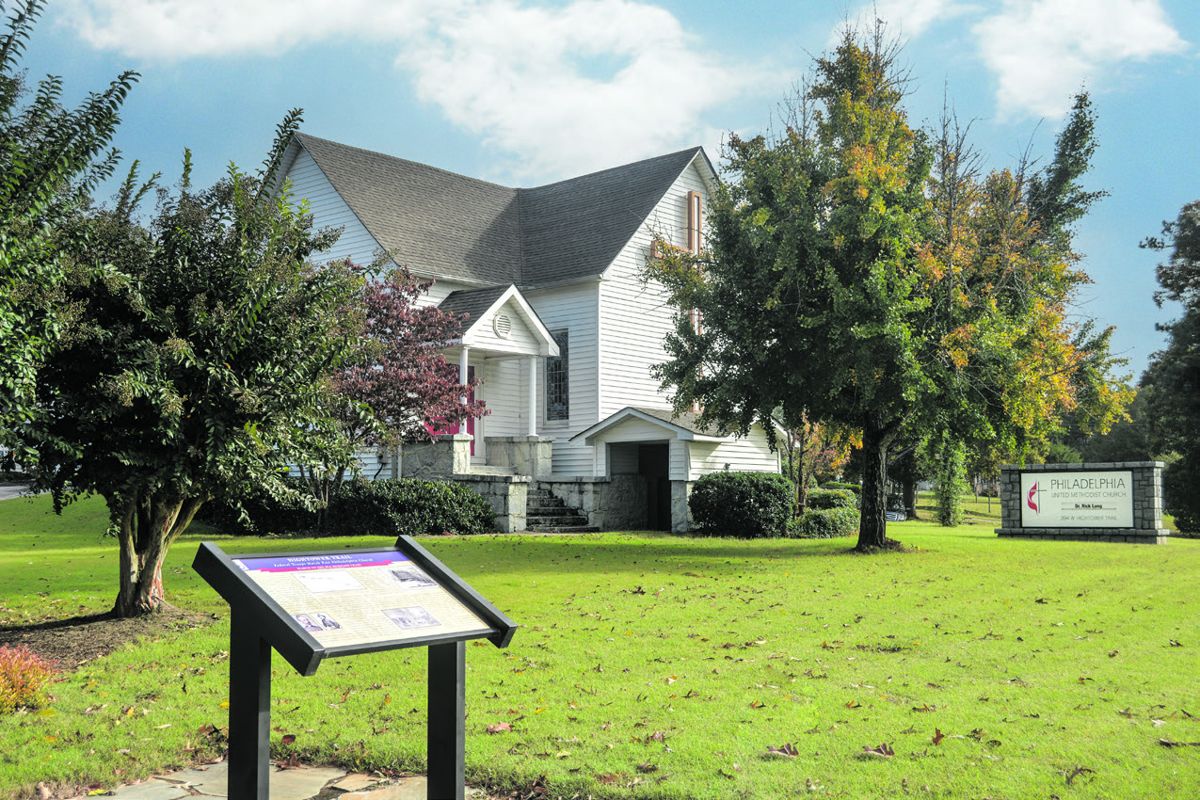
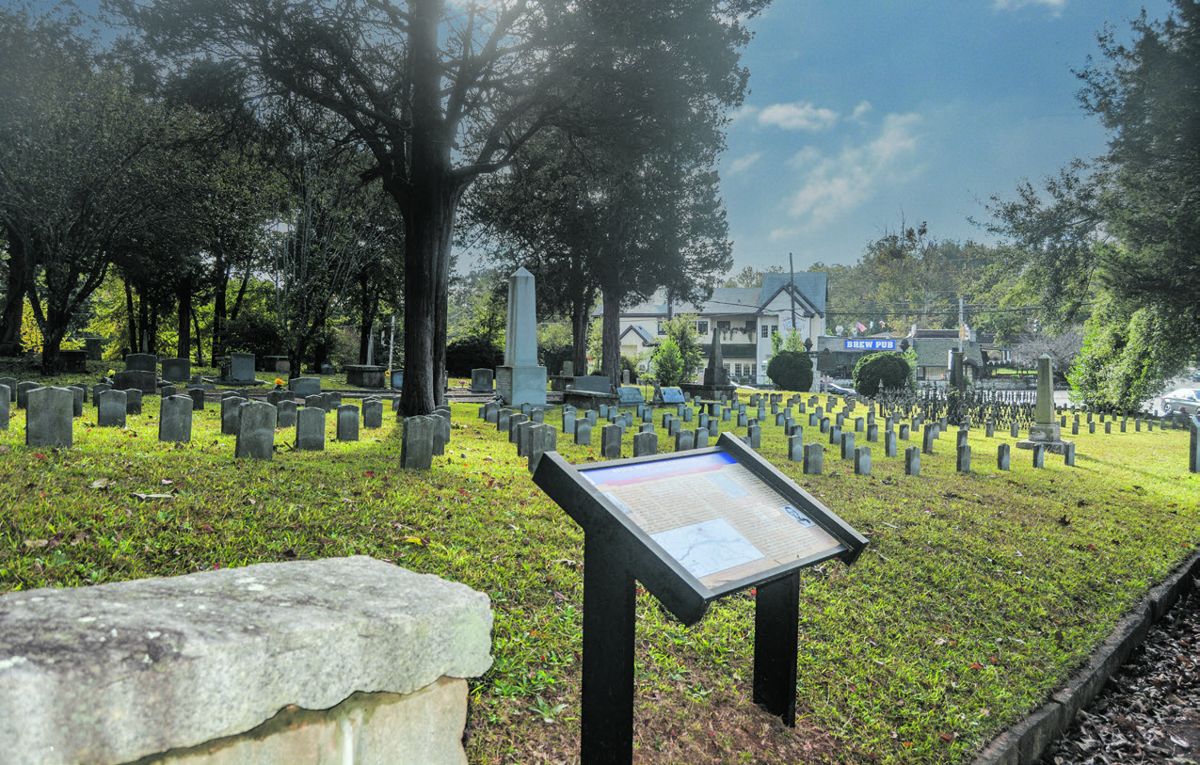
“A Moving Mass of Blue Coats” Tracing Sherman’s March to the Sea: Part Three of a FourPart Series Last month, after traversing the state of Georgia with the Right Wing of Sherman’s force, we left the Federal armies just as their two wings came together at the gates of Savannah in December 1864. We now step back to Atlanta in mid-November and start tracing the route of the Left Wing as it moved east and south through the state. Guided as before by Georgia Civil War Heritage Trails (GCWHT), we will in this column travel with the two corps of the Army of Georgia* under Maj. Gen. Henry W. Slocum as they march from Atlanta to the state’s wartime capital of Milledgeville. The GCWHT marker in the Stone Mountain Cemetery states that both the XIV and XX Corps passed through the area on November 15 and 16. The marker describes a cavalry action that took place in July and offers information about the 215 Confederates interred in this historic burial ground. We read some impressions recorded by Federals as they passed the famous monadnock. Sherman himself wrote of the “mass of granite… cut out in clear outline against the blue sky.” It seems the Federals passed through without incident, as the marker tells of no military action or any encounters with civilians. From Stone Mountain, Brig. Gen. Alpheus Williams’s XX Corps crossed the Yellow River and passed by Philadelphia Methodist Church on November 17. The church was built in 1837 on the Hightower Trail, a major trading route used by the region’s Indians that marked the division between the Creeks and Cherokees. Stretching across the state from Augusta into Alabama, it continued to be an important route after whites settled the area. Here forage was plentiful. “Daily foraging details, 50 men strong, systematically stripped the farms of food, carriages, wagons and livestock,” the interpretive sign tells us. According to “a local story,” one Yankee passer-by helped himself to a young girl’s pony, but left the little beast’s saddle on a fencepost before he trooped along to the village of Centreville. Centreville (now named Jersey) made a pleasant campground for the three XX Corps divisions the night of November 17. “Close to 10,000 soldiers, with their wagons, horses and artillery plus hundreds of following slaves established their evening camps throughout this community.” As usual, “local lore” informs posterity of the livestock fallen prey to the bummers. While the XX Corps marched
along the Hightower Trail, the XIV Corps, under Brig. Gen. Jefferson C. Davis, moved on a parallel track through Conyers and Covington, stations on the Georgia Railroad. In Conyers, Sherman read up on the news when November 13 papers from Augusta were found. The GCWHT marker records a “local legend” which holds that Sherman lunched outside on a boulder while some officers ate indoors at the home of Mrs. Amanda Scott. The corps marched out the morning of the 18th, taking along local blacks hired as teamsters and leaving behind some destroyed tracks, a locomotive, and a number of cars. A Covington resident, Allie Travis, later wrote that “the street in front of our house was a moving mass of ‘blue coats’ from 9 o’clock in the morning to a late hour at night. All during that day, squads would leave the ranks, rush into the house and demand something to eat.” The marker does not indicate how much grub was available for the hungry Federals. “Many slaves crowded around the troops in jubilation, calling them saviors,” according to the marker. The troops marched through the town and made camp four miles to the east. The marker in Social Circle tells of some refugees from Atlanta who had fled to that community. Some luckier ones had set up housekeeping in abandoned railroad cars. Social
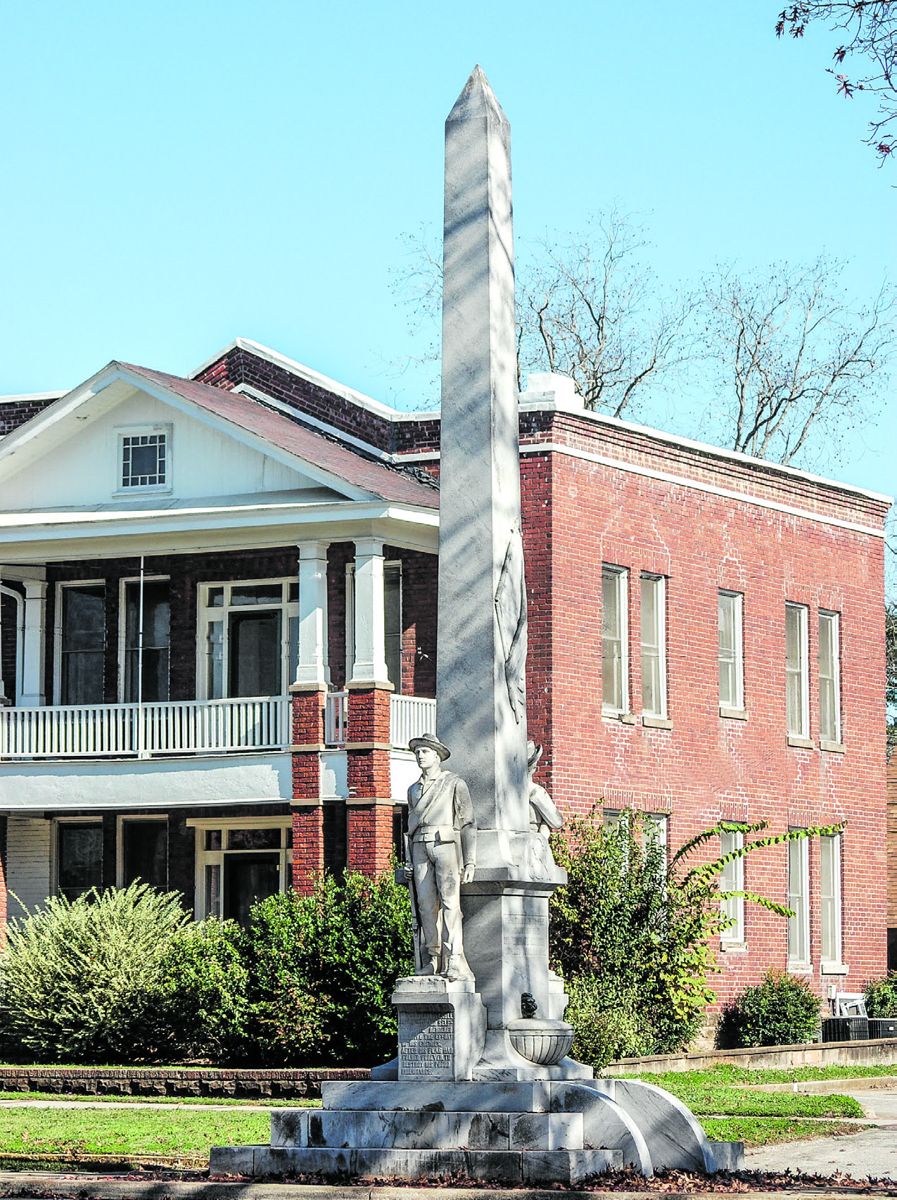
(Gould Hagler)
Circle was relieved of livestock and foodstuffs. As in other towns along the route, here “a joyous reception was given to the soldiers by the slave population.” The XX Corps’ next stop on the Georgia Railroad was the small town of Rutledge. The first division to enter the village, commanded by Brig. Gen. John W. Geary led the first division to enter the village; they arrived at noon on November 18. Geary wrote that near Rutledge Station “we halted for dinner.” The GCWHT marker here gives readers a sense of what a Federal corps on the march looked like. “The approximately 14,000 men of the 20th Corps, plus hundreds of wagons, horses, mules and cattle stretched for miles…. As General Geary’s lead division entered Rutledge the division of Brigadier General Nathaniel J. Jackson was still a two-hour march west of Social Circle, more than ten miles behind,” provoking a modern infantryman’s comment that they were marching close to five miles an hour. Foragers added weight to the wagonloads and increased the size of the cattle herd. Not all foragers returned, however. Forty-four men strayed a bit too far and encountered Confederate cavalry. All were killed or captured. On November 19 Geary’s Division, still in the lead, got an early start and passed through Madison before daylight, on route to the Oconee, not to cross it but to burn the railroad bridge spanning the river. The trailing divisions halted in Madison, torched the depot, wrecked rails, and burned warehouses and cotton bales. Further damage to Madison was (Library of Congress)
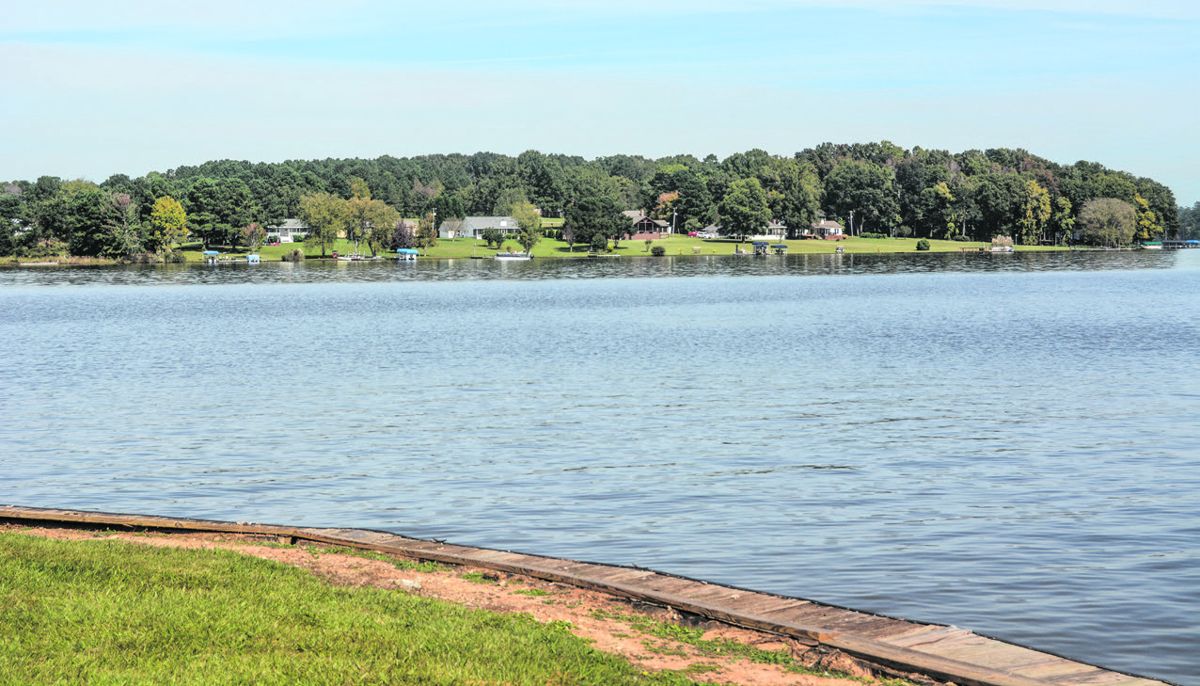
limited, perhaps due to pleas of the mayor, a former congressman who had opposed secession. There was some pillaging, but Slocum drew the line at sacrilege. When a Federal soldier stole a silver communion service from the Presbyterian church, the general made him take it back. Meanwhile the lead division under Geary headed east toward the river, wrecking the track along the way, and destroying the vital railroad bridge. Geary’s troops also destroyed 50,000 bushels of corn, 500 cotton bales, several mills, gins, some ferry boats and “numerous other structures,” according to the marker on the shore of what is
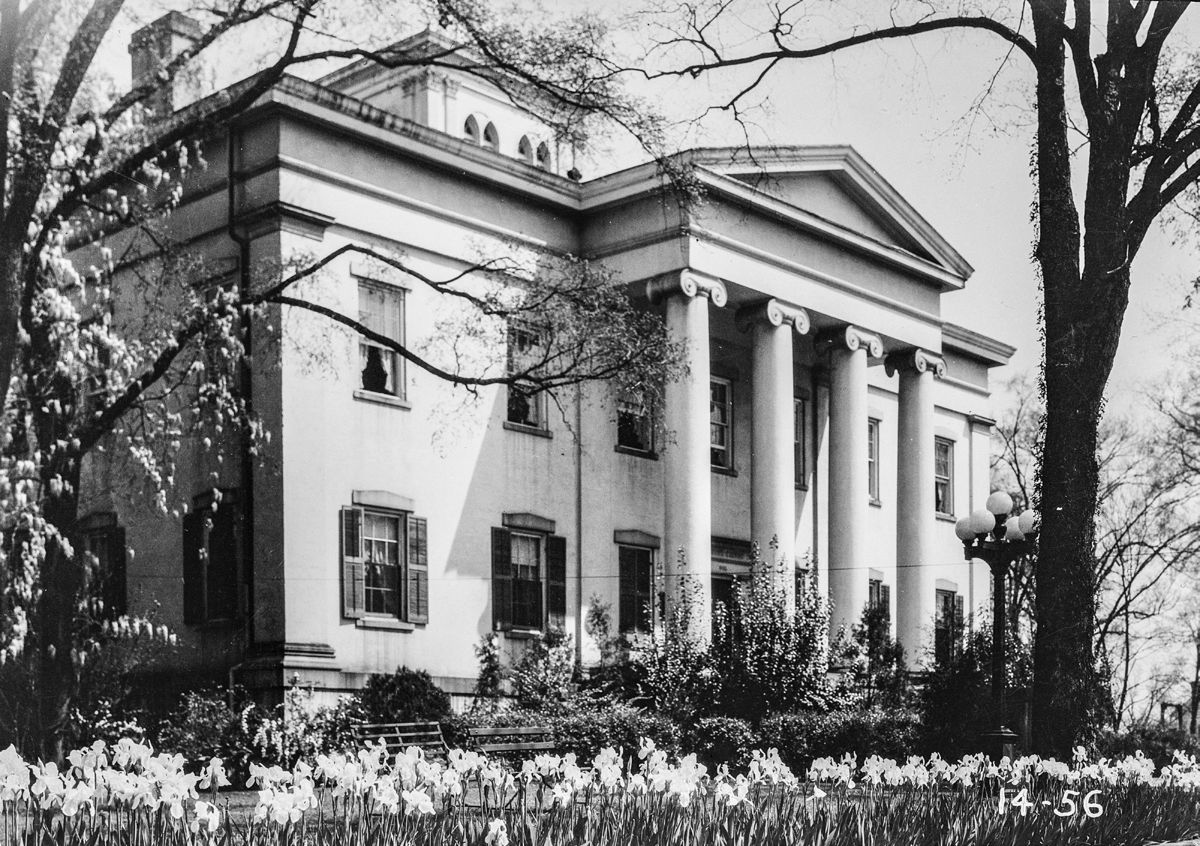
Old State Capitol, Milledgeville, Baldwin County, Ga., 1937. (Library of Congress) now Lake Oconee. Geary’s division and the other Federal columns then moved south along the river, but Geary sent a small detachment “across the river to nearby Greensboro to spread the false rumor that General Sherman’s entire army was marching east…toward Augusta.” The other two divisions of the XX Corps, commanded by Brig. Gen. Nathaniel J. Jackson and Brig. Gen. William T. Ward, struck the town of Eatonton after passing Madison. There the Federal troops ransacked houses, tore up railroad tracks, and replenished their haversacks with goods taken from farms. A newspaper correspondent reported that the farms were “well stocked with hogs and poultry, sacks of corn, fodder, corn-houses, and bins filled with corn and grain.” The GCWHT marker also tells of three Federal surgeons who stopped to call on the family of Edmund Reid. “They had treated the Reid’s wounded and captured son John at Gettysburg,” the marker explains. At Gettysburg, the XI and XII Corps fought on Cemetery and Culp’s Hills; then, much reduced, they were sent to the Army of the Cumberland in Tennessee where they were combined as the XX Corps. The next stop on the trail takes us to the state’s capital city, Milledgeville. The XIV and XX Corps both marched into Milledgeville on November 23. Sherman, still with his Left Wing at this point, set up headquarters in the Governor’s Mansion, vacated by Gov. Joseph E. Brown, who refugeed to Macon as the enemy approached. In his memoirs Sherman wrote that the governor and other officials fled “ignominiously…in the utmost disorder and confusion, standing not on the order of their going, but going at once.” The state penitentiary was also located in Milledgeville. A marker at the prison site explains that the industries established there “had become vital to the Confederacy’s war effort in Georgia.” Prisoners made shoes and combs for carding wool and cotton. The state’s armory was also located at the pen, “producing bayonets, pikes and the Georgia Armory Rifle.” Some inmates earned their release by volunteering for the Georgia Militia. They served with the Milledgeville Battalion and “performed well in a holding action against the Federal army’s ‘Right Wing’ at Ball’s Ferry on the Oconee River south of Milledgeville.” After Ball’s Ferry some of the cons deserted, but others served honorably. A third marker in Milledgeville is placed at the State House Square. Here, in one of the March to the Sea’s more famous episodes, “a raucous group of soldiers staged a mock session of the Georgia legislature and ‘repealed’ the Ordinance of Secession.” They also trashed the place, dumping the contents of the state library out the windows and scattering the halls and grounds with litter. The Federals remained in Milledgeville until November 24. Sherman met with his top generals and gave orders for the next phase of the campaign. Then, on November 25, the XIV and XX Corps pulled out. Next month’s column will follow the steps of these corps to the coast, where they joined up with the Right Wing, and where the March to the Sea ended with the occupation of Savannah. * At the time of this campaign the Army of Georgia was an informal designation. The army comprised two corps of the Army of the Cumberland, the XIV and the XX. According to Faust’s encyclopedia, “because the commander of the latter army was in Nashville, the Left Wing could not use the name Army of the Cumberland.” The informal name became official on March 28, 1865. Gould Hagler is a retired lobbyist living in Dunwoody, Ga. He is a past president of the Atlanta Civil War Round Table and the author of Georgia’s Confederate Monuments: In Honor of a Fallen Nation, published by Mercer University Press in 2014. Hagler speaks frequently on this topic and others related to different aspects of the Civil War and has been a regular contributor to CWN since 2016. His email is: [email protected].
Sherman’s columns marching through in November were not the first Federal forces to strike some of these Georgia communities. Brig. Gen. Kenner Garrard had led a cavalry raid east from Atlanta in July. In Stone Mountain the Federal horsemen skirmished with Confederate cavalry, destroyed track, and burned military stores. In Social Circle Garrard’s men did some plundering, torched a hotel, and were “very insolent to the ladies.” In Covington a local man, 59-year-old Presley Jones, shot at and wounded two of the raiders, one mortally. He paid for his foolishness with his own life. A Confederate soldier, at his Covington home on sick leave, “was found by Federal soldiers following the Jones incident and was executed as a reputed bushwhacker.” Cavalry under Maj. Gen. George Stoneman also went through Covington after Garrard’s visit, outbound on a raid “with a goal of liberating Federal prisoners at Macon and Andersonville.” On the afternoon of August 1, survivors of the unsuccessful foray rushed through Rutledge on their way back, without their leader, who was captured along with several hundred of his men at Sunshine Church. Earlier that same day the retreating cavalrymen rode through Eatonton, hurriedly burning Eatonton’s railroad depot, with nearly 1,000 Enfield rifles stored inside.