
This And That
Tracing Sherman’s March to the Sea: “Charred and Black as Yankee Hearts”
By Gould Hagler · Originally published March 2022 · pp. 16–18
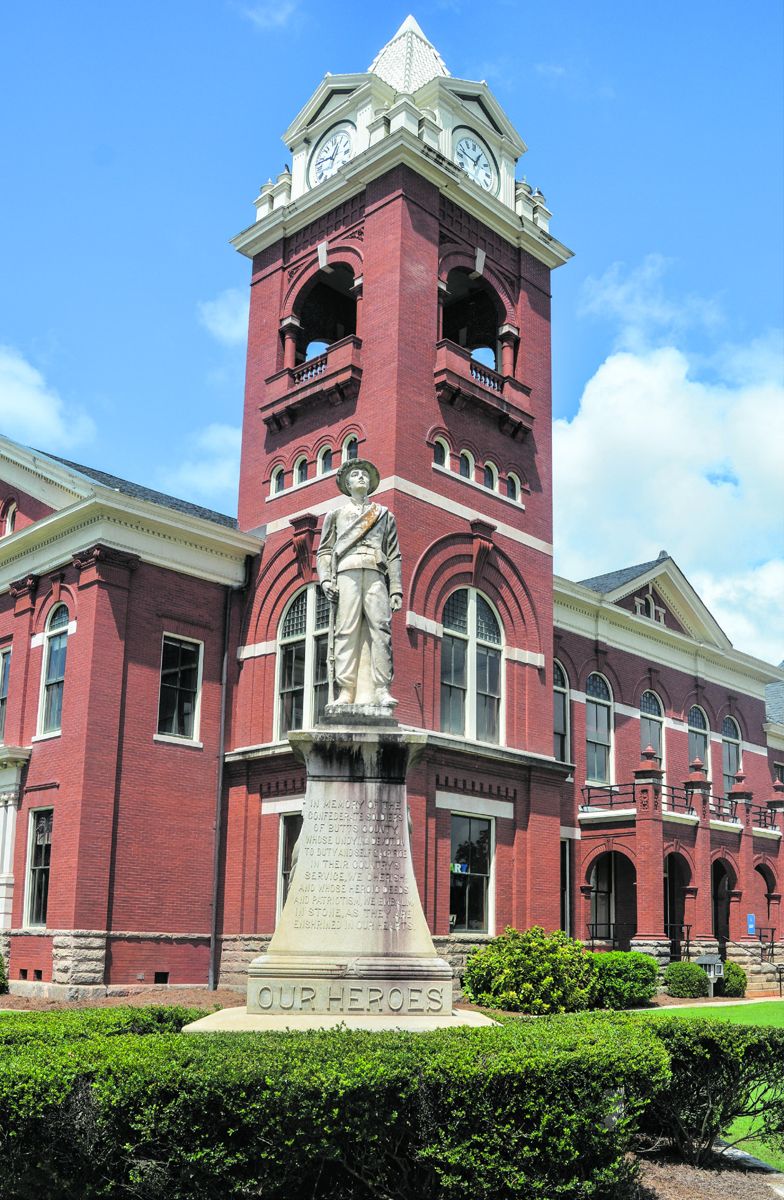
Sherman embarked upon his March to the Sea on November 15, 1864, taking with him on his southeastward journey two corps from the Army of the Cumberland (re-christened as the Army of Georgia) and two from the Army of the Tennessee. This force of some 60,000 men, little more than half the number participating in the Atlanta Campaign, advanced in two wings across the state before meeting at Savannah in December. On a Sunday late in August, I followed the route taken by the Army of the Tennessee, Sherman’s Right Wing, commanded by Maj. Gen. O.O. Howard, from downtown Atlanta to the Oconee River, covering about half the distance to Sherman’s objective. Traveling on a course blazed by Georgia Civil War Heritage Trails (GCWHT), I halted every few miles to read the interpretive markers which tell the stories of Federal soldiers on the march, the civilians in their path, and the outnumbered Confederates laboring to hinder their advance.
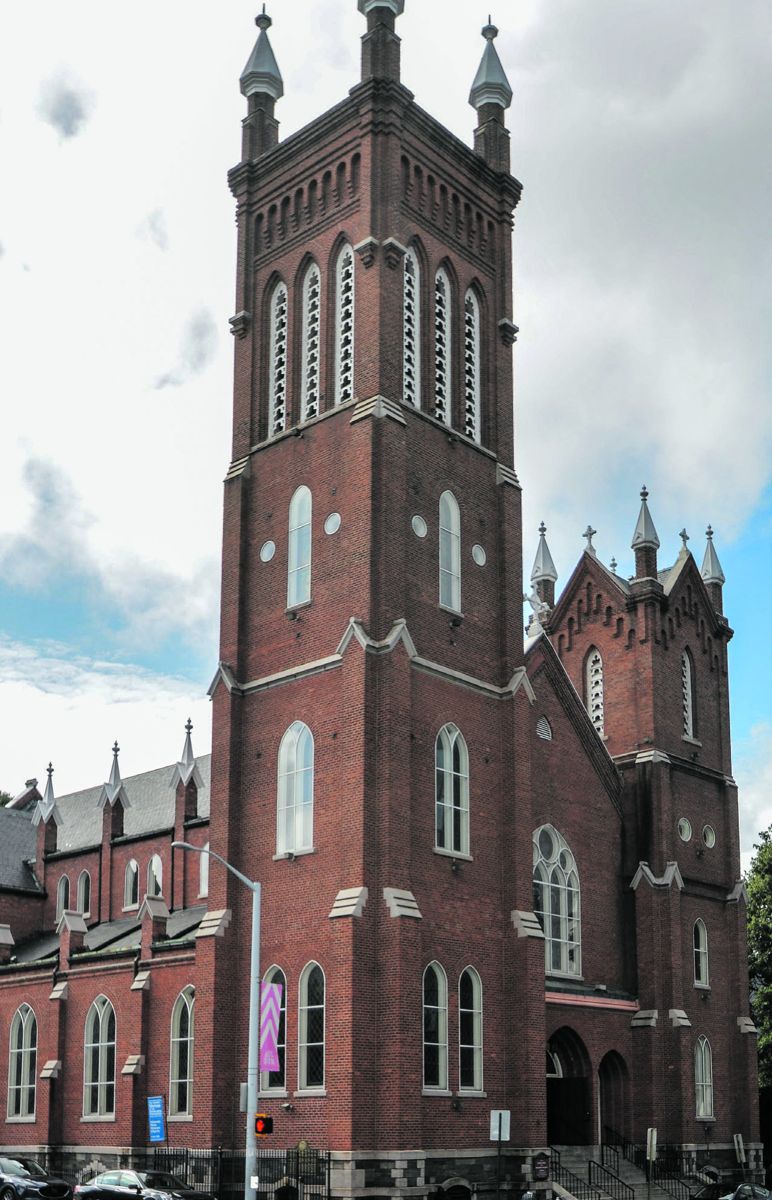
I began at the Shrine of the Immaculate Conception near the State Capitol and Atlanta City Hall. The structure now standing there is post-war, built in 1873, but it was the pastor of this church who is credited with saving his and other nearby churches from the flames that burnt much of Atlanta as Sherman departed. Whether the popular story is true, partly true, or largely legend is debatable, but it is a great story. My favorite part is the threat made by Father O’Reilly to excommunicate the Catholics in Sherman’s army if the sacred buildings were burned. The Army of the Tennessee proceeded southward, toward what are now Atlanta’s suburbs and exurbs. Most of the XV Corps, under Maj. Gen. Peter Osterhaus, halted for the night near Stockbridge. In his report Osterhaus wrote that he met a force of 1,000 Confederates, under Brig. Gen. Joseph Lewis, which made “a very feeble resistance.” (Lewis commanded the Kentucky Orphan Brigade, which certainly numbered well below 1,000 at this stage of the war.) According to GCWHT’s information, the Federals easily repaired a bridge over Little Cotton Indian Creek, which had been burned by Lewis’s unit, and pressed on to McDonough. There the entire XV Corps camped on the night of the 16th. The interpretive marker at the courthouse square states that the town was not burned, but homes, businesses, churches, schools, the courthouse, and a seminary sustained damage while being looted by undisciplined soldiers. Osterhaus’s report was silent about any damage done during his corps’ brief stay. Further on, the marker at Locust Grove describes the action in the area through which the XV Corps passed on the 17th. The marker quotes a Confederate officer, Lt. John Ash, who “described the hopelessness of stopping the Federal advance.” According to Ash, his regiment, He wrote that “We were so completely run over that we were scattered in every direction, those of us who were not killed and captured.” “The Federal soldiers marching through Locust Grove did not leave the area as they found it,” the marker tells us, and quotes a letter from a local woman to her soldier husband, telling him of “plantation after plantation destroyed.” Ten miles or so beyond Locust Grove was Sylvan Grove Plantation, owned by Asa Buttrill. The interpretive marker here tells the tale of the Buttrill family’s unsuccessful effort to flee as news came of the Yankees’ approach from the north. On the 16th, Asa left with two wagons loaded with valuables, food, and other provisions; his daughter Mary, her aunt, two female slaves, and a disabled Confederate soldier followed in a carriage the next day, while Mrs. Buttrill remained at home. (Yes, this seems odd to me too.) Mary’s party encountered some Confederate soldiers along the way, one of whom was Mary’s brother, a lad of 17 years. As Federal cavalry appeared, the combatants fled, trusting, it seems, that the enemy Shrine of the Immaculate Conception.
Tracing Sherman’s March to the Sea: “Charred and Black as Yankee Hearts” Part One of a Four-Part Series would not mistreat the women. Mary sought and received the protection of a chivalrous officer, Col. George Spencer, of the First Alabama Cavalry (U.S.), who ensured the party was not molested while Federal troops passed. Asa also met up with some Federal cavalrymen who plundered his wagons. Colonel Spencer was smitten with Aunt Emma and tried to contact her after the war. Stranger matches have been made, but in this case the suiter was rejected. Later, XVII Corps commander Maj. Gen. Frank Blair headquartered in the Buttrill’s 14-room home. After Blair and his staff departed, stragglers looted and vandalized the place. “Sylvan Grove’s barns, stables, cribs and fences, cotton and gin houses were all burned, while all cows, chickens, horses and mules were killed or stolen.” The Federals then marched through Jackson, just south of Sylvan Grove, and left their mark on the town. The interpretive marker on the square tells that Gen. Howard’s chief of artillery described Jackson as “a beautiful little place and evidently occupied by the most prosperous people of that region.” The modern traveler learns that during the previous summer Jackson had not been as heavily foraged as areas closer to Atlanta had been. That good fortune was erased on the 17th. By the time the Federals left,

CivilWarNews.com the area had been stripped of provisions. Homes were spared but the courthouse and business establishments were burned. Foodstuffs were carted off and livestock either taken or killed. After Jackson both corps pressed on to the Ocmulgee River, which, in the face of a more powerful enemy, would have been a significant obstacle. As it was, the Federals reached and then crossed the river with no difficulty except for bad weather and clogged, muddy roads. General Osterhaus reported that he “succeeded in pushing the Twenty-ninth Missouri Infantry to that river” on the same day the troops passed through Jackson. The Missouri regiment secured both banks and rapidly built two pontoon bridges. On the 18th and 19th, the entire army crossed, leaving behind a destroyed cotton factory and other facilities “which had been used for military purposes by the rebel Government.” Marching south toward Clinton, the Federals passed Sunshine Church, the scene of a battle the previous July. A GCWHT marker informs the traveler of this earlier clash, in which Federal cavalry under Maj. Gen. George Stoneman was defeated by a Confederate force commanded by Brig. Gen. Alfred Iverson. Stoneman surrendered with 400 of his men, while others in his command “made a harrowing
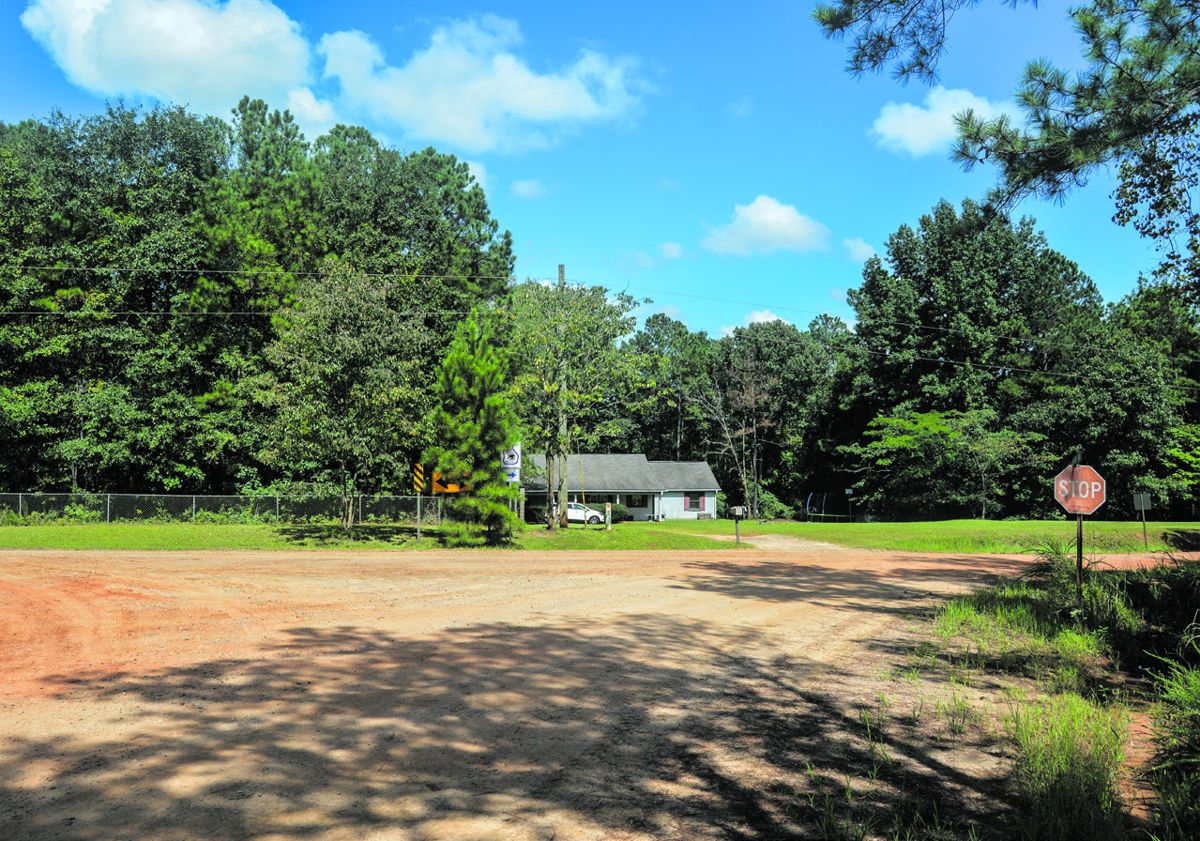
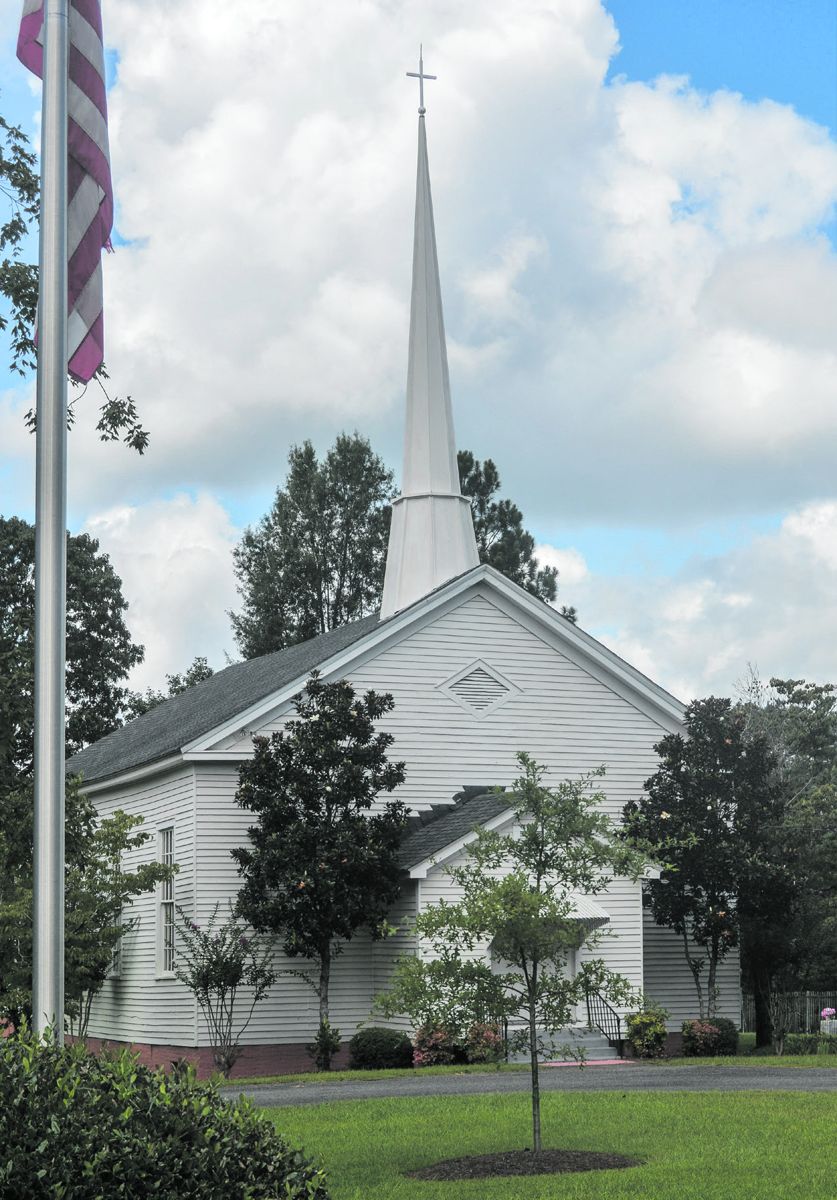
Sunshine Church II, built in 1880. cross-country escape.” Stoneman was the highest-ranking Federal officer captured during the war. He was freed in October, exchanged for Confederate Brig. Gen. Daniel Govan. An Illinois captain wrote that Federal soldiers came upon the unburied bodies of two Federal soldiers killed in the July battle. The marker states that “This find increased the bitterness already felt toward Confederates.” The Federals burned the church. Past Sunshine Church, the Federals came to Griswoldville, where Connecticut-born Samuel
Griswold operated a factory making revolvers for the Confederacy, “plus swords, pikes, bricks, soap, candles and other materials.” On the 20th and 21st troops destroyed the factories and most of the small town. The following day a green and poorly equipped Confederate force composed of Georgia Militia and local defense units from Athens and Augusta, attacked a veteran Federal brigade entrenched in a strong position just east of the town. A plaque installed in 1957 by the Georgia Historical
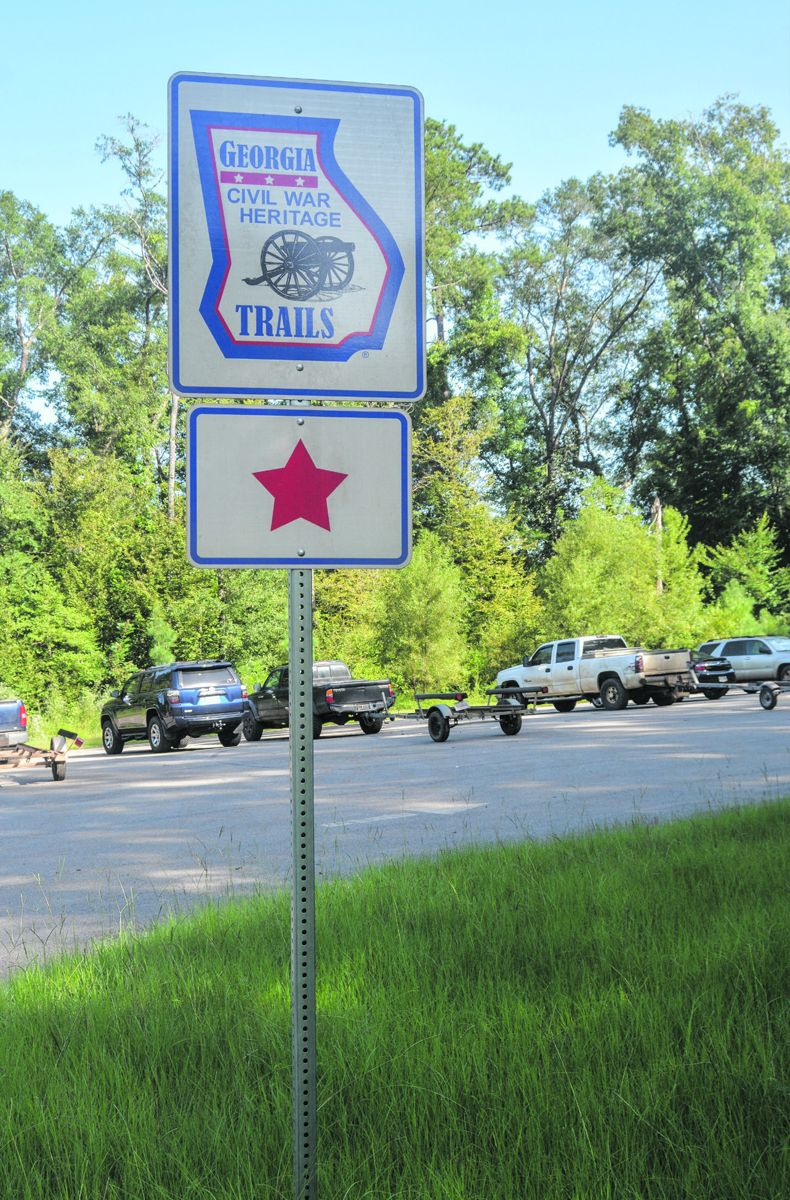
Georgia Civil War Heritage Trails has clearly marked the route with directional signs which lead to the interpretative markers. The GCWHT’s website (https://www.civilwarheritagetrails.org/) also contains each marker’s GPS coordinates. Brochures for the March to the Sea Trail and other driving routes, available from GCWHT, contain much useful information including excellent maps. I suggest that travelers make use of all three resources. If you use only the GPS coordinates to get from one stop to the next you will be led upon modern roads and miss much of the fun. If you are like me, you will miss a sign now and then or take a wrong turn. When this happens the GPS coordinates will get you back on track. GCWHT’s address is PO Box 1864, Evans, Georgia, 30809. Commission numbers the Confederate casualties in this one-sided engagement at 523. The American Battlefield Trust’s estimate is double that. One source states that 600 Georgians were captured. The Federal brigade lost a dozen or so killed and about 80 wounded. A tablet on the nearby battlefield quotes a Confederate colonel who was not present at Griswoldville, but later wrote of the battle: “This engagement, while it reflects great credit upon the gallantry of the Confederate and State forces engaged, was unexpected, unnecessary and utterly unproductive of any good. The Battle of Griswoldville will be remembered as an unfortunate accident whose occurrence might have been avoided by the exercise of proper caution and circumspection.” East of Griswoldville is Gordon, a small community with a townscape dominated by a gigantic kaolin plant. Gordon is on a rail line which, in 1864, was the important Central of Georgia Railroad that ran between Savannah and Macon. A branch line to the north connected Gordon to Milledgeville, the state capital. At Gordon, the local commander of the small Confederate force did exercise “proper caution and circumspection” and withdrew his men to the Oconee River before the Yankee cavalry arrived on the afternoon of the 21st. Federal soldiers remained in Gordon for two days, ripping up rails, wrecking other facilities, and “foraging widely for foodstuffs and animals.” Diarist Fanny Andrews passed through Gordon in December and recorded this impression: “There was nothing left of the poor little village but ruins, charred and black as Yankee hearts.” At the Oconee River the Confederates mounted a skillful defense at the railroad bridge and downstream at Ball’s Ferry. The 1,200 defenders managed to delay the Federals’ march for a couple of days, but against two Federal corps they could do only so much. The Federals secured a bridgehead, forced the Historical Reproduction Tents
Panther Primitives • P.O. Box 32 • Normantown, WV 25267 We make the best tents in history!
The best selection of historical reenactment items from Medieval era to Civil War era. Print catalog is only $2 and includes over 60 pages of our famous tents with a full-color section. Digital catalog is free to download by visiting PantherPrimitives.com. SEND for your copy TODAY. 304-462-7718
Confederates to retreat, and then built two pontoon bridges. By nightfall on November 26 the entire Army of the Tennessee was across. The XV and XVII Corps pressed on. They burned the railroad bridge and marched southeast. As the marker at Ball’s Ferry says, “With both the Ocmulgee and Oconee Rivers behind the Federal army, only the Ogeechee remained.” Future columns will trace the remainder of the route taken by Gen. Howard’s army and the route taken by the Left Wing, the two corps under Maj. Gen. Henry Slocum. Gould Hagler is a retired lobbyist living in Dunwoody, Ga. He is a past president of the Atlanta Civil War Round Table and the author of Georgia’s Confederate Monuments: In Honor of a Fallen Nation, published by Mercer University Press in 2014. Hagler speaks frequently on this topic and others related to different aspects of the Civil War and has been a regular contributor to CWN since 2016. Hagler served for several years as a member of the GCWHT Board of Trustees. He can be reached at gould. [email protected].