
The Unjust Hanging of Captain Henry Wirz
By Joseph F. Wilson · Originally published March 2022 · pp. 36–38
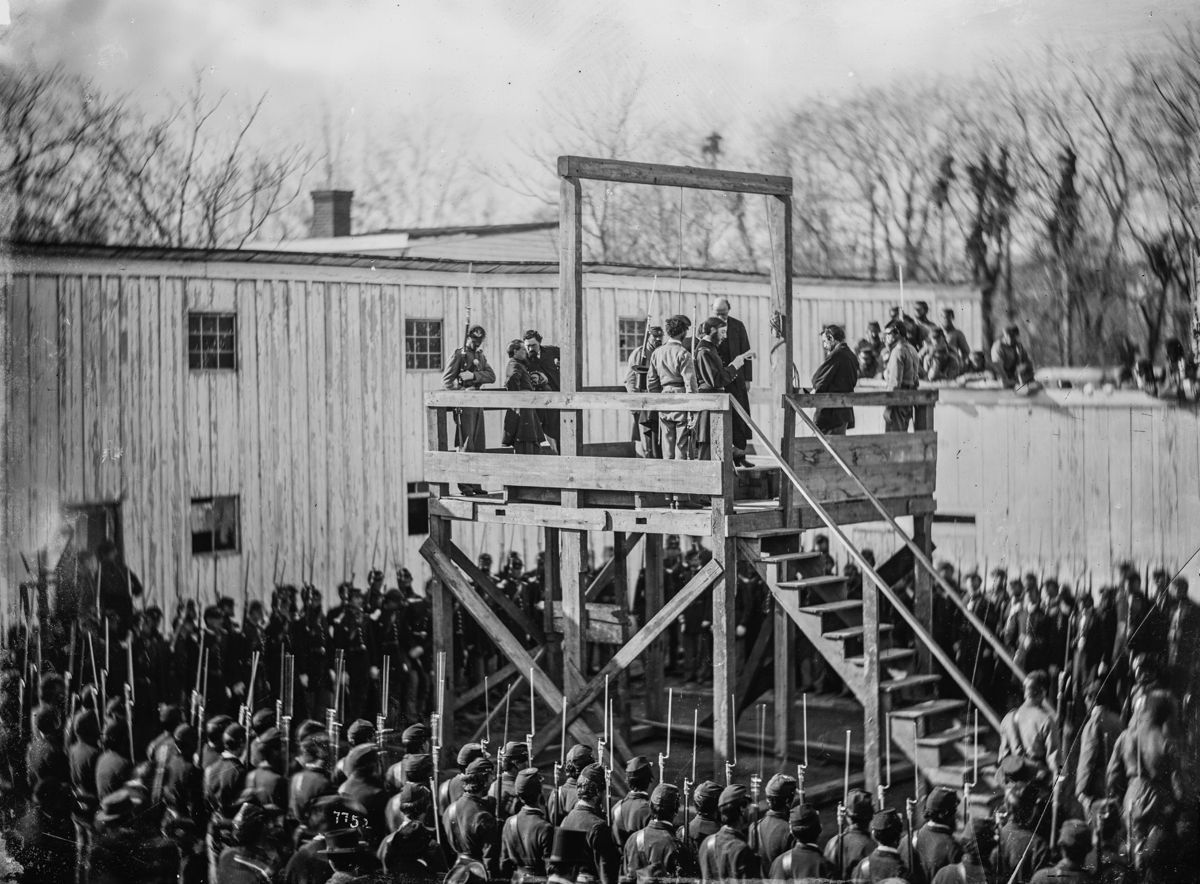
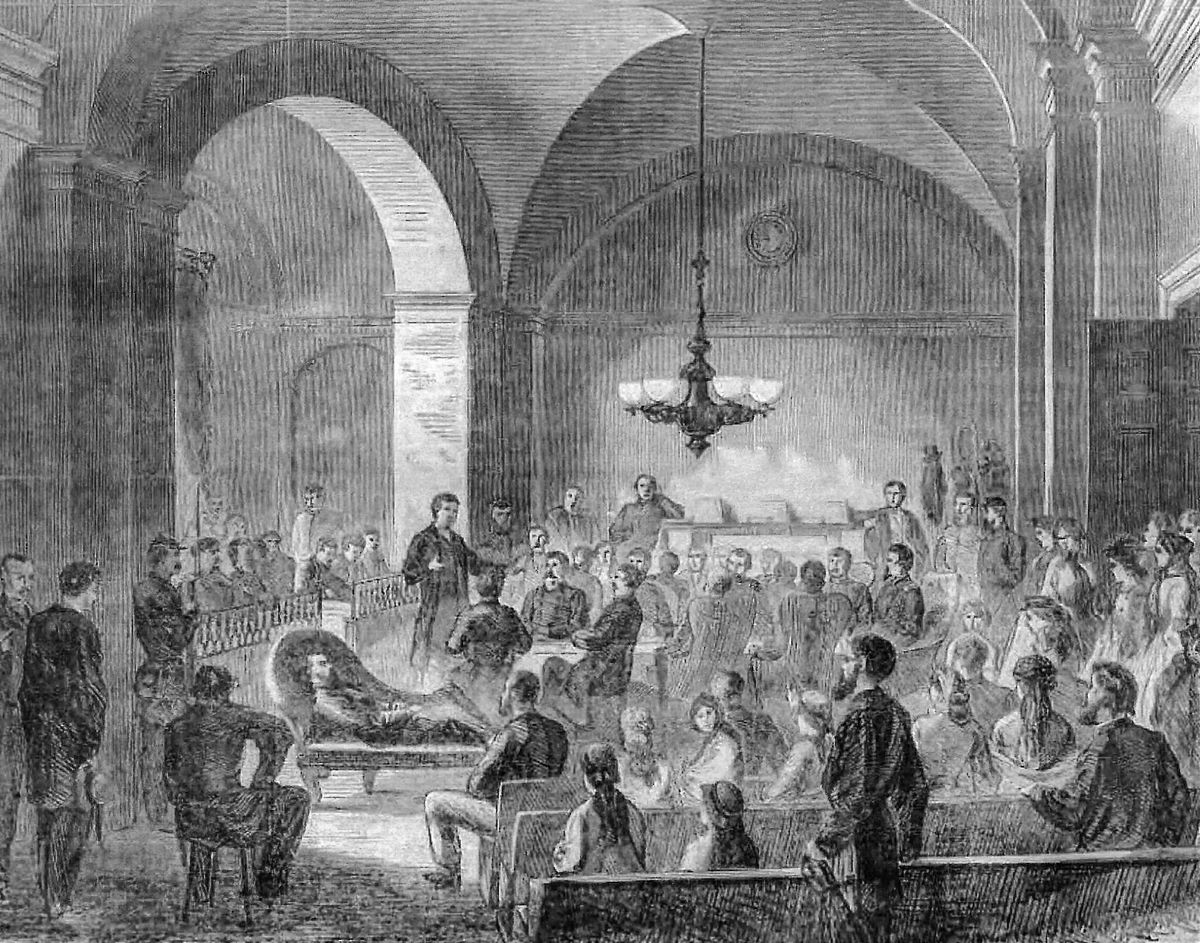
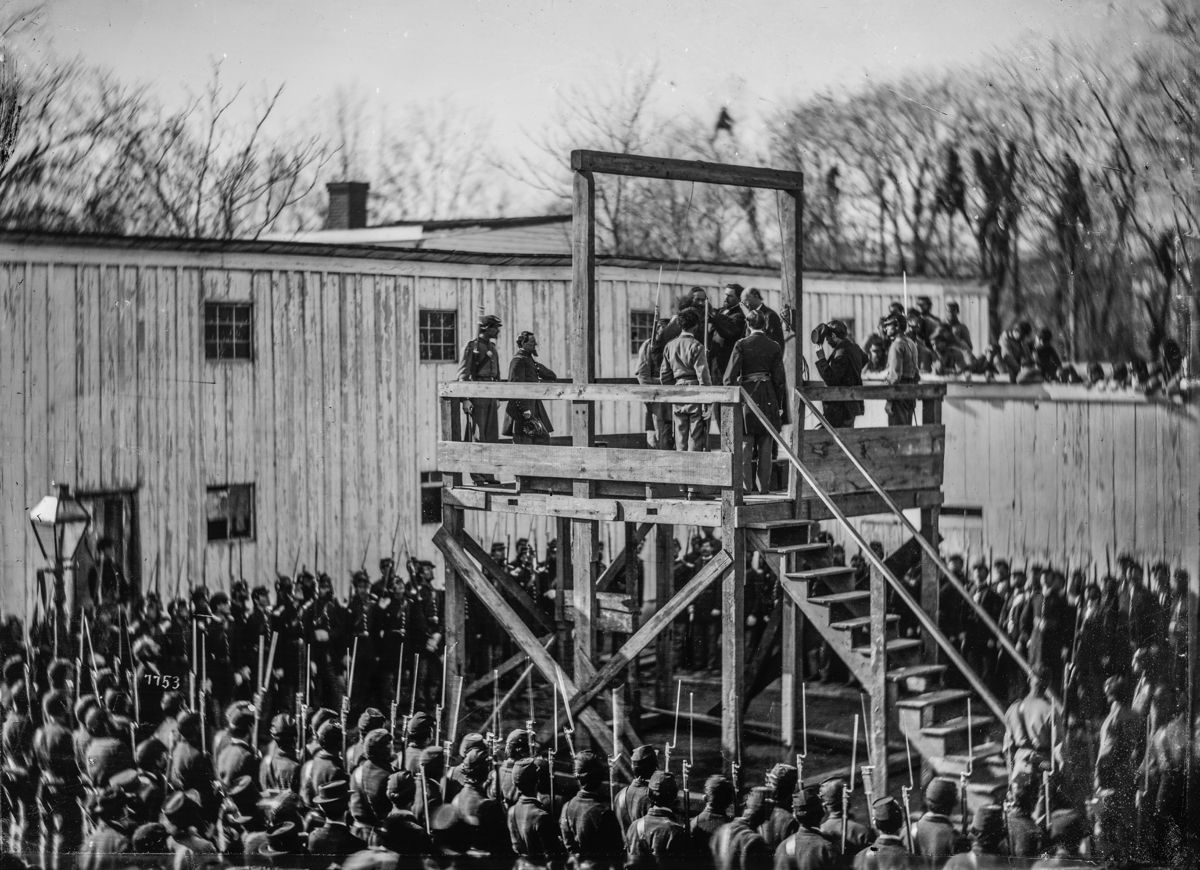
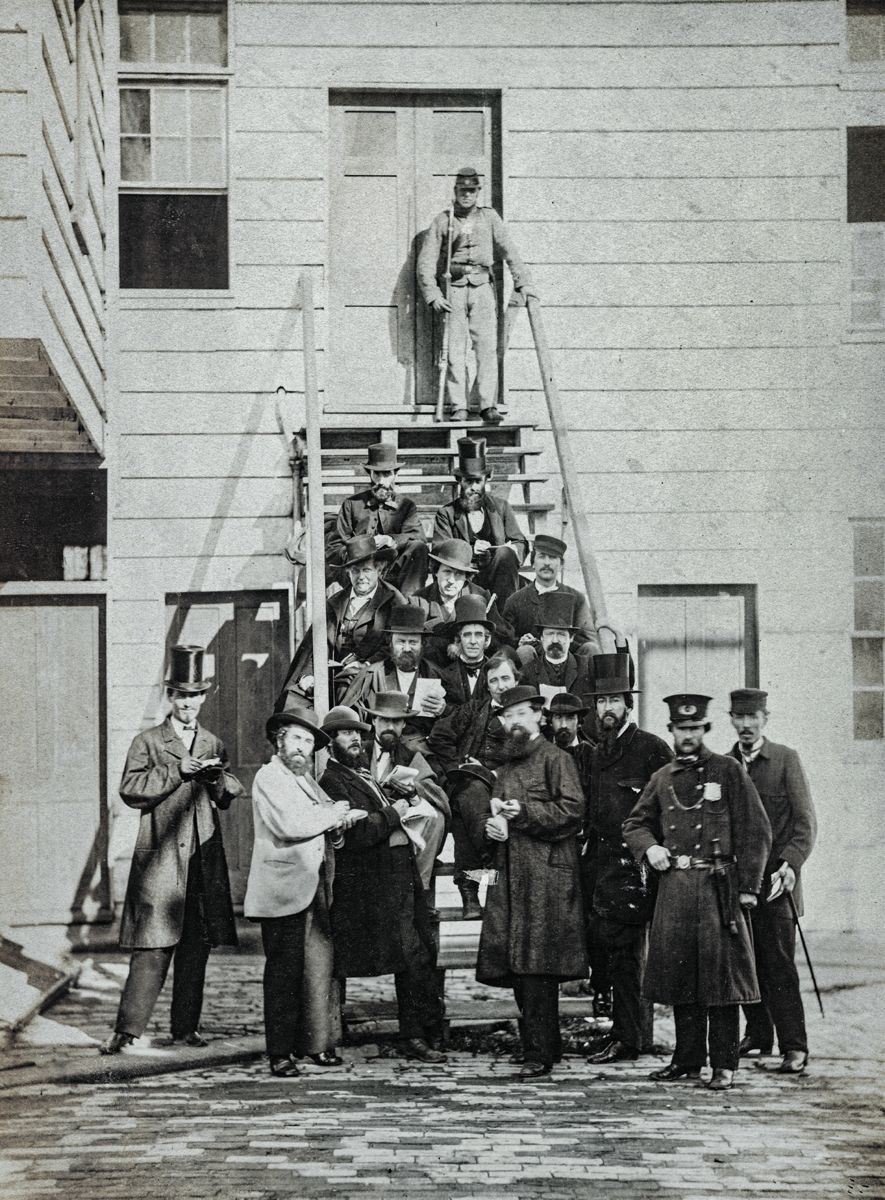
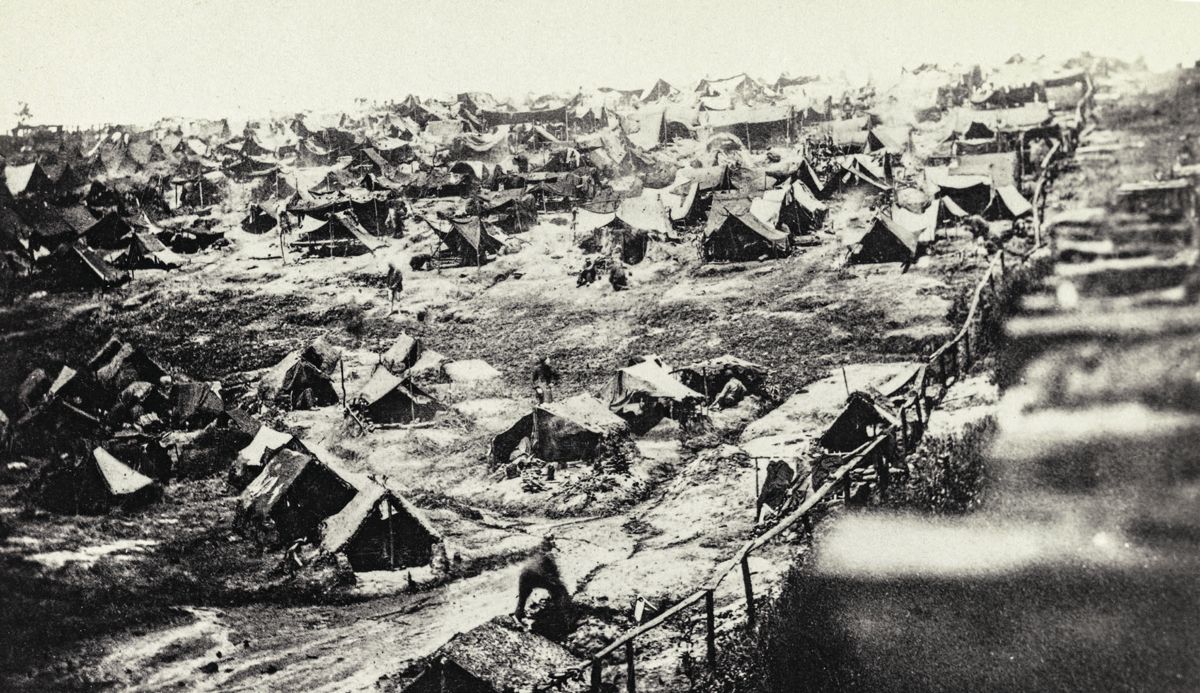
When the trapdoor opened, Confederate Capt. Henry Wirz dropped to his death at the end of a rope. The sacrificial lamb marched to the gallows on November 10, 1865, to satisfy the bloodlust of an agitated north clamoring for revenge after 13,000 Union prisoners who died of disease or starved in Andersonville Prison. Northern hysteria rose to a fever pitch leading up to the sensational trial. The trial was the O.J. Simpson trial of the 19th Century, but achieving an acquittal for Wirz never stood a chance. The verdict came back as expected; tranquility settled over the north after the noose strangled the life out of the Andersonville Prison’s commandant. All seemed pleased when the lifeless body of the most despised man in America went into the grave, but many questioned whether justice had been served. To blame a captain for such a monumental calamity defies how orders flow down the chain of command. Putting Wirz in the crosshairs diverted attention from northern officials who allowed thousands of Union soldiers in 1864 to die at a rate of 100 per day in August because Northern strategy accepted the death of loyal Americans for the sake of a numerical advantage. These are the same boys who rushed to Father Abraham’s call to save the Union. Grant, Stanton, and Lincoln decided not to resume the prisoner exchange policy that collapsed in the summer of 1863. They agreed to hold their Southern prisoners till the end of the war. If that meant Union men in Andersonville had to starve to death, so be it. Sadly, ideology took precedent over humanity. Grant saw prisoners as pawns more valuable to him languishing in a vile prison than recuperating at home. Southern proponents argue correctly that the Union blockade prevented the South from procuring much needed supplies. Union cavalry burned tons of food that may have been partially allocated to prisoners, medicine was declared contraband. However, if you can’t provide the sustenance of life for your captives, you’re bound to release them. Instead, Confederates watched as thousands of cadavers filled up the graveyard. Officials on both sides seem to have remained unconcerned with the unfolding catastrophe. To appear to be taking the moral high ground in an election year, the North offered up the bogus black soldier issue. With the south refusing to exchange black prisoners, Union officials refused to negotiate a deal. Of the total 50,000 Union soldiers being held, only 850 were black. Union Commissioner of Exchange, General Benjamin Butler suggested holding 850 Confederate officers in lieu of the black prisoners. Grant ignored the excellent idea that didn’t fit his scheme. Butler later admitted in a speech after the war that he was told to “put forth the negro question to complicate and prevent exchange.” The trial of Henry Wirz can best be described as a total farce that could probably never happen today. At the start of the trial, Wirz faced charges of murder and conspiracy to injure and impair the health of Federal soldiers. Included in the conspiracy charge were such notables as Gen. Robert E. Lee, Confederate President Jefferson Davis, and other highranking Southern officials. When Secretary of War Edwin Stanton read the charges, he immediately removed Lee, Davis, and the other civilian officials from the conspiracy charge. Despite Lee and Davis leading the rebellion, the popular leaders still held sway among influential Americans. Lee came from one of the most prominent families in Virginia, and Davis still had many friends in Washington. The charge against Wirz now read “conspiracy with others unknown.” The Swiss immigrant who spoke broken English faced the wrath of Northerners alone. Biased reporters flocked to Washington to cover the trial of the man they described as “a blood thirsty monster” and “the demon of Andersonville.” The Boston Advertiser offered that Wirz was “a scorned, loathed, despised, miserable creature, hated of all men.” With passions still running high four months after the assassination of President Lincoln, Wirz didn’t stand a chance. All in the North wanted blood; prosecuting Attorney Colonel Norton Chipman intended to deliver. It was decided to have a U.S. Military Commission to prosecute Wirz. His lawyers immediately objected as Wirz never served in the U.S. Army. At the time of trial, Henry Wirz was officially a citizen. His lawyers claimed he deserved a jury trial of his peers where the case must be proved beyond a reasonable doubt; that wasn’t going to happen. A civil trial requires a preponderance of the evidence; in a military trial, it could come down to whatever mood tribunal members were feeling on a particular day. Wirz’s conviction was preordained from the start. The trial of the century started in August. For two months, Norton Chipman paraded a flood of people to the witness stand including former prisoners, Confederate doctors, clergy, and local citizens. Everyone repeatedly testified to the horrible conditions inside the stockade; even Wirz would agree with that assessment. Conditions inside the prison were never in dispute. Chipman argued that Wirz intentionally caused those conditions. In the conspiracy charge, Chipman somehow knew exactly how many deaths Wirz caused in several areas. Each of the several charges started with his proclamation that Wirz “well knew and fully intended.” Hearsay ran rampant and was allowed throughout the proceedings. Chipman stared at the defendant as he loudly stated that Wirz “well knew and fully intended” for 30 to die in the stocks. Chipman continued to state that a ball and chain claimed 100 men. Noxious air terminated 1,000 soldiers; another 200 died from a poisonous vaccine “wickedly deposited” in the arm to intentionally kill them. Over 300 men were shot at the deadline; dogs viciously killed 50 men trying to escape. How Chipman came up with these detailed figures is anyone’s guess. We now know that impure and rubbed his snout against my cheek.” A narrative of a dog demanding a little love didn’t please the prosecutor. Chipman claimed the lack of food, water, and shelter was Wirz’s “evil and wicked design” that killed 10,000 soldiers. The claim holds a partial truth regarding the scarcity of the basic essentials of life. To suggest those prisoners all died by design at the hands of one man is absurd. In spring 1864, Grant’s Overland Campaign began. Every day in May and June nearly 500 prisoners stepped off the trains and entered the already crowded stockade. Wirz had no responsibility for the excessive numbers. As for food, the prison had a commissary with another officer in charge of rations. The Quartermaster had charge of supplying the prison with blankets, eating utensils, Testimony on the stocks shoot the Yanks. as well as the ball and chain fell Testimony on the dogs well short. Breathing bad air contradicted Chipman’s claim could never be proven. Historians that the dogs were “ferocious, believe that only 14 men were bloodthirsty beasts, dangerous to killed at the deadline. While grave human life; any man overtaken diggers testified many bodies had by these beasts could not save gunshot wounds many soldiers his life by coming to a stop; arrived at the stockade already to surrender was death.” One suffering from battle wounds prisoner testified he escaped and with little chance of recovering in when he heard the “bloodthirsty the dirty prison. Chipman wanted beasts” coming for him, he hid in the court to believe that all the the brush. Boston Corbett stated, gunshot wounds came from “the dog found me in the bushes and shelter. Wirz had nothing to do with the hospital. The myriad reasons why 13,000 Union soldiers died at Andersonville had very little to do with Captain Wirz. Over 140 witnesses testified, but any testimony on cruelty and death in Northern prisons wasn’t allowed. Acts of kindness by Wirz also couldn’t be heard. Captain Wirz had permitted six prisoners to travel to Washington with a petition from the prisoners begging the government to resume the exchange. They couldn’t get an audience with Lincoln or any top official, a fact that wasn’t allowed in court. Chipman argued that “it besmirched the good name of the dead president.” Testimony on the north’s failure to exchange prisoners was deemed irrelevant. Lawyers for Wirz screamed foul. They had anticipated putting partial blame on Grant for refusing to exchange prisoners. With regard to exchanging prisoners, Grant stated, “Exchange simply reinforces the enemy at once, while we get no benefit from soldiers we receive for three months and lose the majority entirely.” A prisoner’s life simply didn’t matter. Since Grant received no benefit from an exchange, the prisoners were doomed. Grant also stated, “It’s hard on our men in southern prisons not to exchange them, but it’s humanity to those left in the ranks to fight our battles.” Families of abandoned prisoners dying by the score never believed Grant possessed an ounce of humanity. Neither did families of soldiers killed at Cold Harbor. Union men starving to death never drew any compassion from Grant or the Lincoln administration. It was simply a business decision.
After the conspiracy charges came the murder portion of the trial. The court presented thirteen counts of murder that claimed Wirz shot, beat, and stomped to death Union prisoners. Incredibly, not a single name could be attached to any supposedly murdered victim. Despite thousands of witnesses inside the stockade, any murder victims remain unidentified. From the 140 witnesses who testified, only 15 saw Wirz commit any act of violence. In a prison scenario, prisoners never have a favorable impression of their keeper. From 33,000 prisoners, it wasn’t hard to find 15 who hated Wirz so much they were willing to perjure themselves. Union prisoner Martin Harris, 5th NY Cavalry, testified he “never saw Wirz shoot or hurt anybody.” Even a Confederate guard, W. Hammack, 55th Georgia, offered, “I never saw violence or was ordered to shoot prisoners.” Chipman’s closing argument referenced guerilla warfare, coal bombs, torpedoes, and Lincoln’s assassination. This was a staged passion play designed to stir hatred that had nothing to do with Wirz. The charade finally ended with Wirz sentenced to death. The commission found Captain Wirz guilty on 10 of the 13 murder charges. He also was found guilty of the conspiracy charge. It’s interesting to note that no other Confederate official was charged or found guilty of conspiracy. It’s an obvious fact that one cannot conspire alone. After the death of Wirz, four more murders brought the total of murder victims to fourteen. It was assumed Captain Wirz must have been responsible for them too. So they were added to the record. It wasn’t long after the trial that the 15 star witnesses given the most time on the stand by Chipman proved to be deserters, liars, and men of despicable character. But it was too late for Wirz, who was moldering in his grave. The United Daughters of the Confederacy erected a controversial monument to Wirz in the village of Andersonville. A priest who spent time in Andersonville, Father Clavreul, best described the Wirz debacle when he stated, “Wirz was no more deserving of a monument than he was of hanging.” Wirz offered a passionate plea at the end of the trial admired by even the most eloquent lawyers.
Letter from Henry Wirz to General J.H. Wilson, U.S.A. (May 7, 1865): Request For Safe Conduct.
Captain Henry Wirz. “ANDERSONVILLE, GA., May 7, 1865 GENERAL: It is with great reluctance that I address you these lines, being fully aware how little time is left you to attend to such matters as I now have the honor to lay before you, and if I could see any other way to accomplish my object I would not intrude upon you. I am a native of Switzerland, and was before the war a citizen of Louisiana, and by profession a physician. Like hundreds and thousands of others, I was carried away by the maelstrom of excitement and joined the southern army. I was very seriously wounded at the battle of “Seven Pines,” near Richmond, Virginia, and have nearly lost the use of my right arm. Unfit for field duty, I was ordered to report to Brevet Major General John H. Winder,
After the long articulate address to the court, he said, “I trust that I shall not be held responsible for the official deeds of others. By my own acts let me be judged. I do not ask mercy, but I demand justice.” In the end, Captain Henry Wirz received neither. Joseph F. Wilson lectures on Andersonville Prison and the Pennsylvania Reserves. He also wrote and produced the film “Civil War Prisons – An American Tragedy” now available on Amazon. Email: [email protected].
in charge of federal prisoners of war, who ordered me to take charge of a prison in Tuscaloosa, Alabama. My health failing me, I applied for a furlough and went to Europe, from whence I returned in February, 1865. I was then ordered to report to the commandant of the military prison at Andersonville, Georgia, who assigned me to the command of the interior of the prison. The duties I had to perform were arduous and unpleasant, and I am satisfied that no man can or will justly blame me for things that happened here, and which were beyond my power to control. I do not think that I ought to be held responsible for the shortness of rations, for the overcrowded state of the prison, (which was of itself a prolific source of fearful mortality,) for the inadequate supplies of clothing, want of shelter, &c., &c. Still I now bear the odium, and men who were prisoners have seemed disposed to wreak their vengeance upon me for what they have suffered—I, who was only the medium, or, I may better say, the tool in the hands of my superiors. This is my condition. I am a man with a family. I lost all my property when the federal army besieged Vicksburg. I have no money at present to go to any place, and, even if I had, I know of no place where I can go. My life is in danger, and I most respectfully ask of you help and relief. If you will be so generous as to give me some sort of a safe conduct, or, what I should greatly prefer, a guard to protect myself and family against violence, I should be thankful to you; and you may rest assured that your protection will not be given to one who is unworthy of it. My intention is to return with my family to Europe, as soon as I can make the arrangements. In the mean time I have the honor, general, to remain, very respectfully, your obedient servant, WIRZ, Captain C. S. A.
[To:] Major General J.H. Wilson, U.S.A., Commanding Macon, Georgia.” Publishers Note: Today Wirz’s arm and the first two neck vertebrae are on display at the National Museum of Medicine and Health located in Silver Spring, Md. According to Anatomical Collections Manager, Brian Spatola “the arm was kept as proof that it was not injured to the degree that he professed and the vertebrae were kept to demonstrate that they did not fracture when he was hung.” An autopsy was deemed appropriate for the convicted man for legal reasons and on Nov. 9, 1865, the necessary orders were sent from J.H. Taylor AAS to surgeons W. Thompson and R.O. Abbott for them to attend the hanging.