
Critic's Corner
Four Years in Rebel Capitals
By Stephen Davis · Originally published March 2022 · pp. 26–28

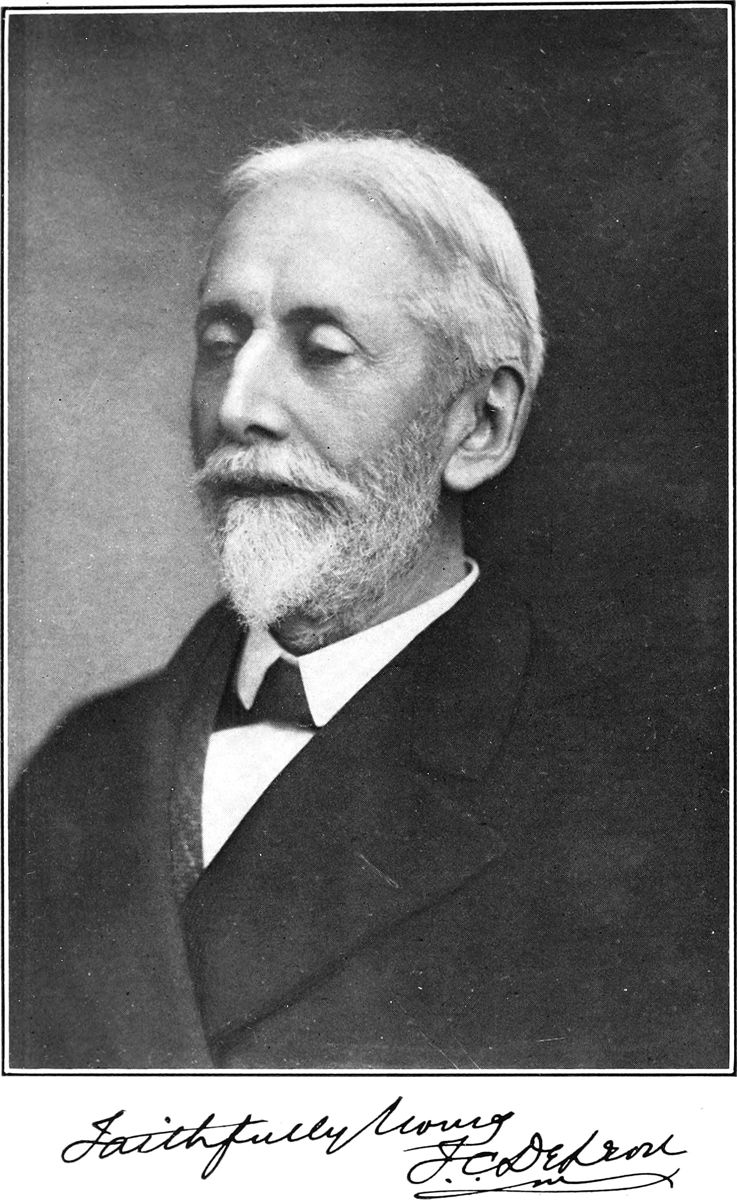
Four Years in Rebel Capitals It’s not often that one catches Douglas Southall Freeman in an error, even a slight one. In The South to Posterity (1939), Dr. Freeman refers to Thomas Cooper DeLeon as “Tucker,” not Thomas; DeLeon preferred to be called Cooper, anyway. It doesn’t matter; Freeman included DeLeon’s masterful memoir, Four Years in Rebel Capitals, in his “Confederate Book Shelf.” Because of DeLeon’s travels to New Orleans and Pensacola, E. Merton Coulter included Four Years in his Travels in the Confederate States: A
Bibliography (1948), noting that “writing years after the war, but from notes kept during the struggle, the author gave his account maturity of judgment, comprehensiveness, and perspective.” Ralph Newman and E. B. Long placed DeLeon’s Four Years in their essay, “The War in Books: A Basic Civil War Library” (1960). That redoubtable critic of Confederate letters, Richard M. Weaver (The Southern Tradition at Bay, 1968) esteemed DeLeon’s memoir as “not surpassed in its picture of life behind the lines.” Wiley, Robertson, and Nevins, in their Civil War Books: A Critical Bibliography (1969) pointed out that DeLeon’s opus “is one of the most frequently cited of Confederate studies.” Richard Barksdale Harwell’s In Tall Cotton (1978) also listed DeLeon, calling him “a good observer of Confederate life.” In The Civil War in Books: An Analytical Bibliography (1997), David Eicher noted that Four Years in Rebel Capitals, published in 1890 by the Gossip Publishing Company of Mobile, was reprinted in 1962 and 1983 (TIME-LIFE BOOKS’ “Collector’s Library of the Civil War”). Tom Broadfoot’s Civil War Books: A Priced Checklist
(1990) added that there was a second Mobile edition in 1892, as well as a more recent one in 1988. By this listing alone, DeLeon’s memoir ranks as a classic. “Simple sketches of the inner life of ‘Rebeldom,’” is the way in which DeLeon described his memoir. Though published in 1890, the author stated that the reminiscence was written almost immediately after the war, “from notes and recollections” which decades later he revised and condensed. His hope, as he declared in a preface, “was to paint honestly the inner life of the South…a clear, unshaded outline of things as they were.” DeLeon was a talented writer, as one sees from his very first pages. He was just twenty-one when the war began, the son of a prominent South Carolina physician and universityeducated. He was working in a Washington, D.C., engineering office when secession hurried him to Montgomery, Ala. There he began the notes and diary entries that he turned into this fascinating book, which is as alert as it is acerbic. At Montgomery he observed unctuous lobbyists and contractors seeking government work. Here’s how he described them: “by the hundred flocked hither those unclean birds, blinking bleared eyes at any chance bit, whetting foul bills to peck at carrion from the departmental sewer.” DeLeon’s eyes were not only on the new administration. He described an Alabama riverboat race with the color and craft of Mark Twain; he chuckled through
Muggins’ and Spring Chicken’s night of drinking and gambling at Mobile in the facile style of the Southwest humorists in the 1840s and ‘50s. More, reading DeLeon is also like reading Sir Walter Scott. His style is a thing of yore, which makes it even more arresting. His words are so savory, I found myself almost reading them aloud. French and Latin phrases pop up like berries in a muffin. Along the way there’s lot of fun, too. Taking in DeLeon’s account of the Louisiana Zouaves’ train-theft and whisky riot in Montgomery is like watching a Mack Sennett comedy. When the war started we see why Southern literary critic Richard Weaver esteemed DeLeon’s opus as “not surpassed in its picture of life behind the lines.” After joining the army, DeLeon was stationed in Richmond for much of the war; what service he performed is not clear. He hobnobbed with the cognoscenti sufficient for him to write about the course of the war, but in a rather general way. The fight at Blackburn’s Ford before Manassas, as one example, “is too well known history to be repeated here.” In addition, he comported himself as something of a military commentator; at one point he called the battle of Shiloh “the bloodiest of the war”; it was, up to that time.
Just as often he chose to record what he saw among the people around him. A fine example is his observation that, upon news of the Confederate victory at Bethel, women seemed to attribute the triumph more to “a higher Power than rested in a Springfield rifle, or a 12-pdr. howitzer.” As for God favoring the South, he heard this exchange outside the War Department: “Don’t you tell me one word, cap’n!” I heard an old lady exclaim in great ire, at the door of the War Department, “Provi-dence is a-fightin’ our battles for us! The Lord is with us, and thar’s his handwritin’—just as plain!” “Don’t say nothin’ agin’ that, marm,” answered the western captain, with Cromwellian sagacity; “but ef we don’t help Providence powerful hard we ain’t agoin’ ter win!” Of literary gems there are aplenty (you can tell I’m picking up on DeLeon’s ornate style here), such as the breathless anticipation in Richmond the night following the battle at Manassas: There was no sleep in Richmond that night. Men and women gathered in knots and huddled into groups on the corners and doorsteps, and the black shadow of some dreadful calamity seemed brooding over every rooftree. Each splashed and wearylooking man was stopped and surrounded by crowds, who poured varied and anxious questioning upon him. The weak treble of gray-haired old men besought news of son, or grandson; and on the edge of every group, pale, beseeching faces mutely pleaded with sad, tearless eyes, for tidings of brother, husband, or lover. This verbal mellifluosity flows throughout Four Years till we finally come to General Lee’s return to Richmond after the surrender. Next morning a small group of horsemen appeared on the further side of the pontoons. By some strange intuition, it was known that General Lee was among them, and a crowd collected all along the route he would take, silent and bareheaded. There was no excitement, no hurrahing; but, as the great chief passed, a deep, loving murmur, greater than these, rose from the very hearts of the crowd. Taking off his hat and simply bowing his head, the man great in adversity passed silently to his own door; it closed upon him, and his people had seen him for the last time in his battle harness. We don’t know how DeLeon’s position in Richmond gave him the capability of “being in the numerous camps that winter” of Joe Johnston’s Army of the Potomac. “Universal slouch and depression” he observed among the troops all around in the months before the spring campaign of ’62. Among other roles, the author of Four Years could be a champion for the Old South’s ideal of gentleman. DeLeon makes this clear by his description of aristocratic Marylanders now in the army’s encampment, displaying soldierly grit with the best backwoodsman or yeoman farmer: But here were gentlemen born—men of worth and wealth, education and fashion—delving side by side with the veriest drudge; fighting as only gentlemen can fight, and then working as gentlemen never worked before! Delicately bred youths who had never known
CivilWarNews.com rougher work than the deux temps, now trudged through blinding snows on post, or slept in blankets stiff with freezing mud; hands that had felt nothing harder than billiard-cue or cricket-bat now wielded ax and shovel as men never wielded them for ages; the epicure of the club mixed a steaming stew of rank bacon and moldy hard-tack and then—ate it! And all this they did without a murmur, showing an example of steadfast resolution and unyielding pluck to the hardier and tougher soldiers by them; writing on the darkest page of history the clear axiom: Bon sang ne peut mentir! DeLeon did not refrain from using phrases in Latin or French, as above, “good seed makes a good crop,” and frequently quoted poetry that is unfamiliar to modern eyes. This might seem as if the author were showing off his education and upbringing; but at the same time he clearly enjoyed telling a yarn or two, such as this one about a column of marching infantry: Passing one house, a pale, boyish-looking youth was noted at a window with a lady. Both waved handkerchiefs energetically; and the men answered with a yell. But the opportunity was too good to lose. “Come right along, sonny! The lady’ll spare yer! Here’s a little muskit fur ye!” “All right, boys!” cheerily responded the youth, rising from his seat—”Have you got a leg for me, too?” And Colonel F. stuck the shortest of stumps on the window-sill. With one impulse the battalion halted; faced to the window, and spontaneously came to “Present!” as the ringing rebel yell rattled the windows of that block. The chord had been touched that the roughest soldier ever felt! But back to Dr. Weaver’s judgment (“not surpassed in its picture of life behind the lines”) as one reads in Chapter 18, a good part of which is filled with observations on Richmond’s social season in the winter of ’61’62. Despite the stresses of war, many held that parties were still proper and not even unpatriotic, while sterner sorts, “behind their abatis of knitting needles,” held that staying home and sewing for the soldiers was the only right recreation. DeLeon wrote approvingly of those stern old ladies that “behind the chevaux de frise of clashing knittingneedles,” they would willingly welcome a well-bred stranger into their society. During this time Mrs. Davis opened the Executive Mansion every evening in informal receptions for all visitors. While the First Lady “discussed the latest book…or talked knowingly of the…newest opera,” the President himself said little (one may guess that DeLeon attended a few of these soirees) and after an hour or so in pleasant company, he retired to his study to work a bit more. The author was aware that during the war Jeff Davis had come in for his share of criticism from Southerners. Thus his accolades to the Confederate president stand out, as does this description of Davis delivering his inaugural address at Richmond in February 1862: There was a depth in the hearts of his hearers that discontent could not touch:—that even discontent had not chilled. They saw in him the representative man of their choice—headstrong certainly, erring possibly. But they saw also the staunch, inflexible champion of the South, with iron will, active intellect, and honest heart bent steadily and unwearyingly to one purpose; and that purpose the meanest one among them clasped to his heart of hearts! Thirty years after the war, Cooper DeLeon shared lots of traits with wartime Confederate newspaper editors. One of them was the goal of vilifying the enemy. There was no better enemy to vilify than Union Maj. Gen. Benjamin F. Butler. He had earned the nickname “Beast” for his heavy-handed administration of Union-occupied New Orleans. Confederate editorialists at the time hurled huge invective at Butler. Their vicious calumnies, though, are matched thirty years later by DeLeon’s: “the annals of the war are not free from small pilferers and vicious imbeciles; but high above the tableau they form, this warrior has perched himself upon a pinnacle—let us hope—unattainable again!” DeLeon assumes the Southern reader’s familiarity with Butler’s “woman order” so much that he does not describe or even name it, though he spends a half-page excoriating its author. Chapter XXI, “Conscription and Its Consequences,” reminds us that for his memoir DeLeon was working from his wartime notes. His criticisms of the Confederate conscription system, especially its substitute provision, read like the bitter anti-administration screeds one sees in Edmund Ruffin’s wartime editorials in the Richmond Examiner. Yet DeLeon approved of the government’s need to call for more men to serve. When Congress extended the conscriptable ages, calling for lads from 16 to 18, and older men 45 and up, DeLeon hailed the idea of old men fighting alongside young lads: “But the infantile and moribund murmured not, and more than once a raid was turned and a sharp skirmish won, when the withered cheek of the octogenarian was next to the rosy face of the beardless stripling!” Cooper DeLeon would not have been a stout Confederate apologist if he did not rhapsodize over the selfless and devoted patriotism of Southern women. Describing the countless wounded after Seven Pines who overflowed Richmond hospitals into tobacco warehouses and private homes, he attested that over many a soldier’s cot “a still, patient form, almost motionless, waved the ceaseless fan or breathed the low promise of the
Living Word.” Then came the Seven Days, which DeLeon, a Richmonder, pays especial attention to. One looking for the crisp military narrative of a Liddell Hart or John Keegan won’t find it here, as in this fleeting summation of Gaines’ Mill: “Still on the barefooted boys press with resistless rush, leaving dead or mangled brothers and writhing foemen in their gory track!” His brief recounting of military events—Shiloh, Sharpsburg, Murfreesboro, Fredericksburg, Chancellorsville, et al.—dance lightly through his pages, while leavening is to be found in his delightful chapters on Confederate newspapers, literature, and even humor. After hailing Southern gallantry at Gettysburg—Pickett’s Charge was “unequaled in history”— like many Confederates, DeLeon paused to ask why Lee had entered battle “on ground of the enemy’s choosing,” then attacked when he could have flanked. The wartime writer was asking questions that historians are still kicking around today. Even as the Confederacy was going up the spout, our journalist retained his fervor and his eloquence. Dahlgren’s raid, for instance, “remains a blot even upon the page of this uncivilized warfare.” DeLeon is not above criticizing Confederate naval “policy”—Congress stinted appropriations that could have speeded completion of the Virginia; not enough emphasis was placed on privateers, even after the early successes of Semmes’ Sumter; and too much money and labor were spent on building flimsy river gunboats, or “frail wooden shells.” Through it all, however, dutifully and heroically Southern sailors held their posts, “at the bitter ending no man nor woman in the broad South but believed they had done their devoir—honestly— manfully—well!” In his chapter “The Failure in Finance,” DeLeon makes the argument that at the start of the war, the government could have on faith bought up the year’s cotton crop, promptly shipped and sold it in Europe, accrued a treasury for purchasing supplies and for repayment in coin of bondholders, thus circulating specie in the economy. The argument is not new, of course, but in DeLeon’s telling of how cotton, “auriferous in every fiber,” could indeed have been king, it becomes more persuasive than ever. By the way, Second Manassas, Sharpsburg, Fredericksburg, and Chancellorsville are related in just ten pages, far fewer than are given to the author’s consideration of the Confederate economy. This is just what you’d expect from a civilian living in a crowded city beset by food shortages, inflationary spiral, and hoarding speculators. Our author, of course, knew well the ultimate outcome of Grant’s contest with Lee in the spring campaign of 1864. This does not prevent him from adding sly licks to his narrative of it. Grant is derided as nothing but “a pertinacious fighter,”
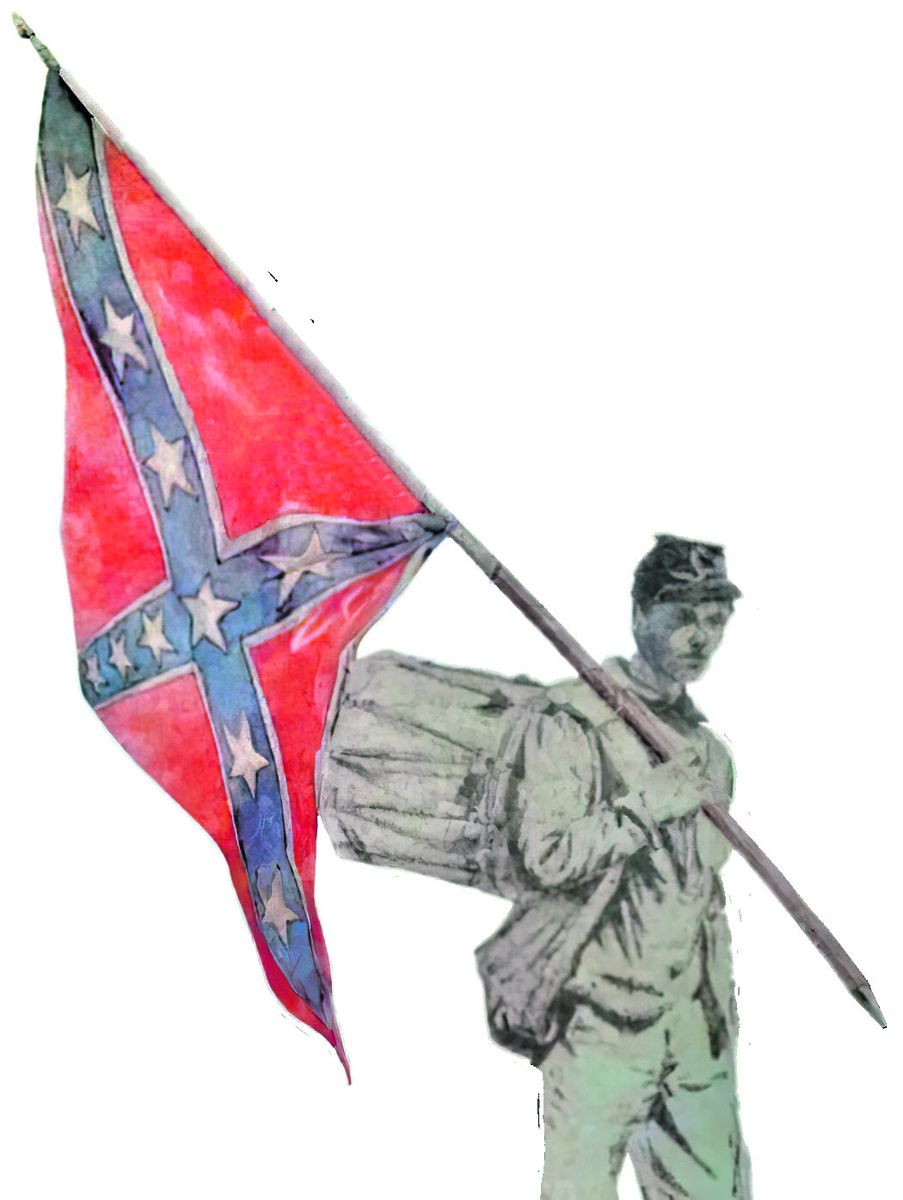
far from deserving a title such as strategist, much less great soldier. His fighting from the Wilderness to Cold Harbor is termed a “disastrous series of blunders” in which he lost seven men to every one of Lee’s. DeLeon has some fun with Butler’s ancillary campaign that Grant ordered while he toughed it out with Lee. Butler, preparing to ascend the James, is equipped with “a fleet of iron-clads, doubleenders, gunboats and transports sufficient for a war with England,” and still fails. “Grant’s civilized warfare,” shelling Petersburg’s helpless civilians, fails utterly to deter loyal Southern women from their quiet labors in support of the soldiery. Later, the depredations of Sheridan’s “barn-burning and railroad-tearing cavalry” are likewise belittled as ineffective in turning the people against the cause. In that other vital contest, the one in Georgia, both Johnston and, surprisingly, Sherman are given high marks, the former for prudently husbanding his strength while giving up ground, the latter for not wasting his manpower in Grant-like assaults. DeLeon thus criticizes the government’s removal of Johnston outside Atlanta “for wholly inexplicable reasons,” as he puts it. As for Hood’s failure to hold Atlanta, the author complains that in his campaign report “neither his theories nor their carrying out are made comprehensible to the public.” Cooper DeLeon was in Richmond when it fell; he writes touchingly of saying goodbye to a friend who apparently did not survive the last days of the war. Hence we are to value all the more his telling of the Union occupation. He writes movingly how, after the Federals opened their commissary to the hungry and needy, Richmond’s ladies swallowed their reluctance to accept charity from their conquerors, and “received small rations of cornmeal and codfish; bearing them home to be eaten with what bitter seasoning they might of tears from pain and humiliation.” Such was the war and its outcome. Like Father Ryan, Cooper DeLeon was prepared to furl and bury that conquered banner, but not before hailing it one last time: But is that proud flag— with the glory and the pride wrought into its folds, by suffering, honor and endurance unexcelled— really “furled forever?” The dust of centuries may sift upon it, but the moth and the mold may harm it not. Ages it may lie, furled and unnoted; but in her good time, historic Justice shall yet unfold and throw it to the breeze of immortality; pointing to each glorious rent and to each holy drop that stains it! It is because of such soaring prose as this that Dr. Weaver deems DeLeon “a literary artist.” He was a Rebel, and proud of it, even in defeat. David Eicher commented on Four Years in Rebel Capitals, “highly partisan and at times bitter, the account nevertheless manages to convey a good deal of information.” This assessment, I think, misses the mark, for it is DeLeon’s
Confederate partisanship and Southern pride (I don’t see “bitterness”) that makes DeLeon’s memoir notable in the first place—an erudite, polished, and entertaining look back on how ex-Rebels could still view their fight as noble, even in failure. When today the entire Confederate experience is being dismissed in one or two slurs, getting at the thoughts and feelings of an intelligent, educated Southerner a generation after the war is more than time travel; it’s a cultural encounter. His two recent volumes on John Bell Hood (Mercer University Press, 2019, 2020) have won the Fletcher Pratt Award of the New York CWRT, the Richard Barksdale Harwell Award of the Atlanta CWRT, and the Douglas Southall Freeman Award of the Military Order of the Stars and Bars. His latest book, with Bill Hendrick, The Atlanta Daily Intelligencer Covers the Civil War, will be released this summer by the University of Tennessee Press.