Battery Wagner: Engineers to the Rescue
By Joseph F. Wilson · Originally published June 2022 · pp. 26–29
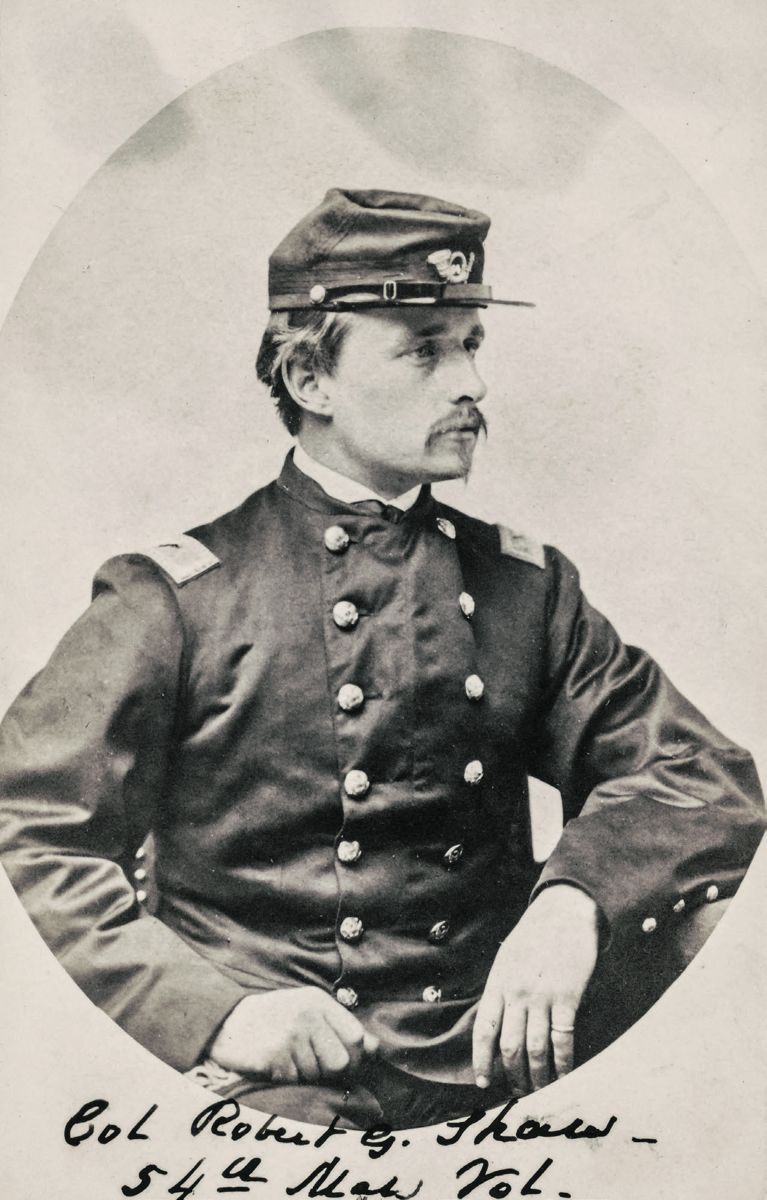
In the fading sunset, the Yankee soldiers waited for the order to charge across the beach and attack the Confederate stronghold on the shores of South Carolina. Already, one attempt to seize Fort Wagner on July 11, 1863 left 339 dead and wounded men scattered about the beach in front of the fort. The second attack on July 18, 1863, also met with defeat. Leading the charge, the 54th Massachusetts later gained fame in the movie Glory. The Fiftyfourth lost half its strength in the attack, including its Colonel Robert Gould Shaw, who fell dead on the fort rampart. More than 1,500 Yankee soldiers including General George Strong added their blood to the sand on
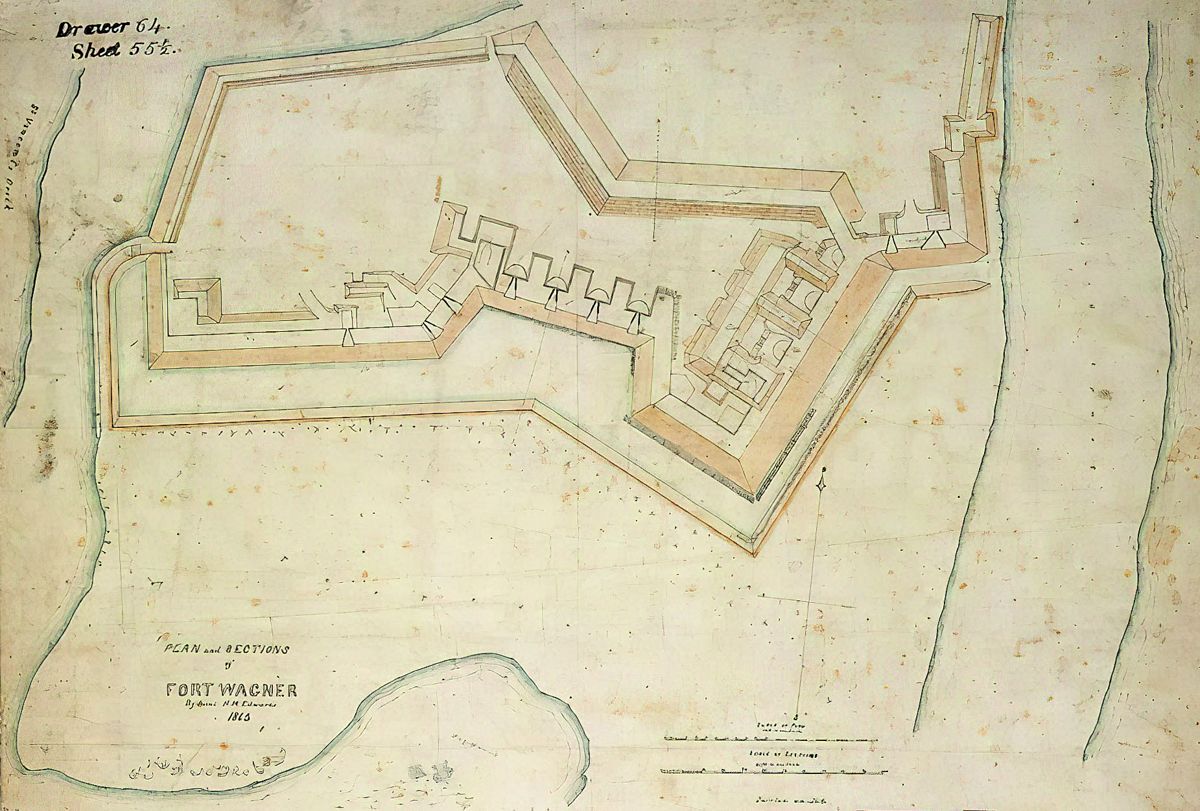
July 18; the Confederates lost only 175. Wagner stood 1,350 yards from the Union line. A compliment of 14 cannon bolstered the 1,800 man Rebel garrison. A moat added more protection. If Union soldiers passed the moat, hundreds of sharpened palmetto tree trunks poked out of the sand to slow their advance. Farther out beyond the moat, gray clad soldiers in rifle pits greeted any assault force. Under the sand, a dangerous hidden mine field bolstered the defense. The Union officers knew another plan had to be formulated.
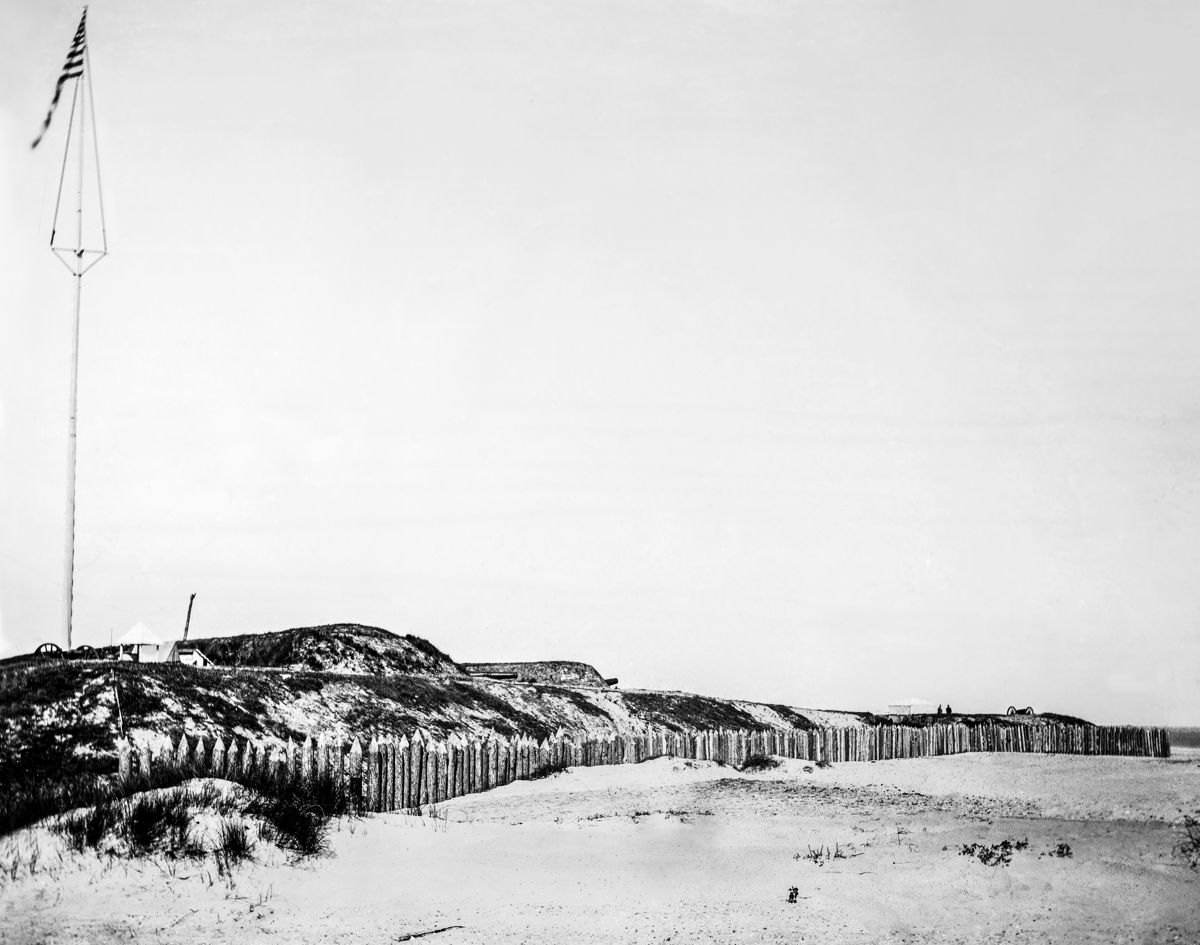
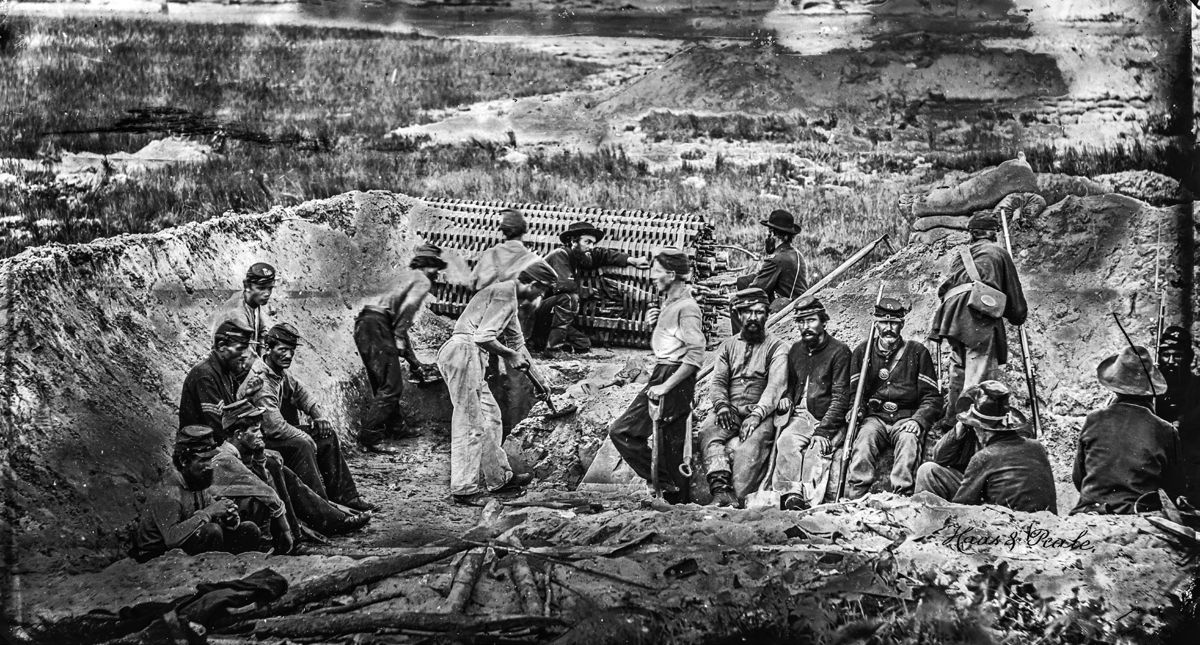
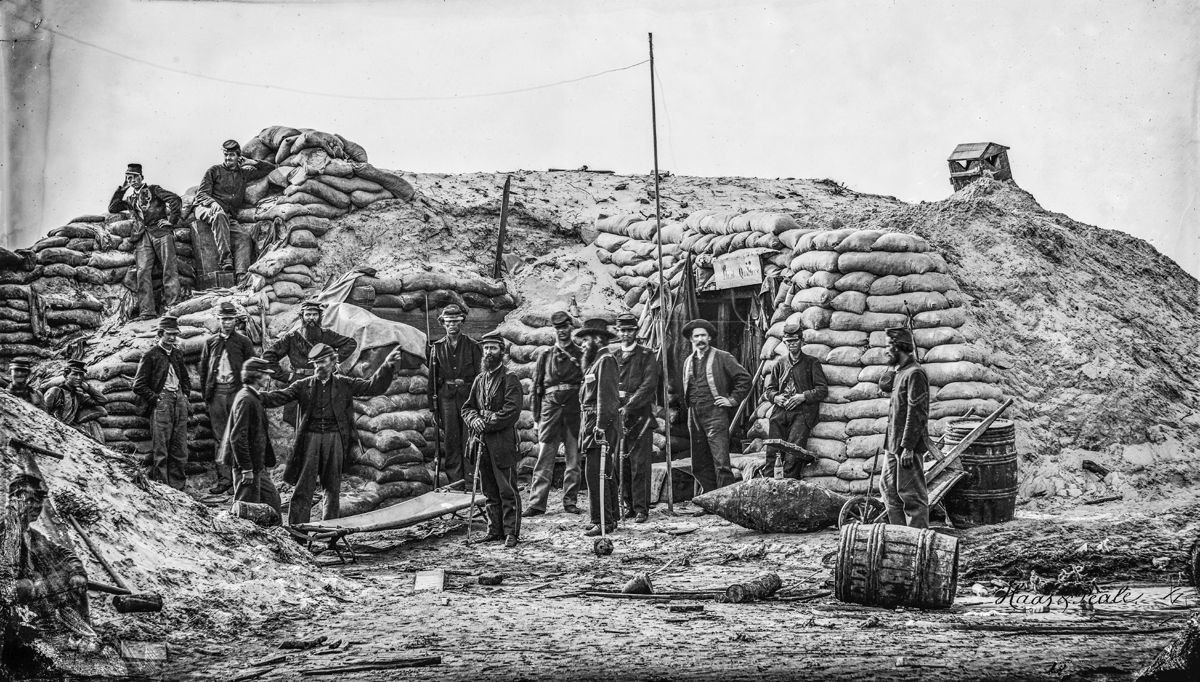
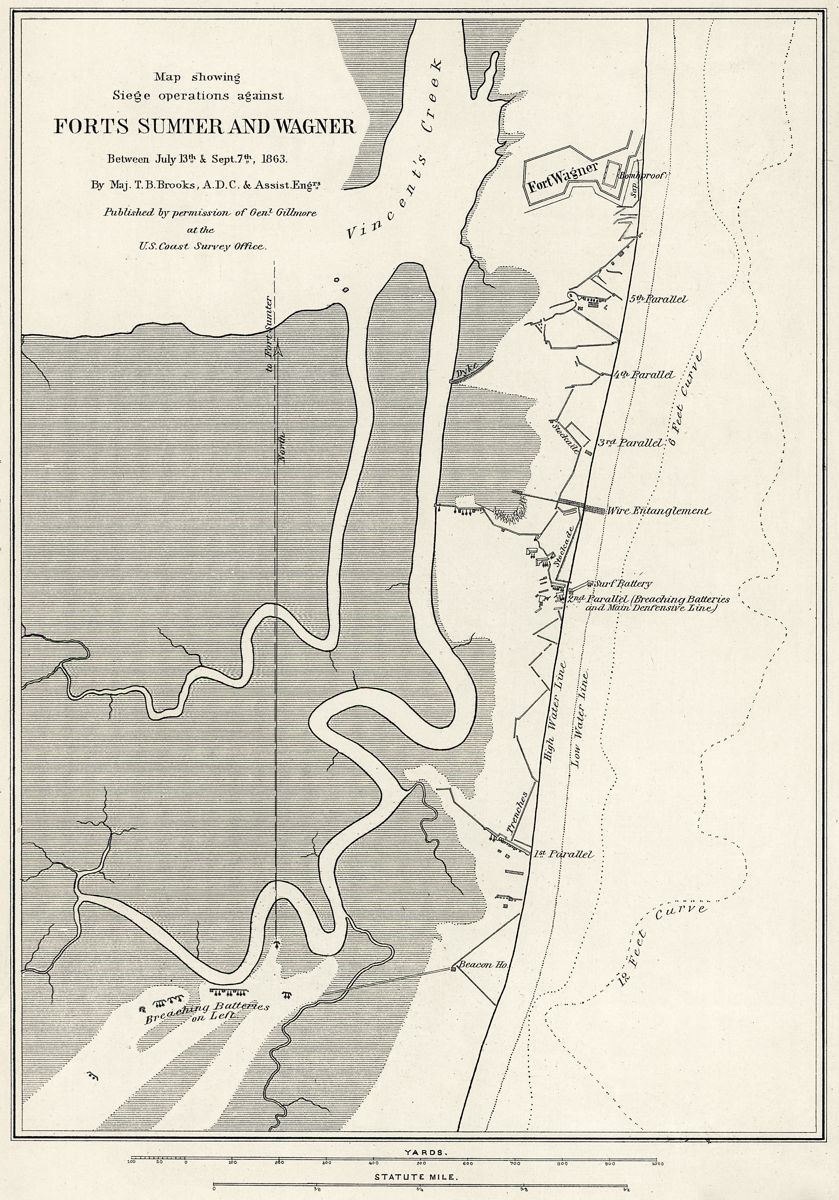
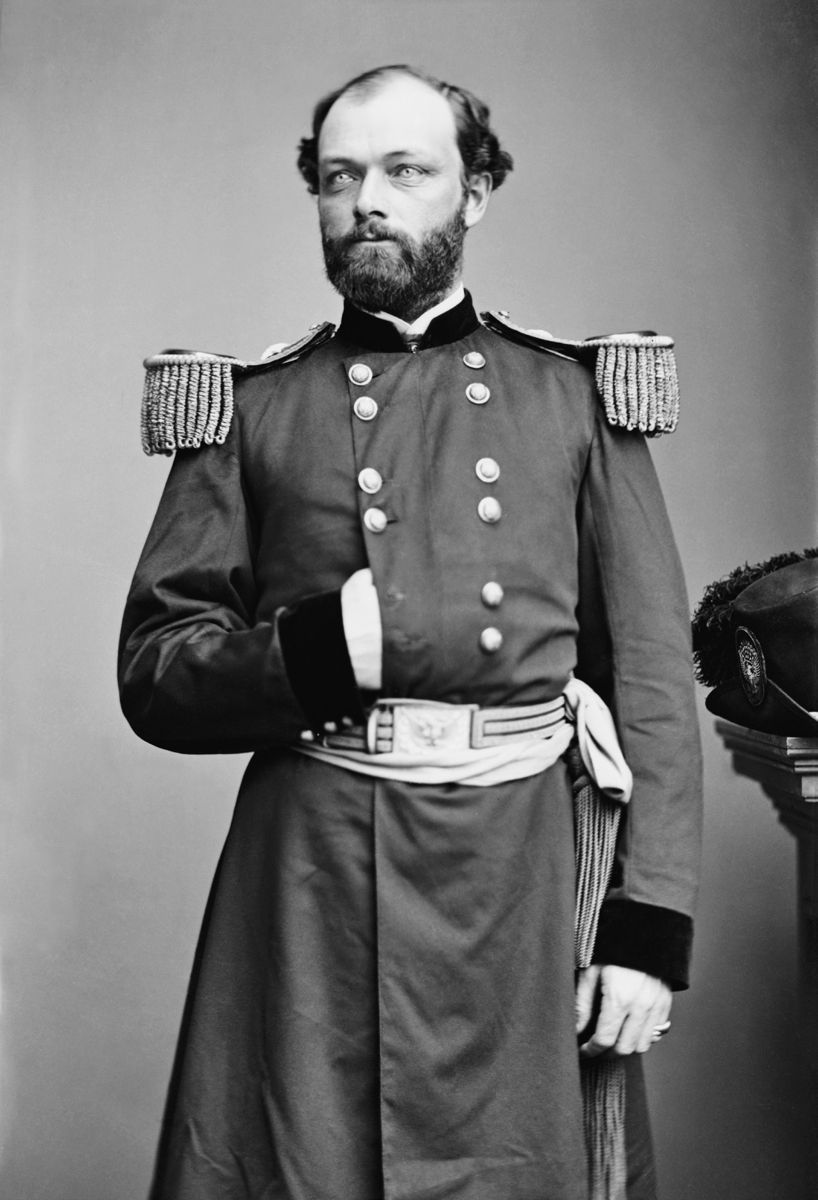
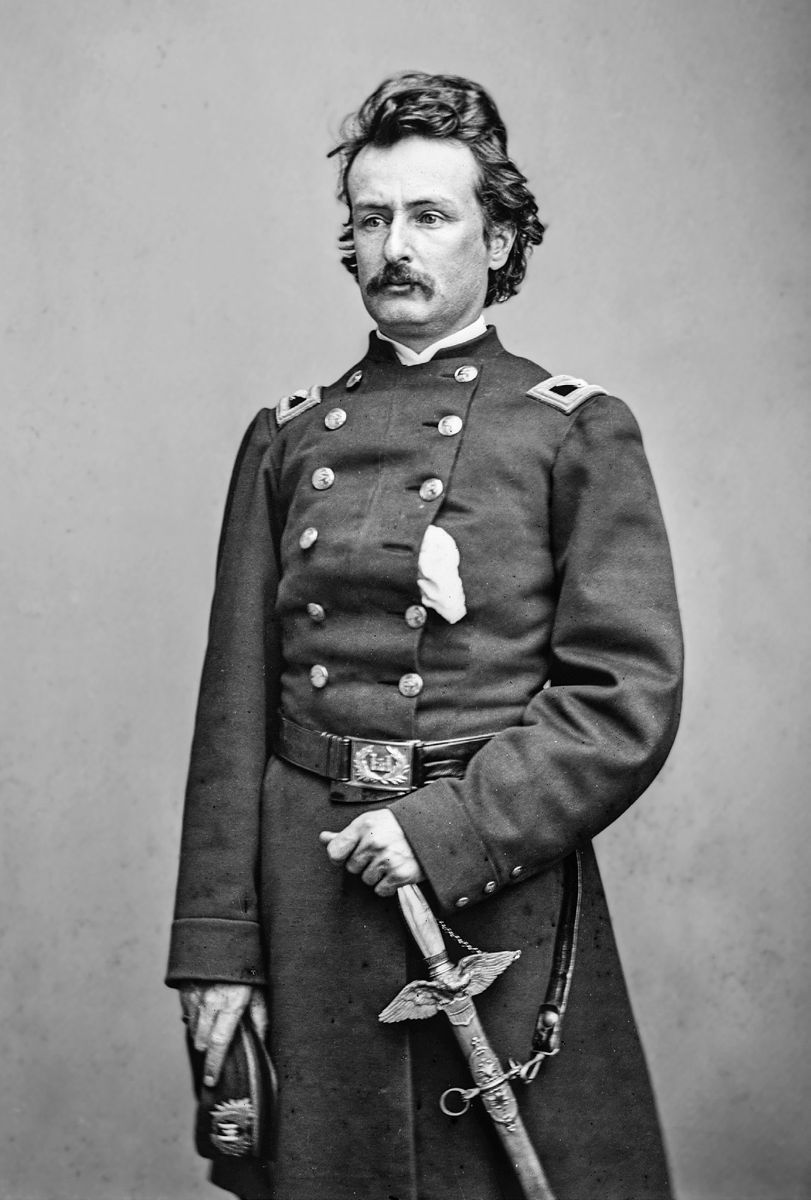
Union General Quincy Gillmore wisely realized a third attack from the Federal position would be futile. Unable to capture the earthen fort by charging over the beach, one officer stepped forward during a council of war with a unique proposal. Colonel Edward Serrell, Chief Engineer of the X Corps, had a bolder and better idea. Gillmore gave his approval. Muskets gave way to shovels as the new plan went into effect. Led by the 1st New York Engineer Regiment, the Union soldiers burrowed their way toward the fort. To avoid more bloodshed, they dug and kept digging. The innovative tactical approach called for sappers to cross the beach one shovel at a time. Work commenced immediately, carving up the beach and relocating countless tons of sand. Hundreds of soldiers inched their way in a series of trenches for well over three quarters of a mile until they were at the fort’s outer works. A sudden attack from such a position offered a much higher rate of success. Confederate commander, General William Taliaferro, stubbornly resisted giving up the fort on Morris Island. After the second offensive failed, the blood of nearly 2,000 Union soldiers saturated the sand on Morris Island. Most of the work took place at night to protect the diggers. Officers crawled ahead of the shovel battalion with a long rope marked at six-foot intervals. Men dug holes at the proper marks. Coming behind them, diggers connected the holes to form a trench. Drawing closer, the engineers opened much larger trenches parallel to the fort that could protect a body of troops and artillery. A total of five parallels and a mass of connecting trenches (Library of Congress) eventually crossed the beach. The engineers began the sixweek project by constructing gabions to protect the workers from the Confederate sharpshooters armed with at least one deadly Whitworth rifle. A gabion was a three foot long basket made of saplings and filled with sand. Hundreds of these placed on top of a trench protected the channel along its entire length. The wicker bundles were capable of stopping a sharpshooter’s bullet. Workers in the rear kept busy constructing a total of 1,400 gabions. Men went out in shifts to shovel through the sand. Surviving soldiers in the 54th Massachusetts likely felt much safer in the holes than they had charging the fort. Engineers comprised about one third of the workers. A force of soldiers known as the Grand Guard always kept watch over the diggers. Slowly, Union sappers excavated their way closer to the enemy. Confederates in the fort watching the operation knew full well what was happening. As the Union scheme developed, so did the Southern gunfire. When the trench line reached 875 yards from Wagner, a larger second parallel Diagram showing a buried wooden torpedo (land mine) in the sand. When something put enough pressure on the board it would detonate the pressure sensitive fuse causing loss of life and injury to everything around the explosion. (Library of Congress) The parallels stated with the first one at the bottom of the map and the fifth nearest Fort Wagner. (Library of Congress)
Confederate General William B. Taliaferro. Circa 1865. (VMI Archives) was excavated to accommodate stretch, the obstacles they faced the heavy guns that strengthened proved more dangerous and a bit the Union position. Hundreds of unexpected. The minefield posed sandbags and iron plates fortified the greatest danger. Resistance the new line. One soldier thought from the rebels in the outlying the second parallel just as strong rifle pits withered quickly but as Fort Wagner. the mines had to be dealt with The digging toward the third carefully. parallel became increasingly Shells of all sizes armed with dangerous for the fatigue force as pressure sensitive fuses lay they closed the gap. Confederate buried under the sand topped gunners took notice of some with a board across the fuse. men from the 85th Pennsylvania Any pressure from an errant foot carelessly grouped together in an set off a powerful explosion. exposed position; a well-placed Some were nothing more than mortar killed seven with one shot. 10-gallon wooden beer kegs Other reckless diggers fell under loaded with powder and armed the accuracy of sharpshooters. the same way. One soldier flew Still, the sand flew as they high in the air after stepping on drew nearer to Wagner. Nothing a mine. When his mangled body stopped the digging. Temperatures landed, the corpse detonated hovered around 100 degrees. another explosion. High tide sometimes flooded the When an explosive device was trenches. Sappers constantly had discovered, the engineers had to deal with windblown sand. a variety of ways to detonate Wagner’s artillery continued them. Sometimes a well-placed adding to the Union casualty list. musket shot did the job. Diggers To shield the diggers at the lobbed iron of their own at the head of a trench from shot and fuse hoping to blow the mine. shell, engineers employed 11 sap For wooden kegs, a hole drilled rollers. The 9 foot long and 4-foot- into the side allowed soaking the wide round wickerwork was powder with water to render the made of saplings and branches mine inert. banded with iron. The ingenious One unforeseen hindrance device was rolled forward in presented a problem more ghastly front of the shovel men offering than hazardous. Union diggers excellent protection. unearthed hundreds of decaying The third parallel opened on human remains. The clothing August 9, only 540 yards from the indicated the bodies were not fort. The fatigue parties continued soldiers. The decomposing digging forward to a fourth civilians had died from disease parallel, a mere 350 yards from that plagued Charleston in the Confederates. During the last yards under a withering fire from musketry and artillery. General Taliaferro sent word to General Beauregard that it would be senseless to sacrifice the garrison. On the night of September 6, the Rebels headed to the far end of the island carrying any supplies to be loaded onto boats waiting at Cumming’s Point. The few remaining Confederates in the fort spiked the guns and left. The valiant Southern defense came to an end as the fort was abandoned. A Southern deserter notified Northern officers the fort was empty. Union troops warily entered the battered fortification in the early morning hours of September 7. The prized bastion was finally occupied by the Union Army after a two-month campaign highlighted by siege tactics employed during the American Civil War. Just as with Vicksburg, Port Hudson, and Petersburg, the Fort Wagner siege was a forerunner to the trench warfare associated with the First World War. The tremendous amount of beach sand reshuffled on Morris Island could never be measured. Union Engineers deserve credit for taking Fort Wagner. Had General Gillmore ordered a third all-out assault on Fort
Landmine exploding among Union troops at Yorktown, Va. Sketch courtesy of Alfred R. Waud, Harper’s Weekly, May 24, 1862.
Wagner from the original line, the killed and wounded would have dwarfed the casualties taken in the six weeks of digging. The digging wasn’t in vain. Total Union control of the strategically important Morris Island now put Charleston and all the forts protecting the harbor in jeopardy. Today, the fort that demanded so much attention on Morris Island is only a memory. Over the years the ocean claimed half of the island. Both the beach where the 54th Massachusetts made their gallant charge and Fort Wagner itself, rest at the bottom of the ocean, several hundred feet from the current shoreline. All the sand piled high by the Union and Confederacy on the island has been reordered backWAR to its CHARLESTON IN THE original position by the forces of Mother Nature. The Union dead buried on the Island, including Col. Robert Gould Shaw, were reinterred in a mass grave in the Beaufort National Cemetery in South Carolina. The civilian dead buried “Coffin Island” now rest underwater. Many Confederates buried in the walls of the fort during the siege probably share the same watery grave. Had it not been for the movie Glory in 1989, the Battle of Fort Wagner may have been relegated to the back pages of the Civil War. Civil War buffs and beyond now know the story of 54th Massachusetts at Fort Wagner from the film. If only the film had kept rolling to showcase the monumental achievement of the Engineers and the dedicated secured the victory on Morris Island while armed only with shovels! Joseph F. Wilson lectures on Andersonville Prison and Walt Whitman in the Civil War. He is a frequent contributor to Civil War News. The author also produced the documentary film “Civil War Prisons – An American Tragedy” now available on Amazon. Contact – [email protected].