
Through The Lens
No One Can Tell What Would Happen In War
By Stephanie Hagiwara · Originally published July 2022 · pp. 10–11
“Who can write the history of a battle whose eyes are immovably fastened upon a central figure of transcendingly absorbing interest—the dead body of an oldest born son, crushed by a shell in a position where a battery should never have been sent, and abandoned to death in a building where surgeons dared not to stay?” – Sam Wilkeson, New York Times Correspondent In the early hours of July 1, 1863, U.S. Gen. George Meade, commanding, Army of the Potomac, sent an order to Gen. Oliver Howard, XI Corps, to advance to Gettysburg, Penn., eleven miles distant. On June 29, the XI Corps reached the Emmitsburg, Md. area after a hard march over bad roads and intermittent rainy weather. By 8 a.m., the XI Corps was on the road.
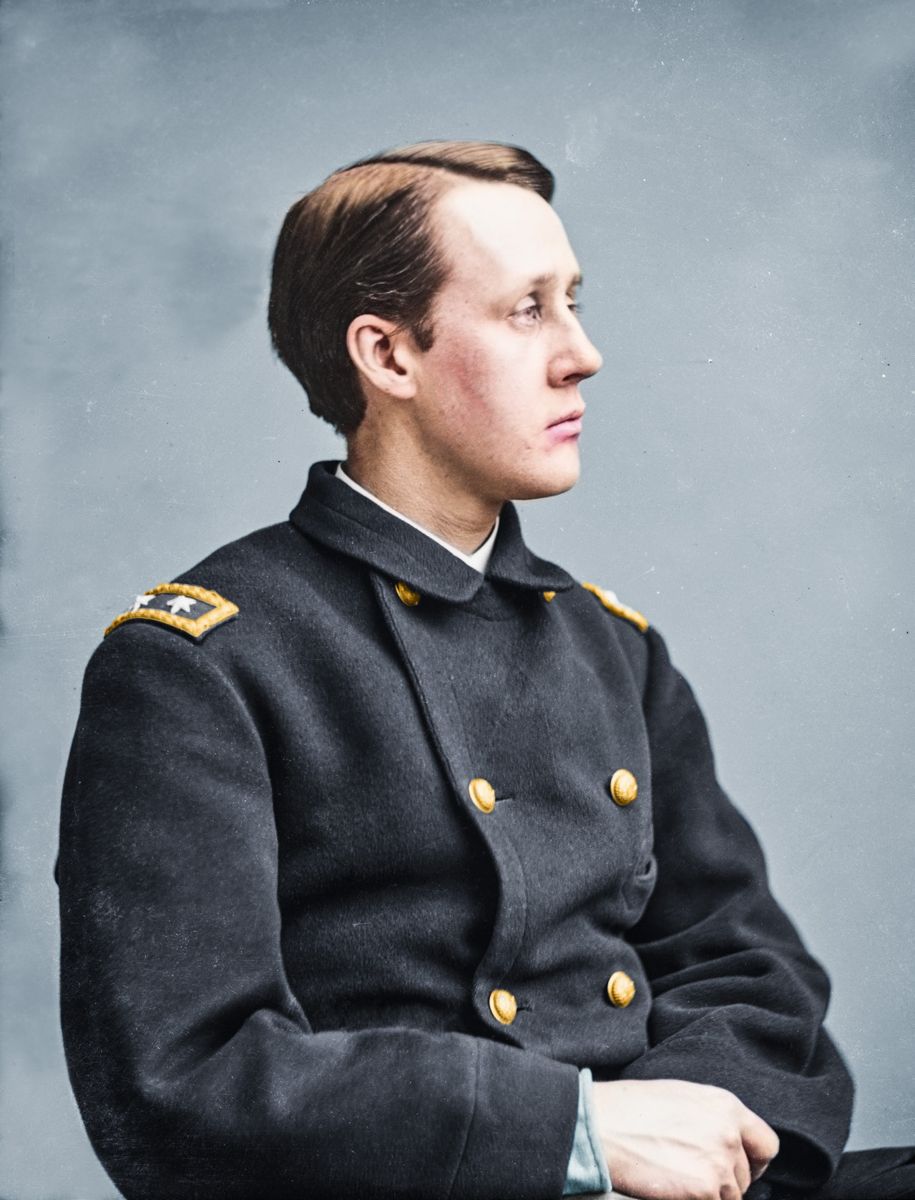
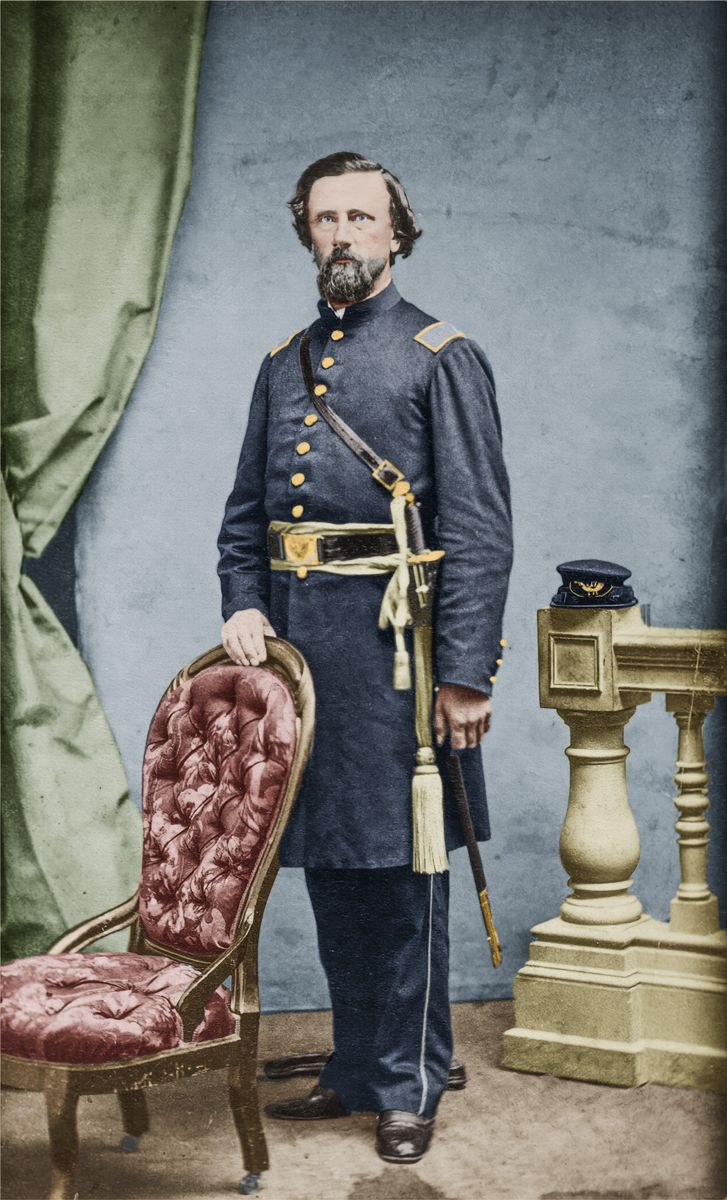
Howard, “Old Prayer Book,” had recently taken command of the XI Corps; about fifty percent of the men were either first generation German or German immigrants; many did not speak, read, or write in English. The former West Point mathematics professor was 32 years old, had lost his right arm in the Battle of Fair Oaks, Va., believed alcohol was a poison “injurious to the mental and moral life of a soldier,” and was considerate of others. For example, he thanked an orderly who held his horse; it was a small gesture, but the orderly remarked to others “that no one else had thanked him since he had entered the army.” Riding ahead, Howard and Col. Theodore Meysenburg had a two-hour lead. In Gettysburg, on Cemetery Hill to “get an extended view,” both men agreed, it would be a “good position” for the Army of Potomac. Next Howard went “dashing” into Gettysburg, entered the Fahnestock building, and joined townspeople viewing the battle from the roof top. There, about 10:30 a.m., Howard learned, “General [John] Reynolds is dead, and you are the senior officer on the field.” As he left the building, Mrs. Fahnestock asked, “Oh, sir, you are not going to let the rebels come into the town, are you?” Howard paused and replied, “Madam, no one can tell what may happen in war.” About 11:30 a.m., Howard met with Gen. Carl Schurz at his headquarters on Cemetery Hill. He ordered Schurz to take the 1st and 3rd Divisions through Gettysburg and position them to the right of the 1st Corps. Gen. Adolph Von Steinwehr’s 2nd Division and two batteries remained on Cemetery Hill in Col. Baynard Wilkeson, Battery G, 4th U.S. Artillery. Colorization © 2022 civilwarincolor.com, courtesy civilwarincolor.com/cwn (Public Domain)
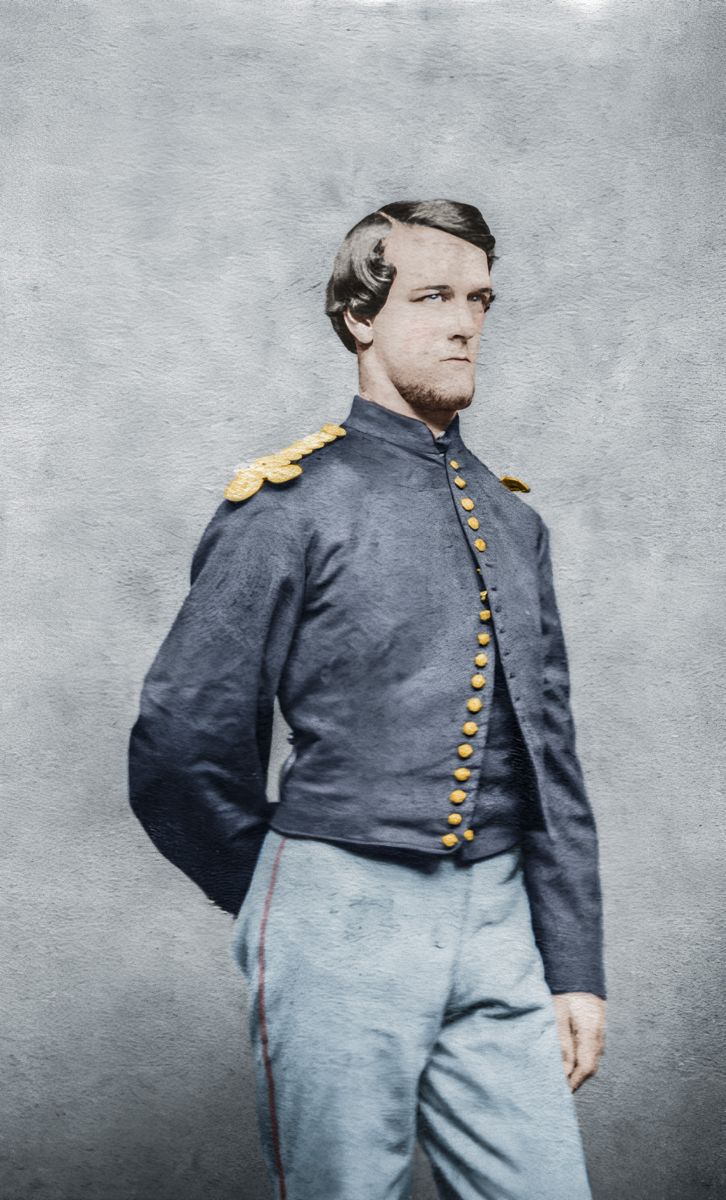
CivilWarNews.com reserve. Howard stated, “We must hold this hill.” The 45th N.Y. had been doublequicking for several miles and the hastening men were “panting and out of breath.” At Gettysburg, “they flowed through and out into the battlefield beyond, a human tide, at millrace speed.” Offers for water were turned down as “there was not time to drink.” On to the farm fields outside of town poured the Federals. Harvard lawyer Gen. Francis Barlow positioned his 1st Division, 2,477 men, on the far right. Barlow was 28 years old, a strict disciplinarian, cool and brave in action but had “always been down on the ‘Dutch’ & I do not abate my contempt now.” The Confederates were already on Oak Hill, the Federals intended destination. Barlow advanced to the high ground now known as Barlow’s Knoll, extending the line about a mile. Schurz had to order his men to extend to Barlow’s, to make “still thinner a line already too thin.” On top of the knoll, Lt. Col. Baynard Wilkeson, Battery G, 4th U.S. Artillery, positioned four Napoleon guns. Wilkeson was the 19-year-old son of New York Times war correspondent Samuel Wilkeson, embedded with the Army of the Potomac. To reach Gettysburg, C.S. Gen. Jubal Early’s Second Corps traveled on the Harrisburg Road, which led onto the XI Corp’ right flank. Less than 1,200 yards from Col. Douglas Fowler, 17th Conn. Colorization © 2022 civilwarincolor.com, courtesy civilwarincolor.com/cwn (Public Domain)
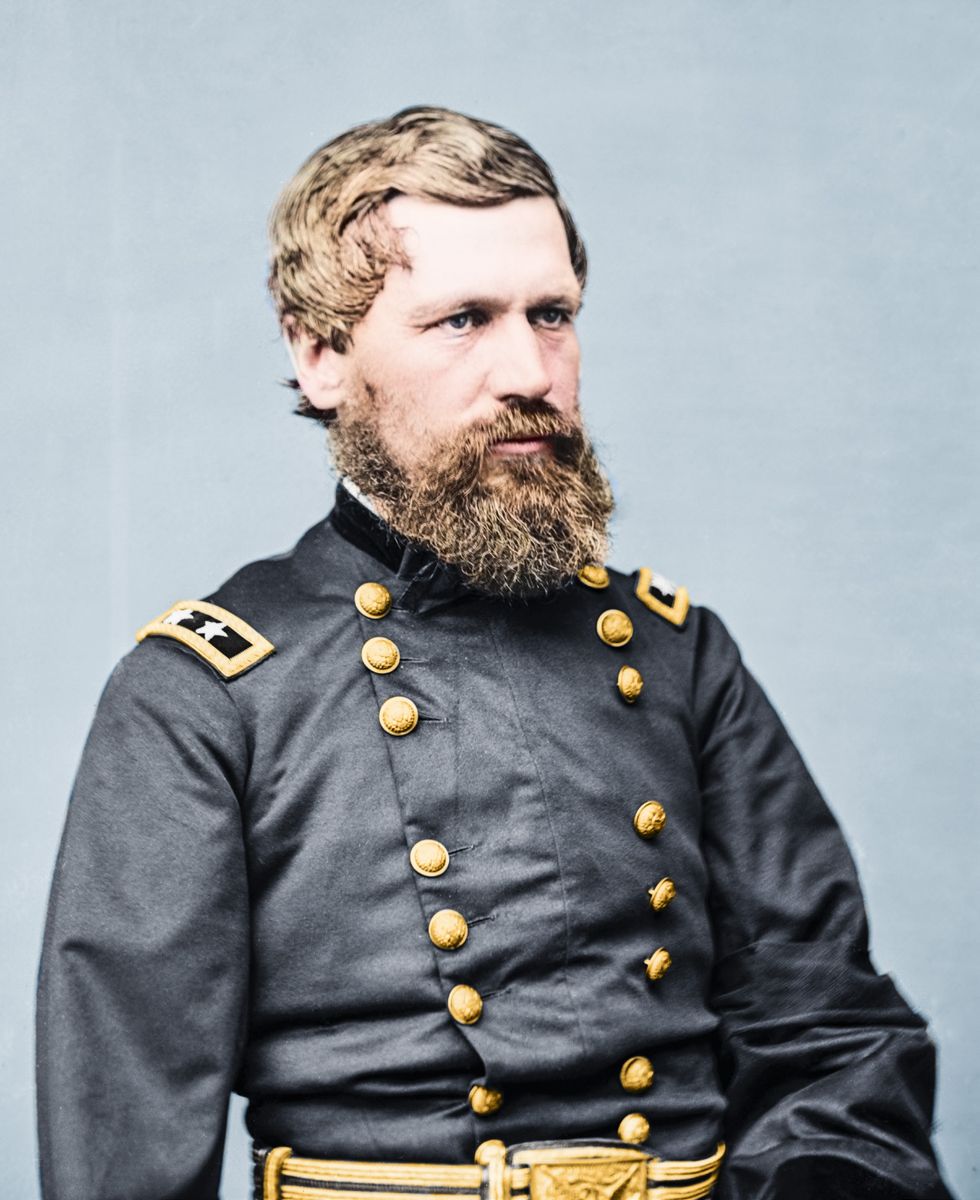
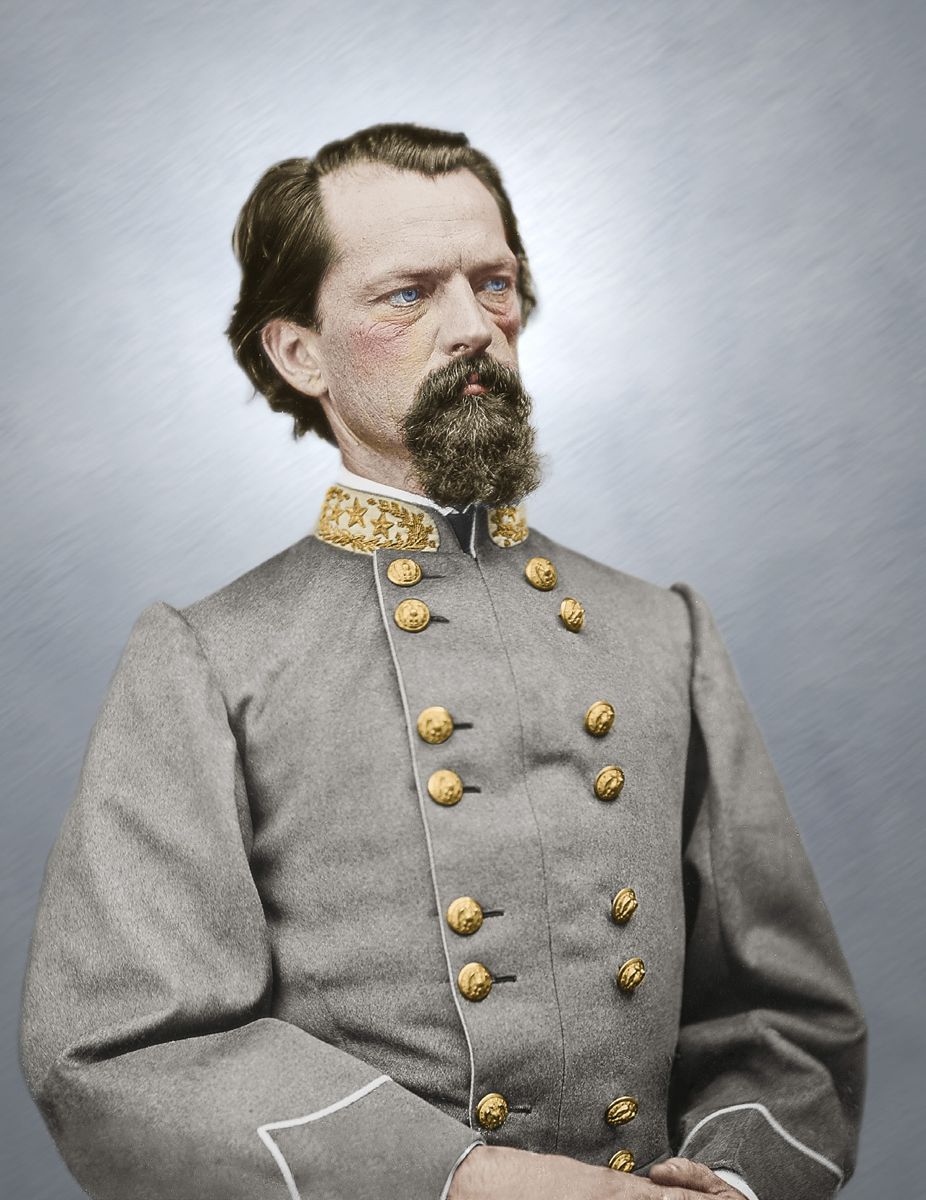
Barlow’s Knoll, Lt. Col. Hilary Jones positioned 12 of his 16 guns. Initially, Jones aimed at the Federal infantry. Then a Federal shot struck the muzzle face of one Confederate Napoleon, putting it out of commission. Later three other guns were disabled after the wrong size ammunition got stuck inside the barrel. Jones ordered his gunners to target an officer on horseback. Lt. Col. Wilkeson was on horseback. A shot mangled his right leg and killed his horse. Under fire, he tied a tourniquet on his leg, used his pen knife to amputate the stump and had his men carry him to a nearby house, where he would die. His replacement deemed the position too deadly and used ropes to drag the guns off the knoll. Jones’s firing signaled Gen. John Gordon’s Southern infantry to move forward toward the 900 men on the knoll. Gordon, on top of his black stallion, “drew his sword, the Georgians grasped their arms, and in a few minutes the line was moving through a field of yellow wheat like a dark gray wave in a sea of gold.” U.S. Col. Douglass Fowler, 17th Conn., and the 75th Ohio and were ordered to counterattack. Fowler had previously advised, “Dodge the big ones, boys.” On his white horse he turned in his saddle, gestured with his sword and shouted, “Now, Seventeenth, do your duty! Forward, double quick! Charge bayonets!” A gunshot struck his head, his brains splattered his men. After some 20 minutes of hard fighting, the Yankees fell back. “They then began to retreat in fine order, shooting at us as they retreated,” wrote G.W. Nichols of the 61st Georgia. “They were harder to drive than we had ever known them before.” Barlow spurred his horse into action, attempting to form a second line. He was shot, collapsed, and left for dead on the field. Gordon, spotting the downed Federal officer, had him sent to the rear for medical attention. Both the positions of the I Corps and the XI Corps were collapsing. Twenty thousand Federals retreated through Gettysburg towards Cemetery Hill; thirty thousand Confederates followed while 2,000 townspeople hid in their cellars. The day was one of the best for Gen. Robert E. Lee’s Army of Northern Virginia as they captured over 5,000 men; one of the worst for the Union Army of the Potomac. The key to the battle’s final outcome would be Cemetery Hill. U.S. Gen. Winfield Scott Hancock arrived at Cemetery Hill about 4:30 p.m. He had
CivilWarNews.com orders from Meade to take over command. Although Howard had seniority, Meade wanted someone he knew in command. Together Hancock and Howard toured the Cemetery Hill. Hancock, in a prophetic comment observed, “I think this the strongest position by nature upon which to fight a battle that I ever saw and if it meets your approbation I will select this as the battlefield.” Sources: • Sears, Stephen W. Gettysburg: Mariner Books, 2004 • Pfanz, Harry W. Gettysburg—The First Day: The University of North Carolina Press, 2011 • Trudeau, Noah Andre. Gettysburg: A Testing of
•
Courage: HarperCollins, 2010 American Battlefield Trust. “Artillery at Gettysburg and Continuing Day 1: Gettysburg 158 Live!” https://www.youtube.com/ watch?v=qGbsZcW_0Pk&list=PLZrhqv_T1O1tcdge8vkHRKOOgD2jjy1jz&index=8
Stephanie Hagiwara is the editor for Civil War in Color.com and Civil War in 3D.com. She also writes a column for History in Full Color.com that covers stories of photographs of historical interest from the 1850’s to the present. Her articles can be found on Facebook, Tumblr and Pinterest.