
The Unfinished Fight
Memoirs and First Hand Accounts
By Craig L. Barry · Originally published July 2022 · pp. 8–9
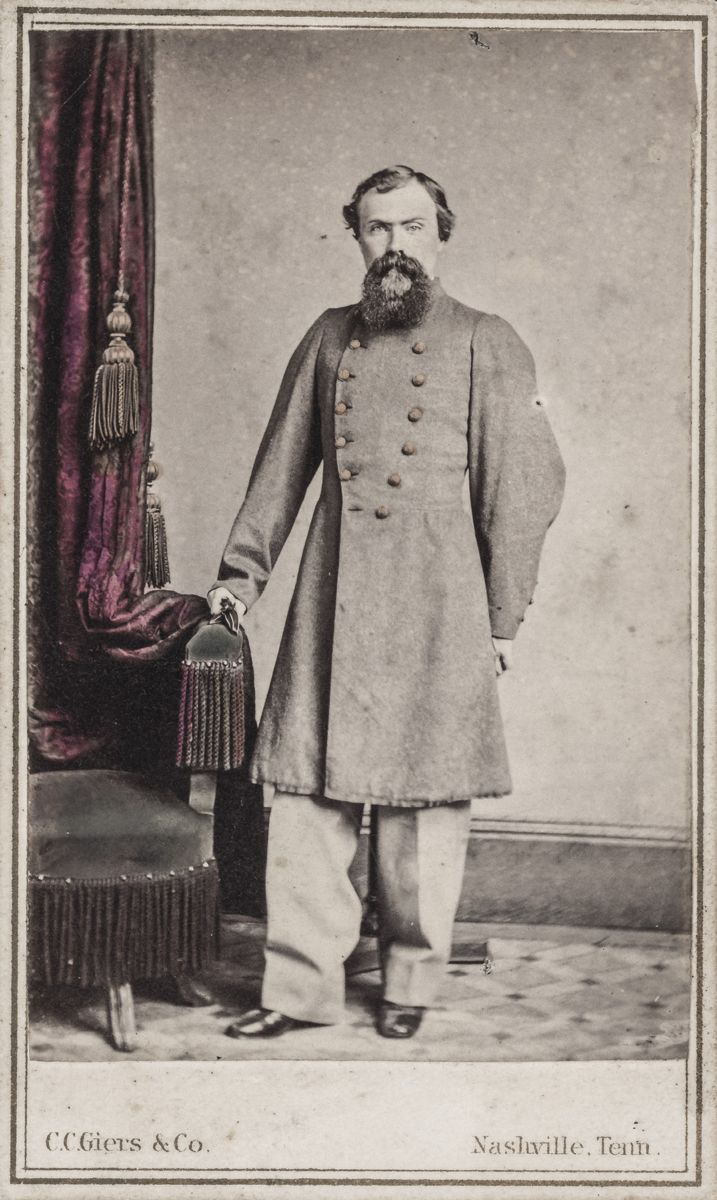
As a group most Civil War collectors and history buffs enjoy doing research to improve their understanding of 1860s material culture. One challenge with historical research, particularly when relying on veterans memoirs that were written many years postbellum, is that an account’s accuracy is often related to the immediacy of the events. An excellent example shared by a World War II veteran is as follows from Old Man in a Baseball Cap: A Memoir of World War II by Fred Rochlin:
“I remember flying from Dakar in the Senegal across the Sahara Desert through the Zagora Pass into Marrakech, Morocco. We were low on fuel. We landed at this dusty town, Timbuktu, mud huts, everyone speaking French. American Air Force fuel depot. Thousands of barrels of fifty-gallon, one-hundred octane aviation fuel. We had cold beers. Refueled, took off, flew through the Zagora Pass, through the Atlas Mountains and into Marrakech. I remember all this with pristine clarity. It never happened. I checked my old navigator logs. We didn’t land to refuel. We flew right through the Zagora Pass. And we wouldn’t have refueled at Timbuktu anyway. Too far away from the course of our flight. So, where did that French-African town come from? My memory, it’s accurate and false at the same time. It’s complex and simple. It changes constantly, — often just to fit the circumstance. And yet, all this time I know I’m telling the truth because I’m relying on my memory…You reveal yourself in the stories you choose to tell. We become redundant. We tell the same story over and over again. The memory of our memories; the story of our stories. Complex and simple. Sometimes interesting, sometimes boring, sometimes true, sometimes not true. Always revealing.” Sam Watkins’ excellent memoir, Company Aytch: Or a Sideshow to the Big Show, contains a number of small historical inaccuracies, such as remembering people by name who were injured in certain battles when the historical record suggests they were not present. For example, in his recollection of Shiloh, an event he recalls with clarity since it was his first big battle, Watkins mentions Col. Matt Martin being injured. According to the records, Martin was voted out as colonel of the 23rd Tennessee before April 1862 and was not at Shiloh. Major Hume R. Field of the First Tennessee was present but is not mentioned by Watkins. These kinds of minor factual mistakes are found throughout the book, which is highly regarded as an accurate depiction of Confederate army life in the Western Theater. In a recent discussion between historic weapons demonstrators at Shiloh National Military Park, one noted that Sam Watkins may have been on “French Leave” during the Battle of Franklin in November 1864, which may or may not have been the case. He wrote in his memoirs of the battle: “Would to God I could tear the page from these memoirs and from my own memory. It is the blackest page in the history of the war of the Lost Cause. It was the bloodiest battle of modern times in any war. It was the finishing stroke to the independence of
Sam R. Watkins. In 1881, with a “house full of young ‘rebels’ clustering about my elbows,” Watkins began to chronicle his experiences in the First Tennessee Regiment. “Co. Aytch” is considered to be one of the greatest memoirs ever written by a Confederate field soldier.
the Southern Confederacy. I was there. I saw it. My flesh trembles, and creeps, and crawls when I think of it to-day. My heart almost ceases to beat at the horrid recollection. Would to God that I had never witnessed such a scene!” Who knows? About all that can be said with certainty is that his account of Franklin lacks the kind of specific details he provided elsewhere about his experiences. Watkins for his part admits that Company Aytch is not intended as a pure historical account of the war. “Eyewitness accounts” are notoriously unreliable. In other period accounts, soldiers rely on hyperbole to make their point. For example, one Union soldier proud of his newly issued “United States Springfield” wrote in a mid-1862 letter home that “…my Springfield rifle will shoot through six feet of granite.” Obviously this fellow is exaggerating to make a point about how pleased he is to have been issued the highly regarded U.S. Model 1861 rifle-musket. One cannot rely on the memories of the combatants for 100 percent accuracy concerning what weapons were being used when and by whom. For example, a secondary source such as The
Rifled Musket by Claud E. Fuller is much more accurate about the capabilities of the Model 1861 than most firsthand accounts recorded in diaries or letters back home. The best conclusions may be from “research” conducted with a M1861 in my own hands, one that I can take apart and see how it is made and from that basis make my own observations and conclusions. Am I the primary source there, or is the weapon? Would the lack of citation make the findings any less factual or otherwise accurate? How about if I did the same thing with a hundred original M1861s or three hundred? At what point does it make no difference? In summation, my sense has been, and continues to be, that we can largely miss the point or the purpose of historical research and get bogged down in the minutiae too easily. For example, the wellknown antebellum cookbook The Kentucky Housewife from 1839 by Letice Bryan (Applewood Books, 2001) has a recipe for buttering bread. It stipulates that the bread should be cut from the loaf before it is buttered. At the risk of being pedantic, one would think that antebellum cooks who were old enough to read a cookbook would know how to spread butter on a piece of bread. It has been said that one is entitled to their own opinions, but not their own facts. This is an opinion, of course. The “memory curve” is perilously short and within about five days very few details can be accurately recalled. In 1885, Hermann Ebbinghaus discovered the exponential nature of forgetting. The following formula from his Memory: A Contribution to Experimental Psychology describes the relationship between the event (e) and how long the memory of it is retained: R = e-s/t, where R is memory retention, s is the relative strength of memory and t is time. Most memoirs were written and published many years after the actual events they attempt to recall. For his part, Sam Watkins went back and published “corrections” to his original memoirs which were recently republished when greatgranddaughter Ruth McAllister discovered them in a desk. Some original observations were “remembered” better later in life, such as his thoughts on the pretty girls in the “Pass the Butter” episode. He initially wrote that for a kiss from one of those girls he would gladly forfeit 10 years of his life. The girls were not nearly as attractive as the gal he later married in the revised version. Connecting the dots as a historian, a suggestion for Sam might have been to record that initial observation about those young ladies in the footnotes. Since nobody reads the footnotes, he would not have had to be worried about making corrections later in life. Craig L. Barry was born in Charlottesville, Va. He holds his BA and Masters degrees from
UNC (Charlotte). Craig served The Watchdog Civil War Quarterly as Associate Editor and Editor from 2003–2017. The Watchdog published books and columns on 19th-century material and donated all funds from publications to battlefield preservation. He is the author of several books including The Civil War Musket: A Handbook for Historical Accuracy (2006, 2011), The Unfinished Fight: Essays on Confederate Material Culture Vol. I and II (2012, 2013). He has also published four books in the Suppliers to the Confederacy series on English Arms & Accoutrements, Quartermaster stores and other European imports.