This And That
“I should have kept the matter a secret.”
By Gould Hagler · Originally published July 2022 · pp. 12–13
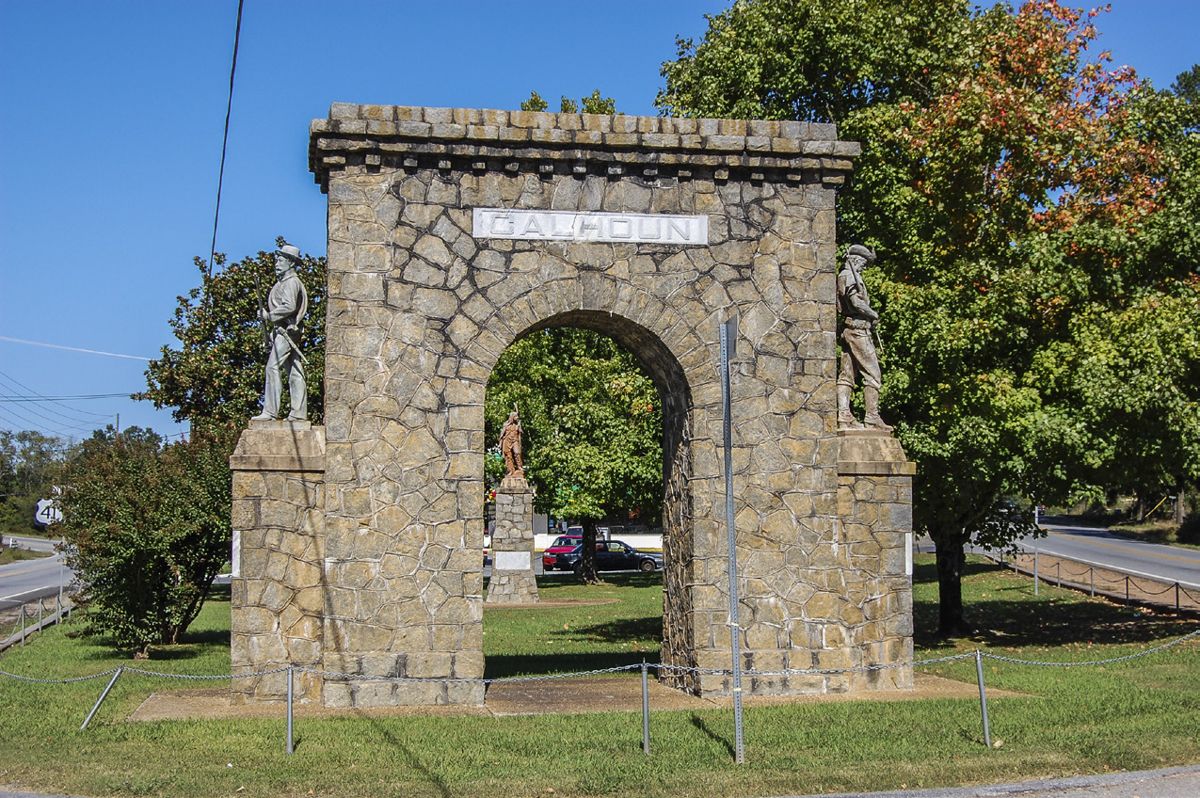
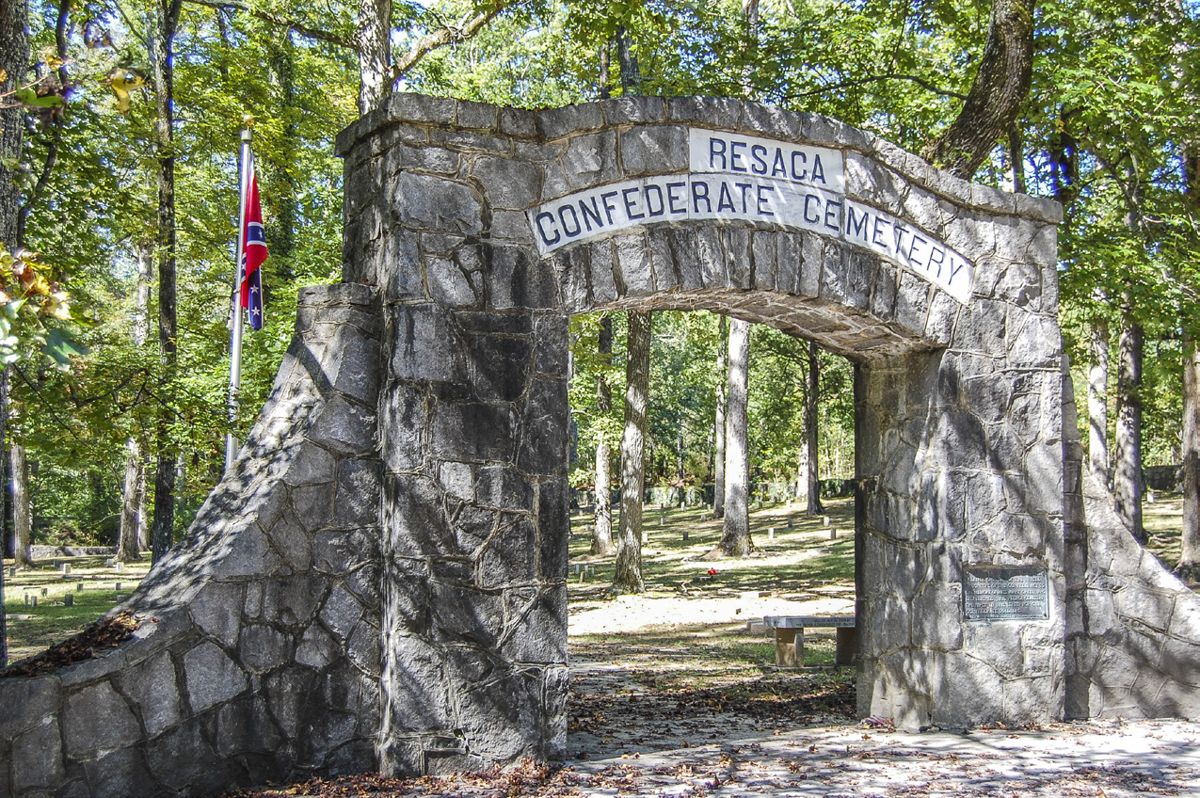
In late April 1906 a Jesuit priest from Chicago wrapped up a lecture tour with an engagement in Springfield, Ill. From there, on April 28, he boarded a train for Chattanooga, planning to spend a week on a different kind of tour, traveling on horseback through northwest Georgia to Atlanta, sleeping in a tent and visiting sites where armies fought 42 years earlier. The news of the priest’s plans arrived before he did; a special report appeared in the Chattanooga Daily Times the day he left Illinois. The good father met his traveling companions at Fort Oglethorpe, just across the state line in Georgia, and they embarked on their adventure, not knowing of the brief item in the Times. For the better part of the week the party trooped along, unaware of the firestorm engendered by the Times report. Numerous papers in the South and elsewhere covered the story; editors and readers opined; politicians had their say; a few Catholic clergymen commented; Georgia Senator Augustus Bacon demanded answers from the War Department; the War Department scrambled to get the answers; President Theodore Roosevelt issued an order; and the Army Chief of Staff acted. The priest was Father Thomas Sherman, son of the general wellknown to Georgia and the nation. Thomas Ewing Sherman, the fourth child and second son of William T. Sherman and Eleanor Ewing Sherman, was born in 1856. Thomas was educated at Georgetown College, Yale, and Washington University’s school of law. He continued his studies under Jesuit fathers in England and Europe. His decision to enter the priesthood in 1878 must have pleased his Catholic mother, but to General Sherman, who had different hopes for Thomas, this choice was a keen and longlasting disappointment. Father Sherman always maintained a strong interest in the Civil War and his father’s role in the conflict. He was present at the dedication of the Chickamauga and Chattanooga National Military Park in 1895, four years after his father’s death. He spoke at the ceremony and paid tribute to men who fought with his father and the Union and to their Confederate adversaries as well. Before his ill-fated trip to northwest Georgia in 1906, Father Sherman had traveled from Savannah to Atlanta to visit—in reverse—the sites along the March to the Sea. He had also toured the battlefields around Atlanta. These earlier trips to Georgia, and to battlefields in other Southern states, had caused no controversy whatsoever. It is uncertain how Father Sherman came to be invited on the 1906 excursion. The invitation may have originated with President Roosevelt in 1903, when the equestrian statue of Gen. Sherman in Washington was dedicated. One of Father Sherman’s sisters claimed that, during a White House dinner for the general’s family held after the ceremony, Roosevelt said he would arrange for the invitation. It is also possible that the invitation came from someone of lesser rank than the commanderin-chief. Father Sherman was well acquainted with a number of army officers, and, during an earlier tour in Georgia, he had expressed an interest in traveling over the course of the campaign from Chattanooga to Atlanta. Whatever the source of the invitation, Father Sherman’s 1906 tour turned out to be quite different than the previous ones. The reason: the press and the politicians. While Father Sherman’s train rattled along from Illinois to Tennessee, this headline appeared in the April 28 Times: SHERMAN COMING Jesuit Father to Retrace Steps of Soldier Parent Under this headline was a small error that was magnified and distorted in subsequent stories in the press. Sent from Springfield on April 27, the item stated that the priest would “be accompanied by an escort of the United States cavalry.” On April 30 the Chattanooga paper ran a piece with more details about Father Sherman’s plans to “cover every mile of territory devastated by Gen. Sherman’s army in 1865 [sic].” The article went on to state that “By reason of a special order by the secretary of war, Col. Chase [the commander of the 12th Cavalry] has detailed a small escort of cavalry to accompany Father Sherman.” Outrage was sparked by two misunderstandings caused by inaccurate reporting. One misinterpretation was that public resources were being commandeered for a private CivilWarNews.com purpose, when in fact the cavalry exercise was already planned and would have been conducted regardless of Father Sherman’s presence. The second and more important problem was the phrase “escort of cavalry,” read by many to imply that Father Sherman believed he needed protection on a visit to an area through which his father had campaigned. The Times published a letter the following day from a reader who objected to the expenditure of public funds for this duplication of Sherman’s march “on a miniature scale” and to the ostentation that accompanied the march. Furthermore, the reader believed, the excursion would re-ignite “the embers that all people…have tried to quench.” The reader’s concerns were misplaced, said the editor in a note below the letter. It seems the editor forgot that his own paper’s reporting was the basis for the reader’s misunderstanding. On May 3 the Times ran a piece headlined “Sherman’s ‘Second March to the Sea.’” It was understandable for the general’s son, in his “filial zeal,” to undertake such a trip and “he might possibly have accomplished his desire without arousing the slightest objection, had not the military authorities suggested the ‘escort’ which… occasioned the rather sensational publicity.” Again, the editor seemed unaware of the origin of the sensational publicity. The same article stated that the president had “recognized the impropriety of this official detail.” The politicians had chimed in. While Father Sherman and his “escort” were marching south from Fort Oglethorpe, ignorant of the furor that had erupted, the story became big news, principally, but not exclusively, in the South. Members of Georgia’s Congressional delegation spoke up, as did senators and representatives from other states. Atlanta’s mayor said that Sherman’s son would be welcome in his city but advised against appearing with his military escort. The acting mayor of Savannah made the press with an intemperate remark about hanging Father Sherman. Regular people joined the chorus, sometimes with facetious comments and lame jokes about torches and fire insurance; numerous newspapers continued to fan the flames. Although the comments varied in tone and volume, all had the same basic points: the military escort was improper and unnecessary. This private citizen had no right to use the army for his own purposes and had no need of protection from his fellow citizens. Following a sit down with the president, the army chief of staff sent an order to the commander of the Department of the Gulf in Atlanta. Word was sent to Col. George Chase at Fort Oglethorpe: recall the cavalry. However, the cavalry was hard to find. The small force (two officers, eight enlisted men, and one Jesuit) was riding through and camping in the countryside, or “lost in the woods,” according to the Atlanta Constitution on May 3. After leaving Fort Oglethorpe on April 30 the party spent the night in Dalton. They moved on to Resaca, where they spent some time on the battlefield, then passed through Calhoun. In Cassville they halted to make some notes on the action that had occurred there. In several places along the way the cavalrymen and their guest encountered local people, including Confederate veterans, and spent time in conversation with them. All the meetings were cordial and apparently no one they met had seen the news that was so upsetting to so many people. On May 2, after Cassville, Father Sherman and the cavalrymen reached Cartersville, just 7 miles to the south. There they caught up with the news and the order for the cavalry to turn back. In the words of historian E. Merton Coulter, “Father Sherman was astounded, aggrieved, and deeply hurt – and angered as far as became a priest.” On May 3 Father Sherman and the soldiers mounted up and headed north. In contrast to the pleasant outbound trek, the march back to Fort Oglethorpe would be an ordeal for the clergyman, nearly 50 years old and unused to riding such a distance. Father Sherman and his “escort” camped that night near Calhoun. On the 4th they made camp just short of their destination, which they reached the morning of Saturday May 5. The exhausted Jesuit was taken in by Col. and Mrs. Chase, who allowed no one to see him. A reporter from the Times was present when the party arrived, and wrote that “in five minutes the priest had disappeared.” He was told that Father Sherman “did not wish to be disturbed by reporters or anybody else.” The persistent journalist tried by telephone and spoke to Mrs. Chase. She was adamant, and “would not allow the colonel’s guest to be disturbed.” Mrs. Chase answered the reporter’s questions and informed him of some facts, important facts, that had been missing from all the press coverage during the week. Quoted in the May 5 Times, Mrs. Chase said: “The socalled trip over the ‘March to the Sea’ was arranged well before the invitation was given Father Sherman. You know, we have a practice march at Fort Oglethorpe every week.” According to Mrs. Chase, the invitation had been issued the previous December by Gen. Thomas Barry the Assistant Chief of Staff of the Army. If Father Sherman knew the source of the report from Springfield he did not say, nor did he comment otherwise on the press coverage. He spoke positively of the welcome he
CivilWarNews.com received from the Georgians he had met on his abbreviated trip. According to Coulter, Father Sherman felt “bitter against the authorities in Washington.” While he did not mention Roosevelt, this bitterness may indicate that the president did first suggest and arrange for the invitation, or at least was aware that such an invitation could have been issued. Perhaps Father Sherman resented the fact that Roosevelt responded to the controversy not by immediately setting the record straight but by recalling the cavalry. The exhausted priest rested on Sunday at the Chases’ home. On Monday he left Chattanooga by train, bound for California, to officiate at the wedding of his cousin William Ewing. The reporter from the Times had spoken to Col. Chase, as well as Mrs. Chase, on the day the party returned to Fort Oglethorpe. The colonel said that “it was intended that nothing would ever be given to the public about Father Sherman’s march over Georgia battlefields.” Nothing about the march would have appeared in the press, said the colonel, “If first news had not been received here from Springfield.” “I should have kept the matter a secret,” Col. Chase said, but of course that was beyond his power after the dispatch had been sent to the Chattanooga Daily Times on April 27. Father Sherman did not speak to the press, but surely his sentiment was precisely the same as the colonel’s.
I am indebted to Cheryl MasonMercer of Colorado Springs, Colo., whom I heard speak on this little-known episode in 2020. Ms. Mason-Mercer directed me to the article upon which this column is based, “Father Sherman’s ‘March to the Sea,’” by E. Merton Coulter, published in The Georgia Review, Winter 1956. The article is available in booklet form in the Fulton County Public Library’s Special Collections.
Gould Hagler is a retired lobbyist living in Dunwoody, Ga. He is a past president of the Atlanta Civil War Round Table and the author of Georgia’s Confederate Monuments: In Honor of a Fallen Nation, published by Mercer University Press in 2014. Hagler speaks frequently on this topic and others related to different aspects of the Civil War and has been a regular contributor to CWN since 2016. He can be reached at [email protected].