
Lincoln Forum's 26th Annual Symposium
By Leon Reed · Originally published January 2022 · pp. 1–7
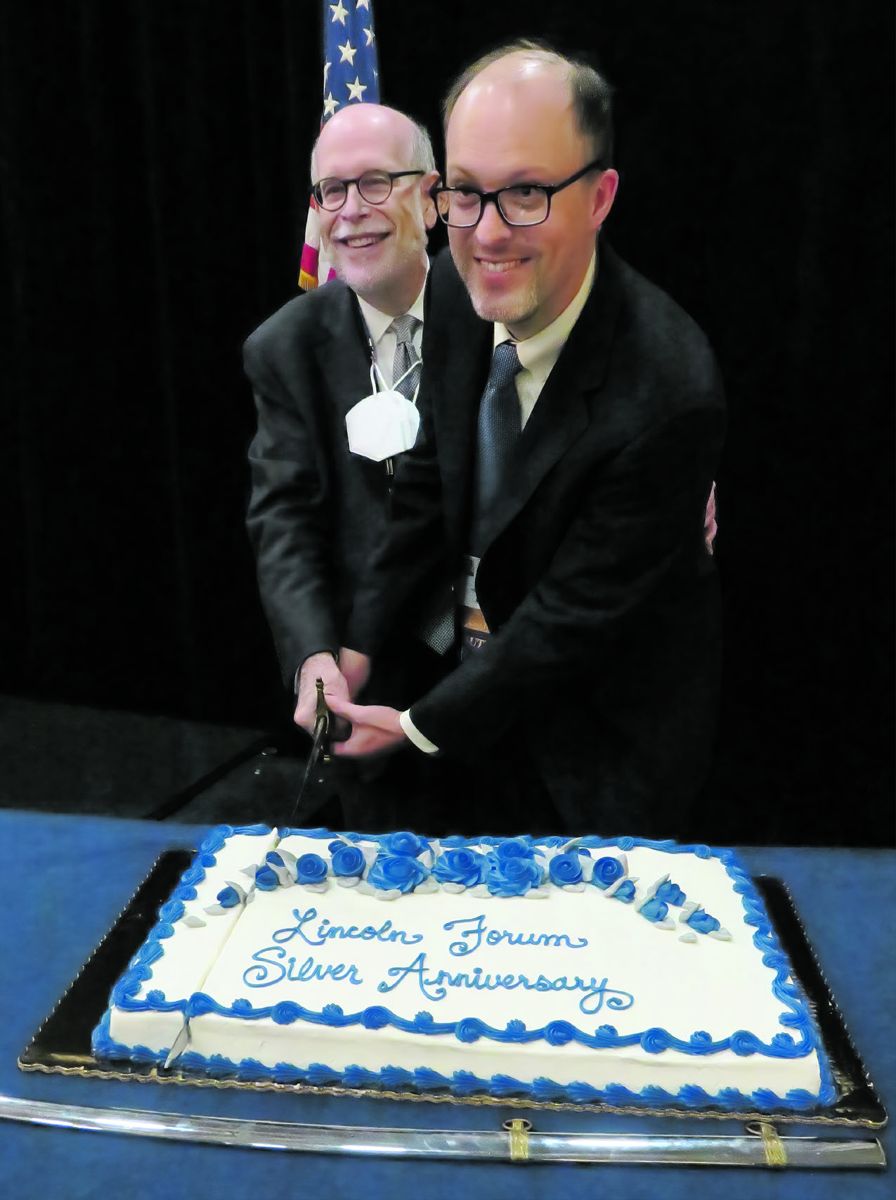
Special Correspondent to Nearly 300 Lincoln scholars and enthusiasts gathered in the days preceding Dedication Day at Gettysburg’s Wyndham Hotel for the 26th Annual Lincoln Forum Symposium, “Abraham Lincoln and the New Birth of Freedom.” Forum chair Harold Holzer, Director of the Roosevelt House Public Policy Institute at Hunter College, was excited to be able to meet live after a year’s absence. “Although we tried our best to stay connected last year over
Zoom, there is still nothing like a live symposium that includes shared meals, experiences, lectures, small-group discussions, and opportunities for Q&A. The Forum is more than a meeting; we like to describe ourselves as a ‘family,’ “so it was really thrilling to see all those people in the ballroom.” Vice chair Jonathan White, Associate Professor of American Studies at Christopher Newport University, echoed the benefits of meeting live. “We really value the idea of the Forum as a family, and you can see that in how our speakers interact with each other and with symposium attendees. I think our speakers really enjoy talking with Forum members. Our members are very knowledgeable about Abraham Lincoln and the Civil War and that leads to great conversations with the speakers, not only during the sessions, but also in the hallways and at meals.” The conference was organized as separate panels and presentations, but there were many interesting overlaps between some presentations. The broad topics addressed by multiple speakers and panelists included: events and places that impacted Lincoln’s beliefs and
48 Pages, January 2022 his growth as a statesman and politician; Lincoln’s leadership and statesmanship; Lincoln’s understanding of the Constitution, his attitudes about slavery, and the path to emancipation. Special presentations departing slightly from the Lincoln theme were “How Should Americans Understand Gettysburg in 2021?” by Gary Gallagher, a presentation on Juneteenth by Annette Gordon-Reed, and the process of finalizing the surrender after Lincoln’s assassination, by Caroline E. Janney.
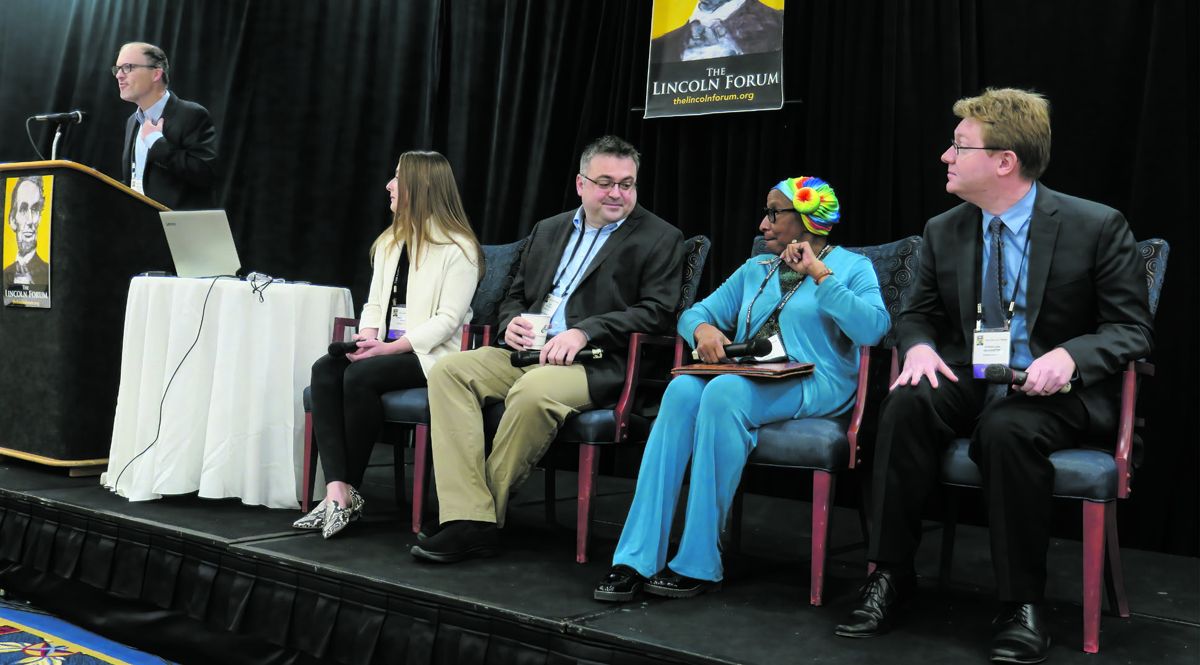
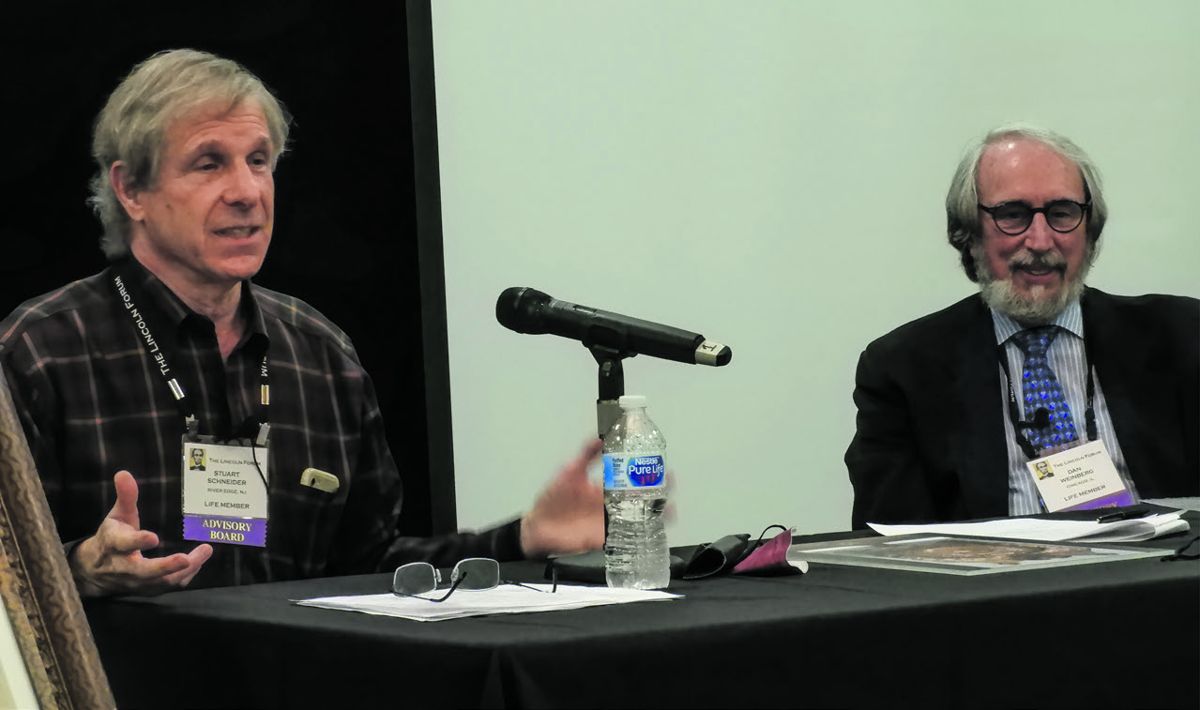
Influences on Lincoln’s Development A panel discussed the influence of Springfield on Lincoln’s development. Participants were Erin Carlson Mast, CEO of the Abraham Lincoln Presidential Library Foundation; Sam Wheeler, Illinois state historian; Kathryn Harris, retired head of the Library Division of the Abraham Lincoln Presidential Library; and Christian McWhirter, a historian at the Lincoln Presidential Library. Wheeler noted that moving to Springfield “introduced Lincoln to a very diverse community,” first settled by people from the Upper South, “then the middle states, then New England. You didn’t have the extreme stratification you had in the East.” The panel also discussed Lincoln’s marriage. Harris stated that, “The marriage was rough around the edges. But I believe they genuinely loved each other.” McWhirter added that “There was absolutely a connection between the two. Their letters indicate a very close relationship.” Wheeler added, “It was also a very close and important political alliance.” They all agreed that the marriage was critical in Lincoln becoming president. In a panel discussing Lincoln’s and FDR’s leadership styles, Holzer noted that “Mary had an extraordinary influence on Lincoln. Both the Lincoln and FDR marriages were extraordinary, though also troubled.” In his presentation on “Lincoln, the Founding, and an America
Saving,” Washington and Lee University’s John K. Boardman Professor of Politics Lucas Morel commented that there was “no greater influence on Lincoln than the ideas of the Founders, frequently stating that he never had an idea politically that did not come from the Declaration of Independence.”
Lincoln’s Leadership Several panels specifically addressed Lincoln’s leadership and other speakers referred to presidential leadership as well. Forum Chairman Emeritus Hon.
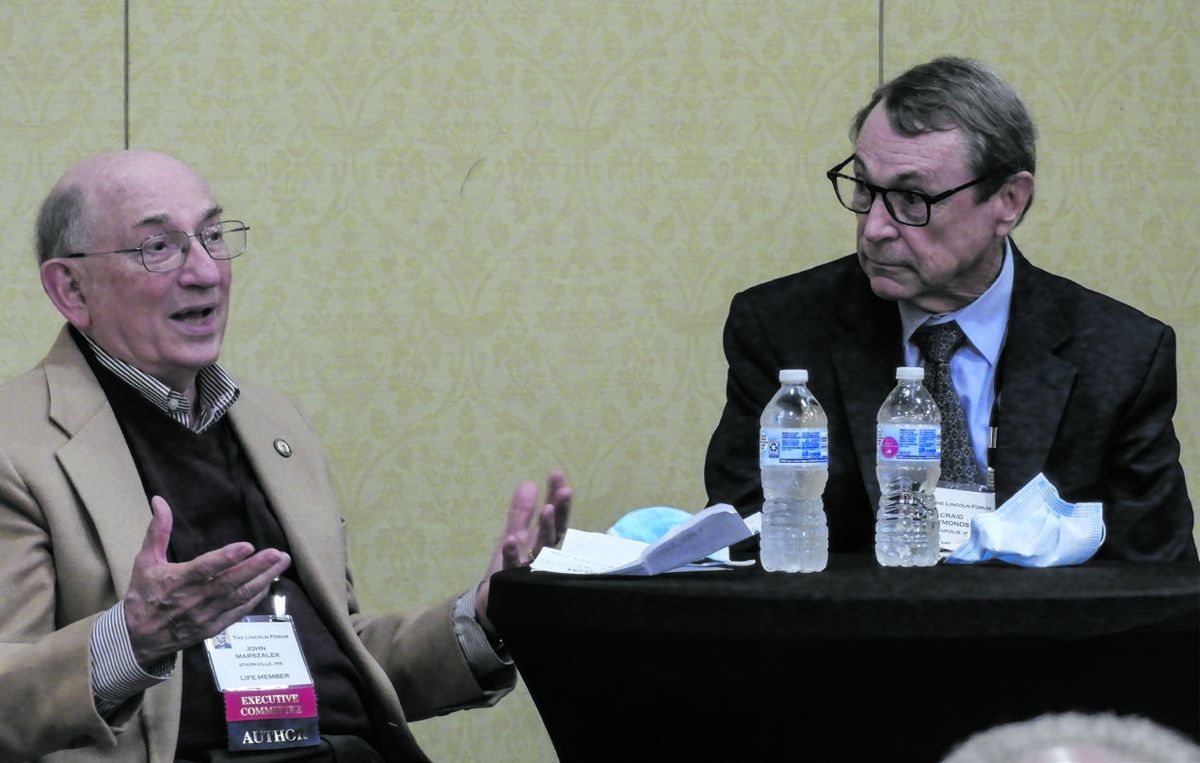
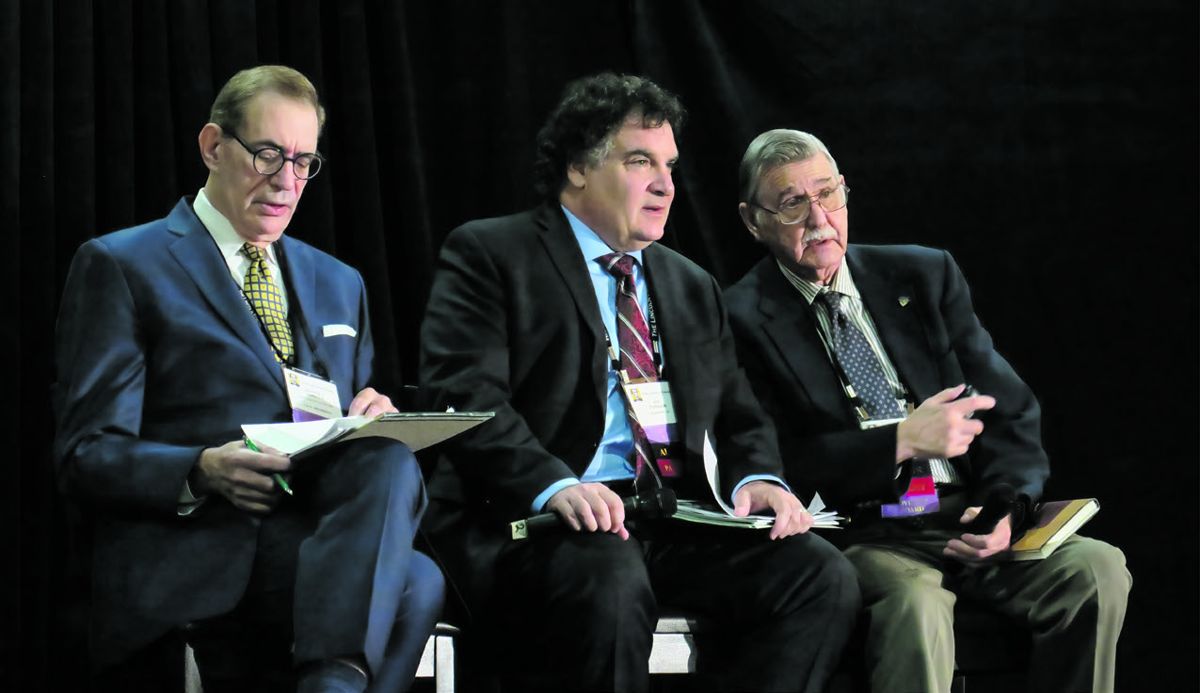
Frank J. Williams led a panel consisting of Judge Dennis Curran, retired Massachusetts superior court justice and professor at Tufts University; Joseph Fornieri, professor of political science at Rochester Institute of Technology; and Ed Steers, author of several books on Lincoln’s assassination. When asked for examples of statesmanship, Ed Steers listed Lincoln’s advocacy of the Land Grant College Act and the Homestead Act, “which continue to affect us to this day.” Joe Fornieri noted “his tenacity in defending the core principles of the Republican Party; he was willing to compromise but he wouldn’t give on the issue of expansion of Slavery.” Judge Curran add, “On the important principles, a leader must remain inflexible.” A second panel, consisting of Forum Chair Harold Holzer and Craig Symonds, Professor of History Emeritus at the United States Naval Academy, contrasted “Lincoln and FDR: Lessons in Leadership.” The panelists pointed out both wartime presidents were excellent communicators. Although Lincoln made few public appearances, particularly when compared to the gregarious Roosevelt, he was a very effective communicator. Symonds added another characteristic the two men shared in common: “Patience.” In a breakout session on military leadership, John F. Marszalek, Executive Director of the Ulysses Panel on Lincoln and FDR presenter Craig Symonds. S. Grant Presidential Library at Mississippi State University, made note of the brutally critical letter President Lincoln wrote General Meade expressing his disappointment about Meade’s handling of the Gettysburg campaign, and then didn’t send. No matter how frustrated Lincoln was, he understood that blowing up at Meade wasn’t going to help win the war.
Constitution, Slavery and Emancipation book prize for his book Lincoln’s Anti-Slavery Constitution, James Oakes, Distinguished Professor of History and Humanities Chair at the CUNY Graduate Center, agreed that President Lincoln considered the Constitution an anti-slavery document. Following up on Morel’s point, he stated Lincoln believed that “fencing slavery in would lead to ‘its natural demise’ while expansion would allow the enslavement of millions.”
There was lively discussion among many speakers and panelists about Lincoln’s views on the Constitution, Slavery, and Emancipation. In a talk entitled “Lincoln, the Founding, and an America Worth Saving,” Lucas Morel pointed out Lincoln’s view that even enslaved people had natural rights was unusual at the time: “Both [William] Yancey [a
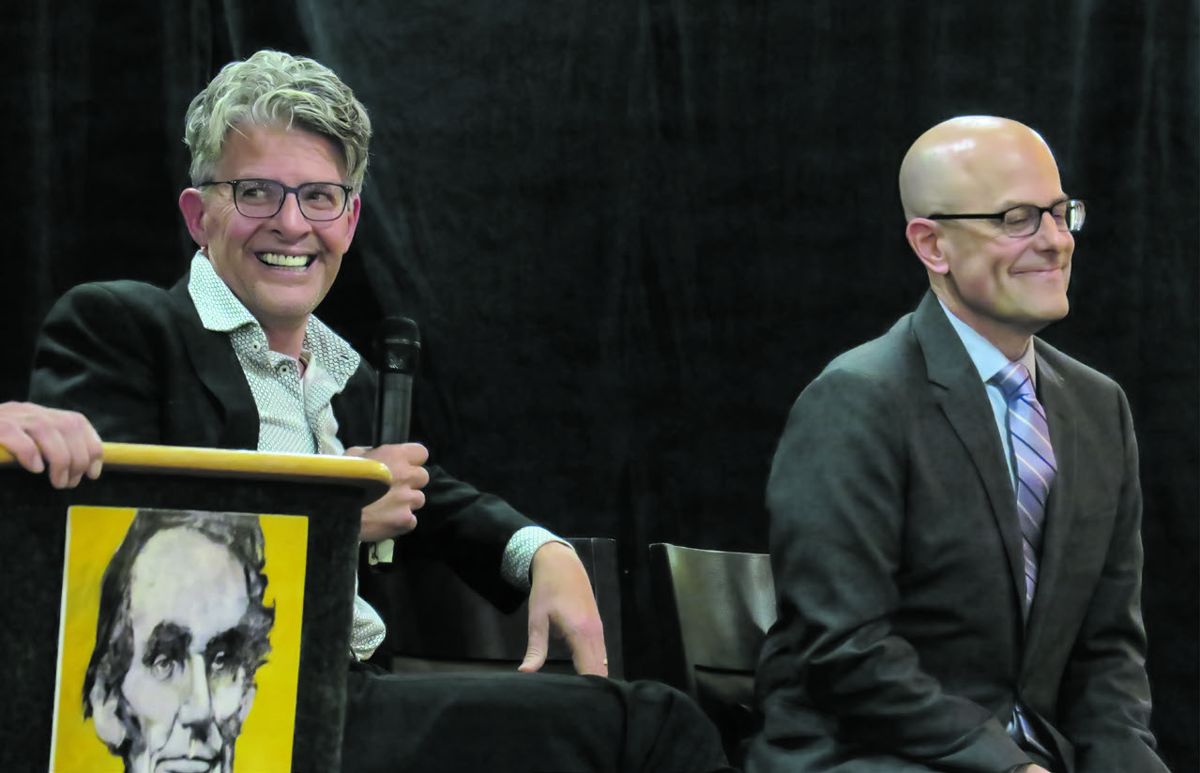
“Lincoln and the Founding Fathers” presenter Lucas Morel. leading southern proponent of secession] and [Stephen] Douglas [the leading northern advocate for compromise and Union] believed the Declaration of Independence applied only to white men.” The issue of the status of slavery in the Constitution and whether the Constitution is a pro-slavery or anti-slavery document was controversial at the time and still is today. Speaking after being presented the 2021 Lincoln Forum
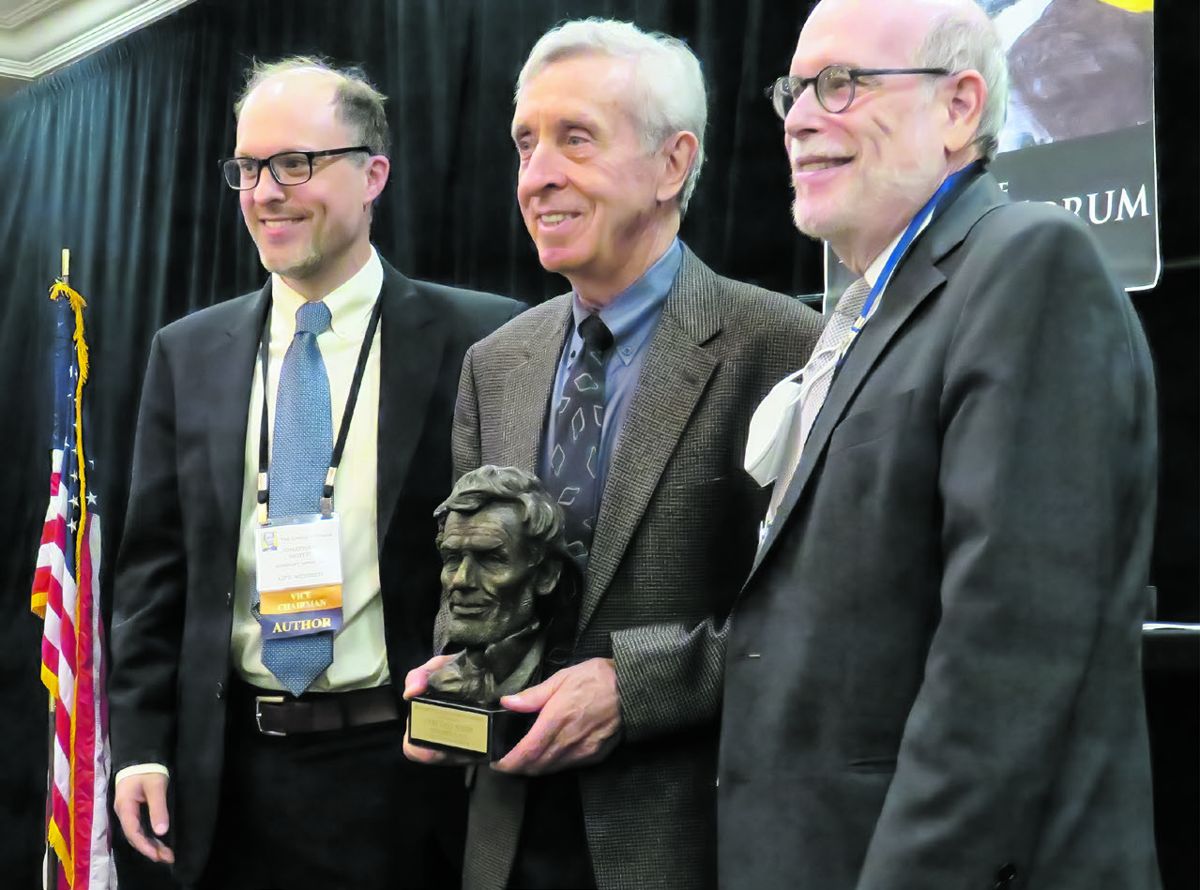
James Oakes, winner of the Lincoln Book Prize.
Oakes continued that “His view was that the Constitution generally favored freedom and that pro-slavery clauses were deplorable exceptions to ensure passage of the Constitution.” Constitutional provisions that can be considered as opposed to slavery, included the right to ban the slave trade, authority to create “all needful rules and regulations” for the territories, the 4th and 5th amendments, and reference to enslaved people as persons. “Beyond the text, the spirit of the document was clear, such as the purpose to “secure the blessings of liberty to ourselves and our posterity” Oakes concluded, “The Constitution made freedom the rule, slavery the exception.” Forum vice chair Jonathan
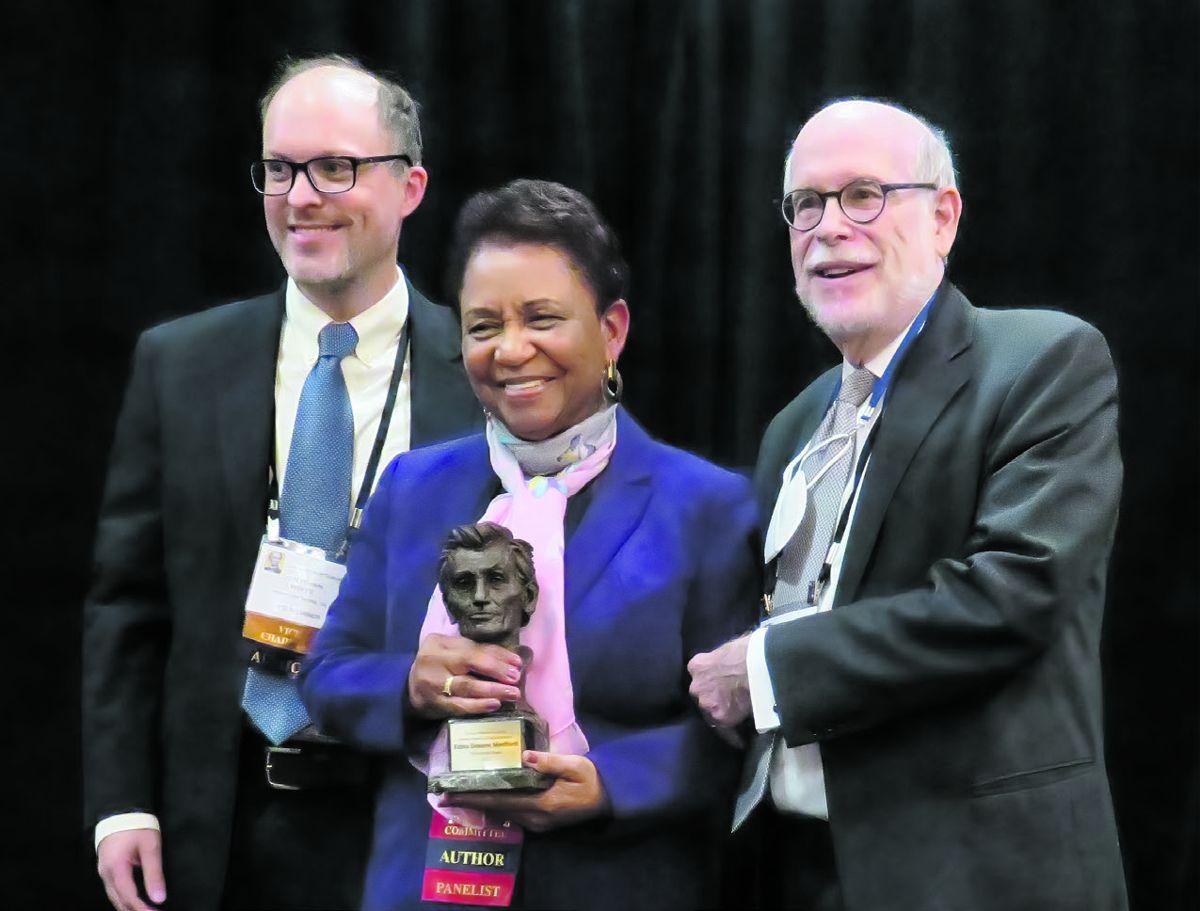
White moderated a panel discussion on “Lincoln and African Americans,” with Michelle Krowl, Civil War and Reconstruction specialist in the Manuscript Division of the Library of Congress; Edna Greene Medford, Professor of History at Howard University; and Lucas Morel. White observed that Lincoln made remarks in the 1850s about black equality and other topics that are criticized today. Morel conceded that these remarks are troubling but also argued that modern analysts must consider the nature of the audiences he was addressing.
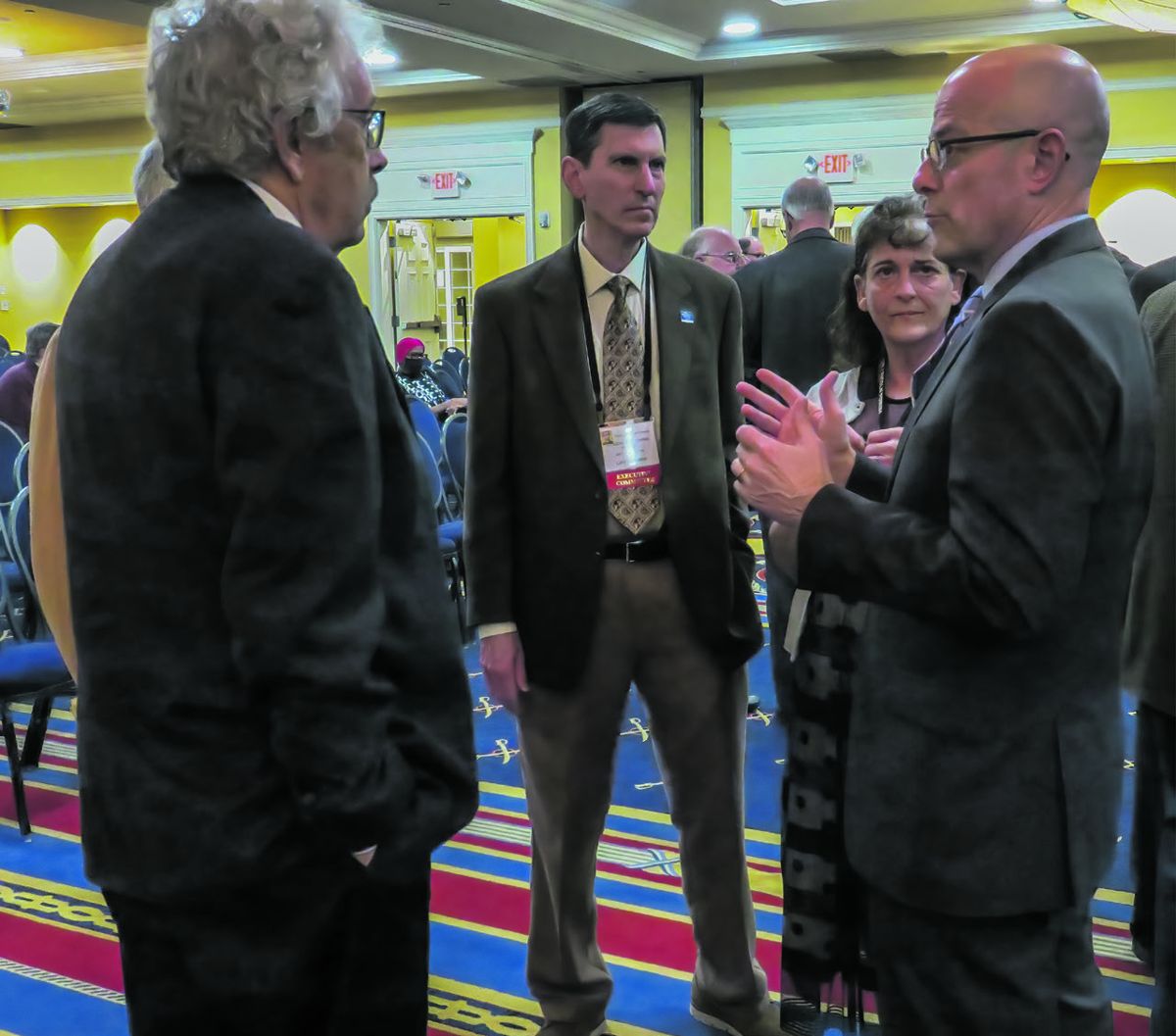
Lincoln and African Americans Panel, Edna Greene Medford. Medford noted Lincoln considered the inferiority he perceived “was a consequence of slavery. He believed it degraded them.” In his presentation on “Gettysburg,” Gallagher observed that Lincoln supported Emancipation “not as a moral crusade to win the war, but to punish slaveowners who brought on the war, and to deal with the only cause that could tear the country apart in the future.” Medford also noticed Lincoln’s pragmatic streak. She pointed out that at first Lincoln didn’t favor use of black soldiers but came around when he realized it was essential to winning the war. Later he was impressed with the bravery and discipline of black soldiers. “Lincoln originally didn’t expect this to happen; he changed his views.”
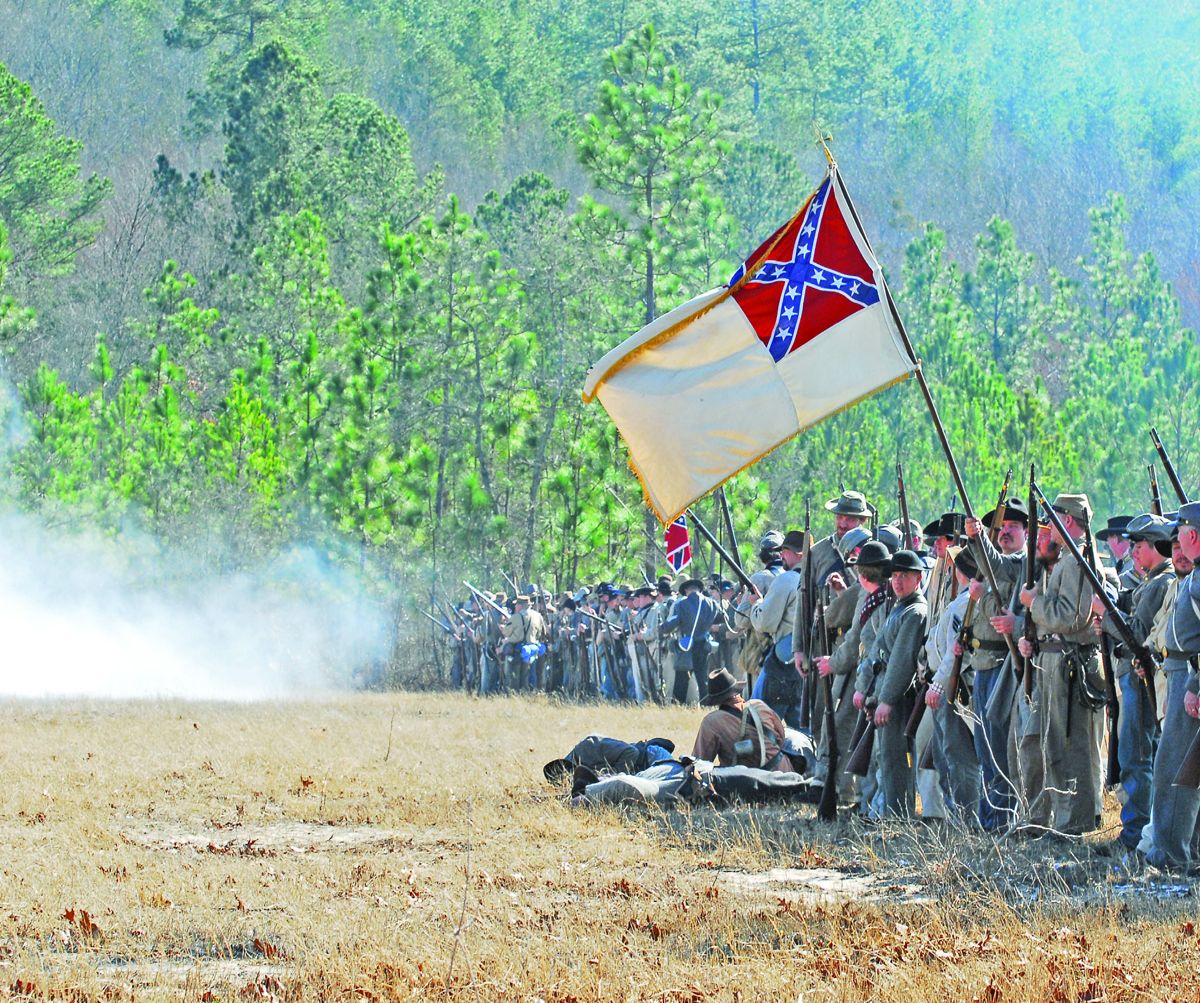
Lee and the Lost Cause Many speakers addressed the Lost Cause and other aspects of Southern reaction to the war and their losses. In his talk about the meaning of Gettysburg, Gary Gallagher pointed out that even the Lost Cause is focused on also mentioned a group of four black men who in 1876 bought land in Houston to celebrate Juneteenth. “It’s still there, Emancipation Park. People who were in terrible circumstances kept moving forward.”
CivilWarNews.com Gettysburg. “In the Lost Cause narrative, the #1 reason they lost is resources, and the second reason is that Longstreet sabotaged Lee at Gettysburg.” A panel moderated by Gallagher and consisting of Ty Seidule, Professor of History Emeritus at the United States Military Academy, and Peter Carmichael, Robert C. Fluhrer Professor of Civil War Studies, addressed the issue at length. After the war, Seidule said, “Confederates realized they needed to isolate themselves from slavery.” It swept the country and affected Northern attitudes. “If you go to Grant’s Tomb, the painting makes Lee and Grant equal; you don’t see much of Grant in the Lee Chapel at Washington and Lee.” The panel discussed the iconic image of Lee. Gallagher conceded that Lee was on record decrying slavery as an evil institution, but Seidule pointed out that Lee engaged in hiring his slaves out, “the cruelest system.” Gallagher was asked if Lee had much to do with promoting the Lost Cause and answered “Actually, he slows it down.”
Gettysburg Gallagher spoke on “How Should Americans Understand Gettysburg in 2021?” He first addressed the “Turning Point” question, stating that many events in the war changed things. “Ball’s Bluff was a major turning point; Vicksburg, of course, the 1864 Atlanta and Shenandoah Valley campaigns had important consequences. I think no battle had more impact on the war than the Seven Days. It showed Federal leadership that it was going to be a long war and made leadership understand that we’re not going to win this war without upping the ante. The Second Confiscation Act followed the collapse of McClellan’s campaign by only a few days and the campaign decided Lincoln on moving forward with the Emancipation Proclamation.” Gallagher commented, “I readily admit that very few places resonate more evocatively than this place … Where else have so many mundane pieces Devil’s Den, the Wheatfield, been invested with so much meaning by so many. … Few places offer so many opportunities to study terrain and leadership.” People on the field can understand in a way not possible in the classroom. The ground at Gettysburg is the best classroom. “Lincoln prophesied the world would never forget what happened at Gettysburg. I hope he’s right.” Speaking during the Military Leadership breakout session, Symonds commented that he brought every class from Annapolis to Gettysburg. “It’s a marvelous teaching tool; nothing compares to being on the battlefield and seeing what they saw.”
Juneteenth Best-selling author Annette Gordon-Reed, Carl M. Loeb University Professor at Harvard, gave a personal account of her experiences growing up in a
“Juneteenth” presenter Annette Gordon-Reed. largely segregated Texas and with local Juneteenth celebrations. “I was born and raised in Texas and I’m still a Texan. I was in New York during the pandemic, and this project gave me a chance to write something more personal.” She noted that the image of Texas, largely derived from TV and movies is that “Texas is a western state, not a southern state,” but that when she was growing up it retained many Southern elements. “Our celebrations of Juneteenth were partly about what happened that day and partly what happened later, after Reconstruction, and the creation of Jim Crow.” She
28th
Post-Assassination
Caroline E. Janney, John L. Nau III Professor of the American Civil War at the University of Virginia, discussed ending the War after Lincoln’s assassination. She noted that Appomattox is often regarded for all practical purposes as the end of the war but that it really began a process. The Union high command recognized that “even with the surrender of main armies, the war might never end.” Paroling was considered a deterrent. “They believed men would be honor bound by the
Dr. Stephen Herr accepts the Wendy Allen Award on behalf of Lincoln Fellowship. parole. Rather than seeing the surrender as the end to the war, it’s better to view it as facilitating the end of the war.”
Awards Several awards were presented. As noted, James Oakes won the 2021 Lincoln Forum Book Prize for his book Lincoln’s AntiSlavery Constitution. The Lincoln
Actor Stephen Lang performed “Beyond Glory: Lt. James Jackson Purman.”
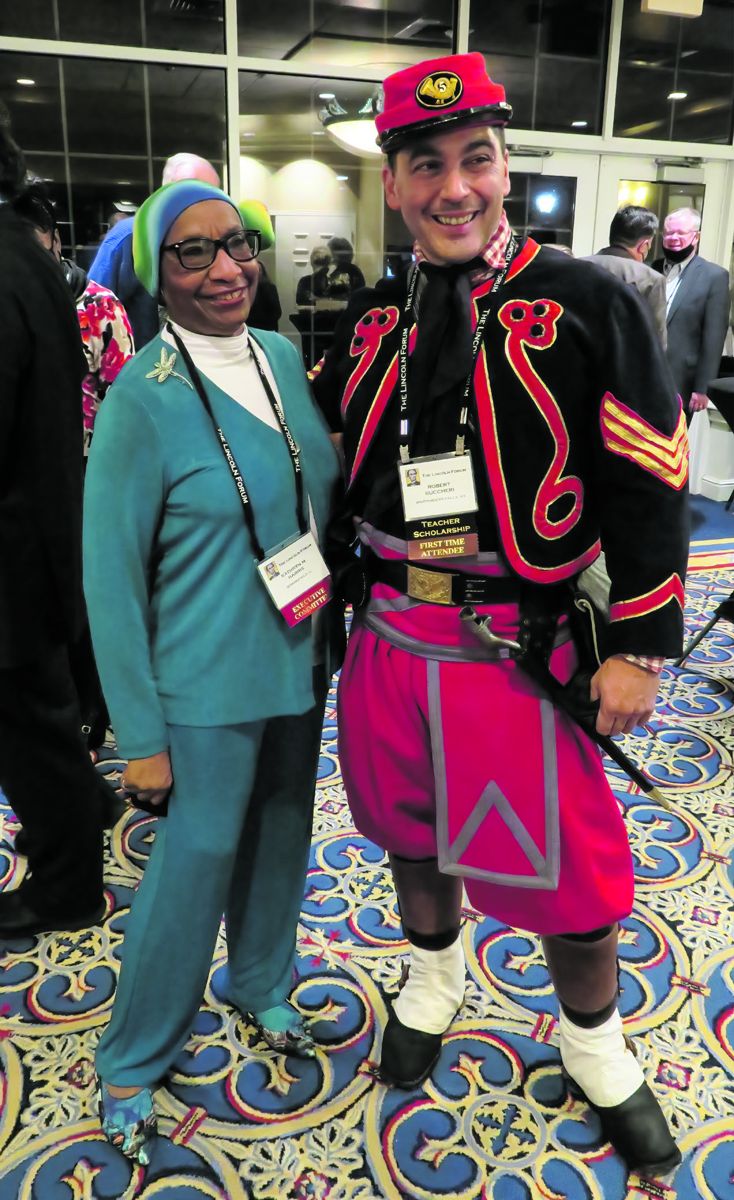
First-time Lincoln Forum attendees.
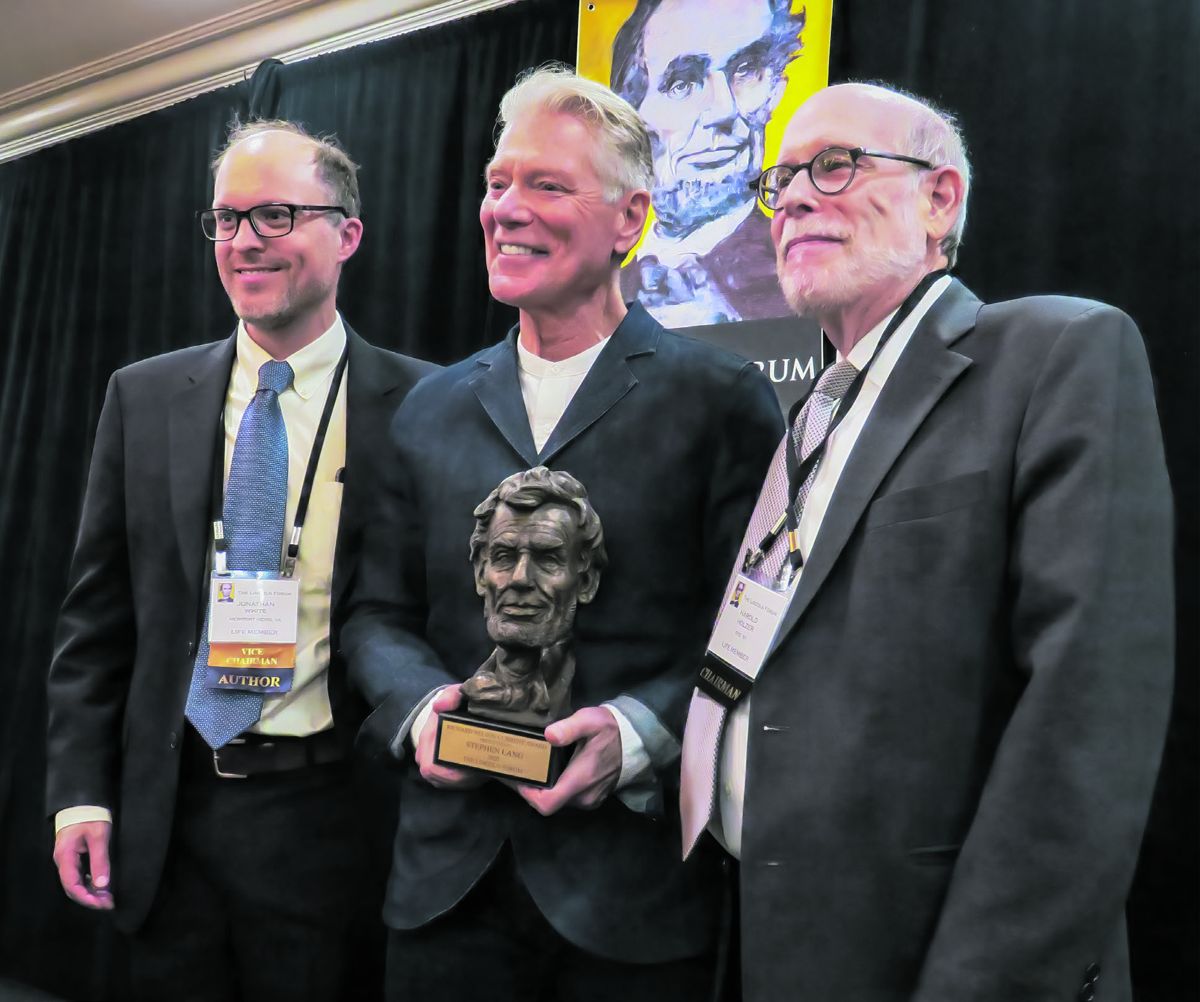
CivilWarNews.com Fellowship won the 2021 Wendy Allen Award for Institutional Excellence. Gary Gallagher was awarded the 2021 Richard Nelson Current Award of Achievement, and Edna Greene Medford, John Marszalek, and Craig Symonds earned honorary awards. Finally, actor and writer Stephen Lang (who played General Pickett in the Gettysburg movie and
Stonewall Jackson in Gods and Generals) was the delayed recipient of the 2020 prize. The conference also included memorable performances. On the first night, visitors were treated to a performance by Jay Ungar and Molly Mason, a husband-wife folk music team best known for performing Jay’s original composition, “Ashokan Farewell,” the theme music for the Ken Burns special. On the final night of the conference, actor Stephen Lang performed “Beyond Glory: Lt. James Jackson Purman,” then completed the evening and conference with a stirring performance of the Gettysburg Address. When the Forum ended, White reflected, “The speakers were phenomenal. Not only were they engaging in their presentation styles, but they hit on subjects that are of vital importance as we reckon with the legacy of slavery in this nation.”
Outgoing administrator Pat Dougal with Harold Holzer.
Holzer, in turn, commented about the informal conversations. “We always tell our speakers that Forum audiences love to engage, both with formal questions at each session and with ongoing conversations at our breakfasts, lunches, dinners, and cocktail hours. Fortunately, our lecturers are always up for the social part of the Forum. I think our scholars also love the book-signing opportunities we provide, and our attendees love to buy books and get them inscribed.” He concluded by praising the work of their great leadership and administrative team. We could not have pulled off such a huge event without the work of Administrator Pat Dougal and her predecessor Elaine Henderson, who managed our website. Thanks extend to Treasurer Paul Ward and Vice Chairman Jonathan White. We are very grateful to everyone both on our team and the hotel’s. Leon Reed is a former U.S. Senate aide and U.S. history teacher. He lives in Gettysburg and is the author of No Greater Calamity for the Country: NorthSouth Conflict, Secession, and the Onset of Civil War (2019).