
Through The Lens
Crossing Hell On Ice
By Stephanie Hagiwara · Originally published January 2022 · pp. 12–13
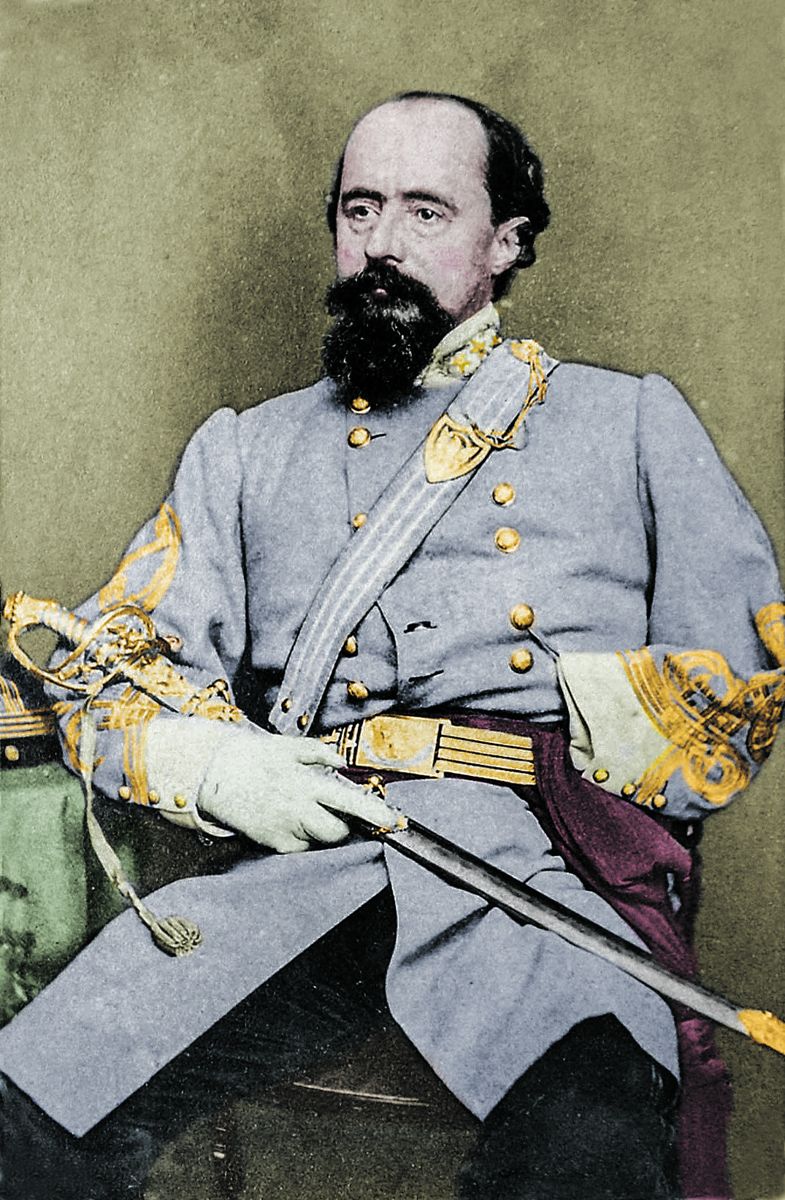
Crossing Hell On Ice “By pondering our plans and maps, Great General George has got the gaps, But we, who watched this sleepy war, We got the gaps long, long, before.” – U.S. Gen. Fredrick W. Lander Fighting the 1862 Shenandoah Valley, Va., winter campaign was as frustrating on the field as it was off. The Shenandoah Valley is located south of the Potomac River southwest of Washington, D.C., and supplied the Confederate capital of Richmond, Va. Both U.S. Gen. Fredrick W. Lander and C.S. Gen. Thomas “Stonewall” Jackson wanted to seize control of the lower (northern) Shenandoah by holding the village of Romney, 40 miles via the Northwest Turnpike from the commerce center of Winchester, Va. The town also overlooked sixty miles of the B&O Railroad in the South Branch Valley.
On Dec. 27, 1861, Lander was the first witness to testify regarding the Battle of Ball’s Bluff, Va. before the Congressional Joint Committee on the Conduct of the War. Lander was nationally known for participating in five transcontinental surveys; he had fought Indians and grizzlies, and distinguished himself in the Battles of Philippi, W.Va., and Rich Mountain, Va. Lander had been shot in his left leg during the battle; the bullet bored through the bootstrap into his calf. The strap had been pulled out and the remaining fragments were later removed, leaving him with an infected wound. When asked if a winter season was practical, Lander said that the Army of the Potomac, “who are housed and buttered up about Washington and taught to believe that if they make a march of three miles it will get into the papers,” may not be capable of a winter campaign but with “the Ohio and Indiana boys on duty in western Virginia, he could whip Jackson at Winchester, [Va.] in any season, as could [Gen. Nathaniel] Banks, if properly supported.” Lander had planned to spend the New Year with his wife while resting his leg for at least five more days as per his doctor’s instructions. On his return home after testifying, Lander found orders to assume command at Romney, which had been captured by U.S. Gen. Benjamin F. Kelley on Oct. 22, 1861. Kelley was ailing from a wound received during the Battle of Philippi. Lander sent a request to McClellan for men to capture towns three miles from Winchester and a note to Lincoln. “We need fighting men,” he told the president. “Up to the present time [I] have seen so many shaking nerves in this war that I sometimes doubt my eyesight.” C.S. Gen. William W. Loring’s Army of the Northwest was sent to reinforce Jackson at Winchester. Starting at 14, Loring served in the Florida militia fighting Seminole Indians for five years, fought and lost his arm fighting in the MexicanAmerican War, and spent decades on the frontier, chasing Indians, protecting settlers, gold diggers, and more. On Christmas Eve, Loring arrived and discussed with Jackson the terms of their cooperation. Jackson considered his force of 7,500 volunteers, 2,234 militia, and 664 cavalry inadequate to hold the lower Shenandoah. He wrote Gen. Joseph Johnston that he would need, “… to attack the enemy in his present position before he receives additional reinforcements … at the earliest practicable moment.” Jackson launched his Romney Expedition on Jan. 1, 1862. He ignored what was locally known as a “weather breather,” an unseasonably warm spell that signaled a sudden freeze. Loring wasn’t informed that Jackson planned to attack Romney and, to protect his right flank and rear; he would first capture the villages of Bath and Hancock. Lack of clear marching directions resulted in delays. A chill wind came up in the afternoon and the temperature plummeted into the twenties. Men anyhow!” were struggling to keep warm, At 2 p.m. the combatants especially those who had thrown sporadically exchanged fire. The their coats into the lagging supply Confederate gunners adopted the wagons. code word “Brown Church” to Loring was livid, “Owing to escape the accurate 10-pounder the mismanagement, for which Parrott rifle shells and code “Red none of my command was Church” to not bother moving responsible, the baggage wagons, for inaccurate smoothbore shells. with food, tents, and bedding, did At nightfall, snow replaced the not reach camp that night.” On shells. The Federals sheltered January 3, not realizing his men in the abandoned homes. The were waiting to attack as other Confederates struggled to stay units were getting into position, warm without camp equipage, Loring declared, “By God, sir, buried in snow. this is the damnedest outrage On January 6, while the ever perpetrated in the annals of Confederates tried to avoid history, keeping my men out here freezing, Lander was wiring in the cold without food!” Banks for men to cross the On January 4, the Federals, Potomac and take Jackson realizing they lacked adequate from behind or send him “five ammunition to fight, decided to regiments by forced march and I withdraw from Bath while they will cross here and beat them.” could. After a few delays, C.S. On January 7, Jackson Col. William Gilham’s Brigade abandoned Hancock, headed arrived to see the last remnants of for Romney. As the temperature the enemy depart. lowered, Jackson’s doctor On January 5, Jackson sent a insisted that he drink some message by Col. Turner Ashby alcohol for warmth. To the ordering Hancock to surrender, or amusement of his men, Jackson he would shell the town. Lander rode drunk. Somehow, it had told Ashby, “… give my regards been overlooked that the horses to General Jackson and tell him were lacking rough shoes capable to bombard and be damned! If of coping with the icy roads.. he opens his batteries on this “There were many times when the town he will injure more of his horses would fall as they began to friends than he will of the enemy, descend a hill, and the weight of for this is a damned secesh place the gun, or caisson, would push them in a heap to the foot. Then came the necessity of raising the poor horses to their feet again and of assisting them to pull their loads up the next hill.” On January 8, Lander arrived at Romney. McClellan had ordered the town evacuated. Every available wagon was assigned to remove Federal stores. On January 10, the Federals left as “… everything that could not be taken was hastily committed to the flames. Many tents were destroyed together with blankets, trunks, clothing, provisions, accoutrements, and articles of camp equipage, – flames lightening up a scene of
CivilWarNews.com destruction that I hope never to witness again.” Both sides grappled moving their army through the frigid weather. As he watched his men’s efforts to cross a creek Landers asserted, “The next time I undertake to move an army, and God Almighty sends such a rain, I will go around and cross Hell on the ice.” On January 14, the Confederates entered Romney. By local accounts, Romney would change hands 56 times. The conflict between Jackson and Loring ended with Loring being promoted to major general and transferred.
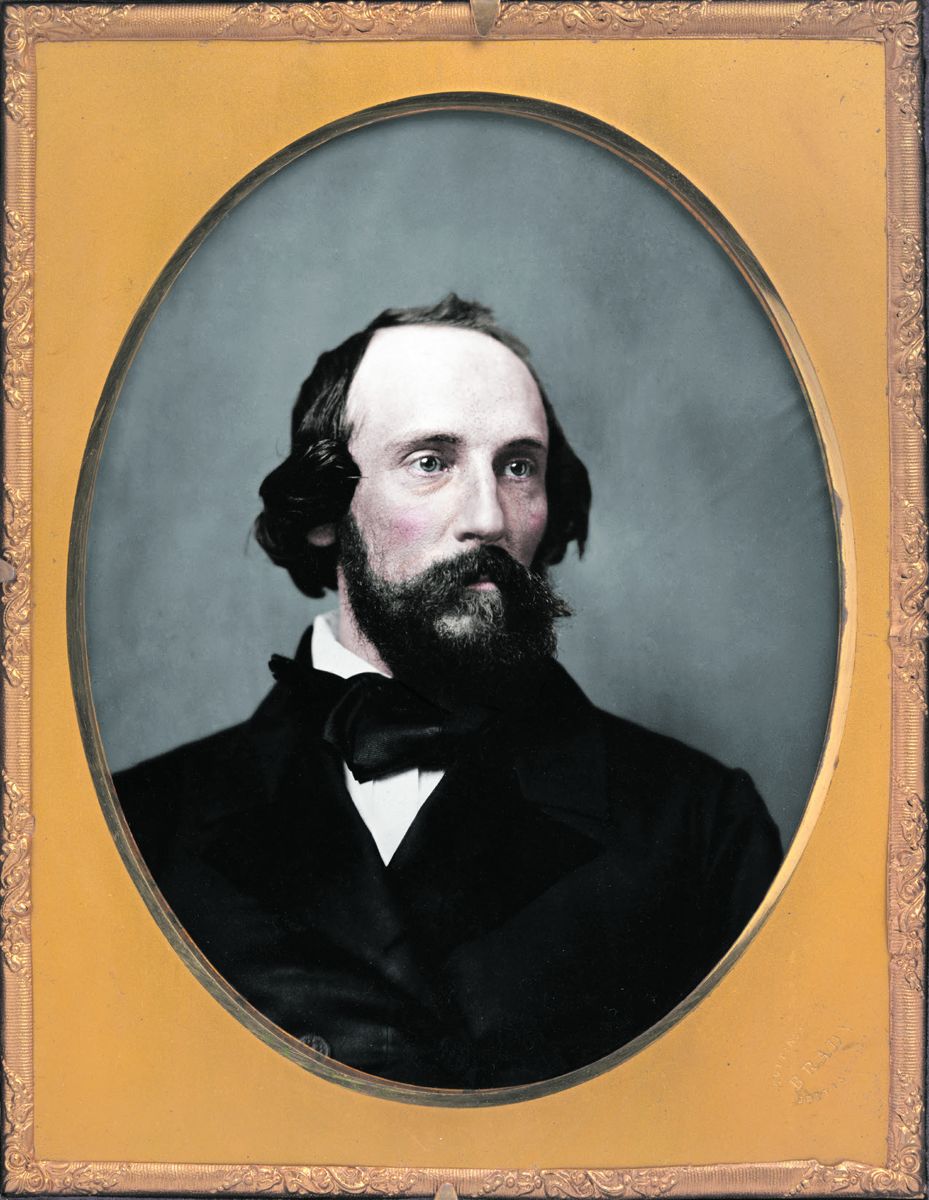
On March 2, 1862, Lander died from his infected wound. During the Expedition, Loring complained to his staff about Jackson’s secretive nature. He stated that if Jackson should be killed, he would find himself “in command of an army of the object of whose movements he knew nothing.” •
•
• Sources:
Cozzens, Peter. Shenandoah 1862: Stonewall Jackson’s Valley Campaign: The University of North Carolina Press, 2009. Ecelbarger, Gary L. Fredrick W. Lander: The Great Natural American Soldier: Louisiana State University Press, 2000. Tanner, Robert G. Stonewall in the Valley: Thomas J. “Stonewall” Jackson’s Shenandoah Valley Campaign, Spring 1862: Stackpole Books, 2002.
Stephanie Hagiwara is the editor for Civil War in Color.com and Civil War in 3D.com. She also writes a weekly column for History in Full Color.com that covers stories of photographs of historical interest from the 1850’s to the present. Her articles can be found on Facebook, Tumblr, and Pinterest.