
Admiral Stephen B. Luce – from Civil War to Naval War College
By Joan Wenner, J.D. · Originally published January 2022 · pp. 20–21
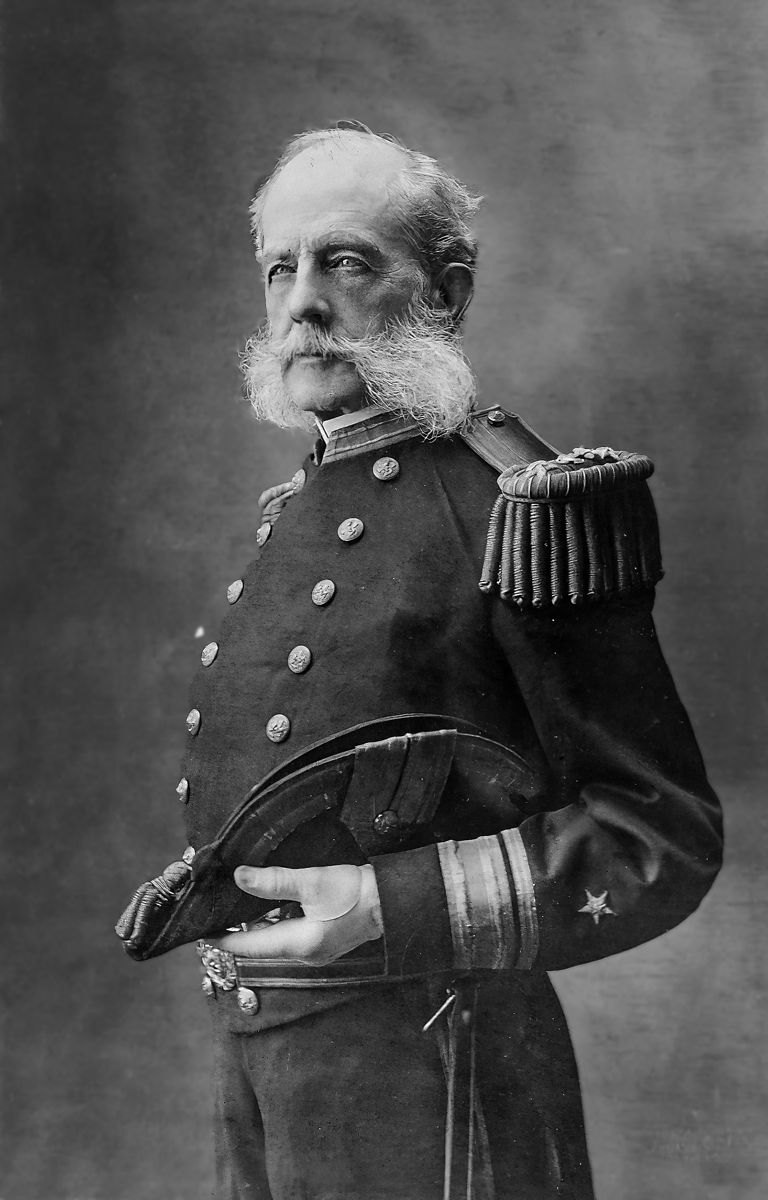
Recent inductions into the National Sailing Hall of Fame in Newport, R.I., included a man with Civil War service. Stephen B. Luce navigated the war and politics to achieve distinction throughout his long career. It is an interesting story we only summarize it here. The first naval laboratory, the Naval Torpedo Station, was established in 1869 on Goat Island off Newport, R.I., following transfer of the Naval Academy to the city during the Civil War. The city came close to being the Academy’s permanent home but for various reasons was not to be. With the founding of the Naval War College in 1884, recruit training quickly expanded which historian and author Anthony S. Nicolosi expertly relates in his Navy, Newport and Stephen B. Luce, Navy War College Review Sept.-Oct. 1984, Vol. 37, No. 5. Stephen Luce was born in 1827 in Albany, N.Y., but spent his early years in Washington, D.C., where his father was a civil servant. He began his naval career “at age 14 as a midshipman aboard the receiving ship North Carolina commanded by Rhode Islander Matthew C. Perry.” For the next almost two decades Luce served in a variety of shipboard assignments perfecting his skills and reading extensively about history, likely cultivating a “keen interest in naval professionalism” says Nicolosi, “and the need for its advancement chiefly through formal education and training.” In an 1843 letter Luce wrote, “Our Navy is in a very imperfect state.” Luce ‘heartily endorsed’ the establishment of a Naval Academy in 1845 and attended briefly in 1848–1849. His attributes were noticed, and Luce was placed on the Academy’s staff at the advent of the Civil War. A May 21, 1864, act of Congress directed relocation from Newport to Annapolis with the Academy leaving Rhode Island permanently soon after Lee’s surrender in April 1865.
Federal Mandate? Stephen B. Luce, circa 1865. (NHHC)
Naval Secretary Gideon Welles had argued in Cabinet, according a country could not blockade itself. In technical terms it was a weapon of war between two sovereign nations or belligerents, and by granting the South ‘belligerent’ status as recognized internationally, the Confederacy was, in effect, given the power to raise foreign loans and purchase supplies from foreign nations. Nevertheless, Secretary of State Henry Seward convinced President Lincoln to declare a blockade. When Lincoln proclaimed the blockade on April 19, 1861, the main strategic problem…was how the U.S. Navy would enact its part of the strategy. “In 1861 the U.S. Navy was woefully unprepared for the task that faced it. Out of a total of just 90 only half, 42 ships, were in commission; of those only 24 were steam-powered and 18 of those were scattered on foreign stations from the East Indies to Brazil,” according to Simson. In 1860 just three steampowered wooden warships were on station in Northern waters; Mohawk, Crusader, and Pawnee. Naval forces became ever more critically important, and the Union Navy’s peak strength rose to 670 ships. Within days of Lincoln’s announcement, it was said to have proved ineffectual, “when to author Jay Simson in his Naval Strategies of the Civil War: Confederate Innovations and Federal Opportunism, against a “blockade” and had simply advocated a closure of the Southern ports by federal mandate. Welles pointed out that a blockade was bound by a set of legal definitions, primarily that
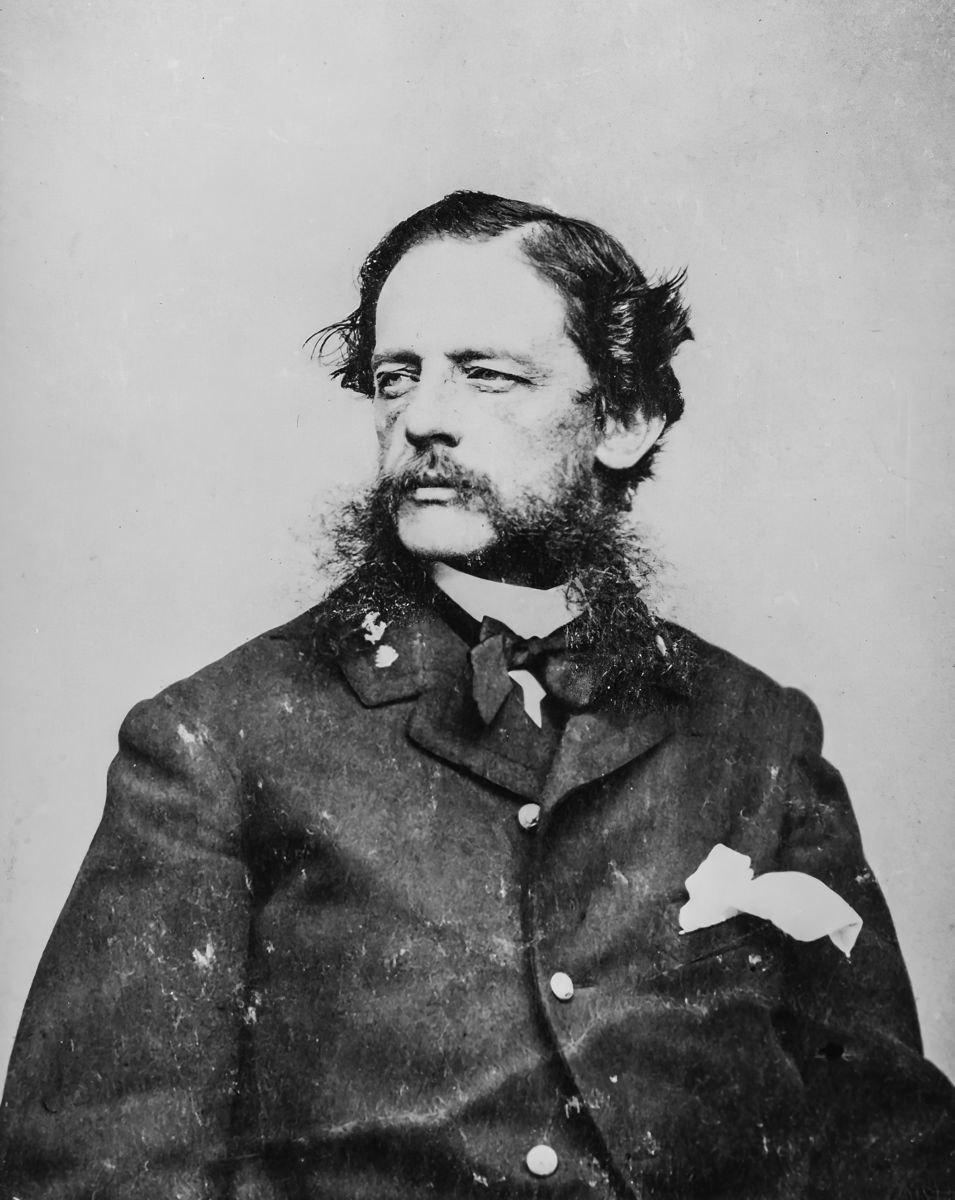
CivilWarNews.com a Union vessel lying off Havre de Grace, Maryland, gave chase to a vessel loaded with arms and ammunition evaded it and ran safely into port.” On April 28th by a second proclamation the blockade was extended to cover North Carolina and Virginia. Less than a week later three British ships arrived in Charleston prompting a resident who spoke to one of the captains about the cargo and the high profits to be made, to write a friend in England, “Don’t you wish you had a hundred ships for one voyage?” On May 3, 1861, Lincoln called for 18,000 sailors. Naval forces were needed to attempt covering more than 3,500 miles of coastline containing nearly 200 harbors and inlets, though after all was said and done, blockade runners could not slip through the eventual ‘federal ring’ to “bolster the sagging Confederate economy.”
Luce’s Civil War Service – USS Carolina (renamed from USS South Carolina), an 1860 Boston-built 217-foot screw steamer purchased by the U.S. Navy in May 1861; outfitted with four 8-inch guns plus one
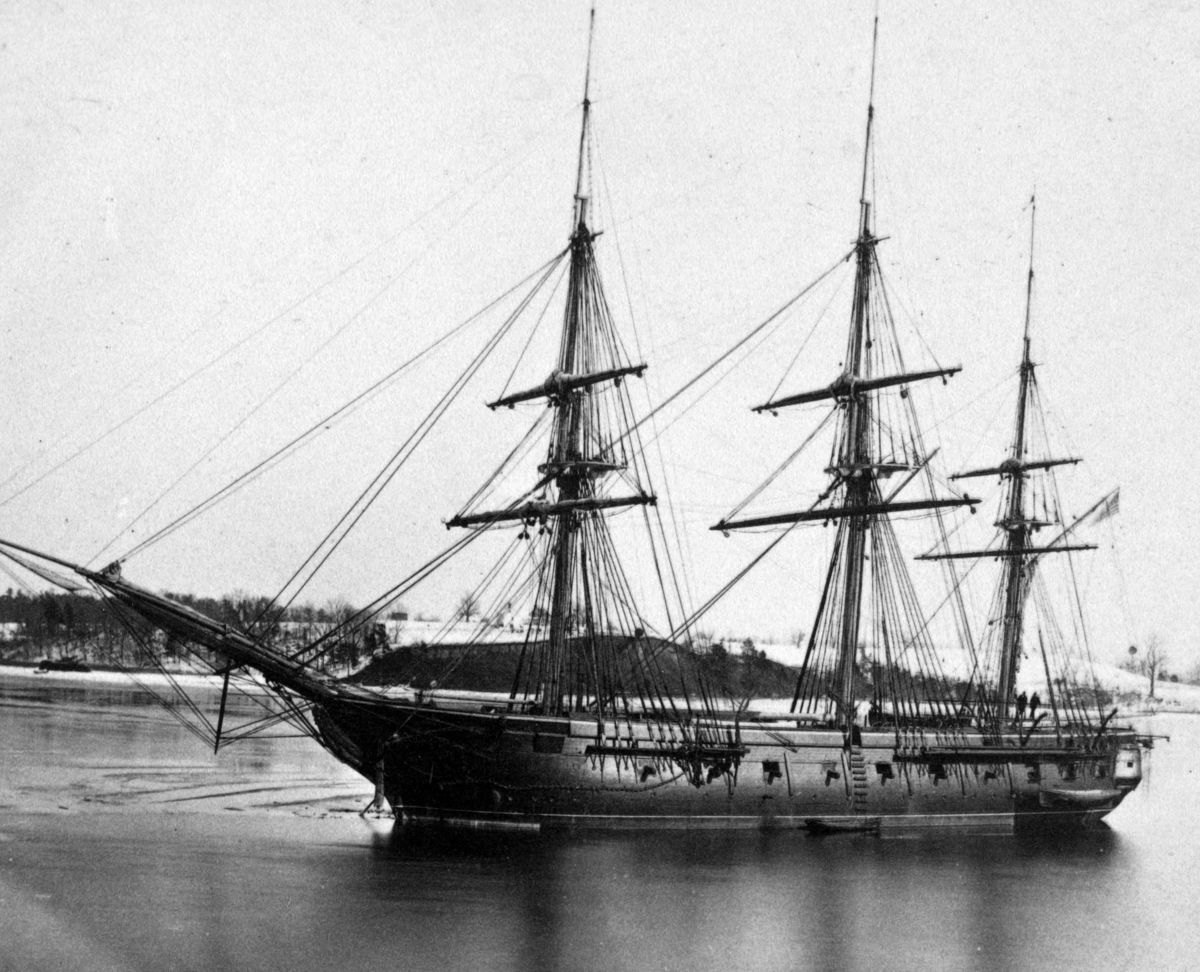
32-pounder, she was loaded with ordnance and ammunition bound for Pensacola, Fla., to join the Gulf Blockading Squadron at Berwick Bay, La. In June 1861 she took station off Galveston, Texas. After seeing significant action and taking prizes she was repaired and reassigned to the South Atlantic Blockading Squadron. Luce continued performing his duties with precision and care, from 1863 until the closing week of the war while the Carolina served as a part of the blockading squadron off the Southern coast. Luce compiled the first text on seamanship, published in Newport in 1862, with several updated editions thereafter. In 1863 Luce received his first independent command, the USS Macedonian. Naval academy library records show that over most of the next two years Luce also conducted a Midshipman’s cruise to Europe gathering information on recruit training systems; and later spent time on training ships in Narraganset Bay. By 1866, and now with his own young family, he returned to the Academy as Commandant of Midshipmen, under Superintendent Admiral David Porter, and helped to develop torpedoes. The English developed a successful propellerdriven torpedo in 1860 and offered them for sale to foreign navies, but the U.S. Navy opted to build its own. In the post-Civil War years Luce recognized the need for professional expertise in the Navy and is credited with many innovations. He died in 1917 at the age of 90.
Joan Wenner, J.D. is a longtime contributor and book reviewer for Civil War News and published writer with special interest in Civil War maritime and courts martial topics. Comments are welcomed at joan_writer@ yahoo.com.